-
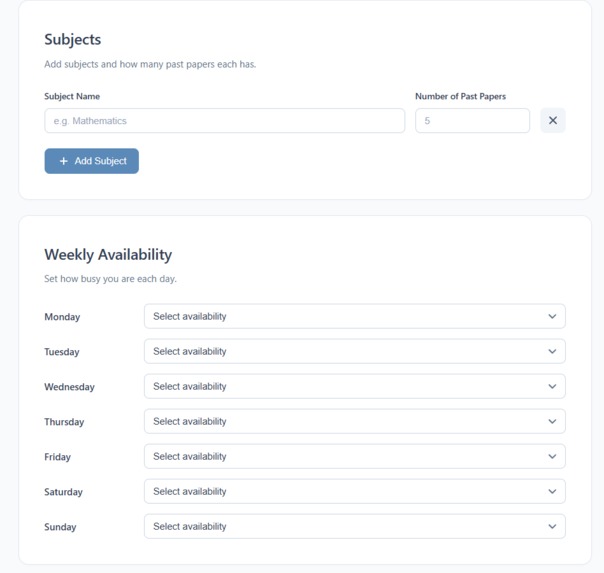
Form asking for details.
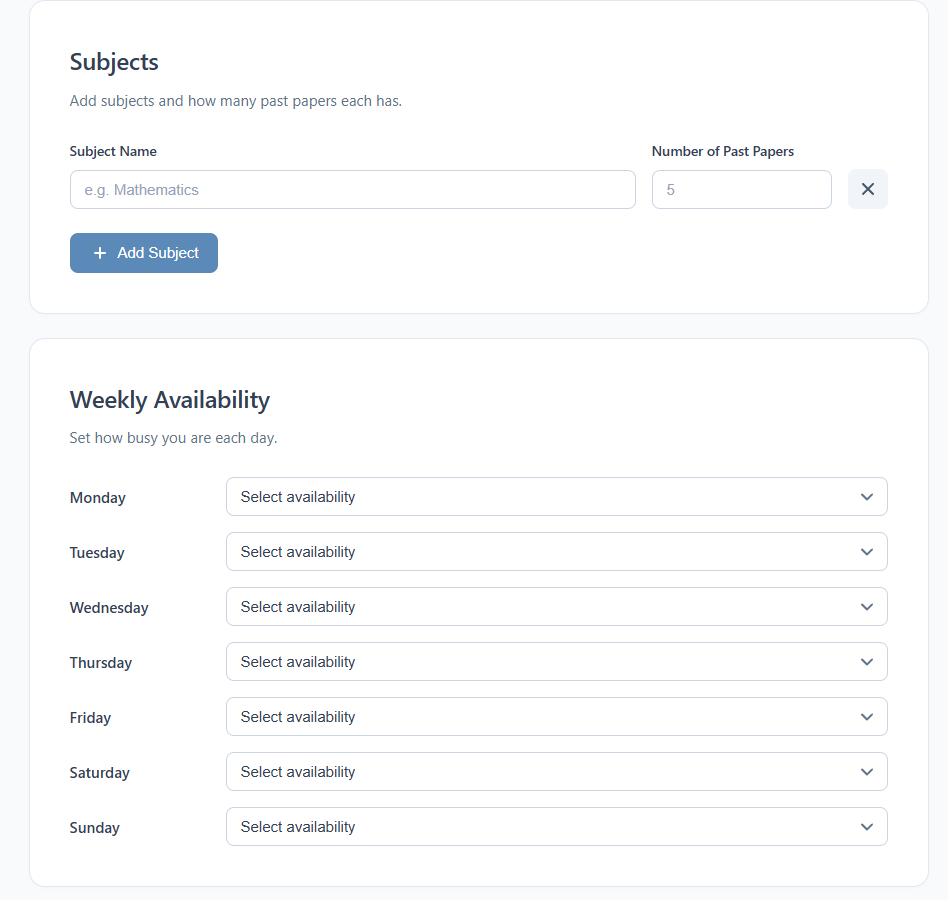
Inspiration
We noticed that many students struggle to manage their study time effectively, especially when juggling several subjects with different workloads. Traditional planners can feel overwhelming or inflexible, so we wanted to build a tool that creates a structured weekly timetable automatically—one that adapts to each student’s availability and study requirements.
What it does
The system generates a personalized weekly study timetable based on two main inputs: the student’s availability for each day and the number of papers or tasks they need to complete in each subject. It distributes study sessions proportionately, prevents overload on any single day, and ensures that each subject receives appropriate attention. The final output is a clear, optimized weekly timetable that students can follow with ease.
How we built it
We designed the system with a simple yet effective workflow:
Collected user inputs for daily available hours and subject workloads
Built a scheduling algorithm that allocates study sessions throughout the week based on workload distribution
Implemented logic to prevent exceeding daily availability
Created a user-friendly interface (CLI/web/app—adjust as needed) to visualize the final timetable
Added customization options such as priority subjects and adjustable session lengths
We used AI to help us code all the files and make descriptions.
Challenges we ran into
Some of the challenges included:
Balancing workloads fairly across the week
Handling days with very limited availability without creating gaps in the schedule
Ensuring the algorithm could adapt to many different study patterns
Designing a clean and intuitive way for users to input their availability and workload
Accomplishments that we're proud of
We’re proud that we built a tool that genuinely helps students stay organized and reduce stress. Our scheduling logic is flexible, reliable, and able to handle a wide range of inputs. The interface is user-friendly, and the final timetable feels practical and easy to follow.
What we learned
We learned how to design and refine scheduling algorithms, how important user experience is in time-management tools, and how small interface decisions can make a big difference in how approachable a tool feels. We also gained experience in turning real-world problems into clean, solvable technical challenges.
What's next for Study Scheduler
Next, we plan to add features such as:
Smart reminders and progress tracking
Integration with calendar apps
AI-based priority suggestions
Support for long-term planning (exam seasons, assignment deadlines)
Enhanced customization for study habits and learning styles

Log in or sign up for Devpost to join the conversation.