-
-
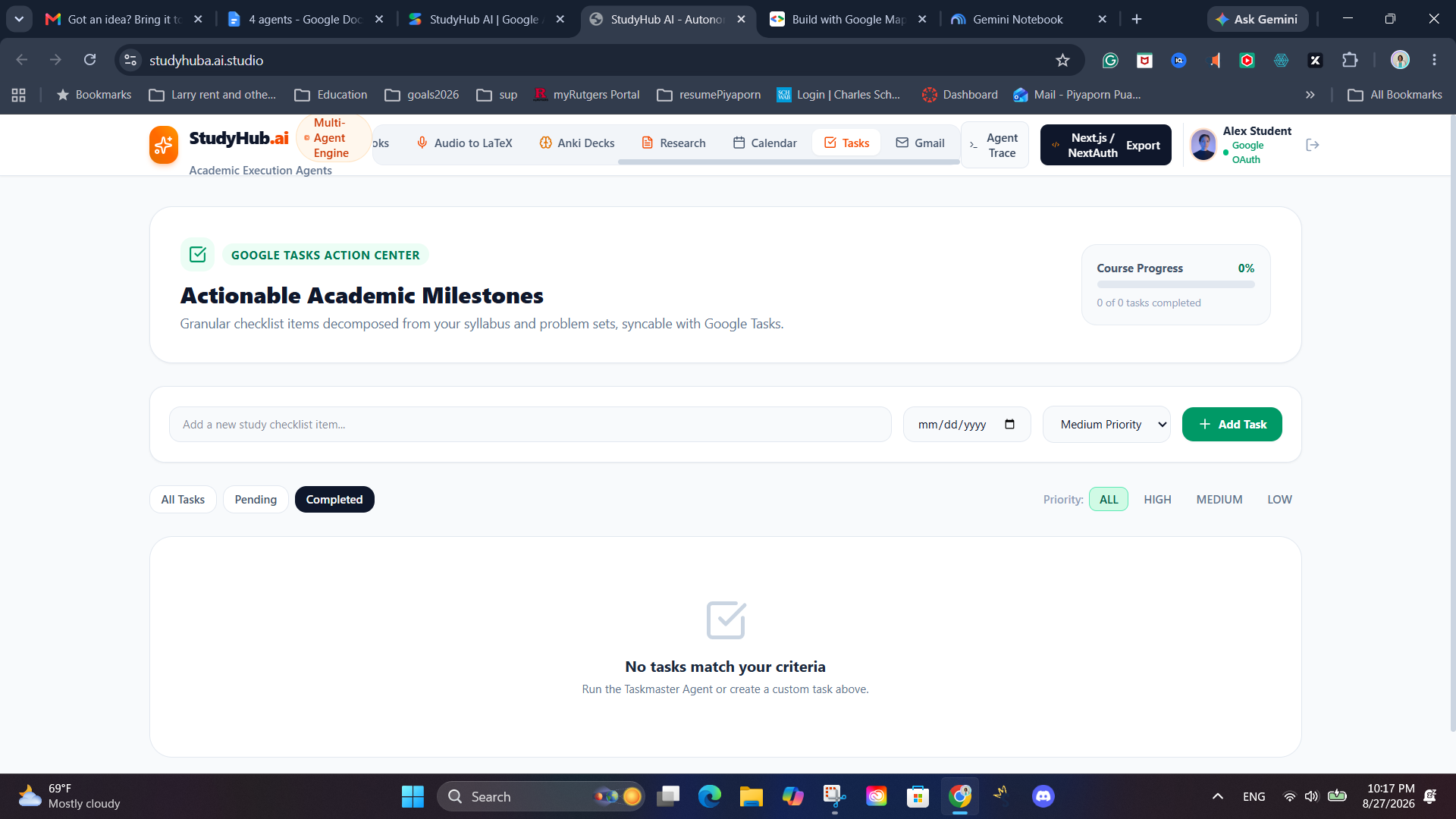
Tasks
-
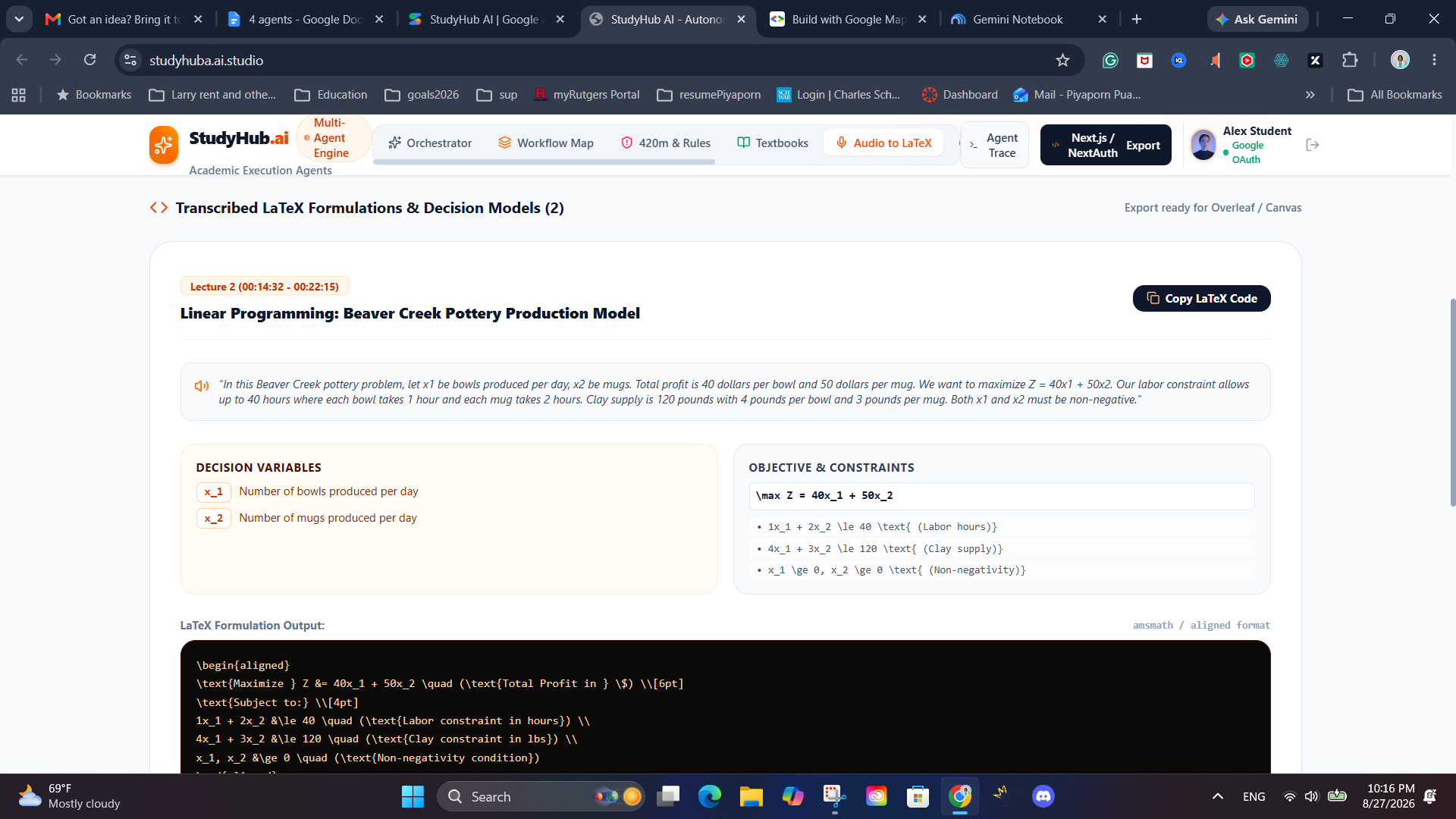
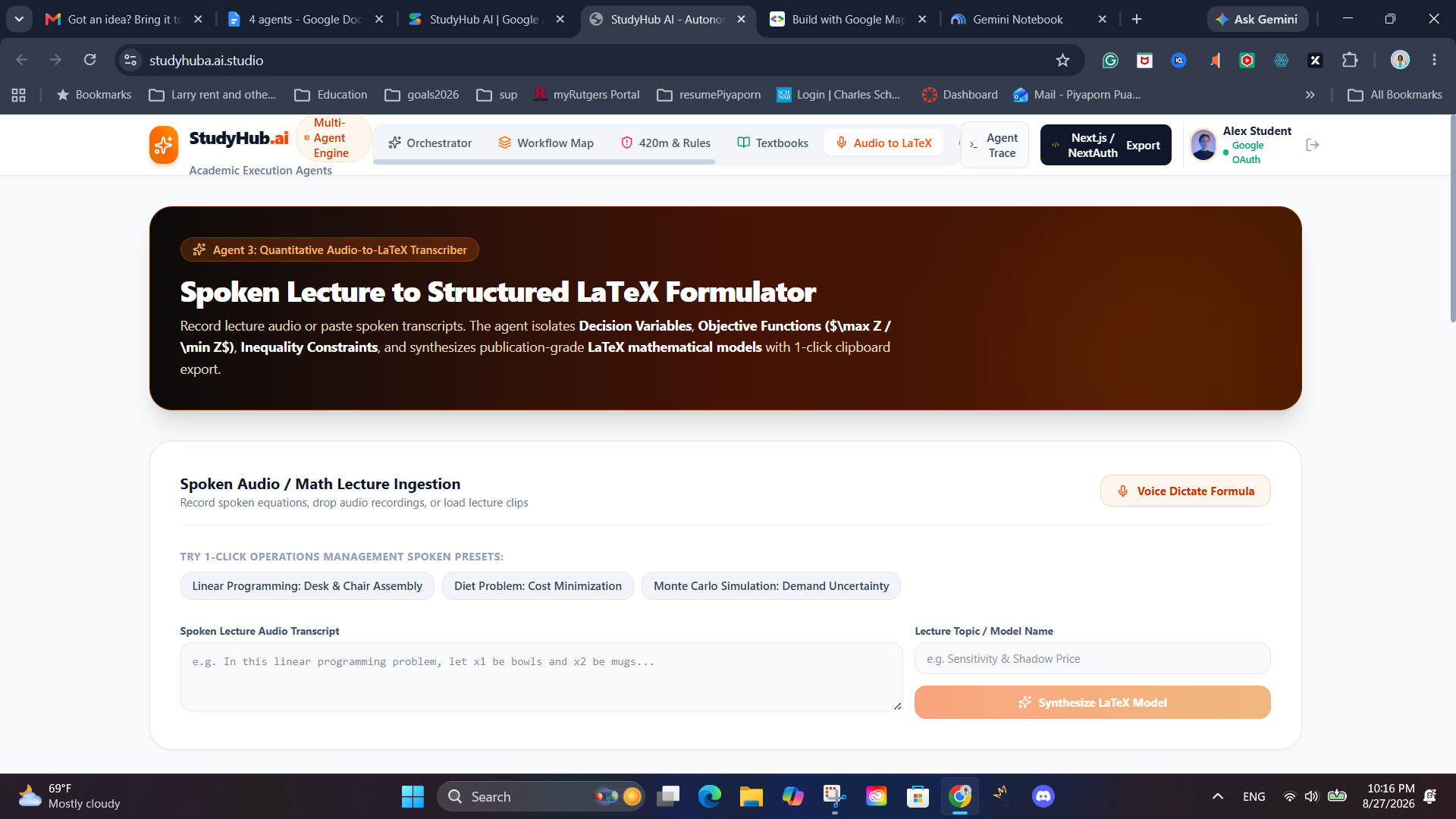
Lecture to LaTex
-
Result
-
Scheduling
-
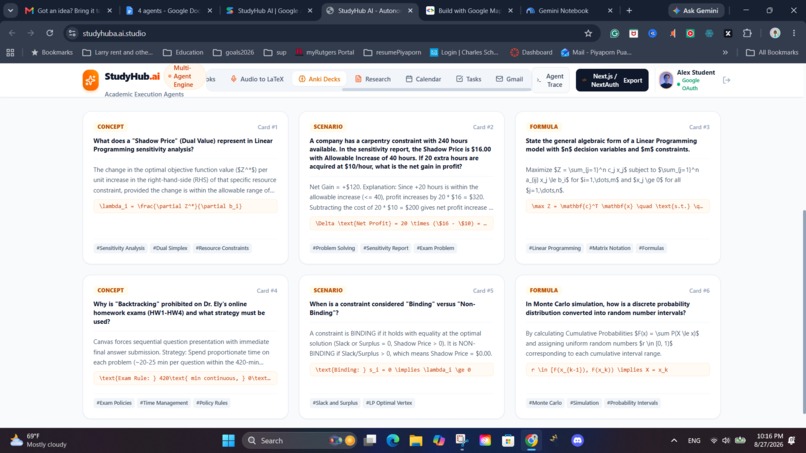
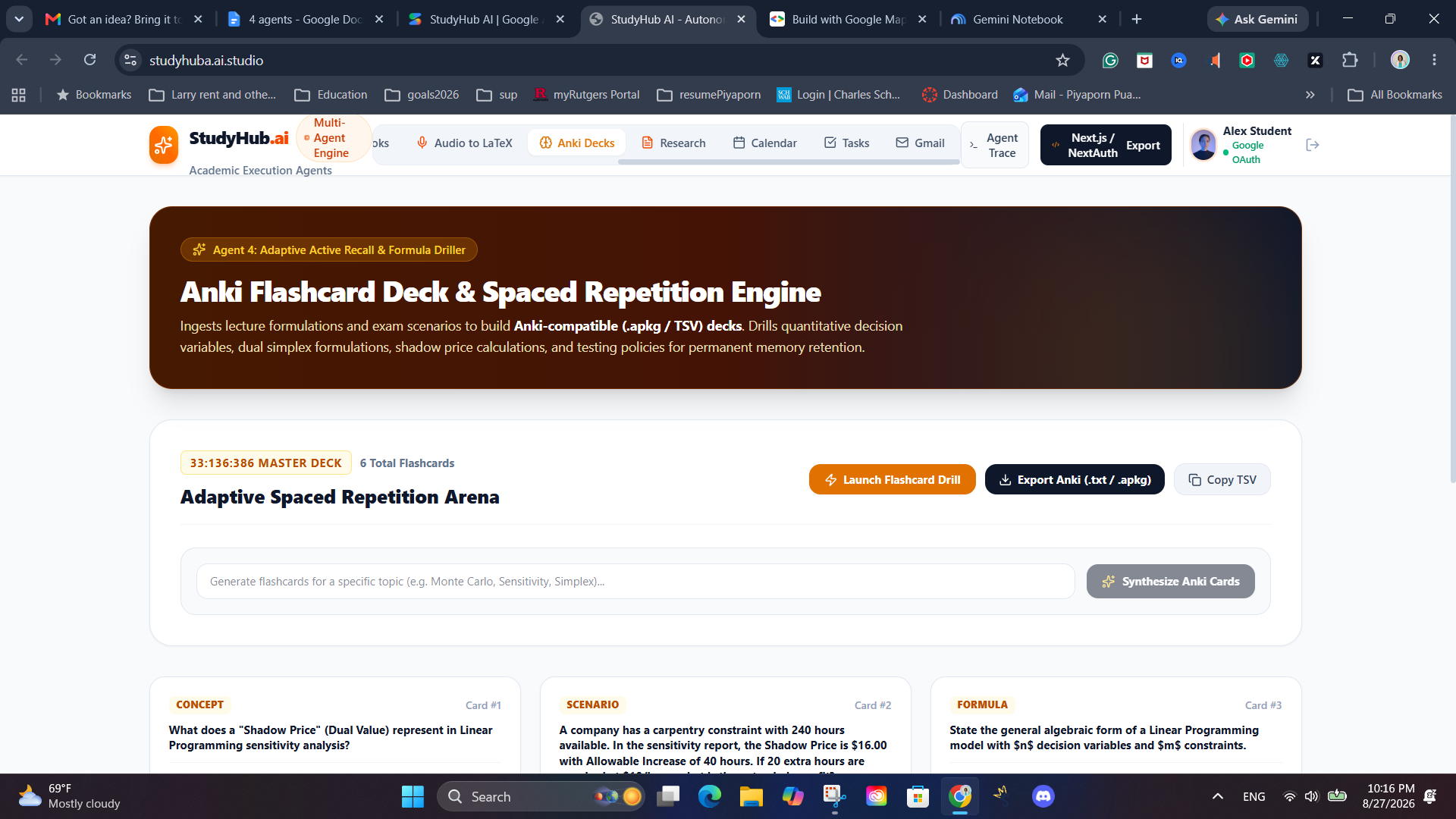
Flashcard builder
-
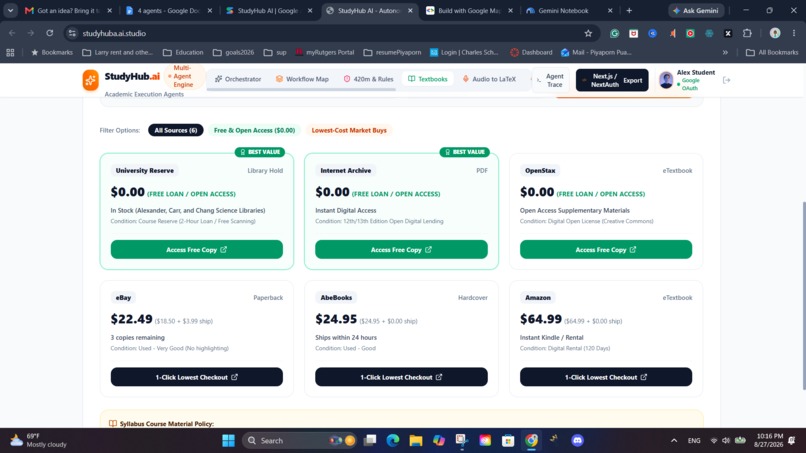
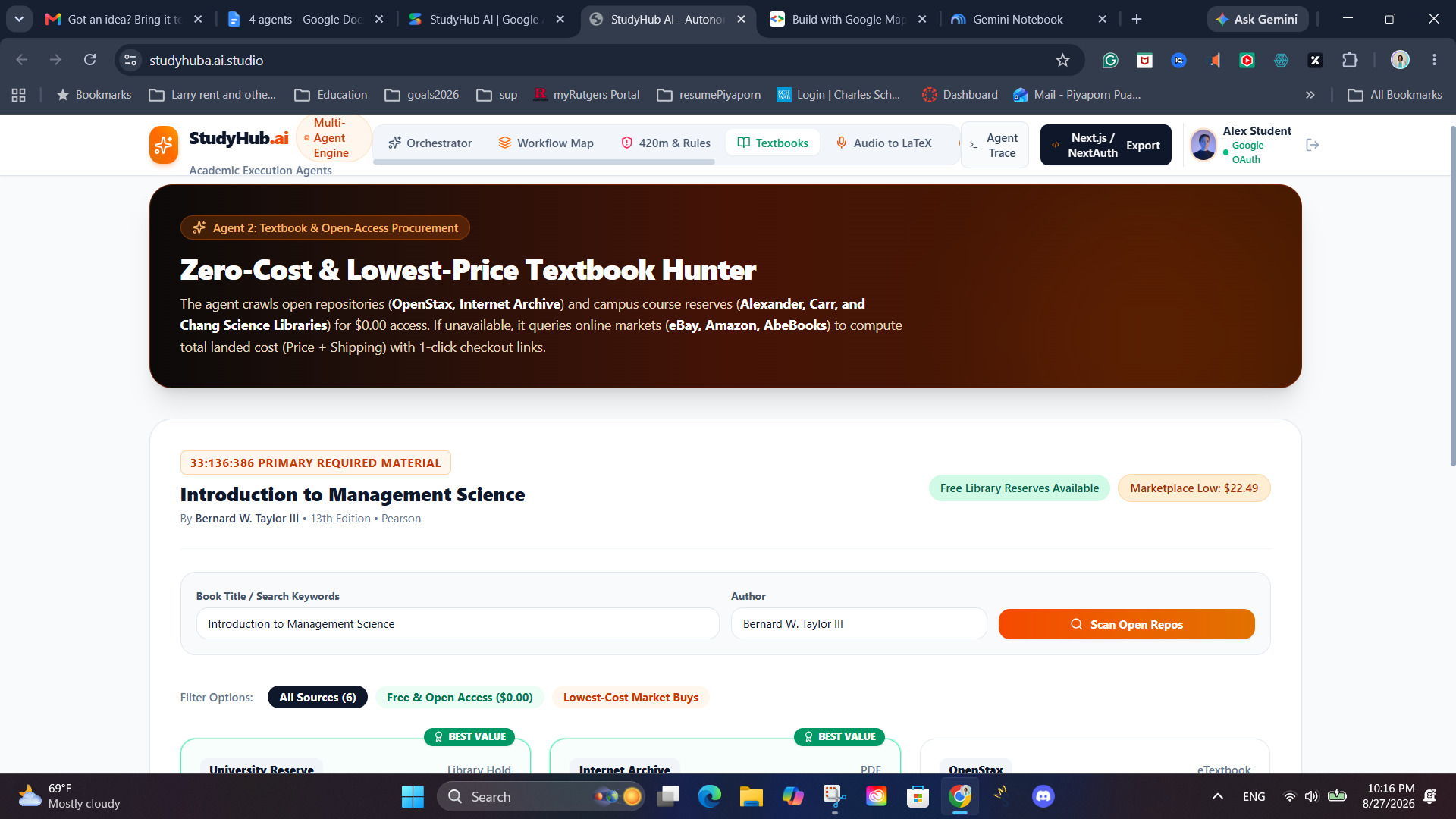
Book search result
-
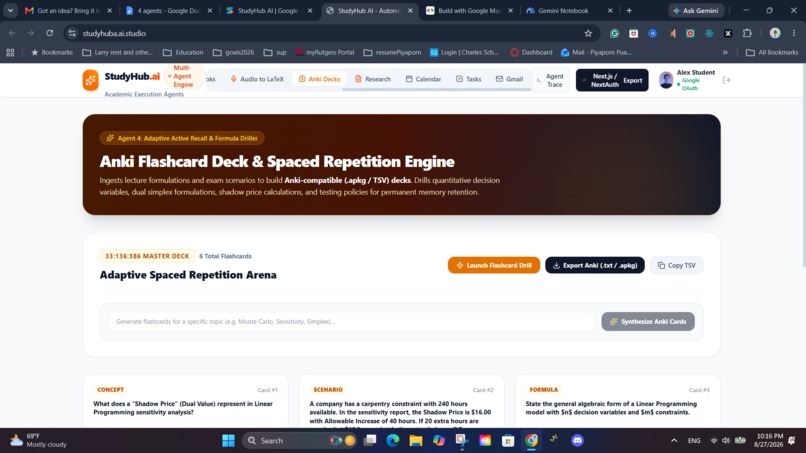
Anki Flashcard
-
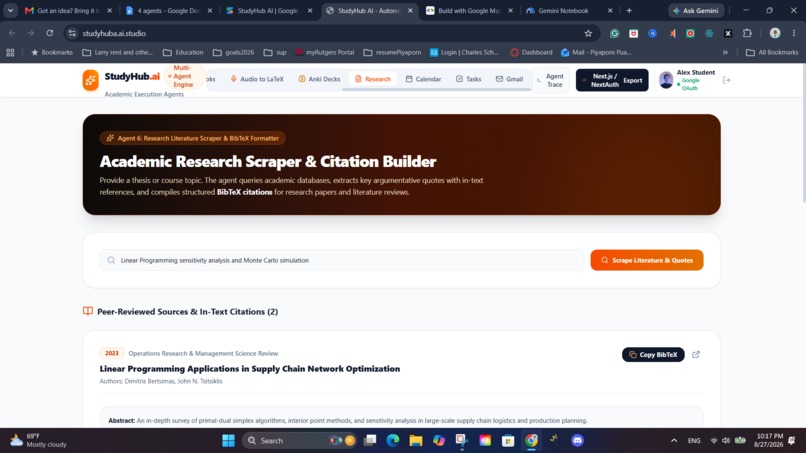
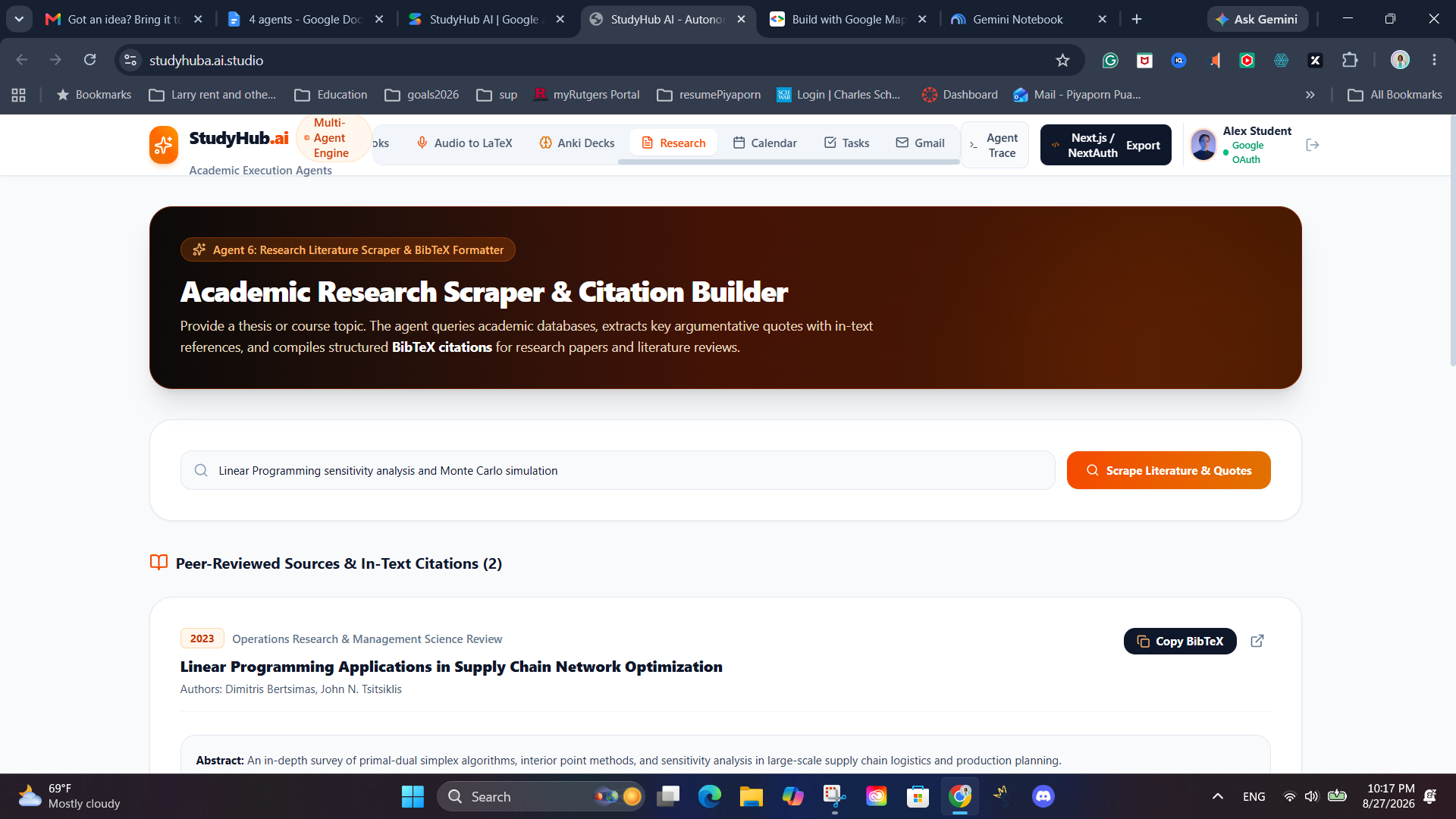
Research
-
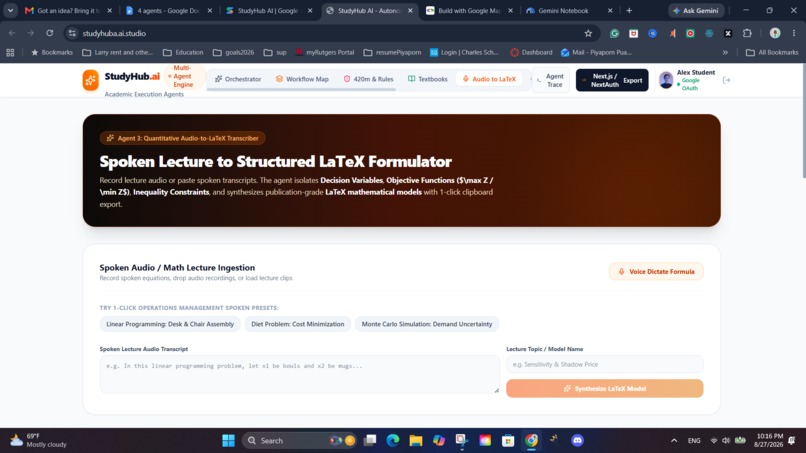
Lecture to LaTex
-
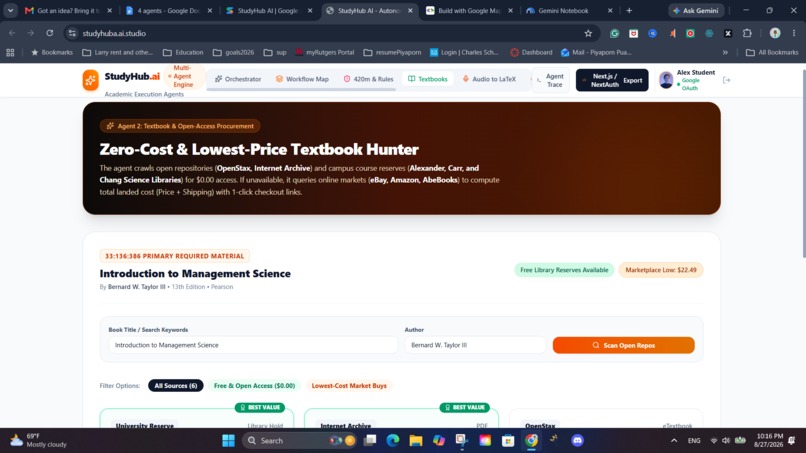
Textbook finder
Inspiration
I'm a full-time student and a full-time worker. Between shifts, classes, and everything in between, there just isn't a spare hour to sit down and read a 500-page textbook cover to cover, hunt through three different bookstores for the cheapest edition, or manually block out study time around an exam policy buried on page 12 of a syllabus PDF. I love learning, but I just don't have the time.
Every semester looked the same: I'd lose the first few weeks just setting up to study, and figuring out what book I actually needed, whether a free version existed anywhere, when the exam windows were, and how I was supposed to fit a 7-hour uninterrupted test block into a week I don't fully control. By the time all of that was sorted, half my study time was already gone.
I built StudyHub AI because I wanted the busywork gone, not just organized. Not another app where I still have to think, but one where I upload a syllabus once, and the logistics handle themselves.
What it does
StudyHub AI is an autonomous multi-agent academic assistant. I upload or paste a syllabus, and five specialist agents take it from there:
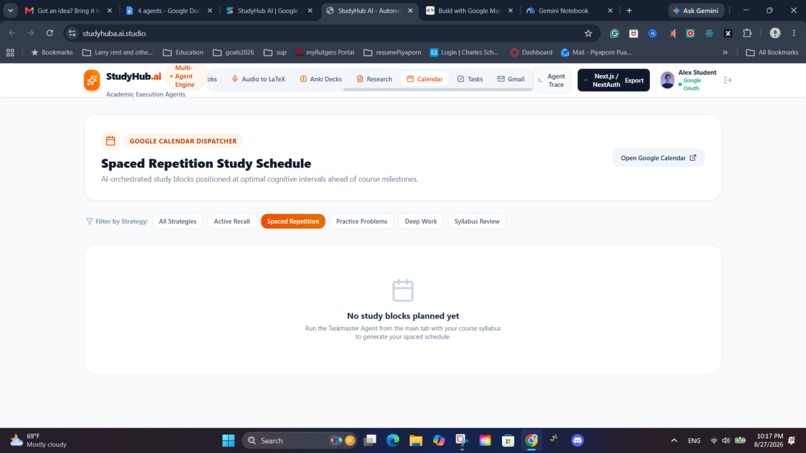
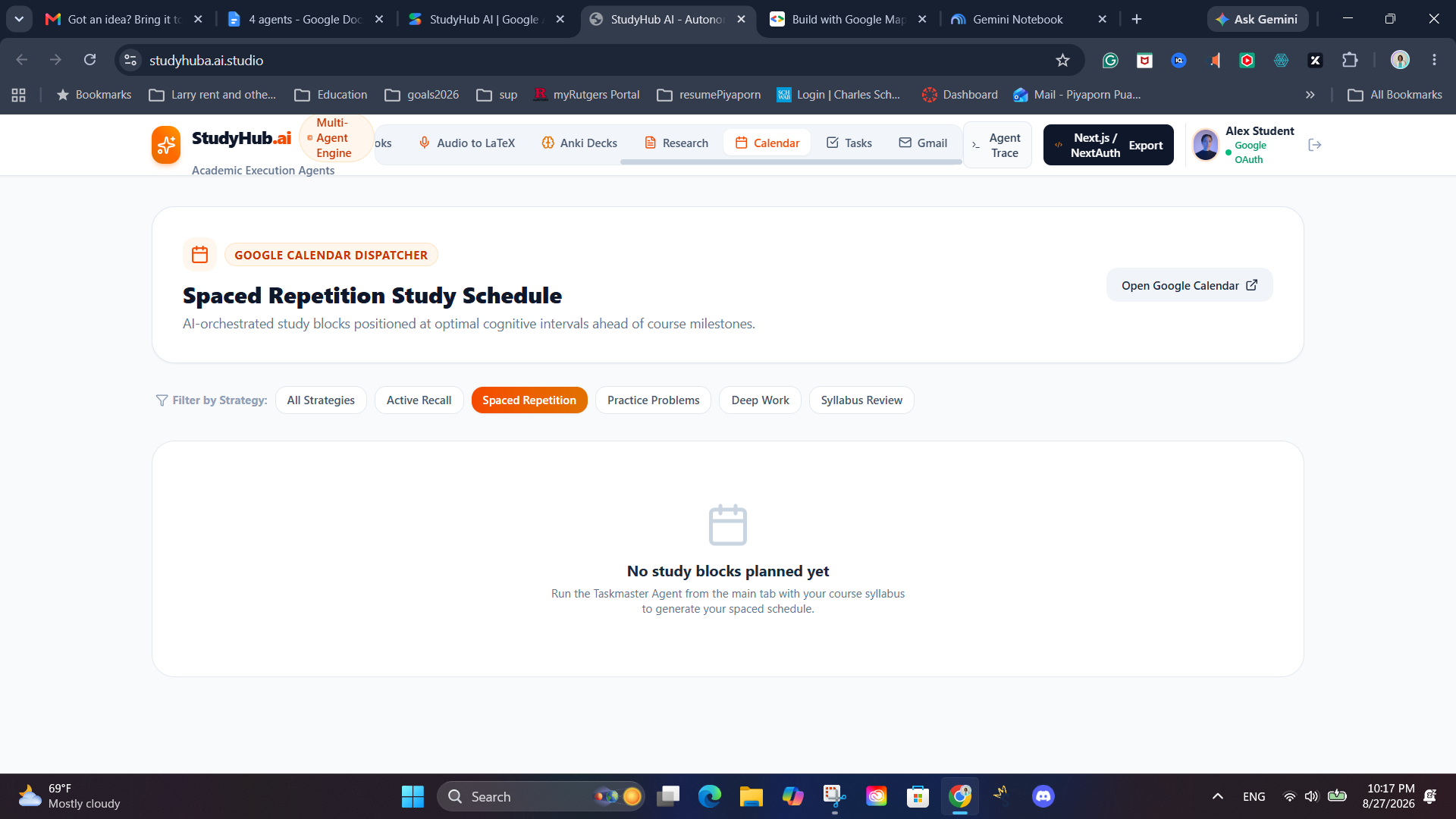
- Schedule & 420-Minute Rule Injector — reads exam policies and reserves genuine, uninterrupted study/exam-prep blocks directly on my real Google Calendar.
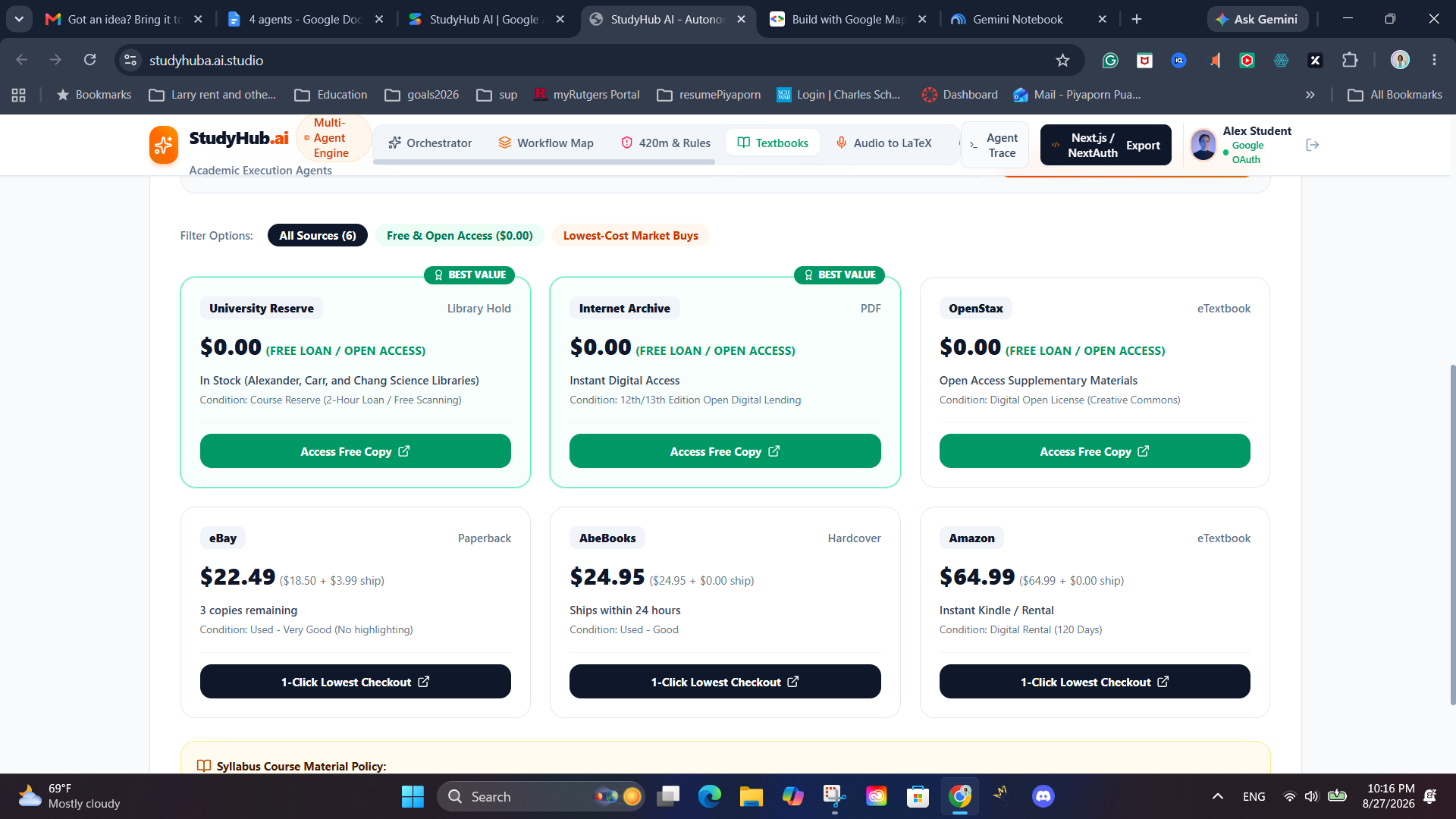
- Zero-Cost Textbook Procurement — searches OpenStax, CrossRef, and other open-access sources for a free or cheaper alternative to the required textbook, and tells me exactly how much I'd save.
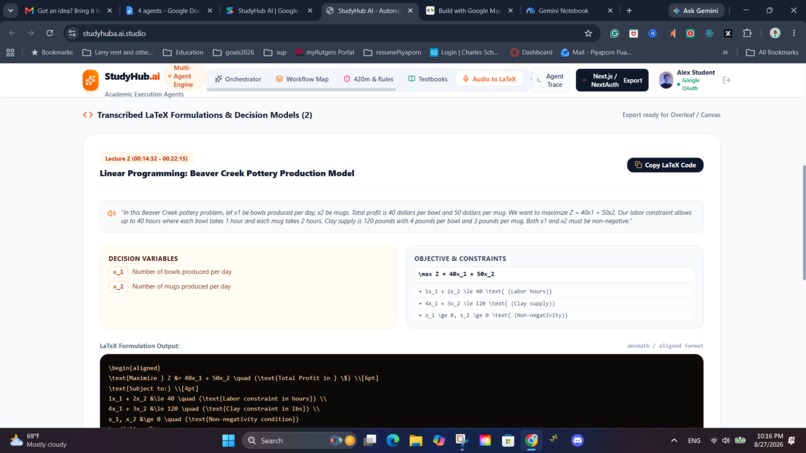
- Audio-to-LaTeX Transcriber — instead of me hand-typing that syntax at midnight.
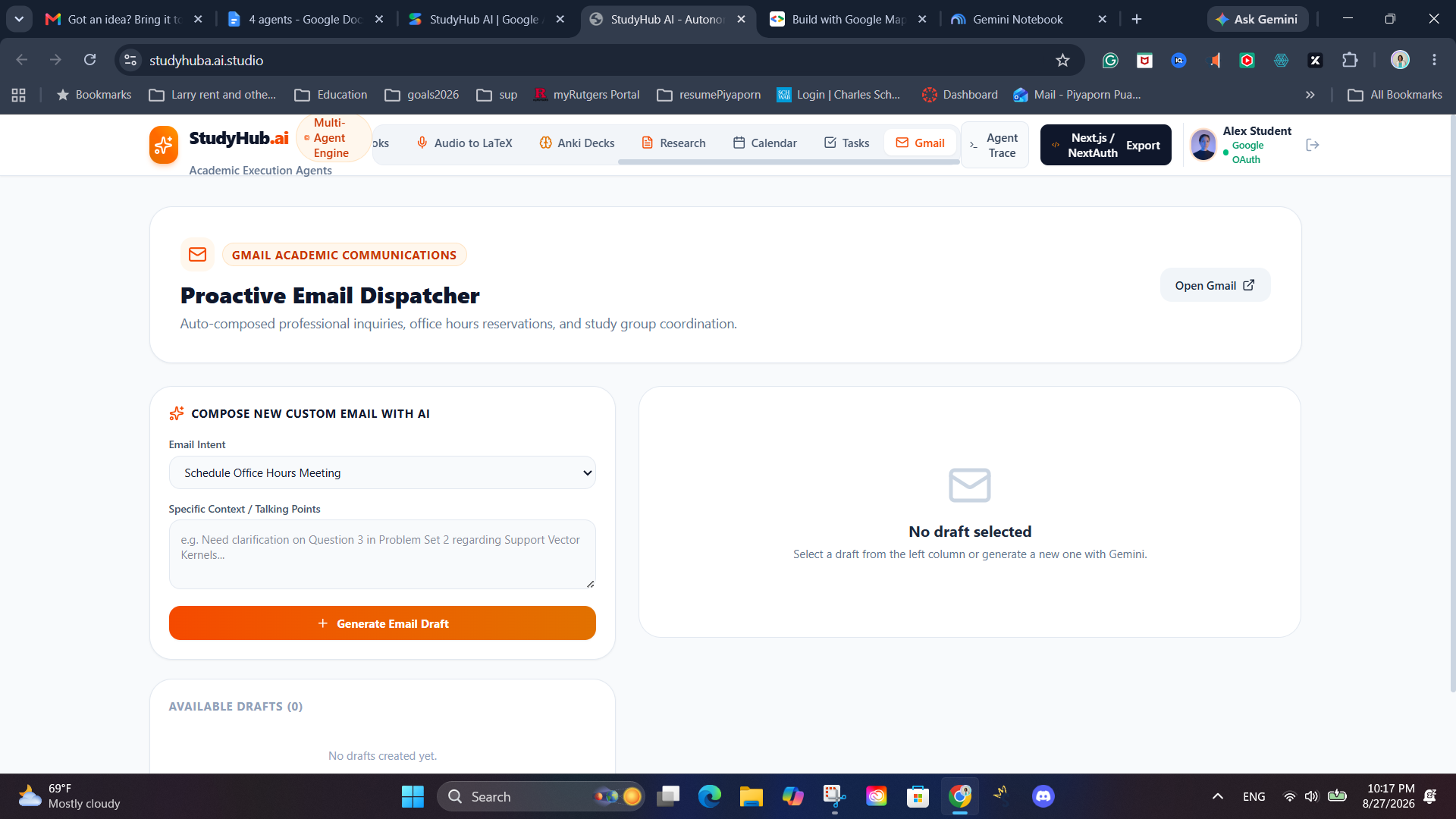
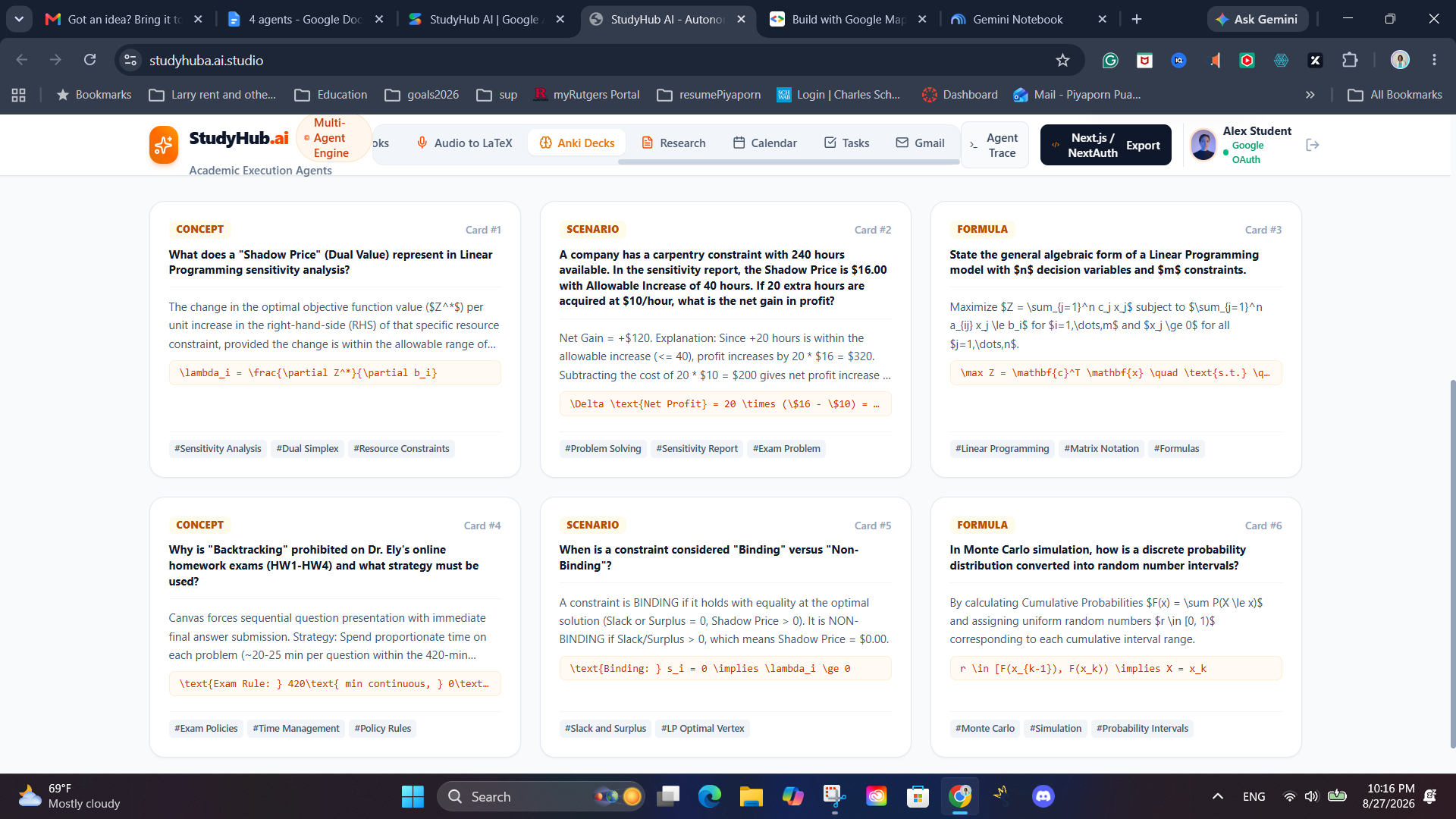
- Active Recall & Anki Deck Builder — turns syllabus topics into spaced-repetition flashcards (SM-2), exportable straight to Anki, with a quiz arena built in.
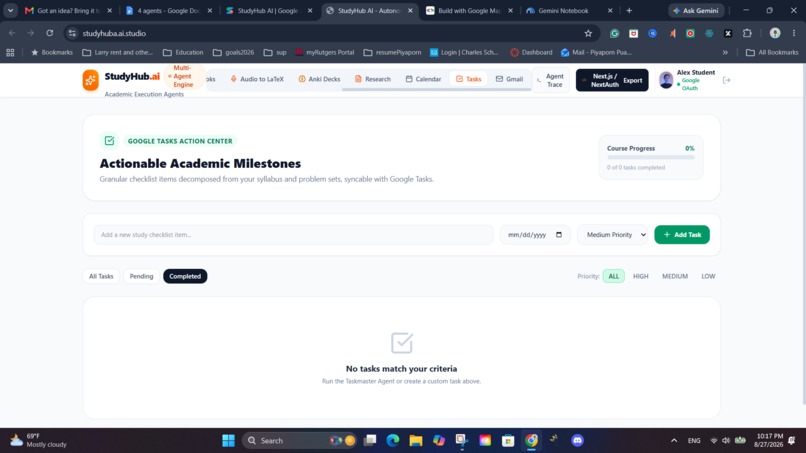
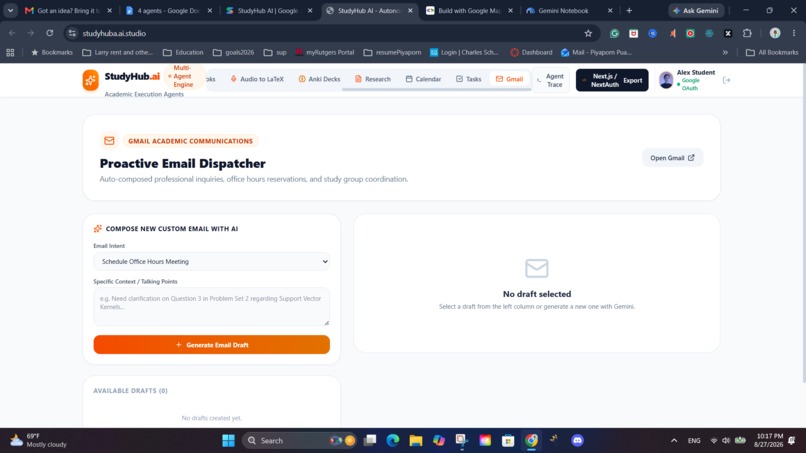
- Policy Guardian & Workspace Dispatcher — audits course rules and syncs real Google Tasks and a real drafted Gmail message to my instructor when one is needed.
How I built it
The frontend is React 19 + TypeScript on Vite, styled with Tailwind. An Express server (server.ts) hosts the API and talks to the Gemini API for every agent call, and from parsing the syllabus into structured data to transcribing audio into LaTeX. Firebase / Cloud Firestore persists each processed course so it's there the next time I log in, and Google Identity Services handles OAuth so the Calendar, Tasks, and Gmail integrations act as me, not a simulation.
The orchestration itself is a single syllabus parse that fans out into five specialist agent calls, each scoped to its own slice of the syllabus data, with results synced back to Google Workspace and Firestore.
Challenges I ran into
For a beginner, everything is slow to learn, but Gemini makes it easy to fix most of the errors. Some functions may not fully work, but at least the big picture is clear.
Getting Gemini to return the same structured JSON shape reliably, across wildly different syllabus formats, took a lot of prompt iteration. If a professor's plain-text schedule and a scanned PDF don't hand you the same signal. Wiring up real OAuth scopes for Calendar, Tasks, and Gmail (instead of faking the integration) meant handling token expiry and permission edge cases I hadn't budgeted time for. And reserving a genuinely uninterrupted 420-minute block without just steamrolling my existing calendar events needed actual conflict-aware logic, not a naive insert.
Underneath all of that was the real constraint: I was building this in the same scraps of time the project exists to give back to me.
What I learned
I learned a lot about how to use Gemini to start the idea, then AI Studio, and how to check the code. How to deploy it to Firebase. How to fix the error. We don't need to wait to be ready. We can learn by building a project. Step by step.
What's next for StudyHub AI
Fixing some tasks is still slow. For example, the book search is still not getting more direct, but getting something. Voice-to-LaTeX may need to be fixed for real voice; it may be that the voice recording file is better, and not only for LaTeX but for summarizing.


Log in or sign up for Devpost to join the conversation.