-
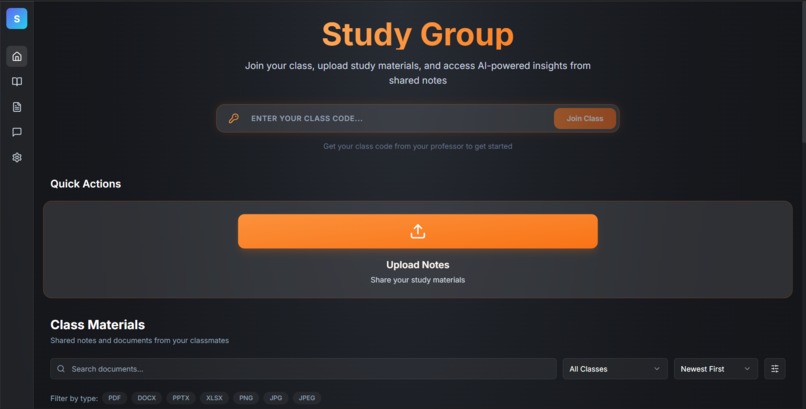
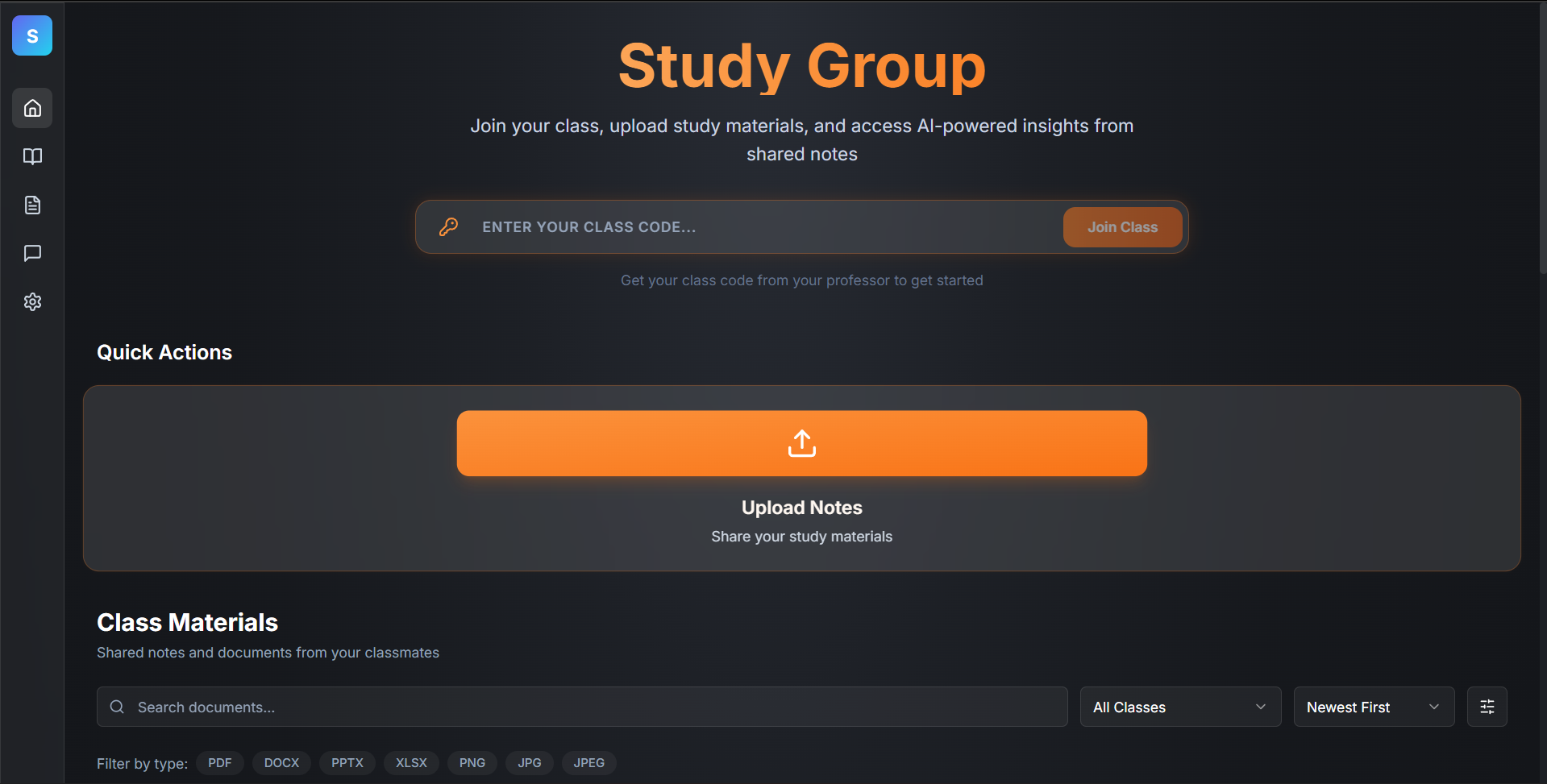
Home
-
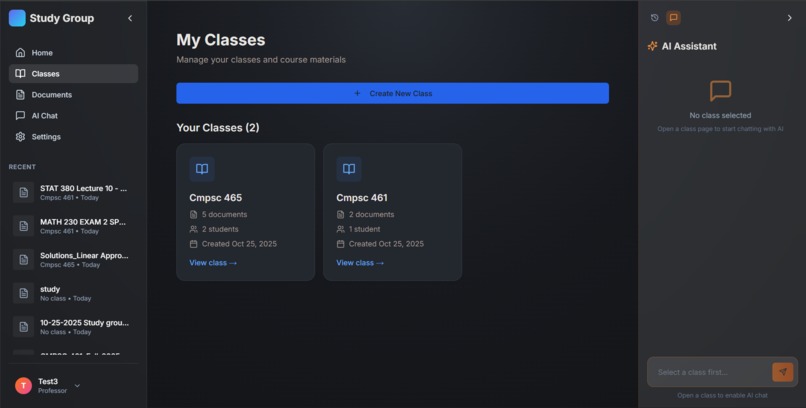
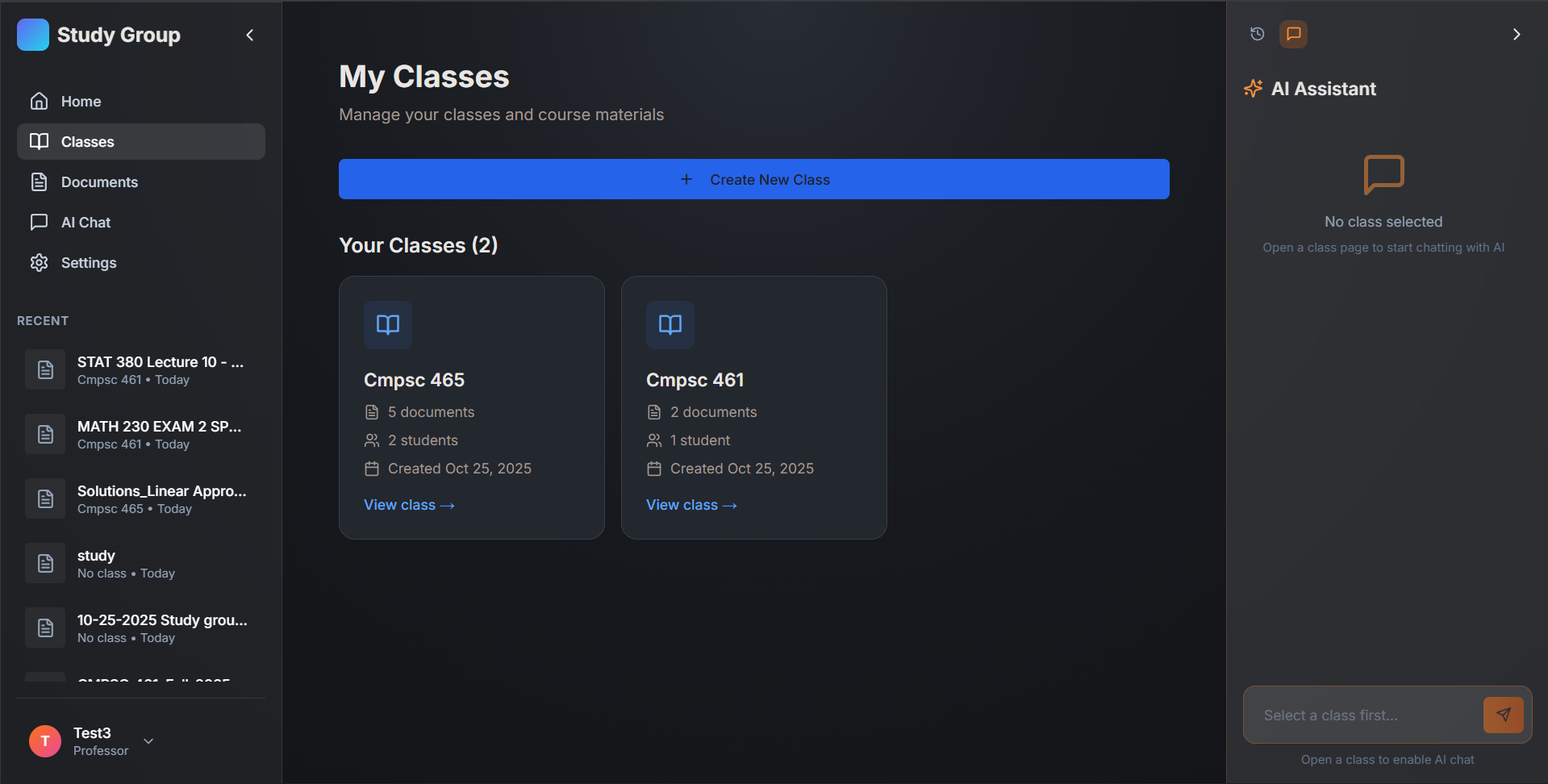
Classes page
-
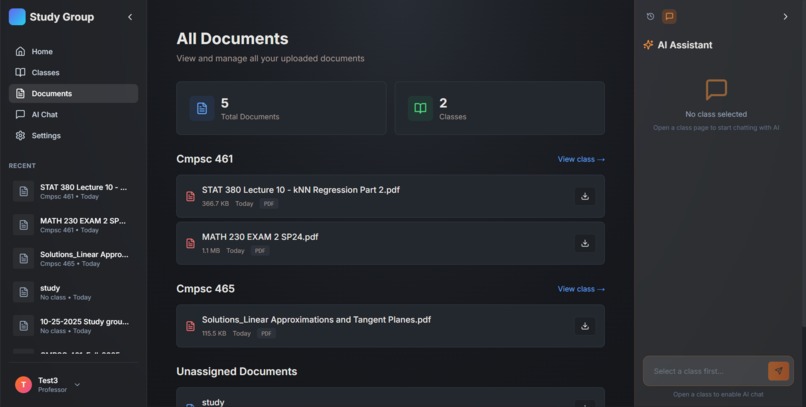
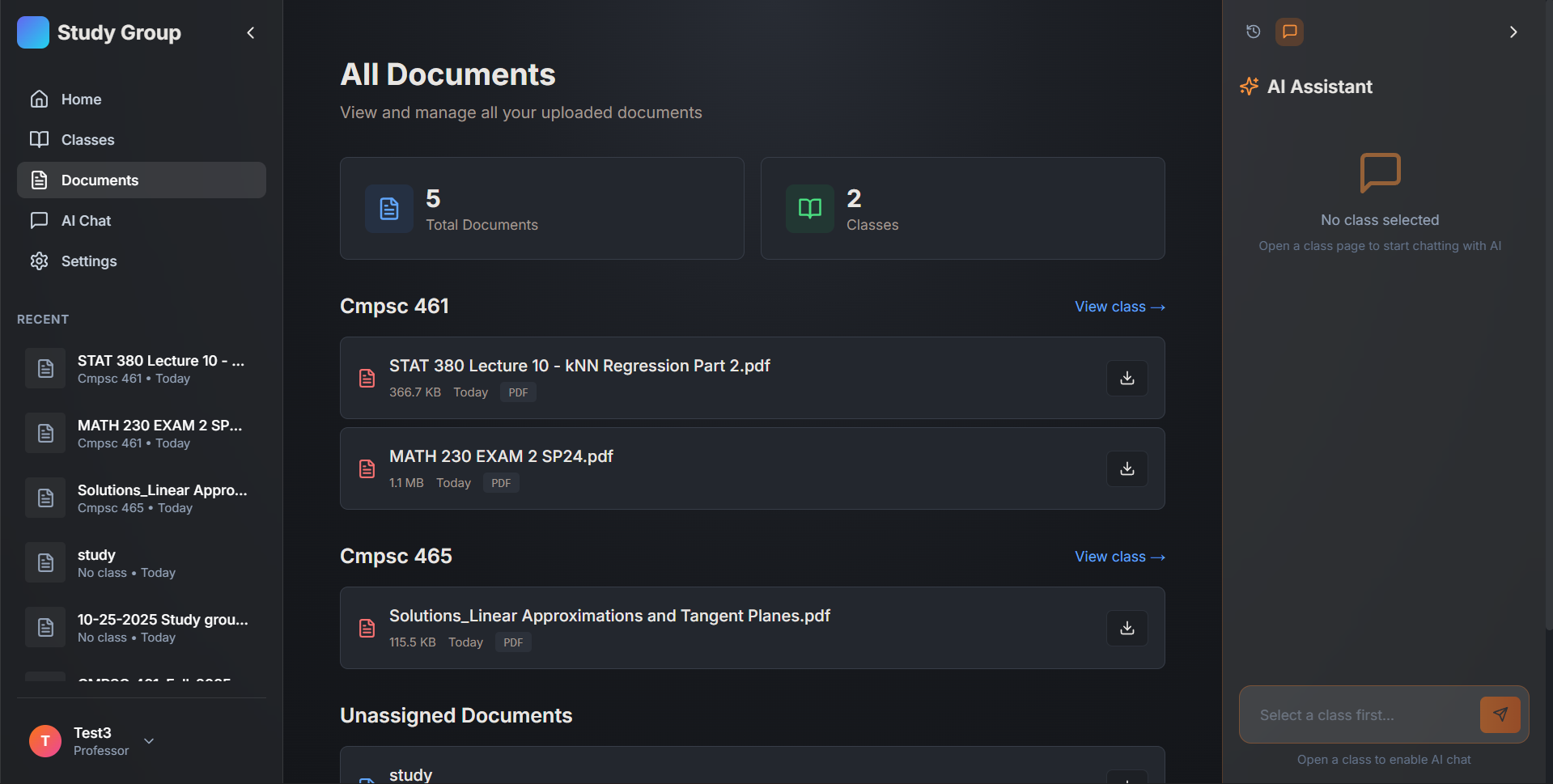
Documents page
-
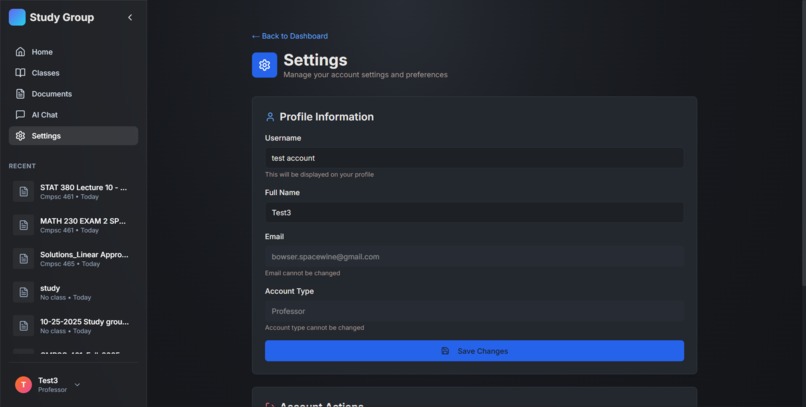
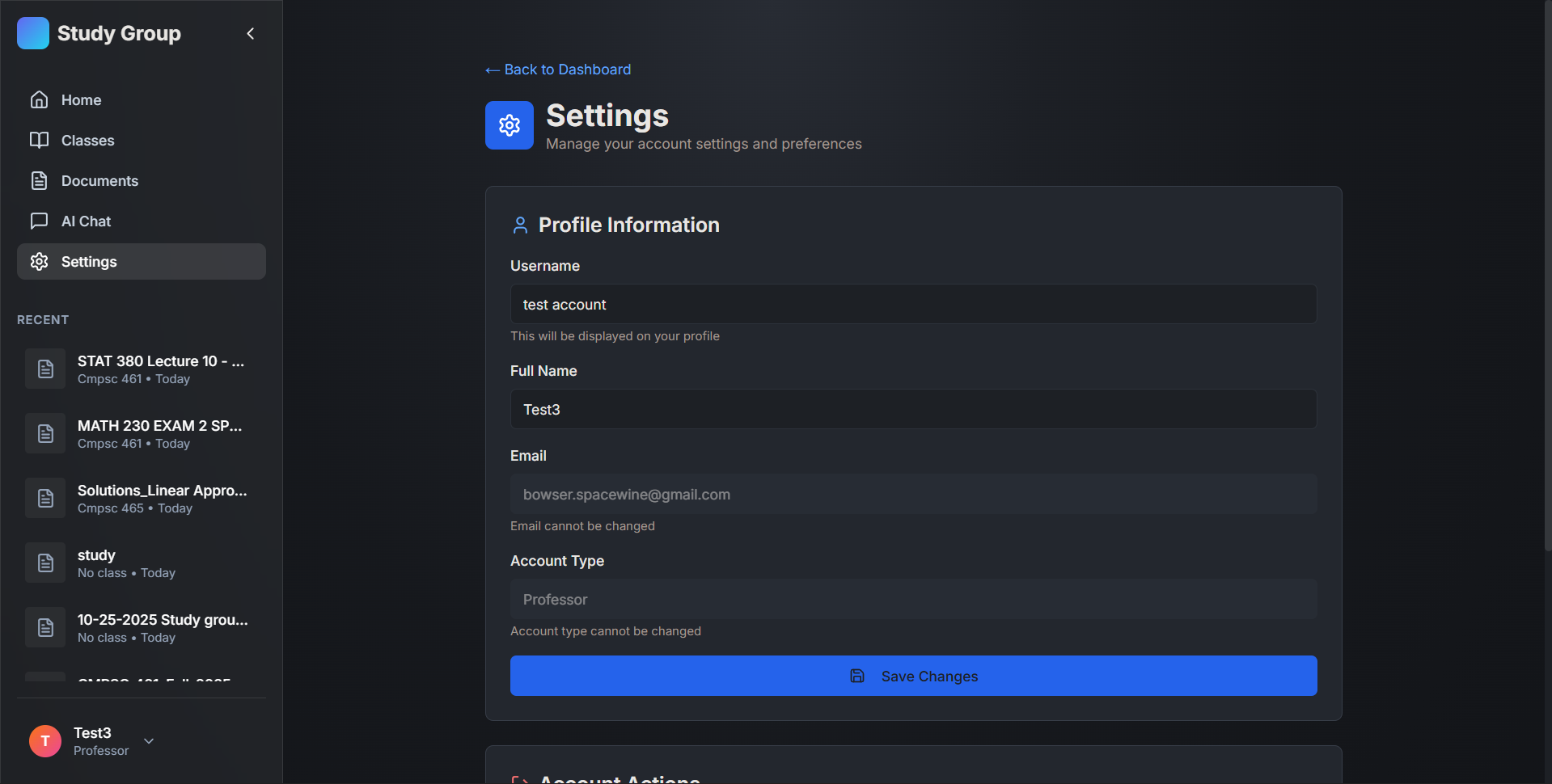
Setting page
Inspiration
This was sort of inspired by learning services that end just up just being more of a pathway to academic violation. We wanted to create a focused, private, and intelligent hub that cuts through the noise. Instead of searching the entire internet and getting generic answers, students needed a tool that could answer questions based only on their specific course materials, acting like a 24/7 TA that has read every single document for the class.
What it does
"Study group" is an intelligent, private study hub for college classes. Students join a class-specific space using a unique code. Inside, they can upload, view, and comment on all course materials. The core feature is a custom-trained AI chatbot that is indexed exclusively on the documents within that hub. Students can ask it complex questions, request summaries, or define concepts, and it will provide answers sourced directly from their class notes, lectures, and textbooks. For academic integrity, professors have a control panel to set "guardrails" on the AI, preventing it from, for instance, answering direct homework questions.
How we built it
Frontend: We used Next.js to create a responsive and intuitive user interface for students and professors. Backend, Database & Auth: Supabase was the backbone of our project. It provided a powerful PostgreSQL database, secure user authentication, file storage for documents, and Row Level Security (RLS) which was critical for ensuring that data from one class was completely isolated from another. The AI Brain: The AI service is a separate Python application built with the FastAPI framework for high performance. We used LangChain/LlamaIndex to orchestrate the Retrieval-Augmented Generation (RAG) pipeline. When a document is uploaded, it's chunked, converted into vector embeddings, and stored in a FAISS vector store, which is incredibly fast for in-memory similarity searches.
Challenges we ran into
Our main challenge was ensuring the accuracy and relevance of the AI's answers. Fine-tuning the RAG pipeline to retrieve the correct document chunks. Another significant hurdle was ensuring our Supabase RLS policies were watertight from the start was a top priority to guarantee user privacy and data security.
Accomplishments that we're proud of
We are incredibly proud of creating a truly context-aware AI assistant for students. Seeing it accurately answer a complex question by citing specific paragraphs from three different lecture slides was a huge success. The implementation of a multi-tenant architecture with strict data isolation using Supabase RLS is a major technical accomplishment. This ensures that the platform is secure and scalable from day one.
What we learned
This project taught us the power of Retrieval-Augmented Generation for creating domain-specific AI applications. We also gained experience in building a full-stack app quickly by using powerful tools like Supabase for the backend and FastAPI for our AI microservice.
What's next for Study group
We want to expand the platform's learning tools. Our immediate roadmap includes implementing Flashcards and Quizzes that can be auto-generated by the AI from the course materials. To foster engagement, we plan to introduce a Leaderboard and an XP (Experience Points) system, rewarding students for uploading helpful notes, asking great questions, and performing well on quizzes. Inspiration
Built With
- next.js
- python

Log in or sign up for Devpost to join the conversation.