-
-
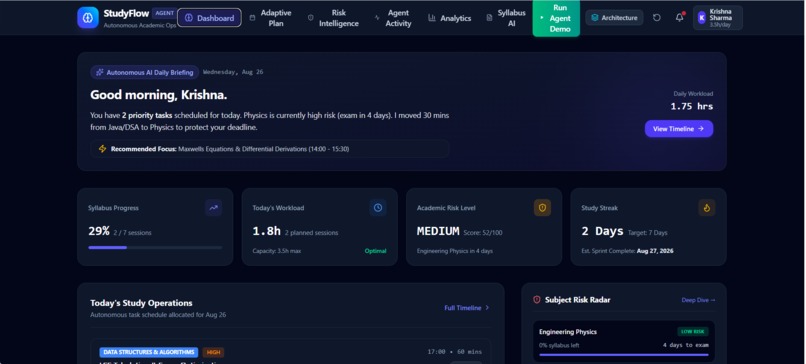
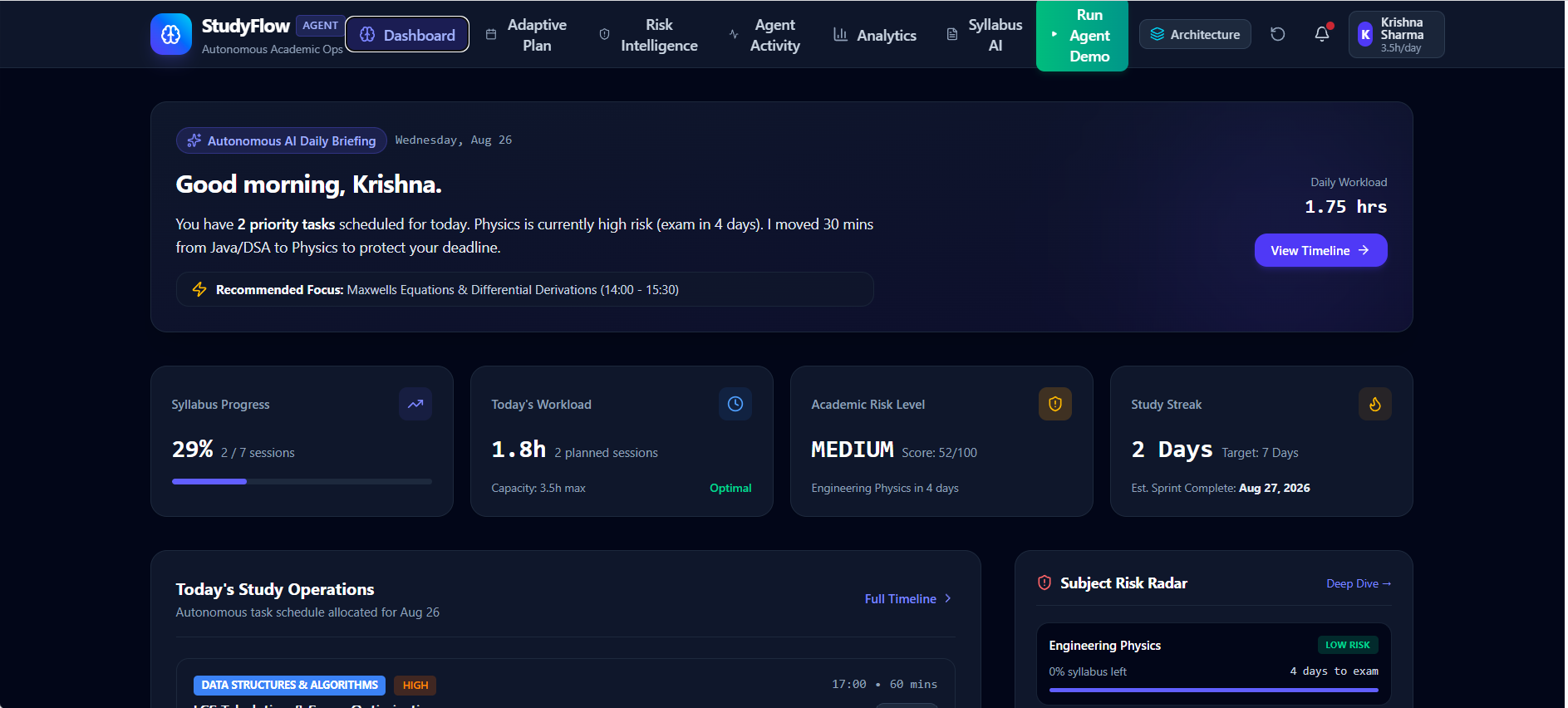
StudyFlow dashboard with AI-powered daily briefing and adaptive workload overview.
-
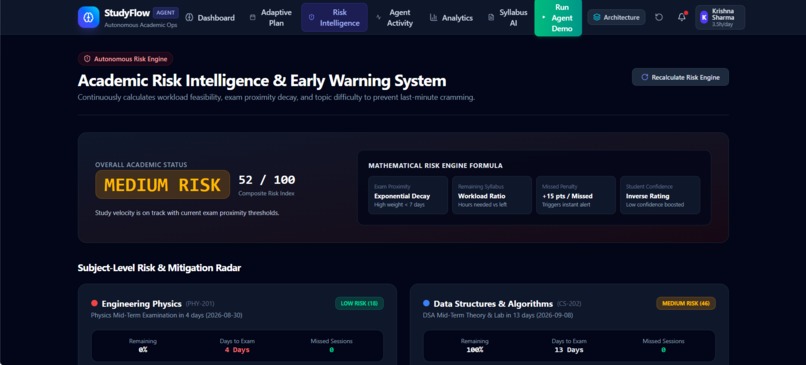
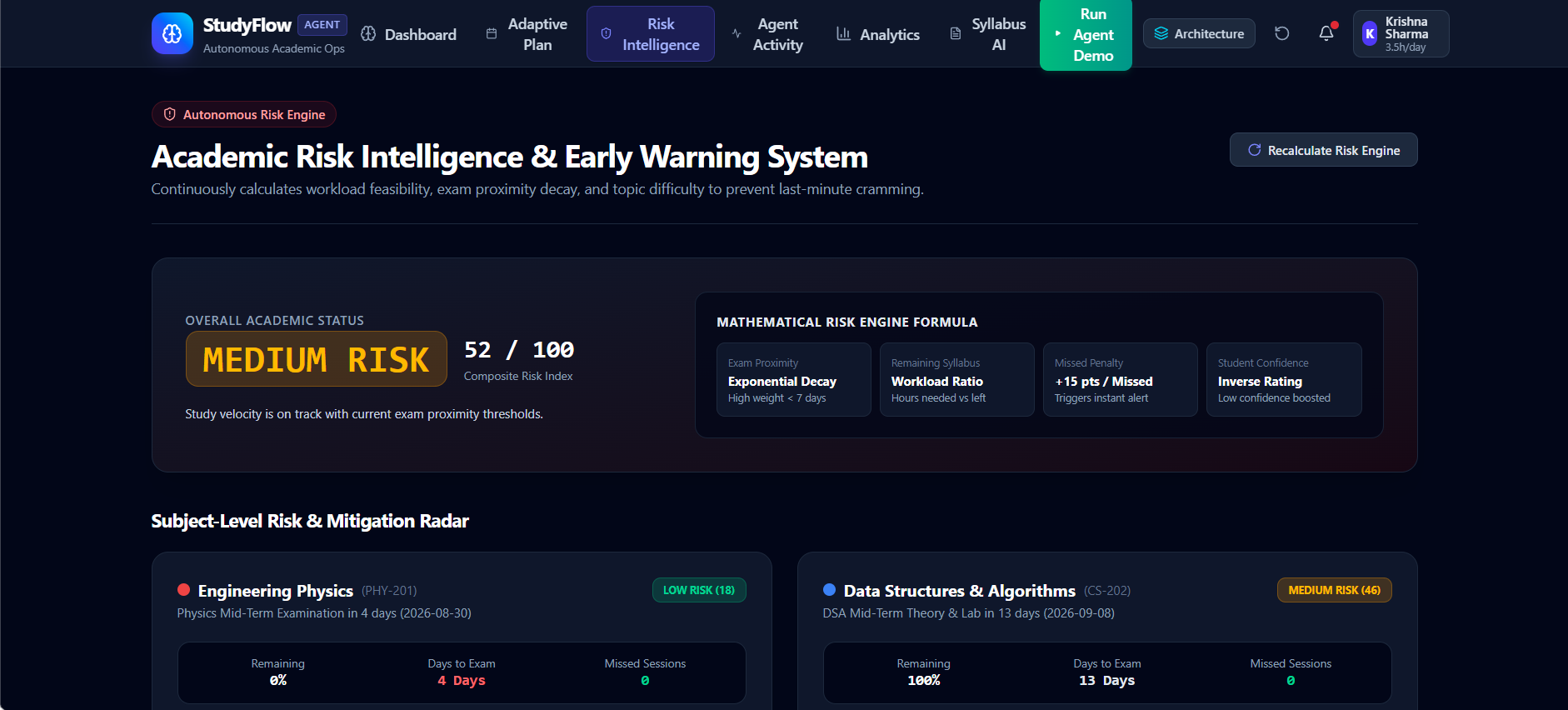
Risk Intelligence dashboard showing subject-level academic risk and mitigation insights.
-
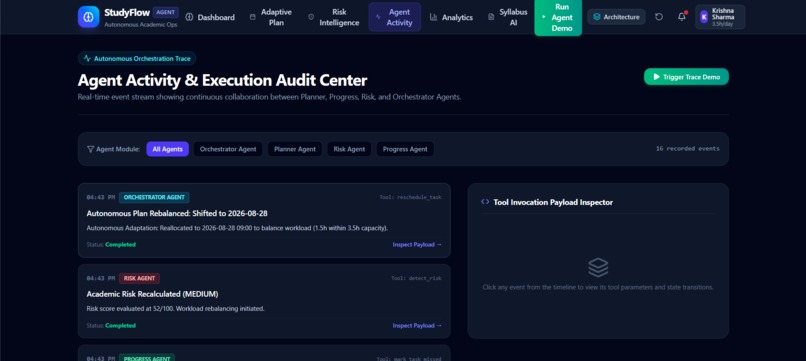
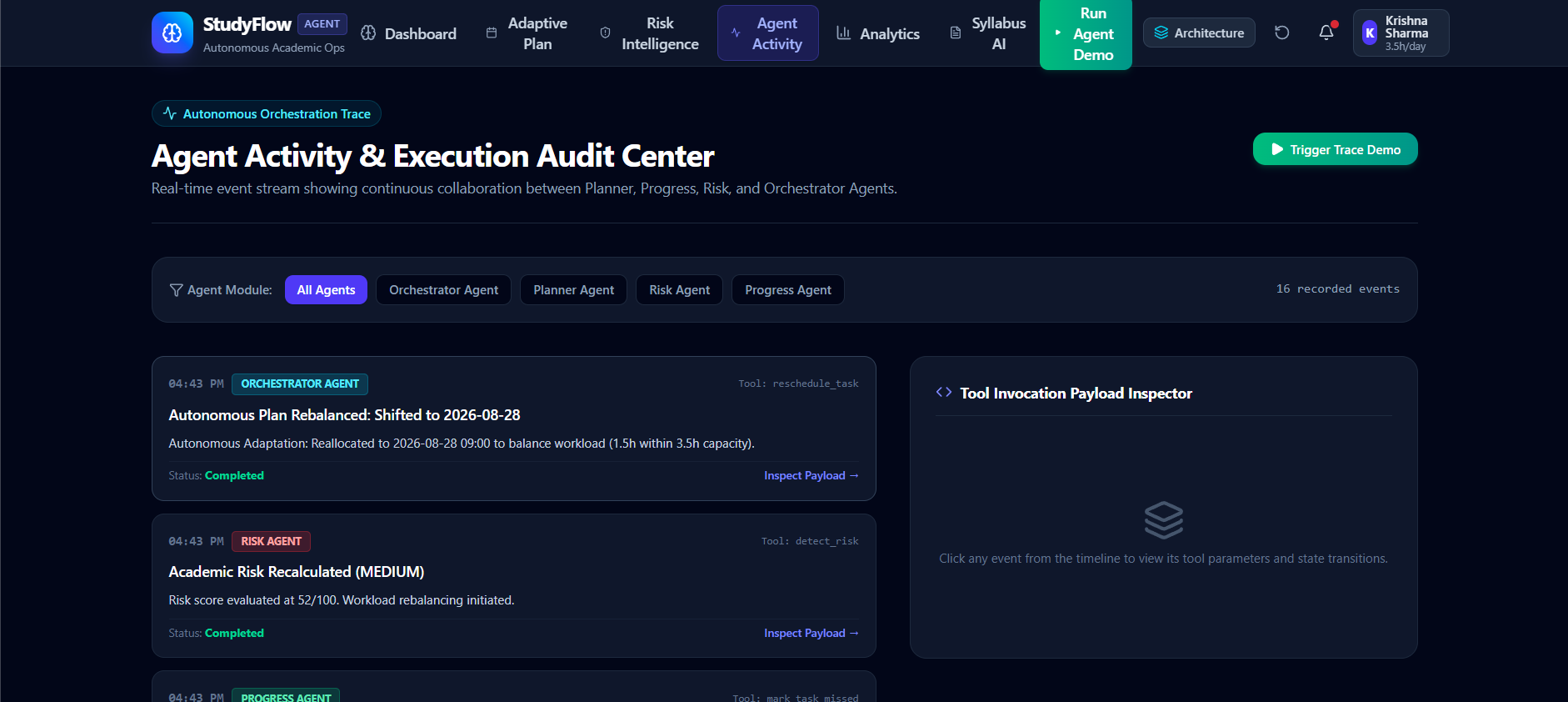
Agent Activity audit center showing autonomous agent actions and execution traces.
Inspiration
Students often create study timetables, but real academic life constantly changes. Missed sessions, upcoming exams, changing priorities, and uneven progress can quickly make a static timetable useless. Study Flow was created to solve this problem by making academic planning adaptive and proactive.
What is Study Flow?
Study Flow is an AI-powered autonomous academic operations agent. Instead of only generating a timetable, it continuously analyzes study progress, upcoming exams, workload, missed tasks, and academic risk to help students decide what to study next.
The system provides an adaptive study plan, subject-level risk intelligence, progress tracking, and an agent activity audit center. When a task is missed or an important deadline gets closer, the system can simulate an autonomous rebalancing of the study plan.
How It Works
Study Flow uses multiple agent roles:
- Planner Agent — creates and adjusts the study schedule.
- Progress Agent — tracks completed and missed sessions.
- Risk Agent — evaluates academic risk based on exam proximity, workload, progress, and missed tasks.
- Orchestrator Agent — coordinates agent actions and triggers plan rebalancing.
The Agent Activity section provides an execution trace so users can understand what action was taken and why.
Key Features
- Adaptive study planning and timeline
- Autonomous task rebalancing
- Subject-level academic risk detection
- Progress and workload analytics
- Missed-task detection
- Agent activity and execution audit
- Syllabus and subject management
- Daily AI academic briefing
- Interactive dashboard
How We Built It
The application was built as a modern web application with a React/TypeScript frontend and a Node.js/Express backend. Google Gemini is used for the AI/agent functionality, while the application architecture separates agent tools, planning logic, risk analysis, state management, and UI components.
The project was developed and prototyped using Google AI Studio and synchronized with GitHub for version control.
Challenges
One of the main challenges was making the application demonstrate an actual agent workflow instead of looking like a static dashboard. We therefore designed explicit agent roles and an activity trace showing state transitions such as detecting a missed task, evaluating risk, rebalancing the schedule, and creating a notification.
Another challenge was keeping the system functional and understandable while presenting complex autonomous behavior through a simple student-facing interface.
What We Learned
Building Study Flow helped us understand how AI agents can move beyond simple text generation and participate in multi-step workflows. We learned how agent tools, state transitions, risk evaluation, and adaptive planning can work together to create a more useful academic assistant.
Future Improvements
Future versions could integrate real calendars, reminders, authentication, persistent cloud storage, richer syllabus parsing, personalized learning recommendations, and real-time academic data to make Study Flow a complete autonomous academic assistant.

Log in or sign up for Devpost to join the conversation.