Inspiration
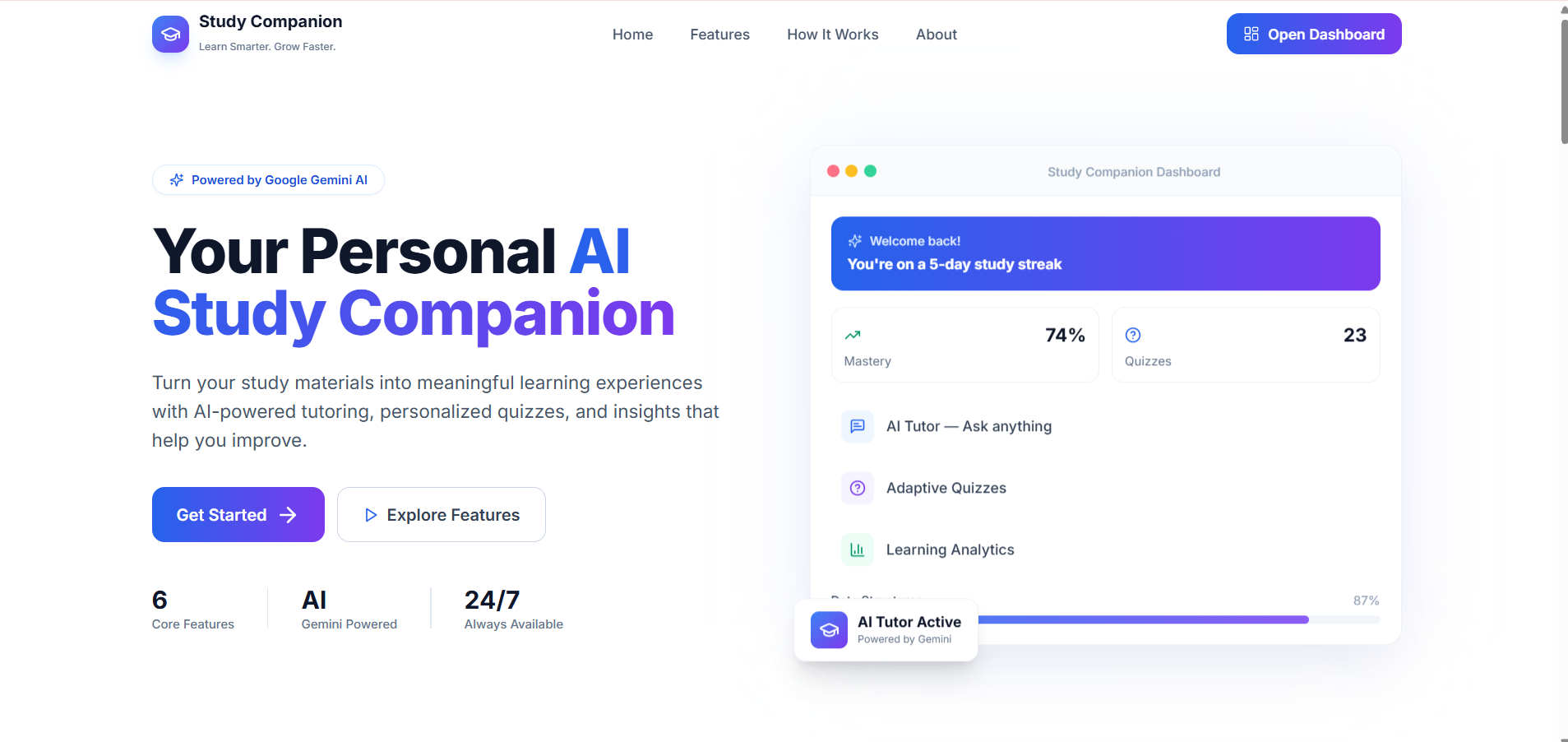
Students often struggle to learn effectively because their study materials are scattered across lecture videos, textbooks, and presentation slides. General AI chatbots may provide answers without connecting them to course materials or identifying a student's learning gaps. We wanted to create Study Companion, an AI-powered learning platform that brings study resources together and makes learning more personalized, reliable, and accessible.
What it does
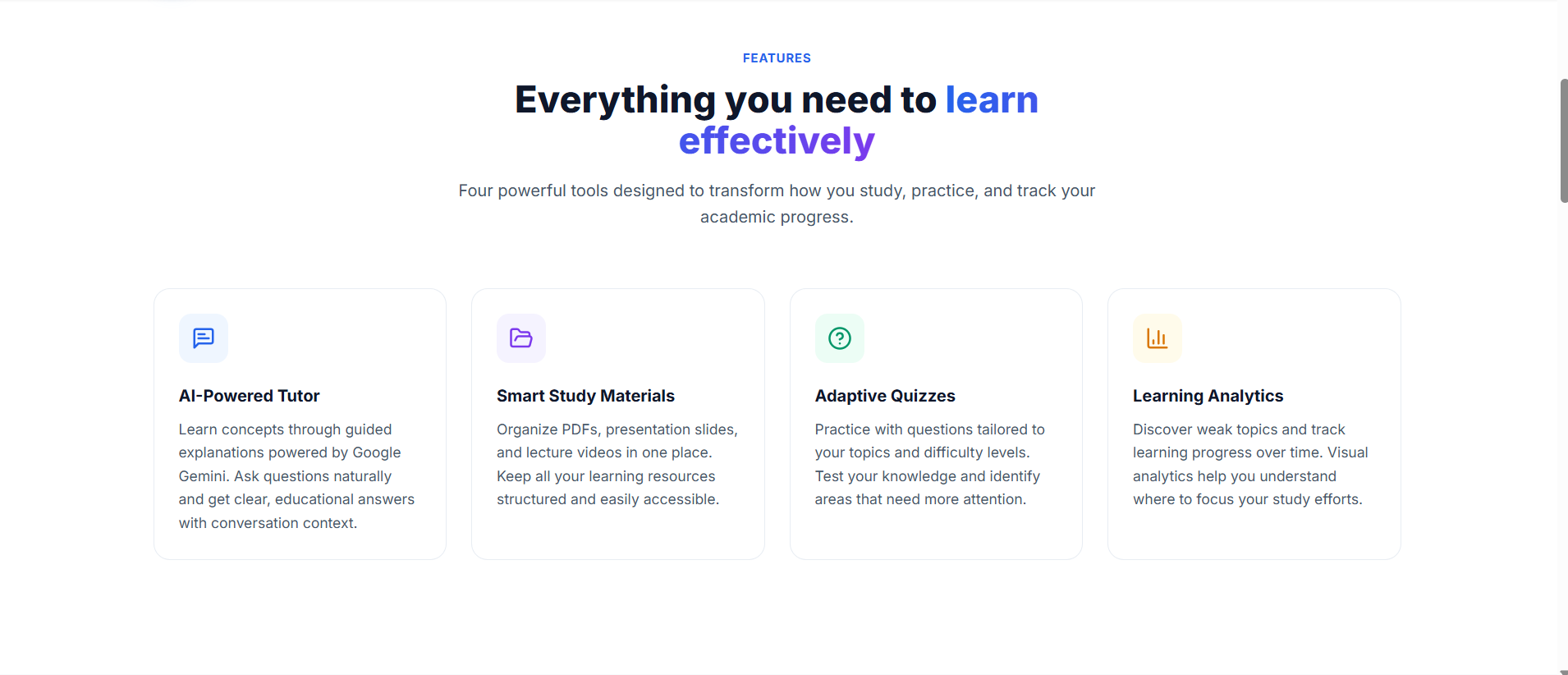
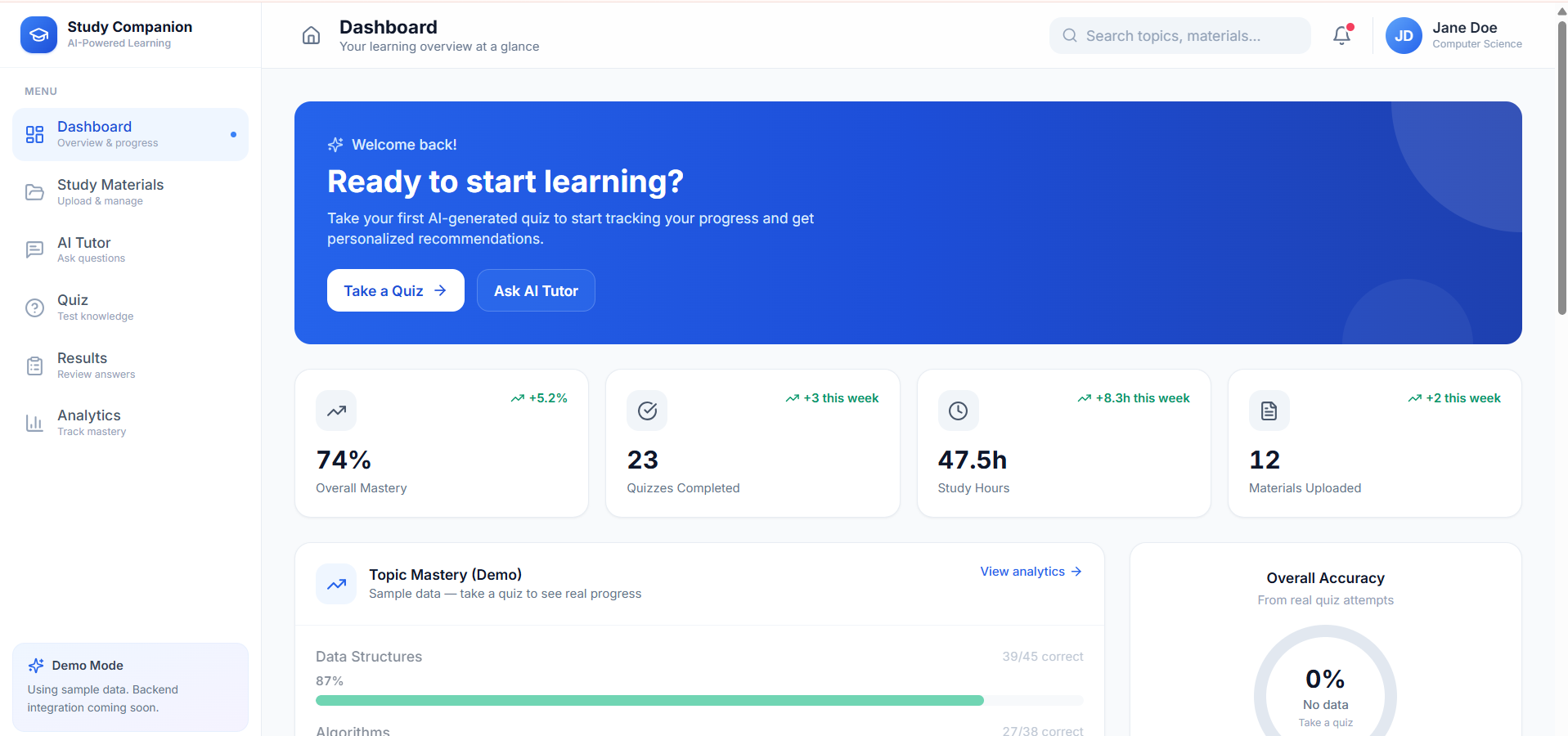
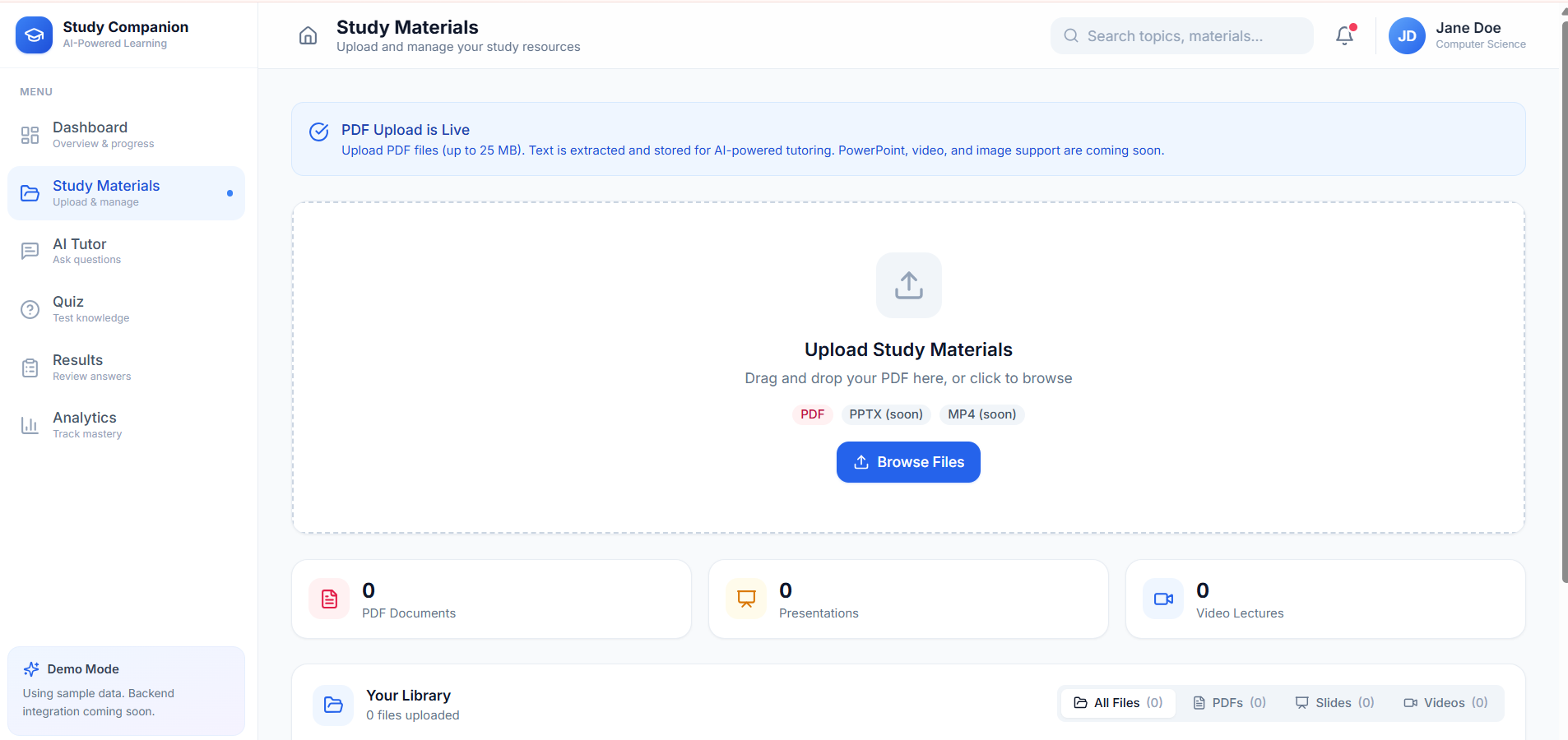
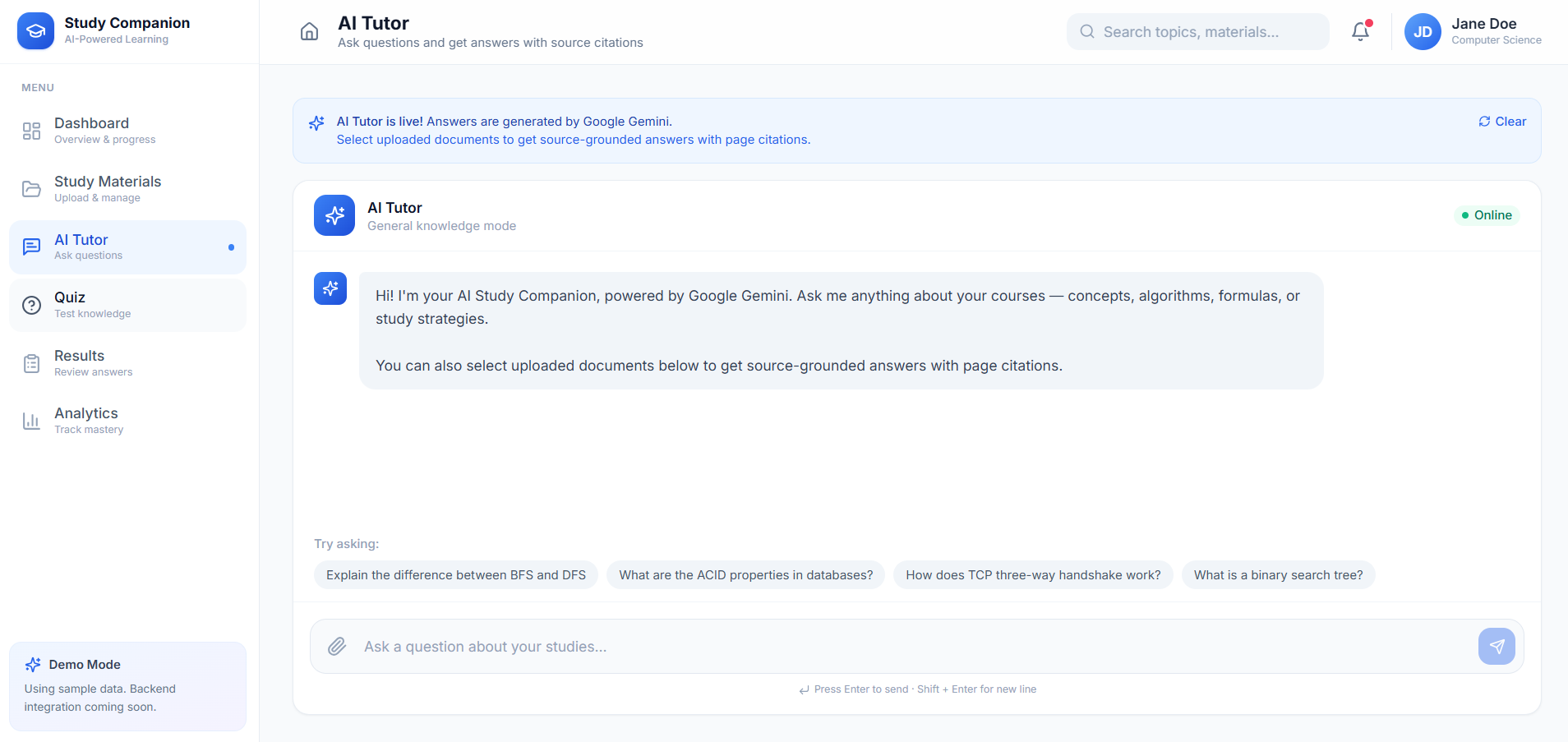
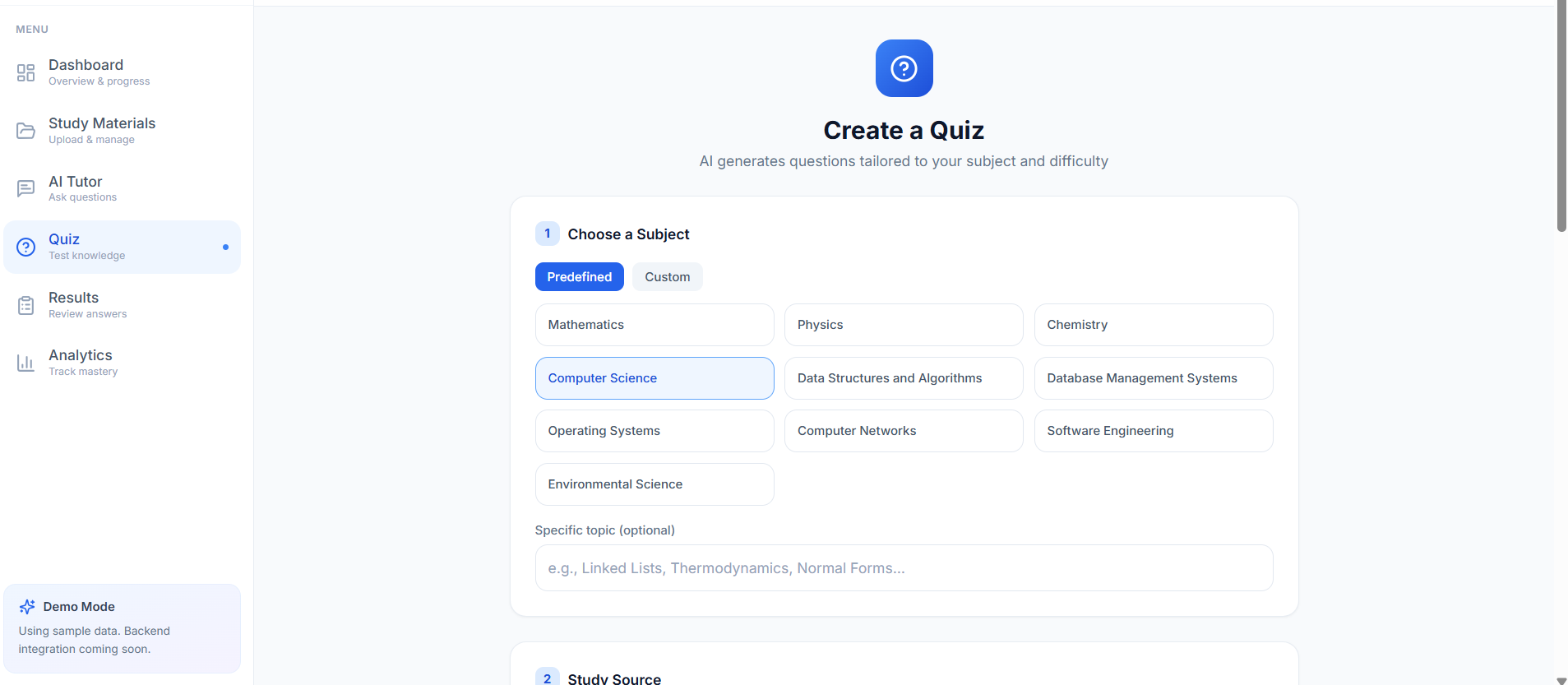
Study Companion aims to transform how students learn through: AI-Powered Tutoring: Answer questions using uploaded study materials with source citations. Multimodal Learning: Bring together PDFs, presentation slides, and lecture videos. Adaptive Assessments: Generate quizzes based on topics and difficulty levels. Personalized Learning: Identify weak topics and recommend revision activities. Learning Analytics: Track quiz performance, topic mastery, and progress over time.
How we built it
We are developing Study Companion as a web application using React, TypeScript, and Tailwind CSS for the frontend. The planned backend will integrate an AI model for answering questions, processing study materials, retrieving relevant passages, generating quizzes, and maintaining student learning progress through persistent storage. We are following a modular approach, developing the dashboard, study materials interface, AI tutor, quiz system, and analytics as separate components.
Challenges we ran into
One of our biggest challenges is ensuring that AI-generated answers remain grounded in uploaded course materials rather than containing unsupported information. Other challenges include extracting content from different file formats, preserving page numbers and video timestamps for citations, generating accurate and non-repetitive questions, and tracking student mastery across multiple topics. We aim to address these challenges through source-aware retrieval, answer verification, and systematic testing.
Accomplishments that we're proud of
We are proud to have established the initial application structure and designed a unified interface for tutoring, study materials, assessments, and learning analytics. We are also building the project with a focus on modularity and future integration, allowing us to develop individual features incrementally toward a complete personalized learning platform.
What we learned
This project is helping us explore how AI can move beyond basic question-answering to support personalized education. We are learning about full-stack development, document processing, retrieval-augmented generation (RAG), source attribution, quiz generation, and learner modelling. We are also learning that trustworthy AI requires clear source references, accurate assessments, and the ability to identify when uploaded materials do not contain an answer.
What's next for Study Companion
Our next steps are to: Implement backend services, database storage, and secure authentication. Enable real document and lecture processing with source-location tracking. Integrate an AI tutor that retrieves relevant passages and provides verifiable citations. Build adaptive assessments with answer verification and topic-wise mastery tracking. Evaluate answer faithfulness, retrieval quality, quiz accuracy, and learning progress. Explore personalized revision schedules, flashcards, and multilingual explanations. Our long-term goal is to make personalized learning more accessible by giving every student an intelligent study companion that adapts to their needs. Study Companion — Learn Smarter. Grow Faster.
Built With
- ai
- api
- artificial
- database
- express.js
- gemini
- generation
- generative
- html
- intelligence
- javascript
- learning
- machine
- natural
- node.js
- processing
- react
- rest
- retrieval-augmented
- tailwind
- typescript
- visualization

Log in or sign up for Devpost to join the conversation.