Inspiration
As a remote worker in Berlin, I’d waste hours hopping between cafes—some had spotty Wi-Fi, others were too loud, and I never knew if there’d be a power outlet. I wanted a tool that took the guesswork out of finding a productive space, something simple, no-fuss, and accessible to everyone. That’s how Study Cafe Finder was born: for fellow digital nomads, students, and freelancers tired of bad cafe days.
What it does
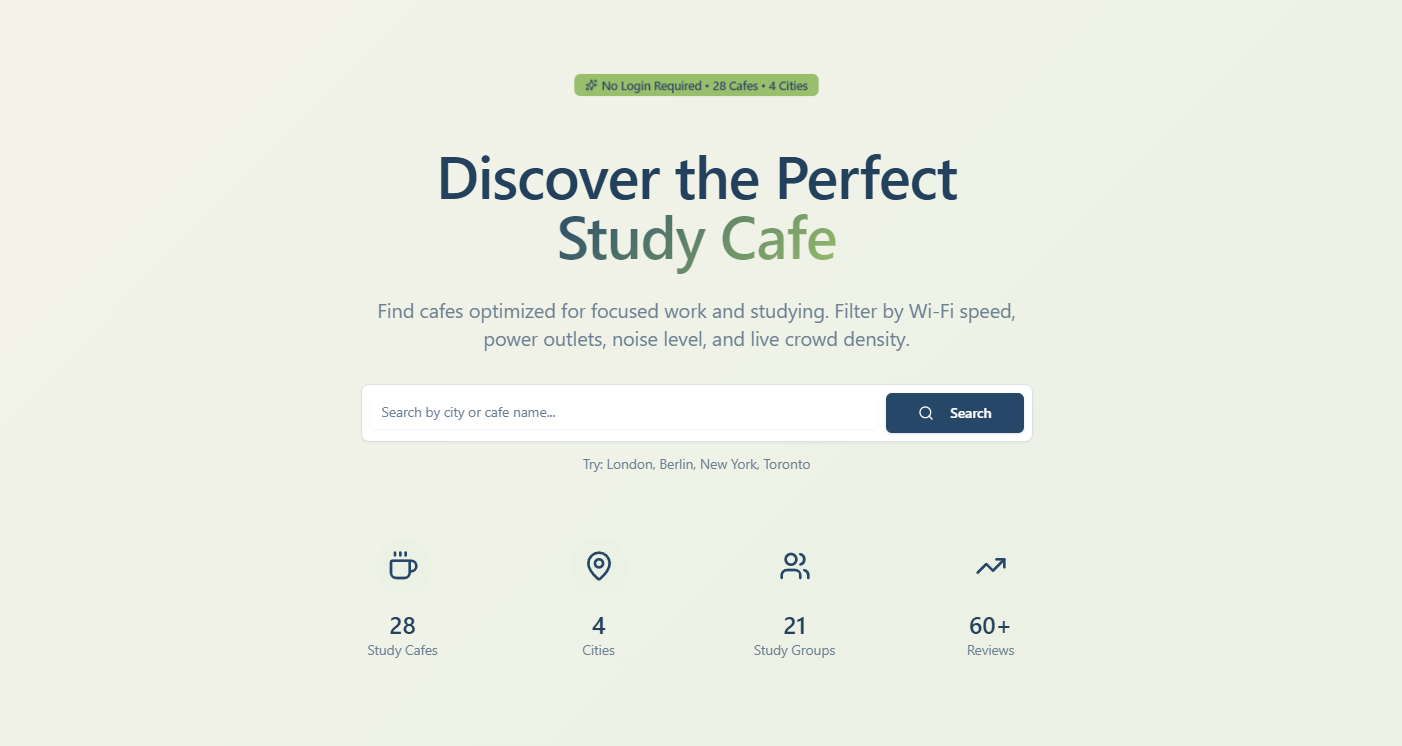
Study Cafe Finder lets users find study-friendly cafes by filtering for Wi-Fi speed, power outlets, noise level, and crowd density. It also connects people through study groups and lets them share reviews/photos—all without logging in. Whether you’re in London, New York, or Toronto, it’s your go-to for productive third spaces.
How we built it
We started with core wireframes for the homepage and cafe detail pages, then built the front end with React and Bootstrap for responsiveness. The back end uses Node.js and Express, with MongoDB storing cafe data and user reviews. We prioritized mobile/desktop compatibility and intuitive filtering logic to make the tool easy to use.
Challenges we ran into
Balancing real-time crowd status updates with smooth performance was tough—we had to optimize data refresh cycles to avoid lag. Also, ensuring the filter logic worked seamlessly with multiple criteria (AND logic) required rigorous testing to fix edge cases like empty result sets.
Accomplishments that we're proud of
We created a fully functional platform that’s intuitive for users of all tech skill levels. The Quiet Work Mode (which surfaces the best focused-work cafes) has been a hit in beta, and we’re proud of making review/study group creation completely login-free—removing barriers to entry.
What we learned
We learned the importance of user-centric design: early testers highlighted the need for simpler filters, so we redesigned the quick-filter buttons for one-tap use. We also gained expertise in balancing real-time data with front-end performance and building accessible, anonymous user flows.
What's next for this project
We plan to expand to more cities across Europe and North America, add more filter options (like seating type), and enhance the study group feature with session reminders. We’re also exploring ways to let local cafes verify their amenity info to keep data accurate and up-to-date.

Log in or sign up for Devpost to join the conversation.