-
-
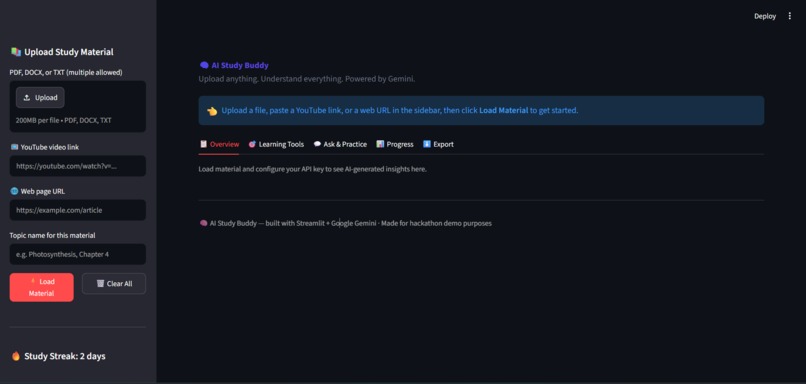
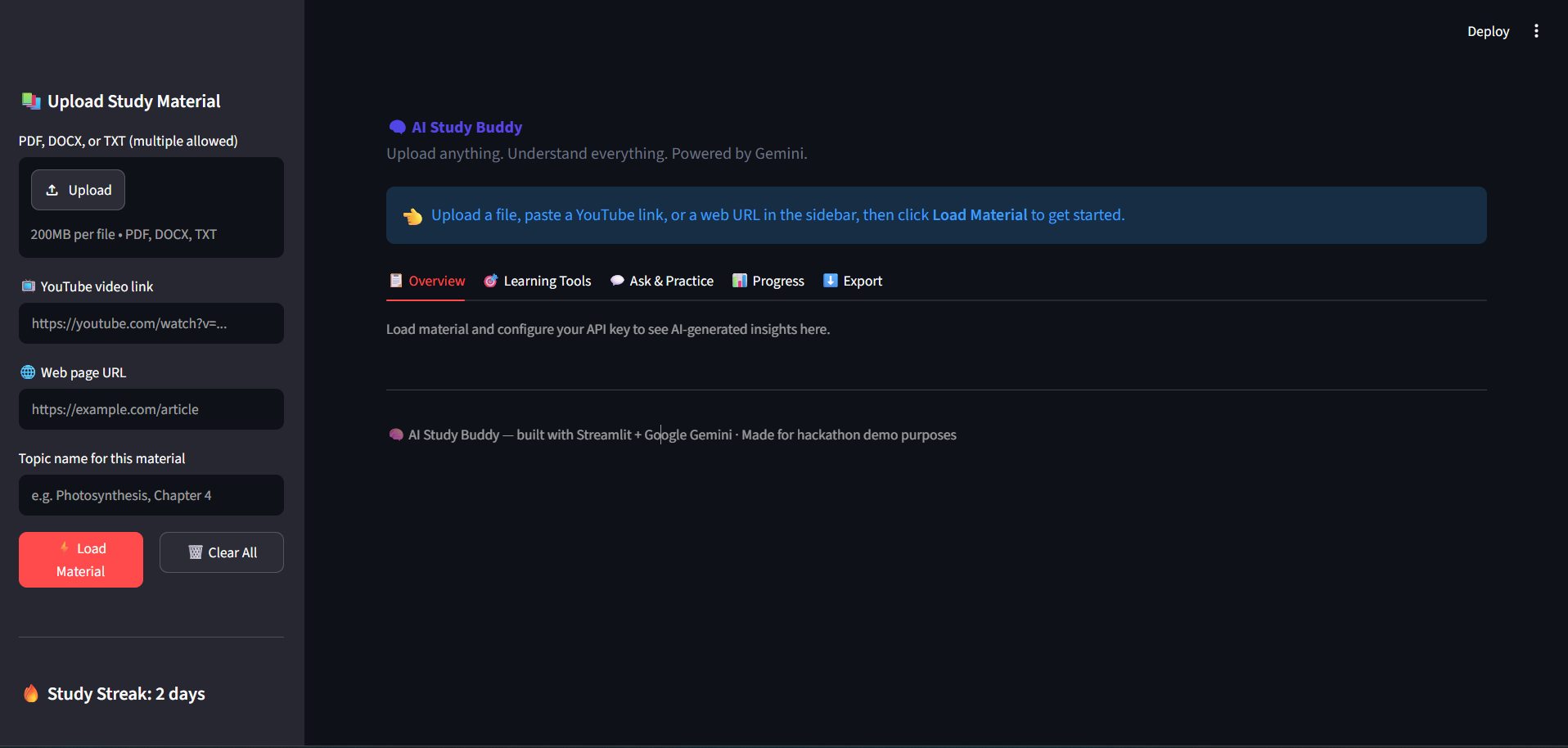
Study Buddy Home Page
-
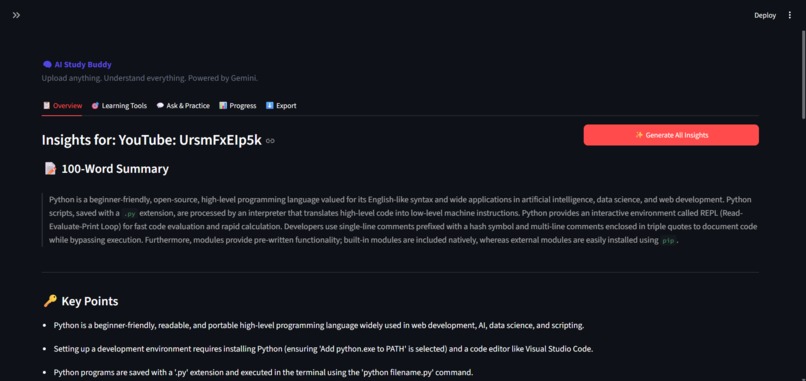
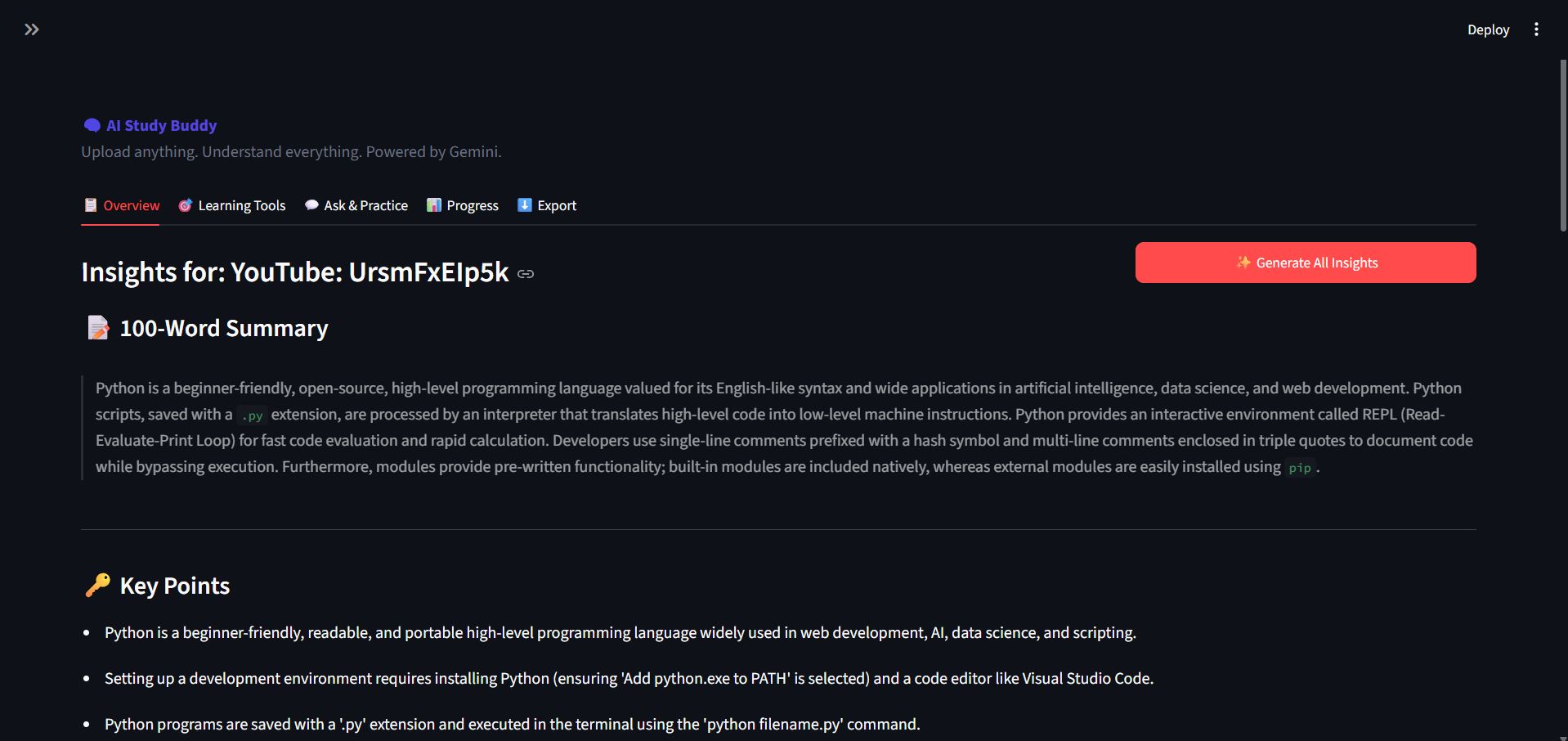
Overview Page
-
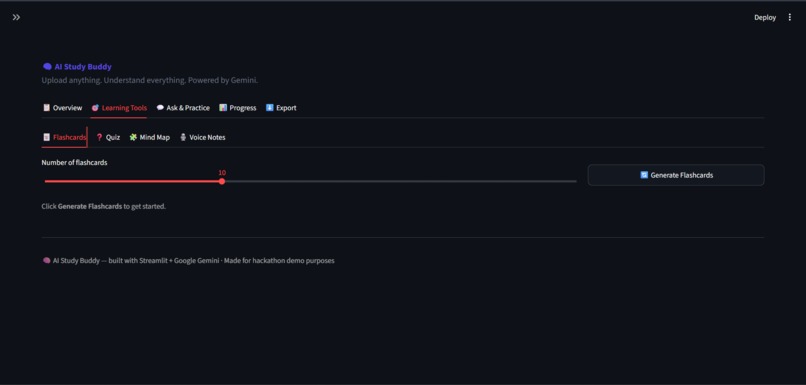
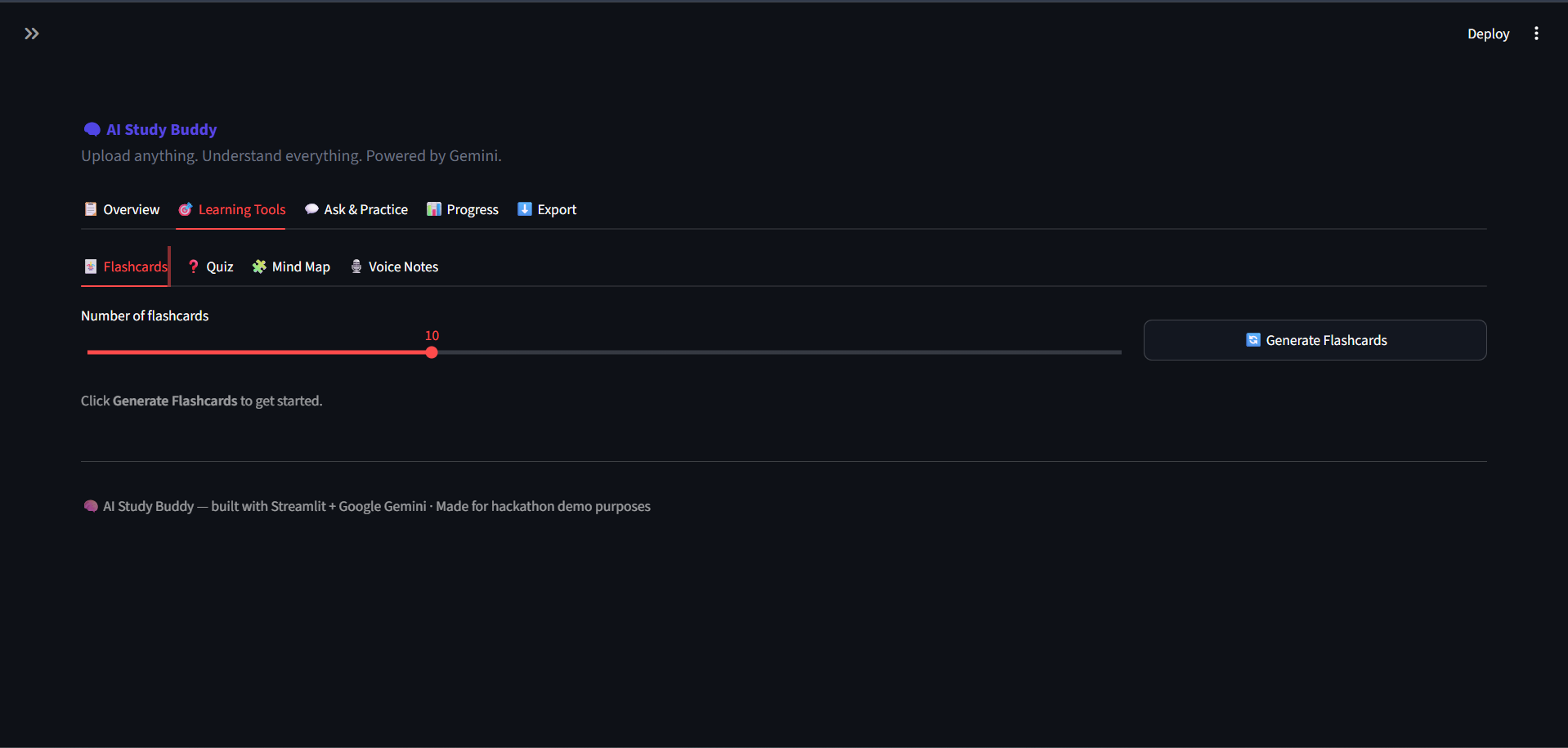
Learning Tools Page
-
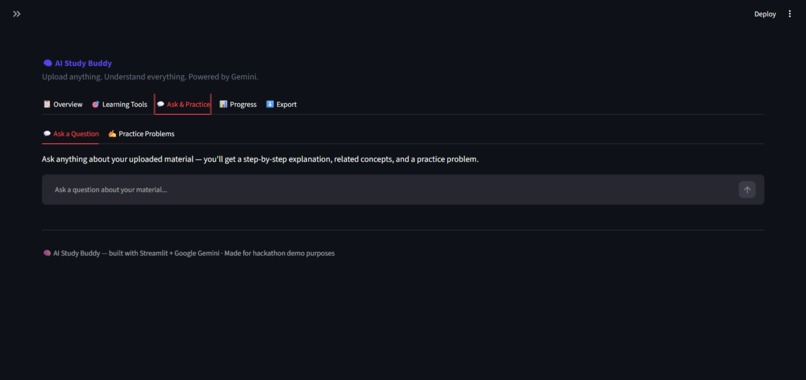
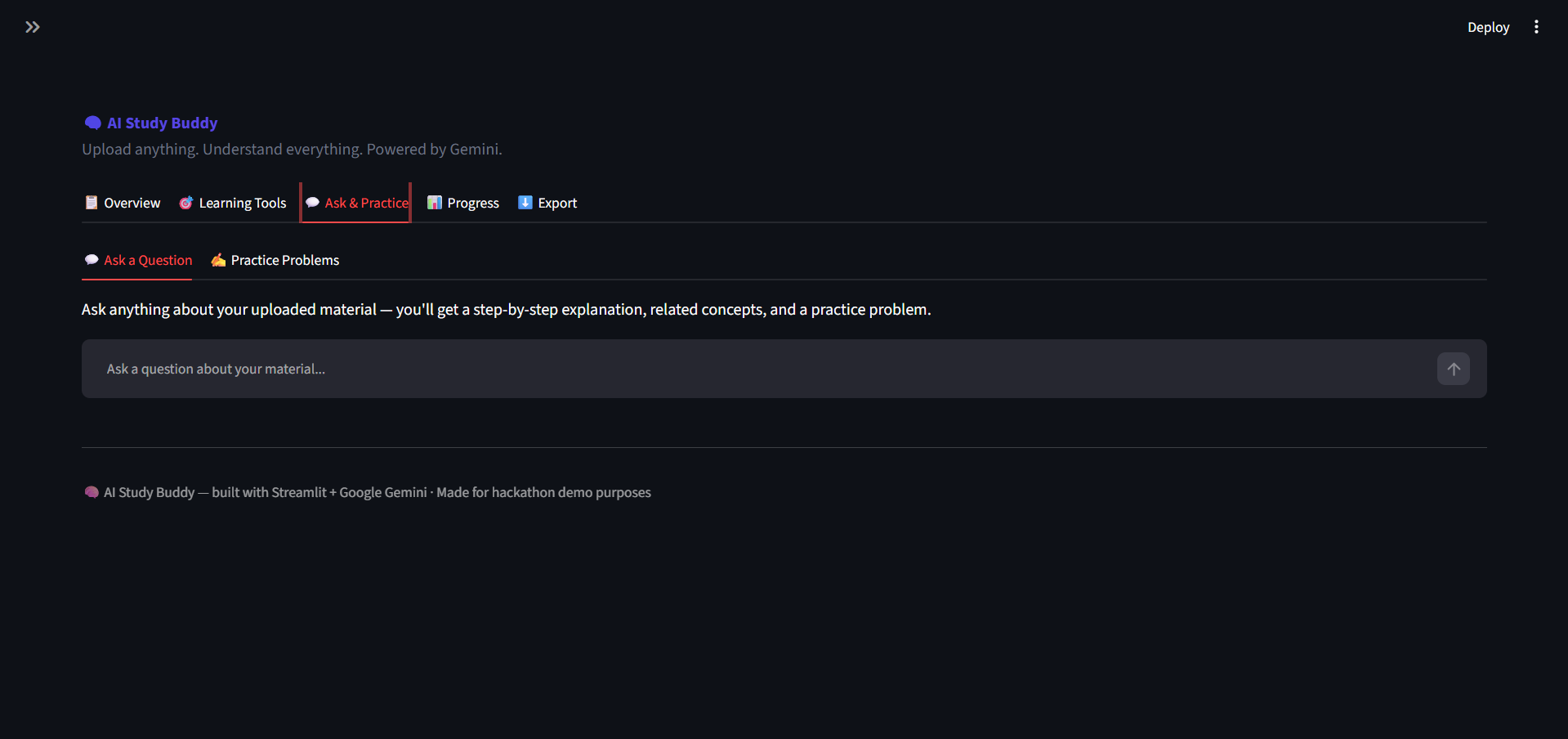
Ask & Practice Page
-
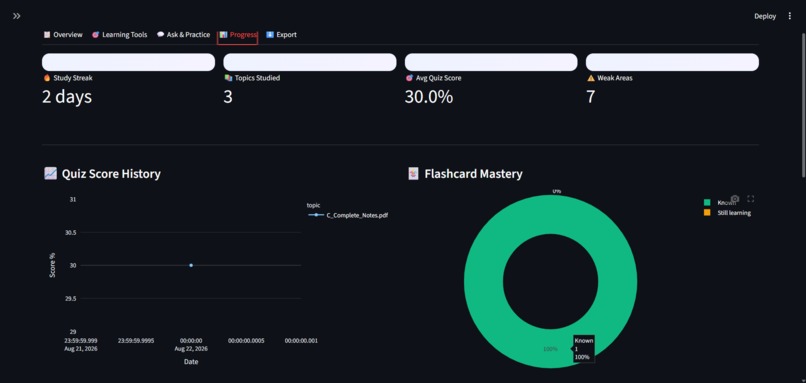
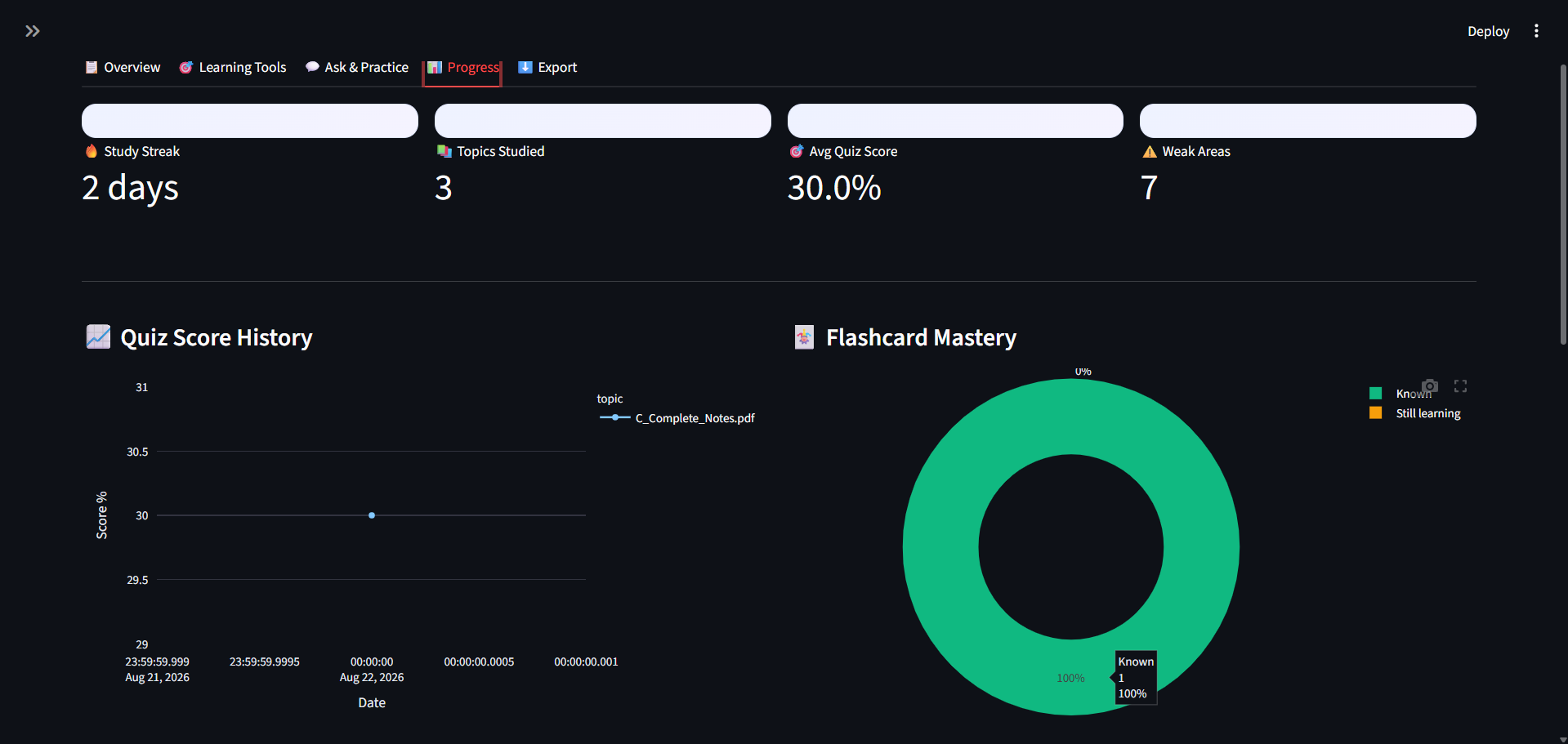
Progress Tab Page
-
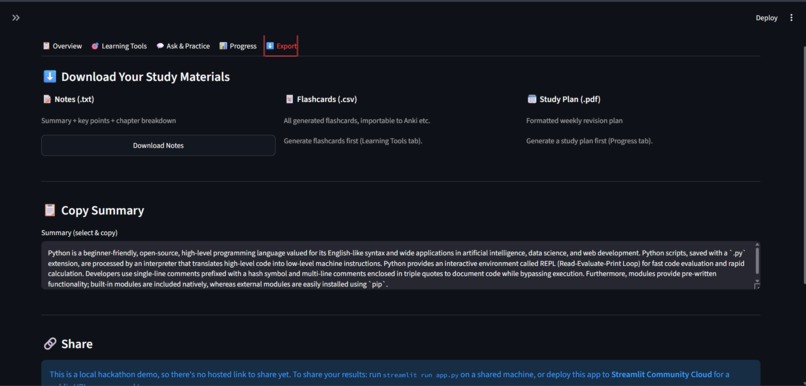
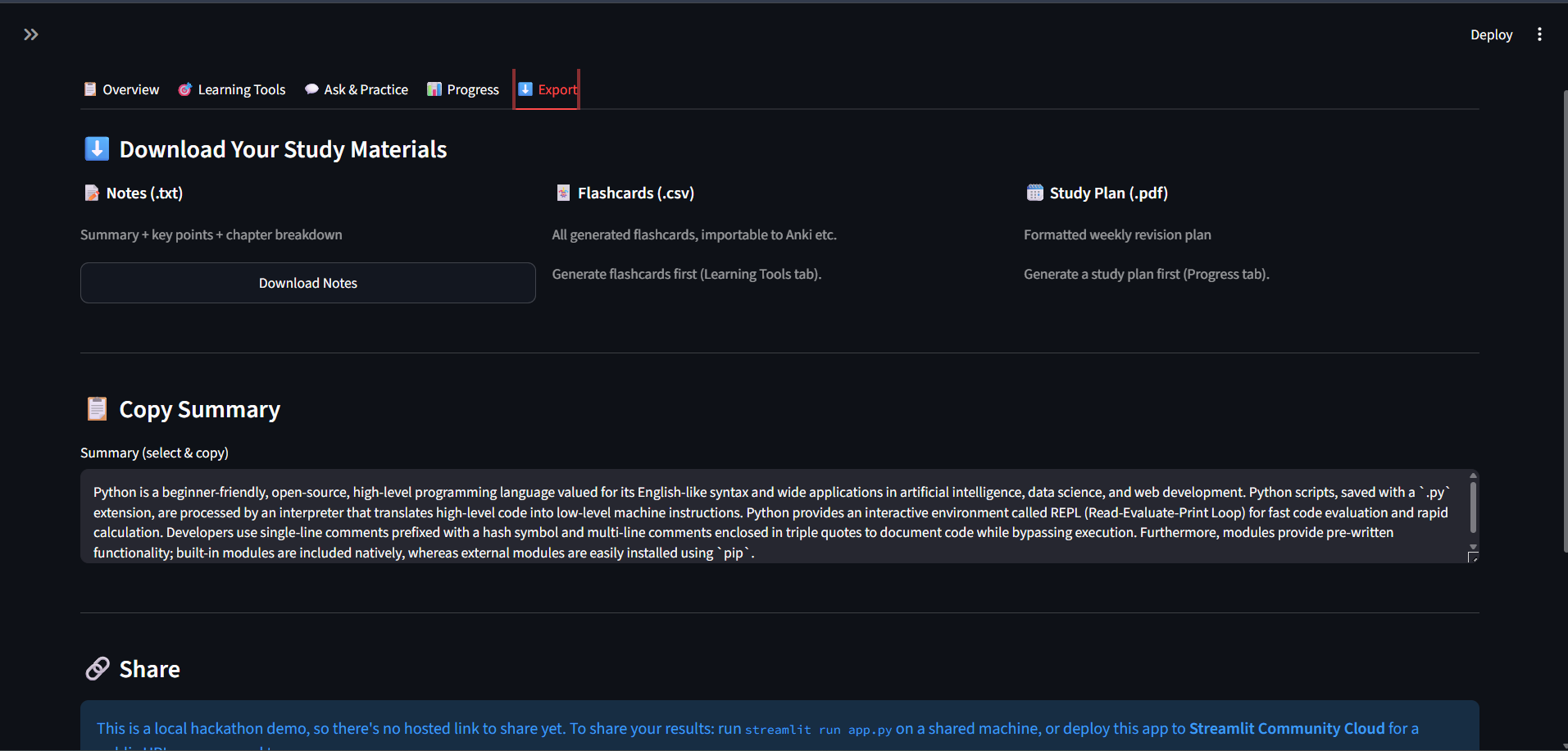
Export Data Page
Inspiration
Students often spend hours turning PDFs, lecture notes, and study material into summaries, questions, and revision plans. The problem is not a lack of information. It is the difficulty of turning large amounts of information into something that is structured, understandable, and useful for learning. We wanted to build something that acts like a personal AI study companion rather than simply another chatbot. That idea led to Study Buddy, an AI-powered learning assistant designed to help students understand their study material, generate useful learning resources, and study more efficiently.
What it does
Study Buddy transforms static study material into an interactive learning experience. Students can upload their study documents and use AI to:
- 📄 Analyze and understand uploaded documents
- 📝 Generate concise summaries and important points
- ❓ Ask questions about their study material
- 🧠 Get AI-powered explanations for difficult concepts
- 📚 Generate quizzes and practice questions
- 📊 Track learning and study progress
- 🎯 Turn unstructured study material into structured revision resources Instead of searching through long documents manually, students can interact with their own material and get focused assistance whenever they need it.
How we built it
Study Buddy was built as a web-based AI application using a combination of modern development and AI technologies. Core technologies:
- Python for the application logic
- Streamlit for the interactive web interface
- Google Gemini API for AI-powered understanding and generation
- PyPDF2 for extracting content from PDF documents
- python-docx for working with DOCX study material
- Pandas for handling structured data
- Plotly for visualizing learning and progress data
- SQLite for storing application data
The basic workflow is: Upload Study Material → Extract Content → Process with AI → Generate Learning Resources → Interact & Track Progress We focused on making the experience simple enough that a student can start using the application without needing to understand anything about AI or prompt engineering.
Challenges We Ran Into
One of our biggest challenges was working with large amounts of study material while keeping the AI responses relevant and useful. We had to think carefully about how documents were processed, how their content was provided to the AI, and how to make responses focused instead of generating generic answers. Another challenge was designing the application so that multiple AI features could work together without making the interface complicated. We also faced API limitations and quota-related issues while testing the Gemini integration. This forced us to pay closer attention to API usage, request management, and application efficiency. Building the project also required combining several different technologies into one coherent application rather than treating each feature as an isolated component.
Accomplishments That We're Proud Of
We are proud that Study Buddy evolved from a simple AI concept into a functional application with multiple learning features working together. Some of the accomplishments we are most proud of are:
- 🚀 Building a complete AI-powered study application
- 🤖 Integrating Google Gemini into a real-world educational use case
- 📄 Supporting document-based learning
- 🧠 Turning study material into summaries, explanations, and quizzes
- 📊 Adding progress and data visualization features
- 💻 Building the application with an accessible Streamlit interface
- 🔗 Connecting AI, document processing, databases, and analytics into one workflow
Most importantly, we built the project around a real student problem rather than creating an AI feature without a practical purpose.
What We Learned
Building Study Buddy taught us that creating an AI application is much more than simply connecting an API to a user interface. We learned how important prompt design, document processing, API management, state management, and user experience are when building AI-powered products. We also learned that an AI system needs to be designed around the user's workflow. A technically impressive model is not enough if the user cannot easily understand or use its output.
The project also gave us practical experience with building, debugging, testing, and iterating on an AI application under hackathon constraints.
What's Next for Study Buddy
Study Buddy is only the beginning. Our next goal is to make the platform more personalized and intelligent by adding features such as:
- 🎯 Personalized study plans
- 🔄 Adaptive quizzes based on performance
- 📈 More detailed learning analytics
- 🗣️ Voice-based interaction
- 📅 Smart revision scheduling
- 🧠 Personalized AI tutoring
- 📱 A mobile-friendly experience
- 👥 Collaborative study features
- 🔐 More robust user accounts and data management
In the long term, we want Study Buddy to become a complete AI learning companion that understands how a student learns, identifies where they struggle, and continuously adapts the learning experience around them.
Study Buddy's goal is simple: make studying smarter, more personalized, and more effective with AI.
Built With
- aichatbot
- aieducation
- aistudyassistant
- artificialintelligence
- datavisualization
- documentprocessing
- edtech
- educationaltechnology
- flashcards
- geminiapi
- generativeai
- googleai
- googlegemini
- machine-learning
- naturallanguageprocessing
- pandas
- pdfprocessing
- plotly
- python
- quizgenerator
- sqlite
- streamlit
- studyassistant
- youtubeapi

Log in or sign up for Devpost to join the conversation.