-
-
Application UX
Inspiration: My inspiration came while I was trying to delve deeper into my own studies, only to realize that my campus resources were lacking detailed information about my topics of interest. This gap in accessible, detailed academic guidance motivated me to create a solution that not only serves my needs but also assists others facing similar challenges.
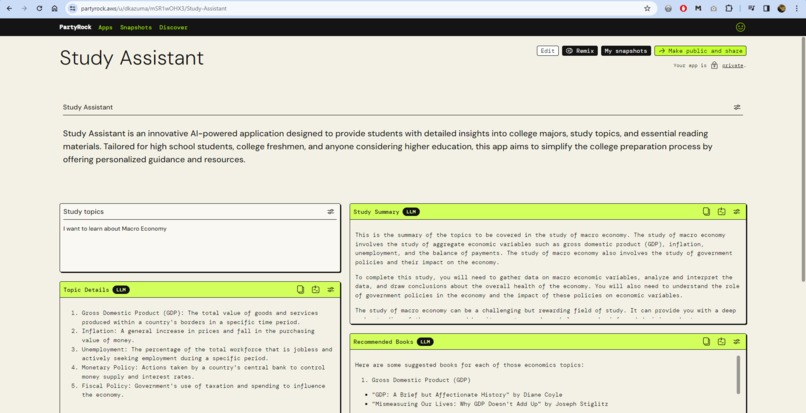
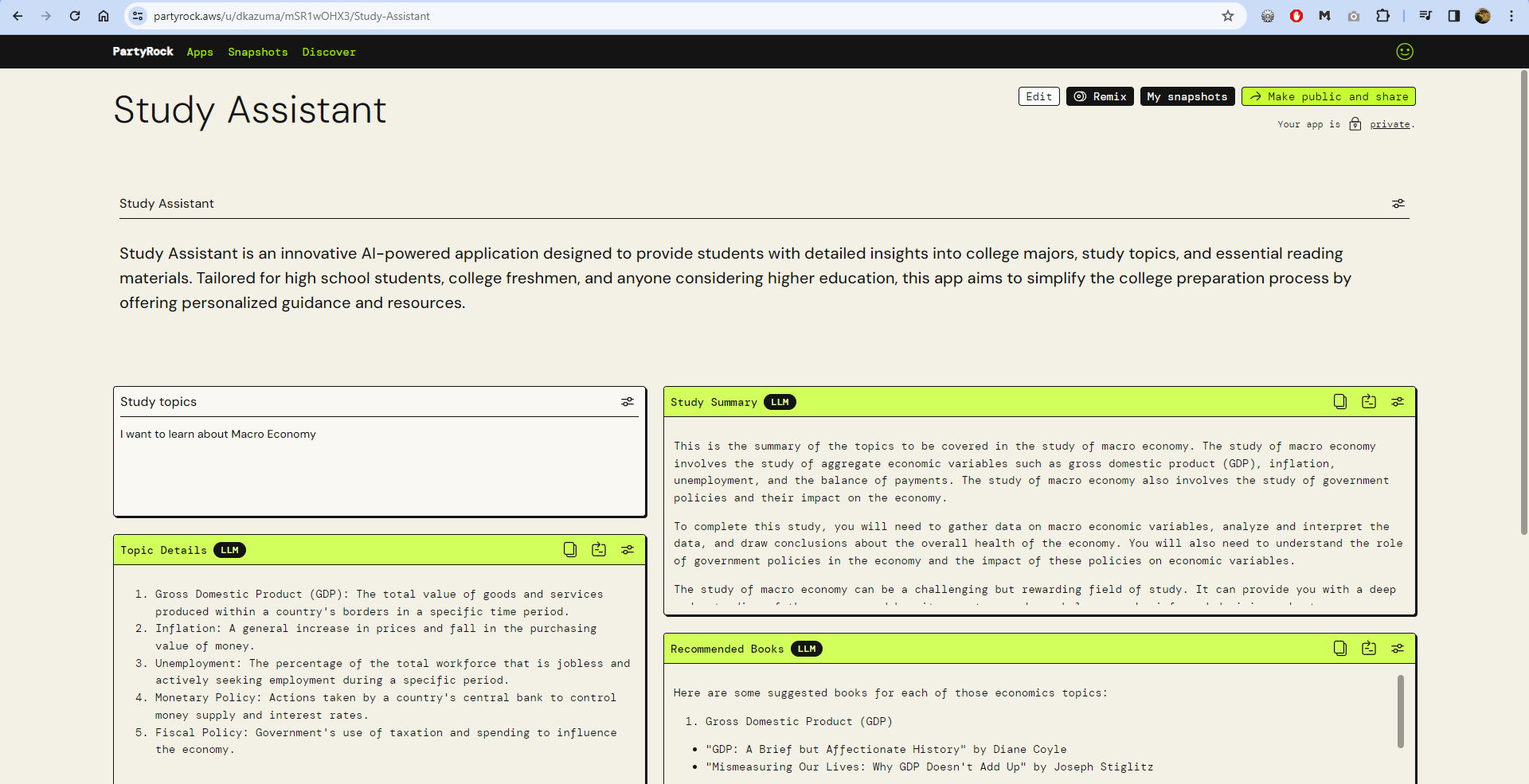
What it does: Study Assistant is designed to intuitively respond to user queries about academic topics. When a user inputs a topic they wish to learn more about, the app generates a concise summary of the study topic, compiles a detailed list of subtopics for thorough understanding, and recommends relevant books. This process demystifies complex subjects, making learning more accessible and tailored to individual needs.
How we built it: We embarked on building Study Assistant by initially researching existing projects with similar objectives to understand the landscape and identify potential models. Our breakthrough came when we discovered a project focused on AWS certification, which shared core functionalities with what we envisioned for Study Assistant. By studying its structure, we were able to adapt and modify the widgets and prompts, tailoring them to fit the educational content delivery we aimed for. This approach allowed us to leverage proven frameworks while innovating to meet the specific needs of academic topic exploration.
Challenges we ran into: One of the major challenges was refining the AI to understand and accurately respond to a wide array of academic queries. Ensuring that the app could differentiate between topics and provide detailed, yet easily understandable, summaries required extensive testing and algorithm adjustments. Additionally, creating a user interface that was both intuitive and capable of handling complex functionalities presented its own set of design and development hurdles.
Accomplishments that we're proud of: We are particularly proud of creating an app that significantly improves the learning experience for students across diverse fields of study. Our ability to turn a personal frustration into a universally beneficial tool, and to execute it in a way that seamlessly blends technology with education, stands out as our major achievement. Additionally, receiving positive feedback from early users about the app’s impact on their studies has been incredibly rewarding.
What we learned: Throughout the development of Study Assistant, we learned the importance of user-centered design in educational technology. We gained insights into the complexities of processing and summarizing academic content through AI, and how nuanced such systems must be to cater to different learning styles and needs. This project also highlighted the value of iterative testing and feedback in creating a product that truly meets user expectations.
What's next for Study Assistant: The future development of Study Assistant is geared towards creating a more personalized and integrated learning experience. We plan to enhance the app by incorporating lecturer preferences and campus-specific resources, facilitating a tailored educational journey for each user. By connecting Study Assistant directly with data sources from academic institutions, we aim to provide users with immediate access to the most relevant and authoritative information, further bridging the gap between students and the vast array of educational content available. This integration will not only improve the app’s utility but also foster a closer connection between learners, educators, and educational resources.
Built With
- partyrock

Log in or sign up for Devpost to join the conversation.