-
-
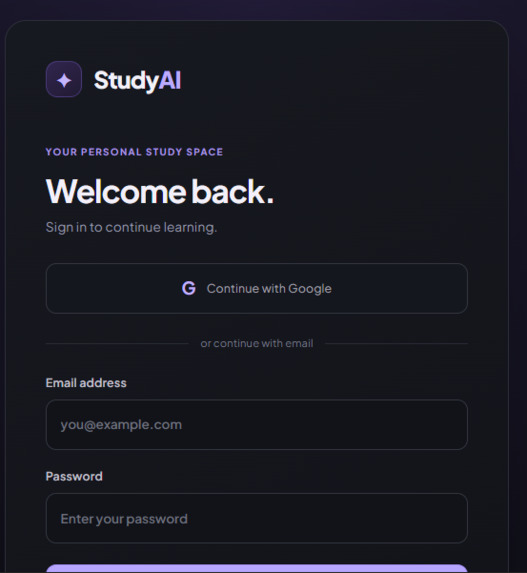
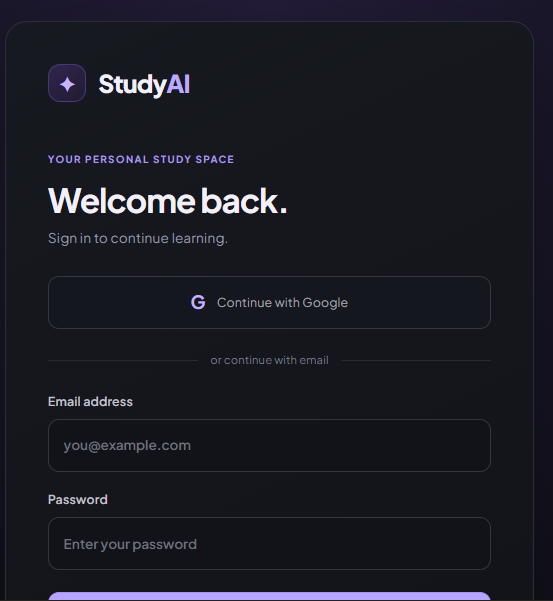
the login page
Inspiration
Study-AI was inspired by the challenges students face when trying to understand complex topics from textbooks without access to personalised guidance. I wanted to create a platform where students could upload their own textbooks or find learning materials online and receive clear, step-by-step explanations from an AI tutor.
My vision is to make learning more accessible, affordable and personalised for students around the world. Rather than simply giving students answers, Study-AI aims to help them understand concepts, practise what they learn and become more independent learners.
I believe every student deserves the opportunity to understand what they study, regardless of their background or access to private tutoring. Study-AI is my step towards making that possible through technology.
What it does
Study-AI is an AI-powered educational platform that helps students understand their textbooks through personalized, step-by-step explanations. Students can upload PDF textbooks or find learning materials online, ask questions about what they are studying, and receive clear explanations to help them understand difficult concepts. The platform aims to make learning more accessible, interactive, and effective for students worldwide.
How we built it
How We Built Study-AI
We built Study-AI as a web-based educational platform using React, JavaScript, HTML and CSS, with Vite providing the development environment.
First, we created the user interface, allowing students to interact with the platform and upload PDF textbooks. We integrated PDF.js to read and extract text from uploaded documents, making it possible for students to search their materials and ask questions about their content.
Next, we developed a backend using Node.js to handle AI requests securely. We connected the frontend to an AI model through an API, enabling students to receive explanations and answers to their questions.
Finally, we tested the PDF upload, document search and AI tutoring features, fixed issues during development, and deployed the website online so students could access it through a web browser.
We developed Study-AI iteratively, improving the application through testing and debugging, with the goal of making personalized learning more accessible to students worldwide.
Challenges we ran into
Challenges Faced During Study-AI Development
- PDF Upload and Text Extraction
One challenge was making sure students could upload PDF textbooks and extract their text correctly. We integrated PDF.js and worked on handling uploaded files so their content could be searched and used for learning.
- AI Integration and Backend Communication
Initially, the AI tutor did not respond to questions as expected, even though the backend appeared to be running. We worked through the frontend-to-backend connection and API configuration until the AI responses worked correctly.
- Debugging and Error Handling
During development, we encountered technical issues and browser console warnings, including a PDF.js standard-font-data warning. We had to inspect errors, test the application and make adjustments to improve reliability.
- Connecting Multiple Components
Another challenge was ensuring the React interface, PDF processing functionality and Node.js backend worked together as one application. We tested the individual features and their interactions to get the main workflow functioning.
- Building With Limited Resource
We wanted to create a useful educational platform while keeping initial costs low. This meant choosing accessible development tools and building the core features before considering more advanced functionality.
What We Learned
These challenges taught us the importance of debugging, testing, integrating APIs correctly and improving software through iteration. They also helped us understand that building an AI product requires more than connecting a model: the entire user experience must work reliably.
Accomplishments that we're proud of
Accomplishments We Are Proud Of
One of our biggest accomplishments is turning an idea into a working AI-powered educational website. We built Study-AI to help students interact with their textbooks, upload PDF documents, search their learning materials and ask questions to receive AI-generated explanations.
We are proud of successfully integrating PDF processing with an AI-powered backend, overcoming technical issues during development, and getting the core features working together.
We are also proud that we started with limited resources and used accessible development tools to bring our idea to life. This project has helped us develop practical experience in web development, API integration, debugging and building AI-powered applications.
Most importantly, we are proud to be building something with a meaningful purpose: making personalised learning more accessible to students around the world.
Study-AI is an important first step towards our vision of helping every student learn with greater understanding, confidence and independence.
What we learned
What's next for Study AI
What's Next for Study-AI?
Our next goal is to evolve Study-AI into a more intelligent and personalised learning companion.
We plan to integrate NVIDIA Nemotron models through Nebius Token Factory to improve how the platform explains complex concepts, answers questions about uploaded textbooks and guides students through problems step by step.
We also aim to introduce personalised quizzes, flashcards and study guides generated from students' learning materials, helping them practise what they learn rather than simply read explanations.
Another priority is developing a learning-progress feature that helps students identify topics they struggle with and recommends what to study next.
Beyond these features, we want to improve accessibility, make the platform easier to use on mobile devices, and gather feedback from students to guide future development.
Our long-term vision is to make Study-AI an accessible learning companion for students worldwide, helping them understand their subjects, study more effectively and become independent learners.
Built With
- css
- html
- javascript
- node.js
- pdf.js
- react
- vite

Log in or sign up for Devpost to join the conversation.