Inspiration
Ever spent hours trying to understand a topic, watched countless videos, gone through your notes, and still felt completely lost? I've been there, and it's honestly frustrating. Sometimes you don't need another textbook or a long video. You just need someone to explain things differently and be patient when you don't understand the first time. That's what inspired me to build Study AI. I wanted to create something that felt less like using another AI tool and more like having a study partner who actually remembers you and understands how you learn.
What it does
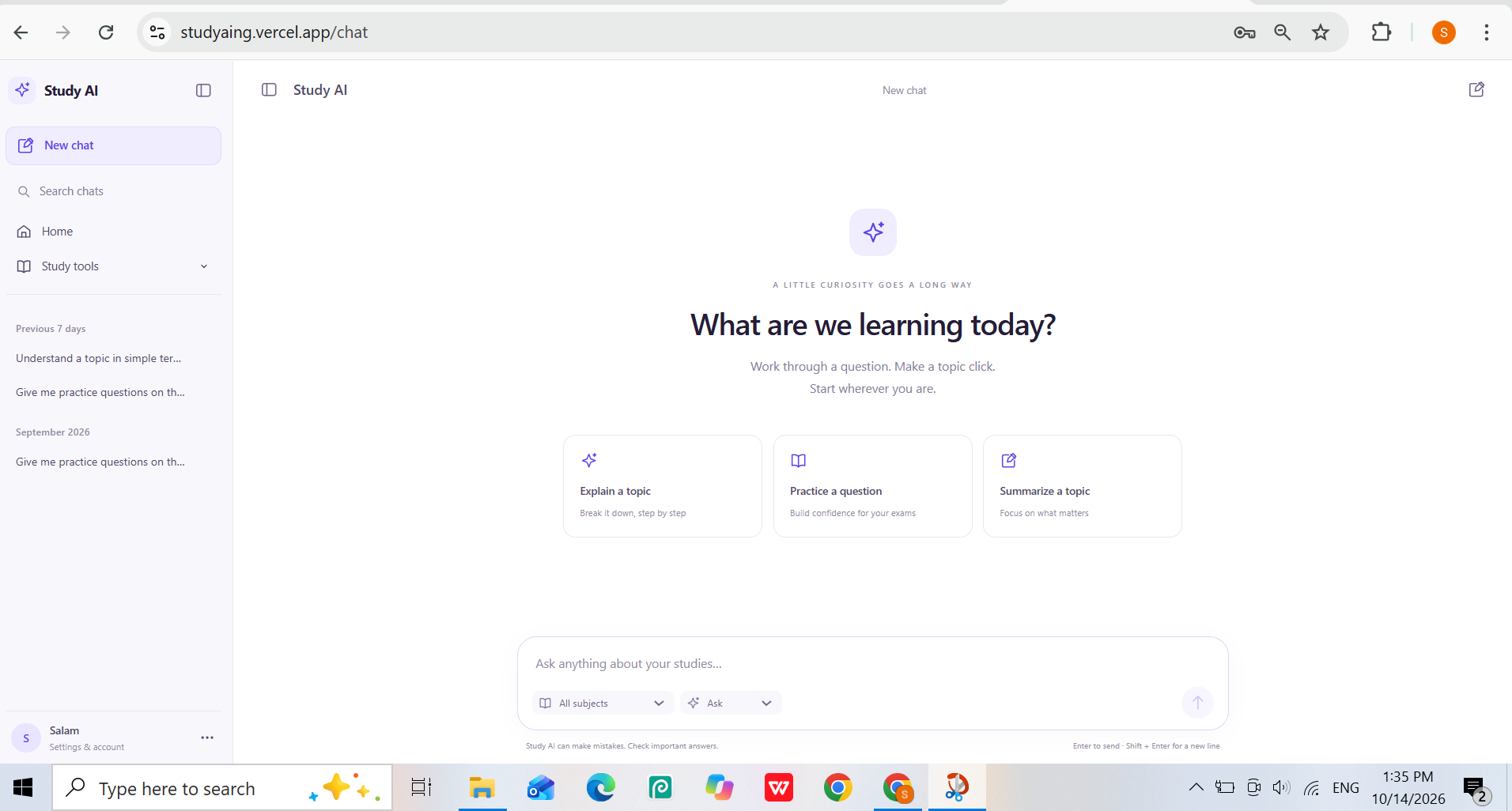
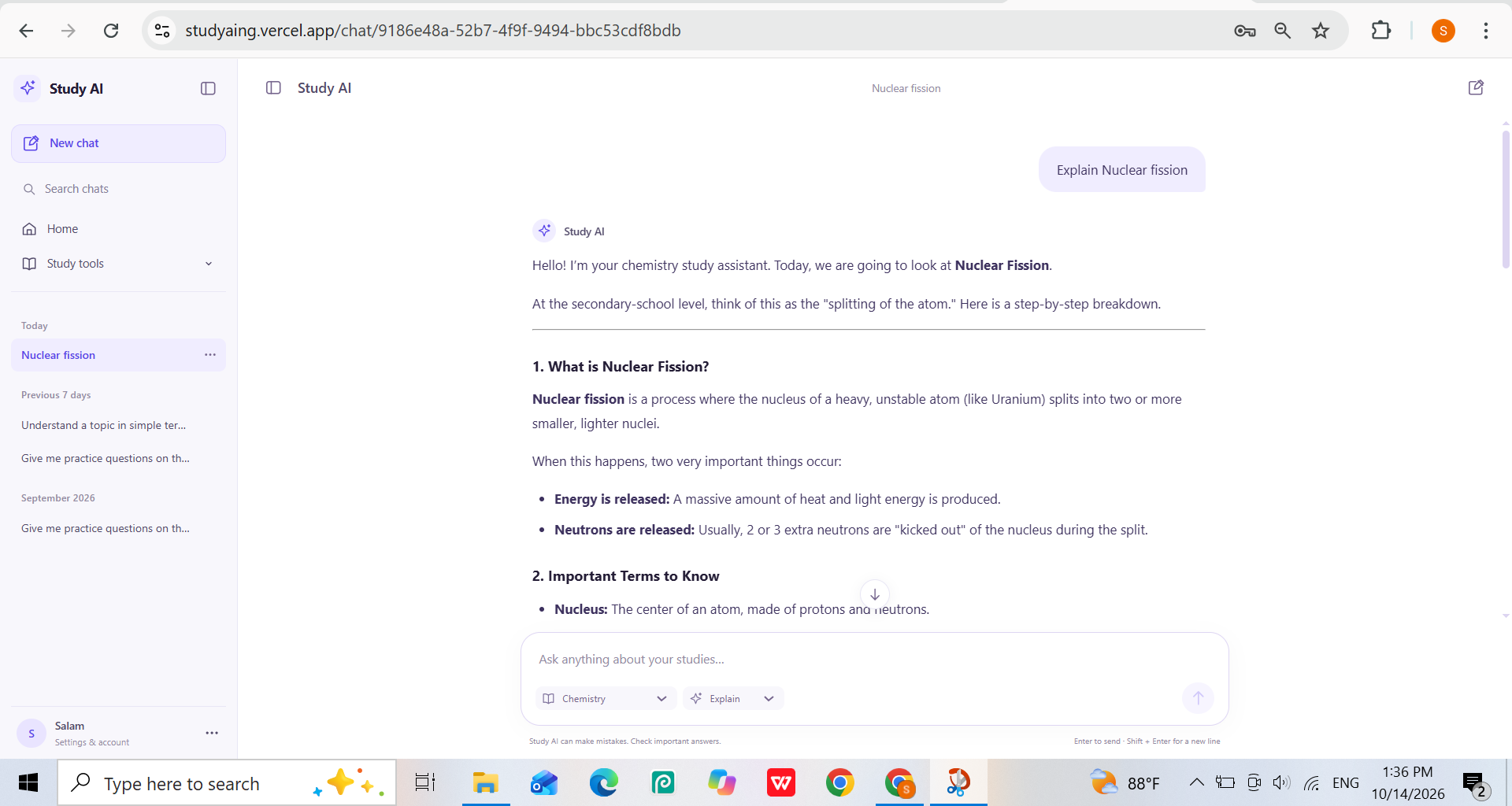
Study AI is a personal AI-powered study companion designed to make learning easier and less stressful. You can ask questions, get explanations for difficult topics, and have natural conversations about whatever you're studying. What makes it different is its memory. Instead of treating every conversation like a fresh start, Study AI keeps track of your chat history and uses previous conversations to provide a more personal learning experience. You can return to something you were studying earlier without having to explain everything all over again. The idea is simple: learning should feel like a conversation, not a struggle.
How we built it
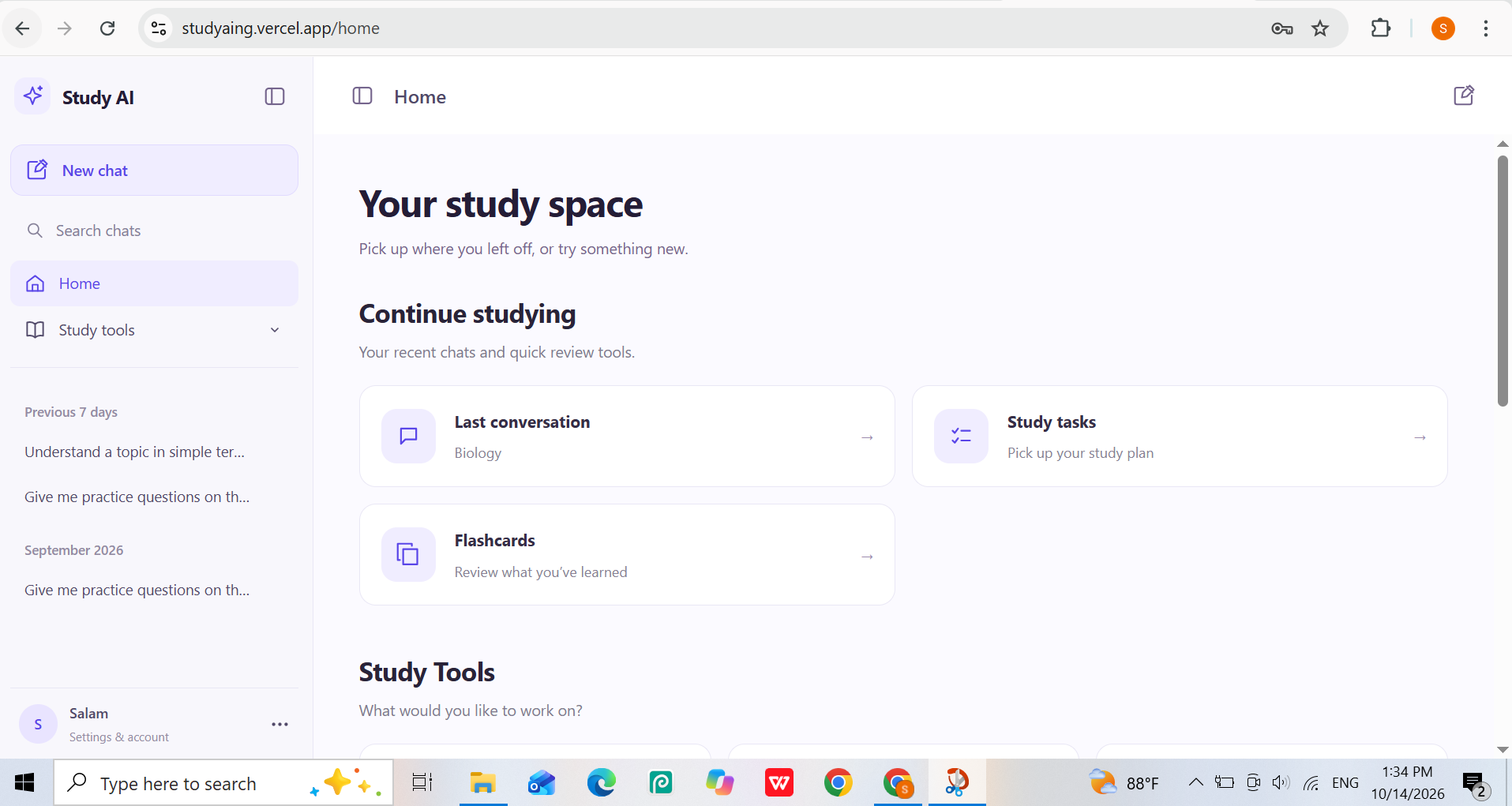
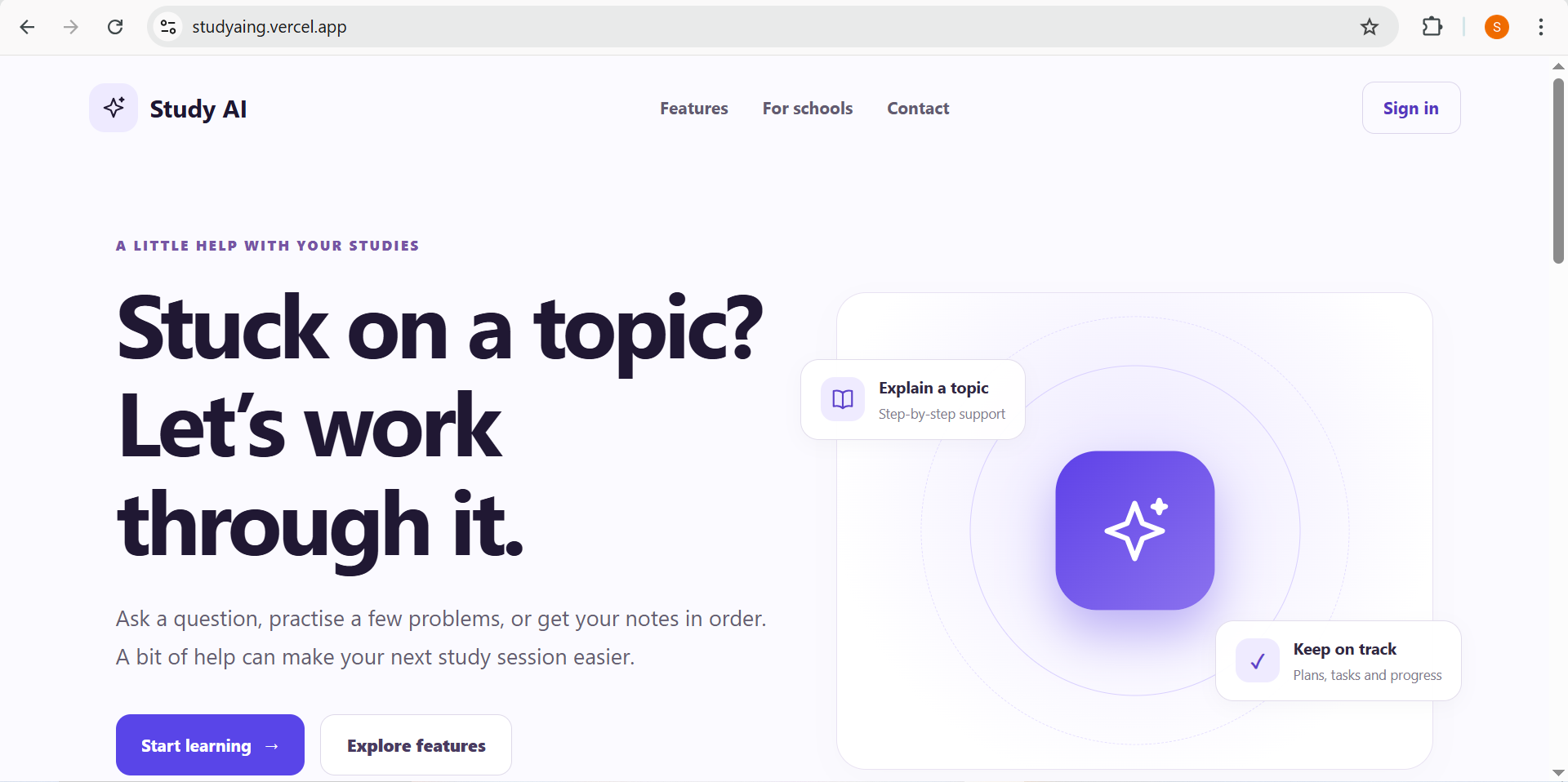
I built Study AI as a web application, using React to create a clean, responsive interface that students can easily navigate. I focused on making the chat experience feel familiar and natural, with organized conversation history and a layout that doesn't get in the way of studying. I also worked on the memory system so the experience could go beyond simply sending questions to an AI and receiving answers. A big part of the development process was refining the interface, improving how conversations are handled, and making the whole application feel like something students would genuinely enjoy using.
Challenges we ran into
One of the biggest challenges was figuring out how to make Study AI feel different from a regular chatbot. Getting an AI to answer questions is one thing, but making conversations feel connected and useful over time is another. Working on the memory system made me realize how important context is, especially when someone is learning a difficult subject across multiple sessions. I also spent a lot of time improving the design. Some early versions felt too much like a typical AI dashboard, and I wanted something simpler and more welcoming. Balancing functionality, memory, and a smooth user experience took quite a bit of experimenting and reworking.
Accomplishments that we're proud of
I'm especially proud of how much Study AI has evolved from the original idea. What started as a way to help students understand difficult topics has grown into a more personal learning experience. Improving the conversation history and memory system was a big milestone because those features are central to what I want Study AI to become. I'm also proud of the interface. I wanted students to open the application and immediately feel comfortable using it, without having to figure out complicated menus or settings. Seeing those pieces come together has probably been the most rewarding part of building it.
What we learned
Building Study AI taught me that creating a useful AI product involves much more than connecting an AI model to a website. The little things matter: how conversations are saved, how information is remembered, how easy the interface is to use, and whether the experience actually solves a problem. I also learned that sometimes simplifying something takes more work than adding new features. Most importantly, this project reminded me why I enjoy building things in the first place. It's not just about writing code. It's about creating something that could genuinely make someone's day a little easier.
What's next for Study AI
I want to keep improving Study AI until it feels like a study companion students can genuinely rely on. My next goals include making its memory smarter, improving how it understands individual learning habits, and adding features like personalized study plans, practice quizzes, and progress tracking. I'd also love to make it more useful for students preparing for major exams, especially those who don't always have access to private tutors or expensive learning resources. Eventually, I want Study AI to do more than help students answer questions. I want it to help them build confidence in what they're learning. Because at the end of the day, every student deserves the chance to understand, improve, and succeed.

Log in or sign up for Devpost to join the conversation.