Inspiration
The inspiration for Studify came from the vast amounts of scattered notes, lecture slides, problem sets, and other learning materials for classes that I would often sift through spending valuable time to find specific pieces of information and understand relevant concepts. My goal was to create a tool that simplified the learning process by transforming static study materials into dynamic, tailored resources that help students learn faster and more effectively.
What it does
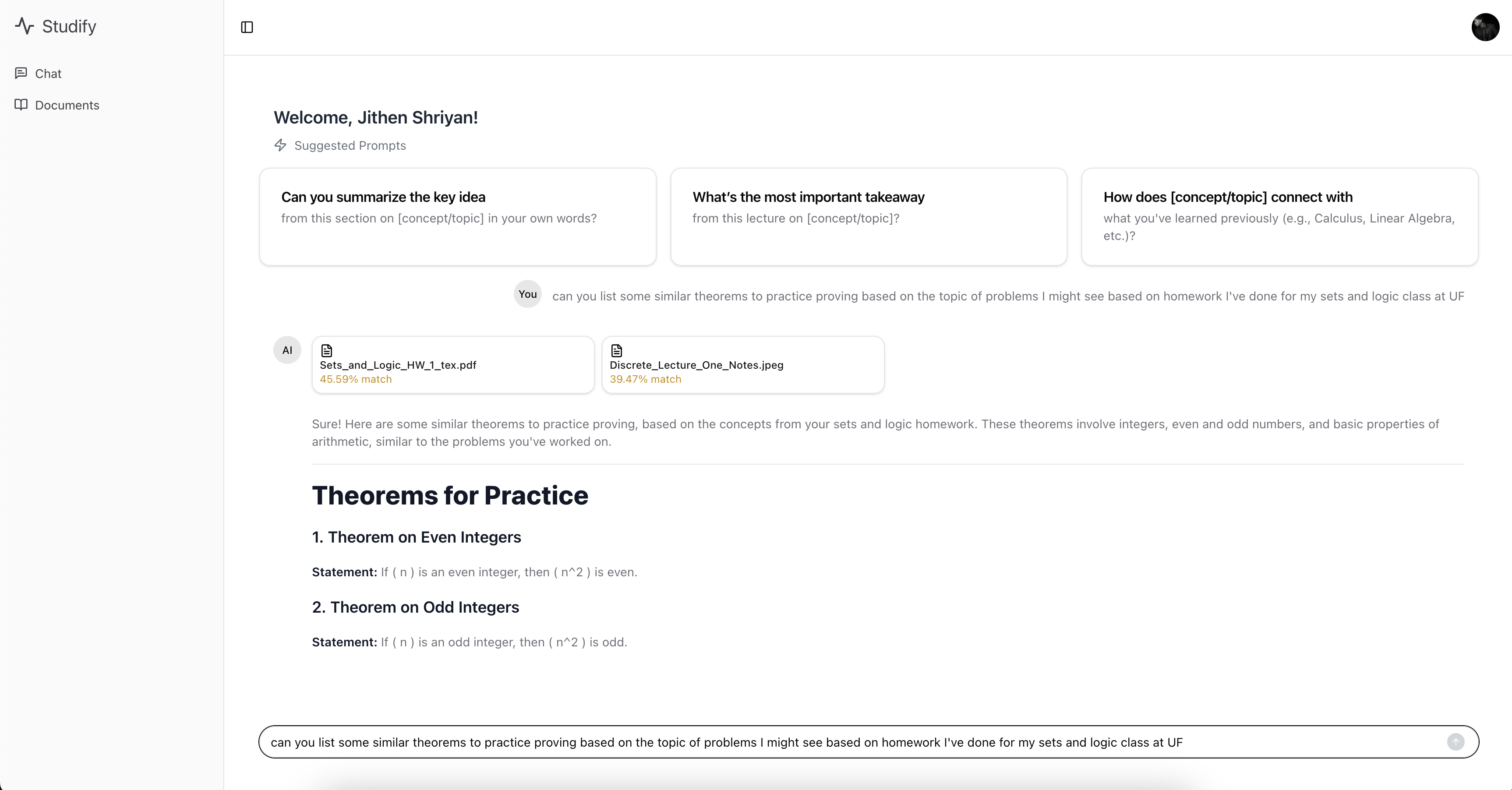
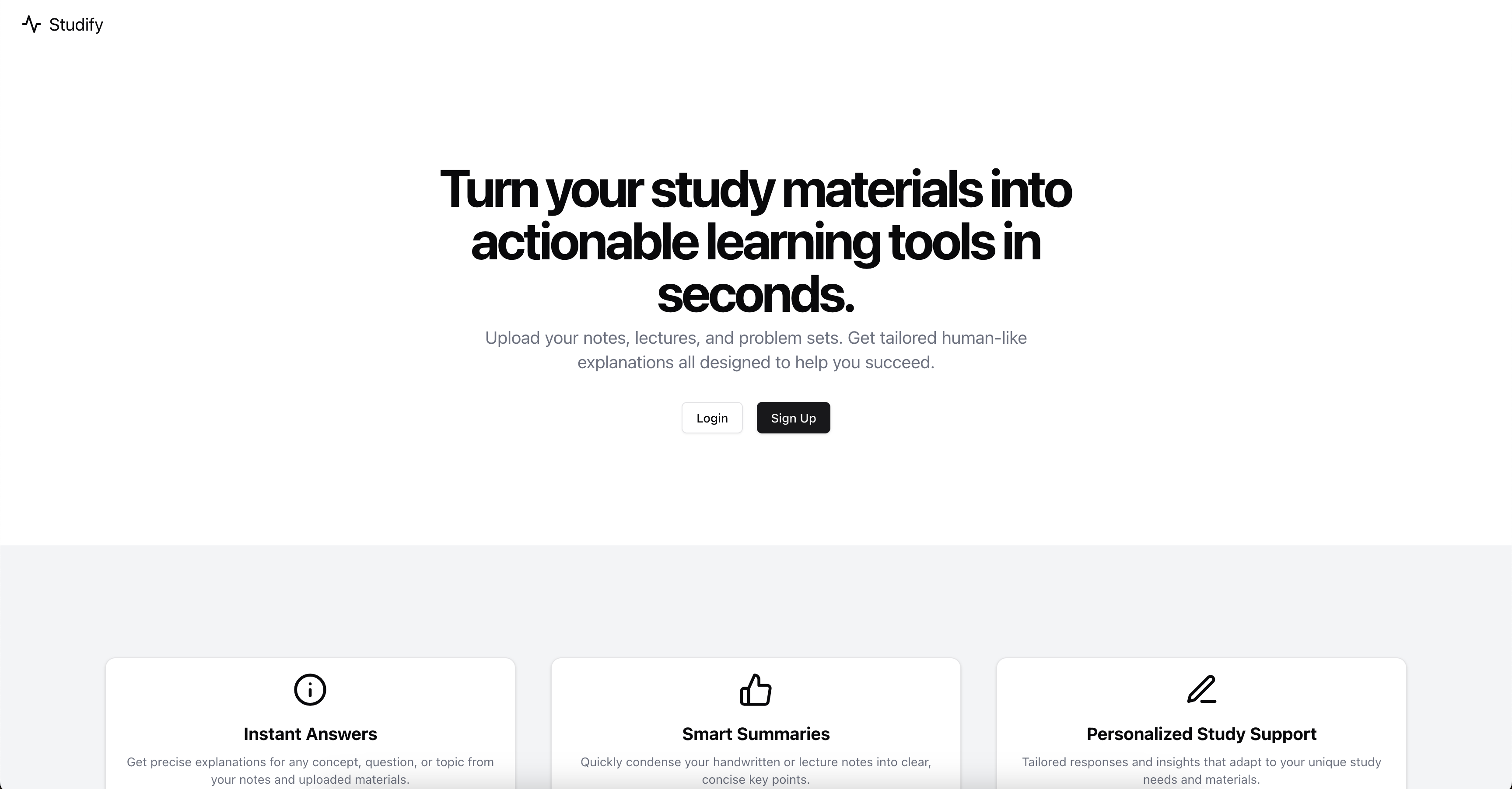
Studify is an AI-powered study assistant that turns your notes, lectures, and problem sets into actionable learning tools in seconds. By uploading your study materials, the tool provides human-like, personalized explanations that adapt to your individual learning style. Whether it's breaking down complex concepts, offering simplified explanations, or guiding you through practice problems, Studify helps students optimize their study sessions and improve retention.
How we built it
I leveraged large language models (LLMs) and retrieval-augmented generation (RAG) to create a tool that could analyze and understand users' own learning materials in combination with trillions of data points on the internet. The AI is trained to identify the most relevant learning materials —whether it's lecture notes, problem sets, or textbooks — and generate explanations that are concise, relevant, and tailored to the user's needs.
Challenges we ran into
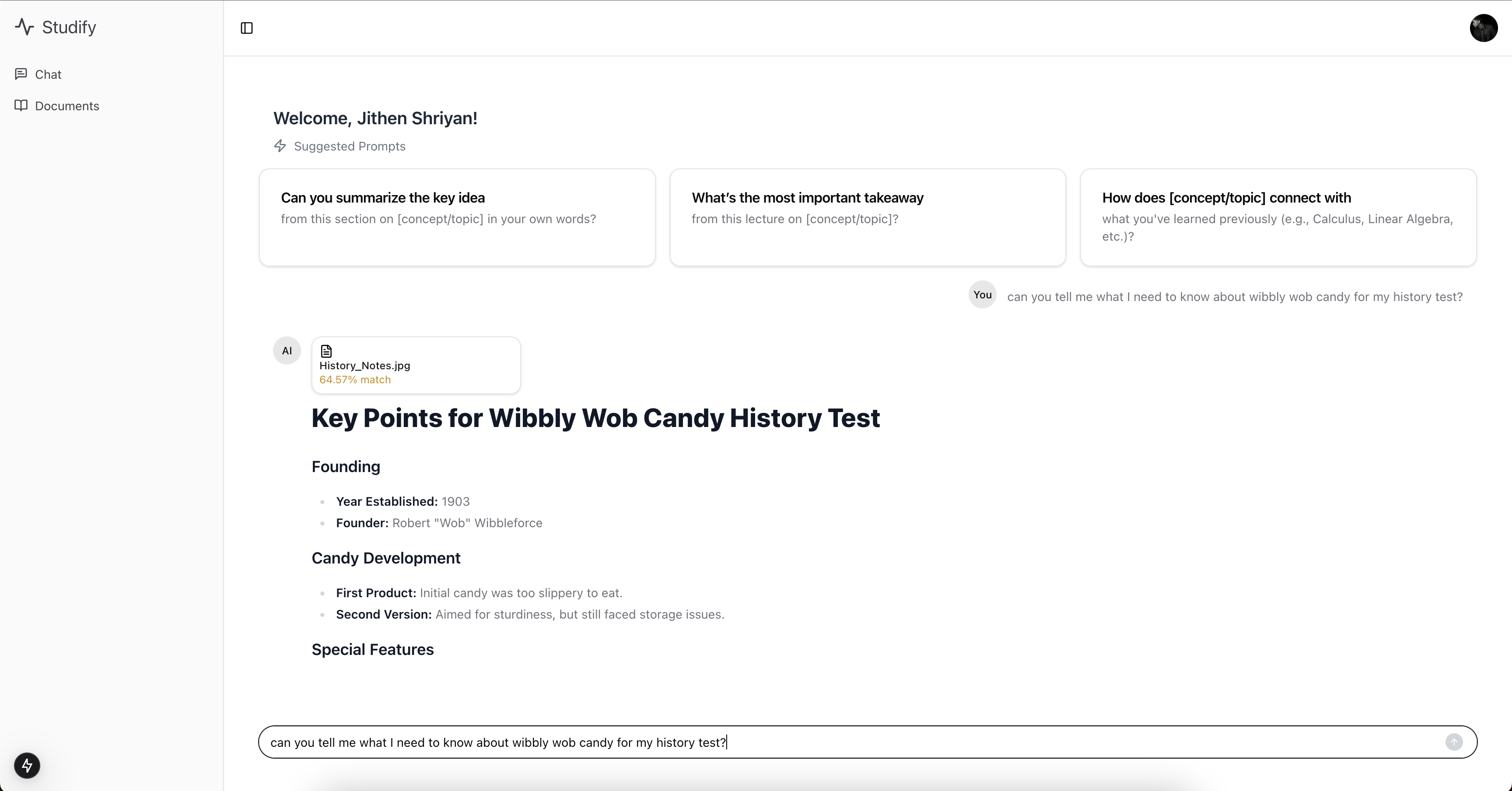
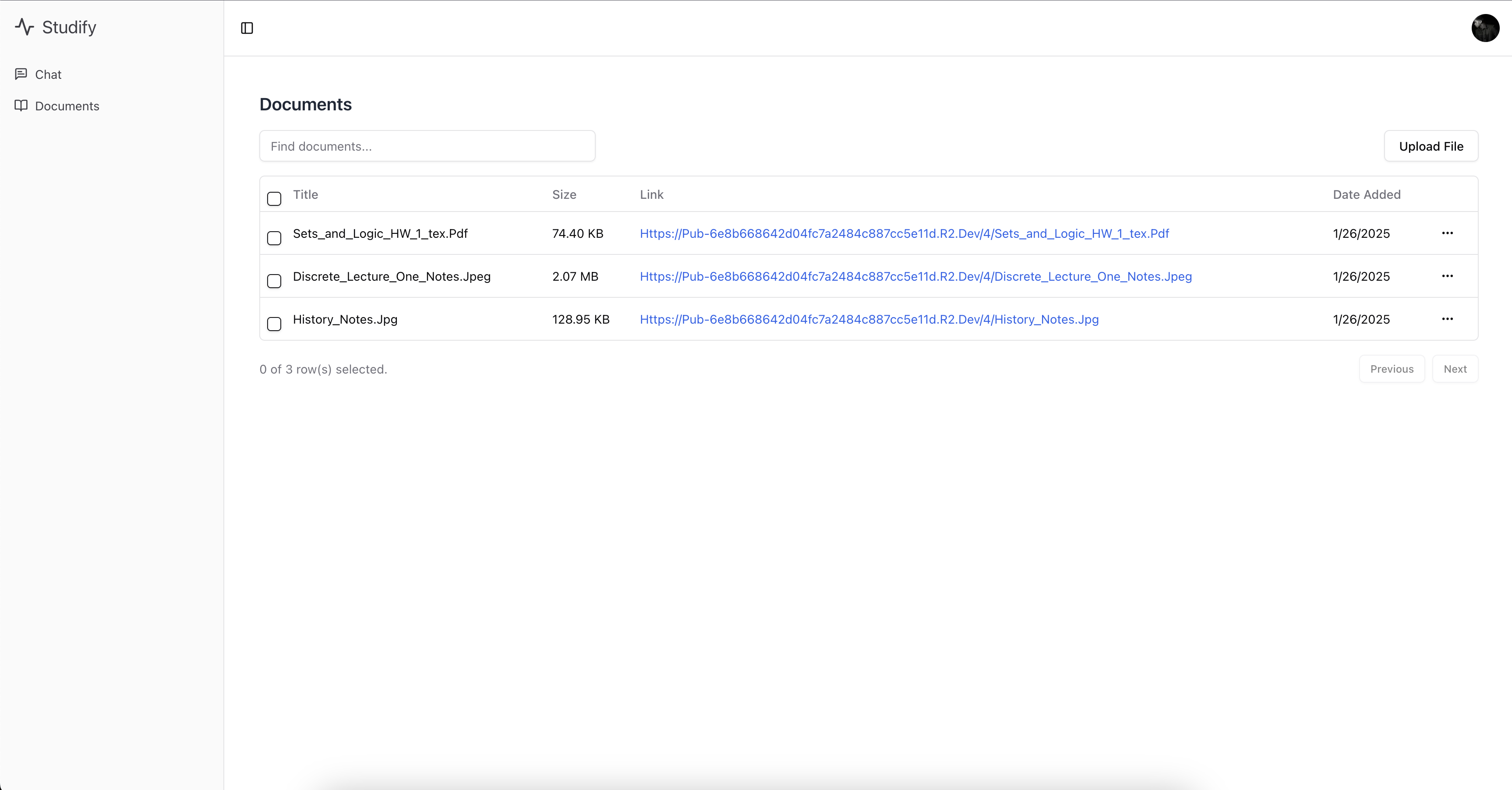
A big challenge I ran into was ensuring that users' could upload images of handwritten notes that were unstructured in nature, but reap the benefits of the AI system. I had to use OpenAI's vision capabilities within their offering to preprocess the images to a text-based format before running them through an embedding model. Additionally, ensuring that the AI would look to relevant subject-matter as context for answering questions was a challenge, and could be solved by filtering the documents to associate questions with (e.g. group by classes, subject, etc.).
Accomplishments that we're proud of
I'm proud of the AI’s ability to quickly analyze and generate personalized study assistance. The tool can process a wide range of content ranging from images of handwritten notes to PDFs of lecture slides, as well as adapt to different subjects from history to math, making it versatile for any student. I’ve also successfully created a polished and intuitive web interface that allows users to engage with the AI in a conversational format and upload their learning materials with ease, and the system responds with valuable, tailored explanations in a matter of seconds.
What we learned
Through this project, I gained a deeper understanding of AI's potential in education. I learned how to refine and tailor AI outputs to ensure they are not only factually accurate but also user-friendly. I also learned how to balance performance and accuracy, especially when dealing with large amounts of text, and how to implement AI models in a way that scales efficiently in real-world scenarios.
What's next for Studify
Next, I plan to further enhance the AI’s ability to handle more diverse and complex study materials, such as video lectures and interactive content. I also aim to incorporate advanced features like practice quizzes, progress tracking, and integration with other educational platforms. Ultimately, my vision is to make Studify an indispensable tool for students of all levels, helping them learn more effectively and efficiently, no matter where they are in their educational journey.
Built With
- auth0
- cloudflare
- next
- openai
- postgresql
- react
- s3
- vercel

Log in or sign up for Devpost to join the conversation.