-
-
-
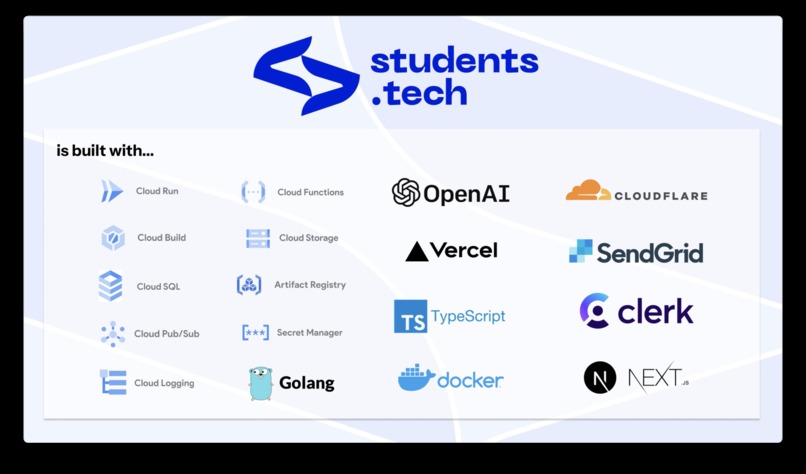
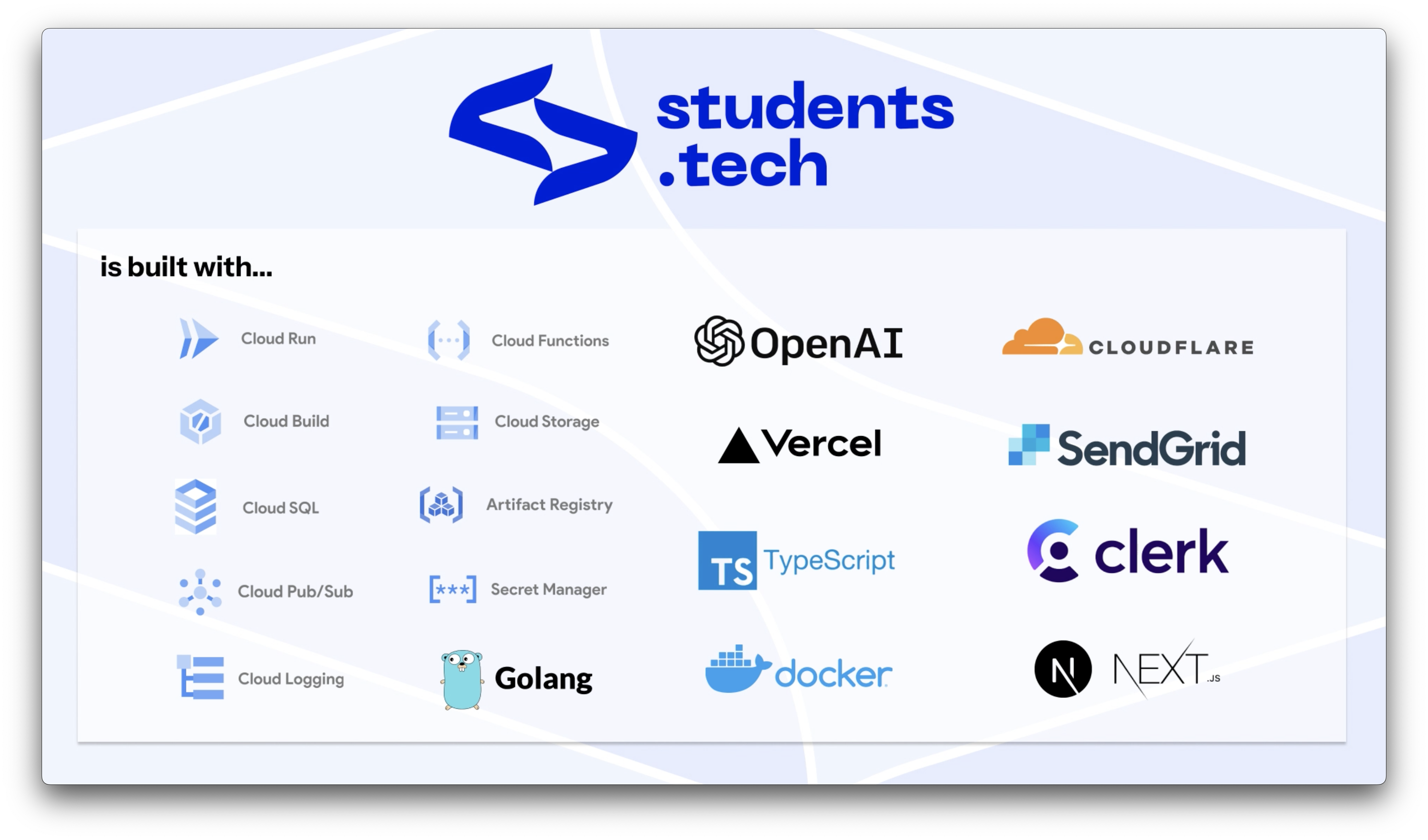
Our Tech Stack
-
Glimpse
Inspiration
Inspirations comes from the personal experiences of the founders. We all have a rich history in doing freelance IT projects with various clients. Cumulate 2022 to 2023 YTD, we have a combined project revenue of over 300 million IDR. This figure evident in how gigantic this students IT project community is. Concurrently, we have had the privilege of encountering extraordinarily talented developers/engineers from less recognized universities in rural Indonesia. Despite their exceptional skillsets, these individuals often face hurdles in securing their first job due to the absence of a practical portfolio.
We aim to democratize this IT freelance project experience nationwide by building a centralized platform.
What it does
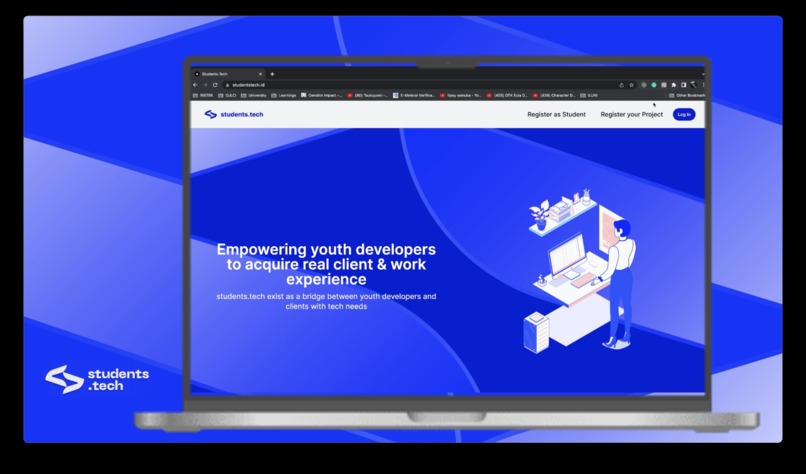
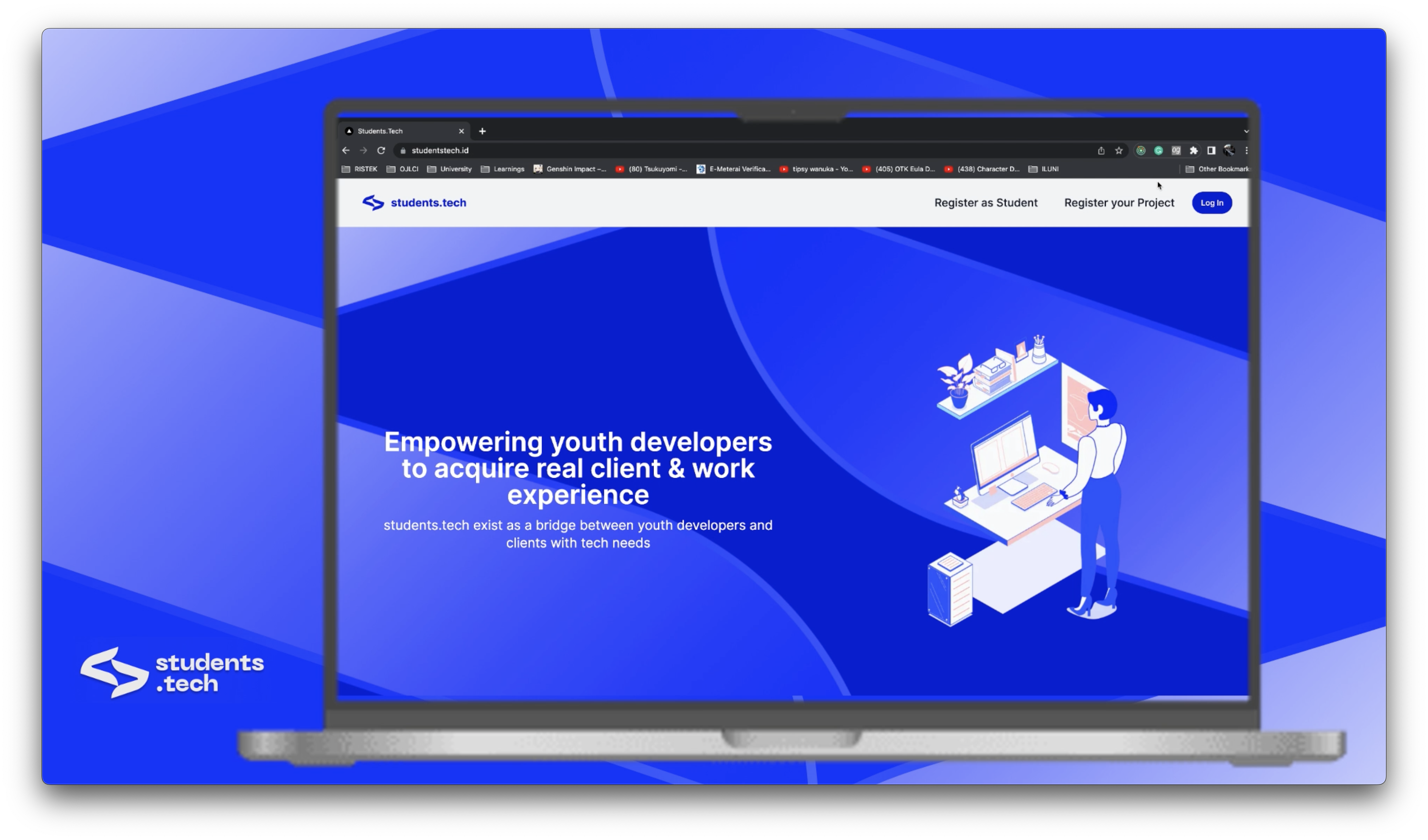
Our platform functions as the melting pot for talents and clients. Clients can submit projects effortlessly with Stubot, our proprietary AI-powered Project Management Chatbot. This innovative tool replaces the tedious task of filling out a Google form with a dynamic and interactive chat environment. Stubot facilitates a detailed discussion until all project aspects are crystal clear.
From the student's perspective, the platform is universally accessible to students of all majors and universities across Indonesia. Upon registration, students are required to provide detailed information, including their areas of expertise and availability. Once verified, they are free to apply for any of the projects listed on our platform. In the process of applying for a project, students will undergo a tailored assessment designed to meet the specific needs of the project at hand. This evaluation is meticulously created using the GPT API, ensuring a personalized approach to each potential project engagement.
How we built it
Our team consist of 4 developers, and each two of us will be responsible for building the client side and the server side of the application. Still, before we jump to the development, first we set up a CI/CD pipeline using Google Cloud to deploy, test and cross-check our work easily. Next, we set up our infrastructure for the application client and server with Google Cloud services, such as Cloud Run, Cloud Function, PubSub, Cloud Build, and many more. We also use other cloud services to help us develop the application, such as uploadthings and (Vercel)[https://vercel.com].
On the second day of the Hackathon, we jump straight to the client and server development, on the client side we are using Next.js as our framework and Go as our backend preferred programming language. Each module will be developed separately between the server and the client, once the module development is done then we start wiring the API and the apps. We also sprinkle some AI tech into our development, in one of our features we mix the functionality with the OpenAPI GPT-3 API to maximize user experience and output in our application.
Challenges we ran into
We were using a lot of Google Cloud services, and it was really hard to combine each one of them to achieve the functionality we wanted. Some services need a special approach to be combined with others. We also have a hard time trying to test the services locally, such as the Cloud Function and Cloud SQL, we have to use a proxy and multiple rounds of trial and error.
When we are integrating the GPT API with our server, we have to go on a lot of research to find the correct and best possible prompt to feed to the API, this prompt also needs to satisfy the requirements we set for the client and the server. We also have to adjust to the limitation the GPT API can give us by revamping some of our features.
Accomplishments that we're proud of
We're proud that we can use the Google Cloud and other cloud services we use effectively, by maintaining its cost usage but still giving us the technology we want. We were also able to give good visibility in each of our services by using Cloud Logging. After much trial and error, we also learned a lot about how GPT API works and manage to structure the best possible prompt for our requirements.
What we learned
We learned that we need to do more research on the technology we are going to use and try to keep it up to date because some of the guides are outdated. We also learned it the hard way that no matter how many hours are given on a hackathon, it will never be enough and will always leads to sleepless nights 🤣–experience we cherish and value from a hackathon.
What's next for students.tech
We don't stop here. We are not only building a platform. We are fostering a community. Our roadmap has two primary focuses moving forward. Firstly, we will be fine-tuning the platform to ensure it is fully equipped to cater to the entire IT student landscape in Indonesia.
Next, partnerships. We know we can't cover every corner of Indonesia, alone. Therefore, we aim to collaborate with IT student clubs across the country. We will engage them as community partners, working towards mutually beneficial agreements. This way, we can ensure that the fruits of our platform are enjoyed by all, reaching and positively impacting students in even the most remote corners of Indonesia.
Built With
- artifact-registry
- clerk
- cloud-build
- cloud-functions
- cloud-logging
- cloud-pub/sub
- cloud-run
- cloud-sql
- cloud-storage
- cloudflare
- docker
- gcp
- golang
- next.js
- openai-api
- secret-manager
- sendgrid
- typescript
- vercel


Log in or sign up for Devpost to join the conversation.