Inspiration
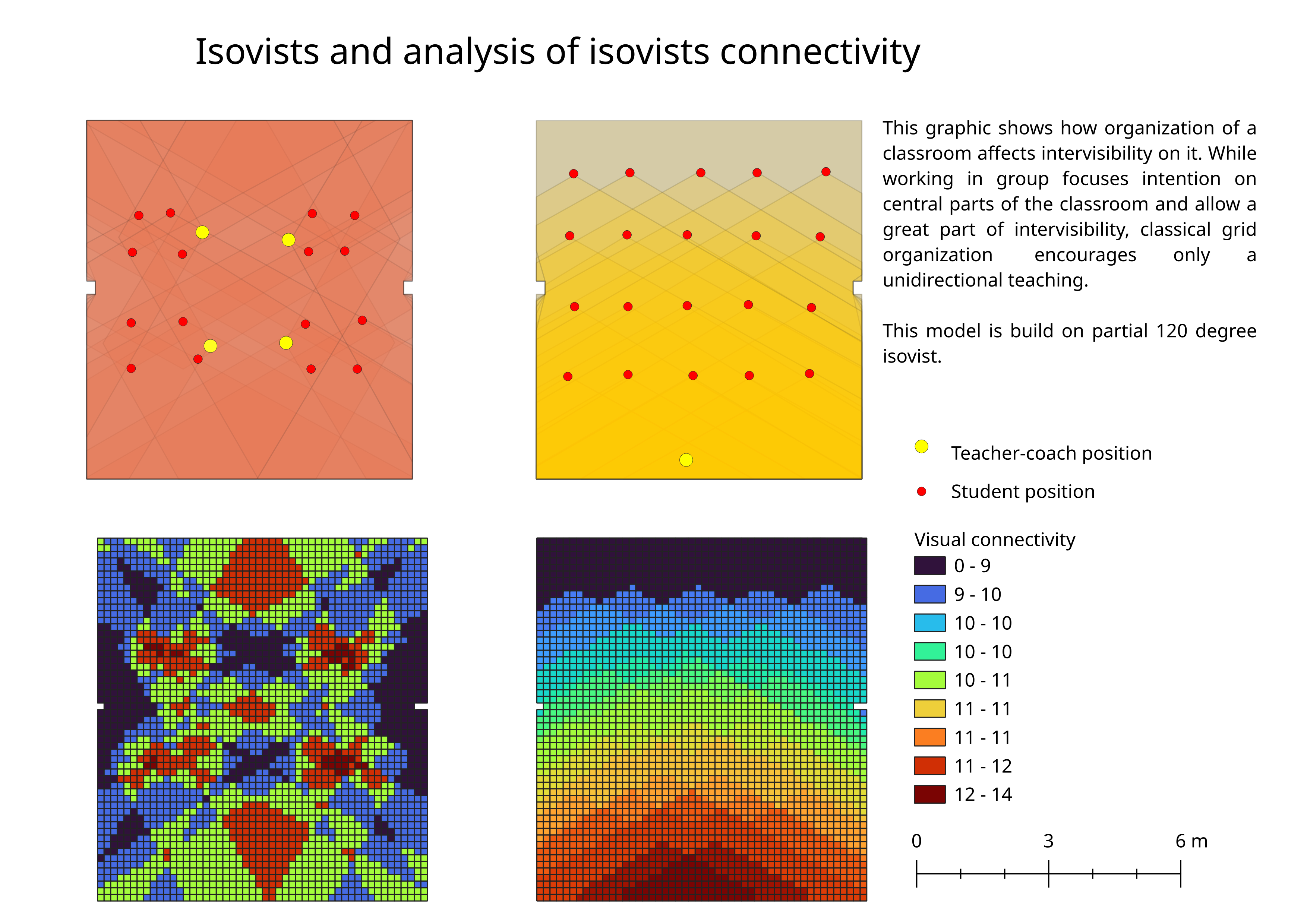
Education is a cornerstone of development, and for Africa, achieving the UN's Sustainable Development Goal 4 (Quality Education) is crucial. My project aims to empower African educators with tools to create classrooms that foster interaction and inclusivity. Traditional designs often hinder student engagement, with limited visibility creating a barrier to participation. This inspired me to leverage the concept of "isovists" - the visual field from a specific point - to transform classroom layouts for the better.
What it does
This uses readily available 2D CAD data of existing classrooms. By analyzing these layouts, we can model student intervisibility using isovists. DepthmapX software will be used to generate visibility maps, highlighting areas where students and teachers can see each other. These maps will be further analyzed to identify zones of low visibility, allowing educators and architects to optimize classroom designs for increased interaction.
How we built it
Data Acquisition: We'll collaborate with African schools to obtain existing 2D CAD floor plans of their classrooms.
** Isovist Analysis:** Software like DepthmapX will analyze the 2D data and generate visibility maps, revealing areas of limited student sightlines.
** Design Optimization:** Based on the visibility maps, we can propose new layouts that maximize interactivity, considering factors like furniture placement and traffic flow. This will be achieved through collaboration with educators and architects who understand the specific needs of African classrooms.
Challenges we ran into
Limited Resources: Working with readily available 2D data presents challenges compared to the ideal of 3D modeling.
Automation Gap: Currently, the process requires manual analysis of the data for optimal design recommendations.
Accomplishments that we're proud of
First of all. I am so proud to participate to this hackathon. I will work to succeed in this graduation and participate with a better engagement in next hackathons.
then, I'm proud to participate in introducing isovist analysis for optimizing classroom design in Africa. This approach has the potential to significantly improve student engagement and learning outcomes. It helps also developing an effective solution using readily available 2D data demonstrates the project's adaptability to resource-constrained settings. This makes it more readily applicable across a wider range of African schools.
What we learned
This project has been an insightful journey. It highlighted the importance of adapting design solutions to local contexts and resource limitations. I've gained expertise in isovist analysis with 2D data and honed collaboration skills to bridge the gap between technology and educational needs in Africa.
What's next for Classroom visibility
The next step is to develop a user-friendly, all-in-one application. This app will seamlessly integrate 2D data analysis, isovist generation, and design recommendations. Additionally, exploring 3D data integration in the future will further enhance the project's capabilities.
By focusing on the African context and the UN's educational goals, this project story strengthens your pitch. It showcases the project's impact and future potential for creating inclusive learning environments.
Built With
- autocad
- depthmapx
- qgis
- r


Log in or sign up for Devpost to join the conversation.