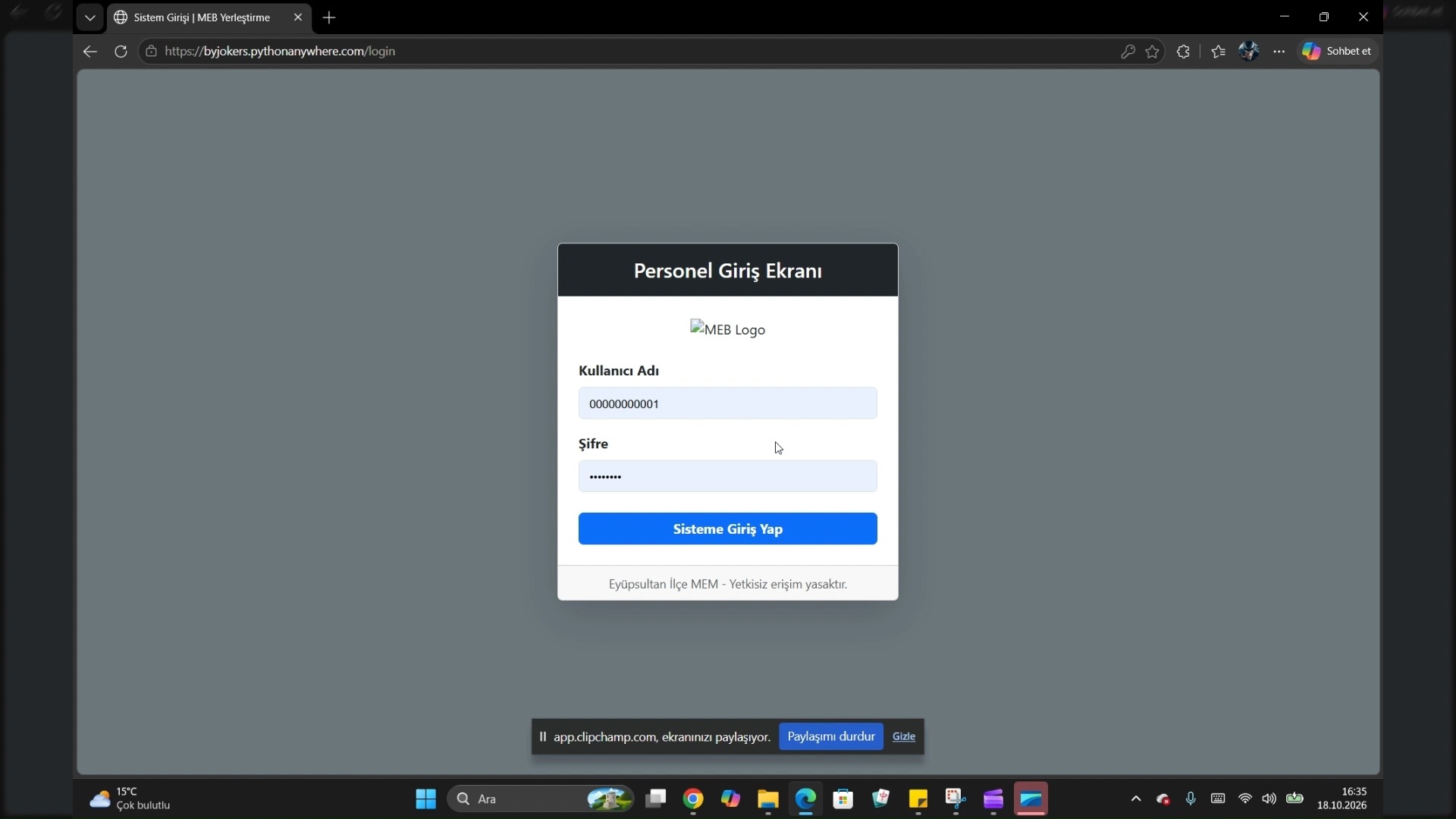
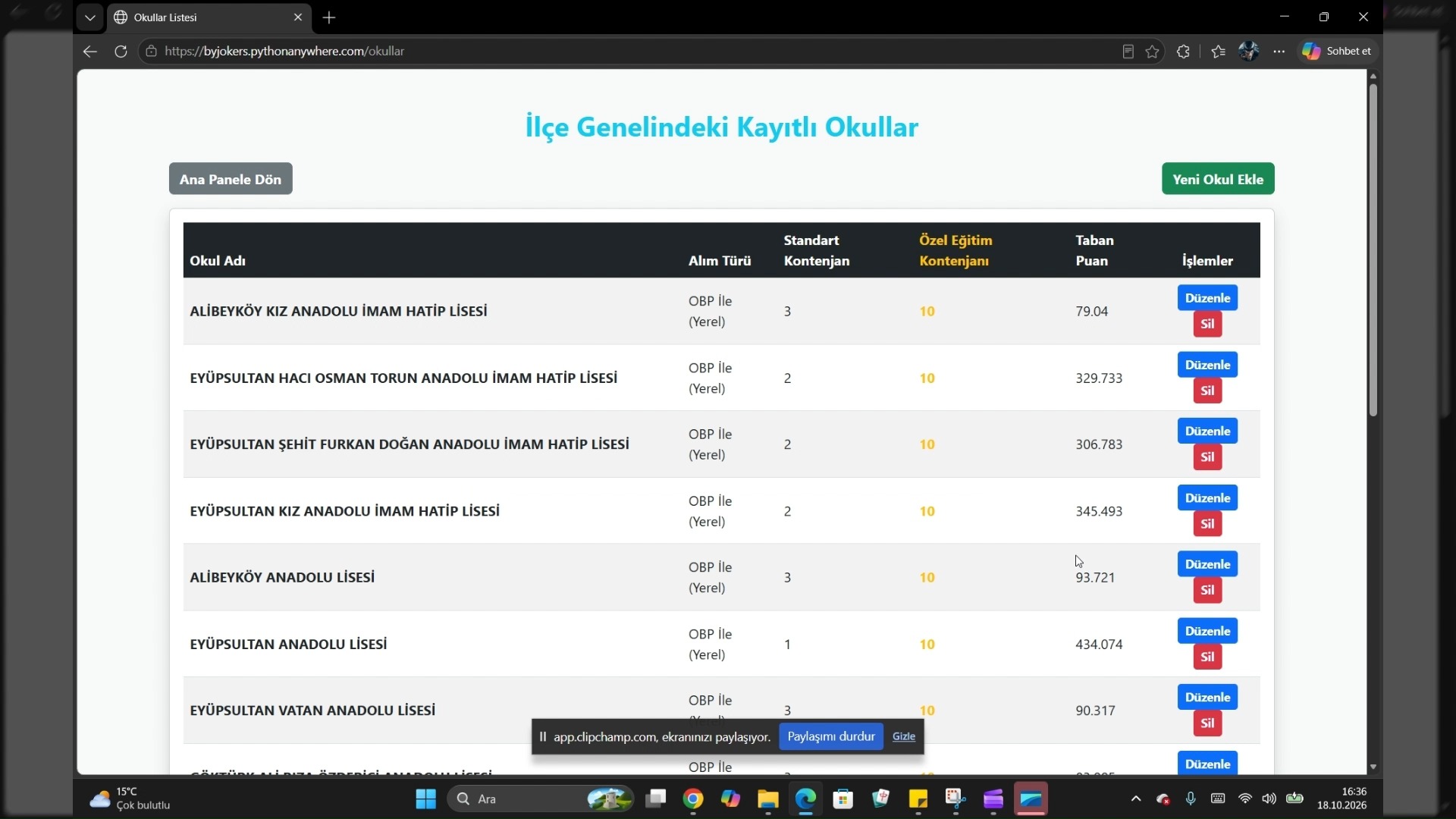
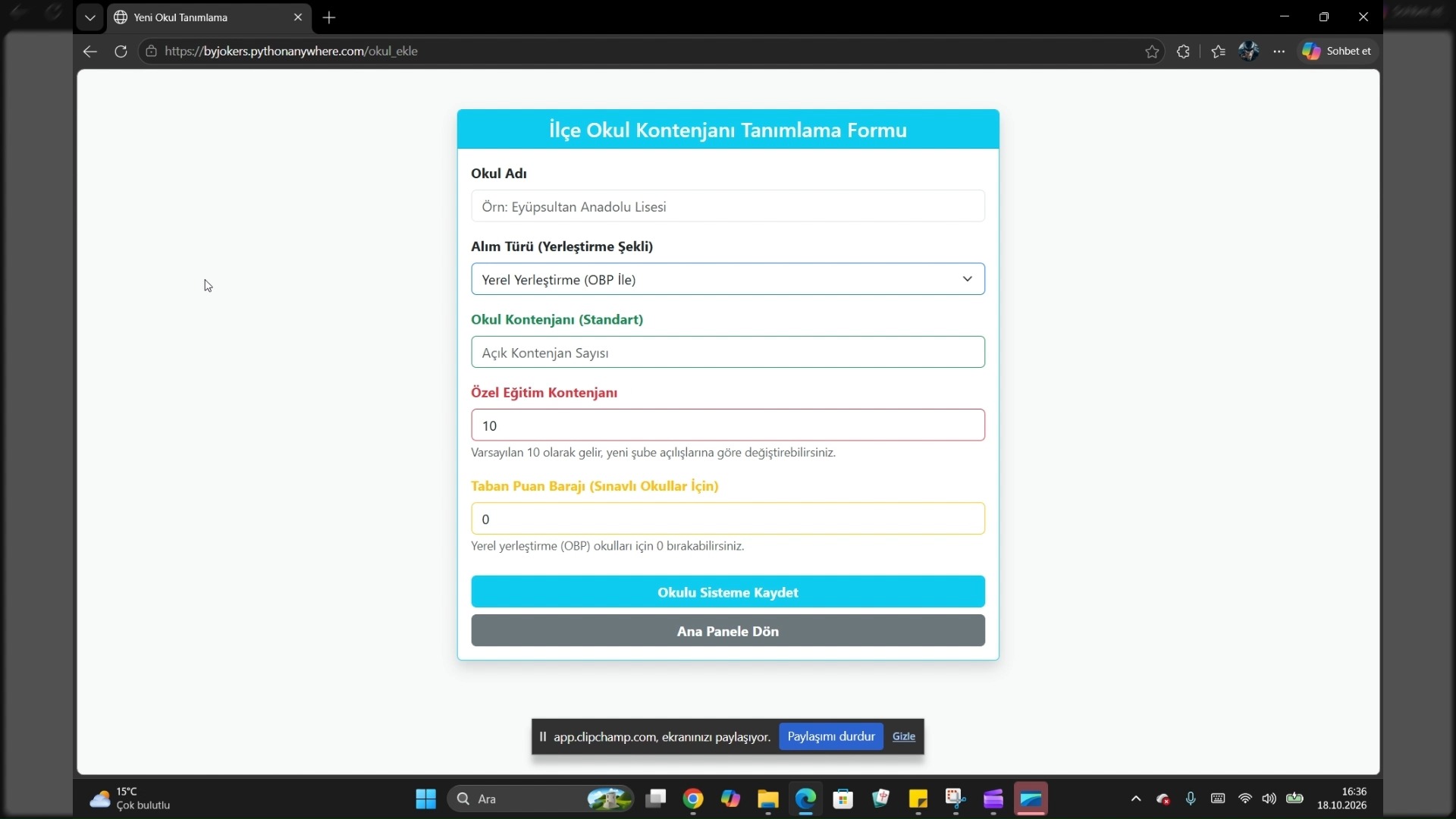
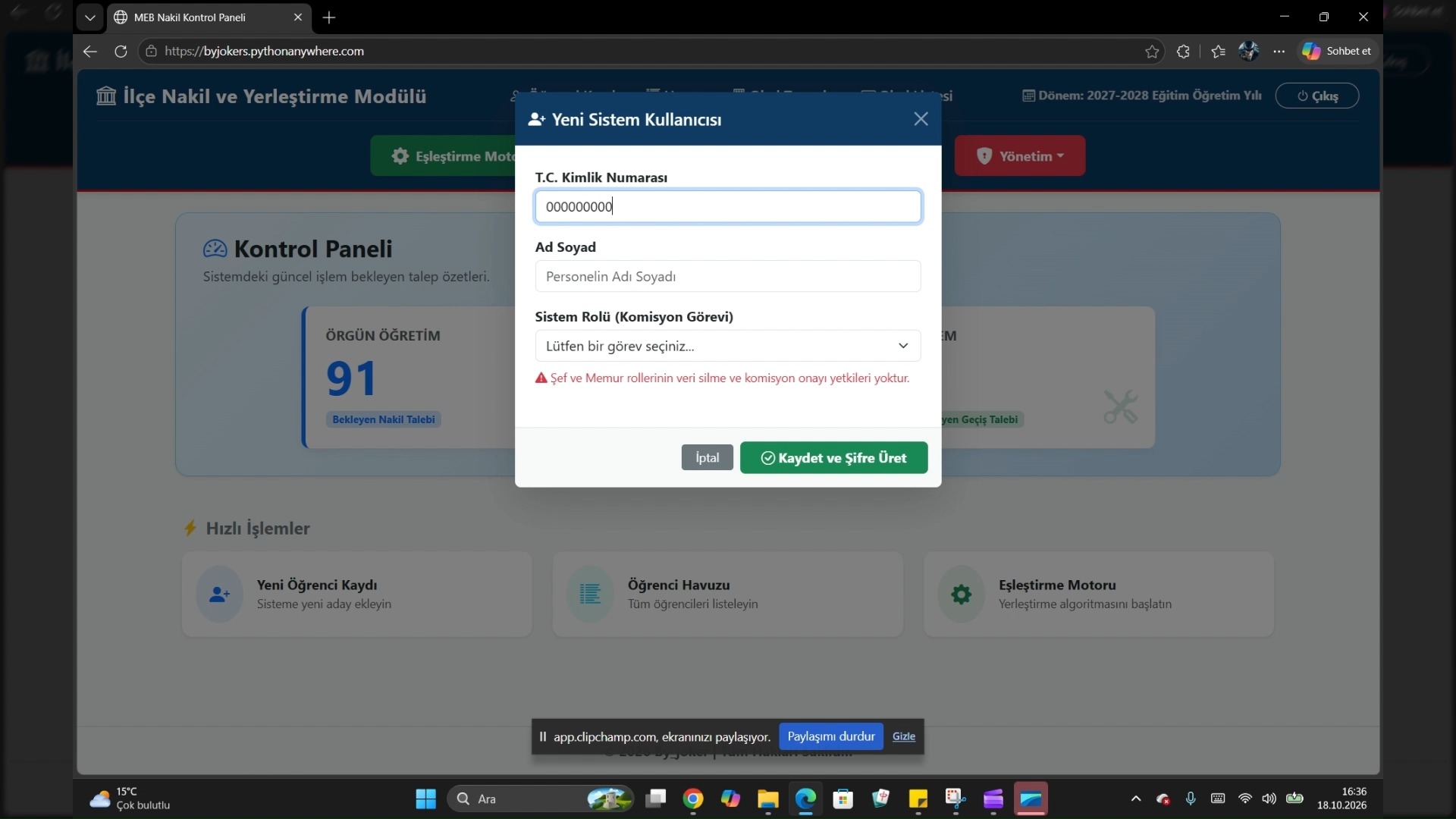
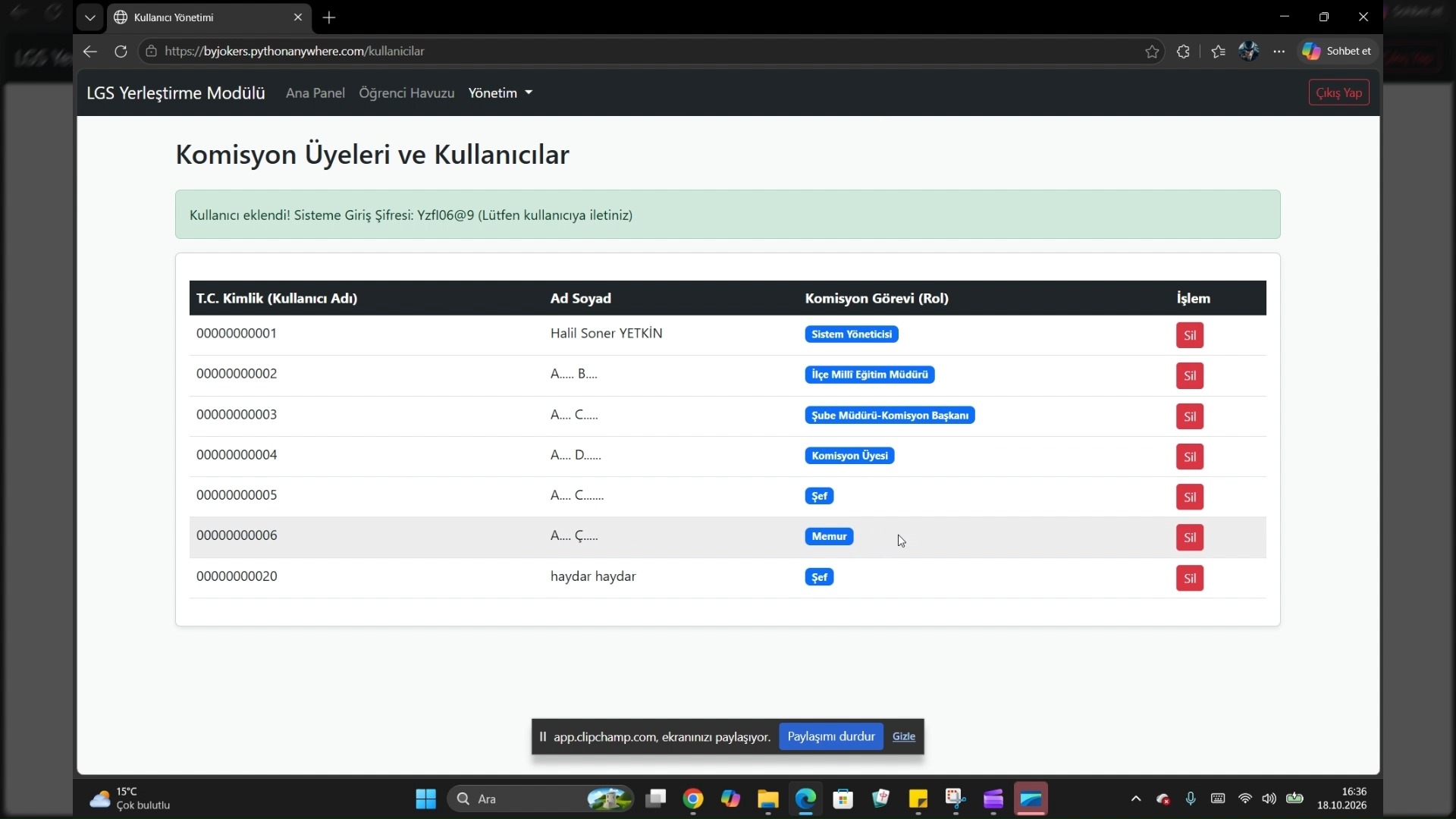
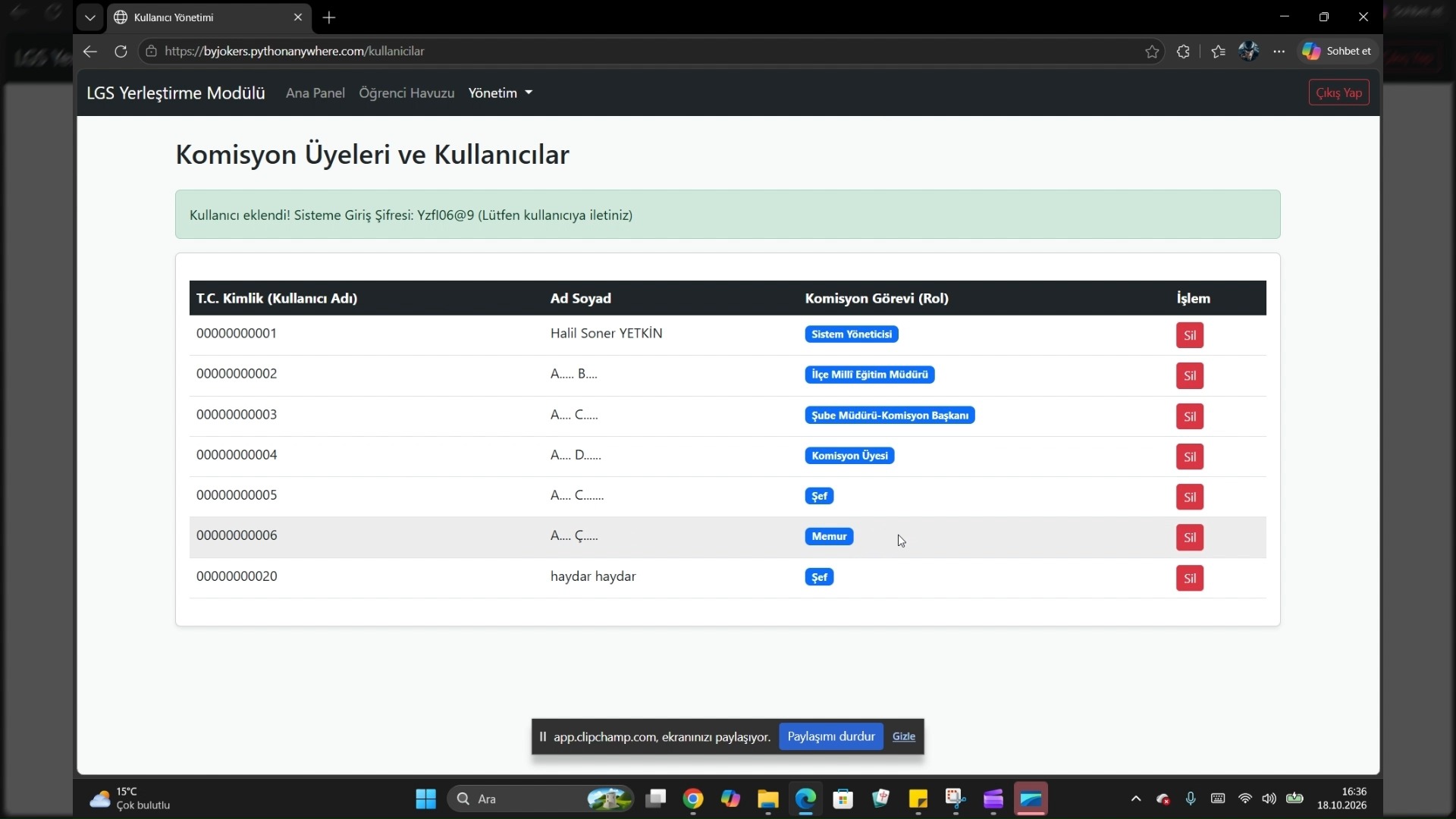
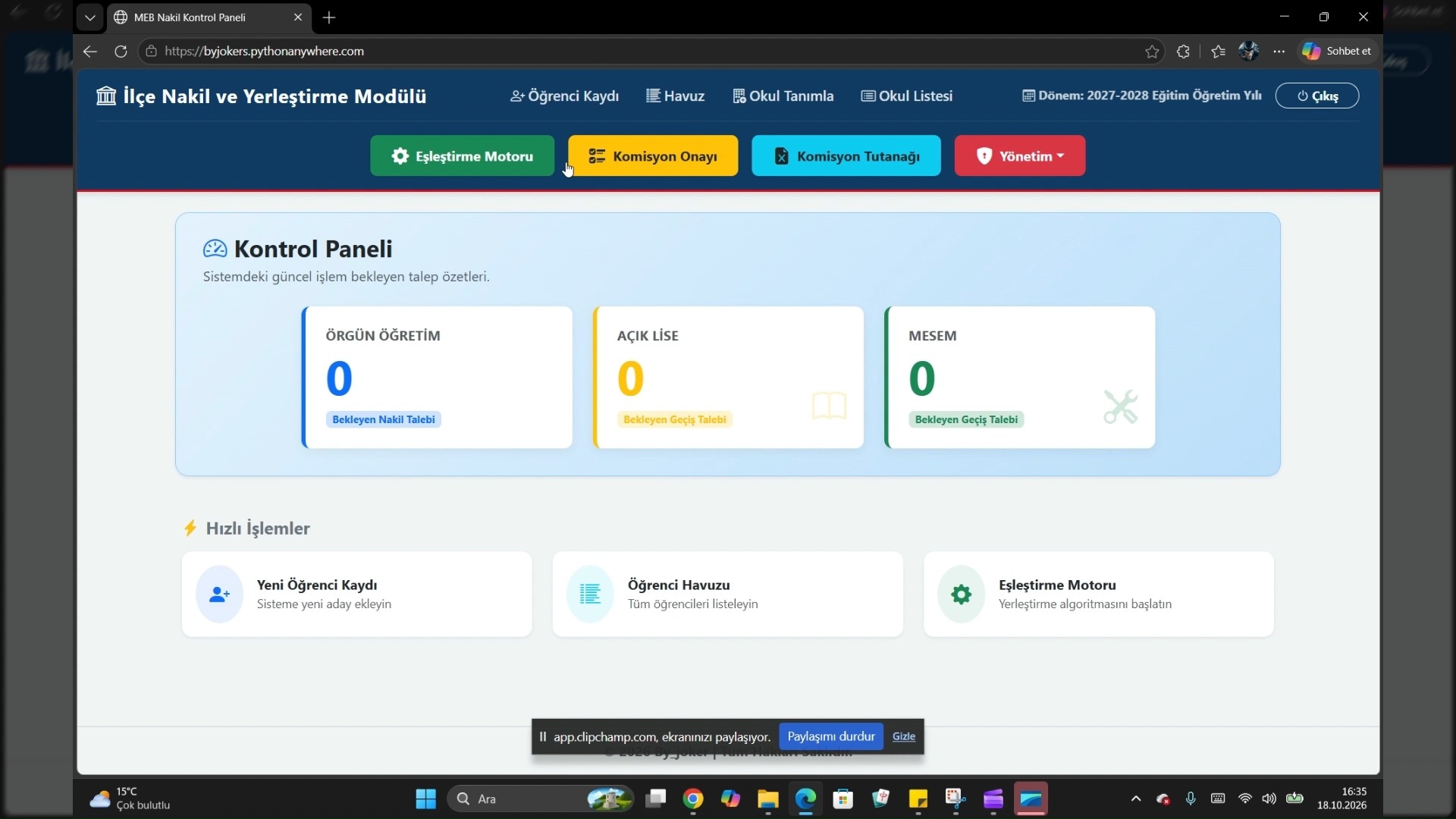
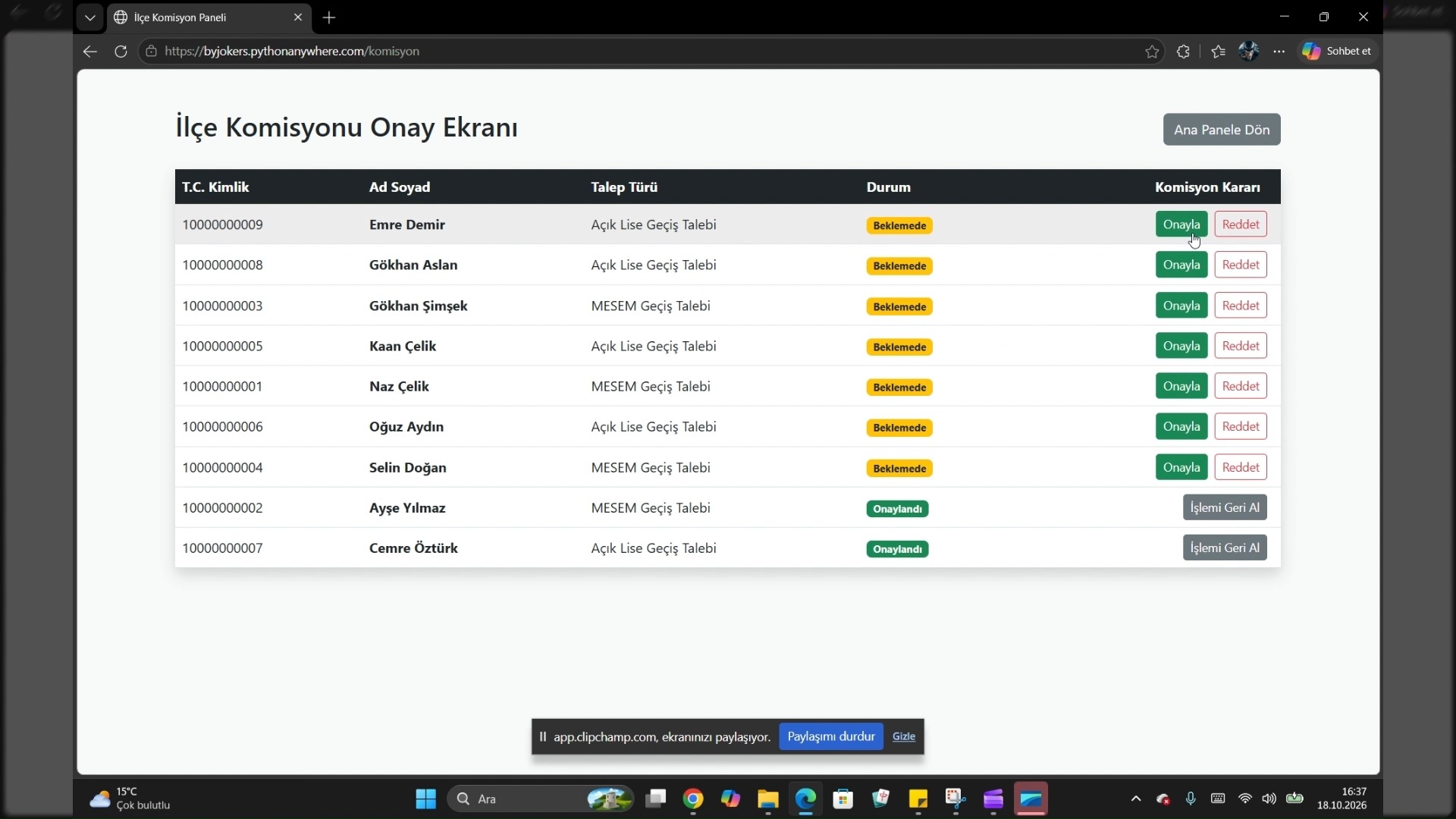
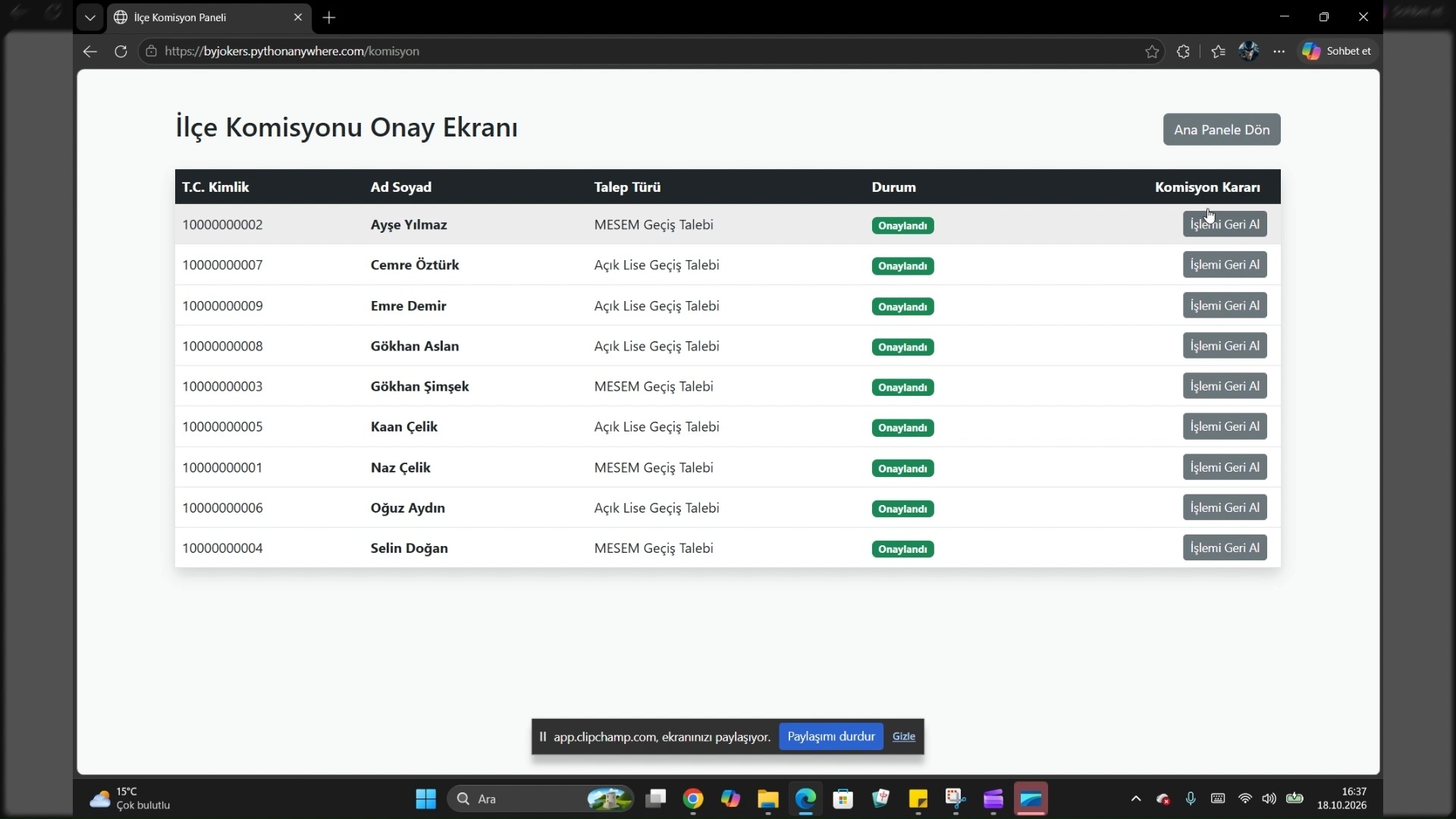
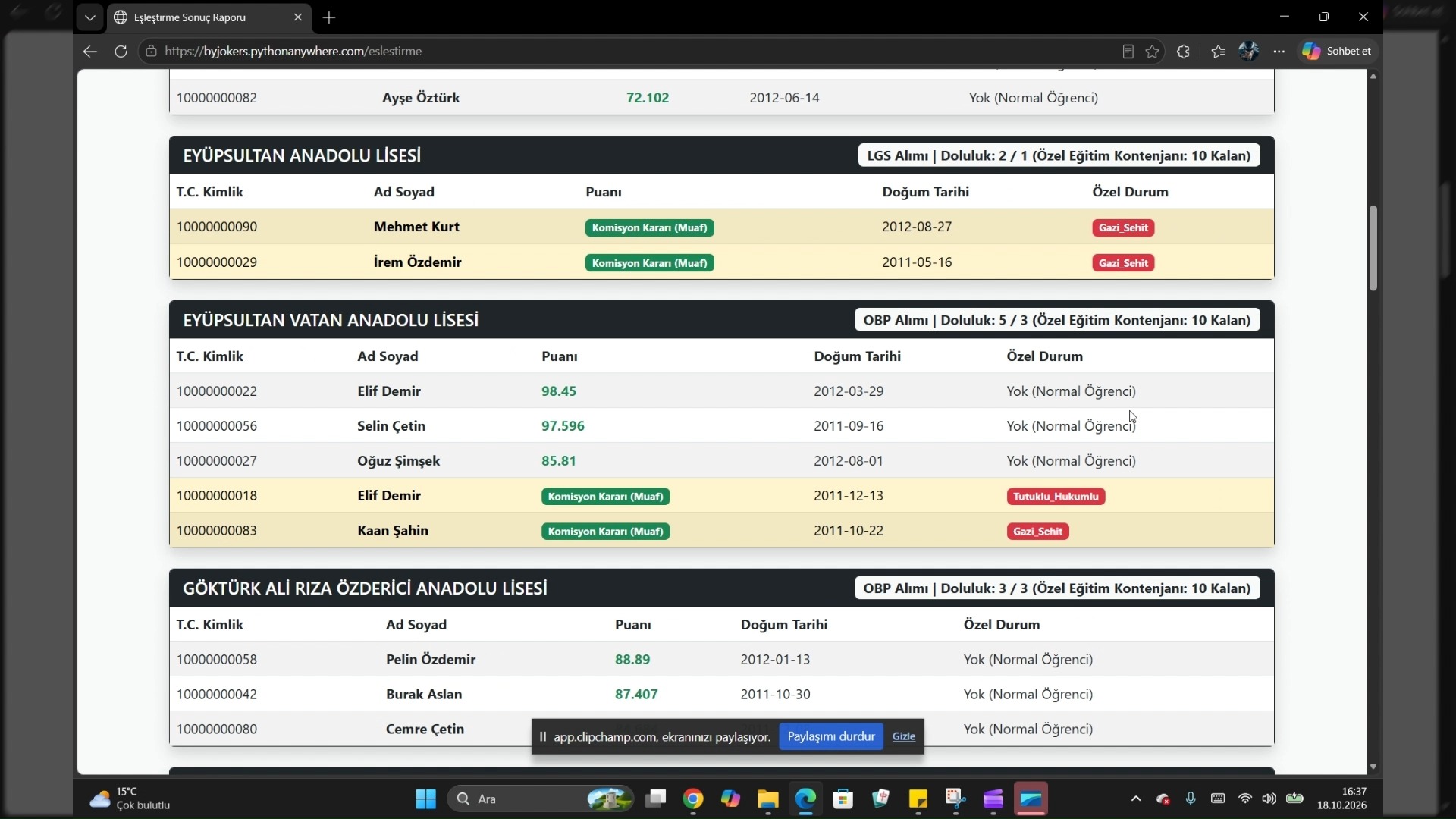
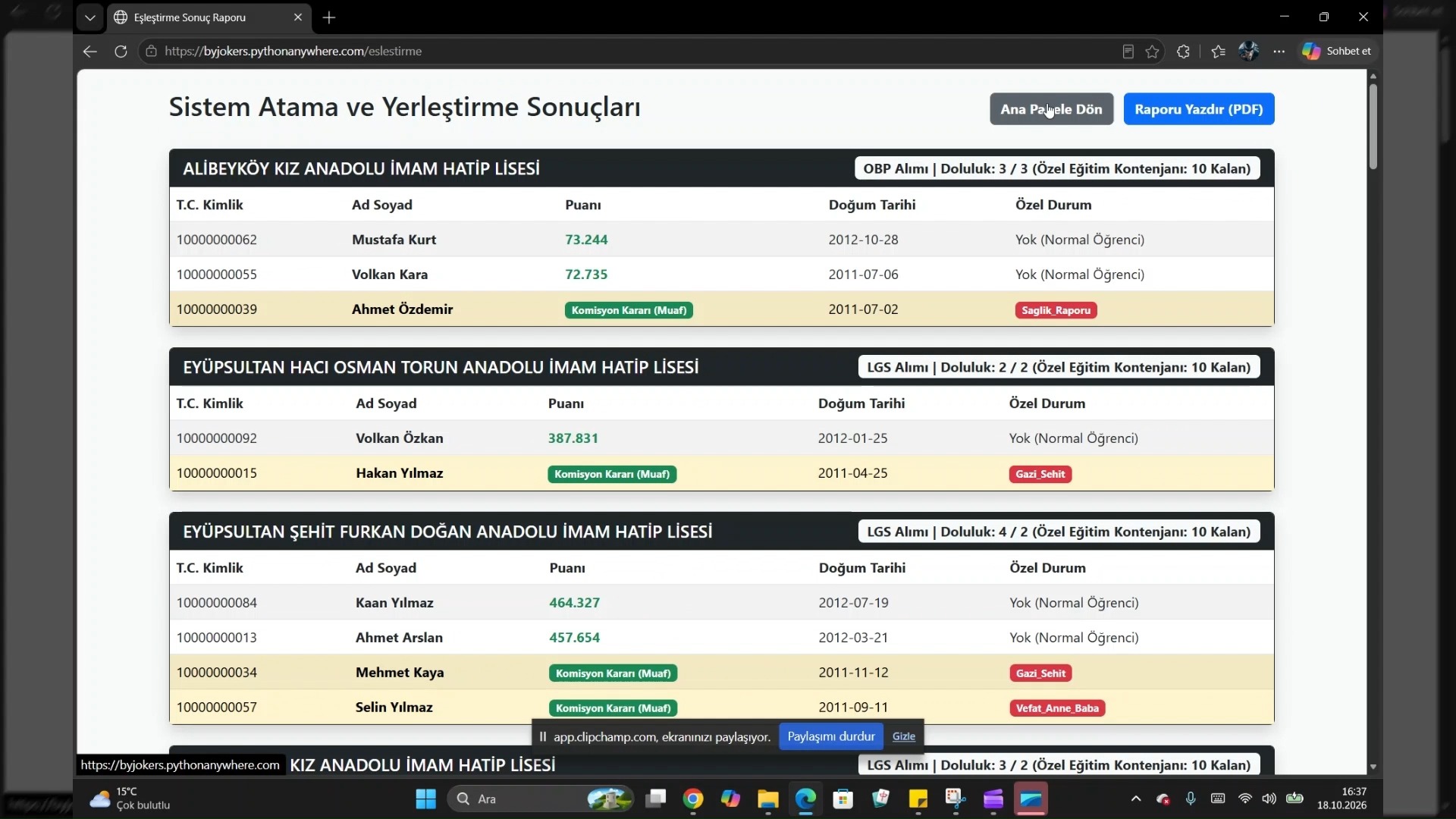
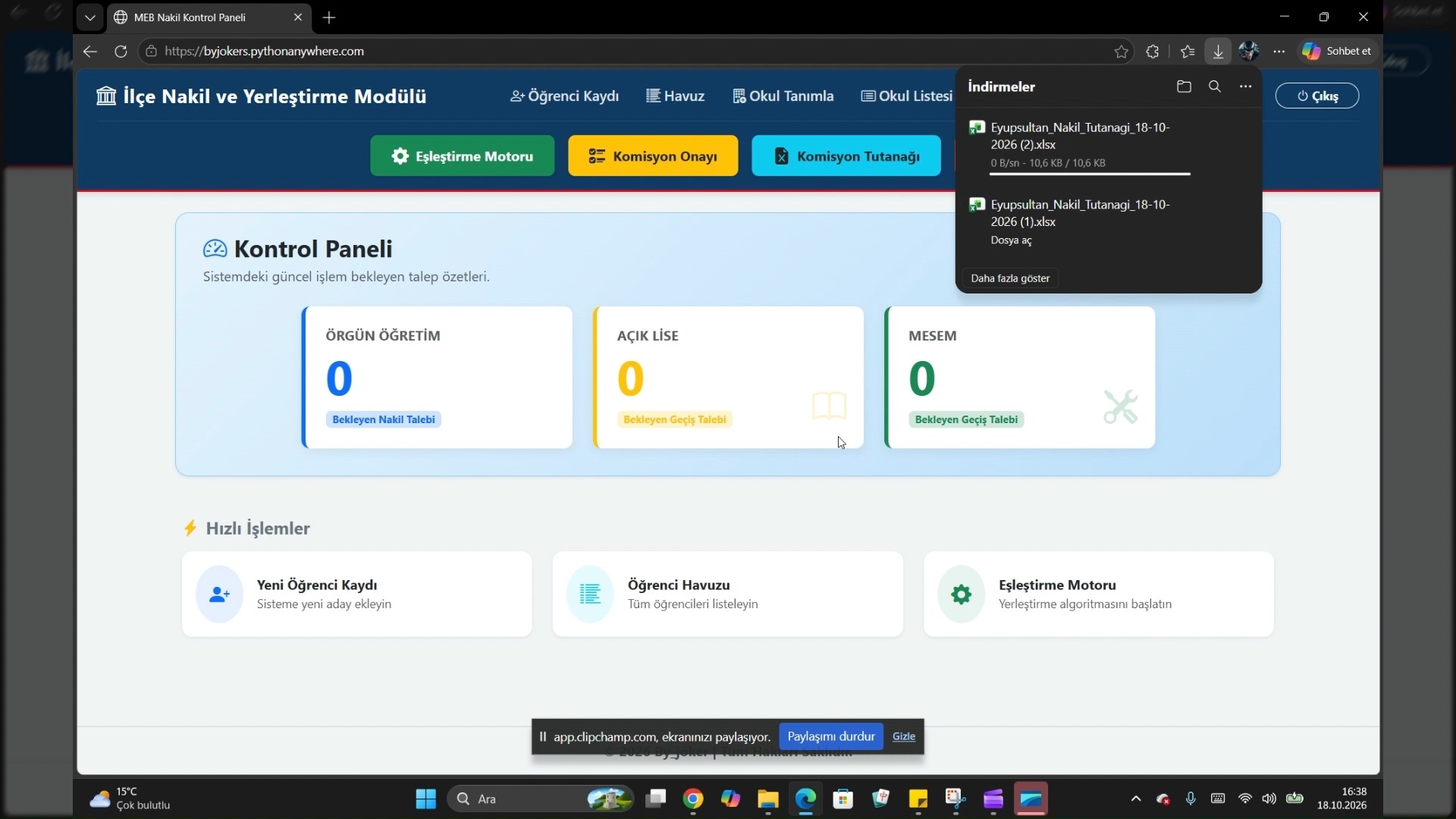
The system is designed to operate as a closed environment, allowing users to log in directly using the provided credentials: • Username: 00000000001 • Password: e1#zjGTM
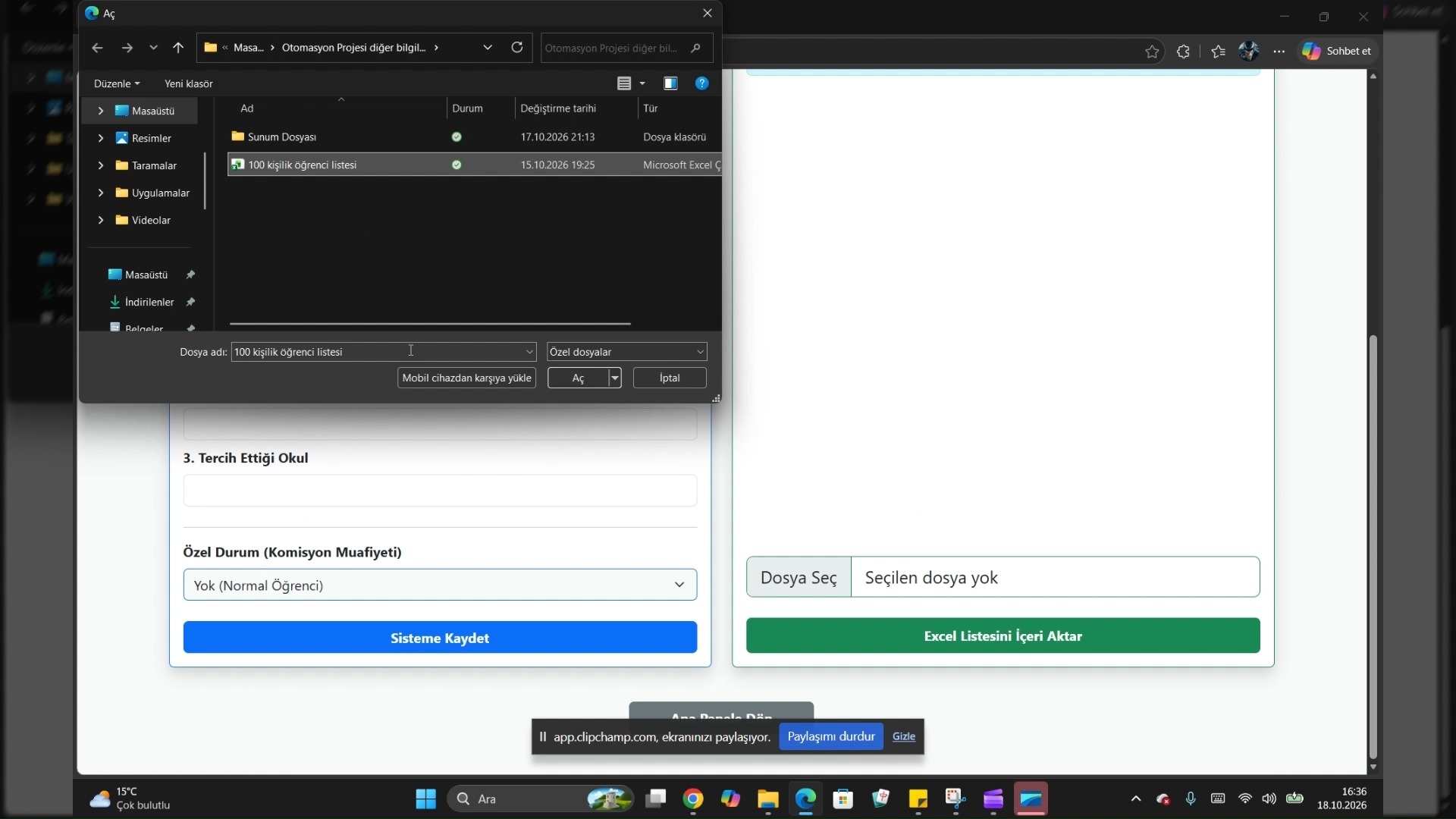
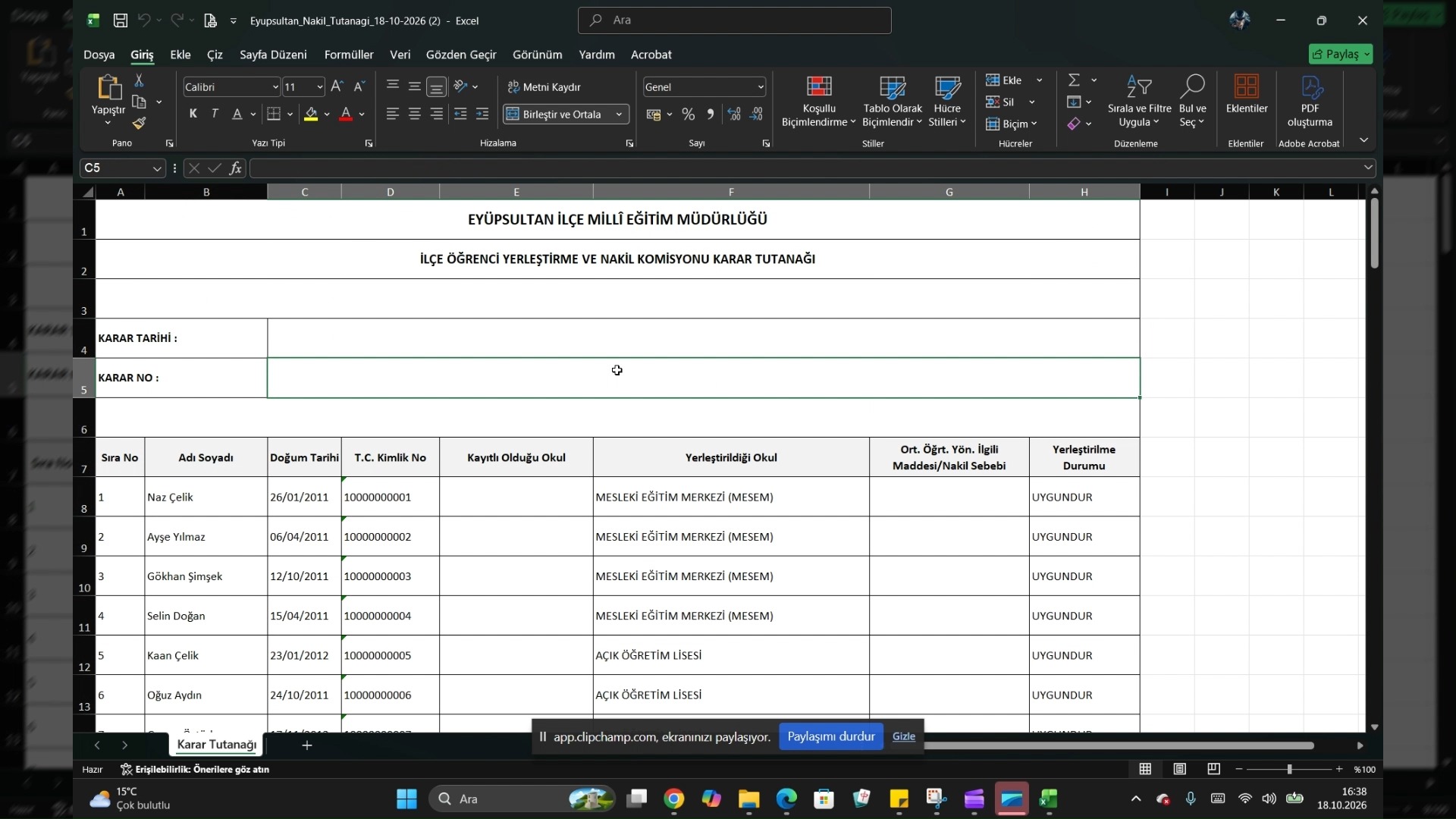
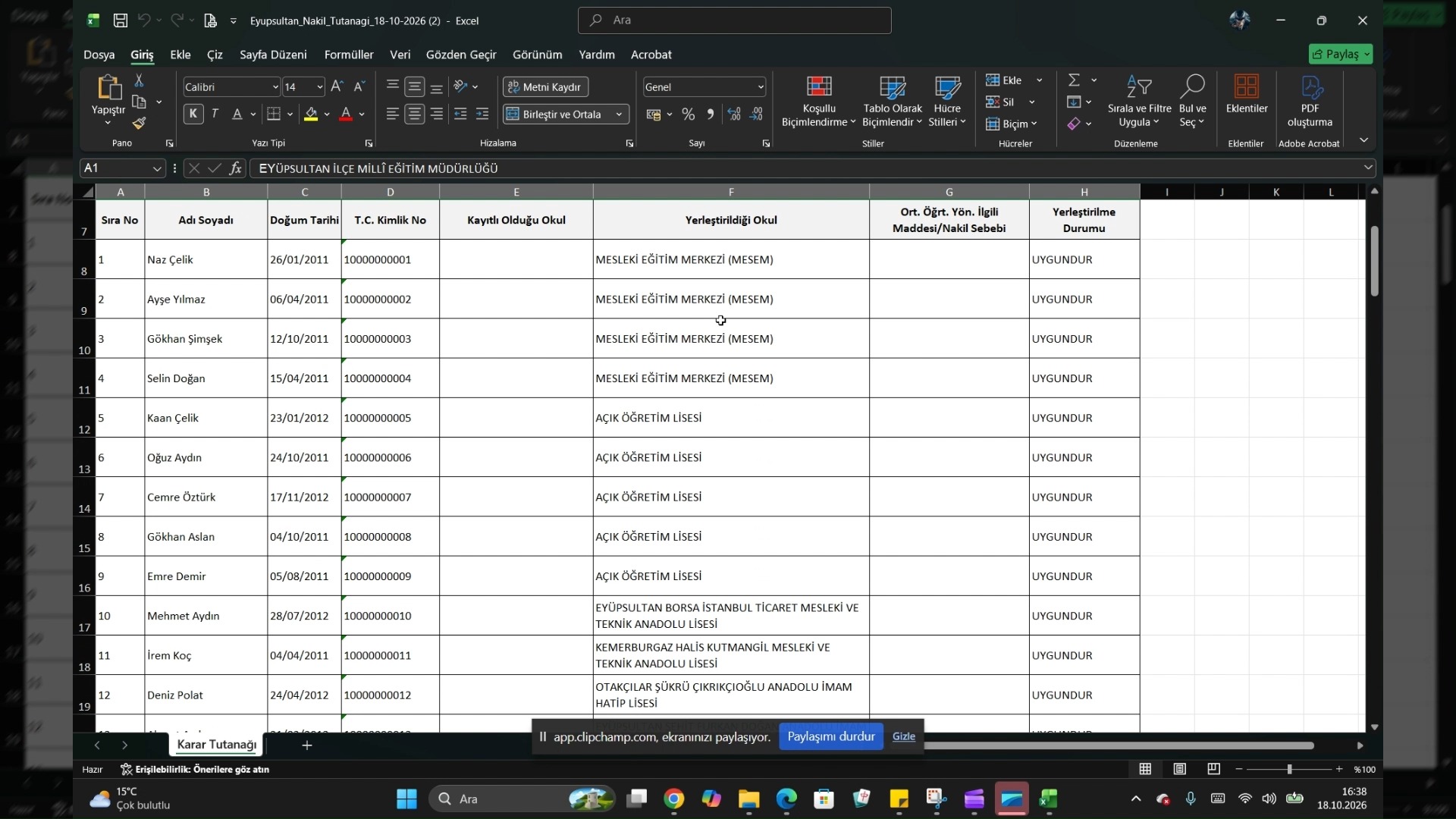
How we built it We built the core architecture using Python and Flask, establishing a robust backend that operates smoothly in a local environment. To ensure strict compliance with institutional data privacy regulations (KVKK), we utilized SQLite as a self-contained database, avoiding external public cloud exposure. Data processing and automated reporting were handled using Pandas and OpenPyXL. The system was designed on two main theoretical pillars: Zero Trust Architecture & RBAC: We implemented strict Role-Based Access Control (RBAC) where users (e.g., Commission Directors, Officers) are dynamically authenticated, ensuring they only access data within their jurisdiction. Algorithmic Fairness: The placement engine autonomously evaluates disadvantaged students (e.g., health issues, loss of parents) based on official regulations (Article 23), eliminating human bias and subjective decision-making. Challenges we ran into One of our biggest hurdles was normalizing highly unstructured, messy Excel data coming from various sources. For instance, special condition tags often had inconsistencies (e.g., "Özel Eğitim", "Ozel_Egitim", "ÖzelEğitim"). This initially caused our algorithm to misclassify disadvantaged students. We had to develop a smart, robust string-cleaning and normalization function to capture every possible variation. Additionally, designing a system for the public sector meant we had to navigate strict data protection laws. We could not use real student data for testing, so we had to engineer a fully synthetic (dummy) dataset that accurately simulated complex placement scenarios without compromising real personal information. Accomplishments that we're proud of We are incredibly proud of transforming a highly stressful, manual bureaucratic process that typically takes days into a "zero-touch" automated operation that finishes in minutes. Beyond just sorting students, our system autonomously generates official, perfectly formatted Excel decision logs (Karar Tutanakları) that strictly adhere to the Ministry of National Education's (MEB) formatting standards—complete with dynamic signature blocks and official headers. What we learned Building this module taught us that applying theoretical academic concepts—like Zero Trust cybersecurity—to practical public administration is both highly challenging and deeply rewarding. We also learned the profound real-world impact of "Algorithmic Fairness"; in the public sector, a single line of code can directly alter a disadvantaged child's educational future. Ensuring our logic was both legally compliant and ethically sound was a massive learning curve. What's next for Student placement and transfer commission Our immediate next step is to transition this academic prototype into a real-world pilot program. We are currently preparing to present the module for official administrative approval (Kaymakamlık Oluru) to be tested in a closed intranet environment. Furthermore, as this originated as a Master's degree project, we plan to expand our framework and findings into a peer-reviewed academic publication.


Log in or sign up for Devpost to join the conversation.