
ABSTRACT The analysis of student academic performance plays a vital role in improving educational quality and institutional effectiveness. This project focuses on applying statistical techniques such as hypothesis testing and correlation analysis to evaluate relationships between study habits, attendance, socioeconomic background, and academic achievement. Statistical inference helps transform raw educational data into meaningful insights that support decision-making by educators and policymakers. The study uses descriptive statistics, correlation techniques such as Pearson’s and Spearman’s coefficients, and hypothesis testing methods including t-tests, ANOVA, and Chi-square tests to determine whether significant relationships exist between selected variables affecting performance. Results indicate that attendance, study hours, prior academic preparation, and family support significantly influence student success. This project demonstrates how statistical tools can be used to identify patterns, predict performance trends, and support academic improvement strategies.
INTRODUCTION Educational institutions continuously seek ways to improve student learning outcomes. Statistical analysis provides a scientific method for understanding how different academic and non-academic factors influence student performance. Student achievement depends on multiple variables including: Study habits Attendance percentage Socioeconomic background Family support Prior academic records Psychological motivation Hypothesis testing helps determine whether relationships between such variables are statistically significant. Correlation analysis helps measure the strength and direction of these relationships. This project applies inferential statistical methods to analyze student performance trends and identify key predictors of academic success.
OBJECTIVES OF THE STUDY The major objectives of this project are: To analyze student performance using statistical techniques To study relationships between attendance and academic scores To examine the effect of study hours on performance To apply hypothesis testing in educational datasets To calculate correlation between performance variables To identify factors influencing academic achievement To interpret statistical results for educational decision making
NEED FOR THE STUDY Understanding student performance trends helps: Improve teaching strategies Identify weak students early Support academic planning Increase institutional success rates Guide education policy decisions Provide personalized learning support Statistical analysis transforms raw academic data into actionable knowledge.
SCOPE OF THE STUDY This project focuses on: Academic performance indicators Study hours Attendance percentage Socioeconomic conditions Family support Prior academic achievement The study applies statistical methods such as: Descriptive statistics Correlation analysis Hypothesis testing ANOVA Chi-square tests
RESEARCH METHODOLOGY Data Collection Data used in this project includes: Student attendance records Study hours per week Examination scores Family background data Demographic information Sources include: Institutional records Questionnaires Academic datasets Data Processing Steps The following steps were followed: Data collection Data cleaning Handling missing values Removing outliers Statistical analysis Interpretation of results
STATISTICAL TOOLS USED The following statistical tools were used:
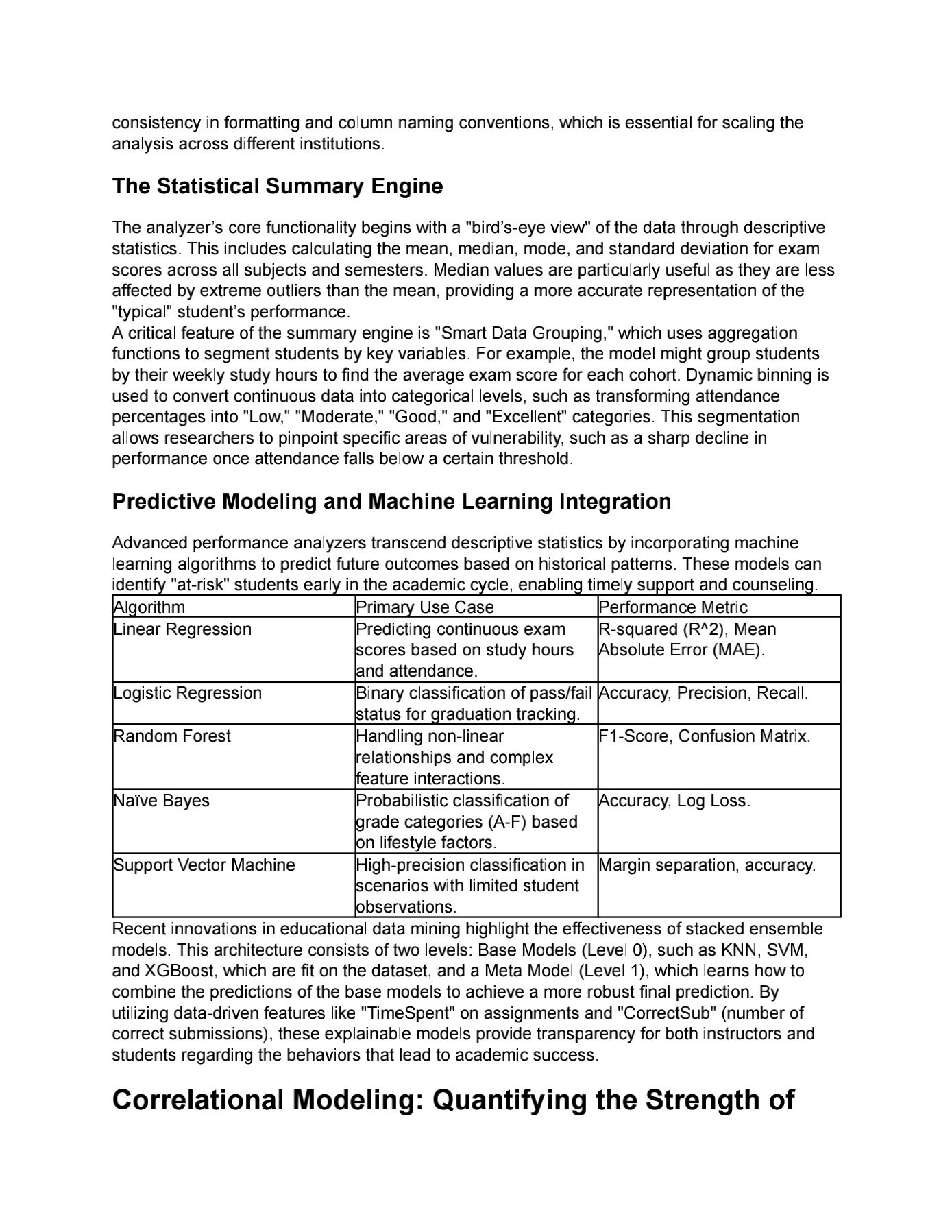
- Descriptive Statistics Includes: Mean Median Mode Standard deviation These help summarize student performance patterns.
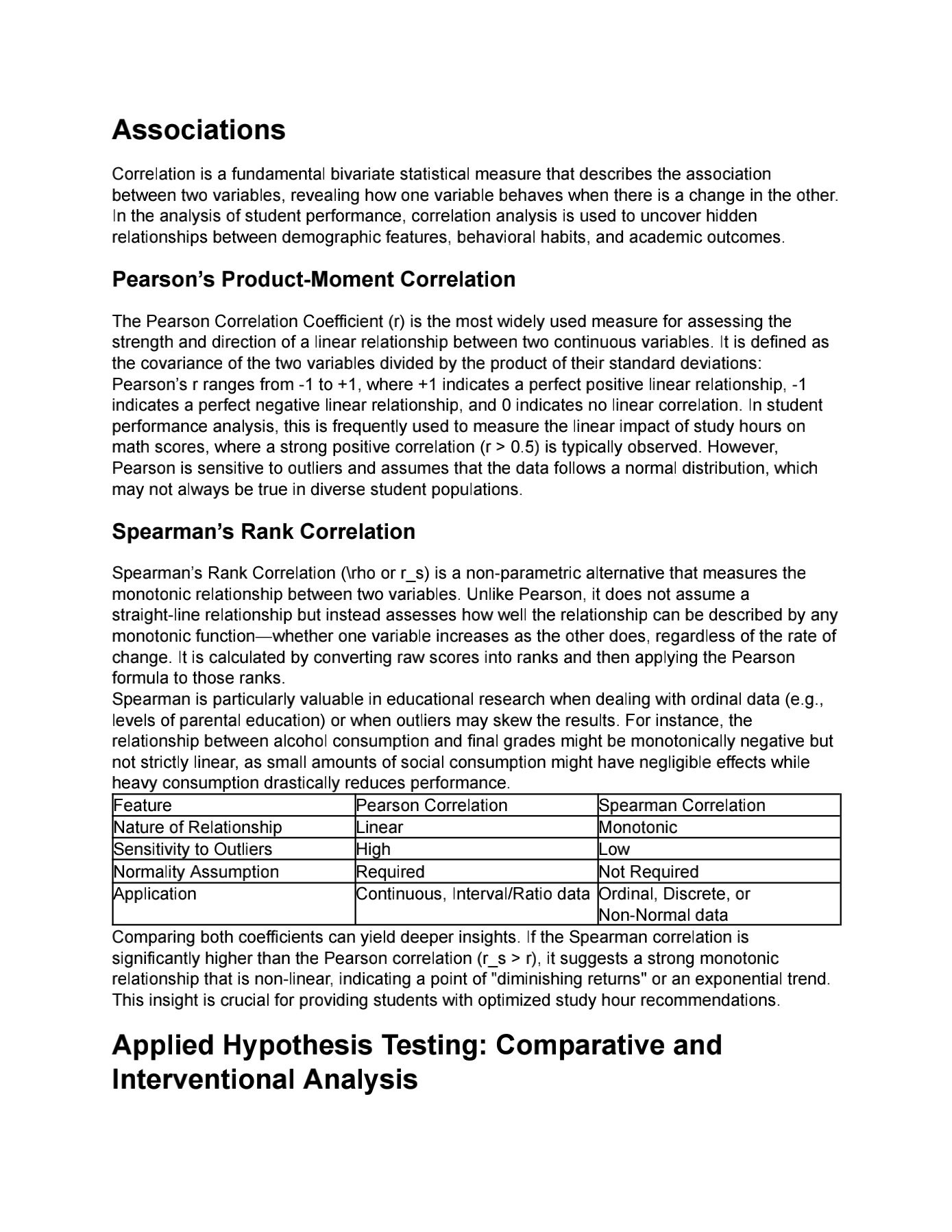
- Correlation Analysis Correlation measures the relationship between two variables. Pearson Correlation Used for continuous variables such as: Study hours Attendance Marks obtained Value range: +1 → Perfect positive correlation 0 → No correlation −1 → Perfect negative correlation Spearman Rank Correlation Used when: Data is ordinal Data is non-linear Outliers are present
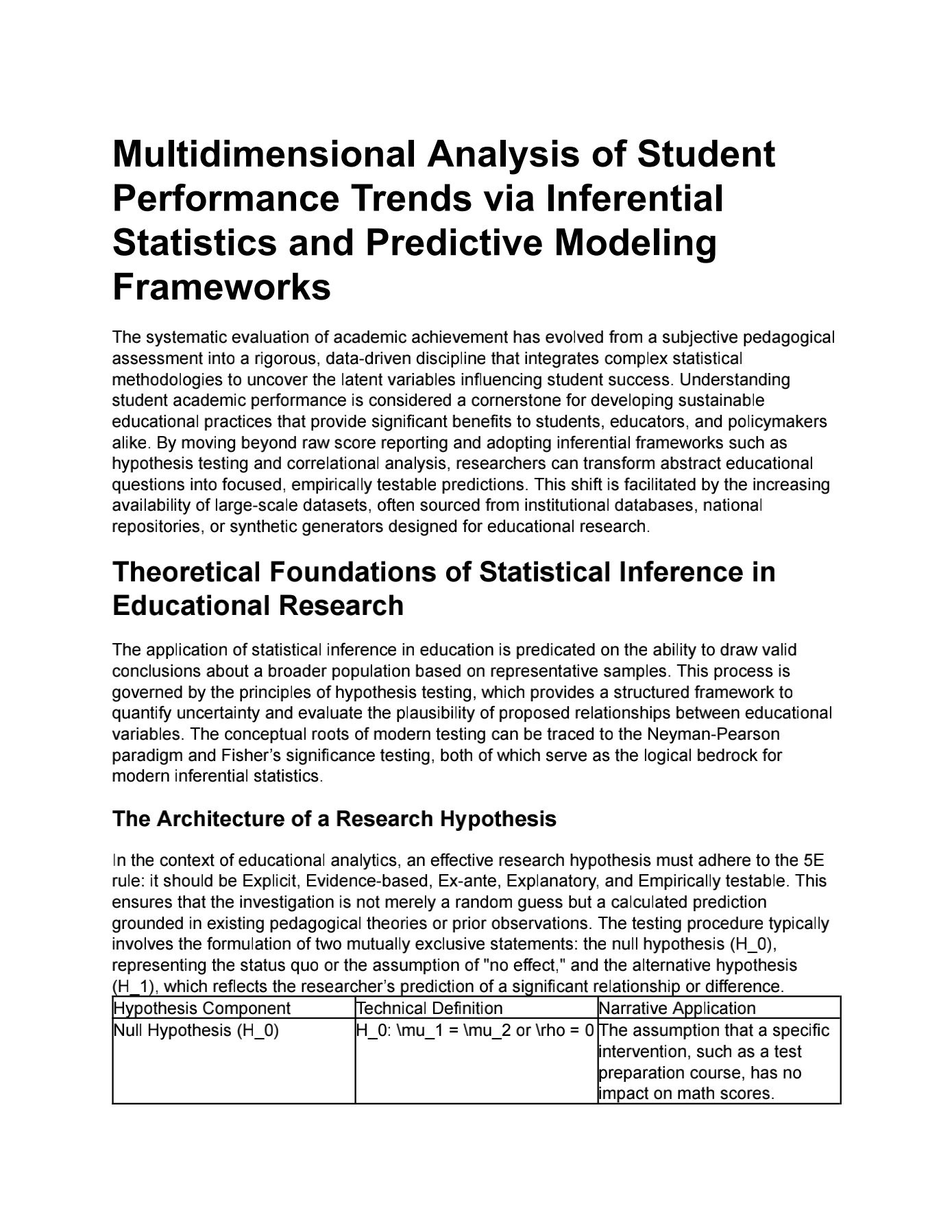
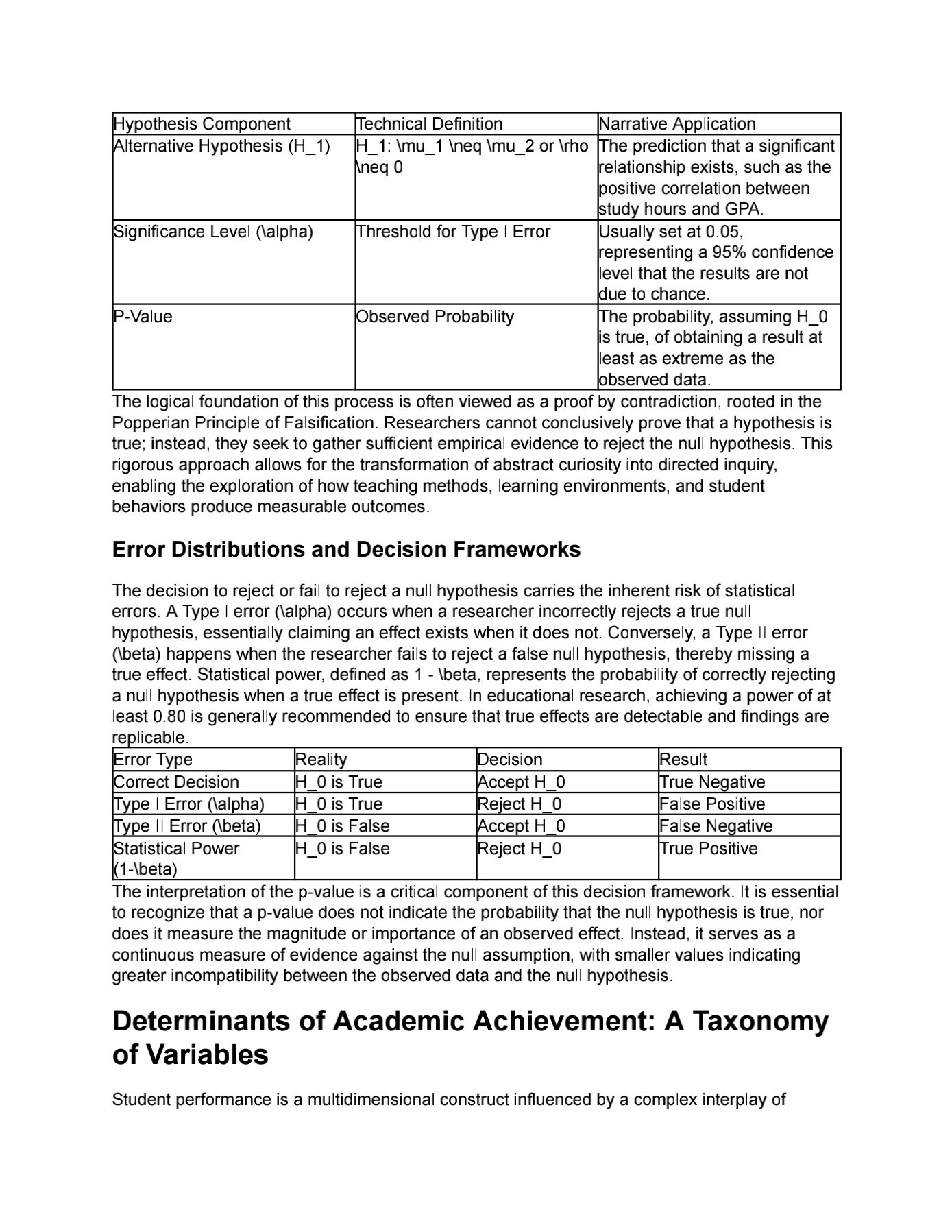
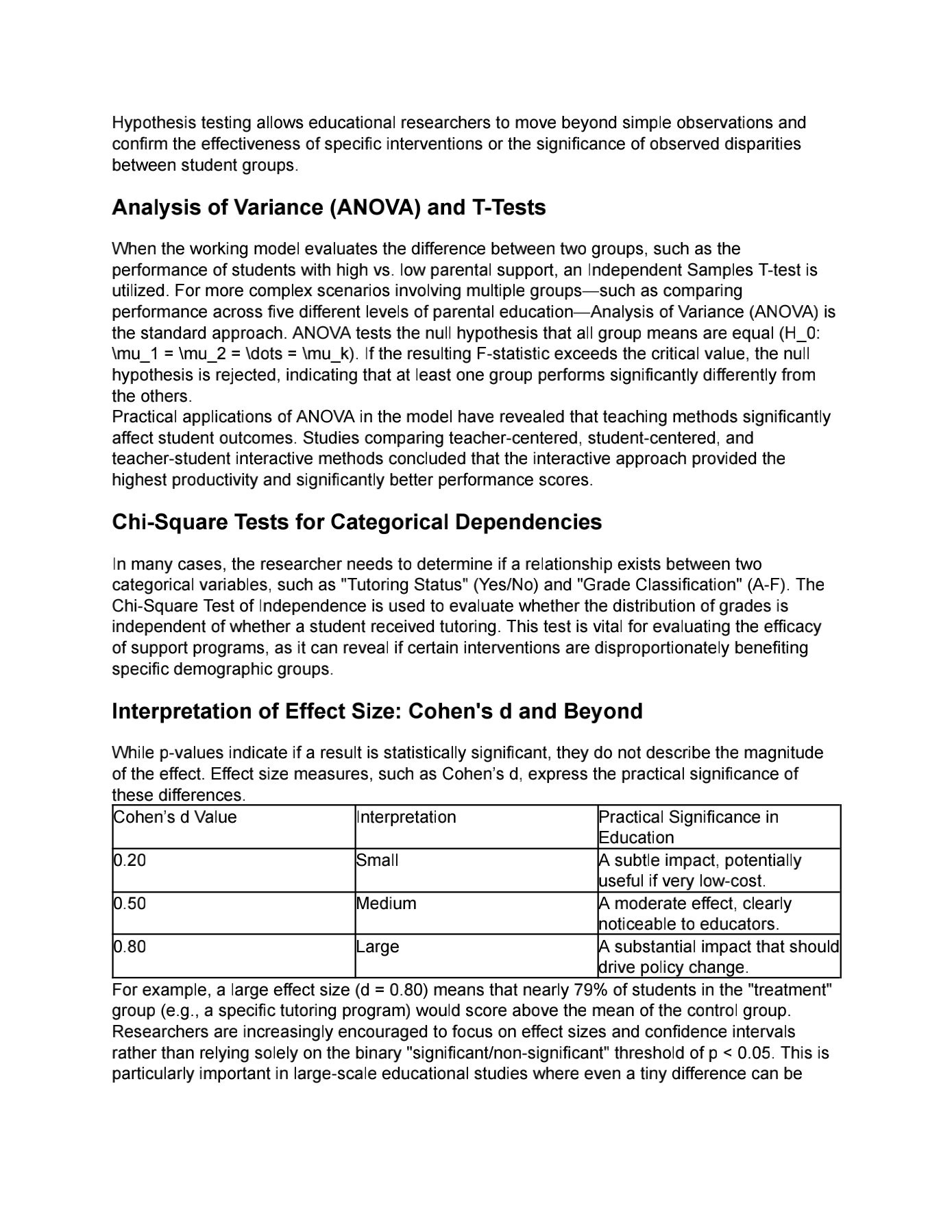
- Hypothesis Testing Hypothesis testing determines whether observed relationships are significant. Two hypotheses are considered: Null Hypothesis (H₀): There is no relationship between variables Alternative Hypothesis (H₁): There is a relationship between variables Significance level: α = 0.05
FACTORS AFFECTING STUDENT PERFORMANCE Student performance depends on several categories of variables.
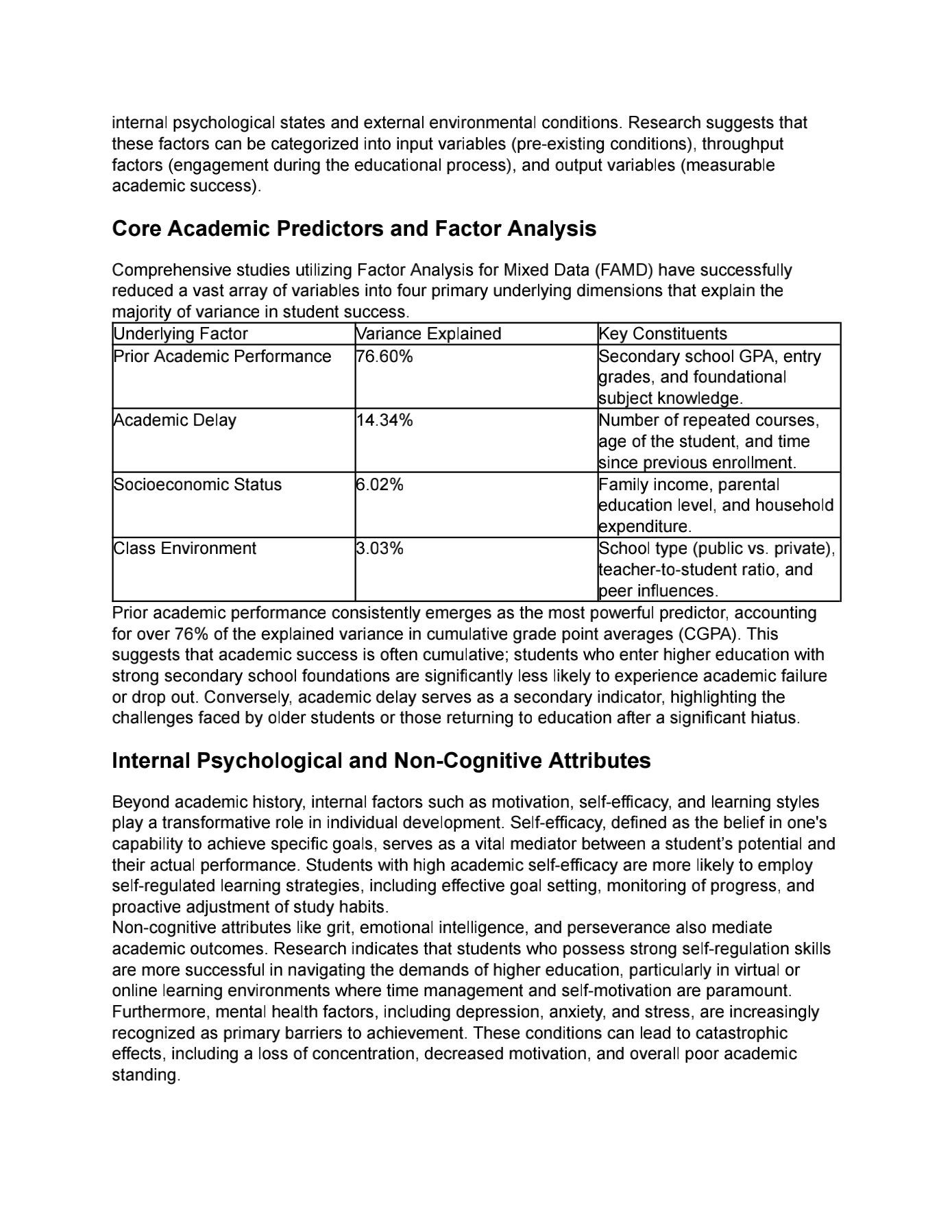
- Academic Factors Includes: Previous grades Study habits Classroom participation Prior academic performance contributes approximately 76% variation in success rates. � DOC-20260323-WA0091. None
- Psychological Factors Includes: Motivation Self-confidence Emotional intelligence Stress levels Students with higher self-efficacy perform better academically.
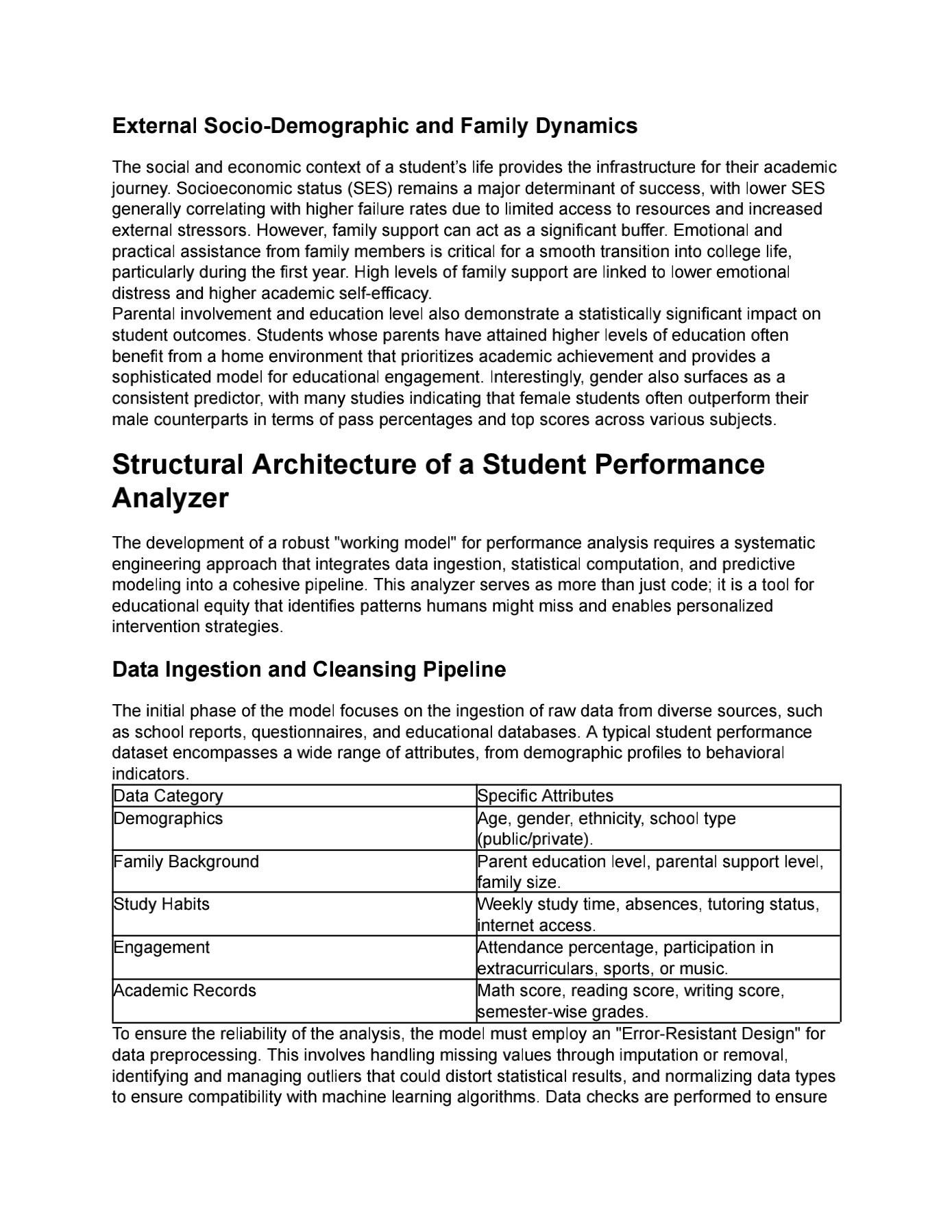
- Socioeconomic Factors Includes: Family income Parent education level Learning environment at home Family support significantly improves student outcomes.
- Institutional Factors Includes: Teacher quality Teaching methods Classroom environment Student-teacher ratio Interactive teaching methods improve performance more effectively than traditional lecture-based approaches. � DOC-20260323-WA0091. None
HYPOTHESIS TESTING METHODS USED
- T-Test Used to compare performance between two groups such as: High attendance vs low attendance students Tutored vs non-tutored students
- ANOVA Used when comparing performance across multiple groups such as: Different parental education levels Different study-hour categories ANOVA determines whether group means differ significantly.
- Chi-Square Test Used for categorical variables such as: Tutoring status Grade classification Helps determine whether variables are dependent or independent.
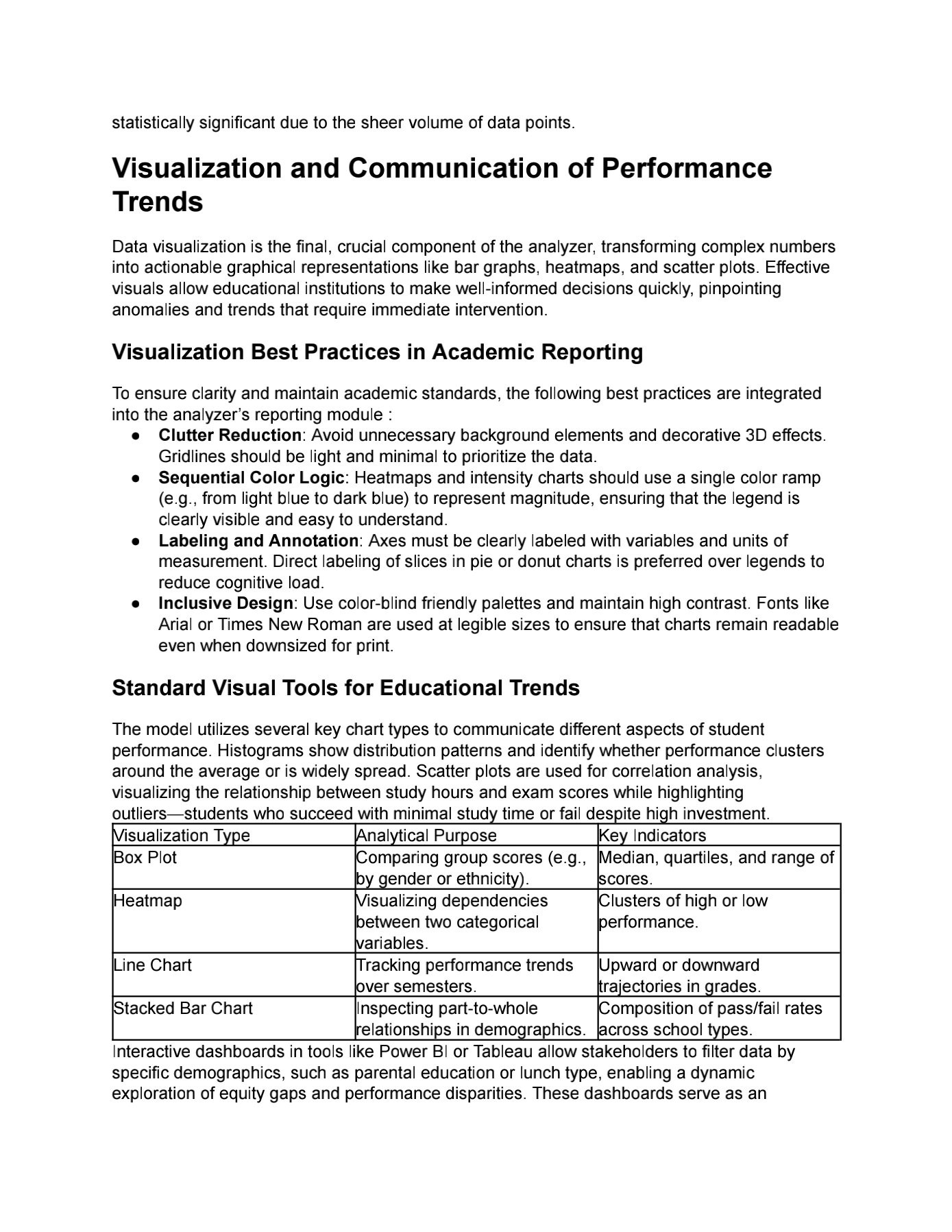
DATA ANALYSIS AND INTERPRETATION Results show: Strong positive relationship between attendance and marks Positive correlation between study hours and performance Significant influence of prior academic preparation Moderate impact of socioeconomic status Strong role of family support in academic success Correlation analysis confirms that increasing study hours improves performance up to an optimal level.
RESULTS AND FINDINGS Major findings include: Attendance strongly influences student performance Study hours positively correlate with academic success Prior academic records predict future performance Family support improves confidence and results Teaching methods significantly affect learning outcomes Socioeconomic status influences access to learning resources
CONCLUSION This project demonstrates that statistical analysis provides valuable insights into student performance trends. Hypothesis testing confirms that attendance, study hours, and prior academic preparation significantly influence academic success. Correlation analysis reveals meaningful relationships between behavioral and demographic factors affecting performance. These findings support the importance of adopting data-driven educational strategies. Educational institutions should implement structured monitoring systems to identify at-risk students early and provide targeted academic support.
SUGGESTIONS Based on the study findings: Encourage regular student attendance Promote effective study planning strategies Provide academic counseling support Strengthen parental involvement programs Use interactive teaching approaches Implement early warning systems for weak students REFERENCES Student Performance Dataset – Kaggle Educational Research Hypothesis Testing Resources Student Academic Performance Factor Analysis Studies Statistical Methods in Educational Analytics Journals Institutional Academic Records and Survey Data
Built With
- iot


Log in or sign up for Devpost to join the conversation.