-
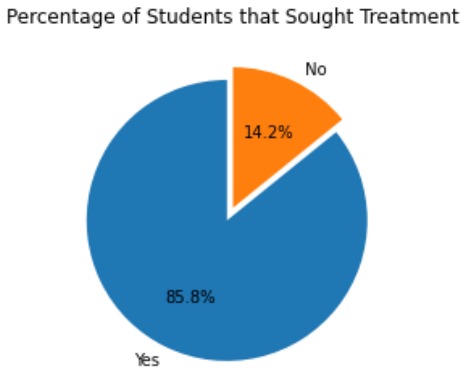
Pie chart based on data using Python and Matplotlib
-
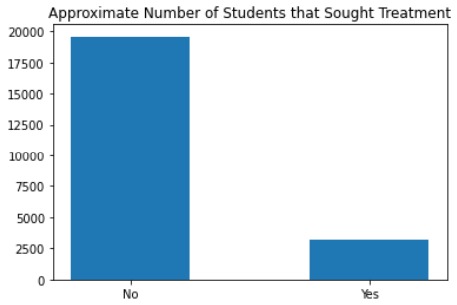
Bar chart based on data using Python and Matplotlib
Inspiration
Nowadays college students are known to deal with any kind of difficulties outside of academics, and we want to make sure that those dealing with mental health problems receive the help they need by using this model.
What it does
In this model, we take in a CSV file of students at the college level. This Data was provided by the America On Tech organization, we used their data. The data is categorized into an ID to prevent any data from the same student, gender, major, GPA, class status, marital status, whether or not they have depression, whether or not they have anxiety, whether or not they have panic attacks, and if they've sought treatment previously. Using this data we created a Principle Component Analysis and created a Machine Learning Model to predict the number of students who received help and how many didn't.
How we built it
This ML model was built using pandas, matplotlib, numpy, sklearn and Python to make it. We did this by creating a data frame with the CSV file, and from there we cleaned the data to ensure we removed any null values or missing data. Then, after we visualized the data, we created a Principle Component Analysis for the Data, transformed it, and through the SkLearn libraries we created the model to output a prediction of how many students would seek help and how many wouldn't.
Challenges we ran into
We were technically using all of the technologies used in this project for the first time, excluding Python, so it was very difficult to code in a language that we were learning as we went along with the project. Also, we ran into a problem where our data was askew. To solve it, we backtracked testing every bit of code we ran to ensure everything was correct and we got a good and accurate result.
Accomplishments that we're proud of
Many of us have been used to coding in C++ for so long, and are a bit rusty when it comes to Python. This was our first time using libraries like Sklearn, MatplotLib, Pandas, and even building a machine learning model, so the fact that we have something that outputs the data we want, and the information we need, all in 24 hours is an incredible accomplishment for all 4 of us.
What we learned
We learned so much this weekend, but if we have to name a few, we learned how to use Panda Data Frames, use Sklearn library functions, and we learned to create visuals using Python.
What's next for Student Health Prediction Model
We only had 24 hours to create it this time, but what if we had more? The purpose of this was to predict how many students would choose yes and how many would choose not to seek out help, but we did this without having the model tell us the factors and only give us the numbers. If given more time we could perfect the model to also return how it takes into account the factors, and return a pattern that can be used by counselors or school officials to reach out to students and help them. We would also like to reduce any and all marginal errors to ensure we can make it as clear and precise as possible.
Built With
- machine-learning
- matplotlib
- numpy
- pandas
- python
- sklearn

Log in or sign up for Devpost to join the conversation.