Inspiration
As a student, I used to wonder how my daily lifestyle and behaviour actually affected my final exam results. Things like attendance, sleeping habits, and study hours always seemed important, but it was hard to measure their real impact. That curiosity pushed me to explore whether data could be used to predict student performance and help students make better academic decisions earlier.
What it does
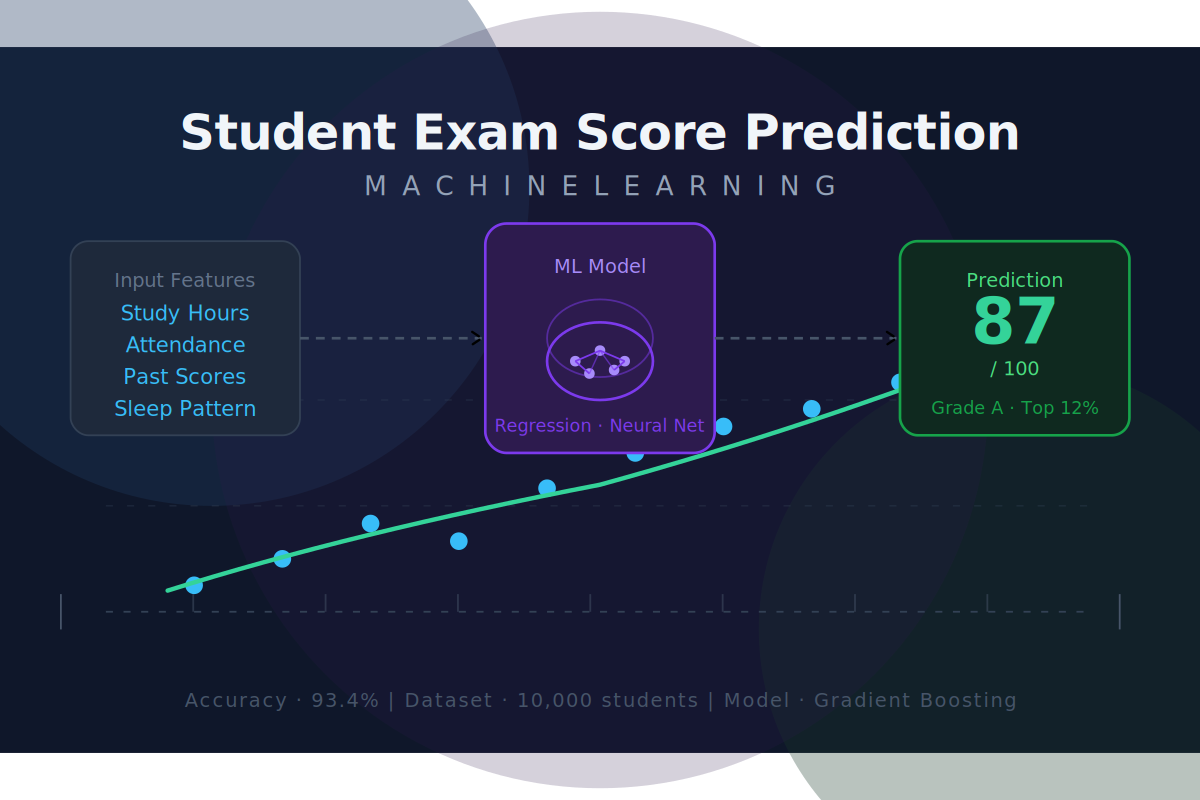
This project predicts possible student exam results using machine learning. It takes student-related inputs such as attendance percentage, number of study hours, sleeping patterns, and participation in online courses.
The system processes this information and predicts the likely performance outcome of the student. The goal is to give students and educators early insights into academic performance so they can adjust study habits before final exams.
How we built it
We used a publicly available student performance dataset from Kaggle as the foundation for training the model.
The steps included:
- Cleaning and preparing the dataset
- Converting categorical data into numerical values
- Handling missing values
- Splitting the dataset into training and testing sets
- Applying the Random Forest algorithm to train the model
- Evaluating the model performance
- Writing the code using Python libraries such as pandas, NumPy, and scikit-learn
- Uploading the partially completed project to GitHub for version control and collaboration
Challenges we ran into
Time management was one of the biggest challenges since we were working as students with other academic responsibilities.
Another challenge was limited technical knowledge in some areas, especially during data preprocessing and model tuning. Some dataset columns required careful encoding and cleaning, and debugging errors took longer than expected.
We also faced challenges in understanding how to properly evaluate model accuracy and improve performance.
Accomplishments that we're proud of
We successfully built a working prototype that predicts students' exam results using machine learning techniques.
Our code is currently available on GitHub, which demonstrates our progress and commitment to further developing the project.
Despite limited time and resources, we managed to implement a functional Random Forest model and create a basic prediction system. This demonstrates our ability to apply theoretical knowledge to real-world problems.
What we learned
Through this project, we gained practical experience in:
- Data cleaning and preprocessing
- Feature encoding techniques such as label encoding and one-hot encoding
- Training machine learning models using Random Forest
- Evaluating model performance using metrics like accuracy
- Debugging code and solving real implementation problems
- Using GitHub for storing and managing project code
- Understanding how lifestyle-related data can influence academic performance
We also learned the importance of teamwork, patience, and continuous learning when building machine learning projects.
What's next for Student Exams Results Prediction
The project is still in progress, and several improvements are planned:
- Improving model accuracy by tuning hyperparameters
- Adding more features such as stress levels, extracurricular activities, and screen time
- Building a web-based interface where users can input their data and get predictions instantly
- Deploying the model online so it can be accessed publicly
- Testing the model with real student data to improve reliability
- Adding visualisation dashboards to show how different habits affect performance
The long-term goal is to turn this project into a practical academic support tool that helps students understand how their daily habits impact their results and make smarter study decisions.

Log in or sign up for Devpost to join the conversation.