-
-
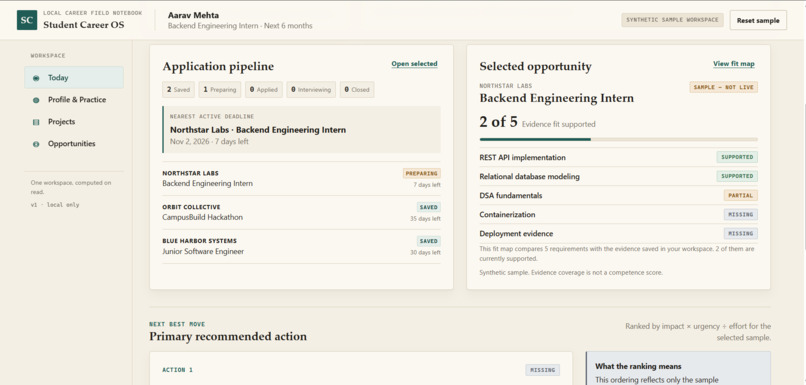
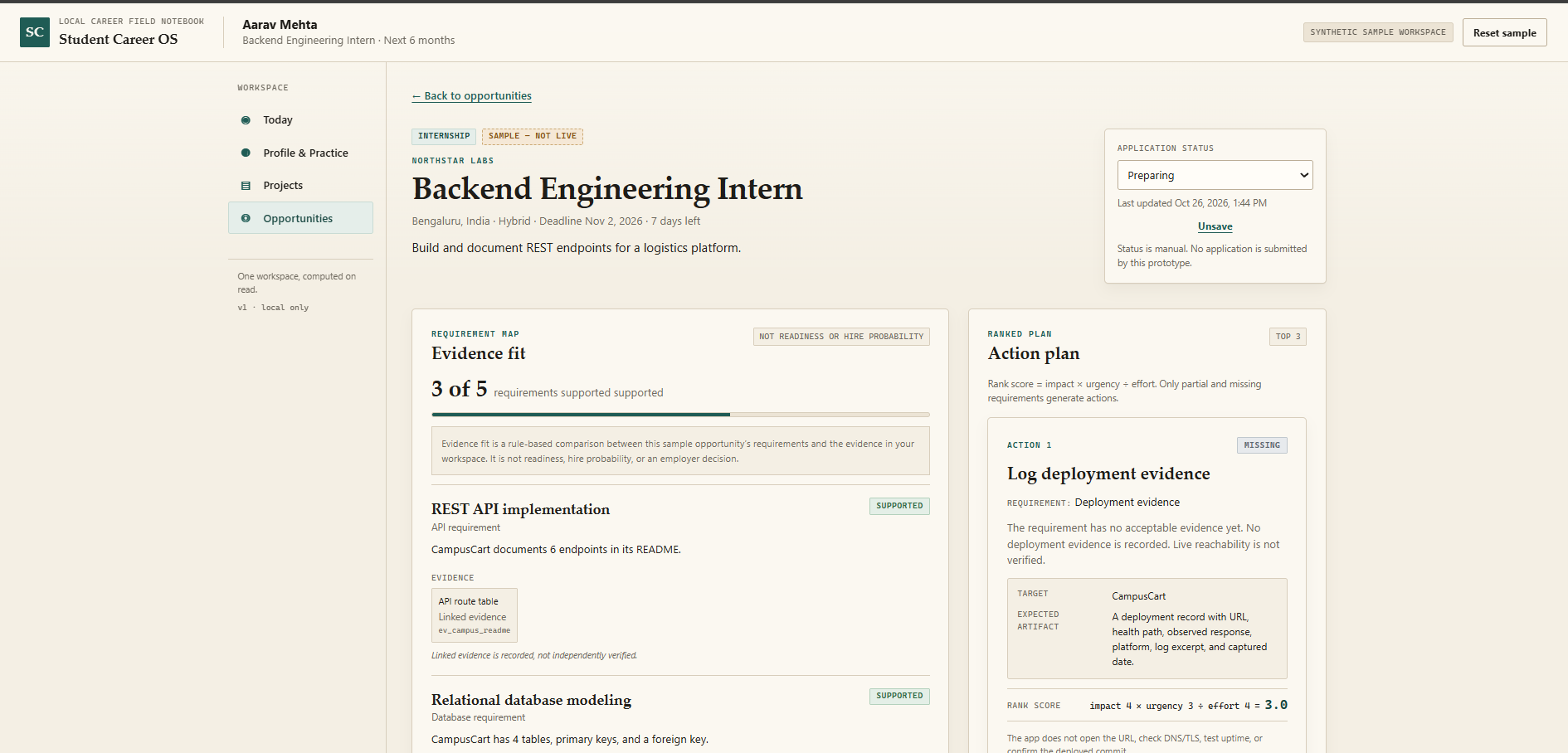
Screenshot 2 — Compare project evidence against internship requirements and identify skill gaps.
-
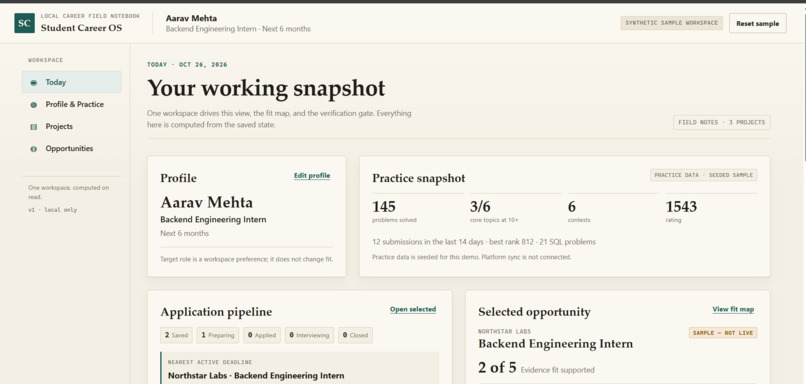
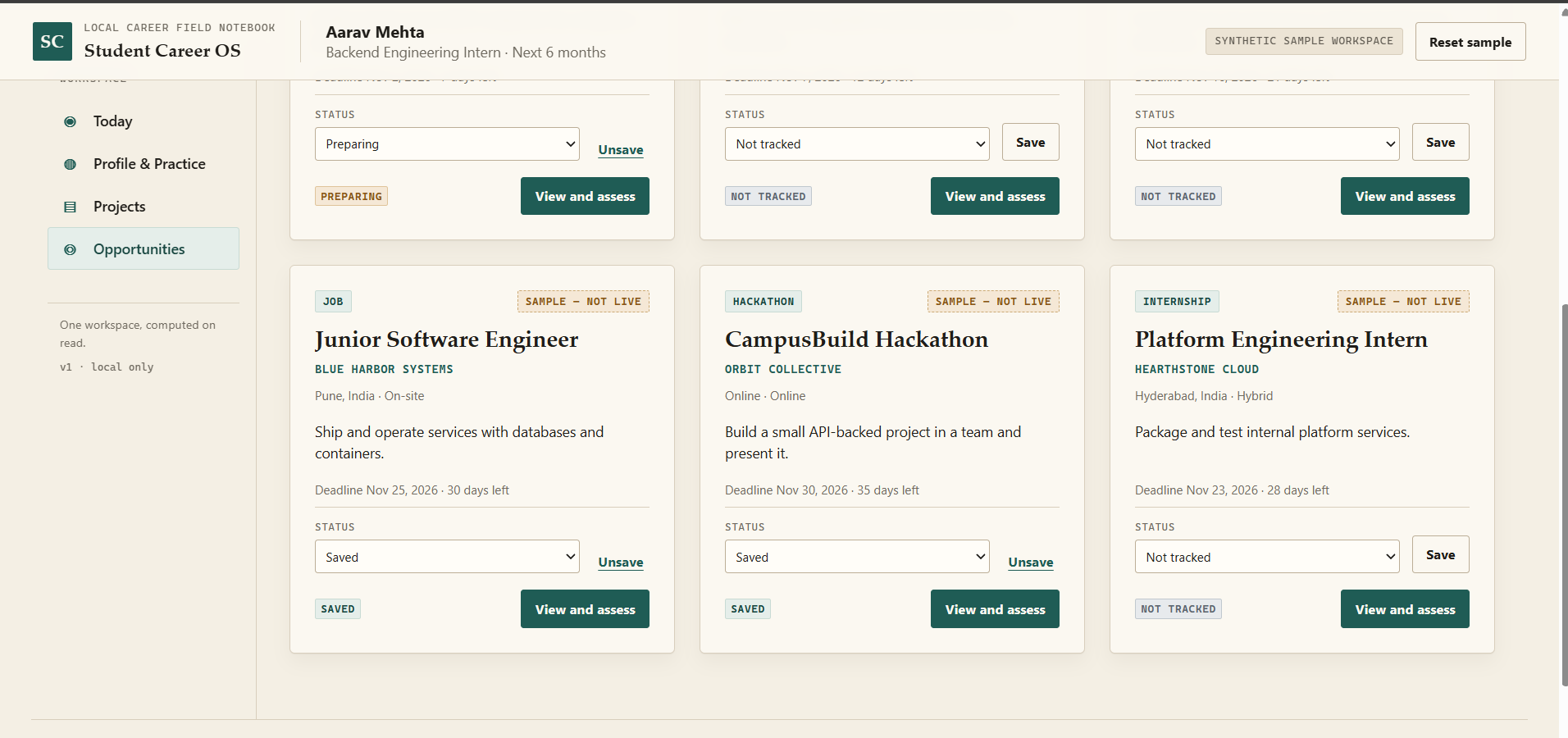
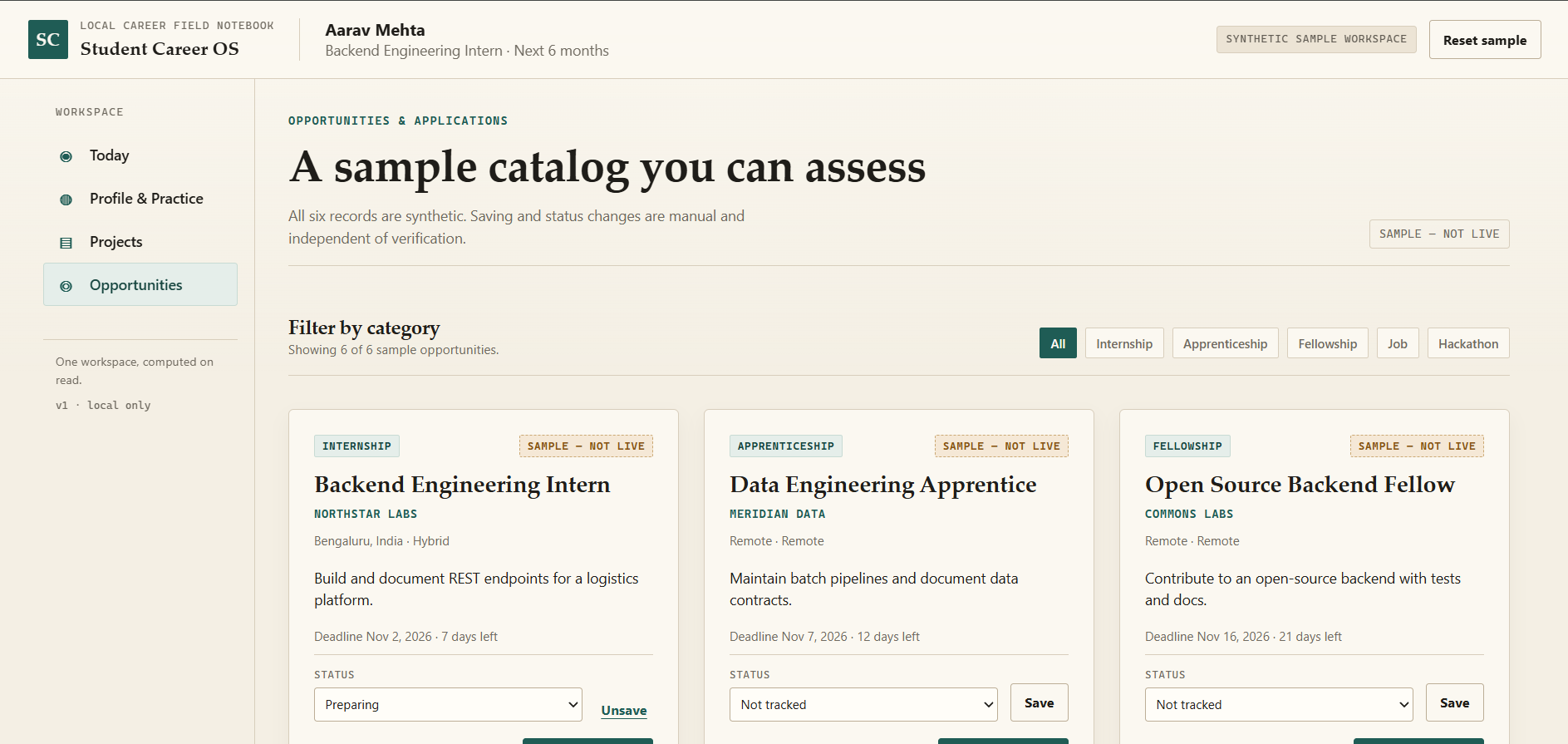
Explore sample career opportunities and track application statuses in one workspace.
-
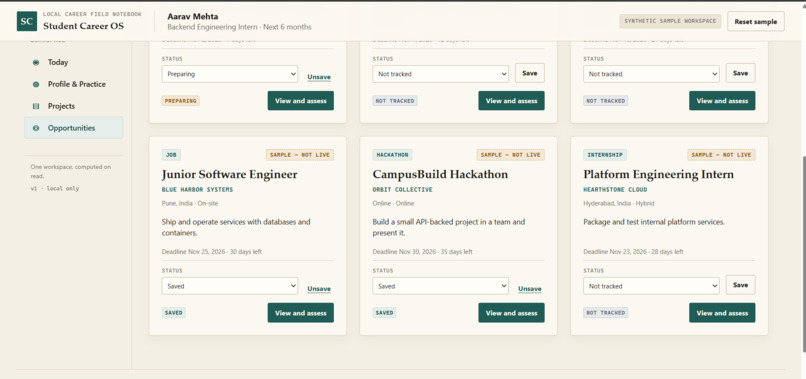
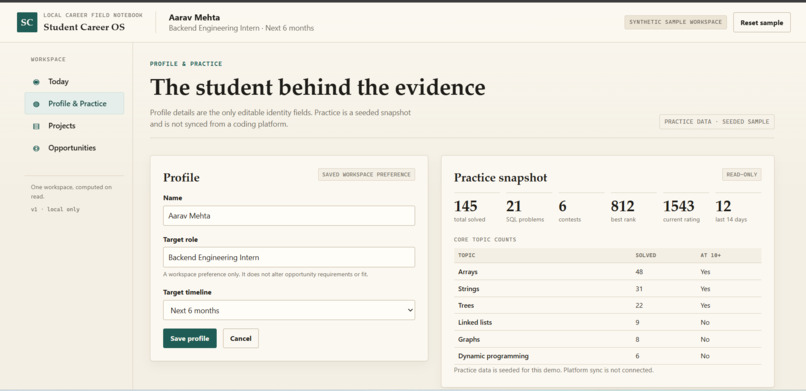
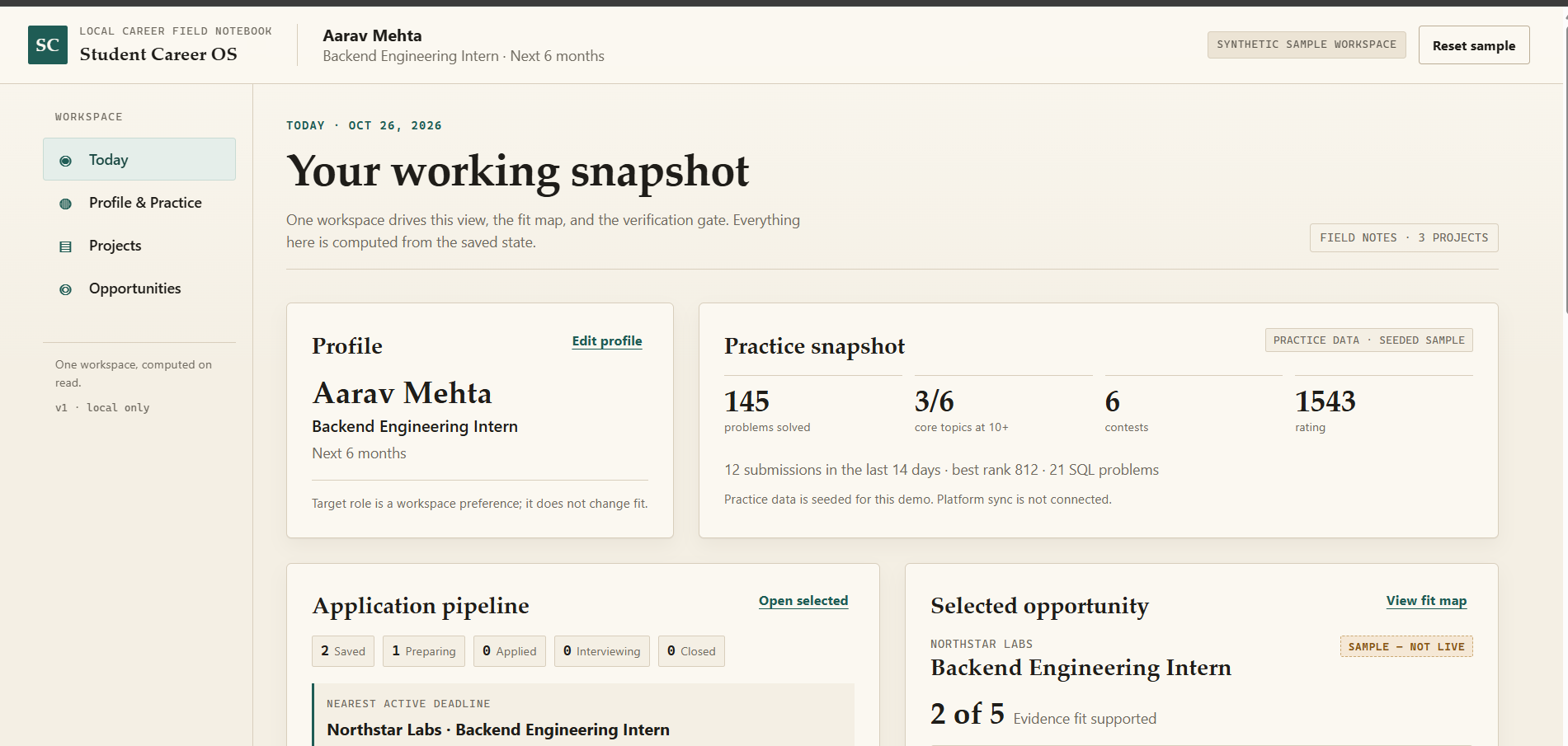
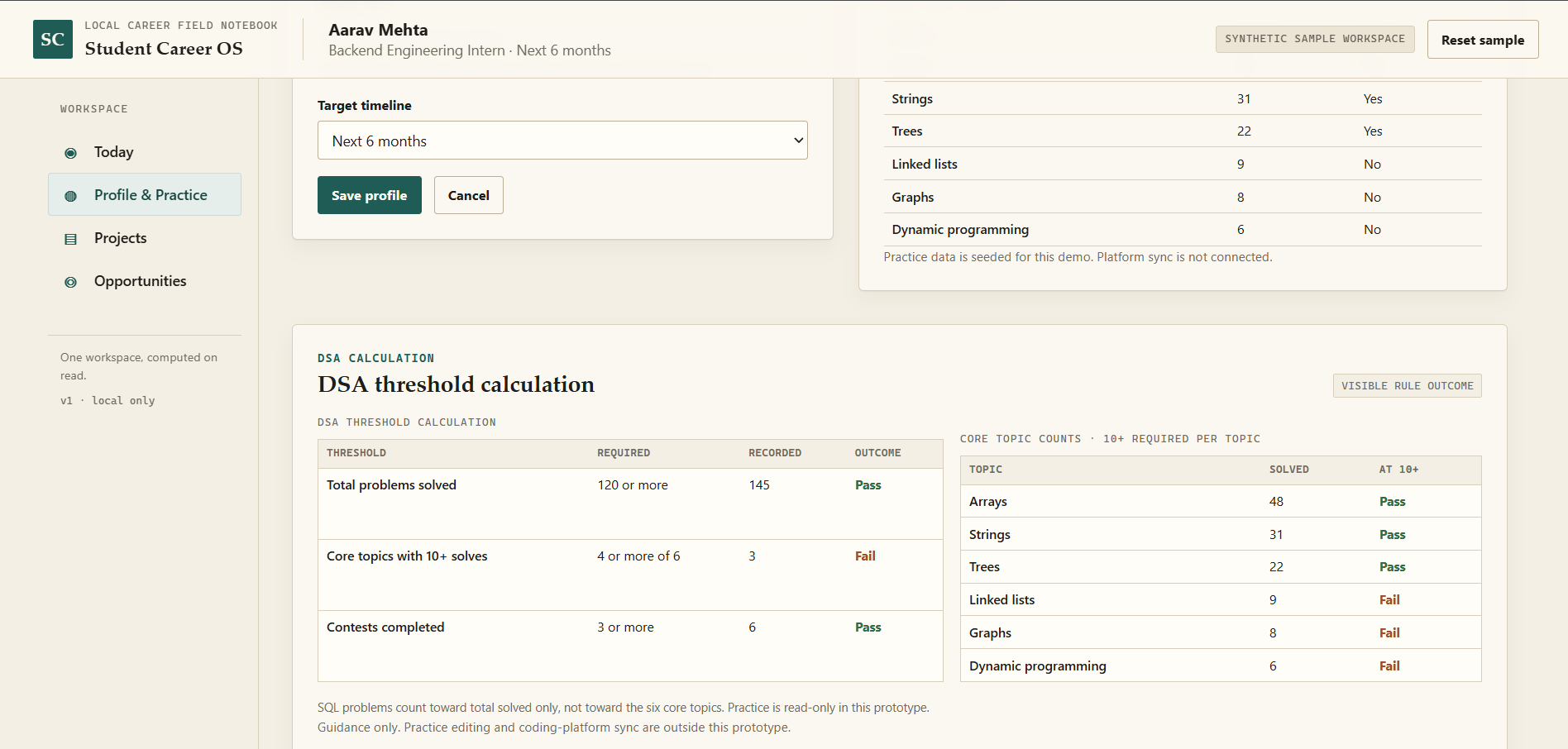
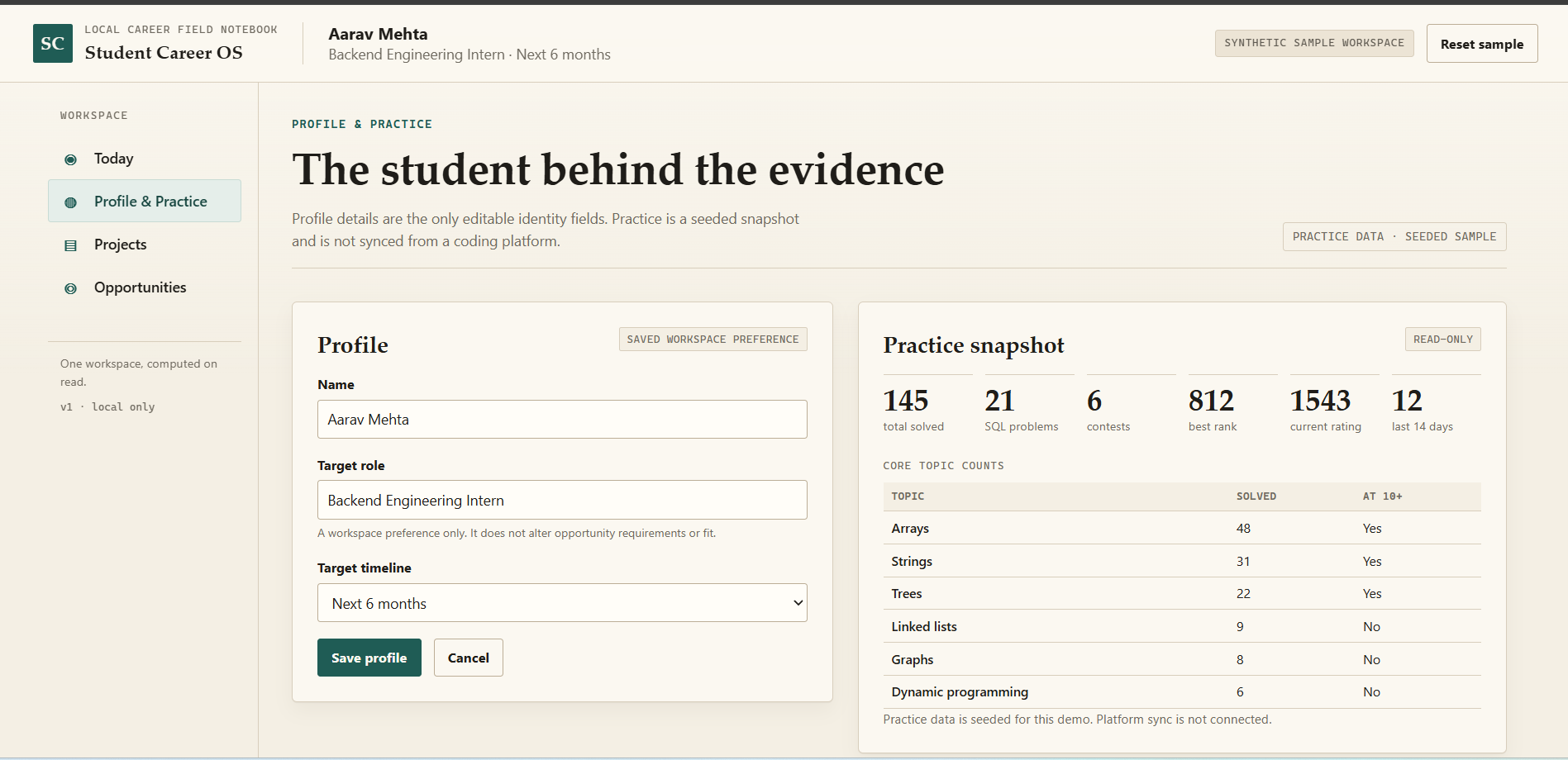
Screenshot 11 — View the student's profile, coding statistics, and topic-wise practice history.
-
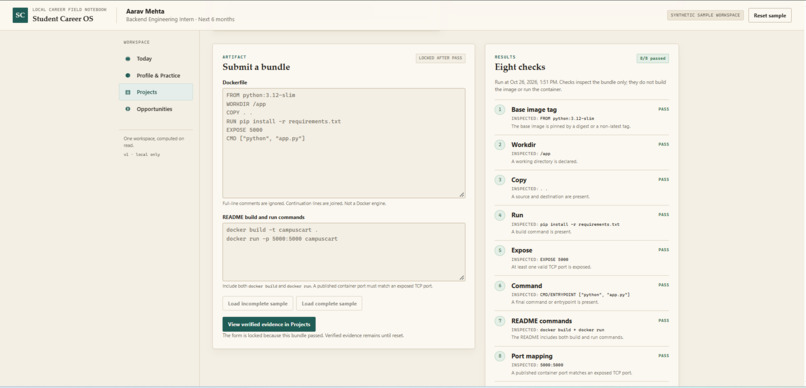
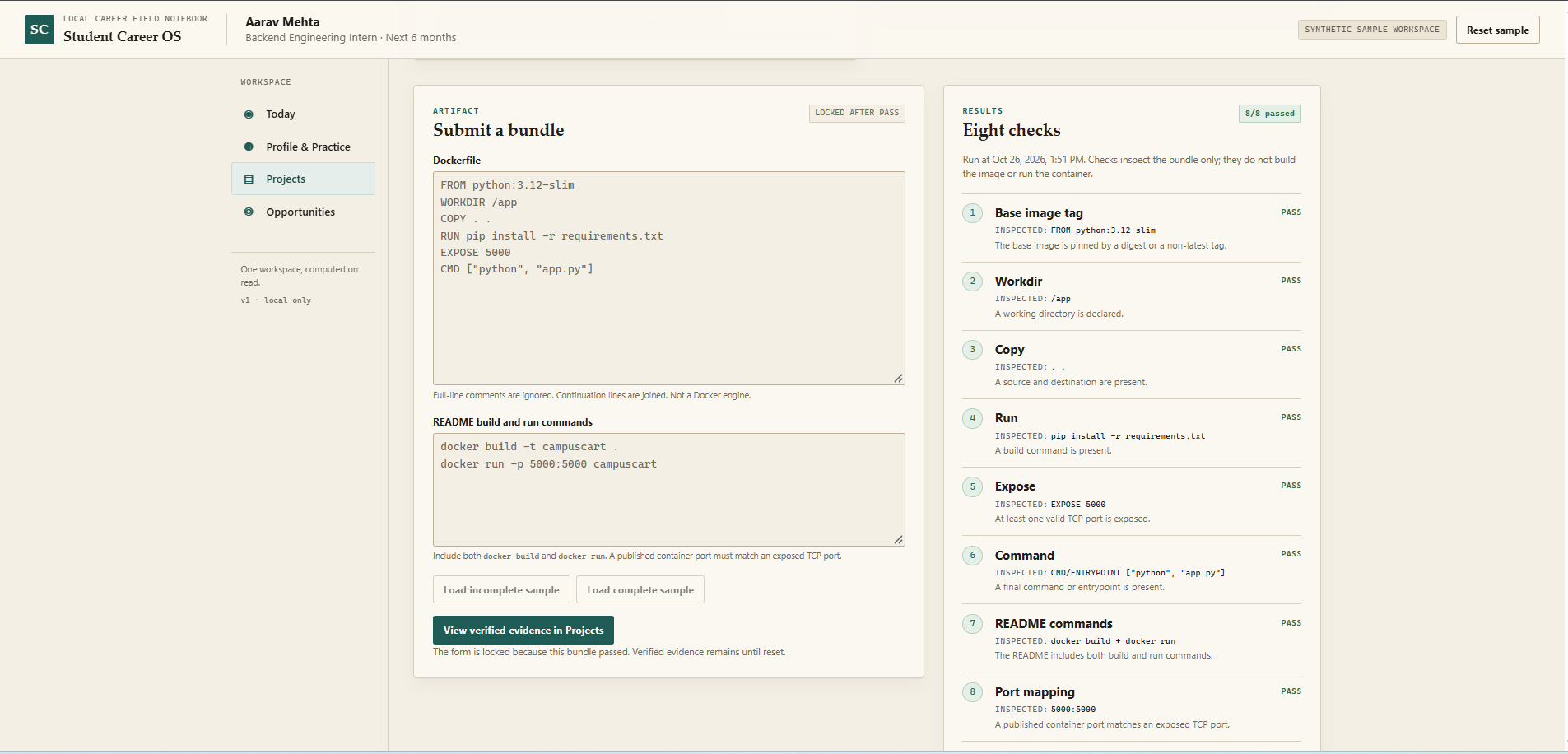
Screenshot 3 — Validate a containerization bundle with eight deterministic checks for completeness and consistency.
-
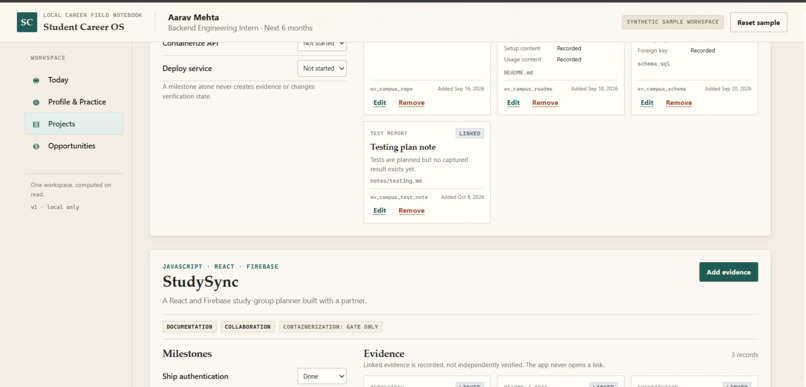
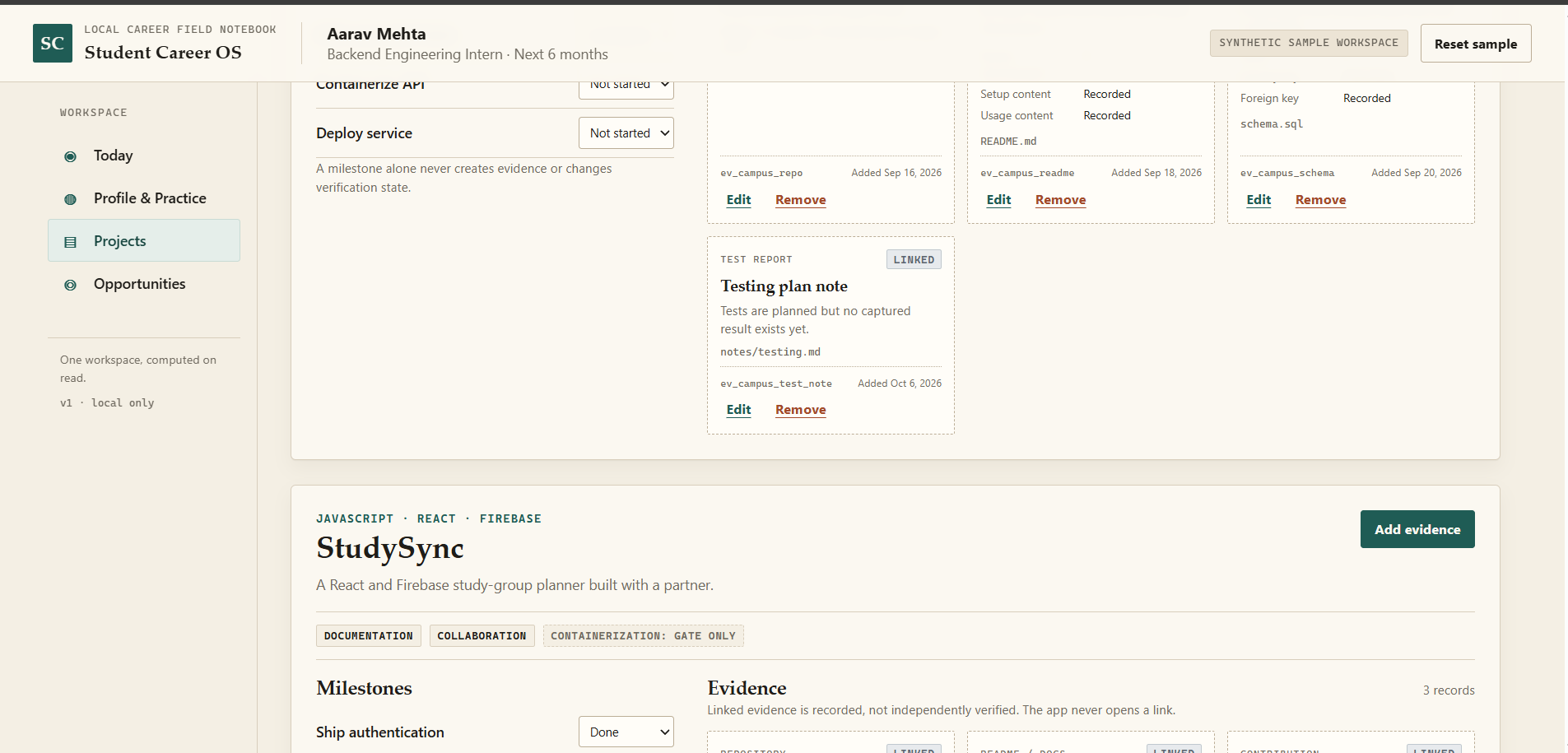
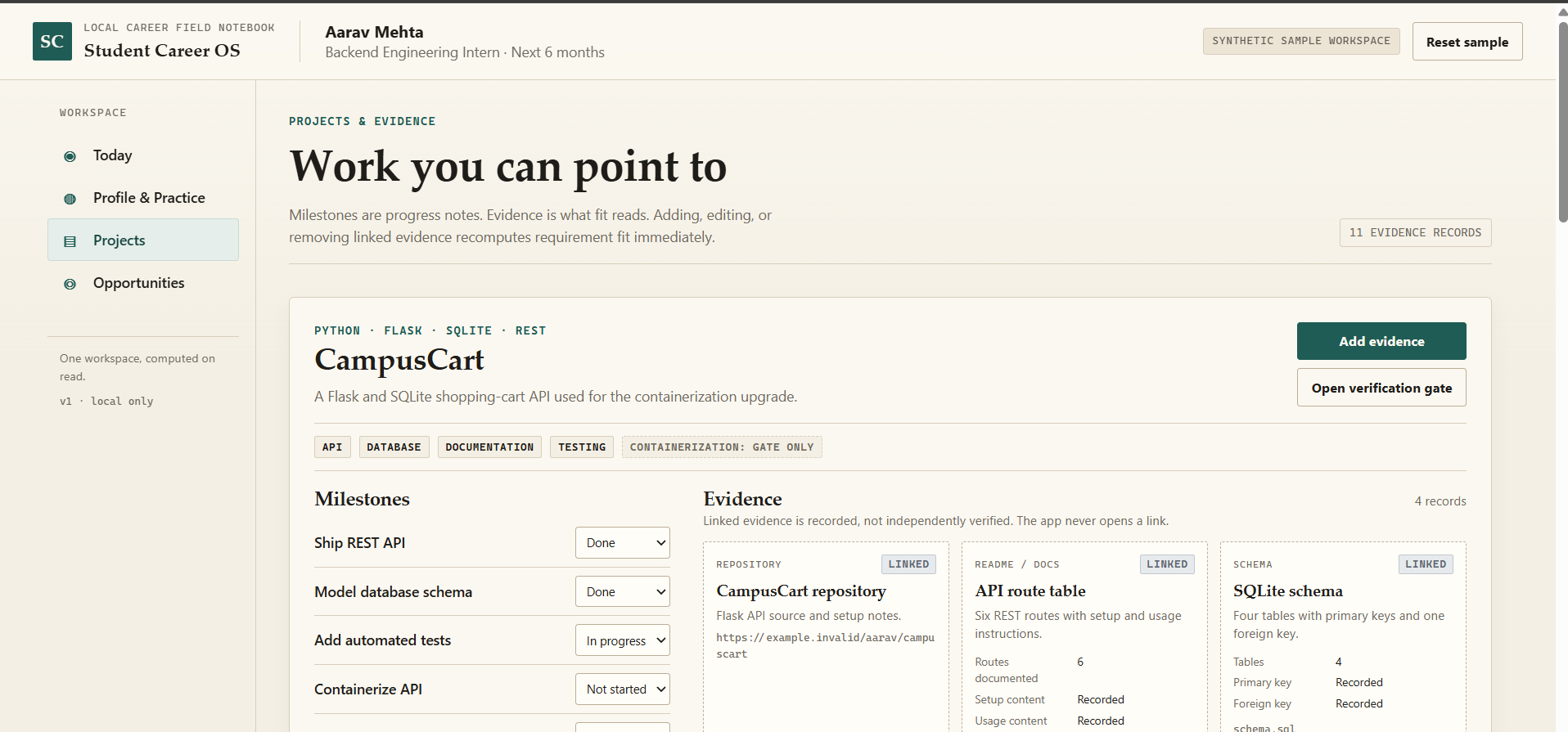
Screenshot 8 — Track CampusCart's API, database schema, testing progress, and containerization milestones.
-
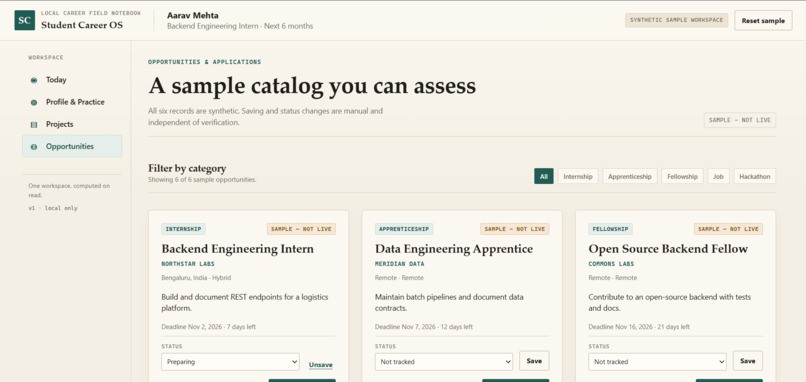
Screenshot 5 — Browse six synthetic opportunities across internships, apprenticeships, fellowships, jobs, and hackathons.
-
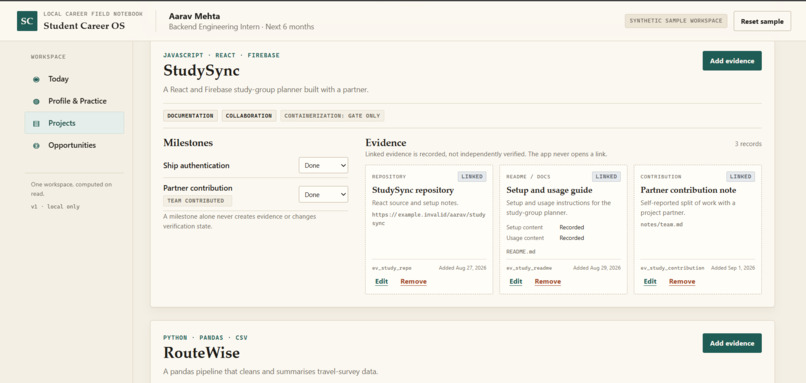
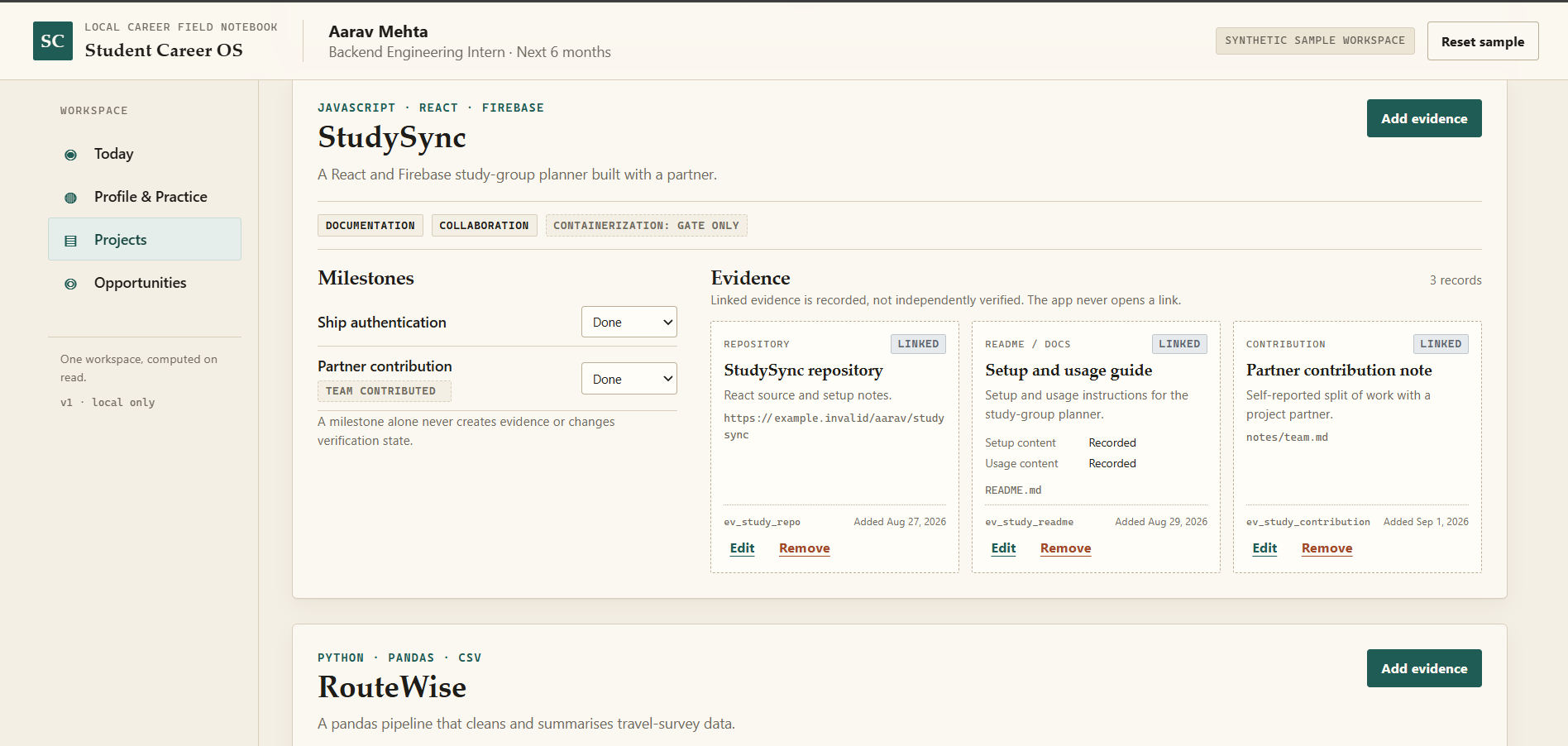
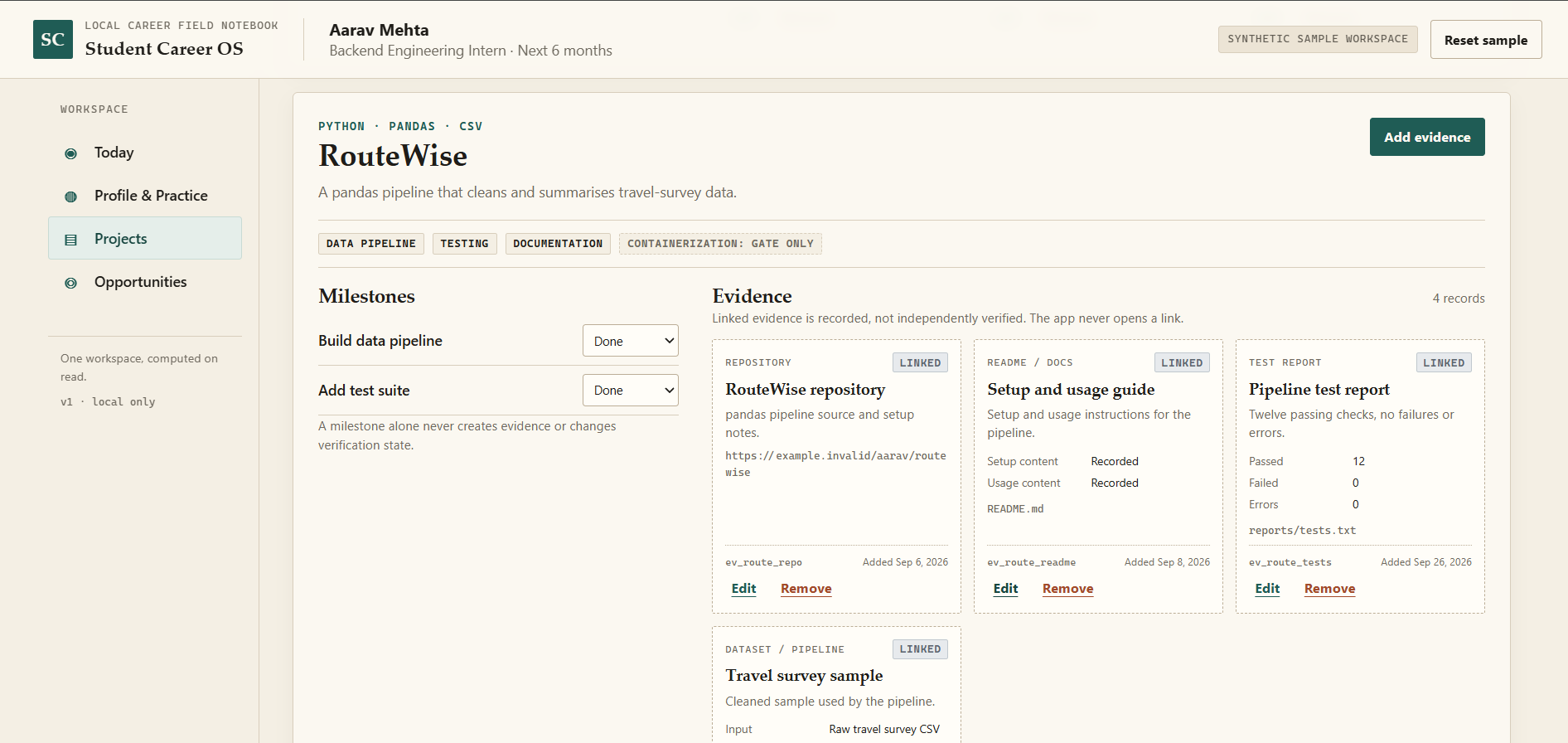
Screenshot 7 — Record project documentation, collaboration contributions, and milestones in one place.
-
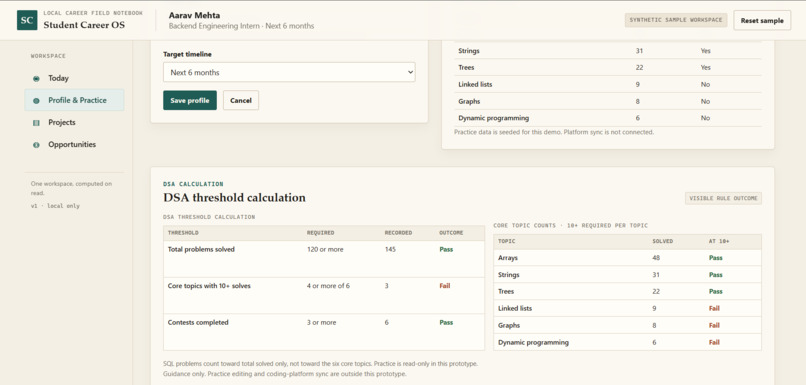
Screenshot 10 — Evaluate coding-practice progress against transparent problem-solving and topic-coverage thresholds.
-
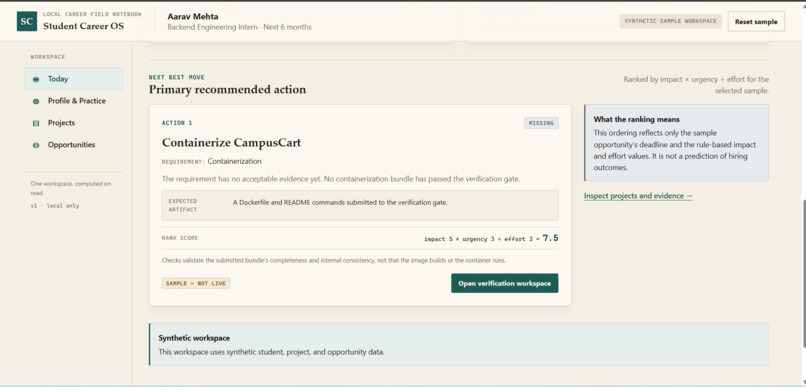
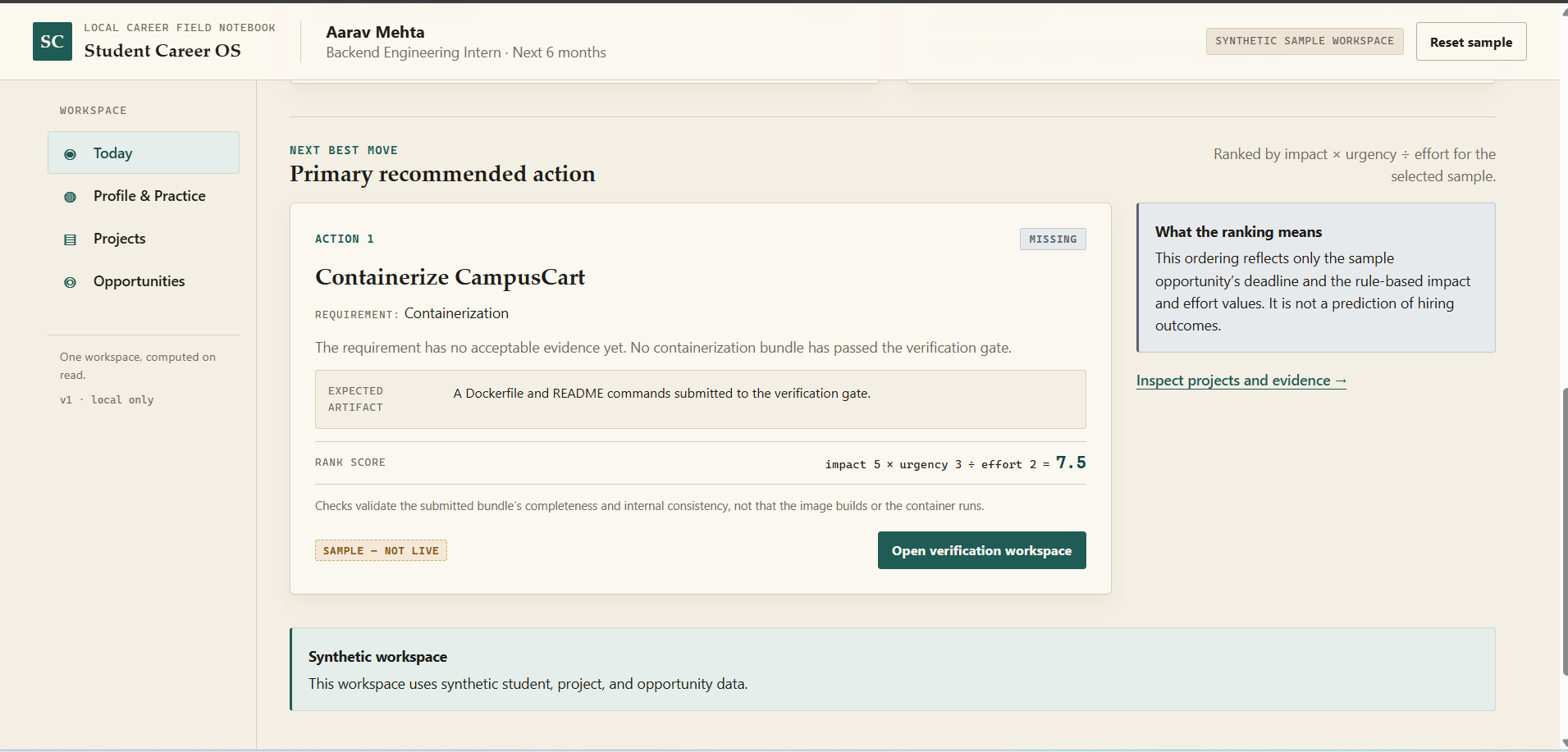
Screenshot 12 — Prioritize the next career-building task using impact, urgency, and effort.
-
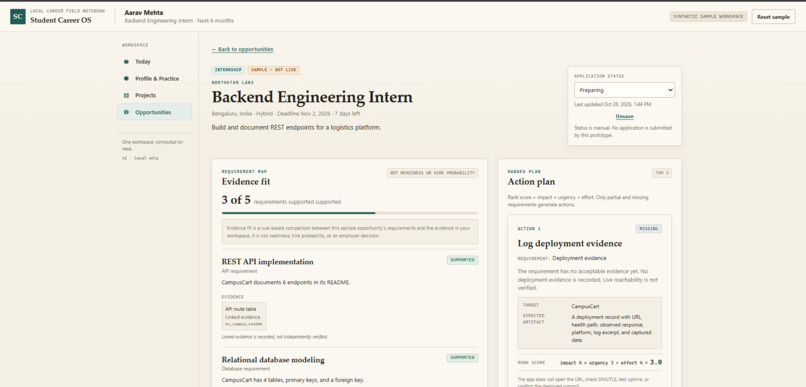
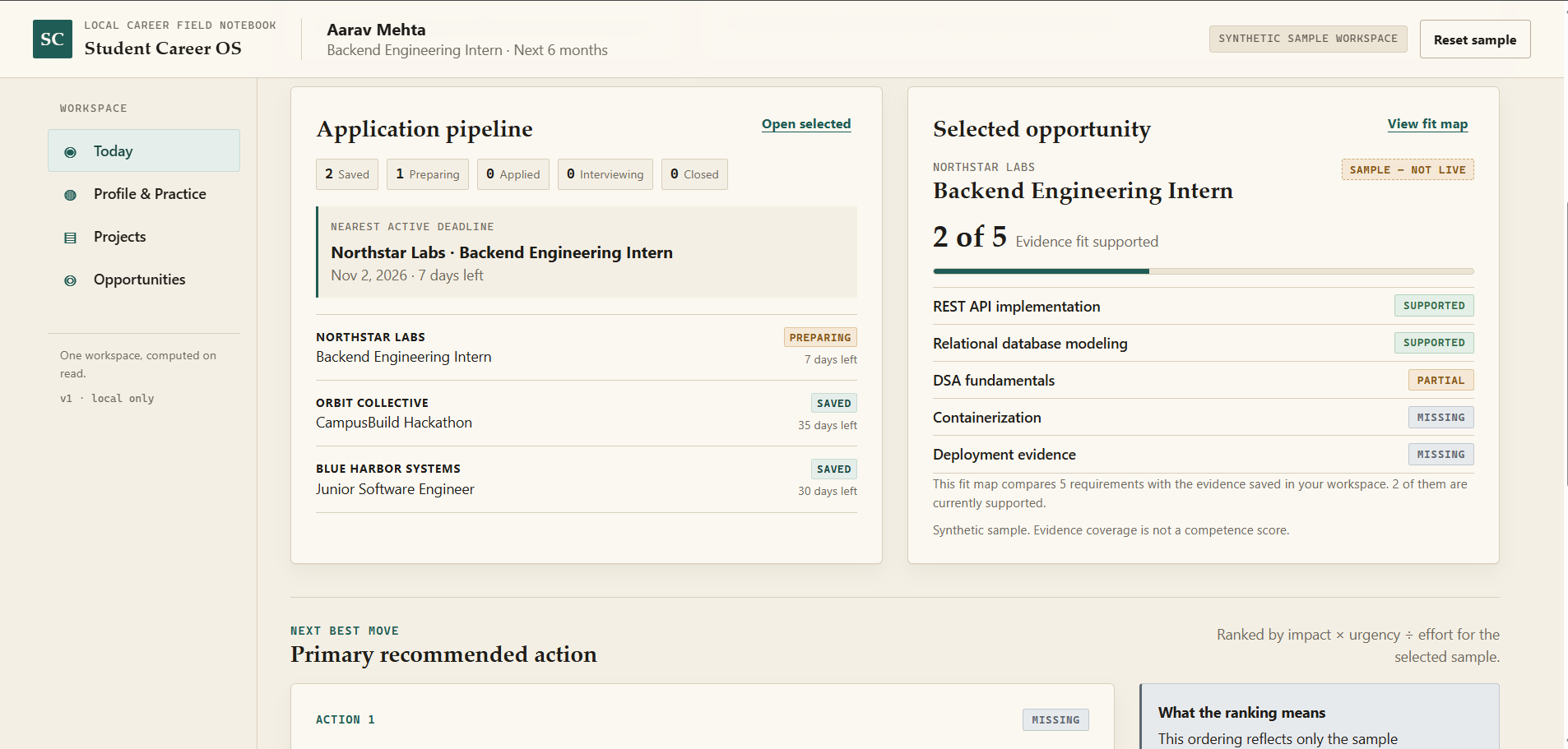
Screenshot 13 — See how existing evidence maps to opportunity requirements and reveals remaining gaps.
-
Screenshot 14 — Get a unified snapshot of practice progress, tracked opportunities, and the next recommended action.
-
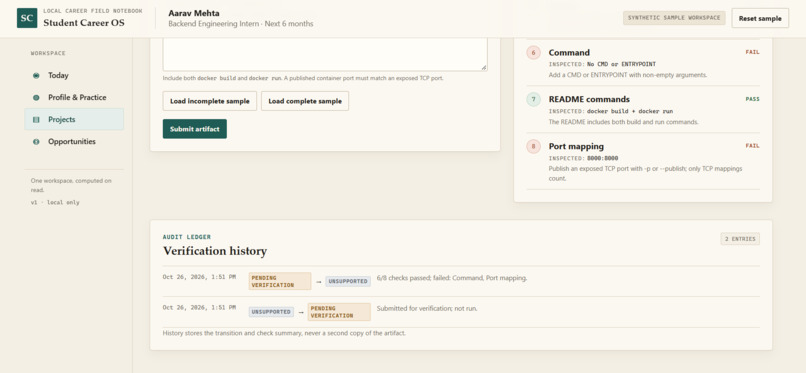
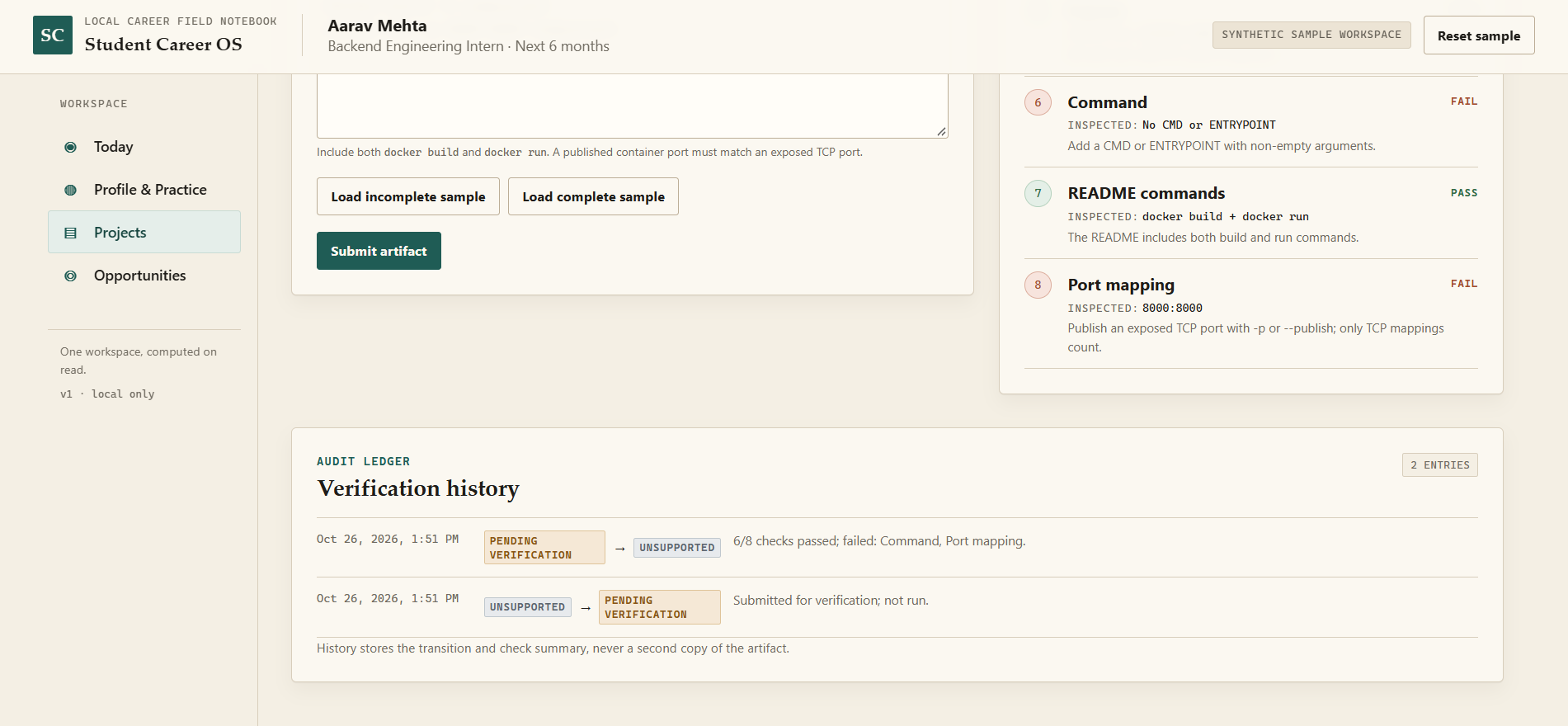
Screenshot 4 — Identify missing Docker command and port-mapping details before passing verification.
-
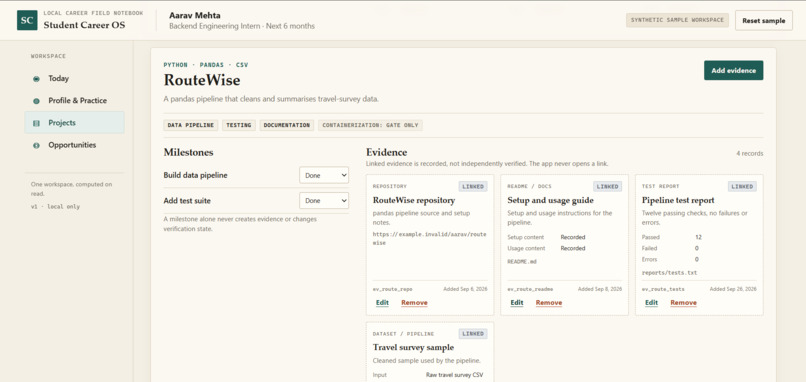
Screenshot 9 — Connect project artifacts to the evidence used for opportunity-fit assessments.
-
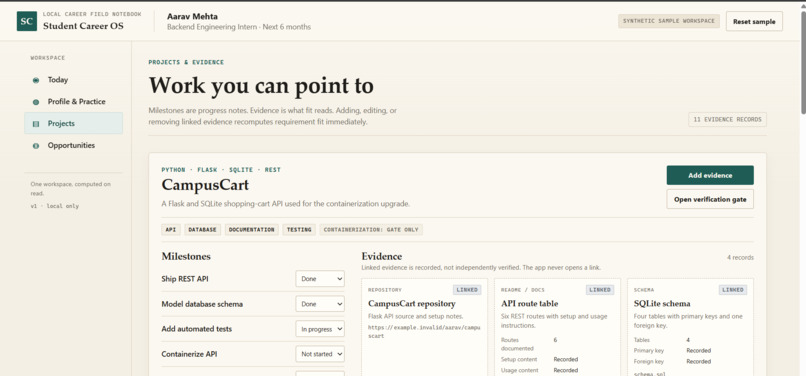
Screenshot 6 — Organize project milestones, documentation, repository records, and test evidence.
Inspiration
Students often manage coding practice, personal projects, and internship applications across different platforms. It can be difficult to understand how the work they do translates into evidence for a particular opportunity. I wanted to build a workspace that connects these pieces and helps students identify what to work on next.
What it does
Student Career OS is a prototype for evidence-based career preparation. It brings together:
- Profile & Practice: View coding practice progress and topic coverage.
- Project Workspace: Organize project details, milestones, documentation, and testing evidence.
- Verification Gate: Run deterministic checks on submitted evidence to identify missing or inconsistent details.
- Opportunity Fit: Compare available evidence with opportunity requirements and highlight remaining gaps.
- Next Actions: Surface practical next steps, such as collecting deployment evidence.
The demo uses a sample student profile, synthetic opportunities, and local sample data to demonstrate the workflow.
How I built it
I built Student Career OS as a web application using React, TypeScript, Vite, and CSS. I used a coding agent to help implement and refine the application, working through the features and connecting the different workspaces into a single user journey.
Rather than treating a project milestone as proof that a skill has been demonstrated, the prototype emphasizes submitted evidence and explicit verification checks. For example, its CampusCart demonstration shows an incomplete containerization evidence bundle failing two checks, followed by a complete sample passing all eight checks.
These checks validate the completeness and consistency of the submitted evidence. They do not build or run the Docker container.
Challenges I faced
One challenge was connecting several related workflows without making the interface feel disconnected or overwhelming. I also needed to make verification results understandable and show how additional evidence can affect an opportunity-fit assessment.
Another important consideration was being clear about the prototype's limitations. The current demo uses synthetic opportunities and sample data, and its verification logic is deterministic rather than a live assessment of a running project.
What I learned
This project helped me practice breaking a broad idea into manageable features, using a coding agent iteratively, and thinking about how evidence should flow between different parts of an application. I also learned the importance of making verification results transparent and distinguishing between recorded progress and evidence that has actually passed a check.
What's next
Future improvements could include secure student profiles, integrations with coding and project platforms, live opportunity data, and stronger verification that can execute project tests in a controlled environment.
My goal is to make career preparation more organized, transparent, and actionable by helping students connect the work they do with the evidence opportunities require.
Built With
- agents
- ai
- coding
- css
- localstorage
- react
- typescript
- vite


Log in or sign up for Devpost to join the conversation.