-
-
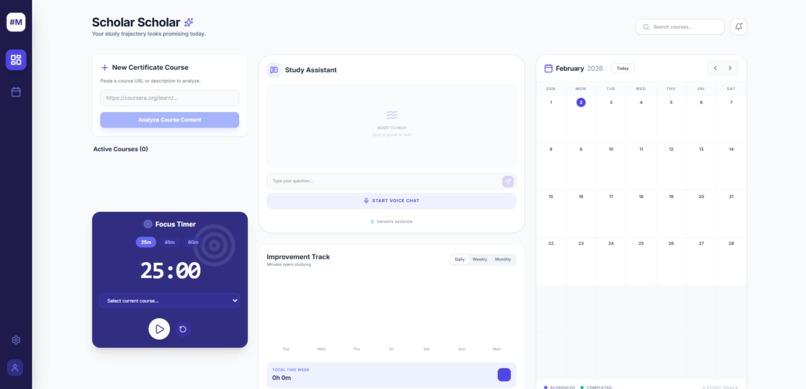
layout
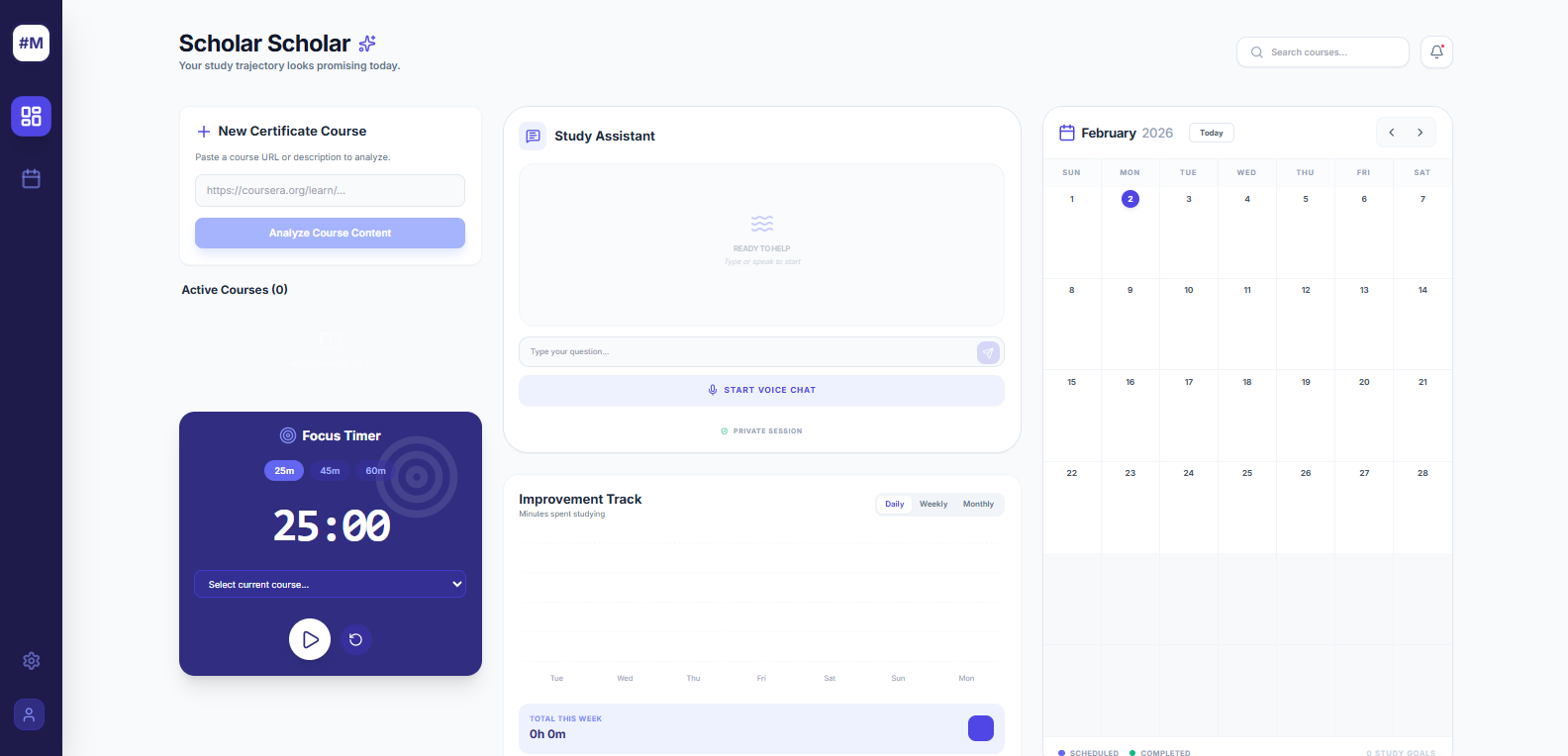
Inspiration
The inspiration for Student AI (ME) came from the "information overload" every student faces. With thousands of pages of PDFs, hours of recorded lectures, and endless web articles, students spend more time organizing data than learning it. We wanted to build a "second brain"—a stateless, high-performance assistant that doesn't just give answers, but helps students synthesize their own study materials into actionable knowledge.
What it does
Student AI is a personalized study companion that transforms passive reading into active learning.
Instant Summarization: Upload long PDFs or lecture notes and get concise summaries in seconds.
Contextual Q&A: Ask questions based strictly on your uploaded materials to avoid "AI hallucinations."
Session Persistence: Even though the app is stateless, users can pick up exactly where they left off thanks to high-speed session caching.
Format Flexibility: It speaks the language of the web, providing data in JSON for our frontend and clean HTML for a seamless reading experience.
How we built it
We followed the 12-Factor App methodology to ensure the service is modern and scalable:
Backend: Built as a Python-based RESTful microservice.
AI Engine: Powered by the Gemini 1.5 Flash API for rapid natural language processing.
Deployment: Containerized with Docker and deployed on Google Cloud Run for serverless, auto-scaling performance.
State Management: To keep our web servers stateless, we used Memorystore for Redis. This solved our initial performance bottlenecks by allowing sub-millisecond session retrieval.
DevOps: Environment variables were used for all configurations (no secrets in the repo!), and logs were treated as event streams for easy debugging.
Challenges we ran into
The biggest hurdle was Latency vs. State. Initially, moving session data from memory to a traditional database slowed down the user experience. We had to pivot our architecture to incorporate a caching layer (Redis), which taught us a lot about the trade-offs between data persistence and speed. We also spent significant time fine-tuning the Content Negotiation so the app could serve different client types (web vs. mobile) via the same API.
Accomplishments that we're proud of
Zero-Downtime Scaling: Because the app is stateless, we can deploy new versions or scale up to handle thousands of students without dropping a single user session.
Clean Architecture: Achieving a high score on "12-Factor" compliance while maintaining a codebase that is easy for new contributors to understand.
Sub-Second Responses: Seeing the performance jump after implementing the Redis caching strategy was a huge win for the team.
What we learned
We learned that architecture is just as important as the AI model itself. You can have the smartest AI, but if your API returns 500 errors on invalid data or takes 5 seconds to load a session, users won't stay. We mastered HTTP status codes (400s for the win!), learned the importance of "Dev/Prod Parity," and discovered how powerful the Google Cloud ecosystem is when services are properly integrated.
What's next for Student AI
Vector Search (RAG): Implementing a vector database to allow students to query thousands of pages of notes simultaneously.
Voice Integration: Using Gemini's multimodal capabilities to allow students to "talk" to their notes while walking to class.
Collaborative Study Rooms: Allowing multiple students to connect their AI assistants to the same "knowledge base" for group projects.
Built With
- cloud

Log in or sign up for Devpost to join the conversation.