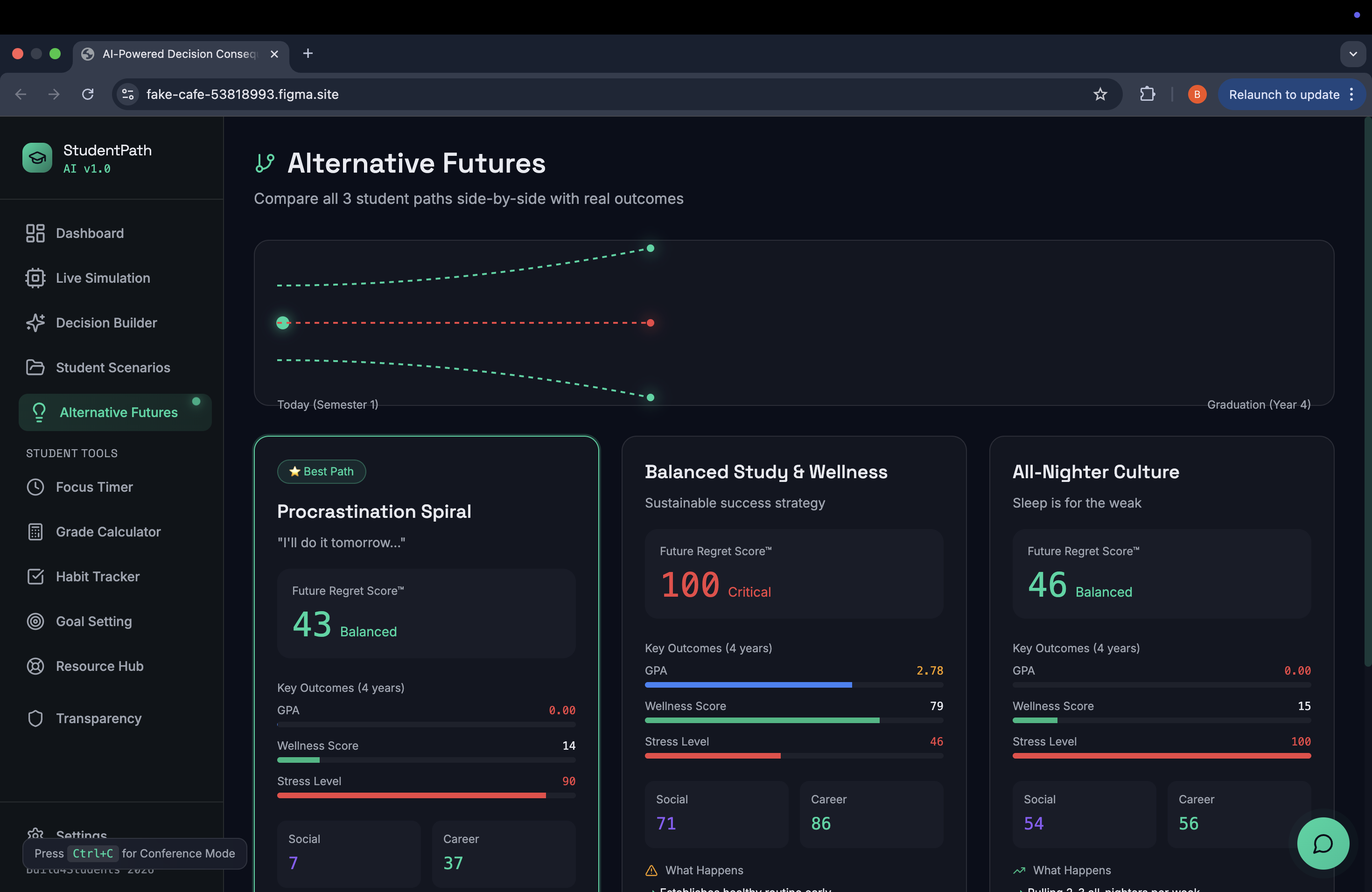
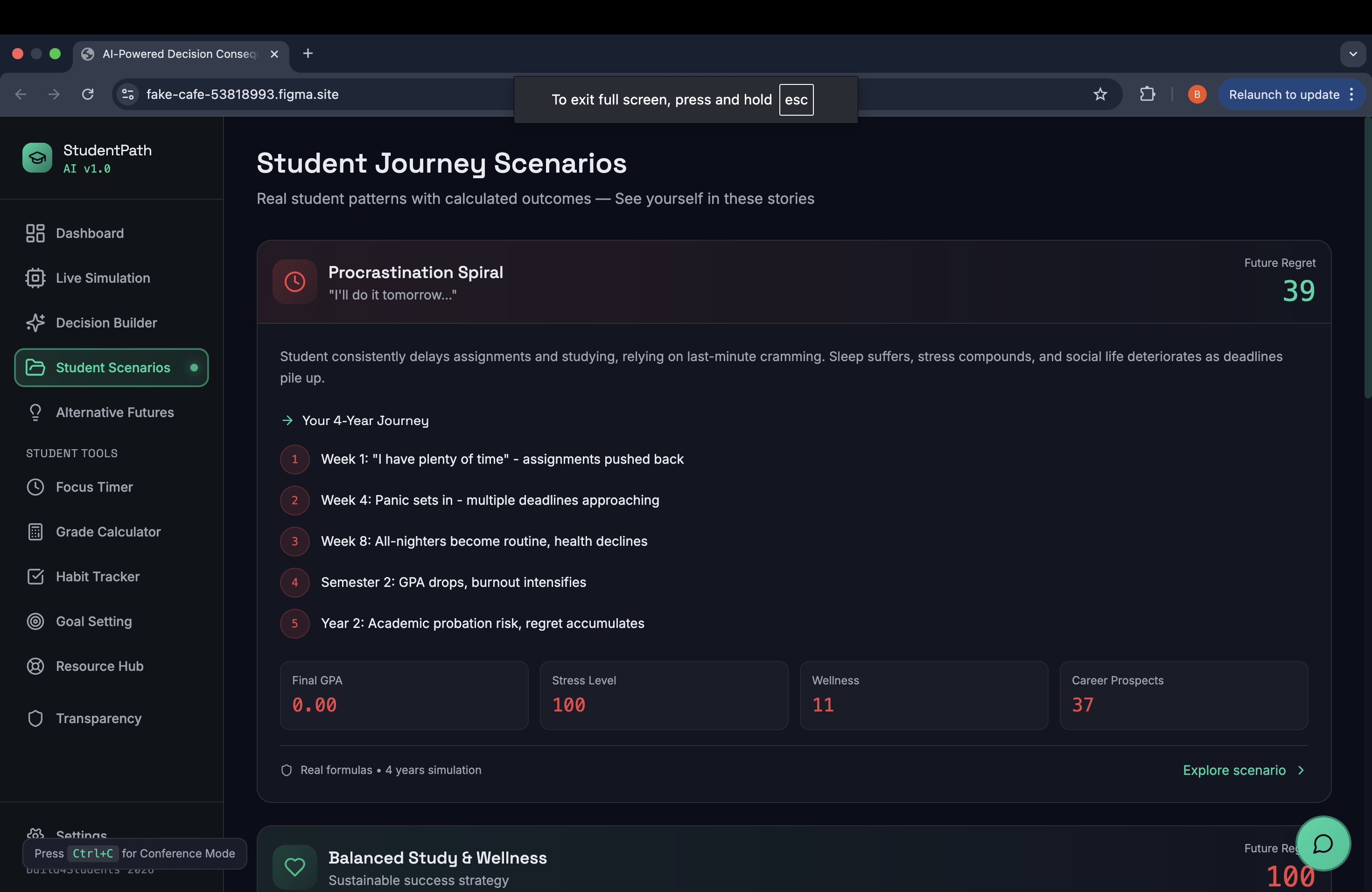
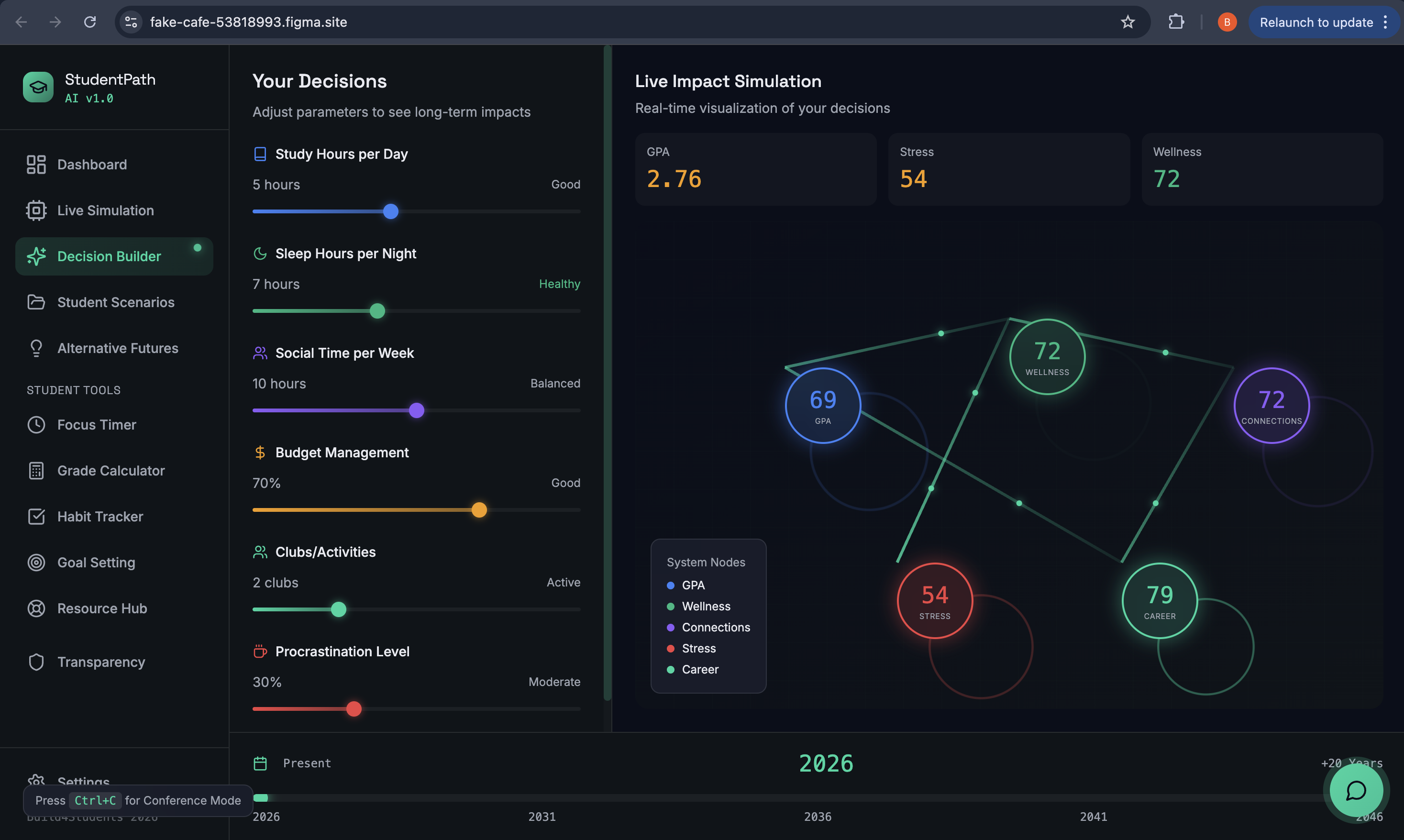
Inspiration StudentPath AI was born from a frustrating reality: students are making life-shaping decisions every single day without seeing where those decisions actually lead. Should I pull an all-nighter? Should I take 18 credits? Should I skip sleep for productivity? Should I drop this course? These choices feel small in the moment, but they compound over months and years. At the same time, decision anxiety is rising, burnout is common, and counseling resources are limited. We wanted to build something different — not another productivity app, not another chatbot — but a platform that shows students the future consequences of their actions before they make them. StudentPath AI is our answer to that problem.
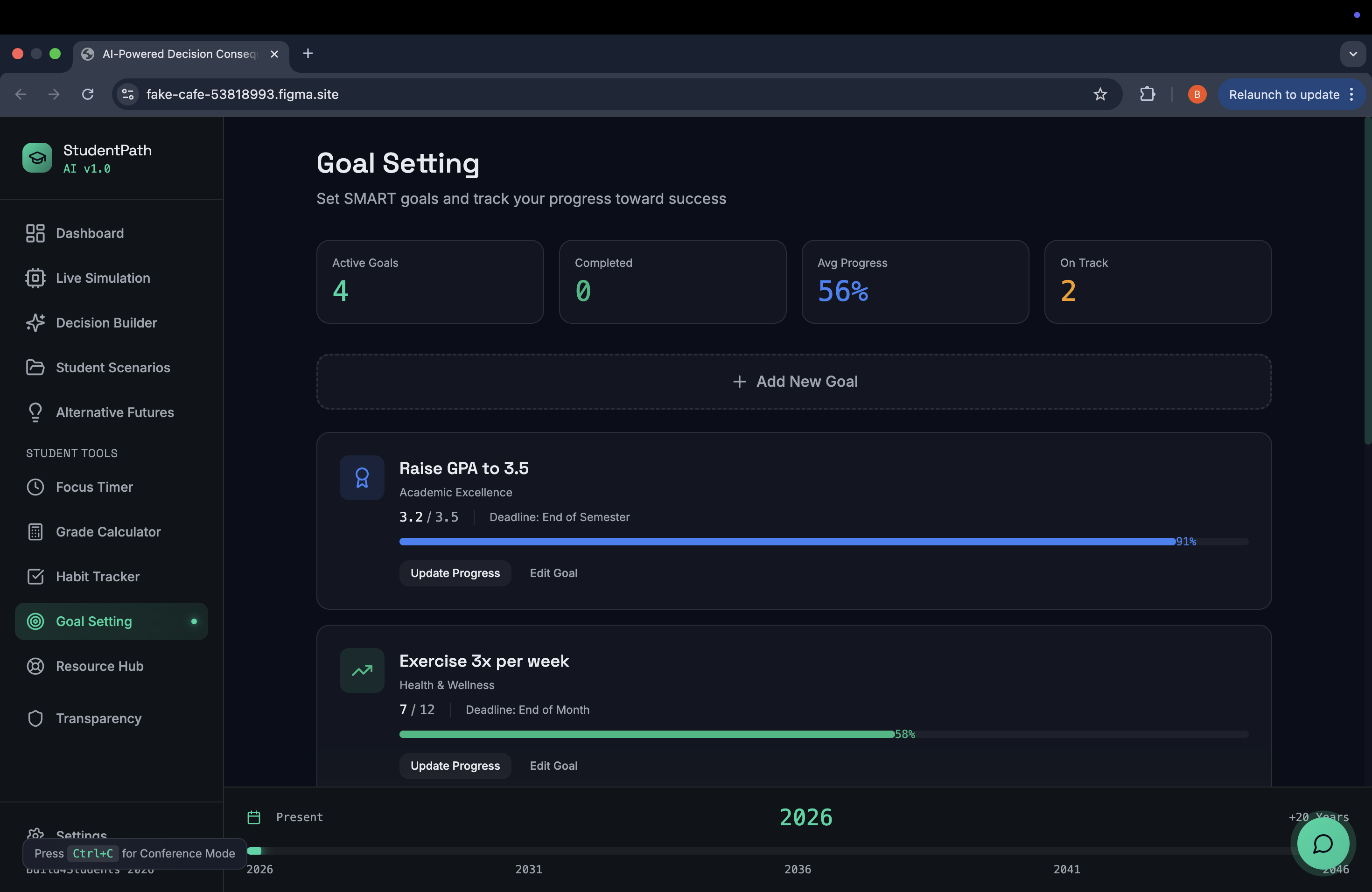
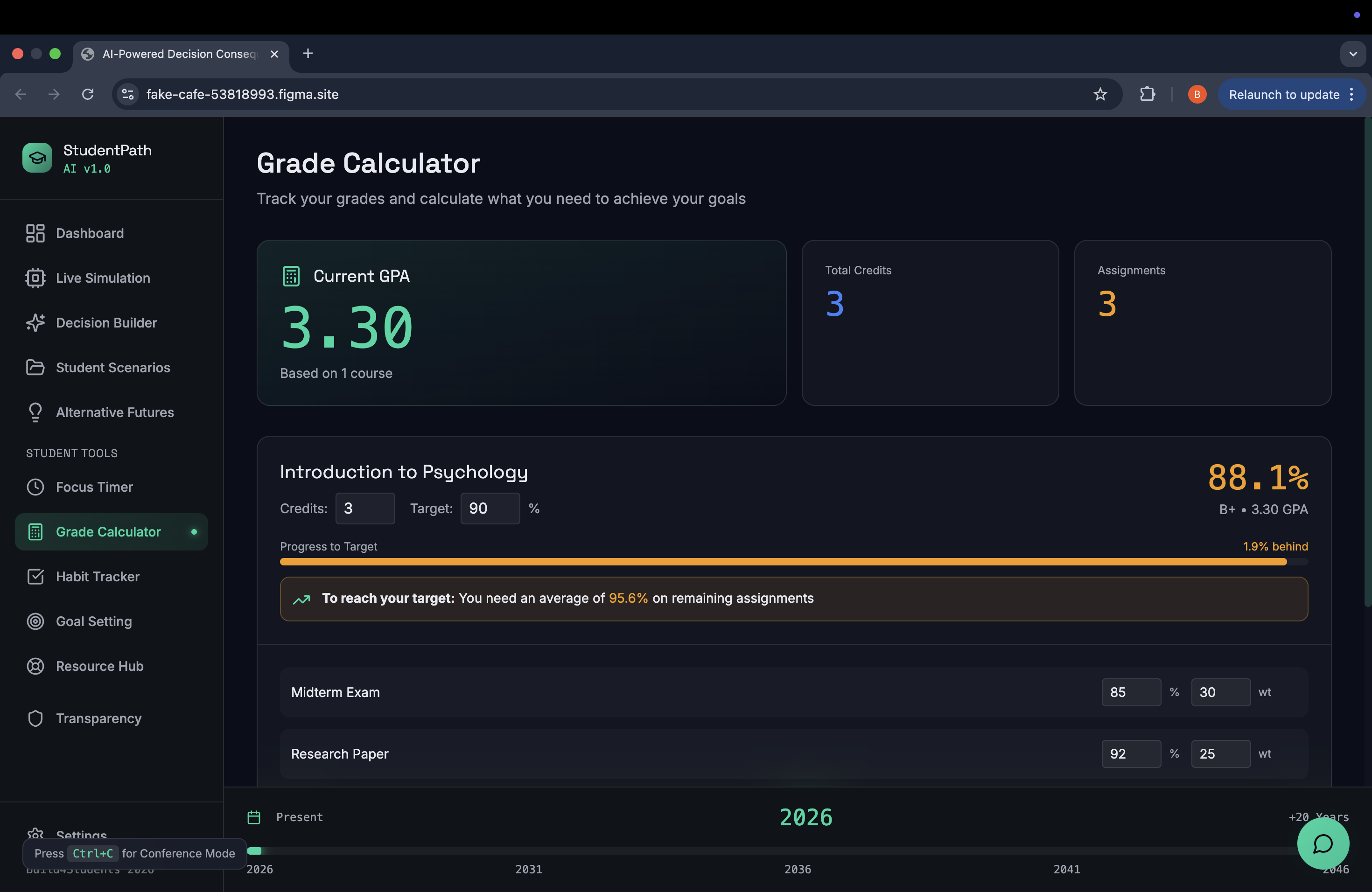
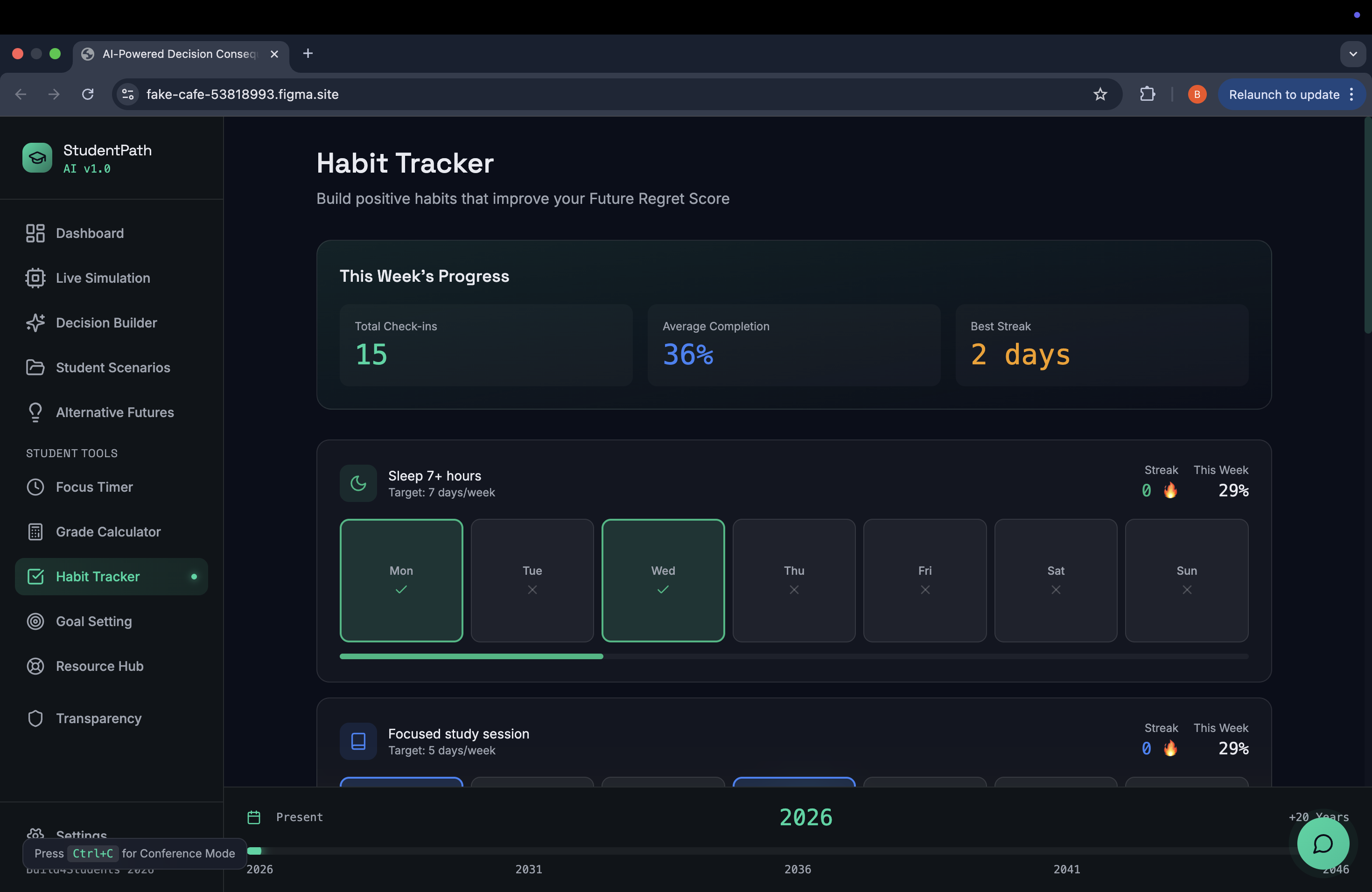
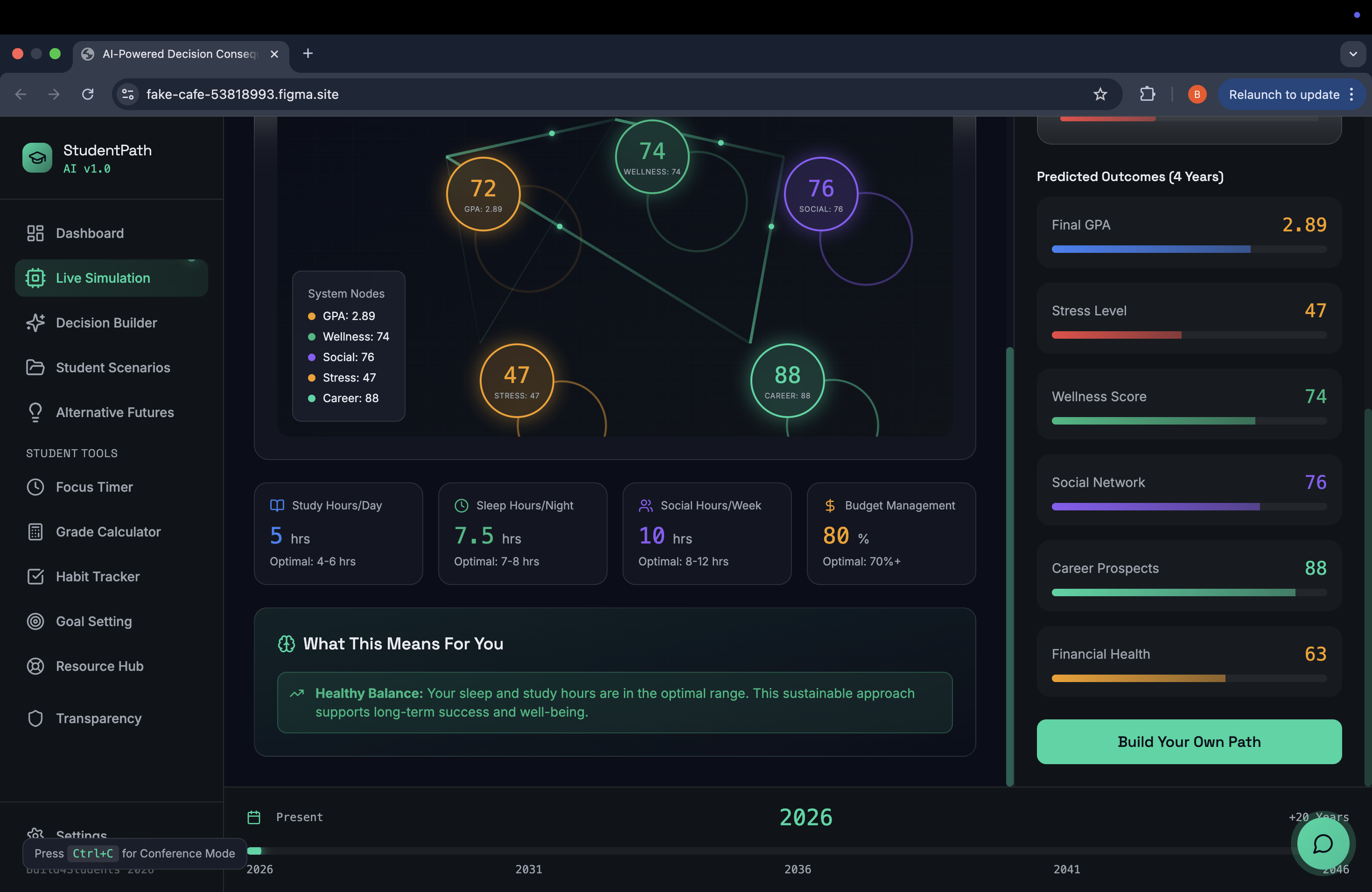
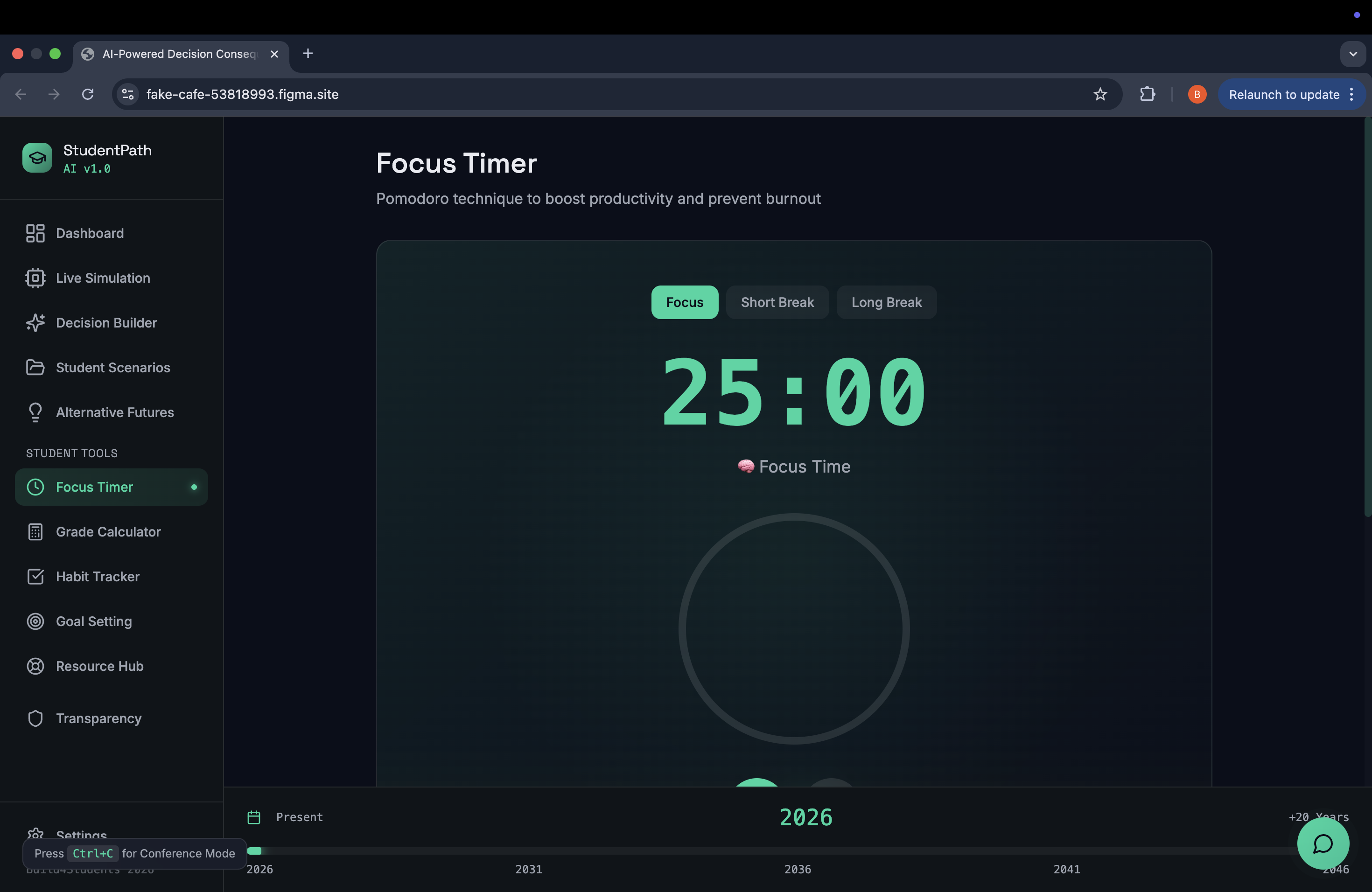
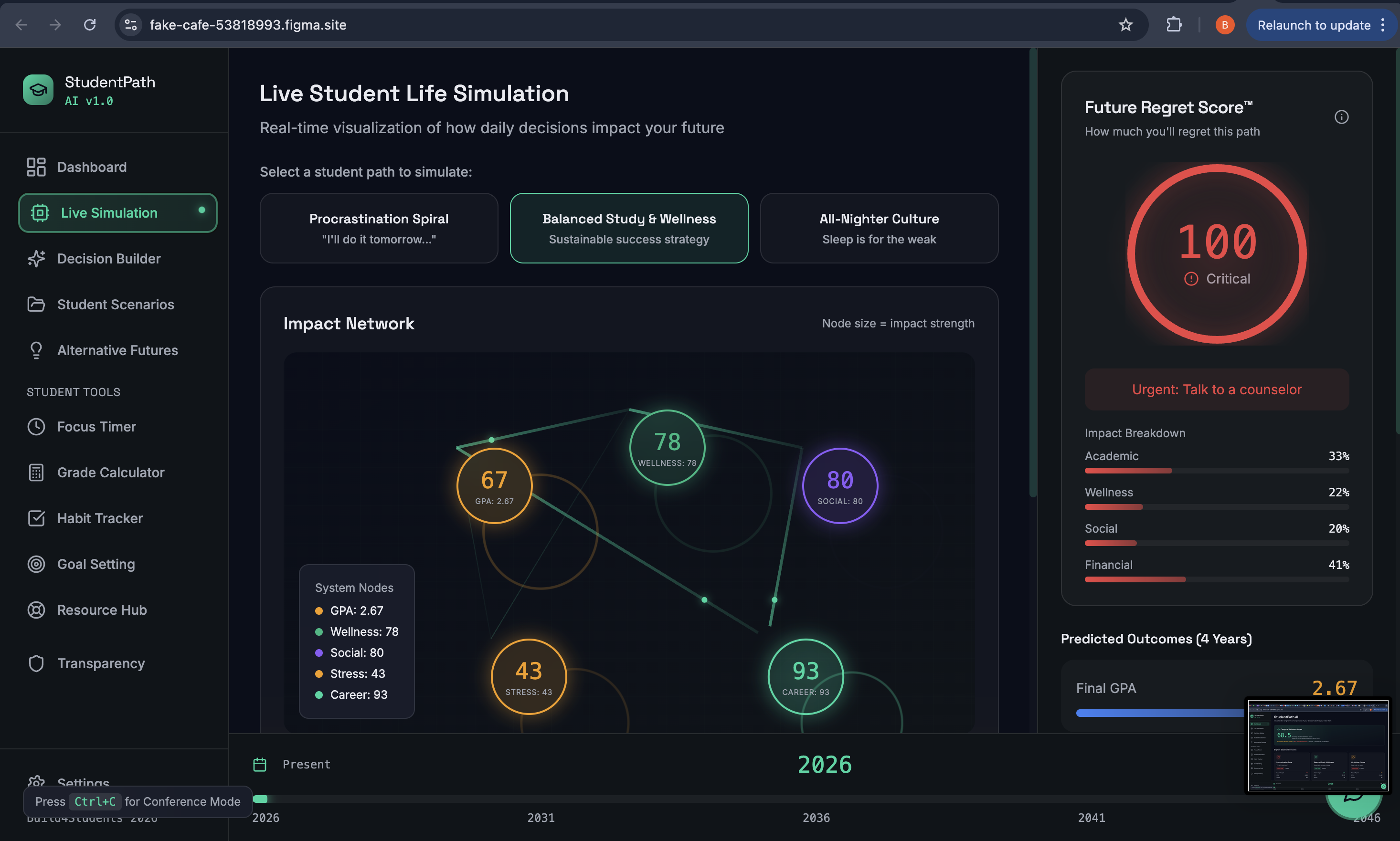
What it does StudentPath AI is a next-generation decision consequence engine for students. It visualizes how daily behaviors — sleep, study time, stress, social activity, exercise — affect six core life dimensions over four years: GPA Stress Wellness Social strength Financial stability Career trajectory Students can: Run live simulations of their lifestyle choices Track grades and predict required scores Use a real Pomodoro focus timer Build habits with weekly streaks Set SMART goals Chat with a 24/7 AI study advisor
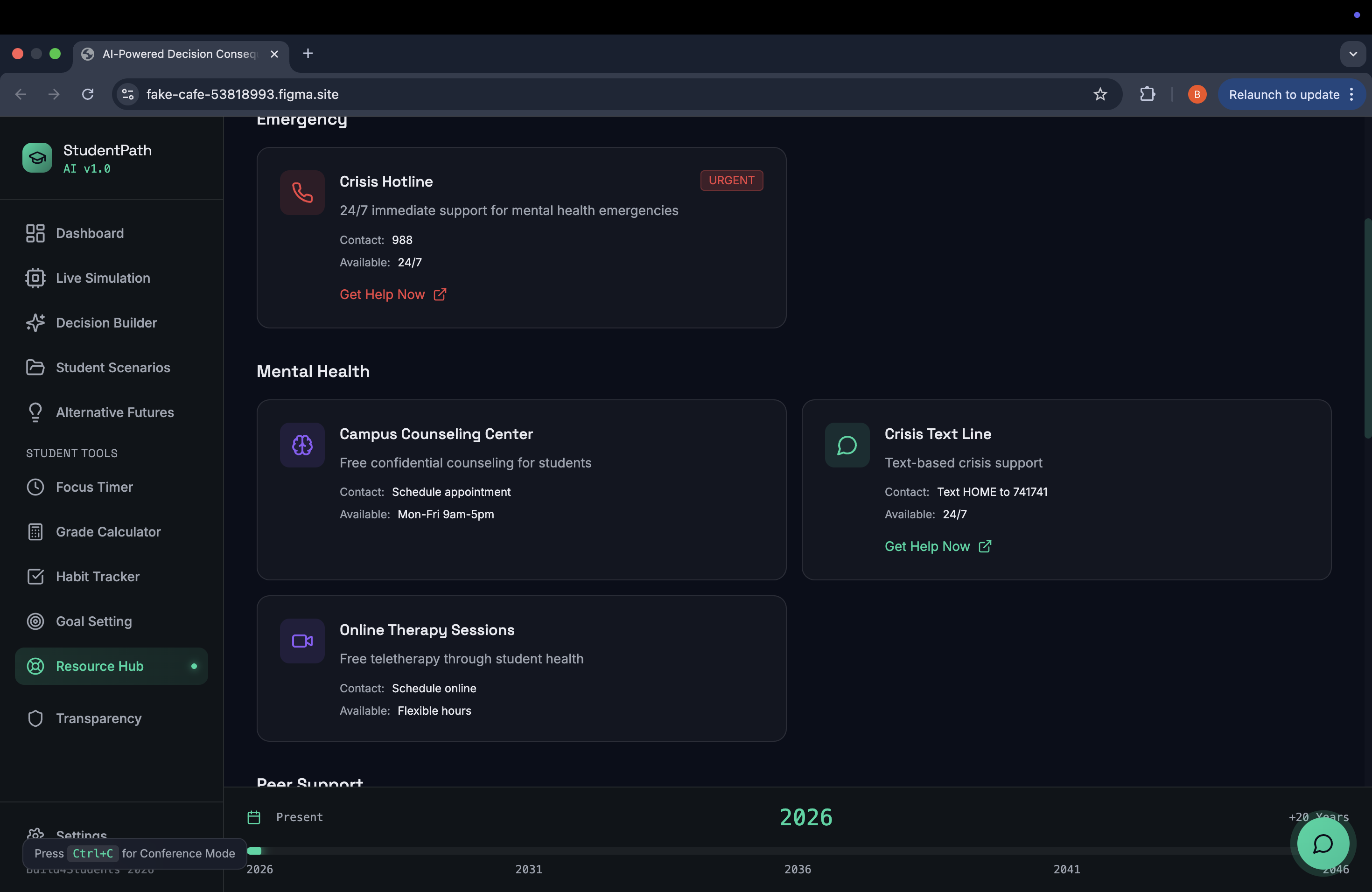
Compare major life decisions with long-term projections Access crisis and counseling resources instantly Everything works offline. No accounts. No data uploads. Full transparency. StudentPath doesn’t just tell students what to do — it shows them what happens if they don’t.
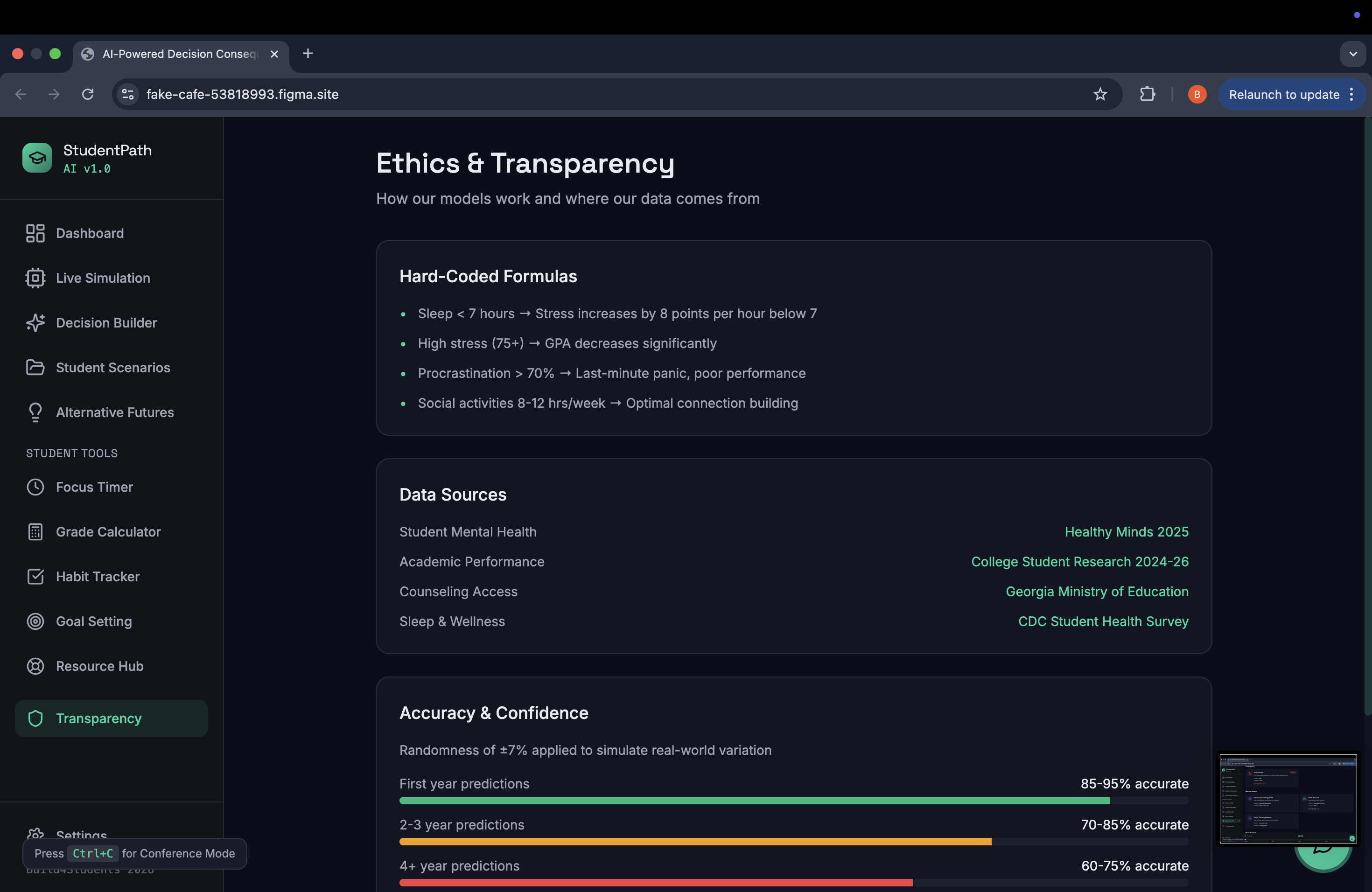
How we built it We built StudentPath AI as a fully client-side platform focused on performance, privacy, and clarity. Tech stack: React + TypeScript Tailwind CSS Framer Motion Recharts localStorage persistence The prediction engine is rule-based and transparent — no black-box AI. Every formula is explainable and tied to research-backed cause-and-effect relationships. We architected the platform modularly: Simulation engine Productivity tools Advisory chatbot logic Data persistence layer Transparency system The result is a system that loads in under a second, runs smoothly at 60fps, and works completely offline.
Challenges we ran into One major challenge was balancing realism with responsibility. If predictions feel too negative, they can increase anxiety. If they feel too optimistic, they lose credibility. We redesigned the simulation messaging multiple times to ensure it feels empowering rather than discouraging. Another challenge was building a long-term projection model that is complex enough to feel meaningful but simple enough to stay transparent and explainable. Maintaining full offline functionality while offering real interactivity also required careful state management and architecture planning.
Accomplishments that we're proud of We didn’t build a prototype. We built a full ecosystem. 13 fully functional features Real productivity tools (not mockups) A working simulation engine Hourly AI engagement Crisis resource integration Full privacy-first architecture Zero external APIs Sub-1-second load time Most importantly, StudentPath AI feels real. It’s usable today.
What we learned We learned that students don’t lack intelligence — they lack visibility into long-term consequences. We learned that transparency builds trust faster than “smart” AI claims. We learned that small daily habits compound more dramatically than students expect. And we learned that design plays a huge role in whether a mental health–adjacent product feels supportive or overwhelming.
What’s next for StudentPath AI Next steps include:
Mobile apps (iOS and Android)
Calendar integration for smarter workload forecasting
Personalized pattern recognition
Advisor export reports
University partnerships
Multi-language support
Social accountability features
Our long-term vision is for StudentPath AI to become the standard decision-support layer for students worldwide.
A system that helps students think long-term, act intentionally, and avoid preventable burnout.

Log in or sign up for Devpost to join the conversation.