-
Login
-
Login
-
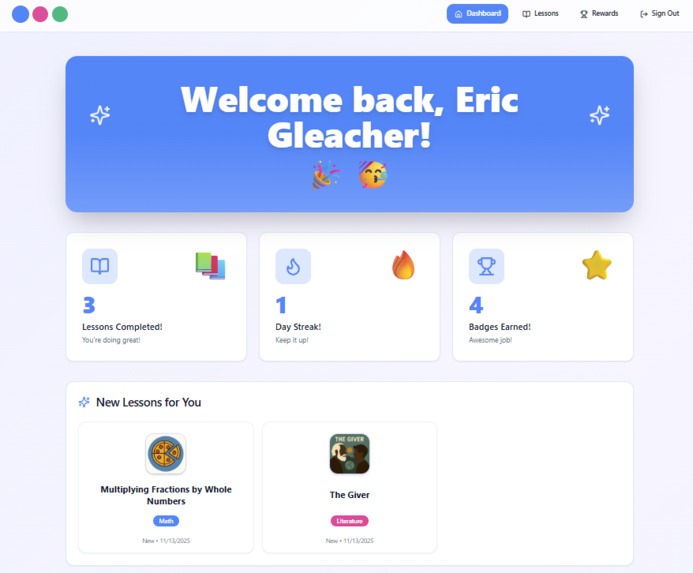
Student view
-
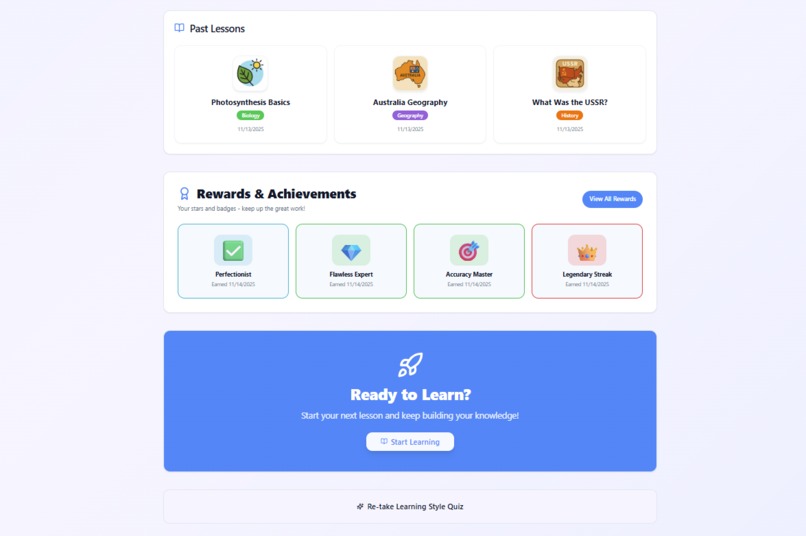
Student view
-
Student view
-
Student view
-
Student view
-
Student view
-
Student view
-
Student view
-
Student view
-
Student view
-
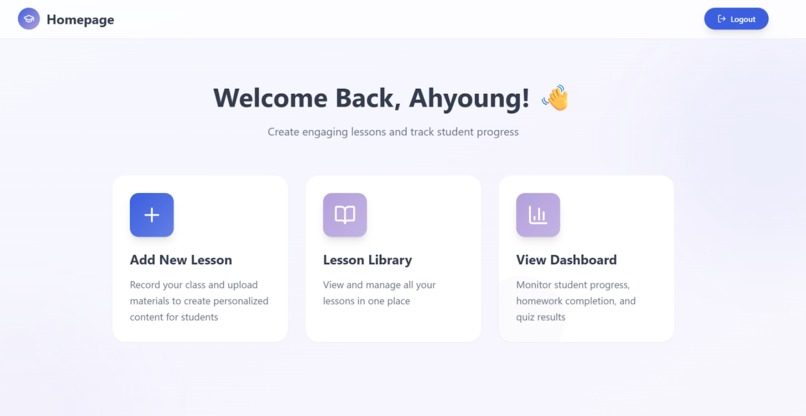
Teacher view
-
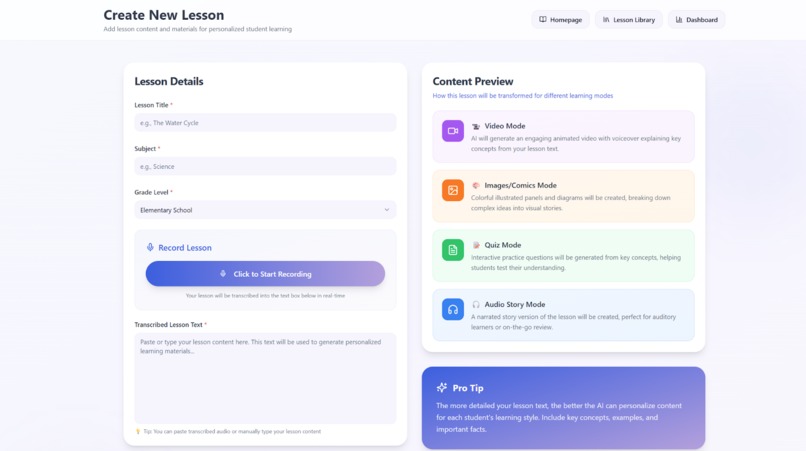
Teacher view
-
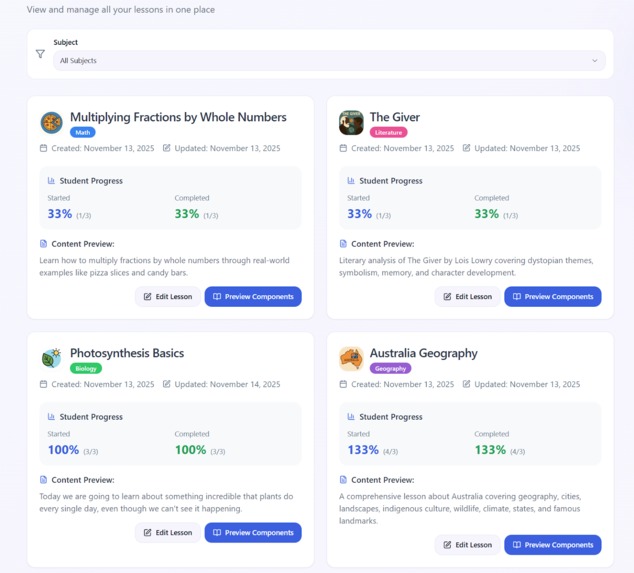
Teacher view
-
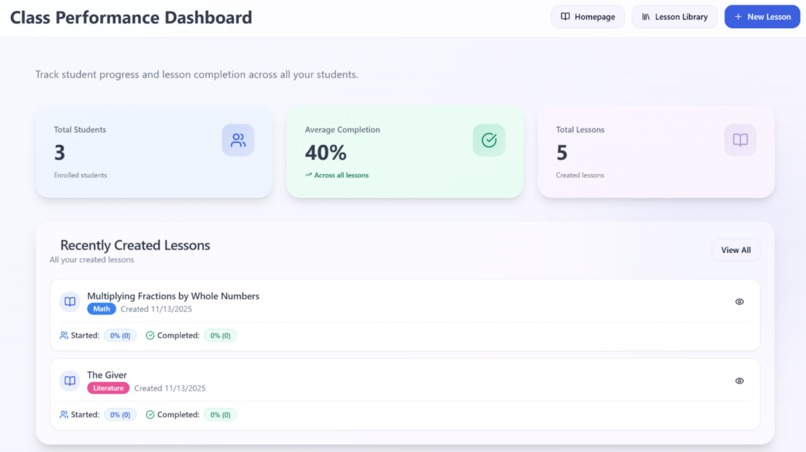
Teacher view
-
Teacher view
-
Teacher view
-
Teacher view
-
Teacher view
-
Teacher view
We started Studdy Buddy because we all agreed that every student learns differently, but most classrooms just don’t have the time or tools to personalize instruction. Teachers are stretched thin, students have a wide range of needs and learning outside the classroom often ends up being sets of one-size-fits-all worksheets. We wanted to build something that makes personalization easy for teachers and additive for students.
We learned a lot along the way about learning styles, designing tools that work for both kids and teachers, and about how to break a big idea into something we could actually build in a couple of days. We also learned quickly that, even with AI, good results still depend heavily on thoughtful prompts and clear UX.
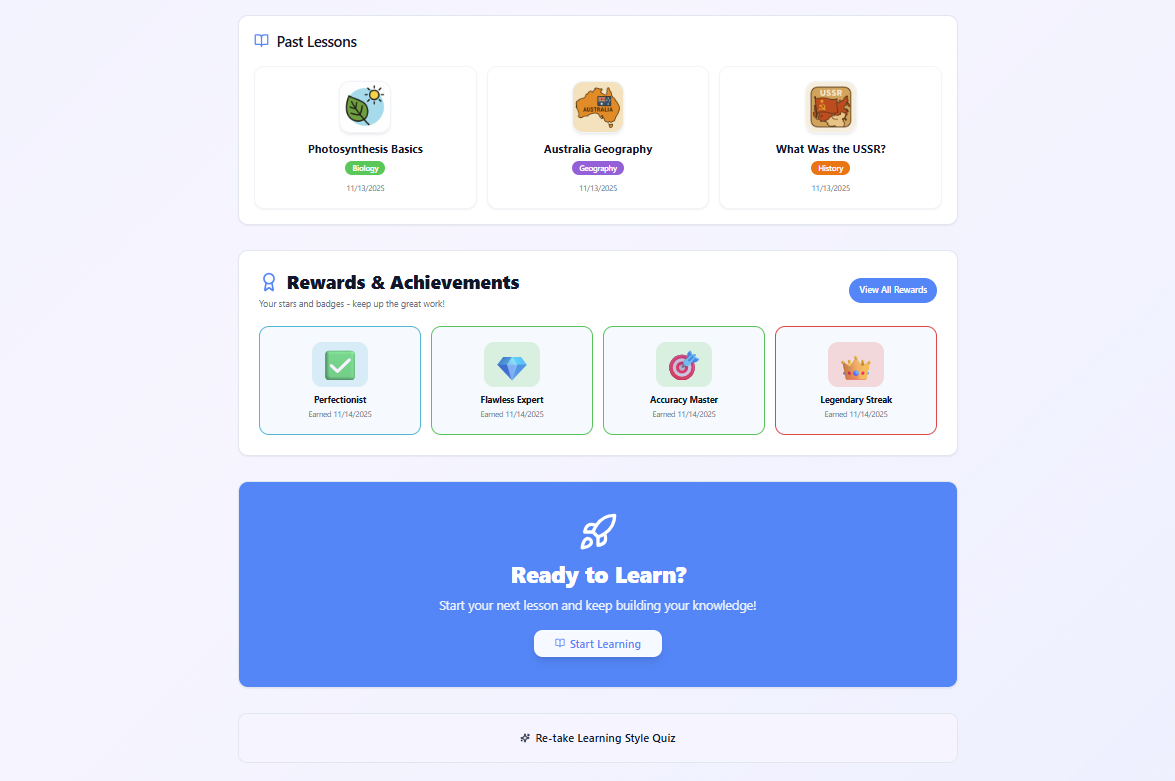
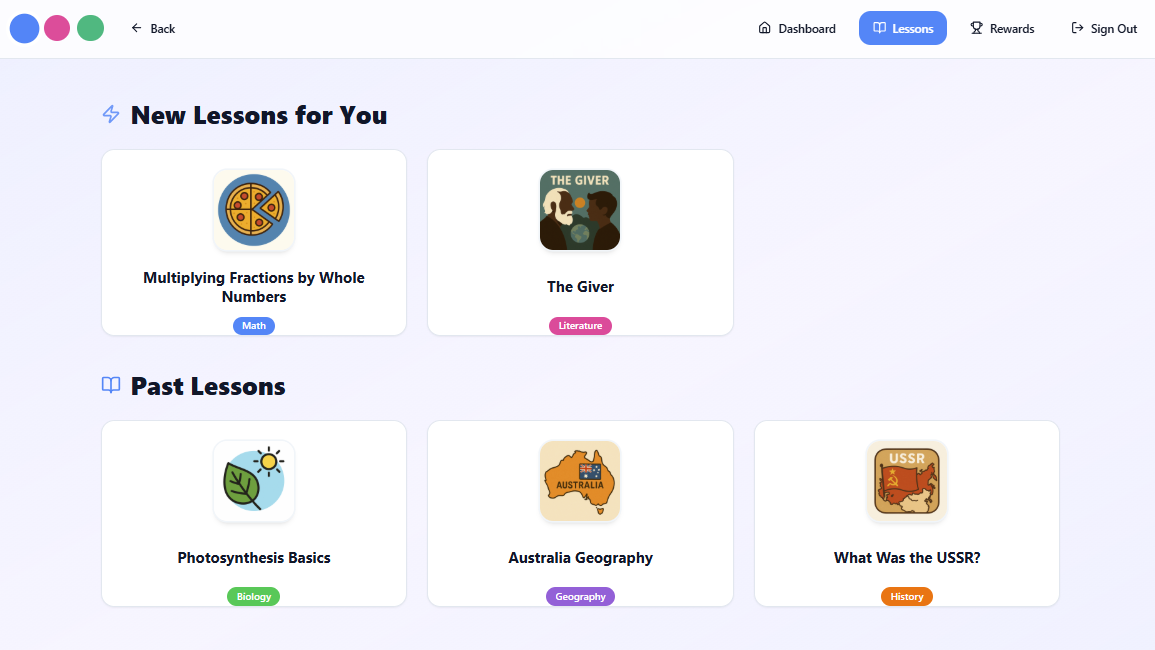
We built the platform around the simple idea that teachers record their lesson once, and StuddyBuddy turns it into different types of study materials depending on a student’s preferred learning style (e.g. videos, visuals, quizzes or audio). From there, we added a one-time onboarding / learning style quiz for students, a personalized learning page and a full teacher dashboard with progress tracking and simple cues about who might need extra help. We also added streaks, stars and badges to make the student experience more engaging.
We definitely had a few challenges too. Getting the student onboarding quiz to run only once, while still allowing optional retakes later, took more logic than expected. Integrating the OpenAI API to generate the actual AI-driven lesson content also took trial and error, especially to get consistent results across different learning styles. Making the teacher dashboard feel clear and helpful without overwhelming it with data required several redesigns. And, like any hackathon team, we had to make tough decisions about which features to build now and which to leave for “future us.”
In the end, we’re really proud of what we built. StuddyBuddy feels like something that could genuinely help teachers who want to do more but don’t have the time, and help students with a wide range of needs learn in a way that actually works for them.
PROBLEM STATEMENT
The Student Challenge - Students have diverging ways of learning (e.g., visually, through audio, etc.). Traditionally, homework and study materials are designed as one-size-fits-all and not tailored to students’ individual needs. This presents a particular challenge for students who:
Live in lower income communities
- Attend schools with larger class sizes
- Cannot afford private tutoring or enrichment
- Have learning disabilities and / or are neurodivergent (ADHD, dyslexia, autism spectrum)
These students are not “behind,” they simply need learning materials that match how they learn.
The Teacher Challenge - Teachers want to personalize instruction, but they have limited time and resources to create differentiated content and personalize their teaching to individual student needs. This is especially the case for teachers with large class sizes. Furthermore, teachers want their students to continue learning beyond the classroom but find it challenging to do so with limited visibility into student progress.
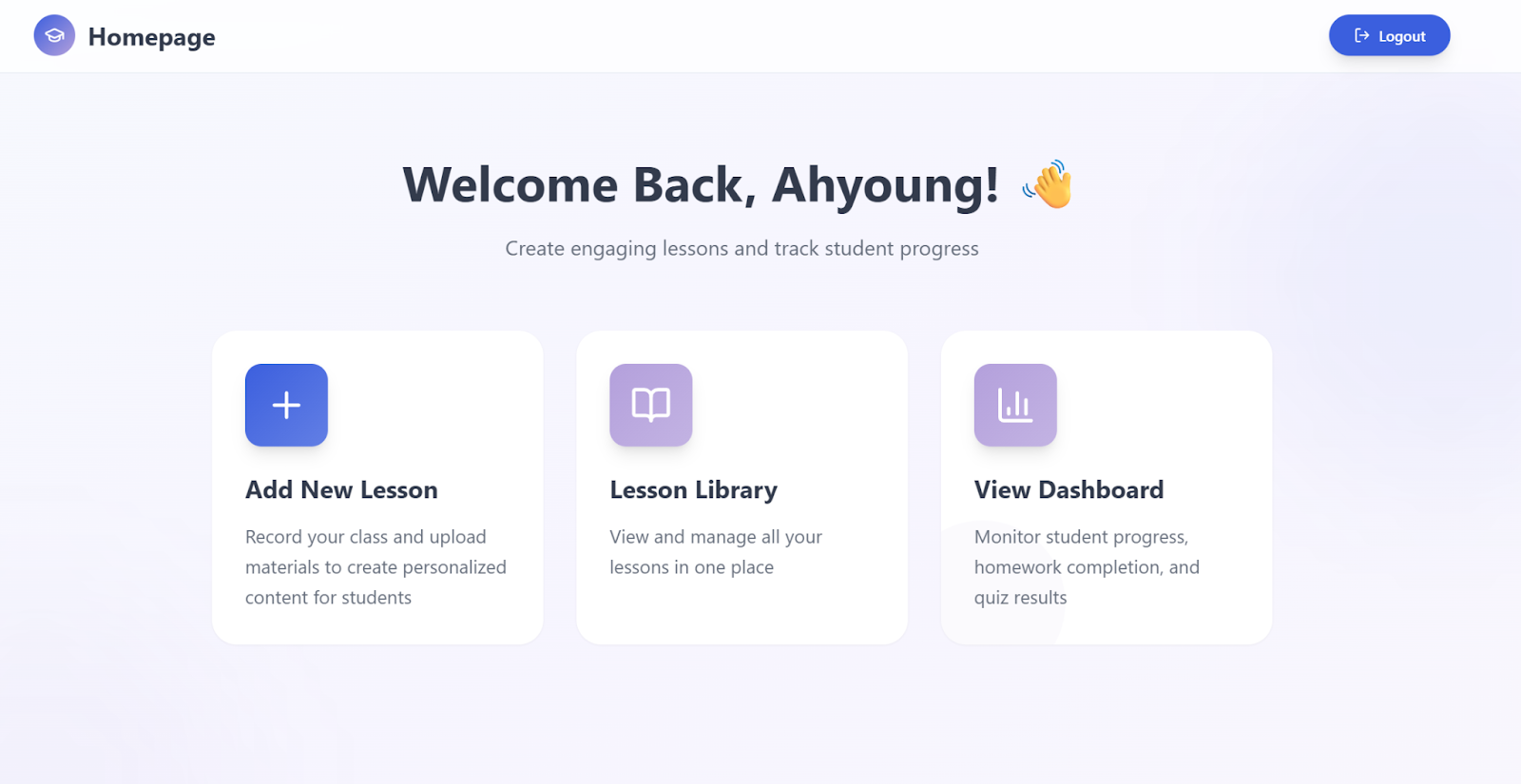
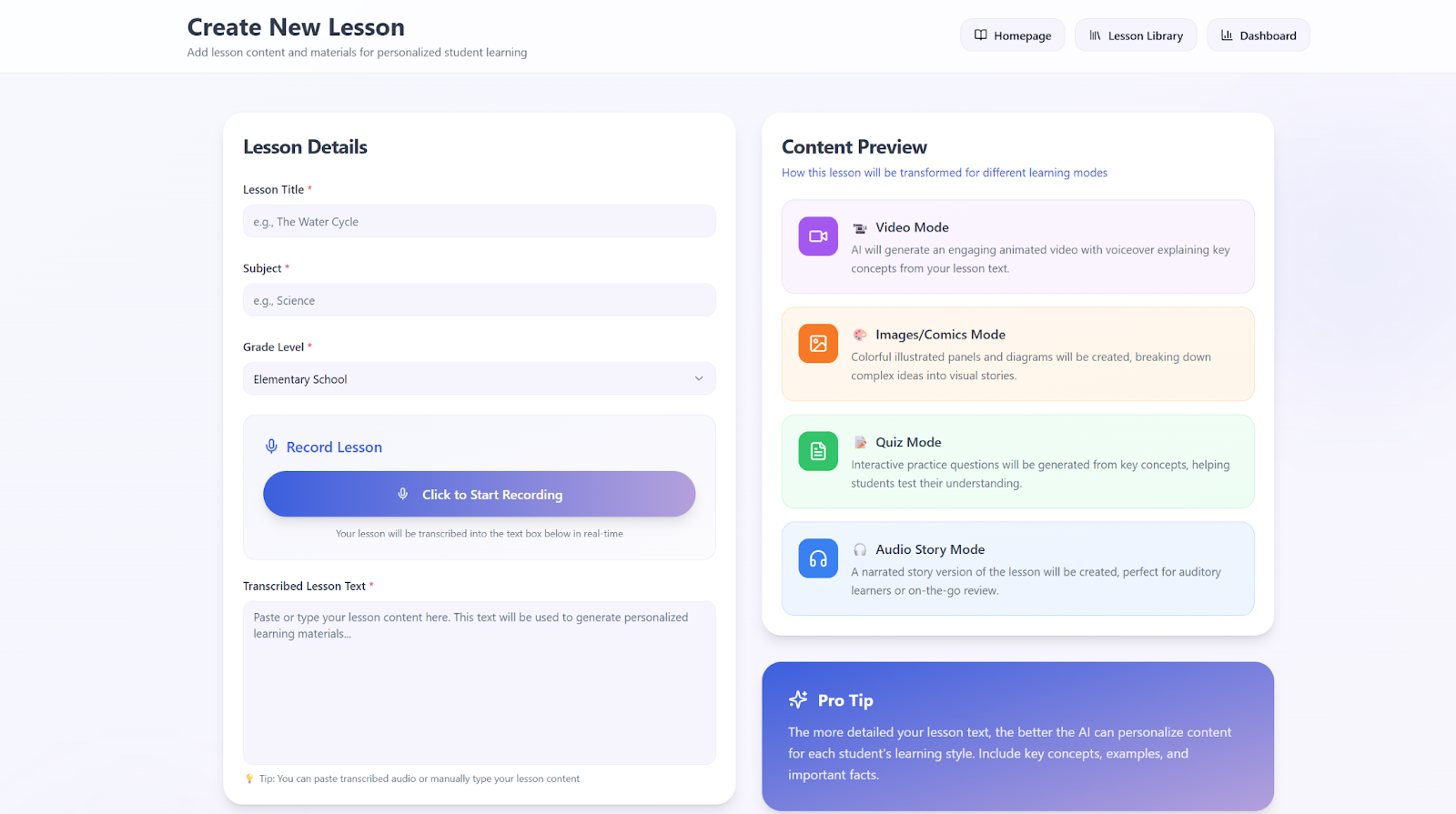
SOLUTION Solution - StuddyBuddy uses AI to automatically transform each teacher’s lessons into personalized learning experiences for every student. The teacher enables this by recording themselves in the classroom as they teach the lesson - the platform takes this information to generate a lesson plan.
Note: We have denoted specific features that leverage AI.
Teacher facing features
- [AI] Voice recording to capture a teacher’s voice while teaching a lesson and StuddyBuddy uses AI to automatically and instantly transcribe lesson text.
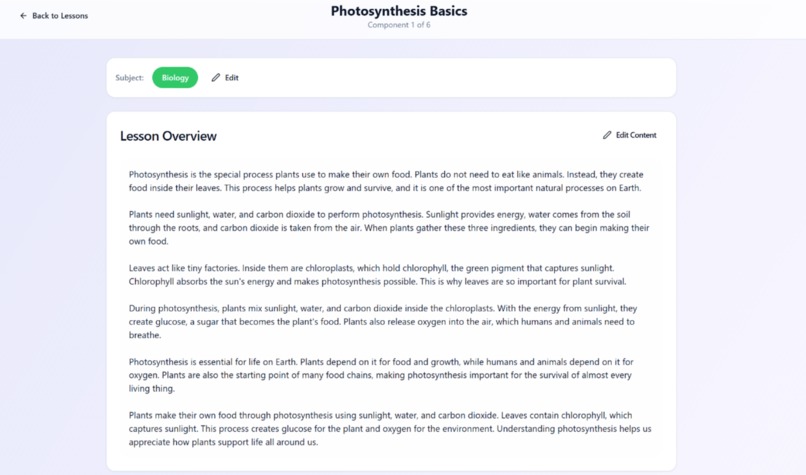
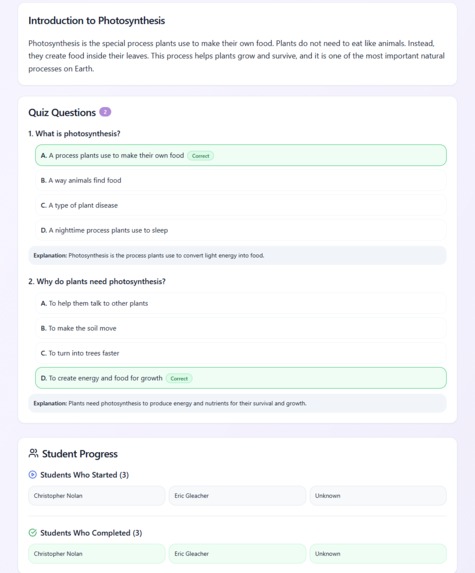
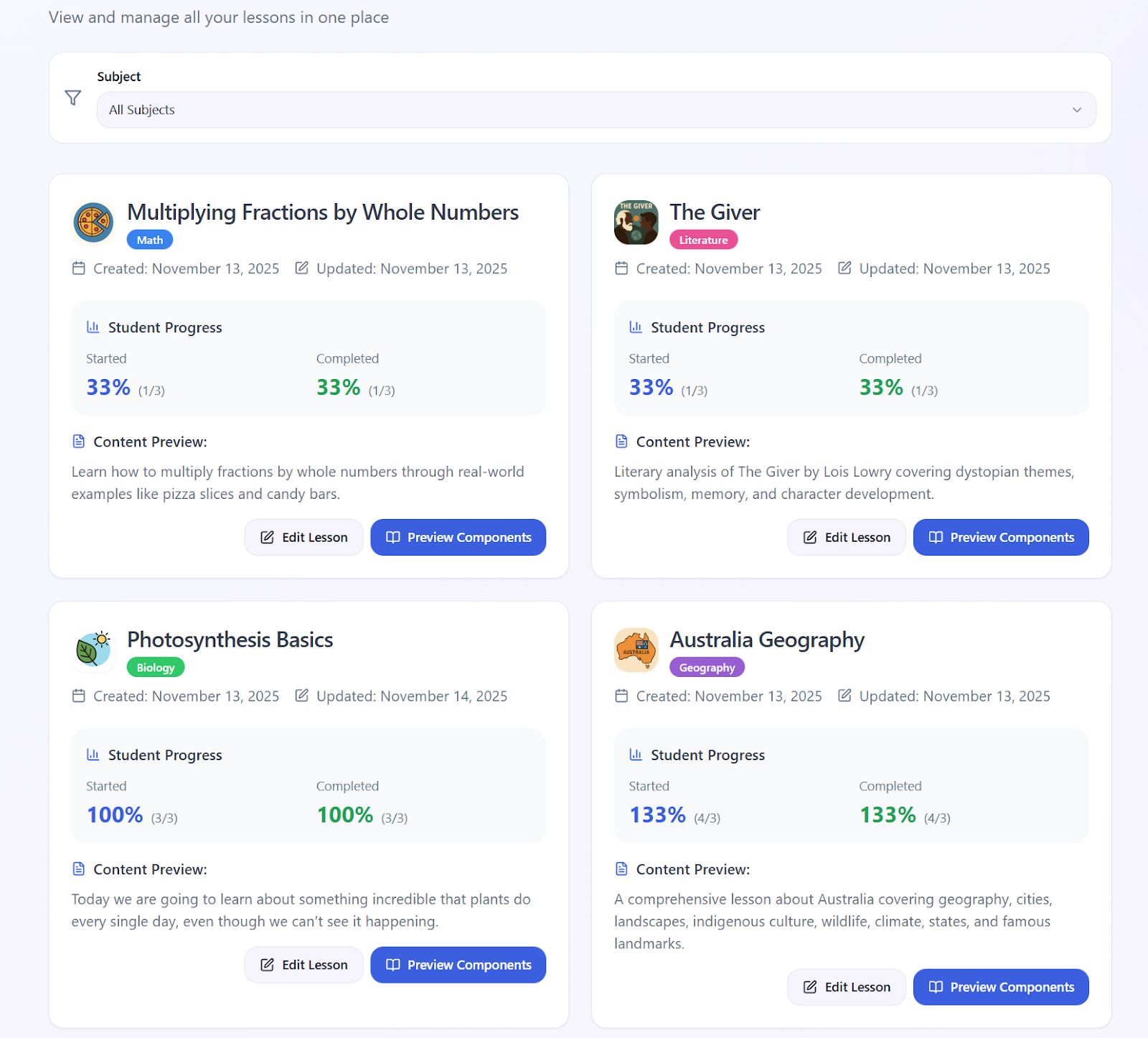
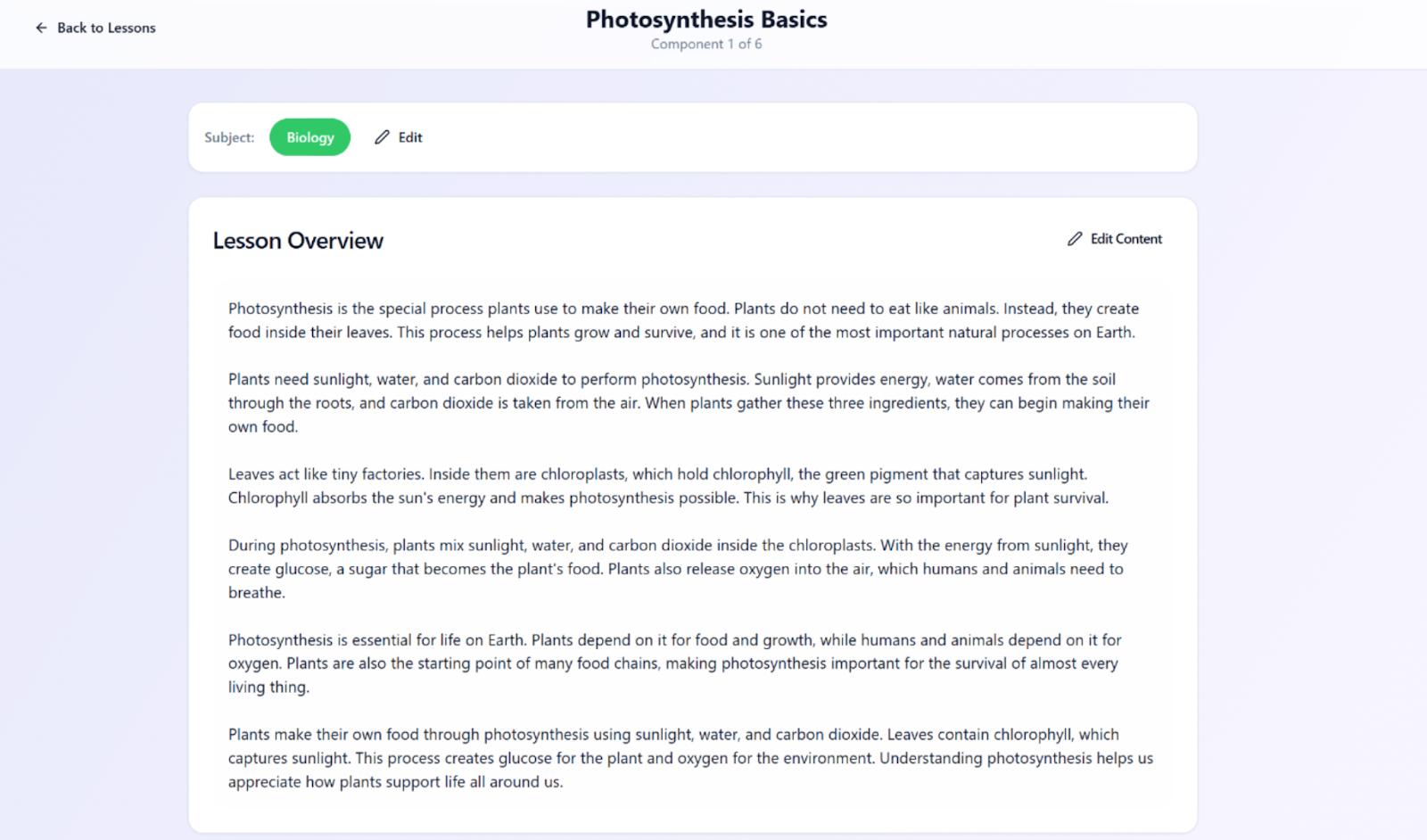
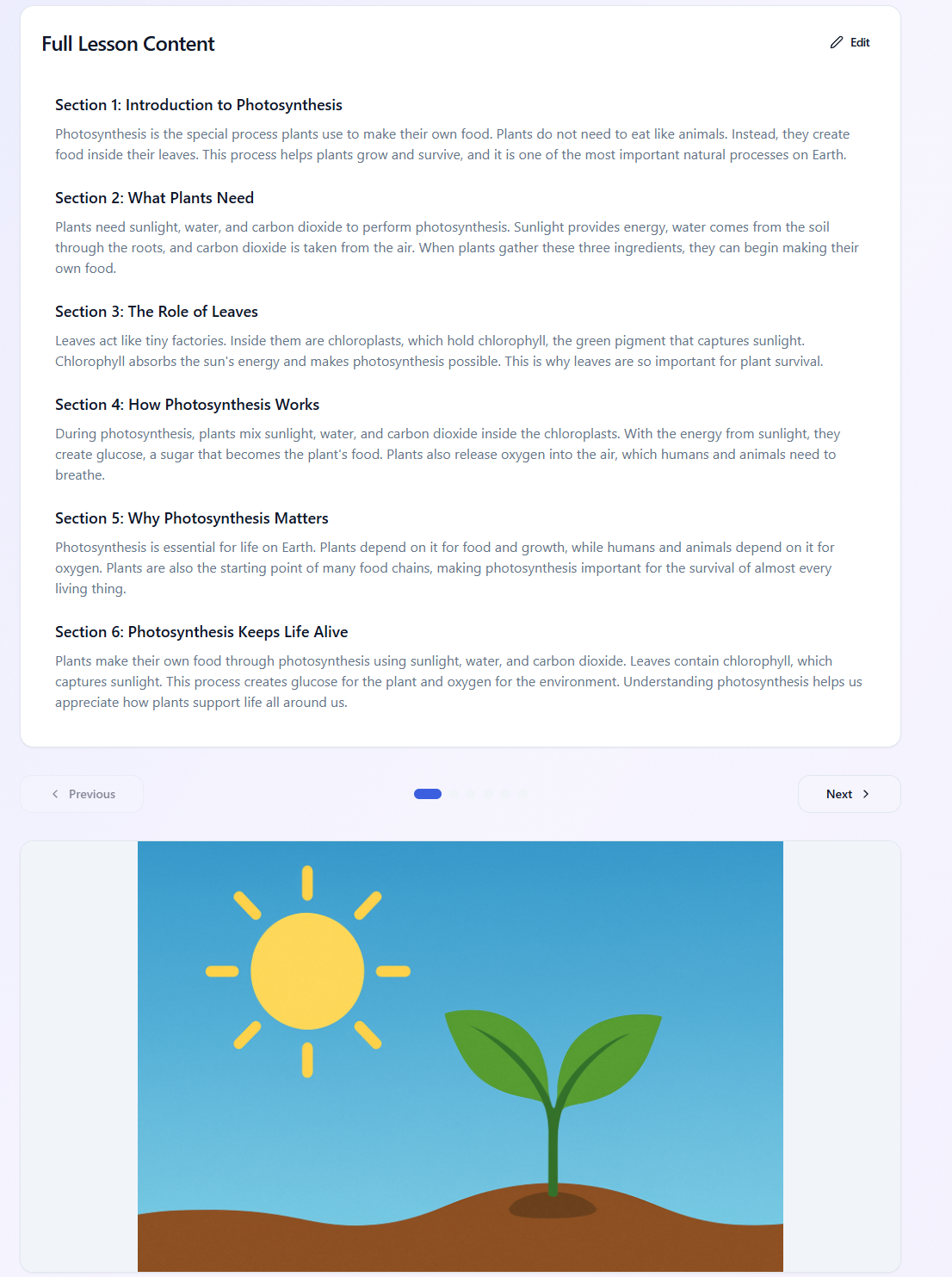
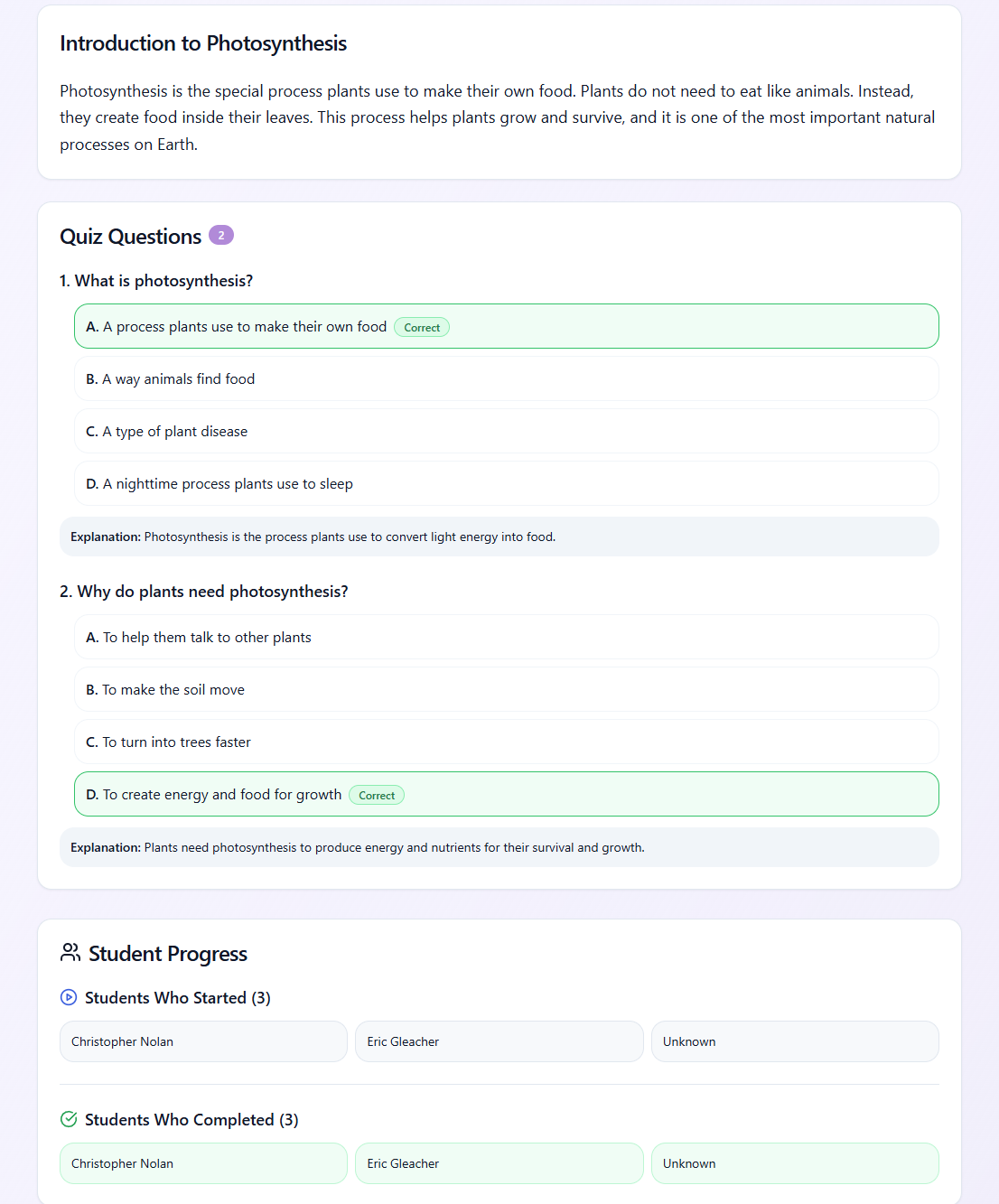
- The Lesson Library allows teachers to view all lessons (with the ability to sort by subject). They can also edit each lesson and preview components. There is also an aggregate view of student progress for specific lessons.
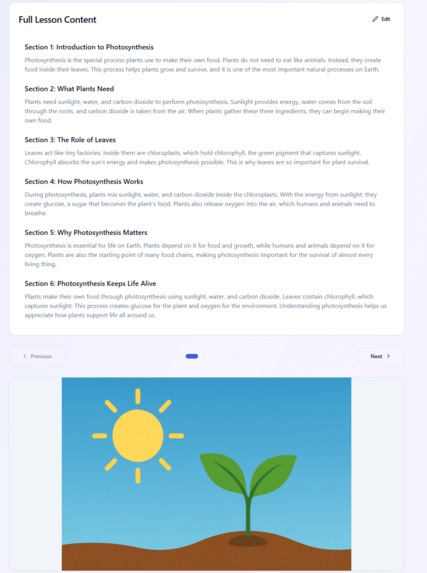
- The ability to preview lesson components to see all content for lessons, accompanying quiz questions and which students have (1) started and (2) completed the lesson.
Each teacher’s Dashboard shows
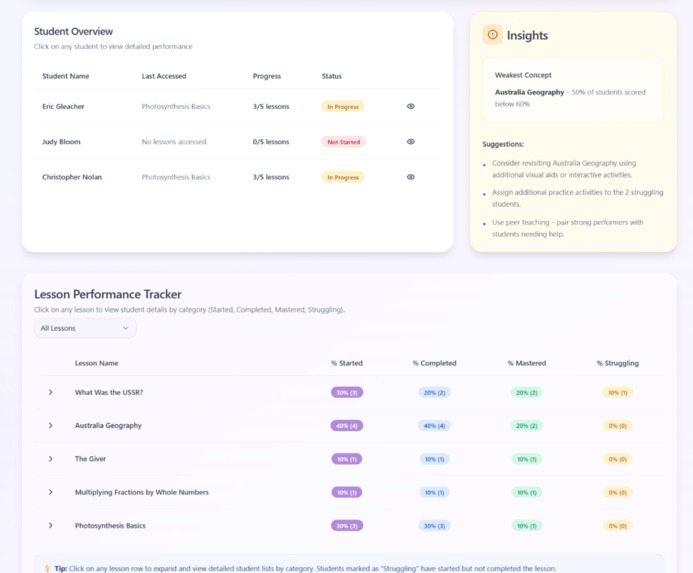
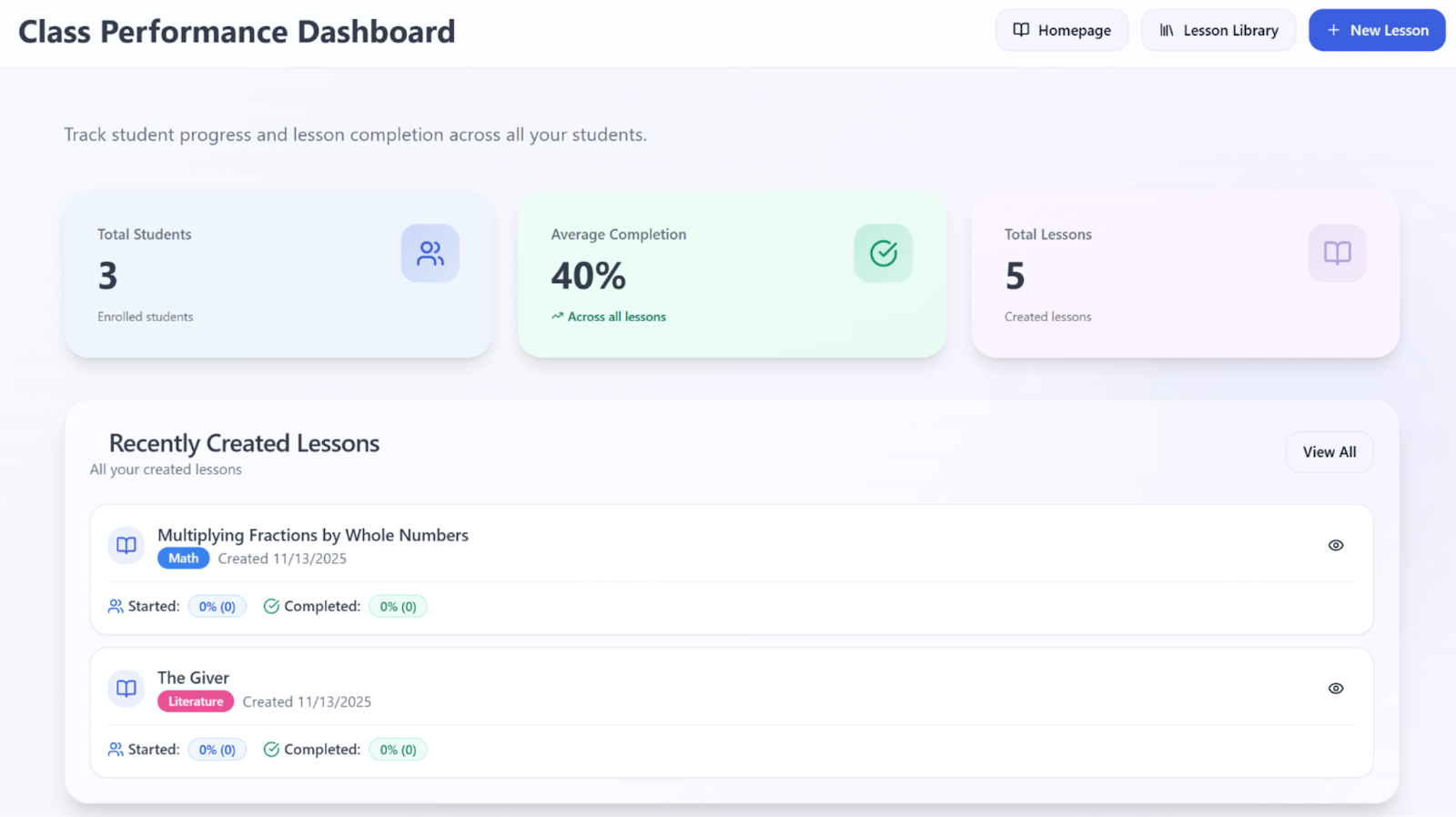
- Aggregate progress data for students (e.g., average completion).
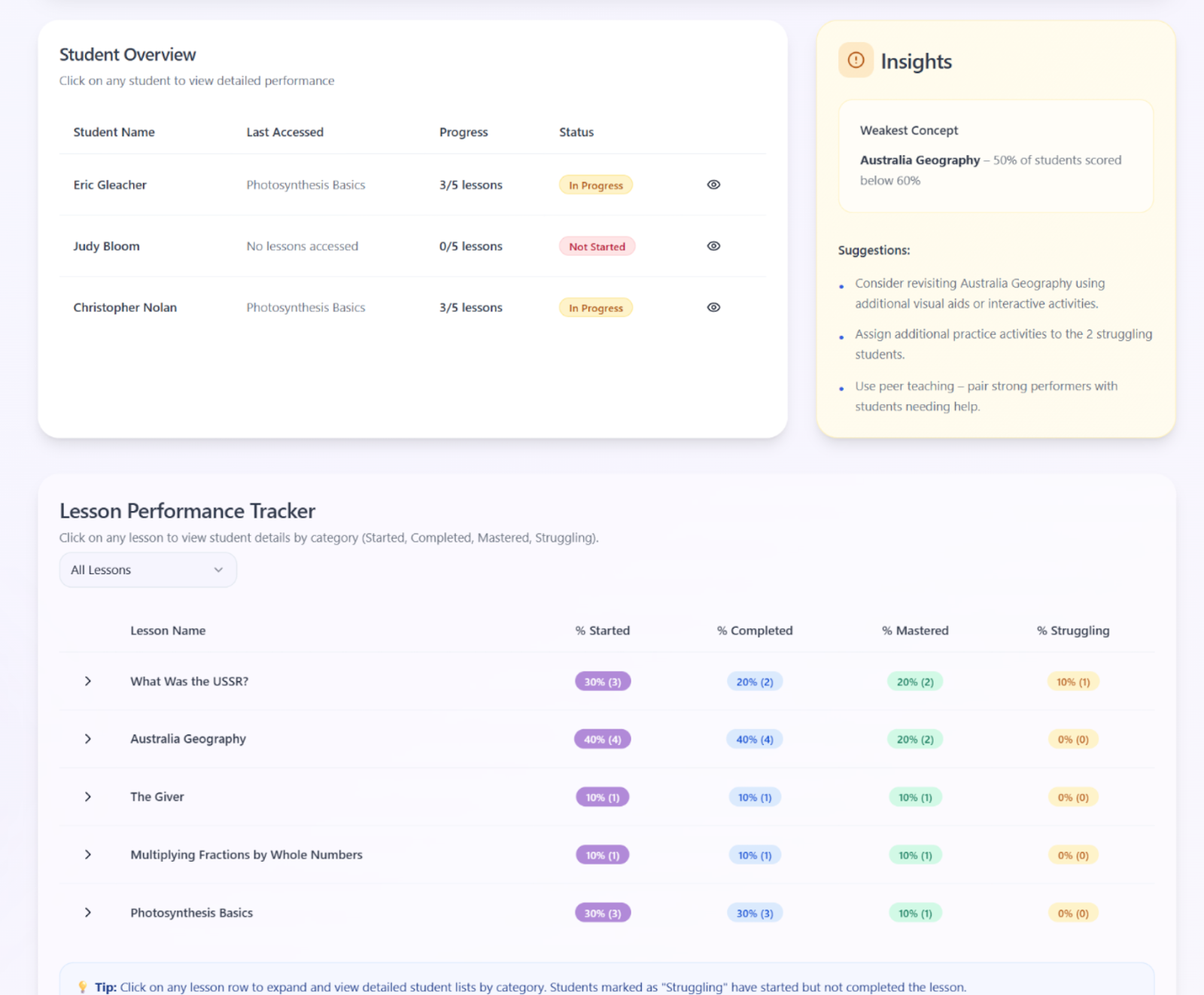
- [AI] Aggregated AI insights on lesson performance across students (e.g., which lessons students are struggling most in, and which concepts students are having trouble with).
- Lesson performance tracker showing which students have started each lesson, how many students have completed a given lesson, and related metrics.
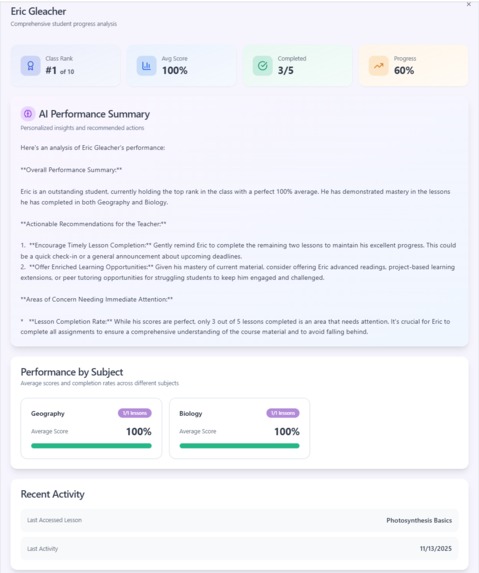
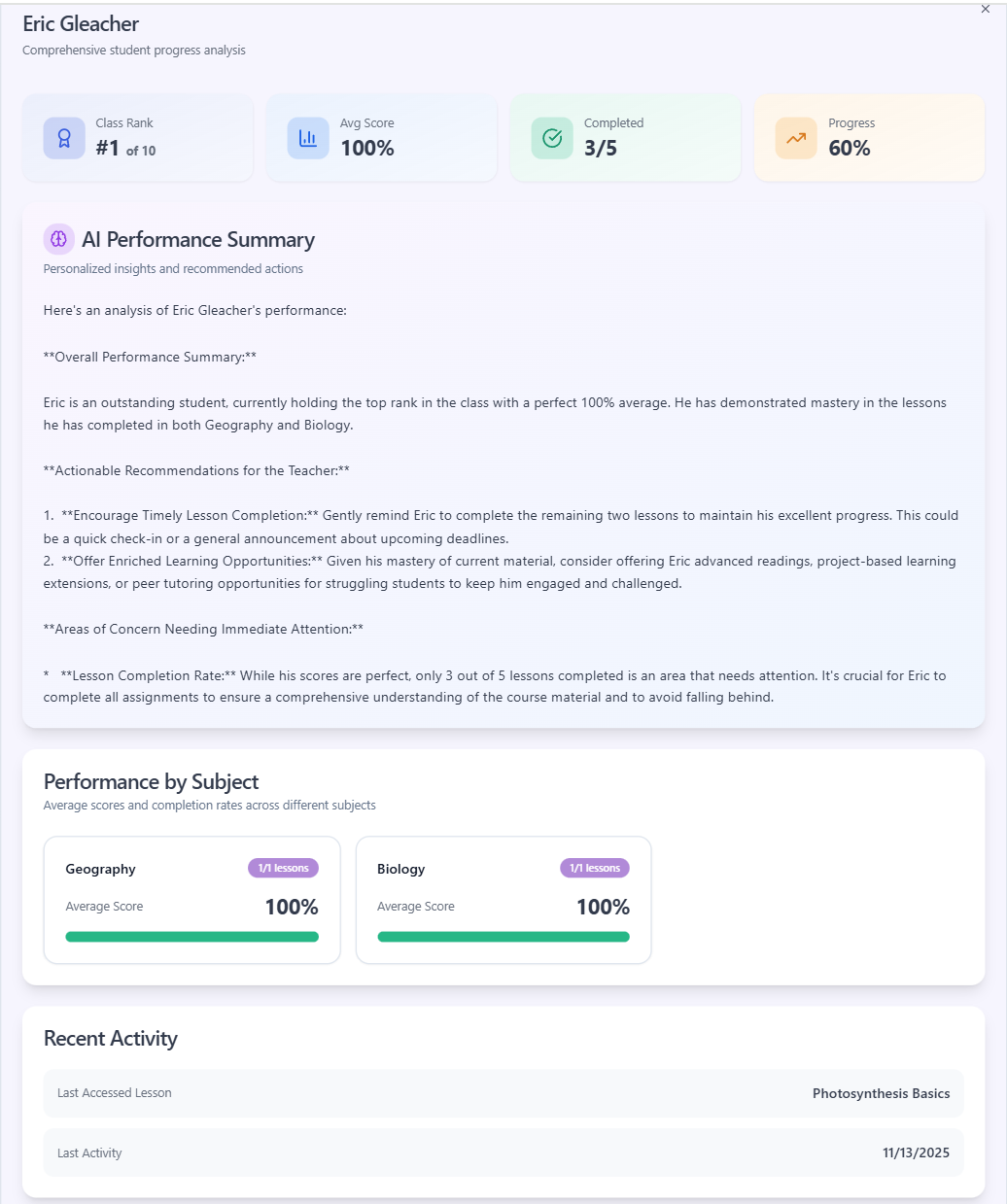
- [AI] Progress for individual students (e.g., class rank, average score, performance by subject); includes AI-generated summary of each student’s performance and actionable recommendations for the teacher.
Student facing features
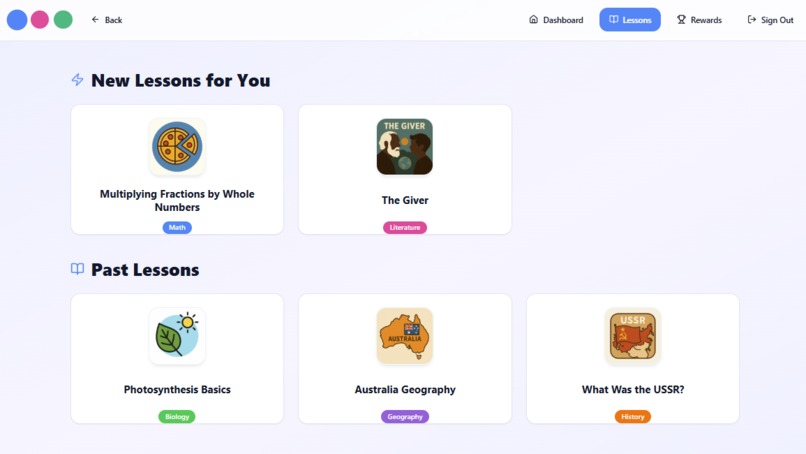
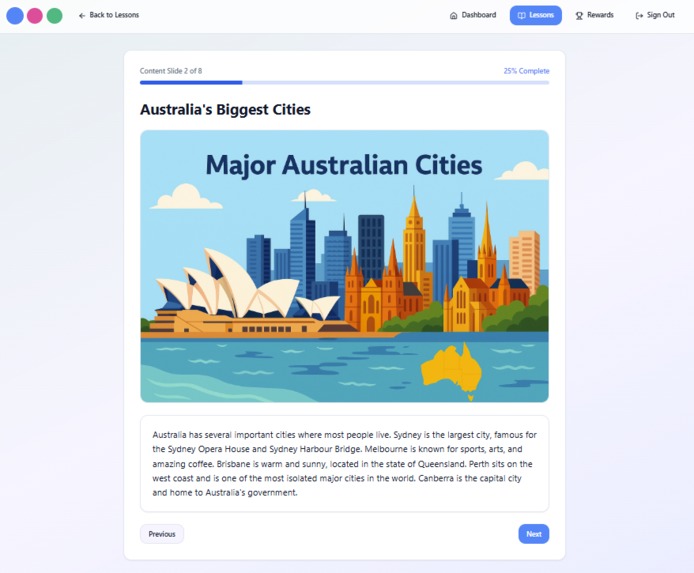
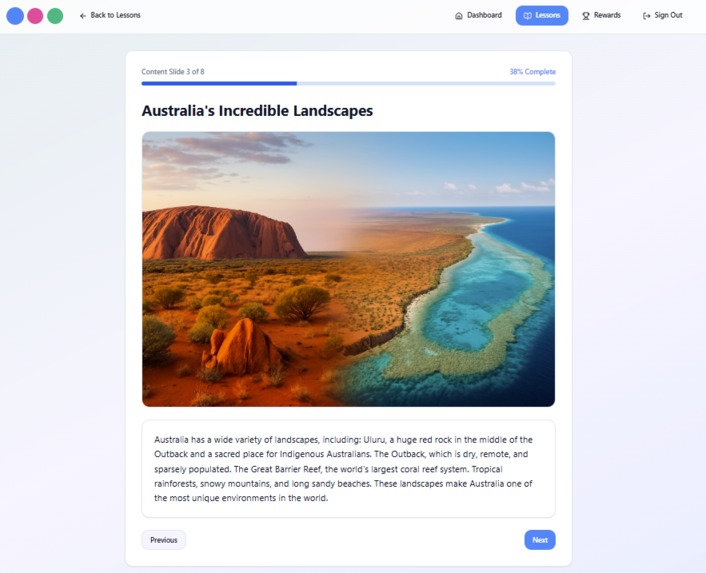
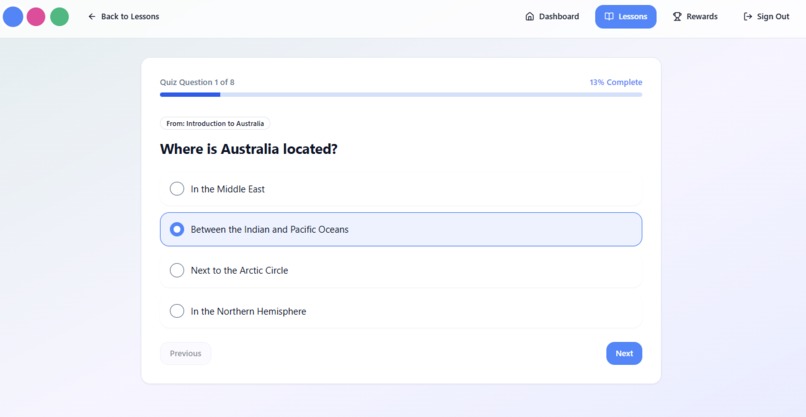
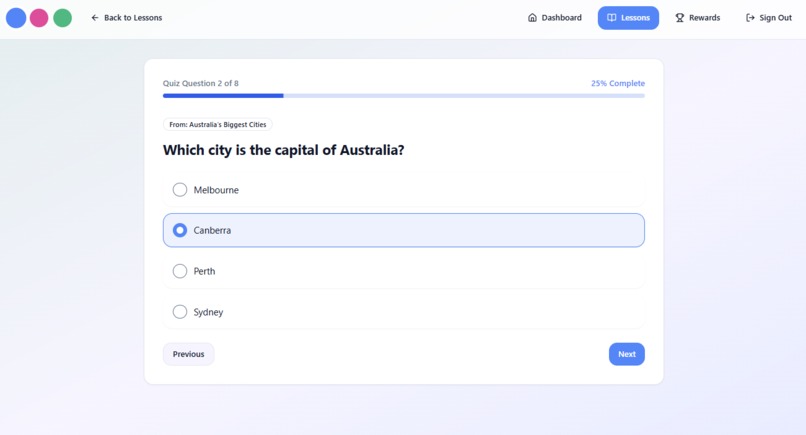
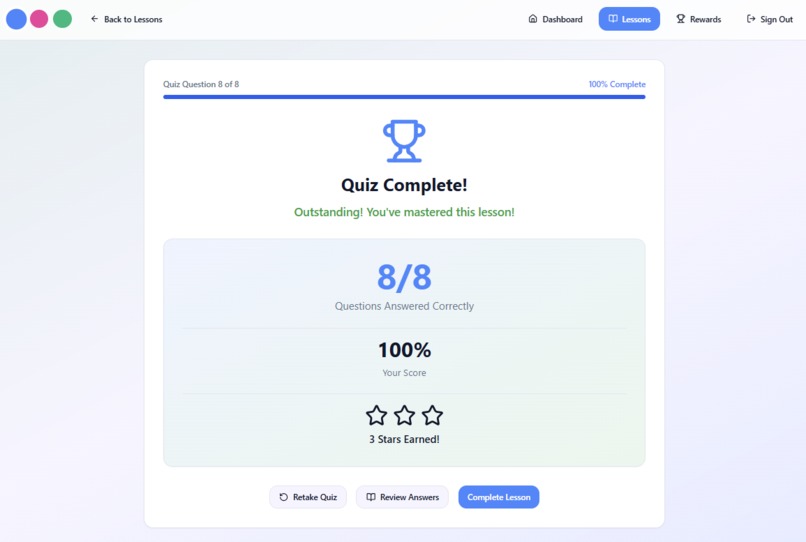
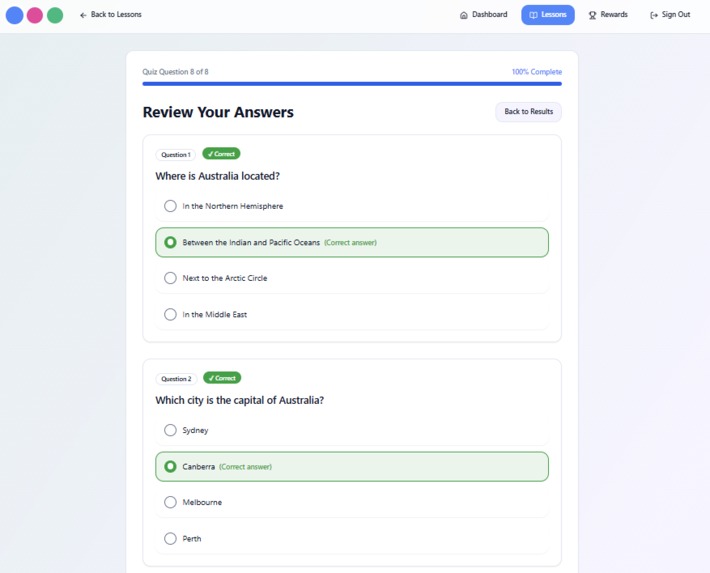
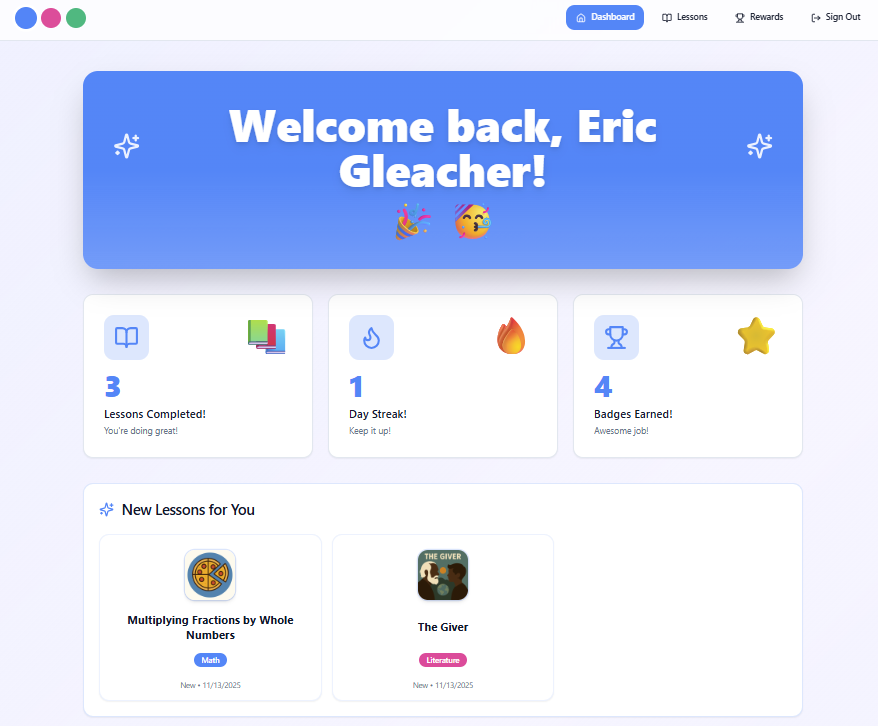
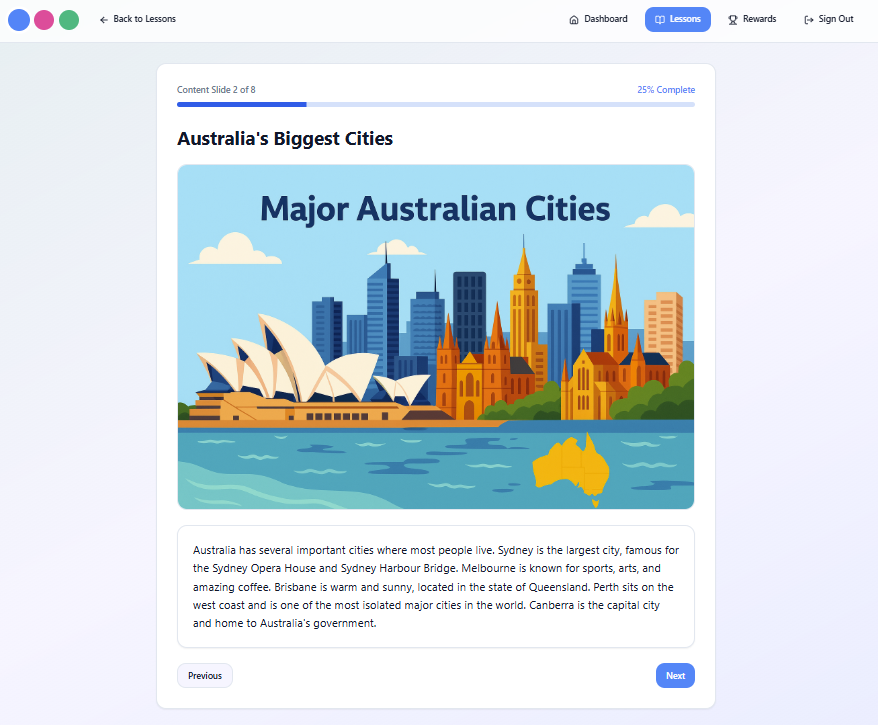
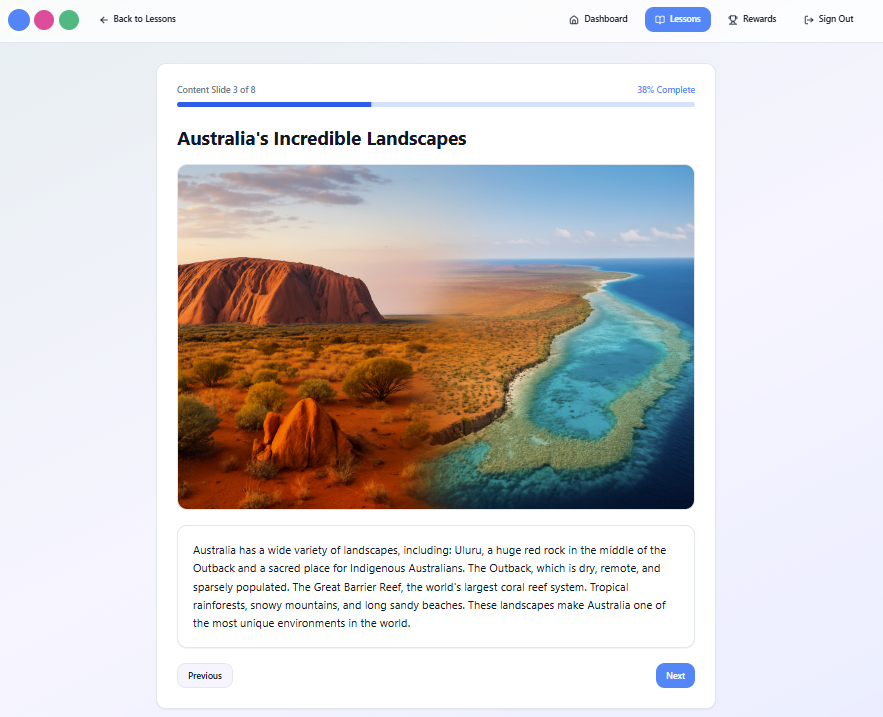
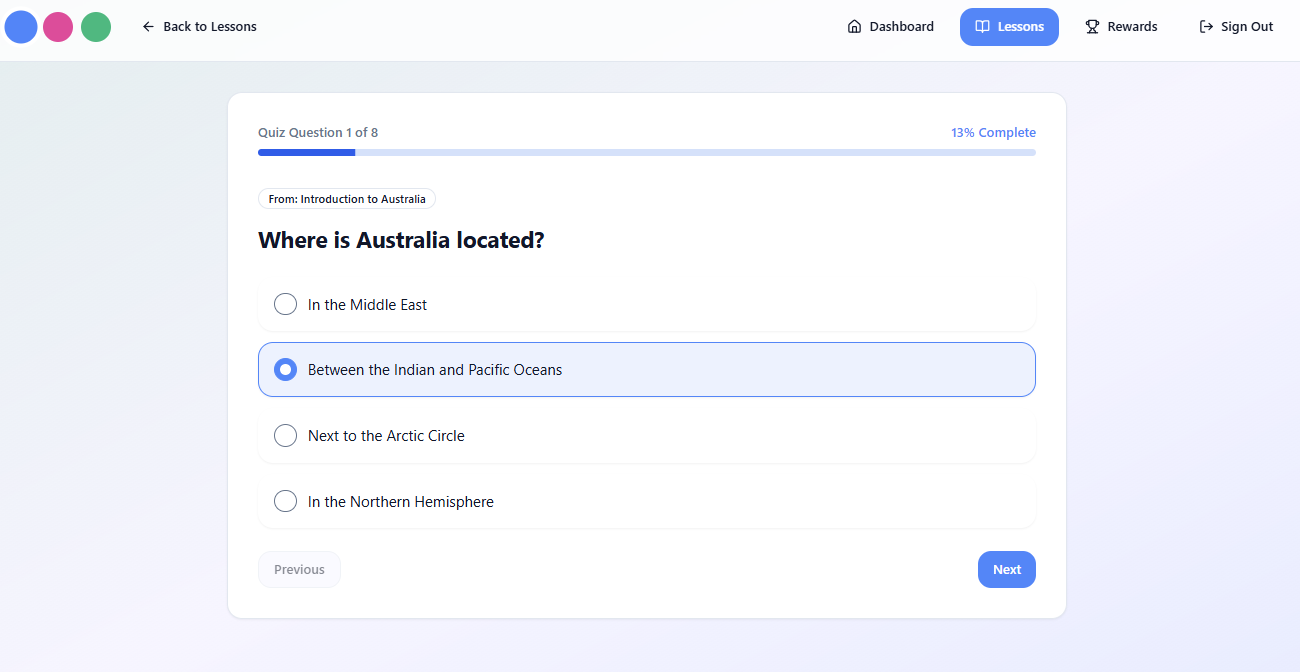
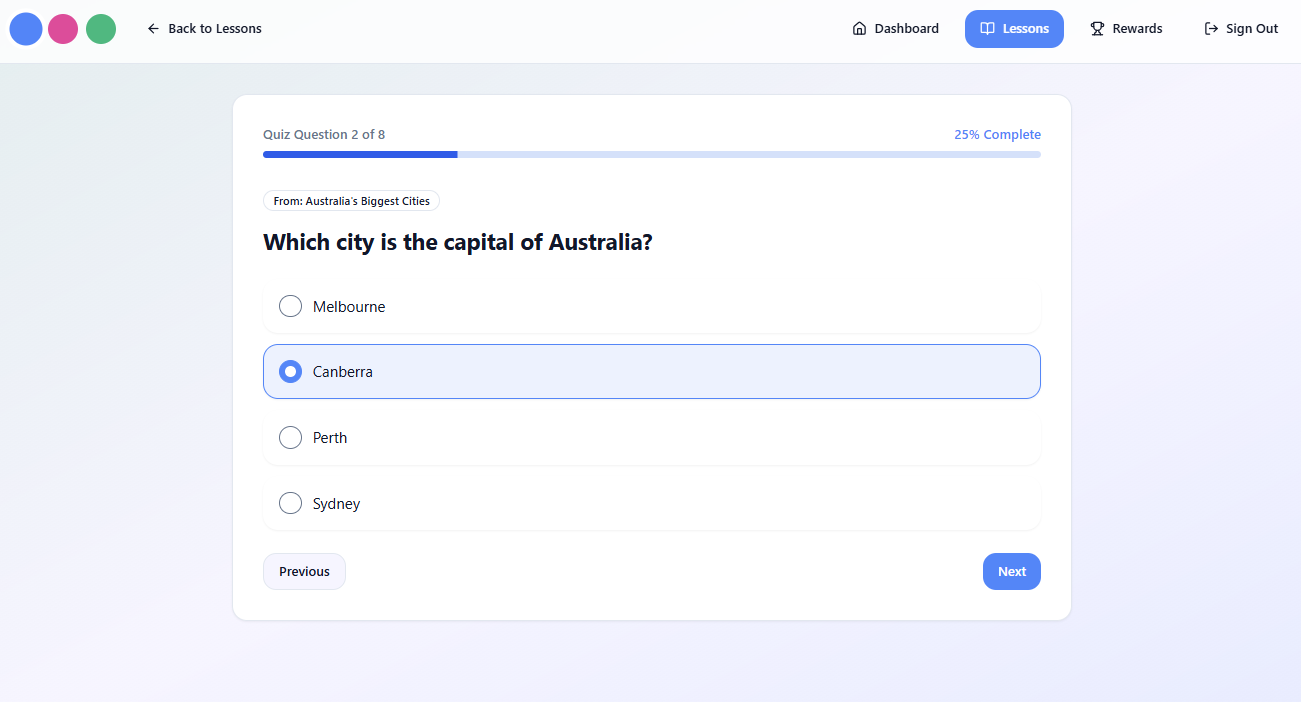
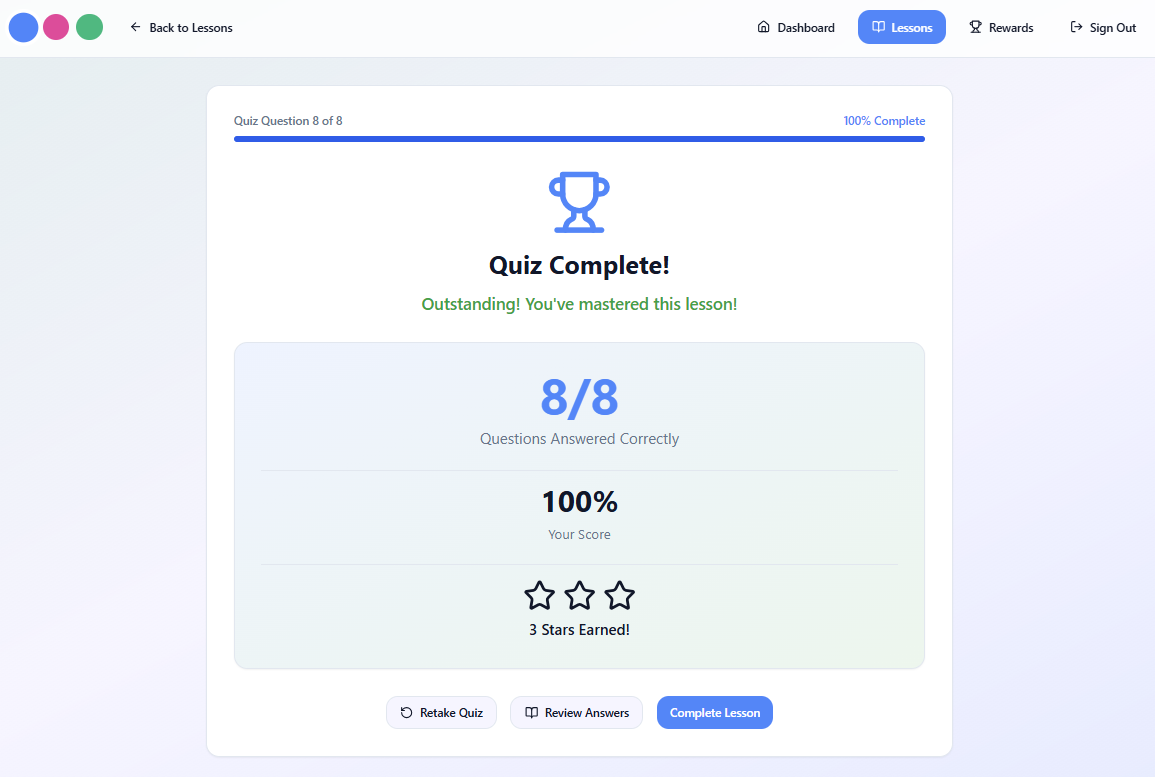
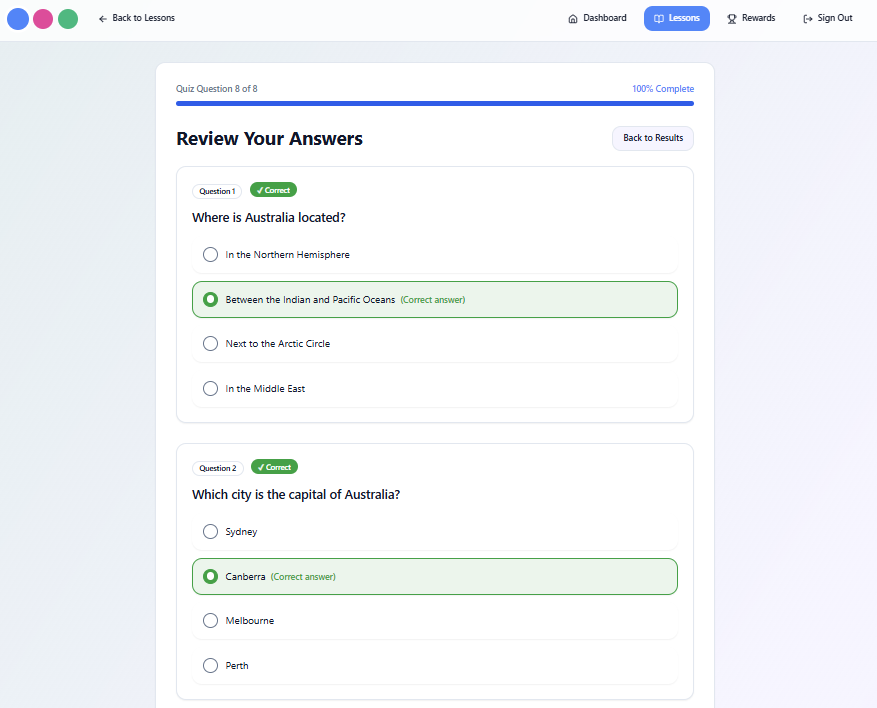
- Lessons are broken into easy to digest sections. At the end of every lesson, each student receives a quiz with questions from each section.
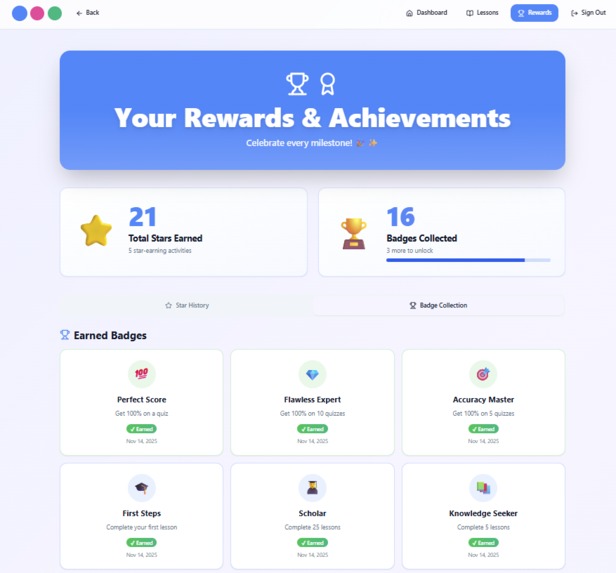
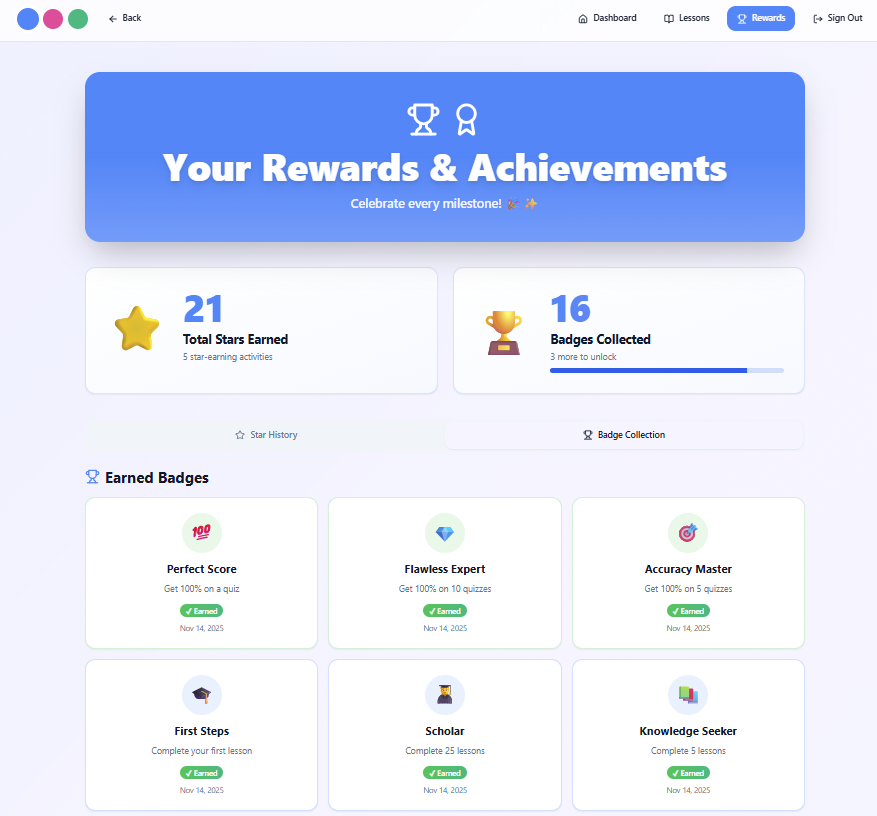
- Rewards and Achievements page that includes total stars earned and badges collected to gamify learning and motivate students (e.g., “perfectionist,” “early bird,” “speed demon”).
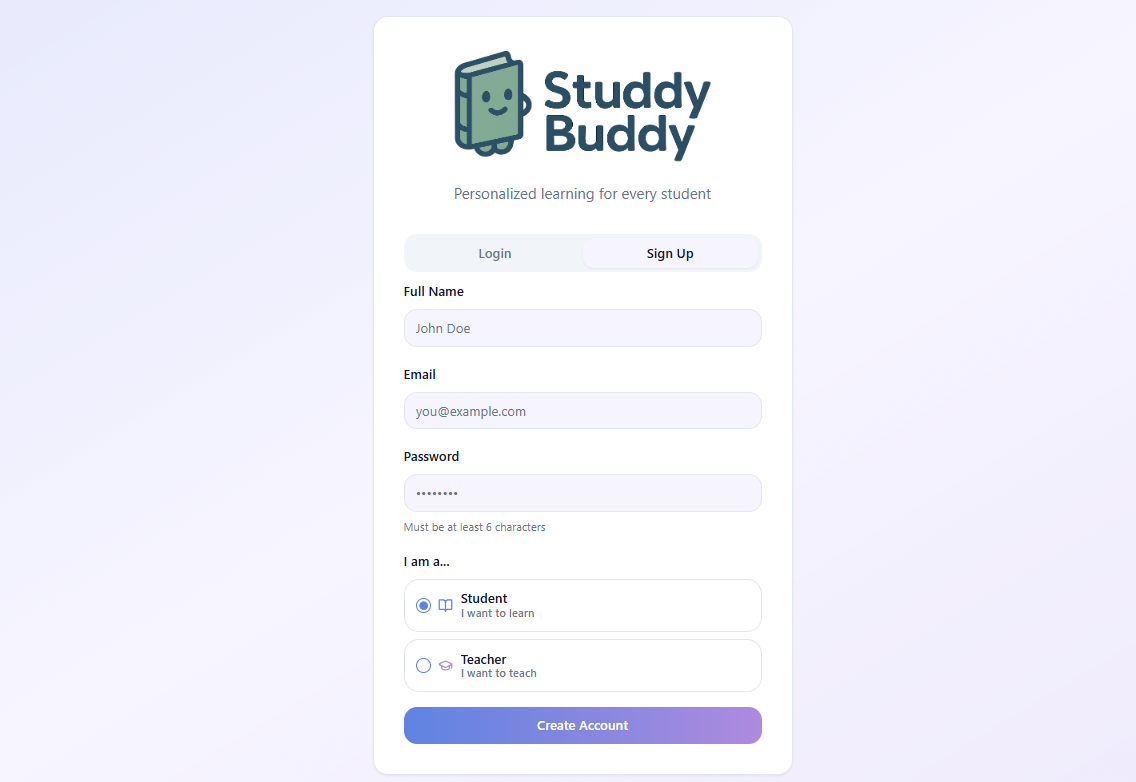
- Learning style quiz taken by students when they first sign up to assign students to one of four learning style personas (visual, audio, quizzes, movies).
- [AI] Personalized content aligned to students’ learning styles, which leverages AI to generate tailored content (including quizzes, movies, audio, and images).
- Themes that students can choose between to customize the appearance of the platform based on their personal preferences.
V2 Features
- [AI] The platform will use AI to assess and adapt to students’ learning styles: Example: If a student is doing poorly with quiz-style learning, it will add in other content media (e.g., movies, audio, images) and see if the student performs better. If yes, the platform will change the media shown to the student to match their learning style. This accounts for discrepancies between students’ stated preference on learning vs. real user behavior.
- [AI] The platform will provide detailed insights into user behavior / engagement, such as when students are dropping off (e.g., whether certain questions are generating confusion).
- [AI] Based on student quiz errors, AI will automatically detect gaps and create micro-lessons to address that specific gap.
- The target user persona will expand beyond elementary school, with lessons for middle and high school.
Built With
- loveable

Log in or sign up for Devpost to join the conversation.