-
Home
-
Flashcards
Studbud
Abstract
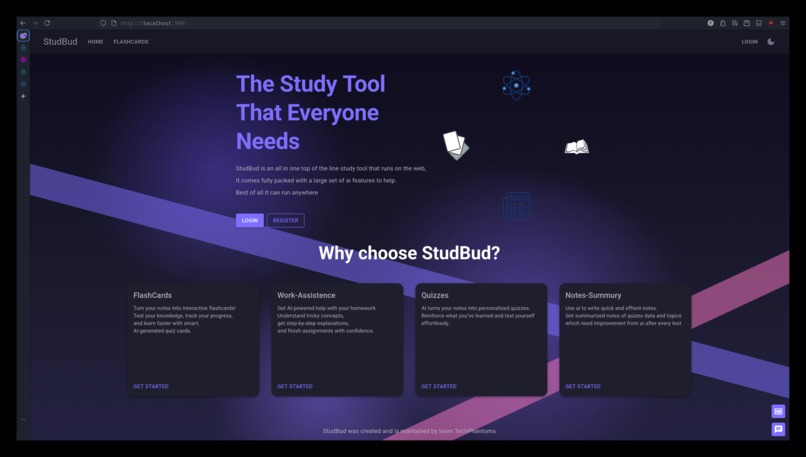
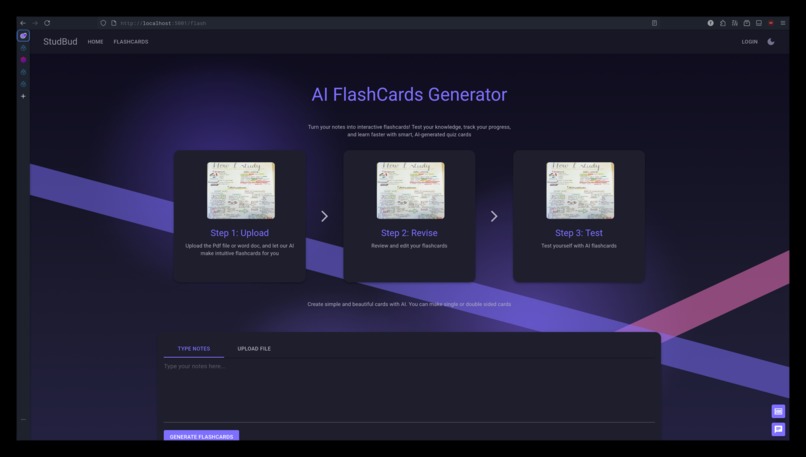
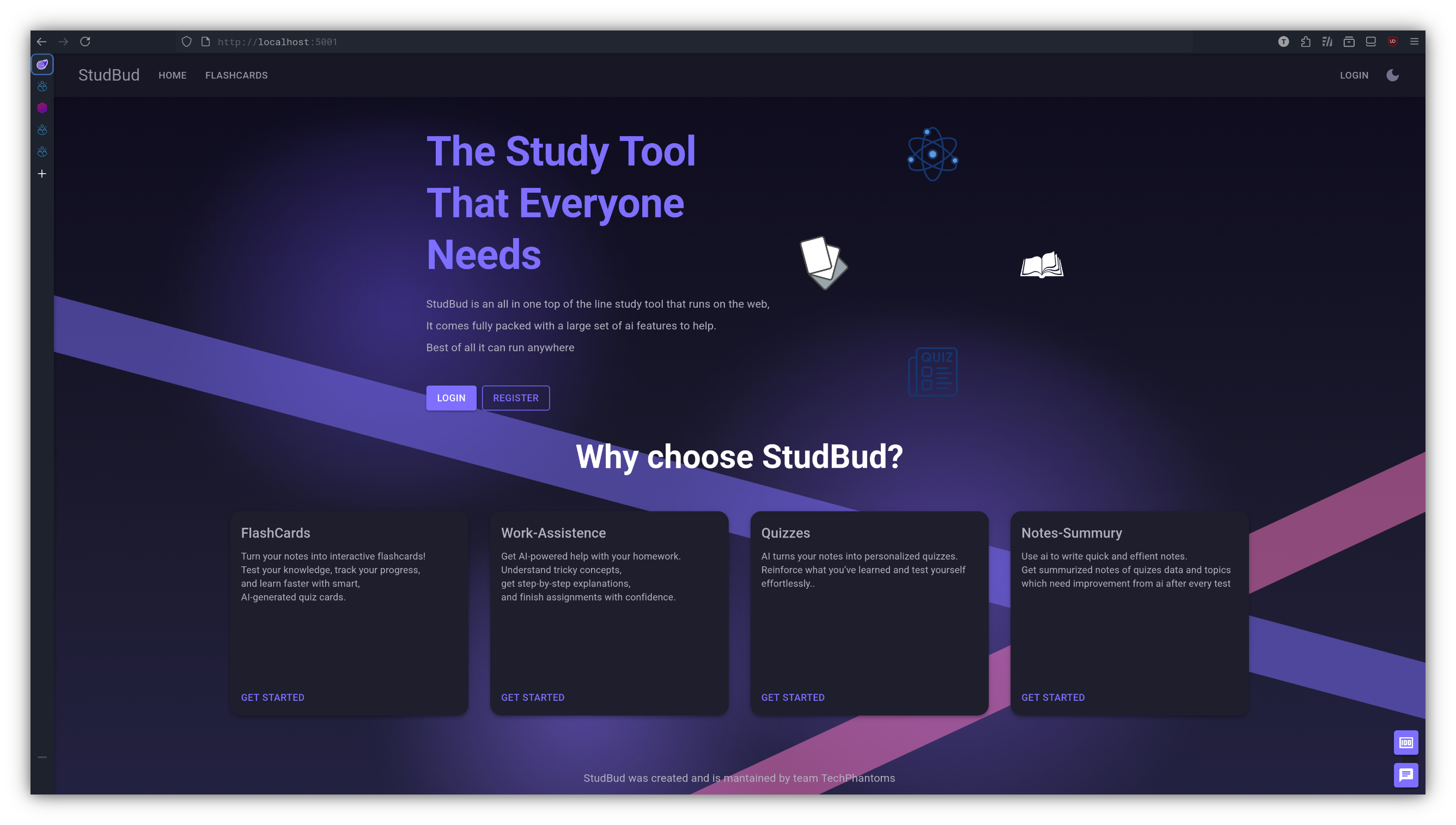
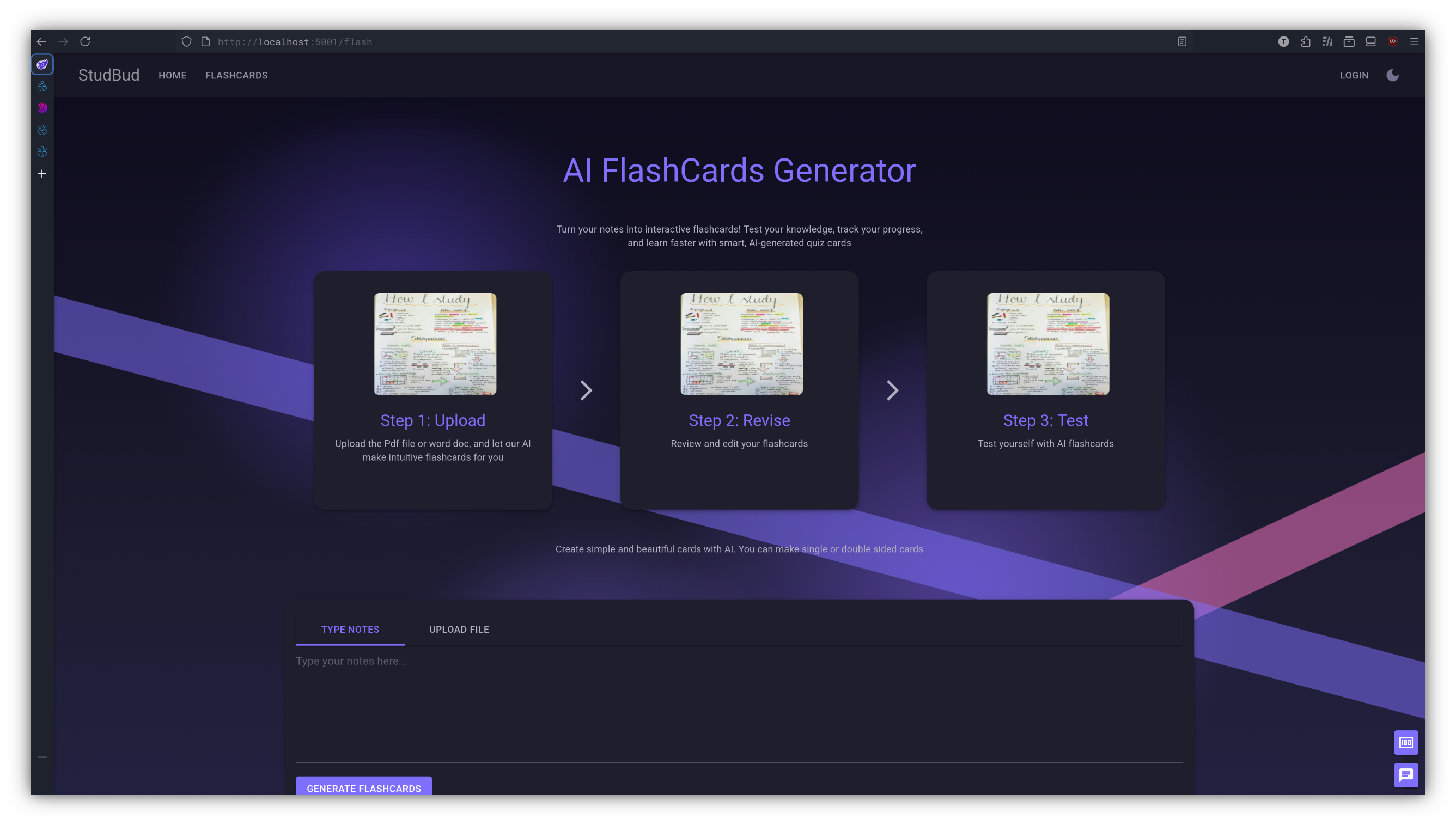
In Zimbabwe we face an educational crisis as schools around the country are failing to innovate and adapt to an ever changing digital landscape that requires these schools to be transitioning as many outdated physical resources as possible into online services that can be accessed as easily as possible by students, parents and even teachers as they rely more and more on technology. Studbud is an easy-to-use and setup application and website that will allow these schools to make this transition as easy as possible whilst not having to rely on external companies as much as possible.
Studbud will provide these institutions with many vital resources such as built-in school timetables and calendar building tools to allow students and staff to easily view what classes they need to attend and teach. These tools can also be used to communicate form-wide or school-wide events that are necessary for students to attend. Each class will also be provided with a platform to communicate with each other, hand in assignments and see the marks they achieved for those assignments. Teachers will also be able to use these assignments to give them weighting which can then be used to assign each child with an end-of-term mark. The application can also be used by teachers to record students' attendance between classes. With all these tools schools could finally rely on one unified platform to handle all their digital needs, that is fully open-source and customizable.
Report
Zimbabwe's educational sector is facing a crisis due to the lack of innovation and adaptation to the rapidly changing digital landscape. Schools struggle to transition from outdated physical resources to online services, hindering access to information for students, parents, and teachers. To address this issue, I developed Studbud, a user-friendly application and website designed to facilitate a seamless transition to online services for Zimbabwean schools.
Problem Statement.
The current educational system in Zimbabwe relies heavily on physical resources, leading to inefficiencies and limited access to information. Schools face challenges in communicating with students, parents, and teachers, resulting in missed opportunities and decreased productivity.
Research Questions.
1. Can a unified online platform improve communication and access to information for students, parents, and teachers in Zimbabwean schools?
2. How can Studbud address the specific needs of Zimbabwean schools, such as timetabling, assignment management, and attendance tracking?
Methodology.
- I conducted surveys and interviews with students, parents, and teachers around St. George’s College to identify the specific needs and challenges faced by Zimbabwean schools in implementing technology into their workflows.
- Based on the needs assessment, I designed Studbud's architecture, features, and user interface to be as welcoming to beginners as possible and to ease these implementation hurdles
- I developed the Studbud application and website using flutter and dart, ensuring customization, flexibility and ease to understand the codebase if schools decided that certain features were redundant or if new features were required
- I conducted usability testing and gathered feedback from users in a small scale environment as they began working on studying for their O-level exams to refine and improve Studbud's features and performance especially to fit this use-case of students working together to learn and revise.
Results.
I concluded that for Studbud, a comprehensive online platform for Zimbabwean schools, to meet the needs of its desired users it needed to provide the following features:
- Timetabling and Calendar Building: Schools can create and manage timetables and calendars, ensuring easy access to information for students, parents, and teachers.
- Class Communication and Assignment Management: Each class has a dedicated platform for communication, assignment submission, and grading.
- Attendance Tracking: Teachers can record student attendance, providing valuable insights into student engagement and participation.
- Customization and Open-Source: Studbud is fully open-source and customizable, allowing schools to tailor the platform to their specific needs.
Conclusion:
Studbud addresses the pressing need for innovation and adaptation in Zimbabwe's educational sector. By providing a unified online platform, Studbud improves communication, access to information, and productivity for students, parents, and teachers. As an open-source and customizable solution, Studbud empowers schools to take control of their digital transformation, paving the way for a more efficient, effective, and inclusive educational system.
Recommendations.
- Pilot Implementation: Implement Studbud in a select number of schools to gather feedback and refine the platform.
- Training and Support: Provide comprehensive training and support for teachers, students, and administrators to ensure seamless adoption.
- Continuous Evaluation: Regularly evaluate and improve Studbud to address emerging needs and challenges in Zimbabwe's educational sector.
Future Work.
- Integration with Existing Systems: Explore integration opportunities with existing educational systems and platforms to enhance interoperability.
- Artificial Intelligence and Machine Learning: Investigate the application of AI and ML to enhance Studbud's features, such as personalized learning recommendations and predictive analytics.

Log in or sign up for Devpost to join the conversation.