Inspiration
As students, we've seen how AI has transformed learning. Tools like chatbots can answer questions instantly, summarize documents, and explain difficult concepts. However, most AI study experiences are isolated interactions, they don't truly understand a student's learning journey over time.
A student may spend weeks studying a subject, revisiting concepts, identifying weaknesses, and building knowledge, yet many AI tools treat every conversation as if it's the first. We wanted to build something different: an AI study companion that learns alongside the student and provides support based on context, history, and progress.
That idea became Studalis.
What it does
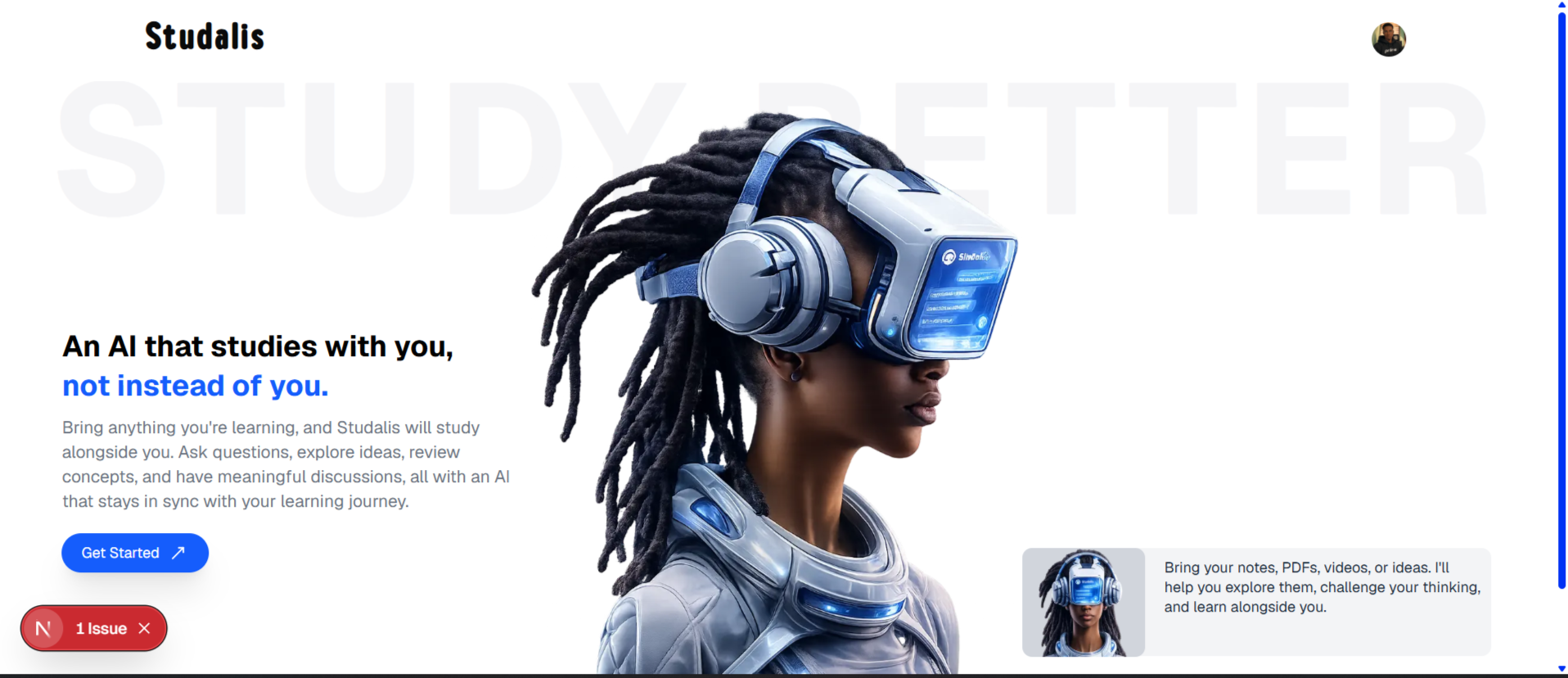
Studalis is an AI-powered study companion designed to help students learn more effectively through continuous, contextual support.
Students can interact with study materials, ask questions, receive explanations, and engage with AI-driven learning assistance. Instead of focusing only on a single prompt, Studalis is designed around the learner's ongoing educational journey.
Key capabilities include: AI-assisted learning and explanations Context-aware conversations Learning history and continuity across sessions Study material interaction Persistent learning context powered by CockroachDB
Studalis aims to make studying feel less like interacting with a chatbot and more like working with a learning partner.
How we built it
Studalis was built as a modern web application using a combination of frontend, backend, AI, and database technologies.
The platform combines: A responsive web interface for student interaction AI-powered conversational and educational assistance Context management systems for maintaining learning continuity CockroachDB as the primary persistent data layer Backend services responsible for storing and retrieving learning context
CockroachDB plays an important role in the architecture by enabling reliable storage of user interactions, learning context, and educational data that can be retrieved and used to improve future study sessions.
This allows Studalis to move beyond stateless conversations and provide a more personalized learning experience.
Challenges we ran into
One of our biggest challenges was designing a system that could maintain meaningful learning context without overwhelming the user experience.
We also faced challenges in: Structuring educational context in a way that remains useful over time Connecting AI interactions with persistent learning history Designing a scalable architecture for future growth Balancing personalization with performance Building and integrating multiple system components within hackathon time constraints
Creating a simple user experience while supporting complex context management required several iterations throughout development.
Accomplishments that we're proud of
We're proud that Studalis moves beyond the traditional chatbot model and focuses on the learner rather than individual prompts.
Some highlights include: Building a working AI-powered study companion Implementing persistent learning context with CockroachDB Creating a foundation for personalized educational experiences Delivering an end-to-end prototype within the hackathon timeline Establishing a scalable architecture for future expansion
Most importantly, we're proud of creating a vision for AI-assisted education that emphasizes continuity, context, and long-term learning.
What we learned
Throughout the project, we learned valuable lessons about AI-powered educational systems, data architecture, and user experience design.
Key takeaways include: Context is one of the most important components of effective AI interactions. Educational tools benefit significantly from continuity across sessions. Database design has a major impact on personalization capabilities. CockroachDB provides a strong foundation for storing and retrieving learning-related data at scale. Simplicity in user experience often requires significant complexity behind the scenes.
The project reinforced the importance of designing technology around human learning rather than simply around technical capabilities.
What's next for Studalis
This hackathon project represents the foundation of a much larger vision.
Our next goals include: Launching the full Studalis web platform Expanding learning personalization capabilities Enhancing memory and contextual learning features Supporting additional educational content formats Introducing study planning and progress tracking Developing intelligent recommendations based on learning patterns Creating richer analytics for students and educators Releasing a comprehensive product walkthrough and public website
Our long-term vision is to build an AI study companion that not only answers questions but actively supports students throughout their entire learning journey.
Built With
- awss3
- cockroachdb
- gemini
- nextjs
- prisma
- shadcn
- tailwindcss
- typescript

Log in or sign up for Devpost to join the conversation.