Inspiration and Background
Going through news and talking to friends across Europe, prior to the crisis, I had noticed a common sentiment in a considerable portion of them, the feeling of having been neglected by the EU. With the Coronacrisis having effected all aspects of our lives, the EU must respond swiftly and tactfully to redevelop itself, both economically but also governance wise, or else, more and more individuals will feel as if the EU has not helped them as it should have to fight the impact of the pandemic
What it does and its overall purpose
We can divide my general solution to this problem into two more specific solutions, one relating to e-democracy and the second relating to green redevelopment.
Solution 1)A critical issue that has caused many, young and old alike, to feel distant from the EU has been its image as a purely bureaucratic organisation, that rules as it wishes, almost in a tyrannical way, from Brussels. With the rise of the internet, and it having influenced our lives beyond recognition, we have been presented with a great solution to this problem, E-Democracy.
E-Democracy has already been implemented at a large scale in EU nations, notably in Estonia, but the EU itself has been slow to catch up on this trend. The European Citizens' Initiative for example, although having been intended as a way to establish some form of online direct democracy, has been rather slow to implement citizens' will in a meaningful form in most instances, due to a variety of problems like having to reach 1 million signatures for an initiative to be considered, its not-so-user-friendly interface, and the amount of bureaucratic hurdle.
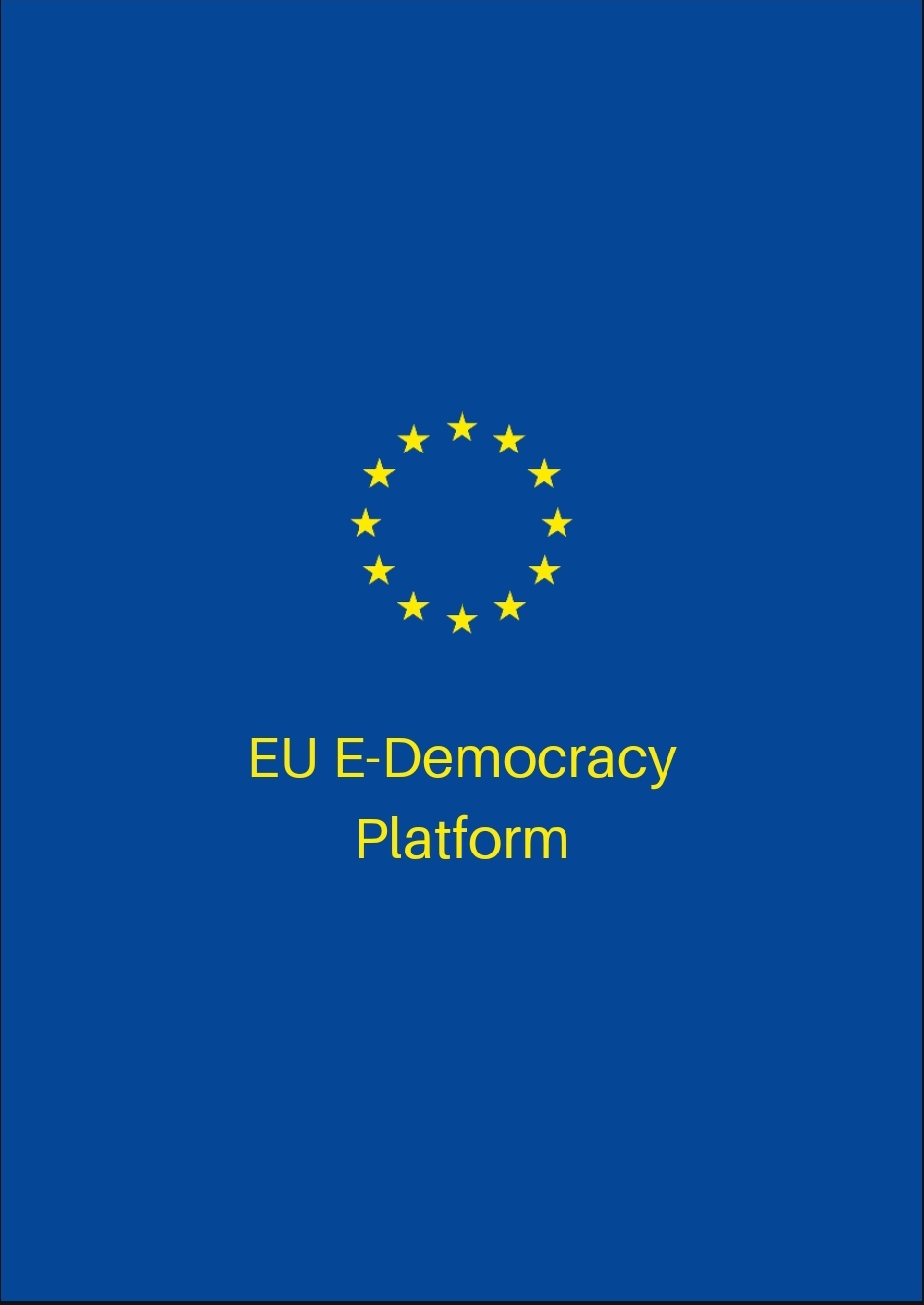
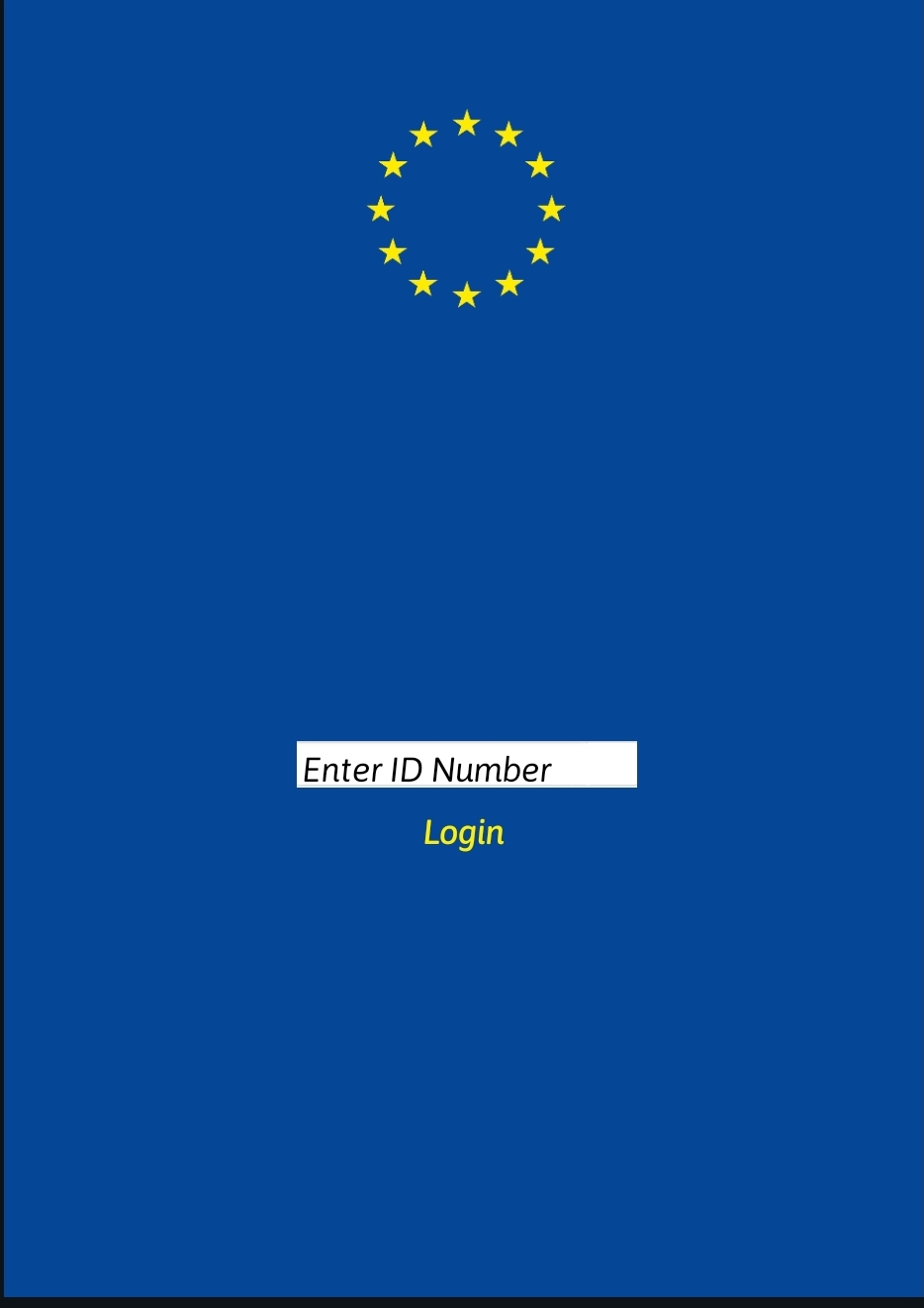
The solution here would be the "EU E-Democracy Platform". The Platform is intended to provide EU citizens an easy to use app, through which they can make their voices heard. The platform would be accessed via each citizens' ID number, similar to Estonian i-Voting, which has proven its security, whereby they can access two simple and minimalistic sections. The first of these being "Contact Your Local MEP", whereby citizens can publicly ask their MEP, or if expanded upon any local representative, any questions regarding issues in their region. As a result of this, a direct line of communication will be established between citizens and representatives, allowing much faster responses to particular issues on the part of the EU. The second of these sections is named "Threads", which is a more general area where citizens can voice regional or national issues, adressing or asking questions to larger establishments, which will prove to be important in regards to the second solution.
The EU E-Democracy Platform will allow citizens to directly contact their MEPs (or other government officials/governmental organisations) which will as a result give the electorate a wider say in legislations passed in the European Parliament. Citizens' influence on legislations will prove to be very important during the redevelopment period after the virus has been put under control, as the European Parliament will pass a set of critical legislations, such as the next 7-year budget, particularly targeting post-pandemic redevelopment, or the European Green Deal, which will receive a new program to allow it to fund redevelopment, both of which can be greatly enhanced by opinions and ideas of those that have been impacted by the economic consequences of the pandemic. But, the benefits of the EU E-Democracy Platform won't be limited to post-pandemic development, it also has the potential to become an important outlet of democracy, where citizens can voice their opinion on any legislation in the future, creating a direct, and permanent, line of communication between citizens and the EU.
Solution 2)Following "the return to normal", we will be faced with a situation almost reminiscent of the post-war period. The Coronacrisis has not only effected people, but it has also effected nations, and what we can call their "lungs", their economies. To this end, particularly small and mid-size business owners are prone to feeling having been neglected by EU, bringing back bitter memories of the 2008 crash and the EU debt crisis. EASME, the Executive Agency for Small and Medium-sized Enterprises (SMEs) has the potential to be the medicine to this disease, but it must be developed properly by the EU itself to fight it.
EASME is a rather specific organisation in the grand scheme of things. It is currently used to deliver grants to SMEs in regards to green development. But due to the EU's intention to use the European Green Deal, in a manner like the Marshall Plan, and additional green subsidies to redevelop Europe in an environmentally-friendly way, EASME can be enhanced to become one of EU's most potent solutions to two very crucial problems, how to best redevelop SMEs, and how to prevent them from feeling that they have been neglected. This being so, to get EASME to a status where it can help redevelop Europe at a large scale, it will need its funds to be substantially increased. Fortunately, the EU has already pledged to deliver "not billions, but trillions" to especially those in need following the beginning of redevelopment. As a result, it will be taken as the required increase in EASME's funds being feasible.
Following the acquisition of sufficient funds, EASME will have to streamline its grant delivery mechanism. The entreprises must still be obliged to fulfil requirements in their practices, in order to ensure a green future, but the mechanism of acquiring the grant should become almost like getting a personal loan to ensure redevelopment is fast and effective. But along with individual grant applications, EASME must also invest more generally on a region by region basis, which is where the EU E-Democracy Platform can be of particular use. If citizens sufficiently utilise this platform, EASME can use it to gather knowledge, not only from economists, but also people who have been affected by the Coronacrisis the most, such as small business owners, and their employees, and the unemployed.
But questions that will naturally appear in the minds of many are "Would the grants not be abused?" or "How would regional funds be directed?". The answer to these questions would be the European Redevelopment Task Force, which can be compared to the Economic Cooperation Administration, that was established after the Second World War in order to coordinate the implementation of the Marshall Plan among the recipient nations. The Task Force can be appointed without bureaucratic hastle by the EU Commission and directly get to work as redevelopment begins. Their task will be to, firstly, cooperate the the redevelopment of individual nations, regions, and even provinces in order to ensure that places that have been hit harder by the virus are given the adequate aid, in line with EU Commission policy, and to do this optimally, it can also be advised by local authorities, which historically allowed the Marshall Plan to be so successful. Secondly, they will also be tasked with ensuring that the grant recipients reach their goals to protect the environment, to this end again cooperation with local authorities will be most helpful, but a dynamic infrastructure where SMEs can update their situation on the same site where they also got their grants can be used. Lastly, the Task Force will ensure transparency between authorities and citizens in regards to the status of redevelopment, which can be done through communications on the E-Democracy Platform.
EASME and the European Redevelopment Task Force will allow the EU and national governments to fund SMEs much more efficiently. As SMEs form the backbone of any economy, it is fundamental that they are redeveloped efficiently after the crisis, not only to restart the European economies, but also to ensure that those who own SMEs, or are employed by SMEs, are supported by the EU and can make themselves heard by the EU, while transforming European SMEs to environmentally friendly models as well. Along with its key role of funding post-pandemic SMEs, EASME, can also be used for longer term projects, such as the EU's 0 emissions by 2050 target, or its "no person left behind" approach on green development, for both of which SMEs will play a very critical role and, thus, dynamic cooperation between them and the EU, which EASME can provide, will be needed.
Overall, if both solutions are adequately supported and developed, they should be able to impact European societies and economies substantially. Together, they can help prevent a set of sentiments that may have been born during, or may be born in the aftermath of the Coronacrisis, such as neglect or feeling that the EU has not supported one's nation appropriately, which may hinder Pan-European cooperation, that will be pivotal in the near-future.
How I built it
The app was built using Thunkable, although, due to my minimal coding experience, I opted to repurpose other projects that were available online for remixing, which led to me substituting the ID number system with a generic email sign in system, or the thread/contact part not functioning as yet, due to the fact that certain individuals, such as MEPs, cannot be designated, and thus no one can respond to questions or threads as intended.
What I did during the weekend and challenges I ran into
During the weekend, I created a very early and simple prototype for the app on Thunkable. Due its current status, I also decided to create more concept designs to convey what the end product may actually look like. Alongside that, I have also detailed my economic plan, which started out as an idea to enhance the European Green Deal with Eurobond-like loans, and slowly evolved into an initiative aiming at SMEs that is also far more feasible.
I had to utilise many skills simultaneously, such as, on one instance, having to brainstorm, edit my early pitch draft, and ensure my app worked at once. Additionally, my coding inexperience and me having worked solo have proven to be challenges, although I think that I could overcome them.
Accomplishments that I'm proud of
The many "Eureka!" moments I had brainstorming, prior to, and during the event were all moments I am proud of, with those relating to EASME being of particular worth. The moment my app worked was surely a proud moment as well.
What I learned
I have expanded my knowledge on the EU very quickly, thanks to my mentors. Furthermore, I have learnt to use, or have been introduced to, many applications on app or website making, although I ultimately opted to use Thunkable.
What's next for Structures for European Green Re-Development and E-Democracy
Going forward, the app will have to be developed fully and properly, which can be done best through a team, but due to its simple structure and idea, it should be able to be built without much hastle. The app will then have to be supported by the EU itself, possibly being shown on government ads to make the public more familiar with it. The second solution too will require EU support, even more so than the first one, and as a result contact with authorities will be needed to make it happen. But with the platform that can be gained here, challenges regarding both should be able to be overcome.


Log in or sign up for Devpost to join the conversation.