-
-
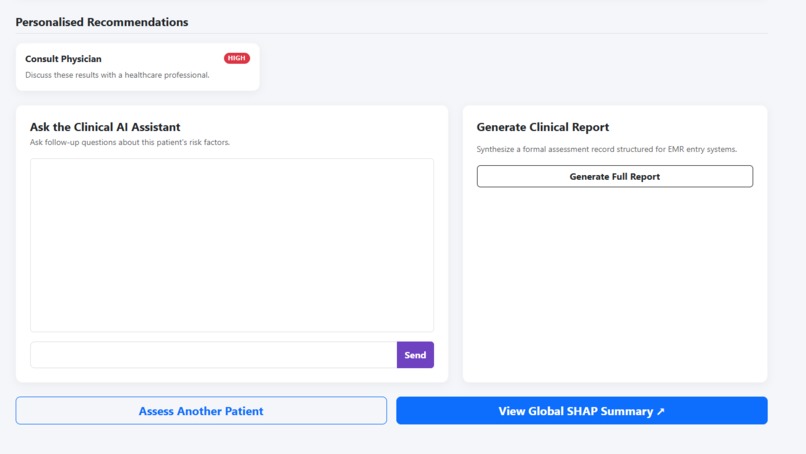
Image 5
-
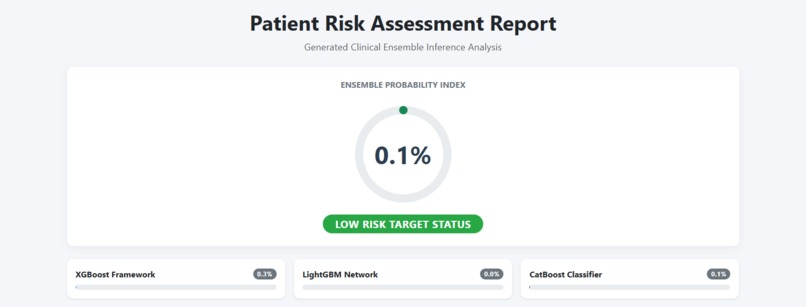
Image 3
-
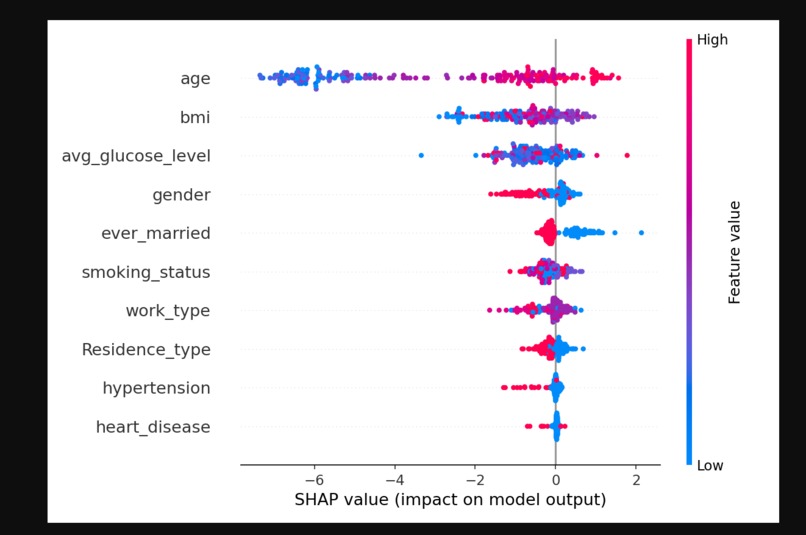
Image 7
-
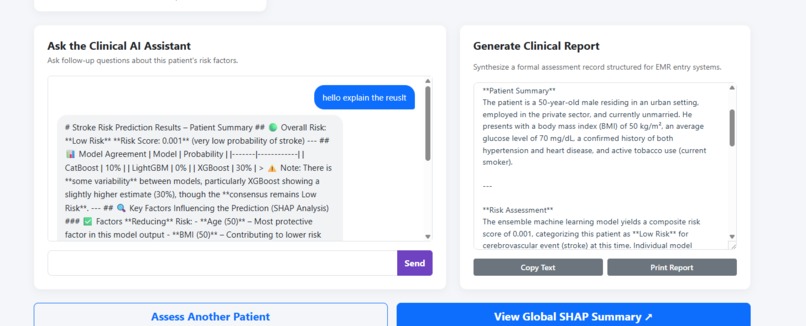
Image 6
-
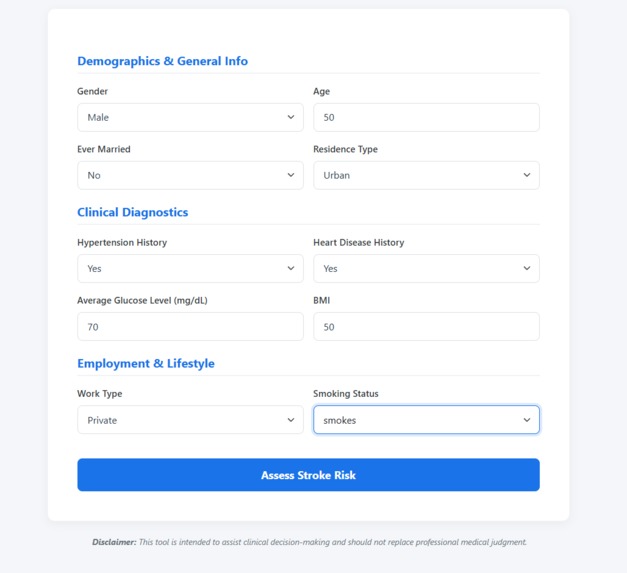
Image 2
-
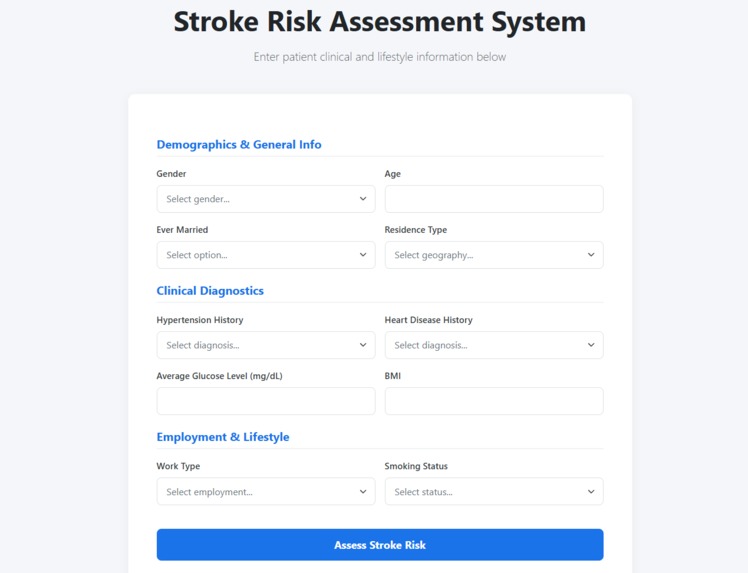
Image 1
-
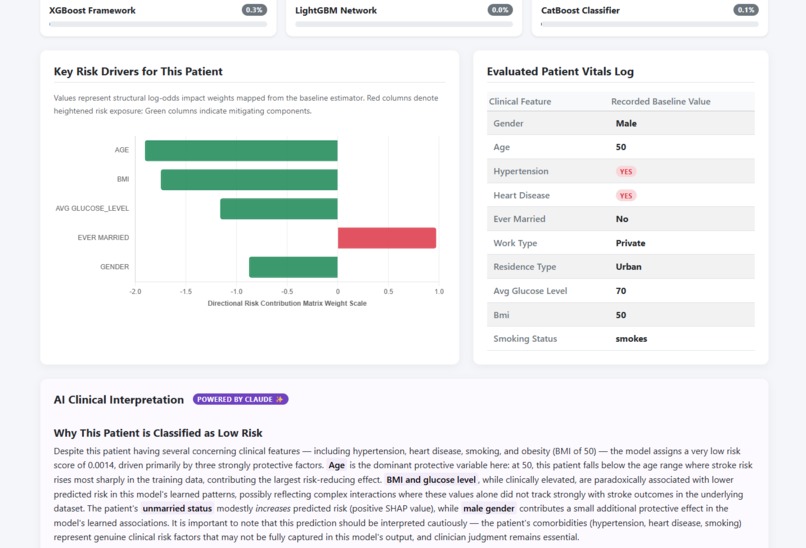
Image 4
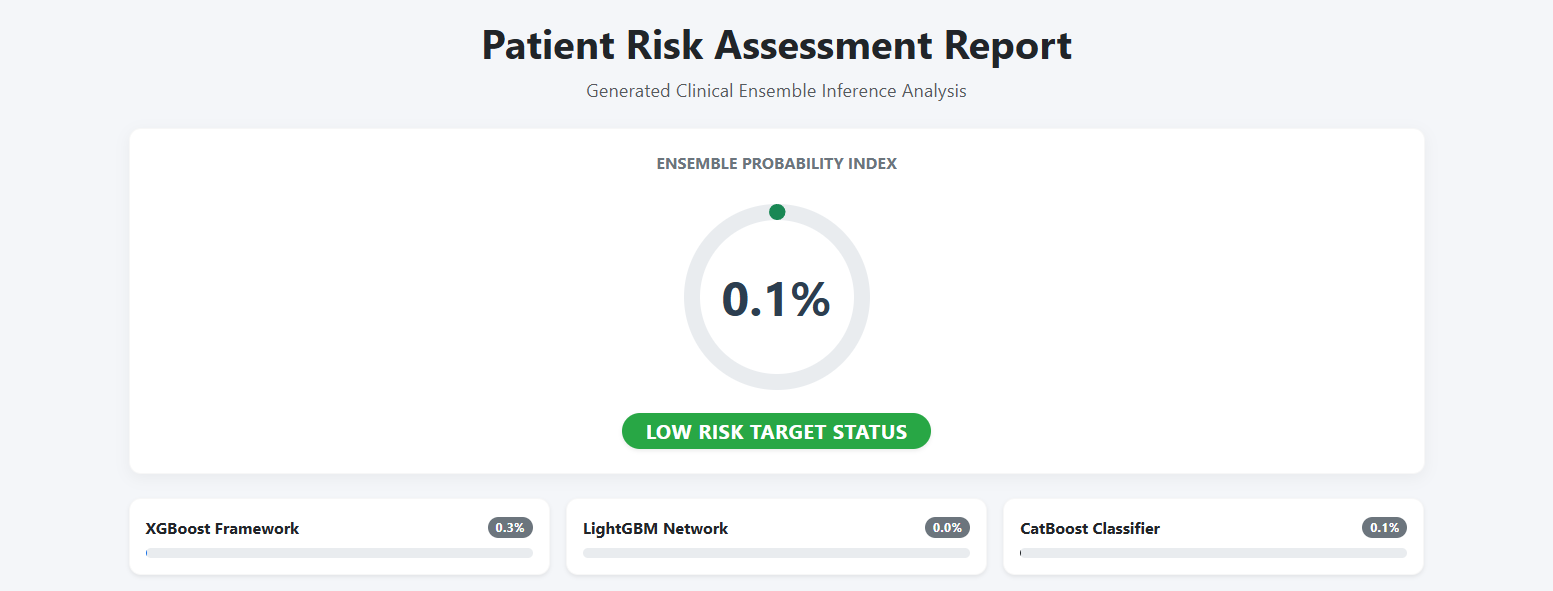
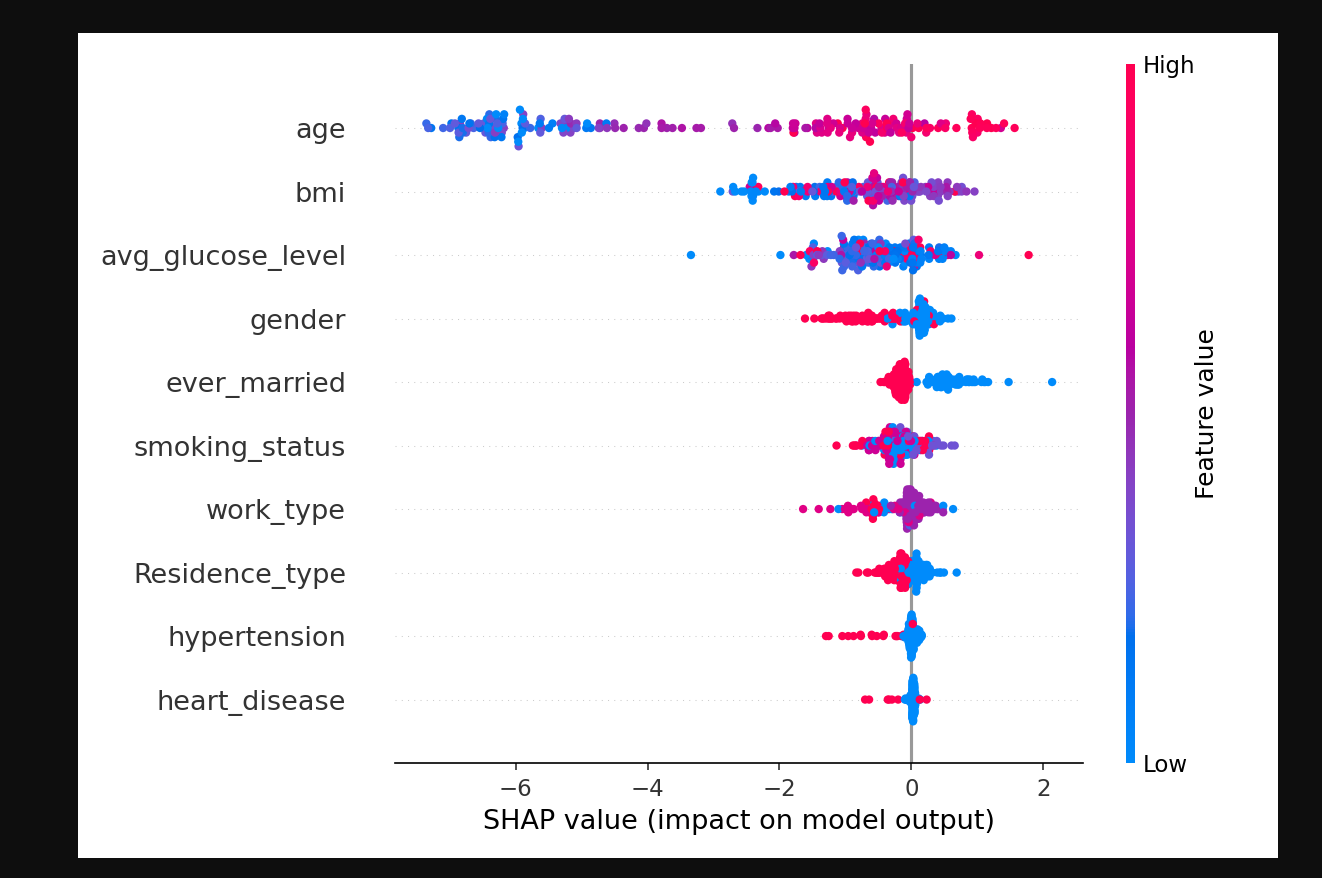
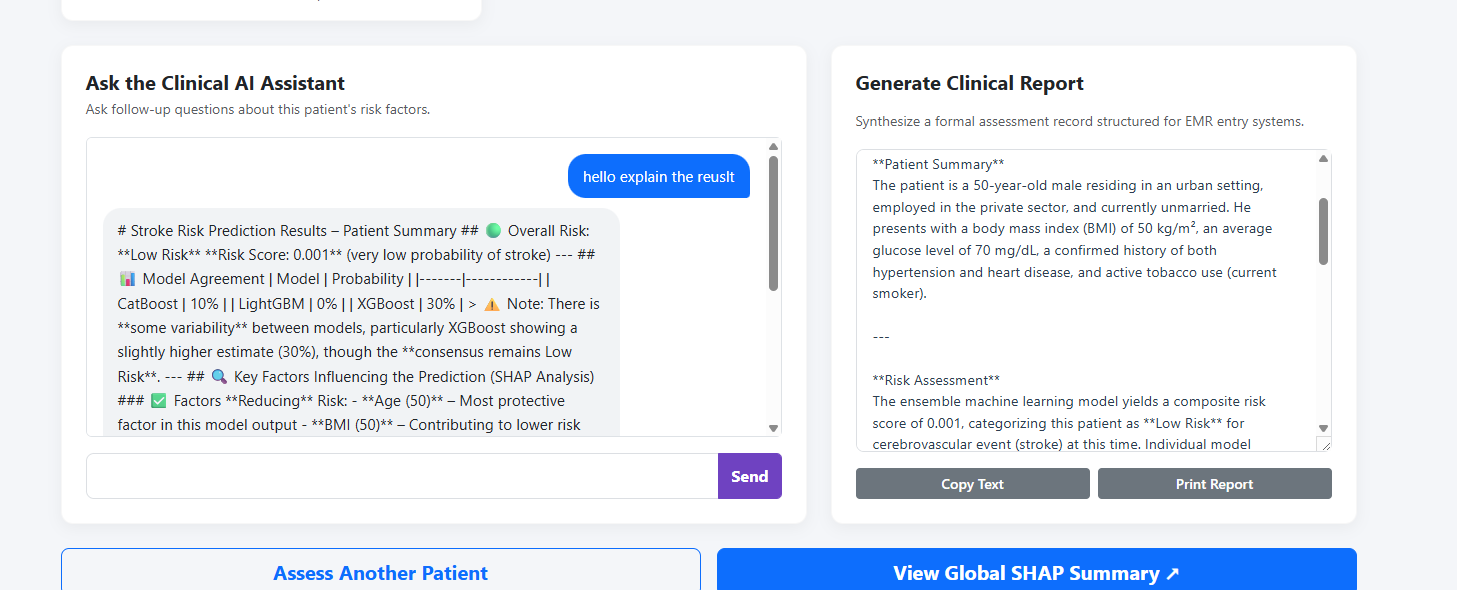
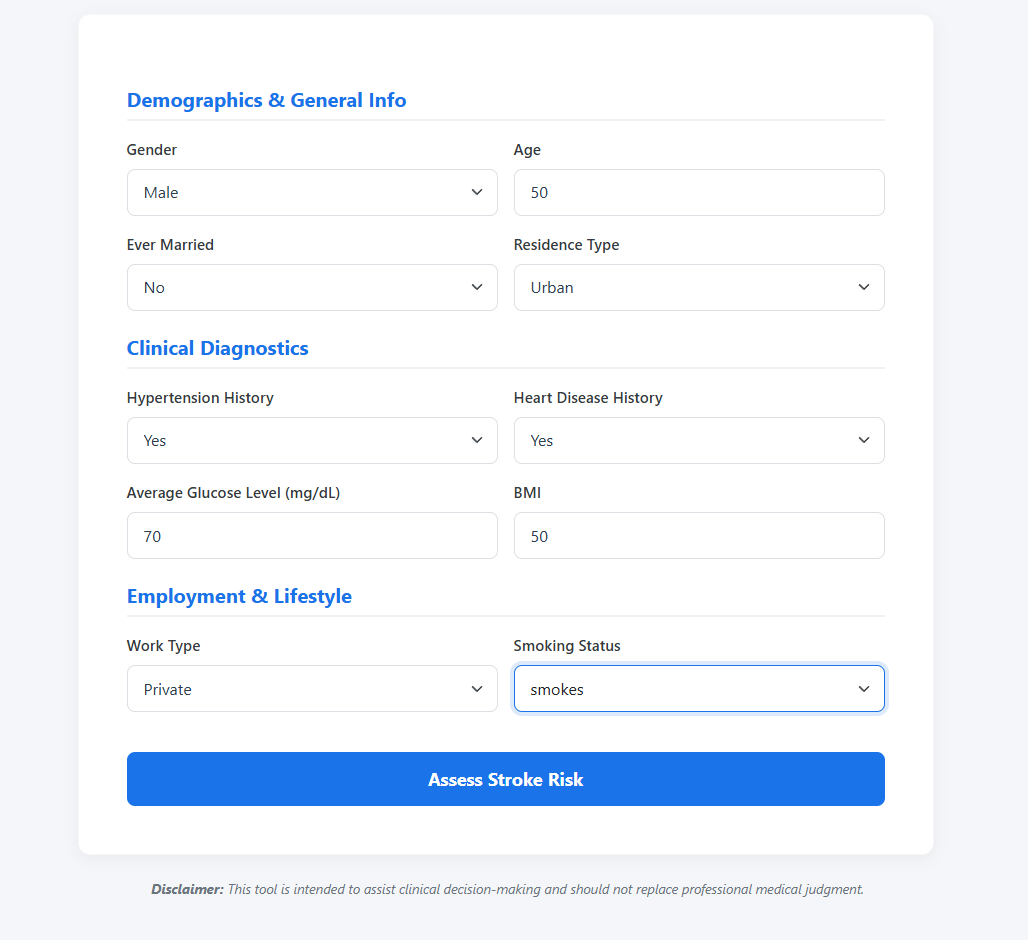
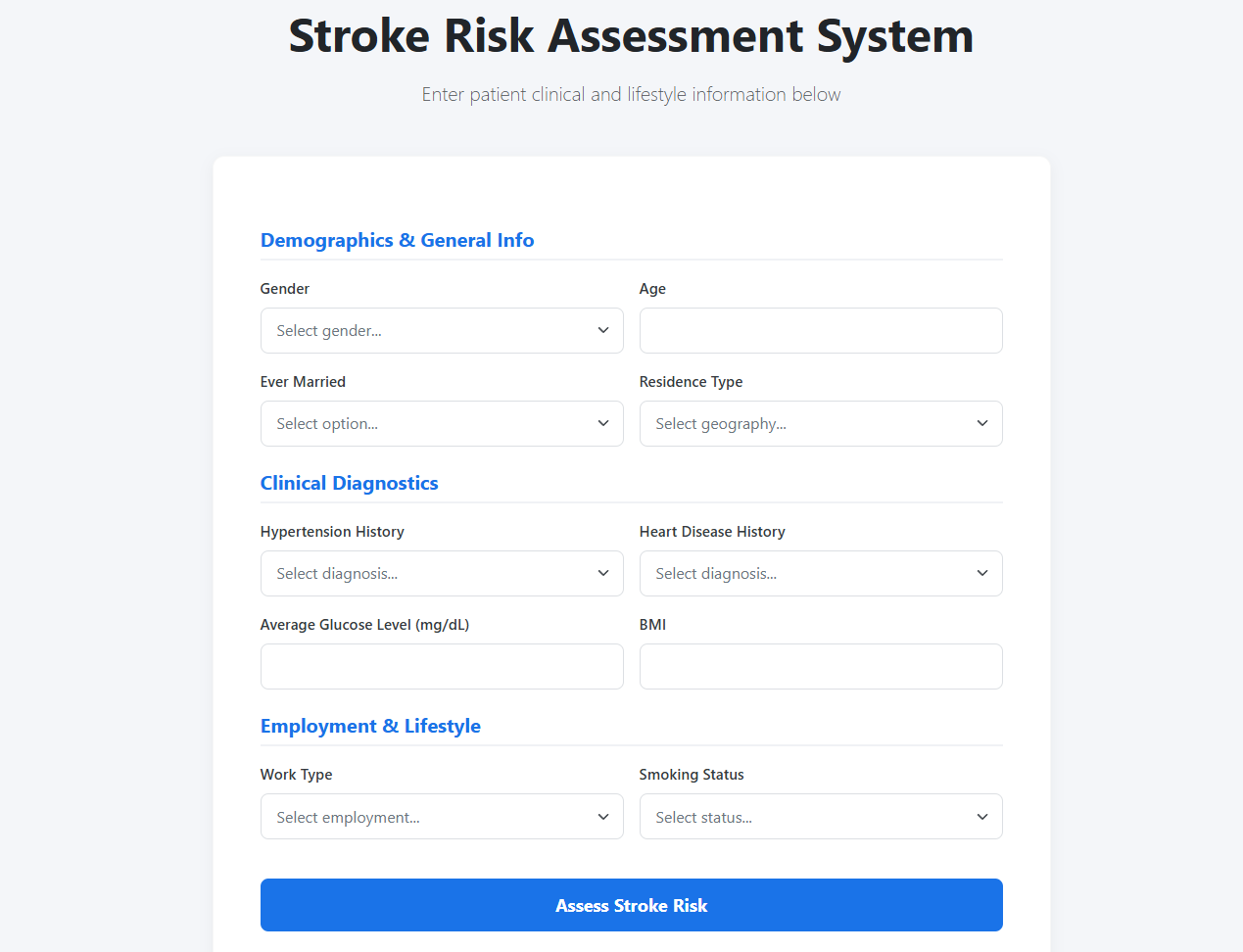
Inspiration : I wanted to solve the "black box" problem in medical AI. While modern machine learning achieves incredible accuracy in predicting cardiovascular events, doctors cannot trust opaque algorithms with life-or-death decisions. I were inspired to bridge the gap between highly accurate predictive modeling and clinical transparency, creating a tool that doesn't just output a risk percentage, but clearly explains why that risk exists.
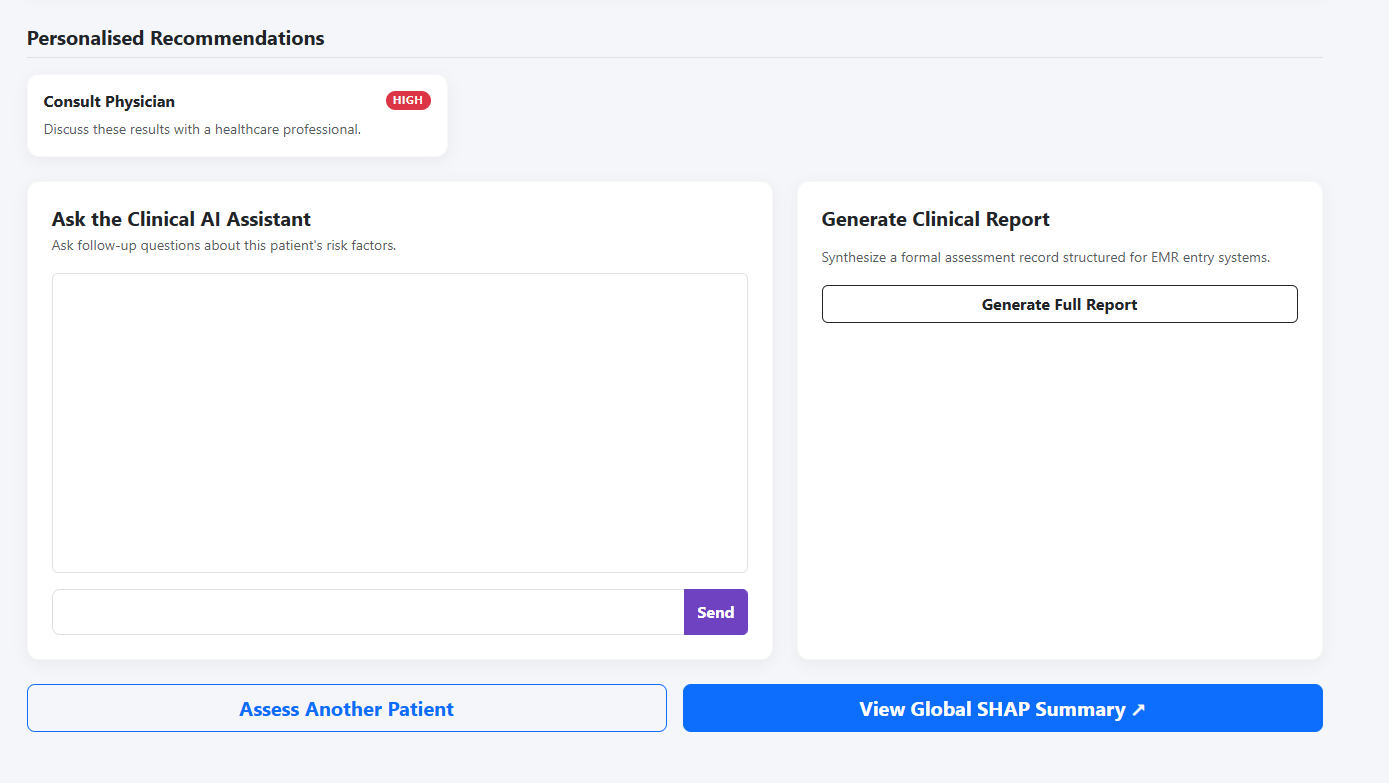
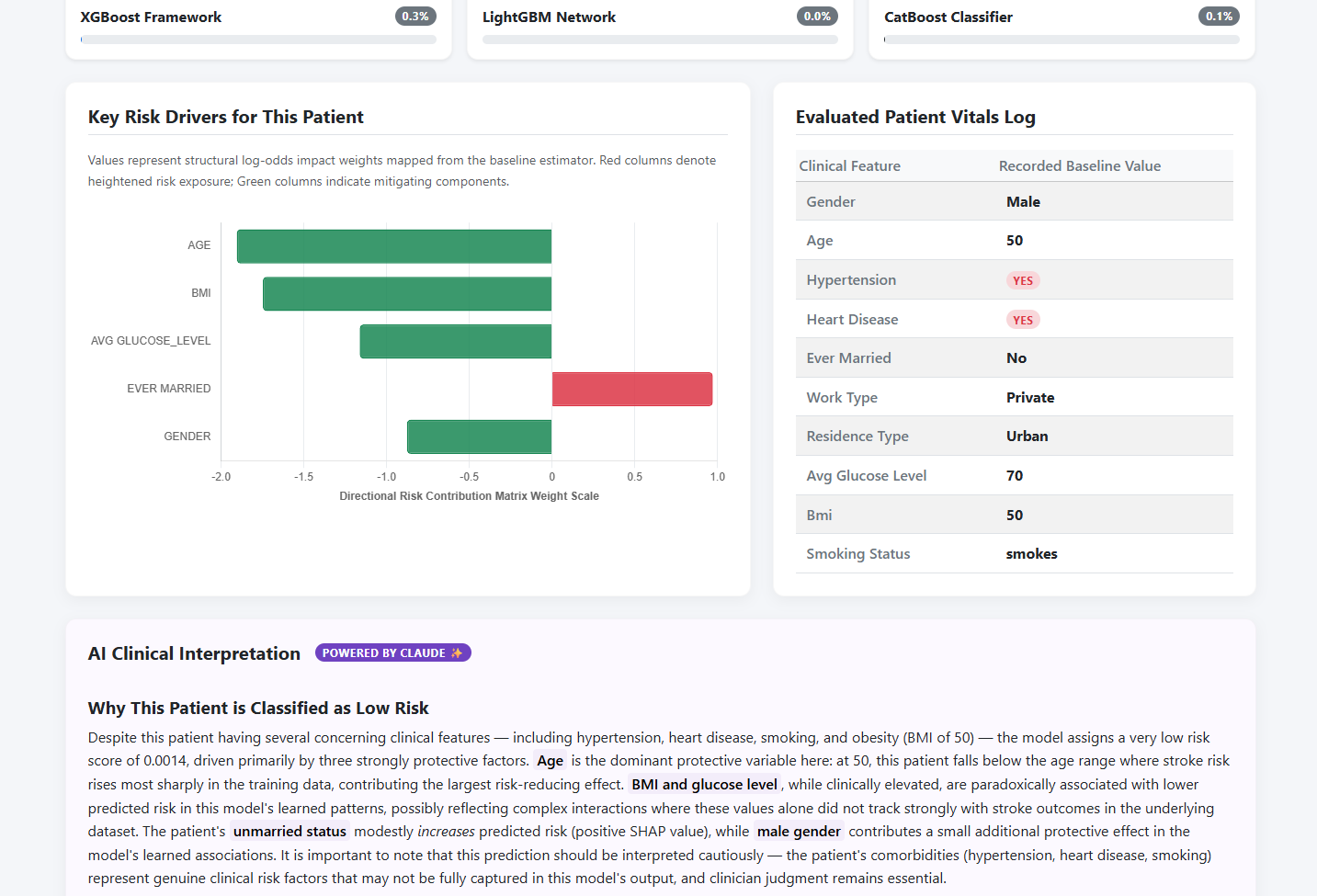
What it does: My platform evaluates patient vitals to accurately predict stroke risk and visually maps out the exact physiological drivers behind that score. It also features an integrated clinical AI assistant that instantly drafts transparent, EMR-ready patient reports and allows clinicians to ask dynamic, follow-up diagnostic questions about the patient's specific risk factors.
How I built it: I built the predictive backend using an ensemble of three powerful gradient-boosted models: XGBoost, LightGBM, and CatBoost. We integrated SHAP (SHapley Additive exPlanations) to mathematically calculate the risk contribution of every patient feature. The frontend dashboard was built with Flask, Bootstrap 5, and Chart.js, while Claude acts as the LLM layer, safely translating raw SHAP matrices into professional clinical prose.
Challenges I ran into: I tackled three major hurdles:
Model Disagreement: Handling edge cases where our ensemble models heavily disagreed (solved by implementing a variance threshold that triggers a manual review warning).
UI Rendering: Safely rendering raw LLM markdown formatting into clean, server-parsed HTML without breaking the clinical dashboard's CSS.
AI Hallucinations: Prompt-engineering the LLM to accurately interpret SHAP log-odds data so it understood when a feature was a "heightened risk" versus a "mitigating component."
Accomplishments that i am proud of: I successfully merged three very different technology stacks traditional predictive machine learning, complex game-theory explainability mathematics, and modern generative AI into a single, cohesive interface. I built a tool that actively respects and enhances clinical workflows rather than disrupting them.
What I learned: I learned that in healthcare technology, interpretability is just as critical as predictive accuracy a model is useless if the end-user can't trust its reasoning. I also leveled up our skills in full-stack integration and domain-specific prompt engineering, ensuring our AI outputs sober, accurate medical assessments rather than generic chatbot responses.
What's next for Stroke Risk Assessment Report: My immediate next steps are to integrate the platform directly with hospital EMR systems using FHIR/HL7 standards for seamless patient data ingestion. I also plan to expand the predictive engine to assess other cardiovascular events and transition toward an offline-first architecture, ensuring the tool remains highly accessible for healthcare workers even in low-connectivity environments.
Built With
- anthropic
- artificial-intelligence
- bootstrap5
- catboost
- claude
- css3
- data-science
- ensemble-learning
- flask
- generative-ai
- healthtech
- html5
- javascript
- lightgbm
- llm
- machine-learning
- predictive-analytics
- prompt-engineering
- python
- shap
- xgboost


Log in or sign up for Devpost to join the conversation.