-
-
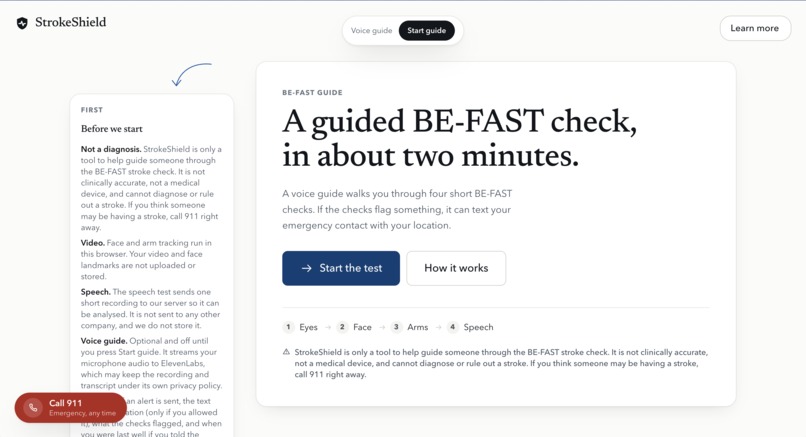
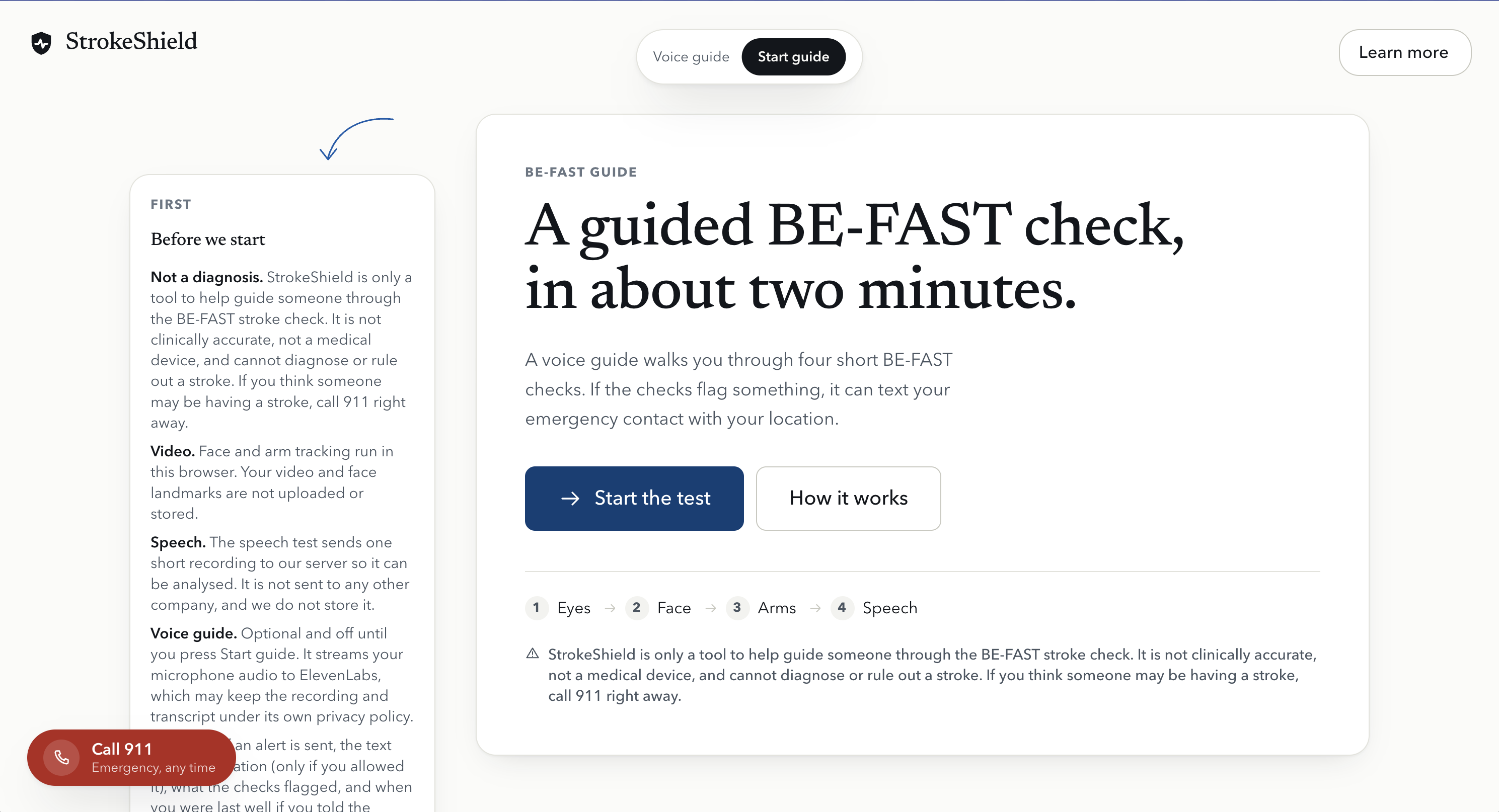
Home Page
-
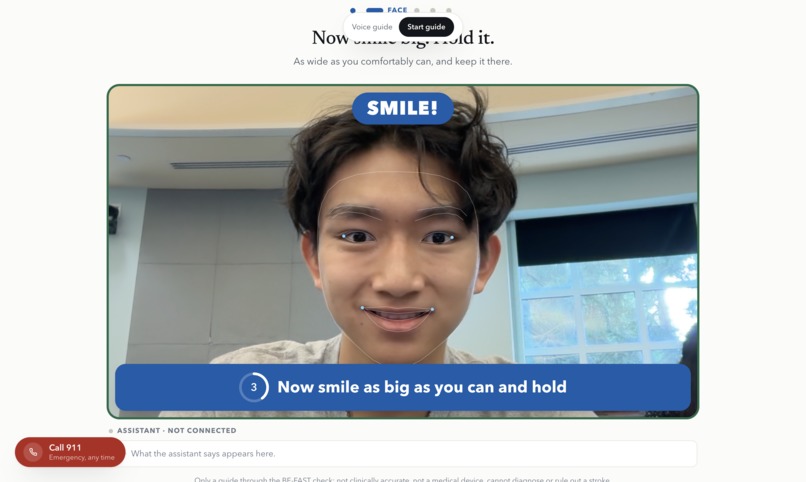
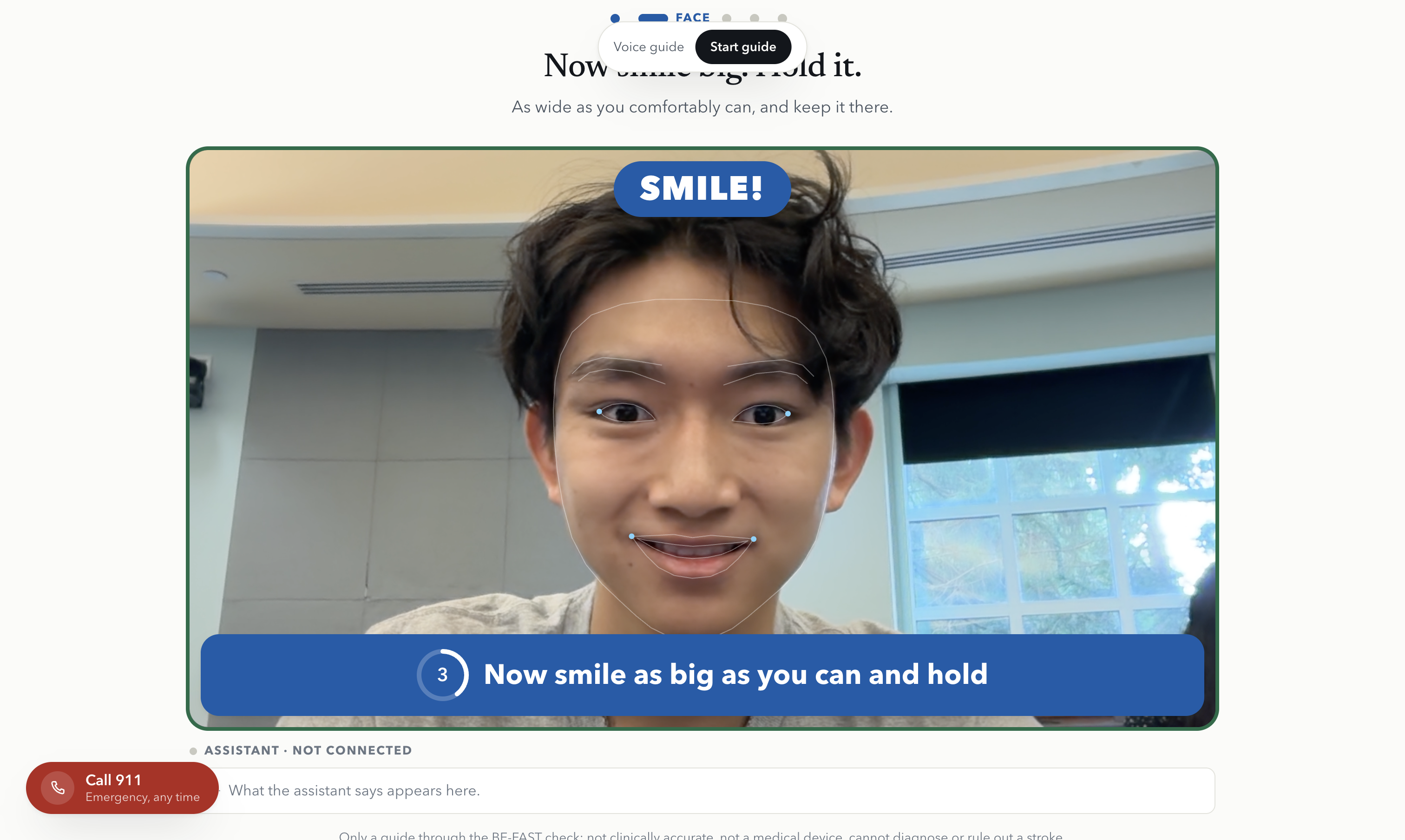
Smile Test (1 of 4)
-
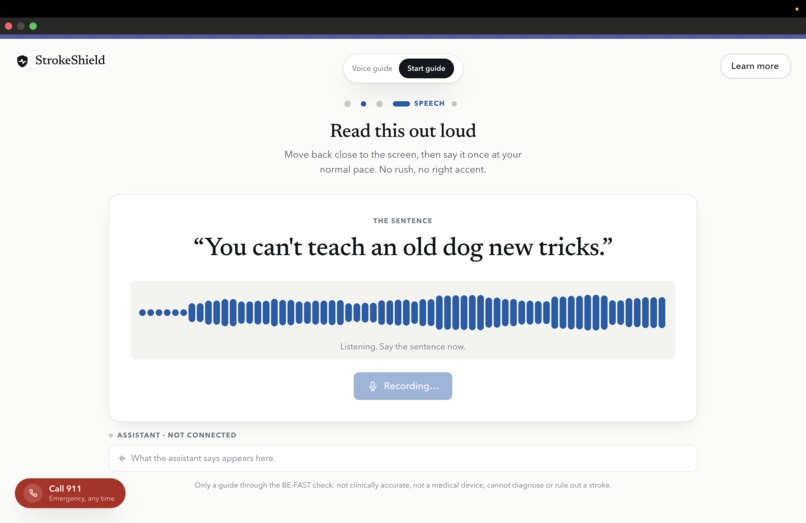
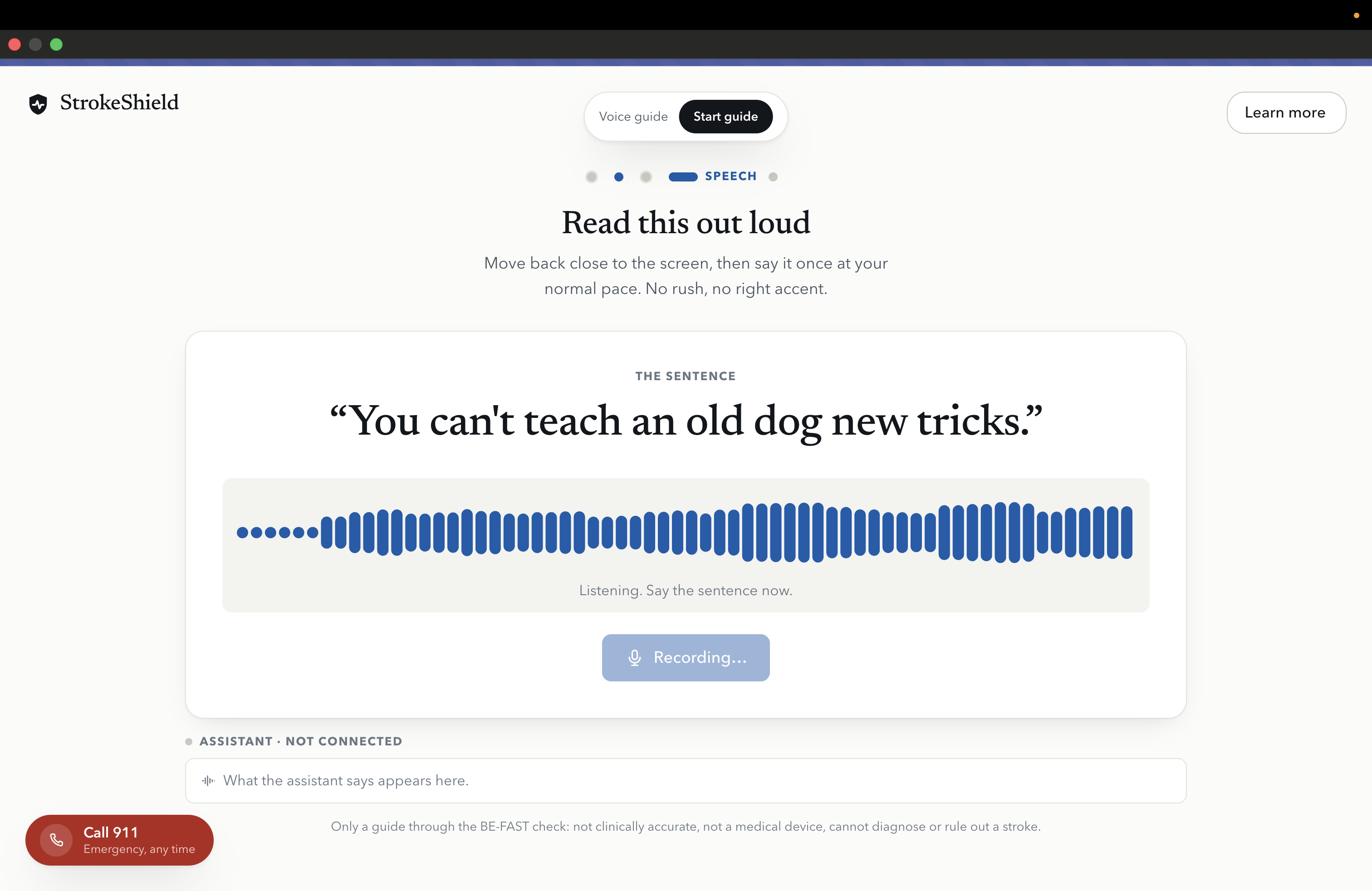
Voice Test (1 of 4)
-
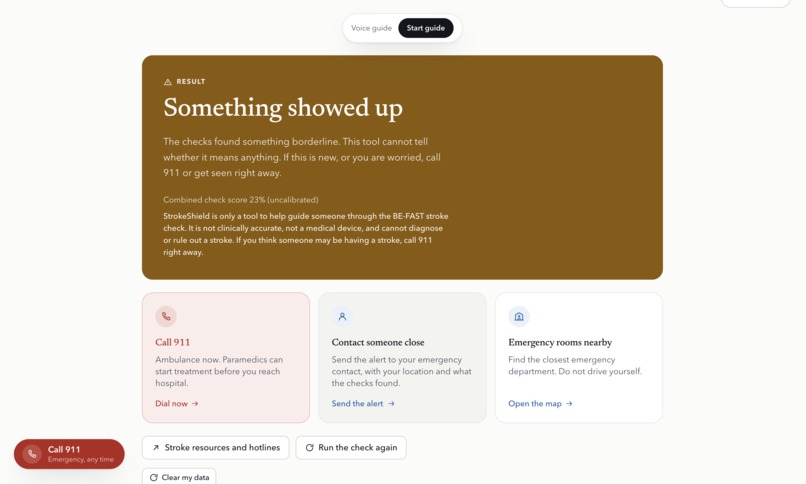
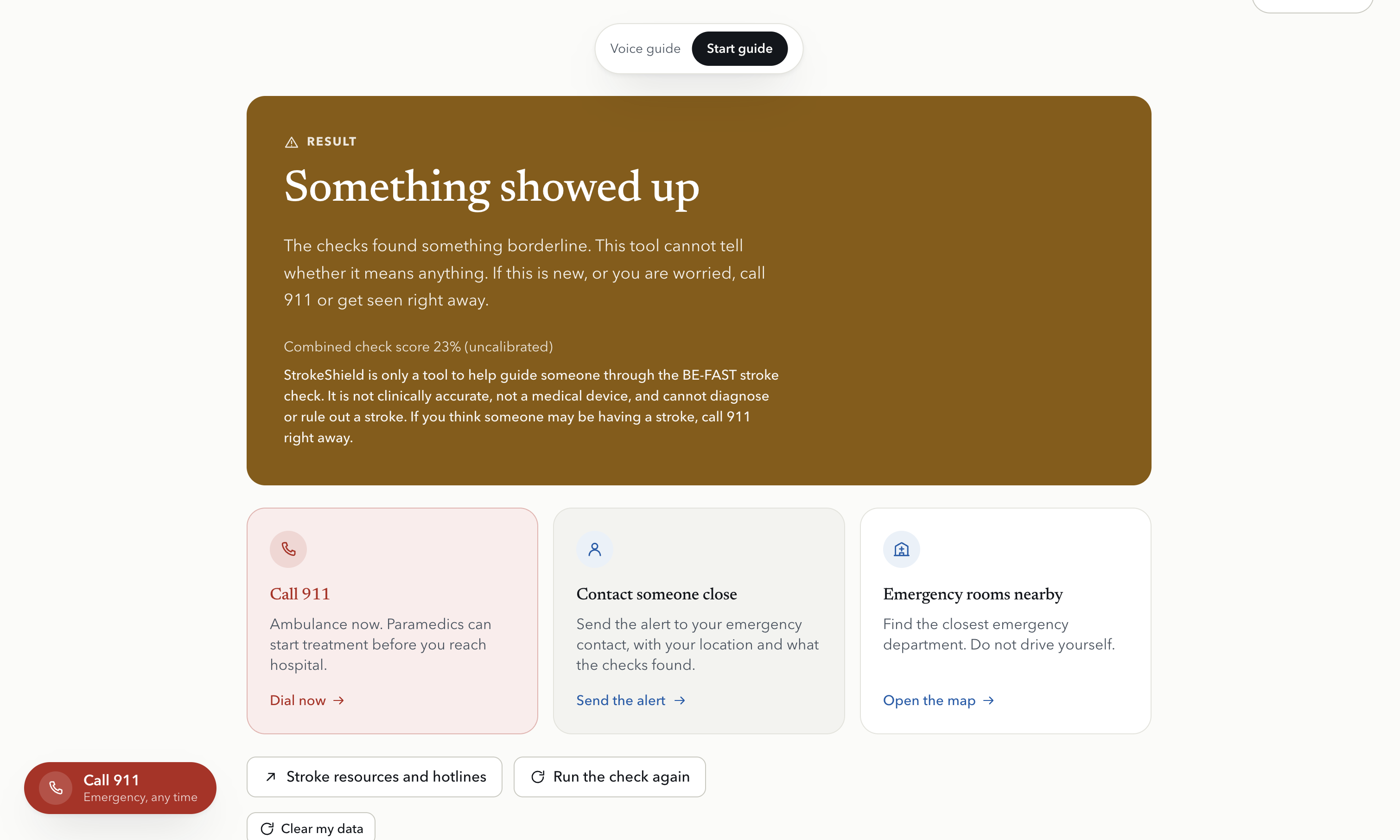
Results
-
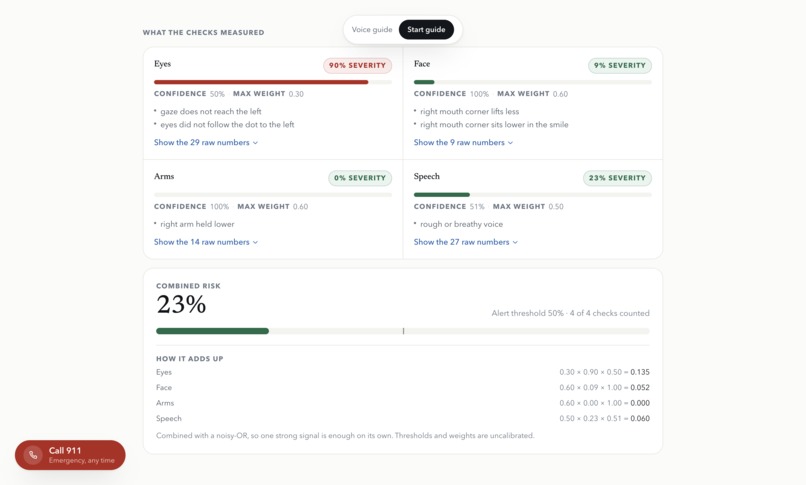
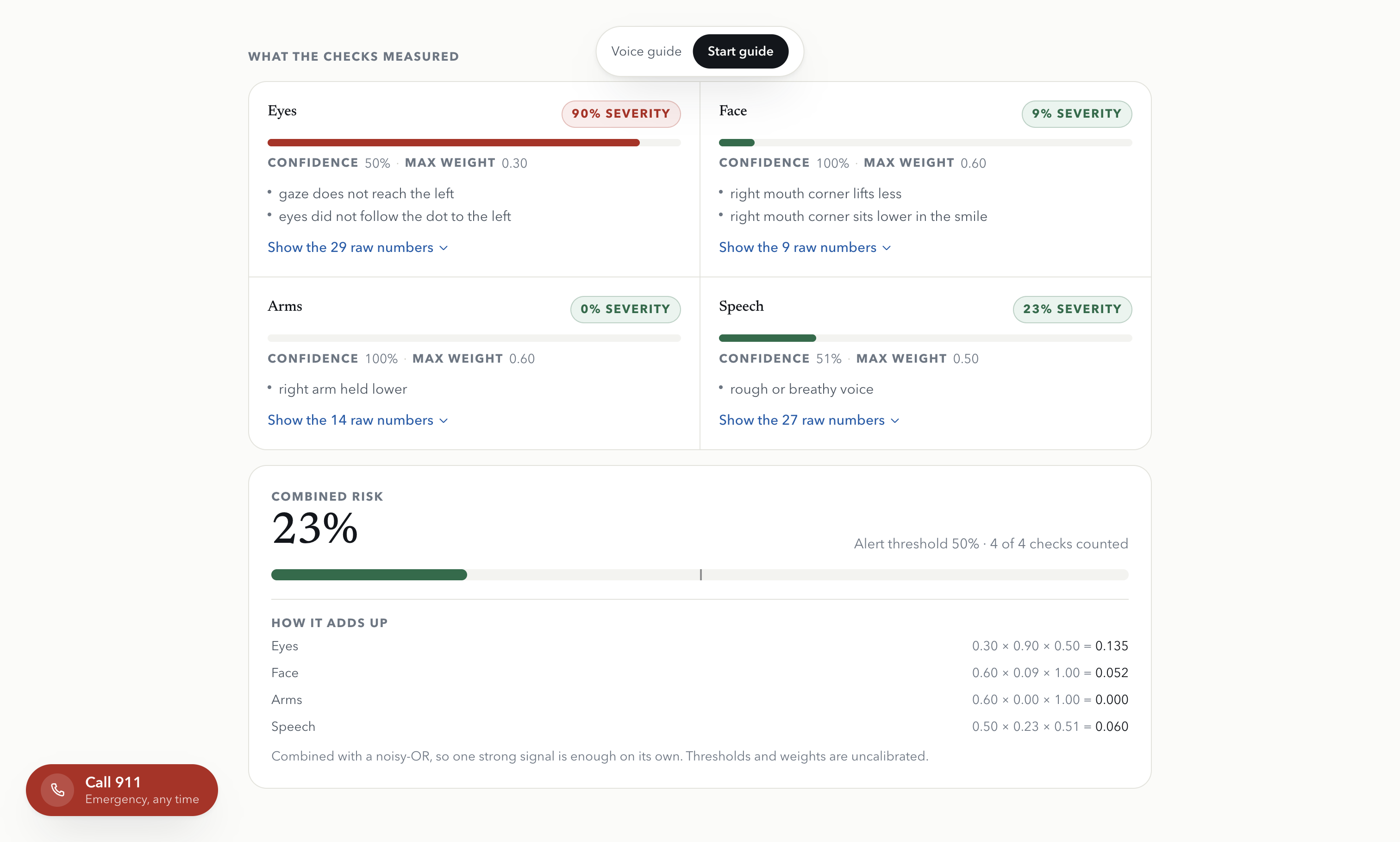
Detailed Results Page
Inspiration
Every 40 seconds, someone in the US has a stroke.
But 82% of stroke patients wait too long before seeking medical attention. By that time, the golden window for treatment and medication has likely passed. A stroke destroys about 1.9 million brain cells every minute it goes untreated.
BE-FAST is a system that recognizes physical symptoms of stroke quickly and effectively. Yet most people who feel the first signs are alone, unaware of the symptoms, or simply wait as they are unsure.
This is why we built StrokeShield, an accessible web app that turns BE-FAST digital. It uses computer vision, audio guidance through ElevenLabs, and AI analysis to guide them through the test and detect stroke symptoms. StrokeShield walks someone through a proper check in about two minutes, with only a webcam and a microphone.
What it does
StrokeShield guides a person through four short checks, out loud and on screen:
Eyes: follow a moving dot without turning your head.
Face: hold a serious face, then smile as wide as you can, so the two sides can be compared.
Arms: step back and hold both arms out for ten seconds, and see if one drifts.
Speech: read one sentence aloud, and we look at how it sounds.
Each check produces a score and a confidence. Together they give one combined result. If the signs are strong, a 10-second countdown starts, which the person can cancel, and then a text message with their location goes to their emergency contact. A "Call 911" button is on screen the whole time. A voice assistant explains each step in plain words. It never diagnoses or gives scores; the app makes the call. StrokeShield is a demo, not a medical device.
We designed it for both those who are alone and caretakers. We also seek to use StrokeShield to improve public awareness around stroke symptoms and the BE-FAST system.
How we built it
- Camera checks run in the browser through MediaPipe. We measure things like how much each mouth corner lifts, how far each eye travels, and how far each arm drifts.
- Speech analysis runs on a Python (FastAPI) backend, which measures pitch, pauses, speaking rate and voice quality. Another model checks how clearly each sound was said.
- Each check is weighted by how reliable it is, and one strong sign is enough to trigger an alert. If a check can't be measured, it's dropped and labeled, not guessed.
- The voice guide is an ElevenLabs conversational agent with eight tools it can call: start a check, save when symptoms began, look at the current step, or start the emergency countdown when someone asks for help.
- Alerts go through Email-to-SMS. The server will only ever text one pre-set number, and there's a dry-run mode for testing.
- Fully compatible on computer browsers, Safari for iPhones/iPads, and Chrome for all mobile devices. Also compatible in both English and Spanish
Challenges we ran into
- One camera, two distances: The face needs a close-up, but the arms check needs the whole upper body in view. We built a positioning step that tells you when to move, and we ordered the checks so you only step back once.
- No stroke patient data: We can't train a model, so every measurement is a simple, explainable rule. We built tools to record real people, replay the recordings, and tune the thresholds on a held-out set, so we can show how well it actually works.
- Keeping the voice and the app in sync: The assistant could talk over a recording or lag behind the screen, so we made the website the single source of truth and mute the assistant during recording.
- Safety: A tool like this can scare or falsely reassure someone. So it never diagnoses, the alert can only reach a pre-set number, a cancel step comes first, and every screen says it is not a medical device.
Accomplishments that we're proud of
- A full working pipeline: camera and microphone, four checks, one score, a decision, and an alert with a location, all in one flow.
- Safety and privacy built in: a cancelable emergency popup, a single allowed phone number, and no diagnosis language. Video and audio stays on the device ensuring privacy.
- Real validation tooling and hundreds of automated tests: so the numbers can be tuned and checked instead of guessed.
- Intuitiveness: an interface that works for a stressed or impaired user, with large targets, plain wording, high-contrast colors and a way out of every step.
What we learned
- Test on real people early. Our synthetic test data looked fine, but the first real microphone showed problems we did not see in it.
- The person in a hurry is the real user. Intuitive UI and a way out of every step defines the utility of our product.
- Collaboration is key.
What's next for StrokeShield
We haven't yet tested on a wide range of real people, and the scoring thresholds are still being tuned. Next: calibrate on real cameras and microphones, validating with real test data; automating finding the nearest stroke center with a one-page summary for the ambulance crew; pilot with nursing home to learn from a real user base.
Built With
- claude
- elevenlabs
- fastapi
- geminiapi
- mediapipe
- pytorch
- react
- tailwind
- typescript
- vitest

Log in or sign up for Devpost to join the conversation.