-
-
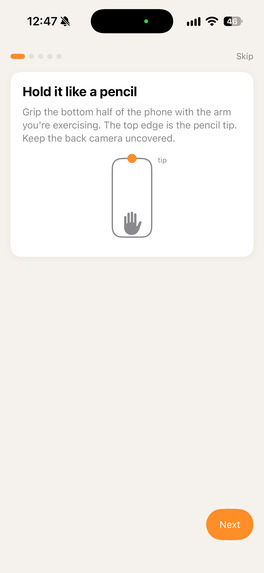
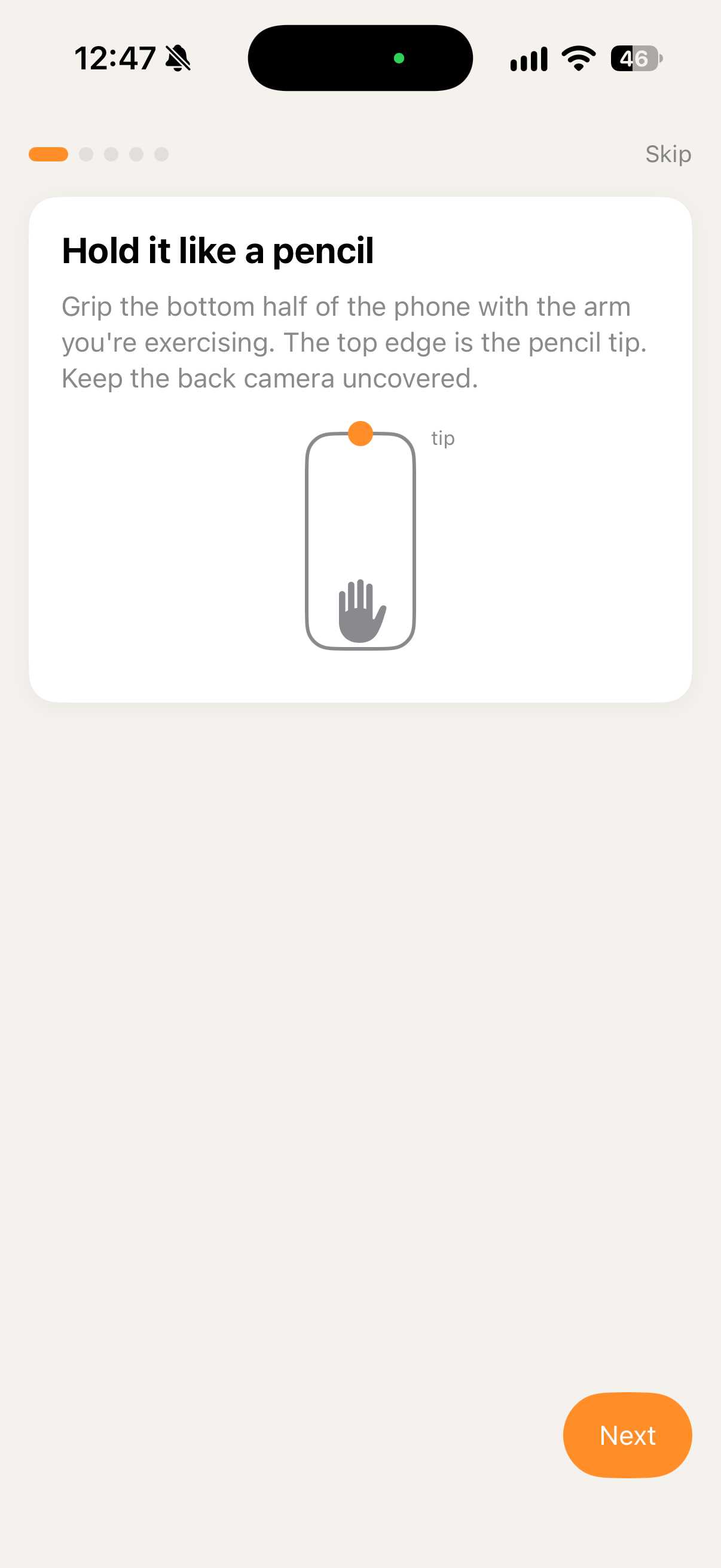
Tutorial part 1
-
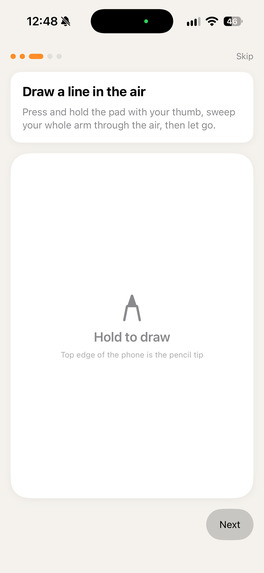
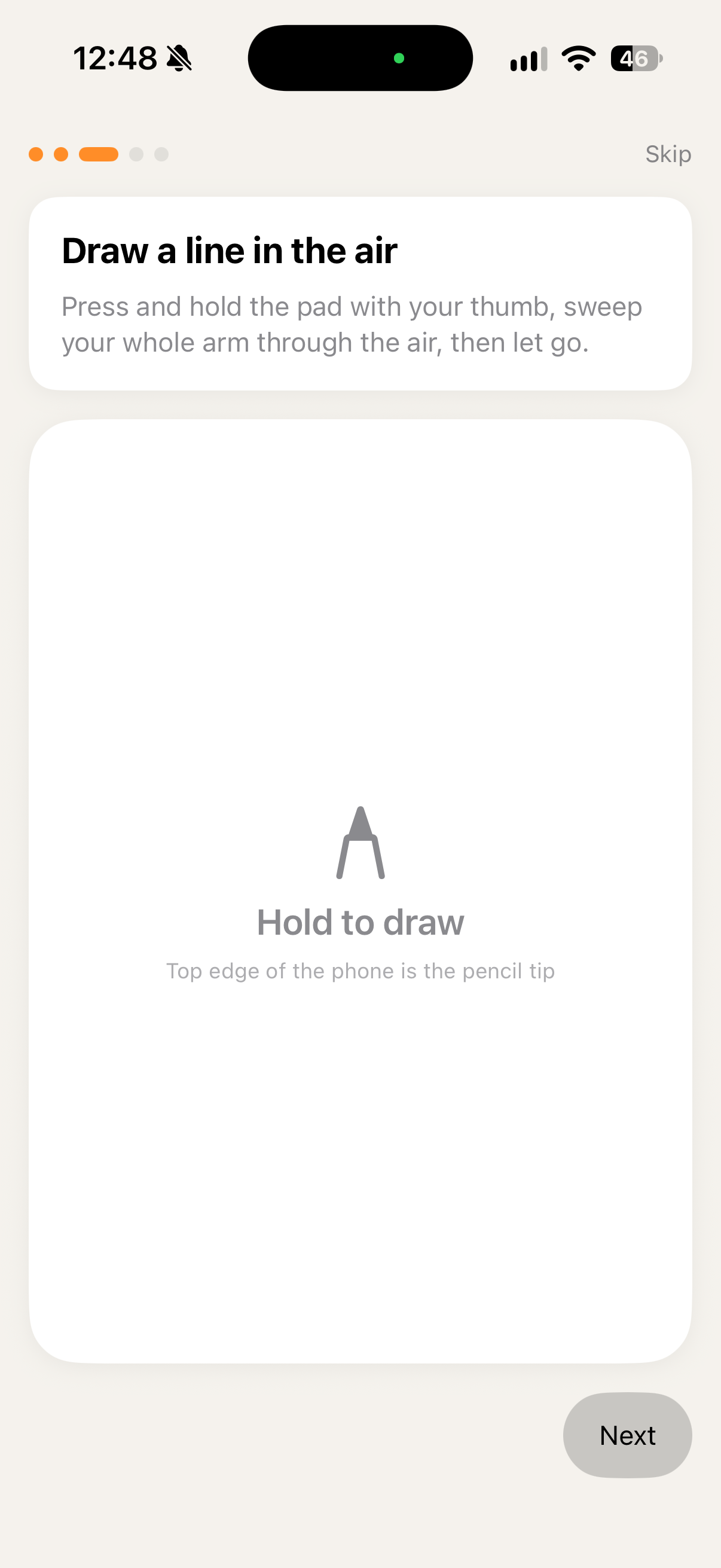
Tutorial part 2
-
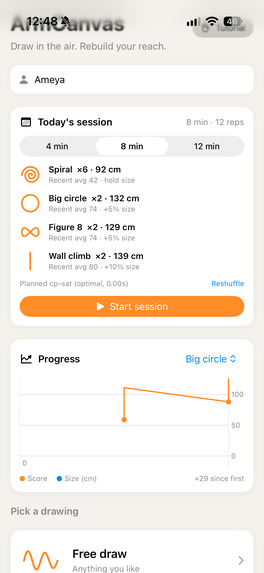
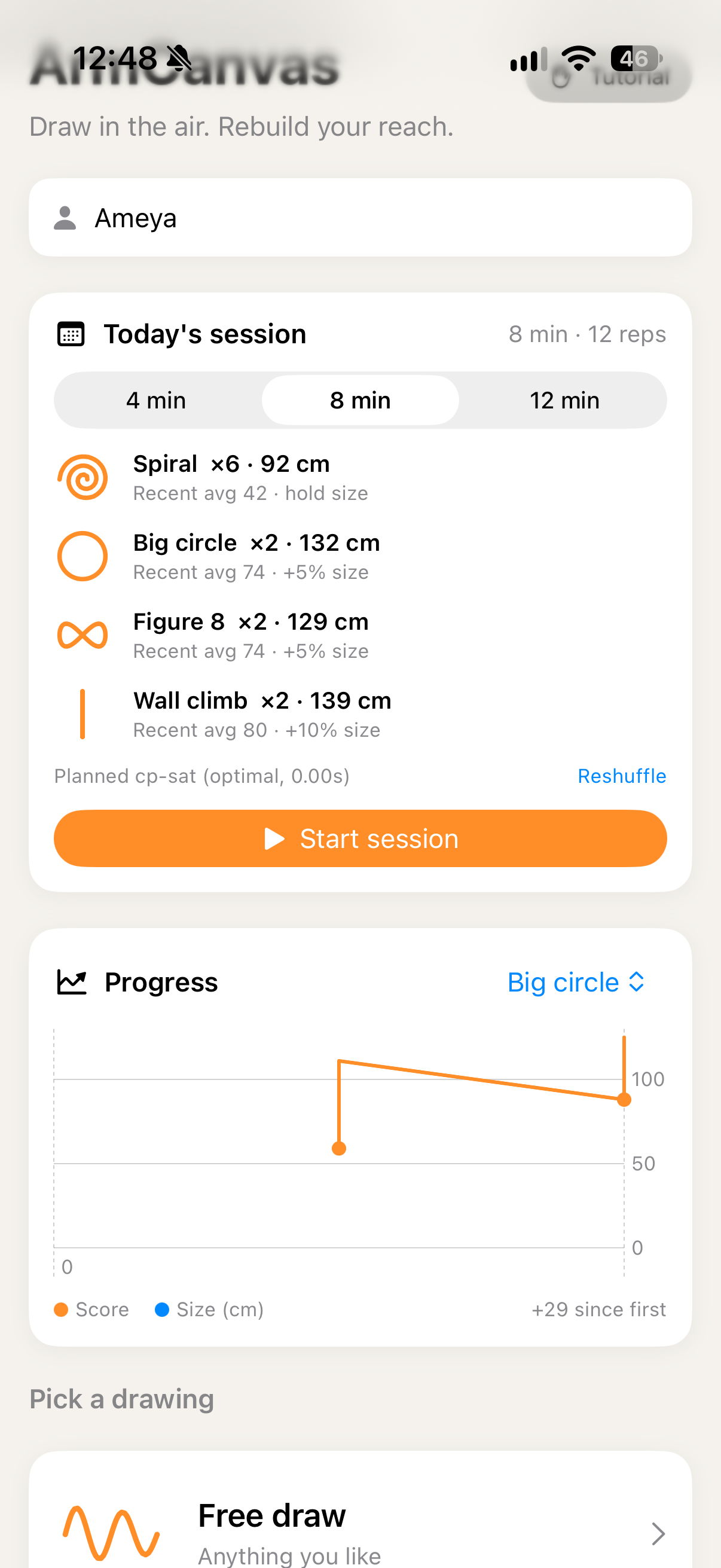
Personalized schedule and a progress chart for patients with a stroke or broken arm
-
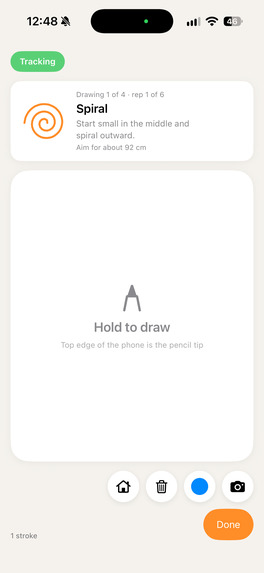
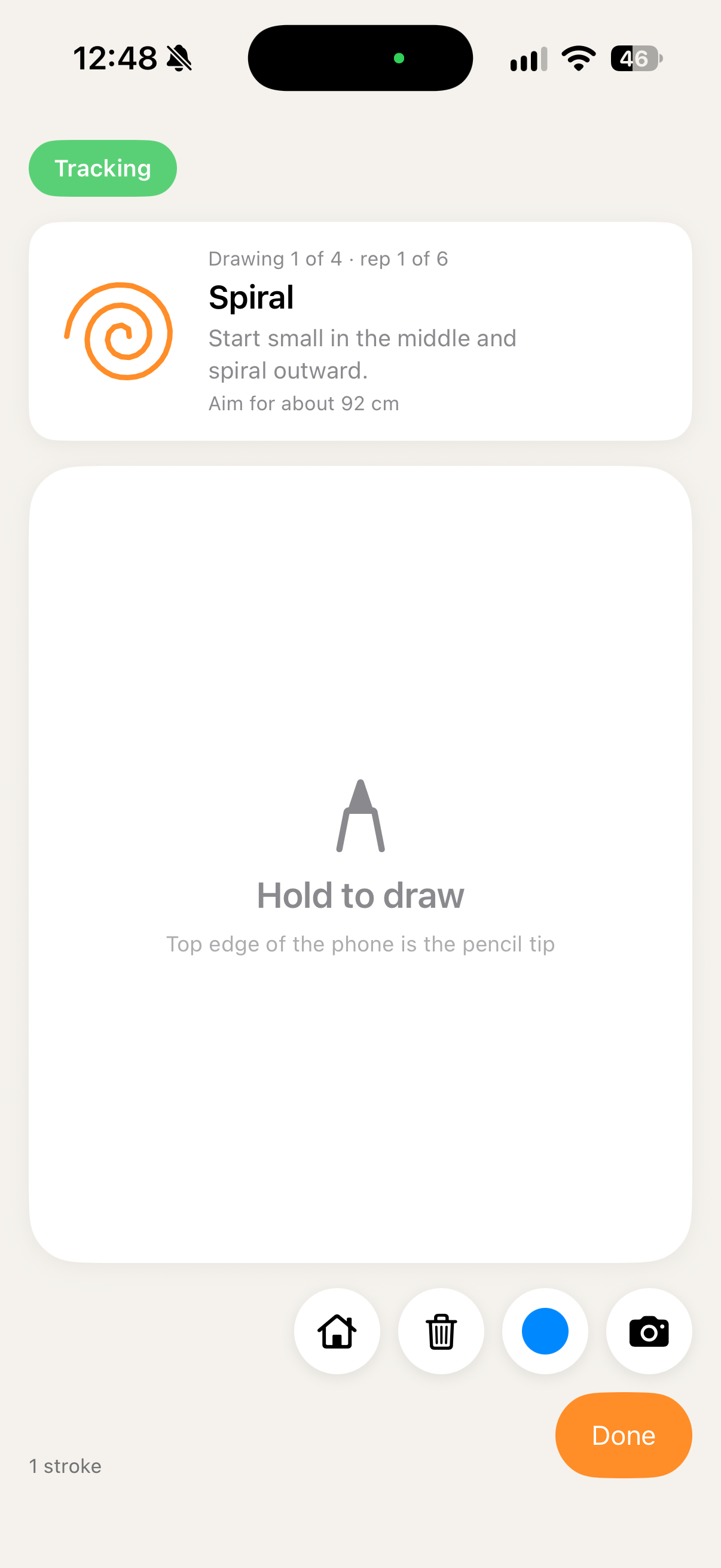
UI telling you what to draw
-
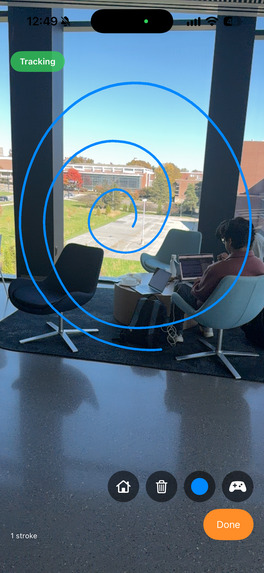
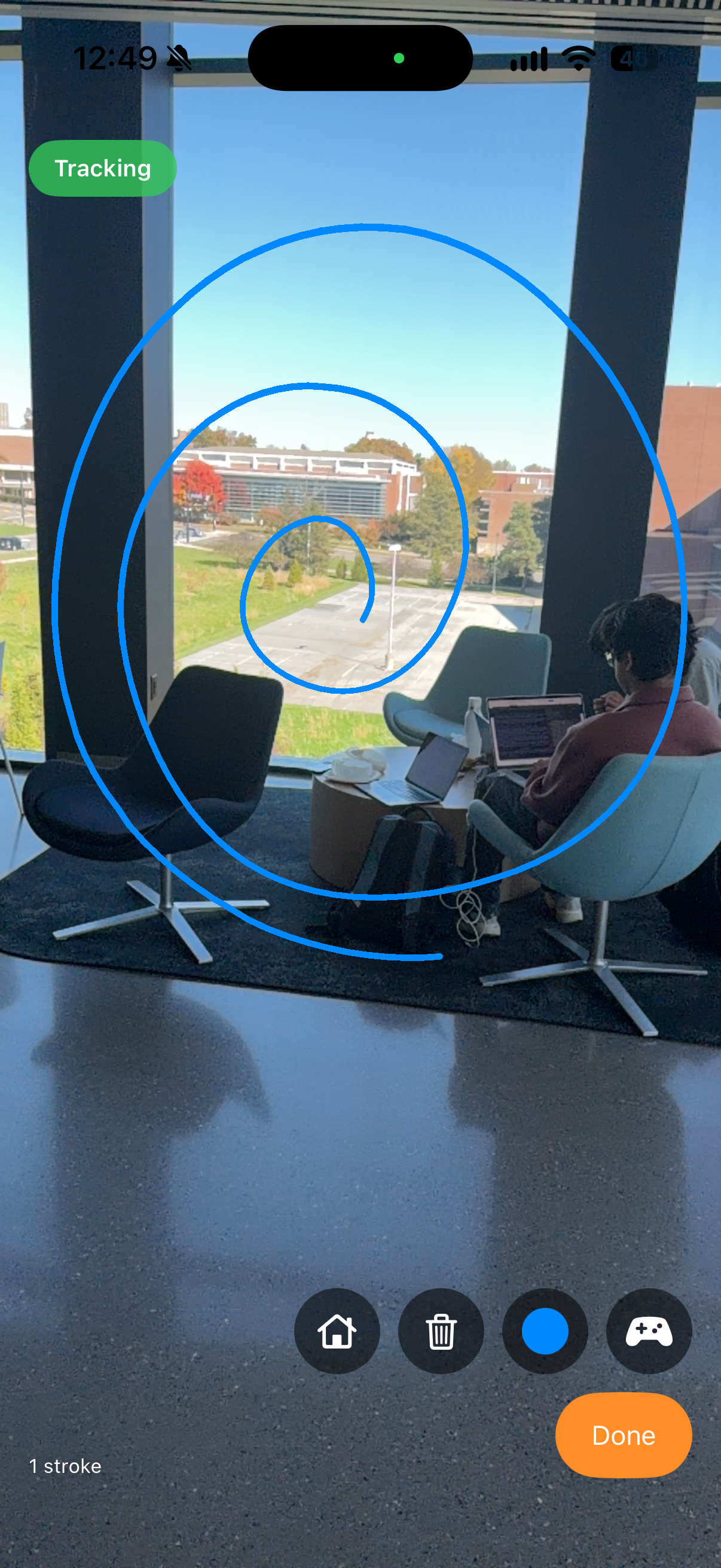
Drawing in 3D space
-
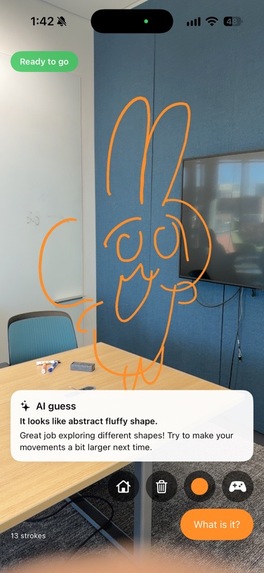
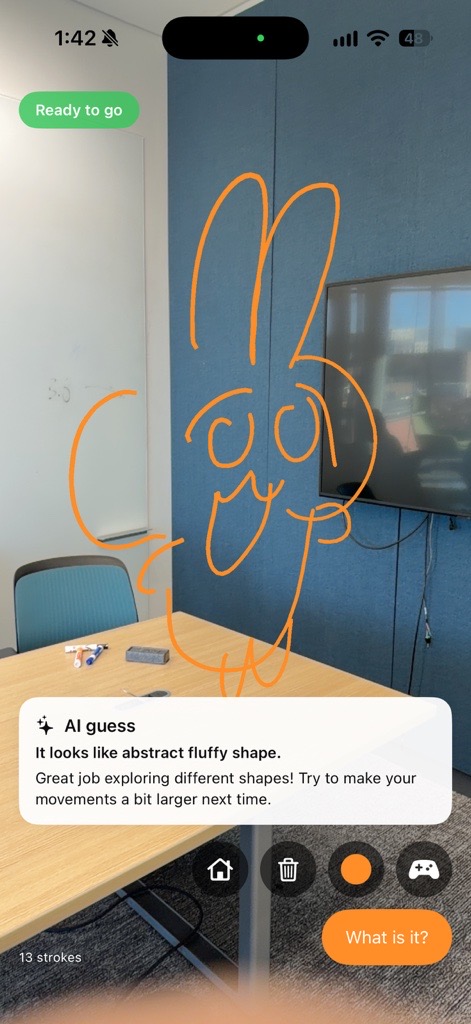
Fun drawing
Inspiration
Our inspiration came from seeing family members experience limb fractures and being instructed by doctors to perform rehabilitation exercises. These exercises were often repetitive and painful, making it difficult to stay motivated and consistent. We wanted to make rehabilitation more engaging by turning arm movements into a fun, interactive drawing experience that encourages patients to keep moving while working toward recovery.
What it does
Stroke transforms physical rehabilitation into an interactive 3D drawing experience. Patients recovering from strokes or limb fractures can move their phones through the air to draw objects and scenes, turning repetitive exercises into something enjoyable. The app also uses patients' medical histories to recommend personalized rehabilitation plans and monitors their progress to help prevent overexertion and encourage safe, consistent exercise.
How we built it
We built Stroke using Swift and iOS development tools. We leveraged the phone's gyroscope, compass, and accelerometer to track its orientation and movement in 3D space, allowing users to draw objects and scenes simply by moving their phones through the air.
We integrated the Gemini API to make drawing an interactive game by identifying and guessing what users drew. It also provides feedback and suggestions to help users improve their drawings, making rehabilitation more engaging and enjoyable.
Additionally, we implemented a Constraint Programming Solver (CP-SAT) algorithm to recommend personalized rehabilitation plans based on patients' histories and progress. Our goal was to balance recovery with safety by encouraging appropriate exercise while minimizing the risk of overexertion, injury, and pain.
Challenges we ran into
One of our biggest challenges was getting our Swift application connected and running correctly on a physical iPhone. Since iOS development was new to us, learning the development workflow and testing our application on a real device required some trial and error.
After overcoming this initial hurdle, development became much more enjoyable. We experimented with drawing in 3D space ourselves and explored how ordinary phone movements could become an interactive rehabilitation experience.
Accomplishments that we're proud of
We're proud to have combined interactive 3D drawing with personalized rehabilitation planning in a single application. Instead of simply reminding patients to complete repetitive exercises, Stroke gives them an engaging reason to move their arms. We're also proud of integrating mobile sensor technology with a CP-SAT optimization algorithm to explore how rehabilitation plans can be tailored to individual patients.
What we learned
We gained hands-on experience with Swift, iOS development, and mobile sensor technologies. We learned how gyroscopes, compasses, and accelerometers can help track a phone's orientation and movement in 3D space. We also learned how to refine our interface and functionality to make the experience more intuitive and accessible. Most importantly, we learned how technology can make repetitive healthcare routines more engaging and potentially help patients remain consistent with their rehabilitation.
What's next for Stroke
We hope to expand Stroke with more drawing challenges, interactive activities, and personalized rehabilitation exercises for different recovery needs. We also want to improve progress tracking so patients and healthcare professionals can better understand improvements in mobility over time. In the future, we aim to collaborate with physical and occupational therapists to validate our exercise recommendations, incorporate appropriate safety limits, and ensure the app supports rehabilitation without encouraging patients to push beyond their prescribed capabilities.
Built With
- accelerometer
- camera
- claude
- cp-sat
- gemini
- gyroscope
- swift


Log in or sign up for Devpost to join the conversation.