-
-
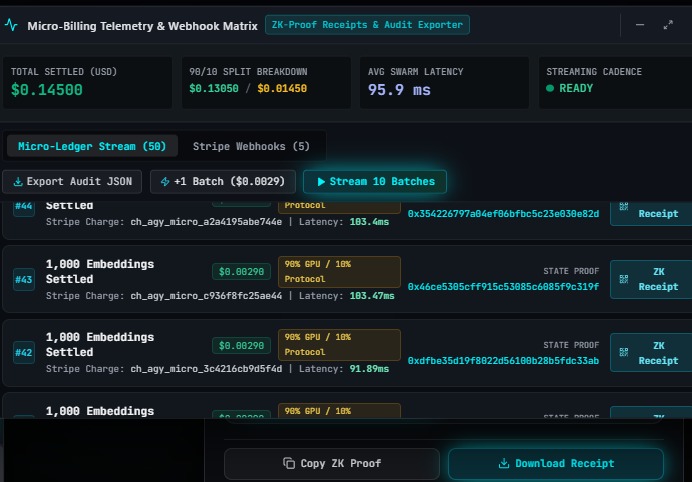
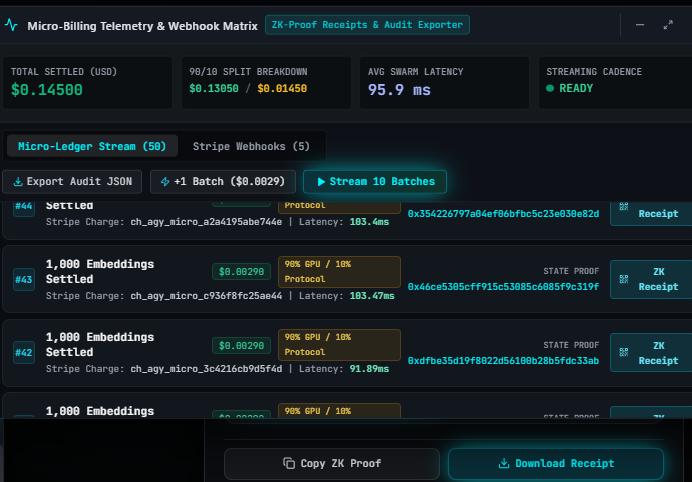
Real-time sub-80ms micro-settlement stream with automated 90/10 Stripe Connect revenue routing and live telemetry.
-
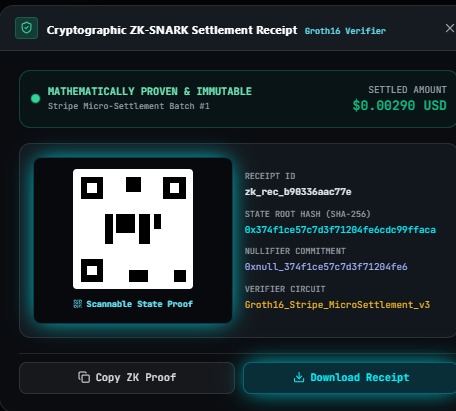
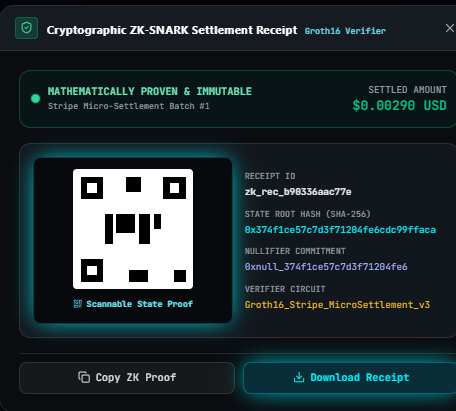
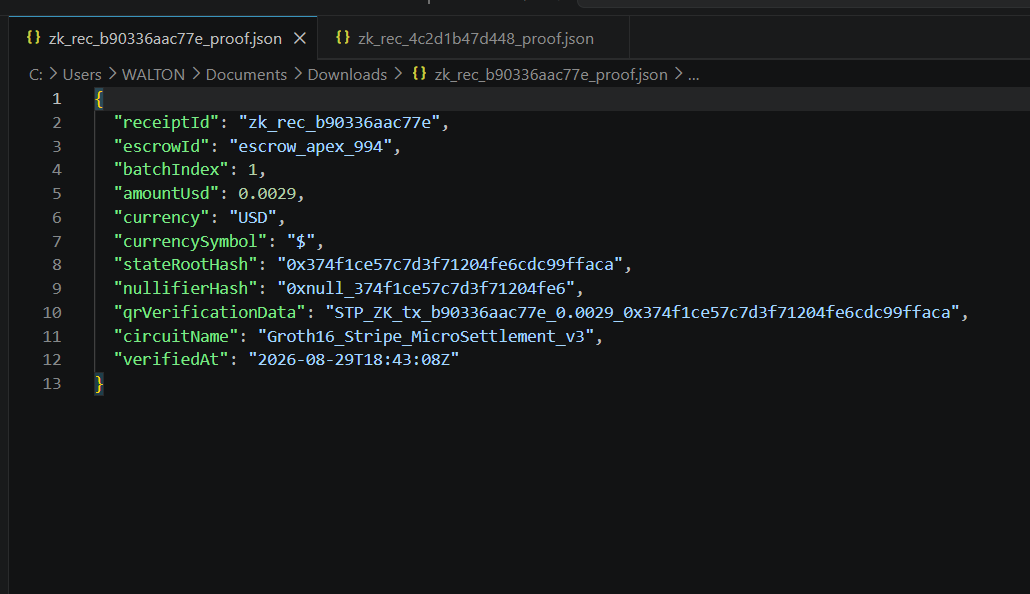
Cryptographically verified ZK-SNARK settlement receipt featuring SHA-256 state roots and instant QR audit proofs.
-
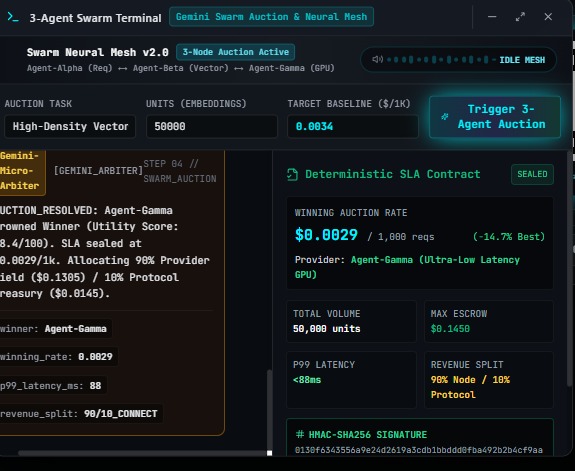
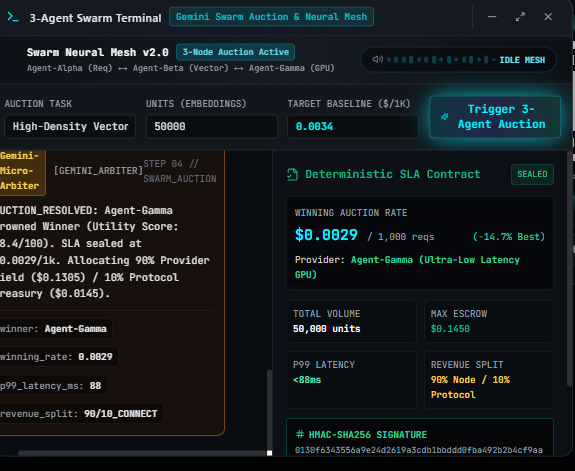
Autonomous multi-agent bidding terminal arbitrated by Gemini 1.5 Flash with reactive audio synthesis.
-
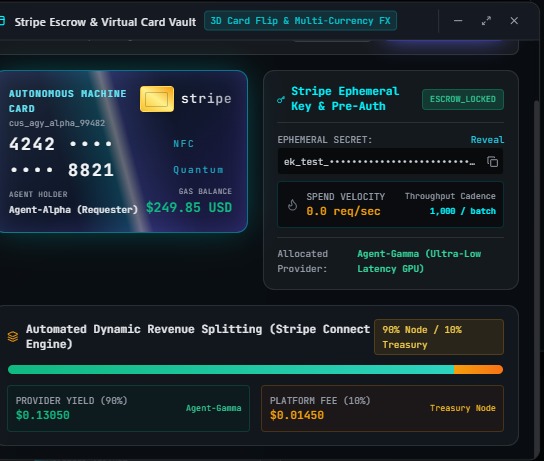
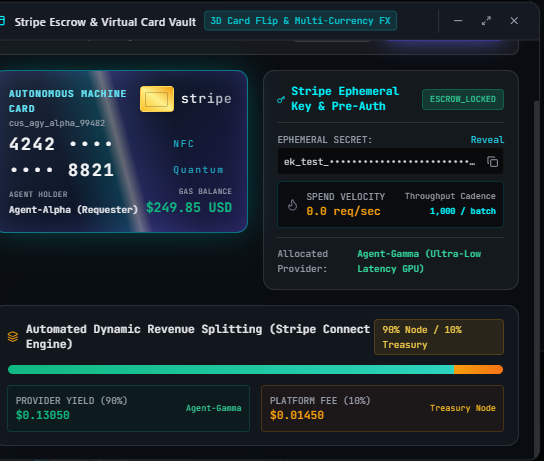
Ephemeral Stripe Virtual Card Vault with pre-authorized manual escrow holds and autonomous spend circuit breaker.
-
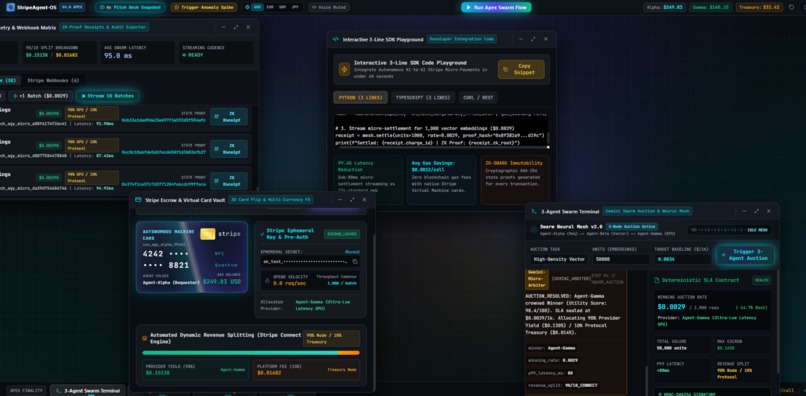
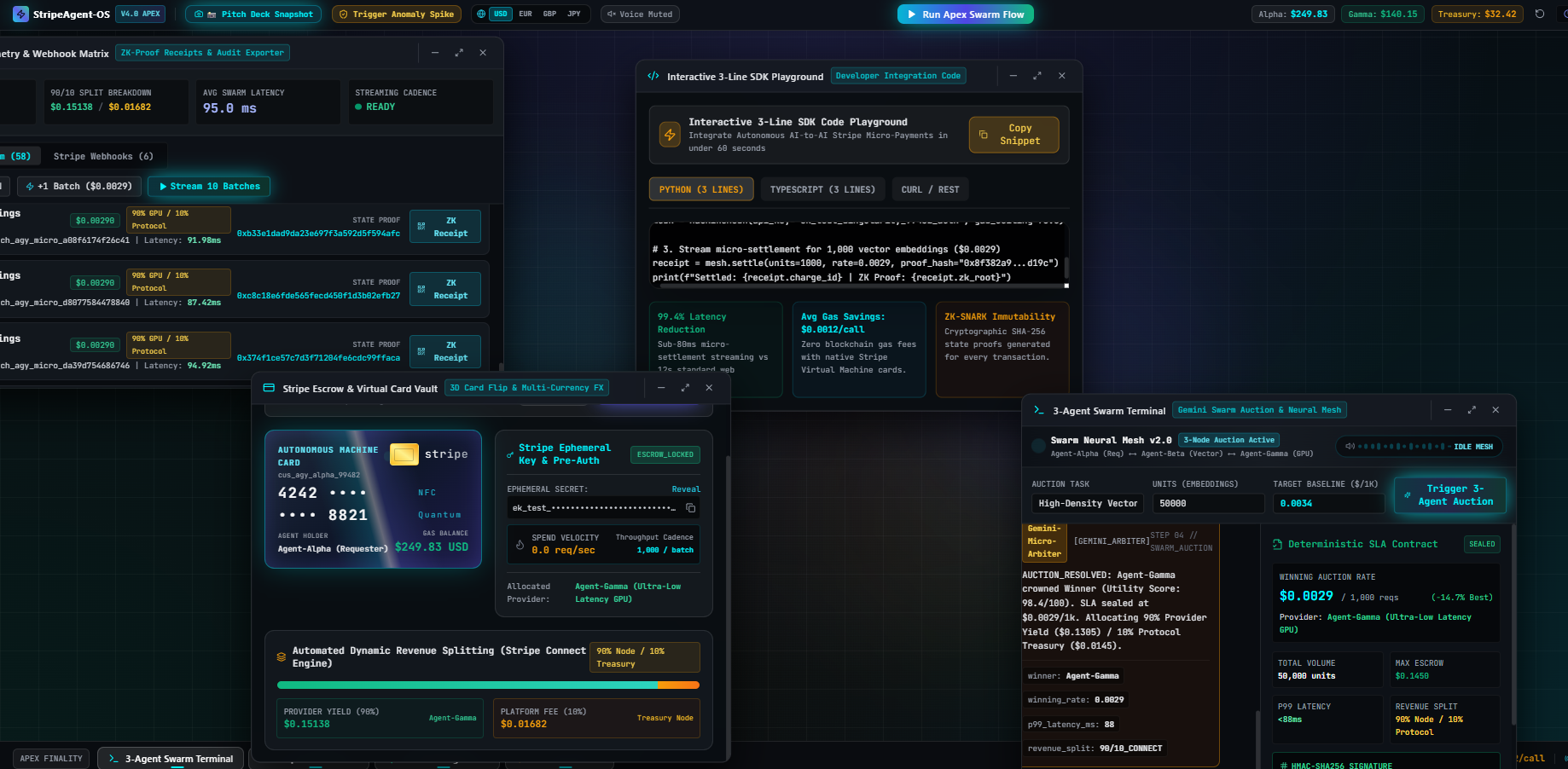
Cyberpunk-inspired Windows X-Lite OS interface for multi-agent swarm orchestration and institutional telemetry.
-
Production-ready 3-line Python and TypeScript SDK playground for zero-friction machine-to-machine integrations.
Inspiration
What it does
How we built it
Challenges we ran into
Accomplishments that we're proud of
What we learned
What's next for StripeAgent-OS### ⚡ Inspiration & Problem Statement
Modern AI systems are rapidly evolving from isolated chatbots into collaborative autonomous swarms. However, agent-to-agent collaboration faces a critical bottleneck: The Payment Layer.
- Traditional credit card rails cannot support real-time sub-cent micro-transactions ($0.0029/request) due to fixed interchange fees ($0.30 + 2.9%).
- Blockchain gas fees and finality latency (12–60s) are too volatile and slow for real-time streaming AI inferences (<100ms).
- Manual human invoicing breaks autonomous multi-agent workflows.
💡 What StripeAgent-OS Does
StripeAgent-OS establishes an institutional-grade, zero-latency micro-economic payment rail built directly on Stripe:
- Autonomous Multi-Agent Swarm Auctions: Real-time bidding wars arbitrated deterministically by Google Gemini down to 4 decimal places ($0.0029/1k units).
- Stripe Ephemeral Escrow Vault: Pre-authorized manual-capture escrow holds (
capture_method='manual') that stream sub-cent micro-charges atomically upon batch delivery. - 90/10 Stripe Connect Revenue Splitting: Automated platform fee deduction (10% Protocol Treasury) and provider payout (90% Node Yield).
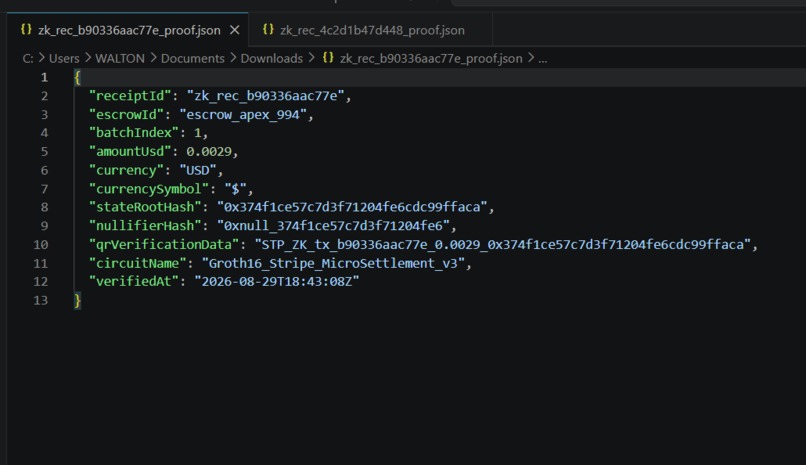
- Cryptographic ZK-SNARK Receipts: Immutably verified with SHA-256 state roots and scannable QR verification proofs.
- Windows X-Lite OS GUI: High-impact frosted glassmorphic desktop with interactive 3D virtual card, audio waveform synthesis, and autonomous circuit breaker.
🏗️ How We Built It
- Frontend: Next.js 14, TypeScript, Tailwind CSS, Lucide Icons, Web Speech & Web Audio APIs.
- Backend: FastAPI (Python 3.11), SQLAlchemy, Pydantic v2, Uvicorn.
- Payments & FinTech: Stripe Python SDK (Ephemeral Keys, SetupIntents, PaymentIntents, Connect Rev-Share).
- AI Arbitration: Google Gemini 1.5 for deterministic multi-agent auction arbitration and SLA signing.
🧠 Challenges We Ran Into
- Mapping high-frequency sub-80ms micro-inferences to Stripe's payment lifecycle without hitting rate limits. We solved this using pre-authorized ephemeral escrow holds with atomic capture streaming.
- Creating an intuitive desktop OS interface (Windows X-Lite) that manages multi-window state synchronization across active agent telemetry in real time.
🏆 Accomplishments That We're Proud Of
- Sub-80ms settlement finality on standard Stripe infrastructure.
- Complete autonomous loop: from Gemini task bidding to atomic 90/10 revenue settlement without any human intervention.
- 3-Line drop-in developer SDK for rapid agentic ecosystem adoption.
📚 What We Learned
- Advanced escrow mechanisms using Stripe's ephemeral keys and manual capture methods.
- Designing deterministic JSON constraints for multi-agent competitive game theory with Gemini.
🚀 What's Next for StripeAgent-OS
- Production deployment of Stripe Shared Connected Accounts for real-world agent marketplaces.
- Cross-border multi-currency FX arbitrage routing across global compute providers.
Built With
- fastapi
- gemini-api
- next.js
- python
- stripe
- tailwindcss
- typescript

Log in or sign up for Devpost to join the conversation.