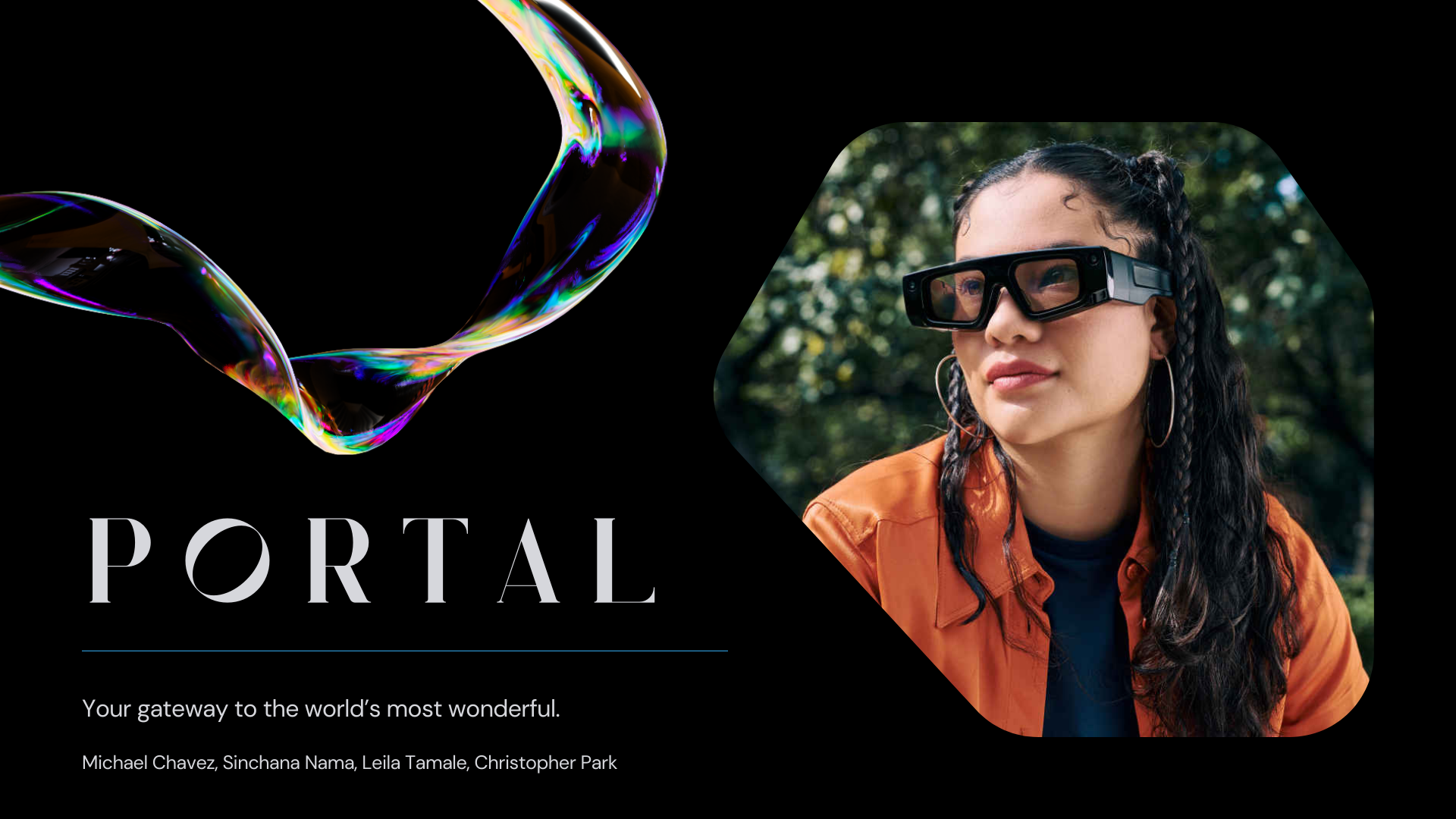
Portals
Project Story
Portals was born out of a passion for music, culture, and the transformative potential of augmented reality (AR). Inspired by the rich diversity of global musical traditions and the desire to make these experiences accessible to everyone, our team set out to create an immersive AR platform that bridges cultural gaps and fosters environmental awareness.
Inspiration
During our time at Stanford, we noticed a gap in how technology could be leveraged to educate and engage users with diverse cultural and musical heritages. We envisioned a tool that not only celebrates these traditions but also promotes inclusivity and environmental consciousness. The idea of using Snap Spectacles as the medium for this experience was driven by their widespread use and the powerful AR capabilities they offer.
What We Learned
Throughout the development of Portals, we deepened our understanding of spatial audio and computer vision technologies. We explored how AR can enhance cultural education by providing interactive and engaging content. Additionally, we gained valuable insights into designing for accessibility, ensuring that our platform can be enjoyed by individuals with varying abilities.
How We Built It
Portals was built using a combination of JavaScript and Snap Lens Studio, leveraging the Spectacles Interaction Kit for our co-creation tools. Our team utilized spatial audio to create immersive soundscapes and computer vision to recognize cultural markers and artifacts in the real world. We integrated voice-controlled features to enhance accessibility.
Challenges Faced
One of the main challenges we encountered was optimizing the performance of spatial audio on Snap Spectacles to ensure a seamless user experience. Balancing the complexity of cultural content with the limitations of AR hardware required innovative solutions and meticulous testing. Additionally, designing voice-controlled features that are both intuitive and reliable involved extensive iteration and user feedback.
Ensuring the accuracy of cultural representations was another significant challenge. We had to research carefully to avoid misrepresentation and to provide meaningful educational content. Integrating climate change themes into musical experiences in a way that felt natural and impactful also required careful consideration and creativity.
Despite these challenges, the collaborative spirit of our team and the support from the Stanford hackathon community enabled us to create a robust and engaging AR experience that we are proud to share.
Built With
- blender
- javascript
- lensstudio
- snapardeveloperapi
- snapspectacles
- typescript
- voicecommands

Log in or sign up for Devpost to join the conversation.