-
-
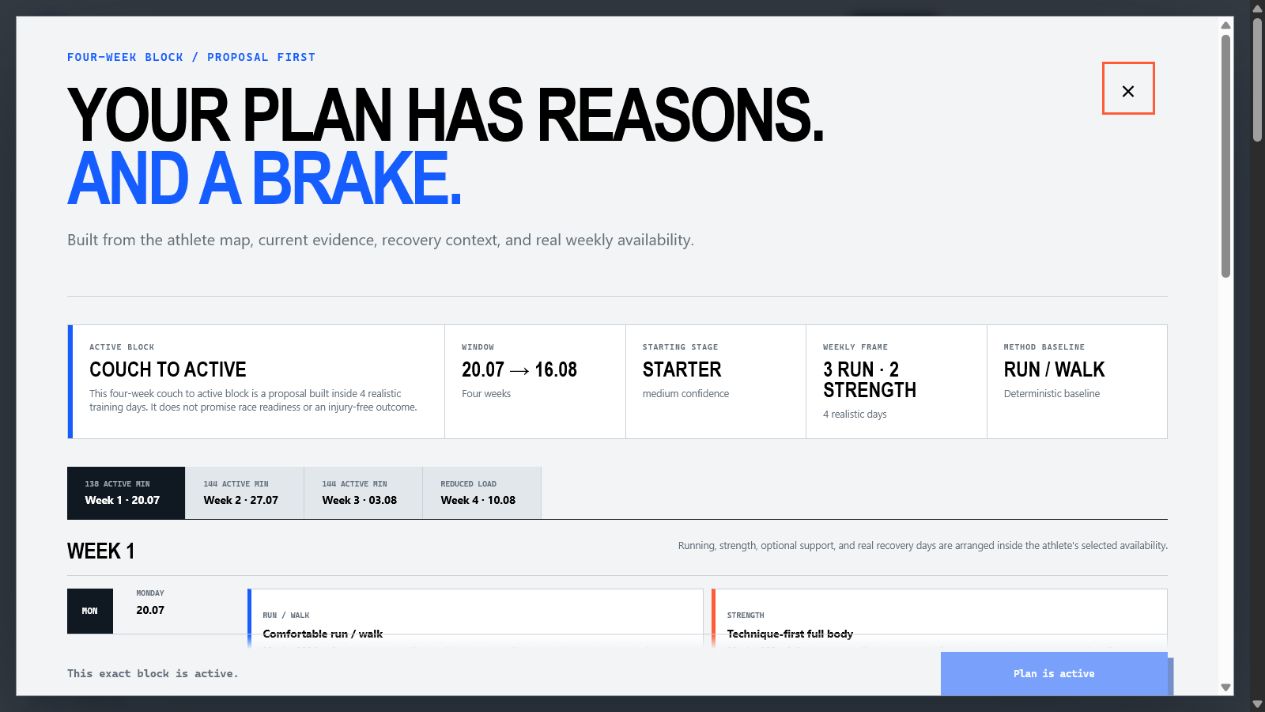
Detailed running and strength plan
-
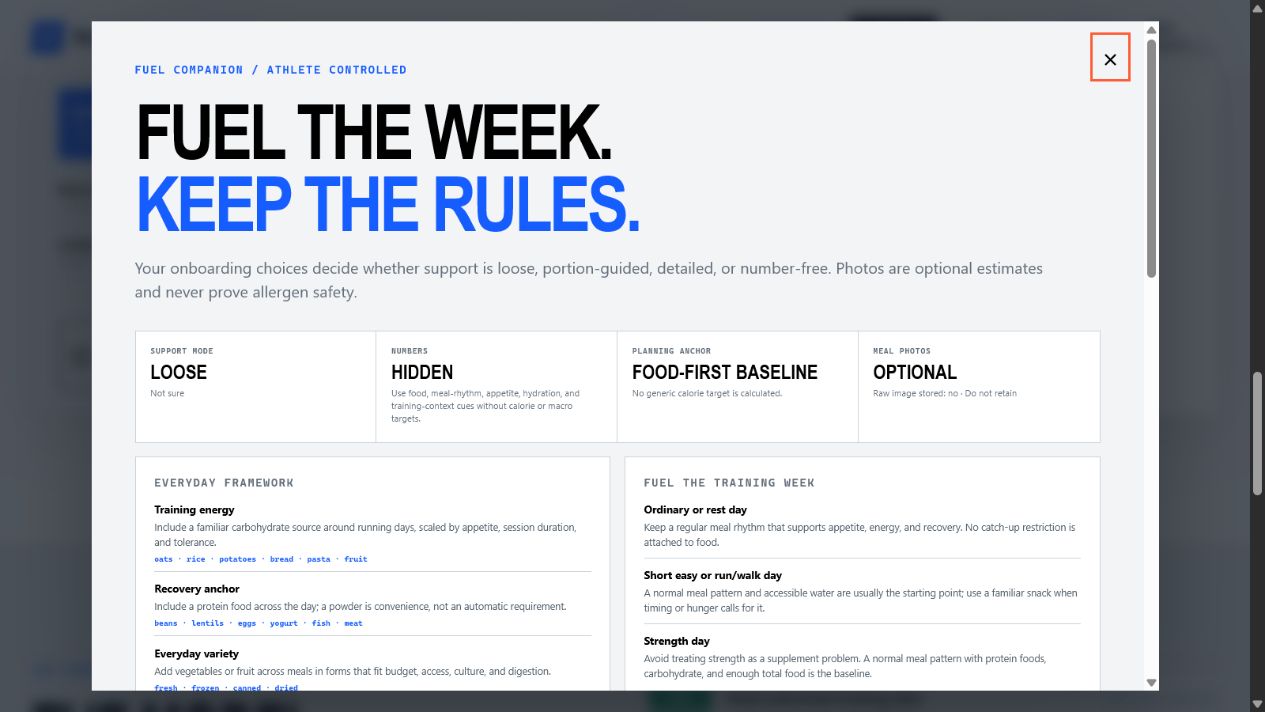
Optional athlete-controlled fueling companion
-
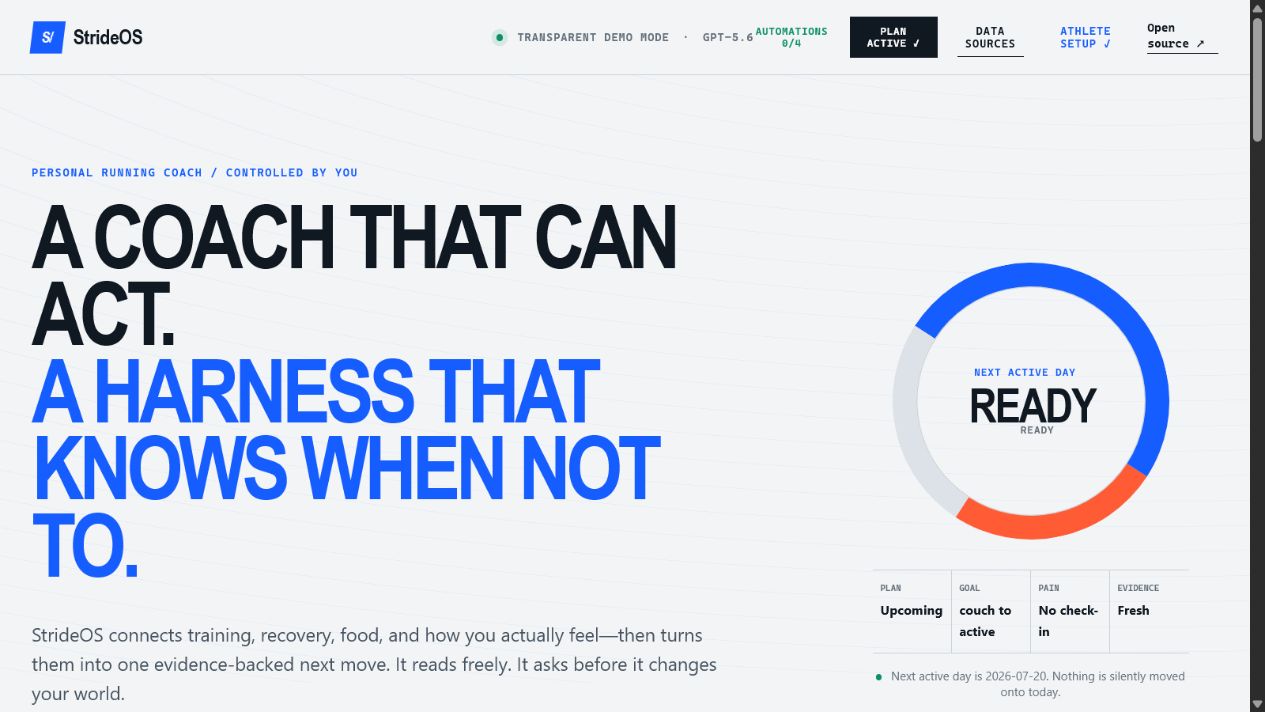
Local-first athlete dashboard
-
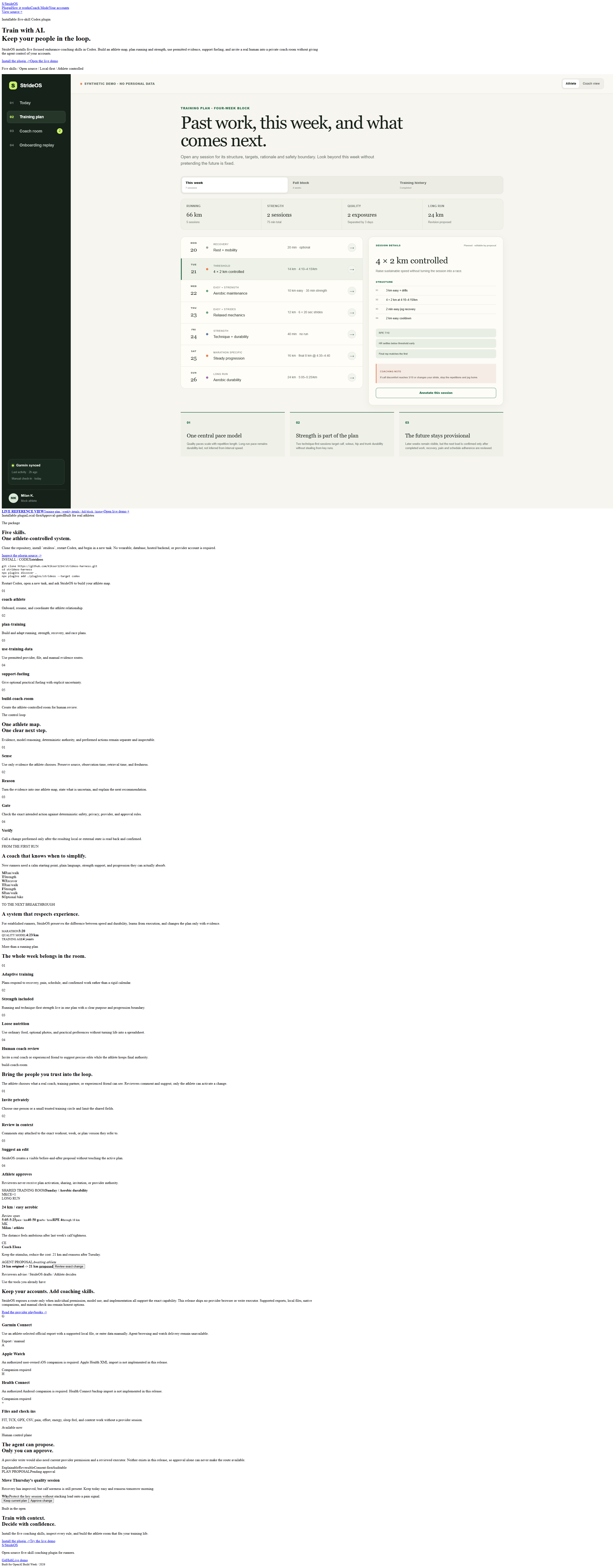
StrideOS public product experience
Inspiration
I, I wanted to make something that will help my running. That was completely customizable to my liking and my needs. I was experimenting with many things, I tried to build an AI application for me to use to get everything i need in one place but nothing was clicking. But then the Codex app started to evolve. I started talking, developing coaches, talking to, with my coach inside the app. I connected my Garmin. And when the, I saw the announcement of the build week couple of days ago, I decided to structure it better so other people can use it, open source it, and here we are.
What it does
StrideOS installs six focused endurance-coaching skills in ChatGPT Work mode and Codex. Together they:
- onboard the athlete conversationally and build a structured training profile;
- combine selected wearable or provider evidence with the athlete’s own check-ins;
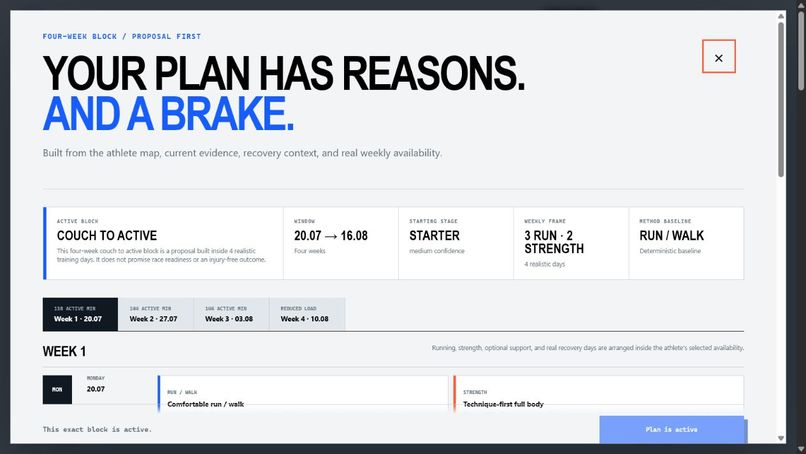
- propose running and strength plans that fit the athlete’s goals, experience, schedule, and recovery;
- explain uncertainty and ask before activating any change;
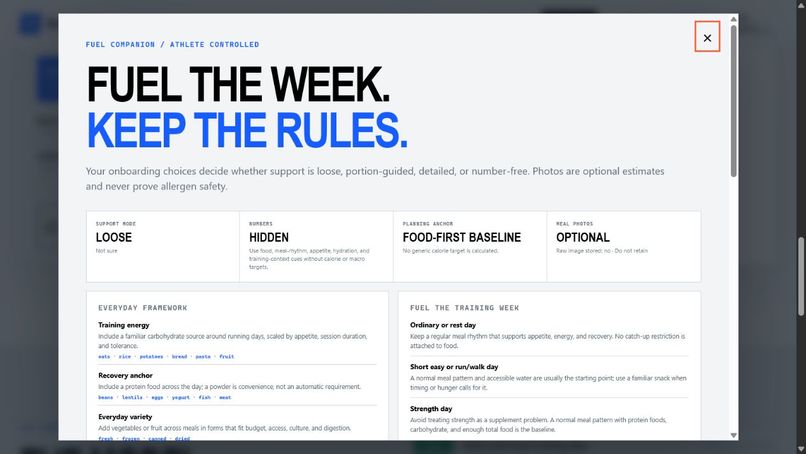
- support optional, athlete-controlled fueling guidance;
- prepare morning, pre-workout, post-workout, and weekly coaching rhythms; and
- build a Training Circle where a real coach, experienced runner, or trusted friend can review the plan and suggest precise edits.
The experience is deeply personal. No two runners need the same plan, dashboard, feedback loop, or evidence sources. StrideOS provides a strong starter experience, then lets the athlete and their agent shape it around real life.
StrideOS works alongside the accounts the athlete already has. It recommends documented provider routes, file imports, and manual input. When the host provides attended browser or computer use, the athlete can choose to work in their own signed-in provider session. The athlete performs login, credentials are never handled by StrideOS, and every state-changing action receives a dry-run preview and one-use approval before it happens.
The model is never the permission system.
How we built it
The project was built with Codex during OpenAI Build Week. Codex helped turn the original coaching workflow into a complete plugin package: skill architecture, onboarding rules, provider playbooks, training logic, UI, reference server, tests, documentation, security hardening, and browser verification.
GPT-5.6 provides reasoning and multimodal understanding for coaching context and optional meal-image support. Deterministic policy outside the model separates evidence, reasoning, permission, and execution. Proposed actions remain inactive until approval is recorded, and external writes are verified before success is reported.
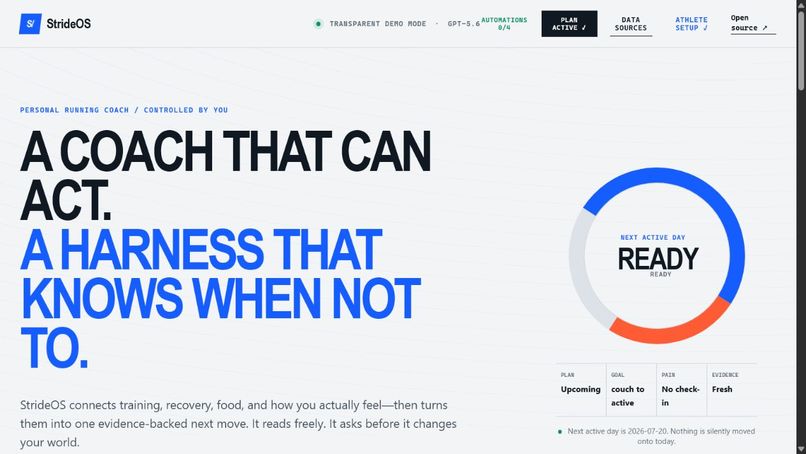
The shipped product is a validation-ready .codex-plugin package with six SKILL.md modules, scoped references, UI metadata, an icon, and an MIT license. The repository also includes an optional local-first Node.js reference runtime and responsive PWA for inspecting onboarding, state transitions, imports, approval gates, and Training Circle interactions. A zero-setup judge mode uses synthetic data and requires no wearable account or API key.
Challenges
The hardest problem was not generating another training answer. It was defining the boundary between reasoning and authority.
We had to make pending plans visibly different from active plans, preserve the source and freshness of every piece of evidence, prevent missing wearable data from becoming invented readiness, and ensure that a failed verification never becomes a false claim of success. We also kept the connector catalog advisory: it recommends routes but never becomes an allowlist that blocks a host capability selected by the athlete.
Accomplishments
- A discoverable, installable six-skill ChatGPT Work and Codex plugin.
- Beginner-first onboarding with safety, strength, schedule, evidence-source, and coaching-preference context.
- Deterministic four-week running and strength proposals with recovery and missed-session rules.
- A complete preview, approval, activation, verification, and decision-ledger lifecycle.
- Real FIT, GPX, TCX, and CSV imports with consent and freshness metadata.
- Optional fueling support that treats image estimates as uncertain and stores no raw meal photo.
- A Training Circle for scoped human review without giving reviewers control of the athlete’s plan or provider accounts.
- A tested local-first reference runtime and public synthetic demos.
- An open-source MIT-licensed repository with a full verification suite.
What we learned
Better coaching requires more context, but more context must not mean less control. Trust improves when the athlete can see what the system knows, what it thinks, what it is allowed to do, and what actually happened as separate things.
What's next
We want to deepen long-term athlete memory, recurring-issue analysis, shoe and gear tracking, running-form review, and flexible nutrition history; add production identity, invitations, expiry, and revocation to the Training Circle; and expand official provider integrations as documented individual access becomes available.
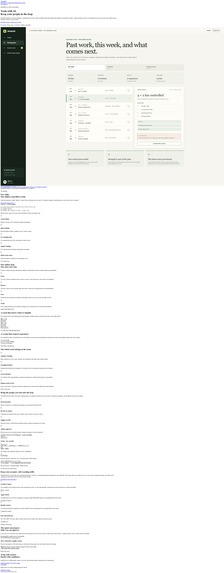
Try StrideOS on the live landing site, explore the Training Circle demo, or inspect the open-source repository.
Built With
- chatgpt
- codex
- gpt-5.6
- javascript
- node.js
- openai-api
- pwa


Log in or sign up for Devpost to join the conversation.