Inspiration :-
We’re college students. Our lecture slides, assignments, project ideas and AI conversations live in different places. Even after understanding a topic, it is hard to turn it into something useful—and pick it up again a week later.
We built Stride to connect those steps: learn from your course, try something yourself, build a project you care about, and keep moving forward.
What it does :-
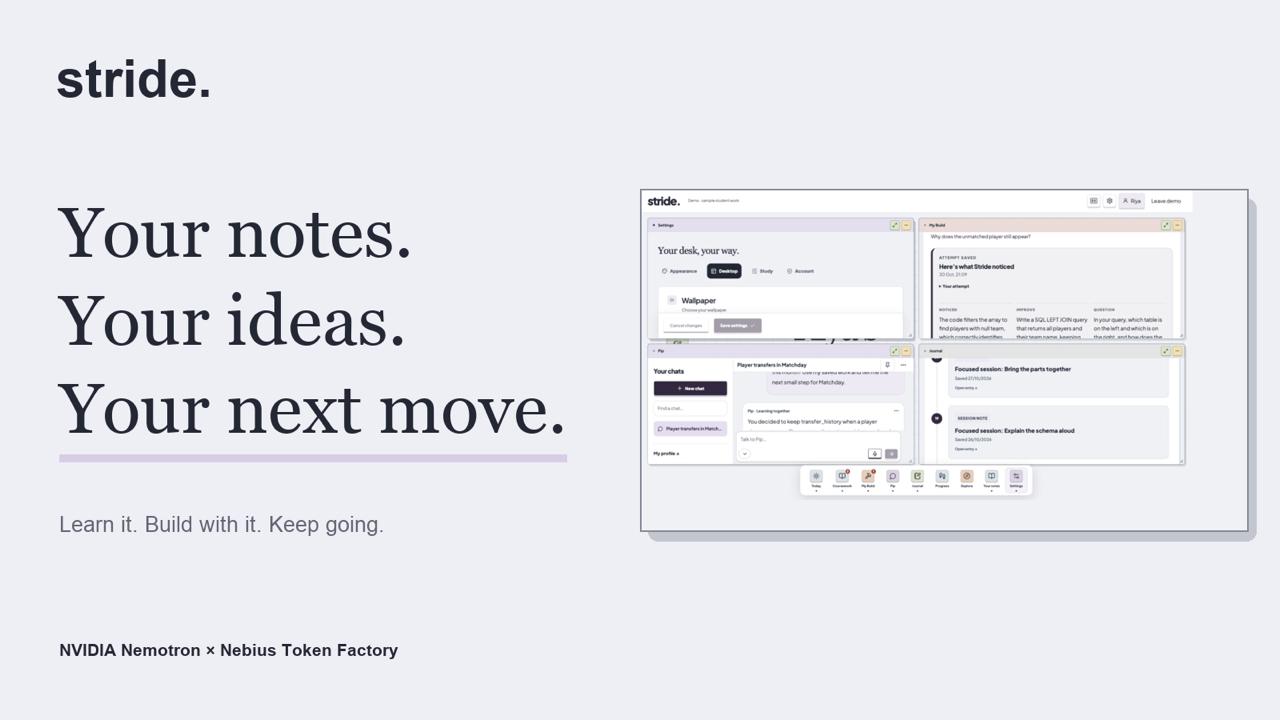
Stride is a personal AI desktop for engineering students.
Bring your college PDFs, slides, syllabus or past questions. Study selected pages through explanations, worked examples and questions. For PDFs, the study tool can use page images alongside extracted text.
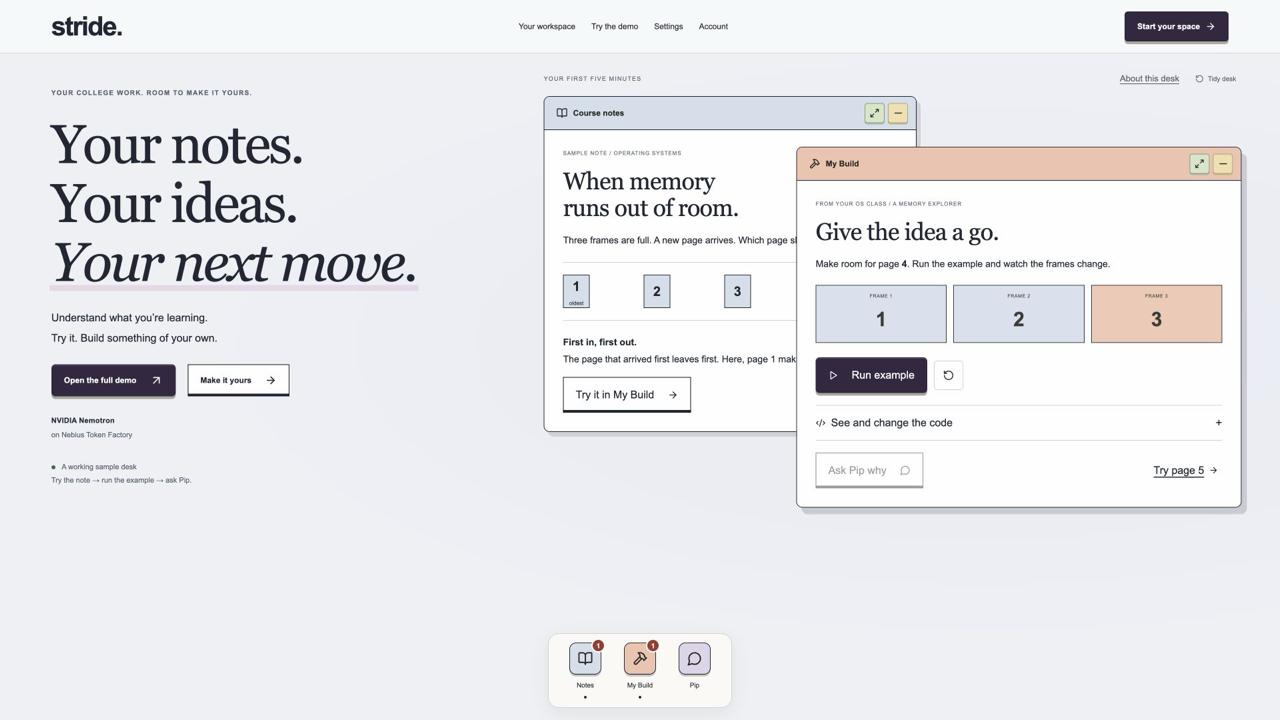
My Build connects that learning to a project you choose. Write notes or code, run JavaScript in an isolated browser worker, save attempts and receive formative feedback.
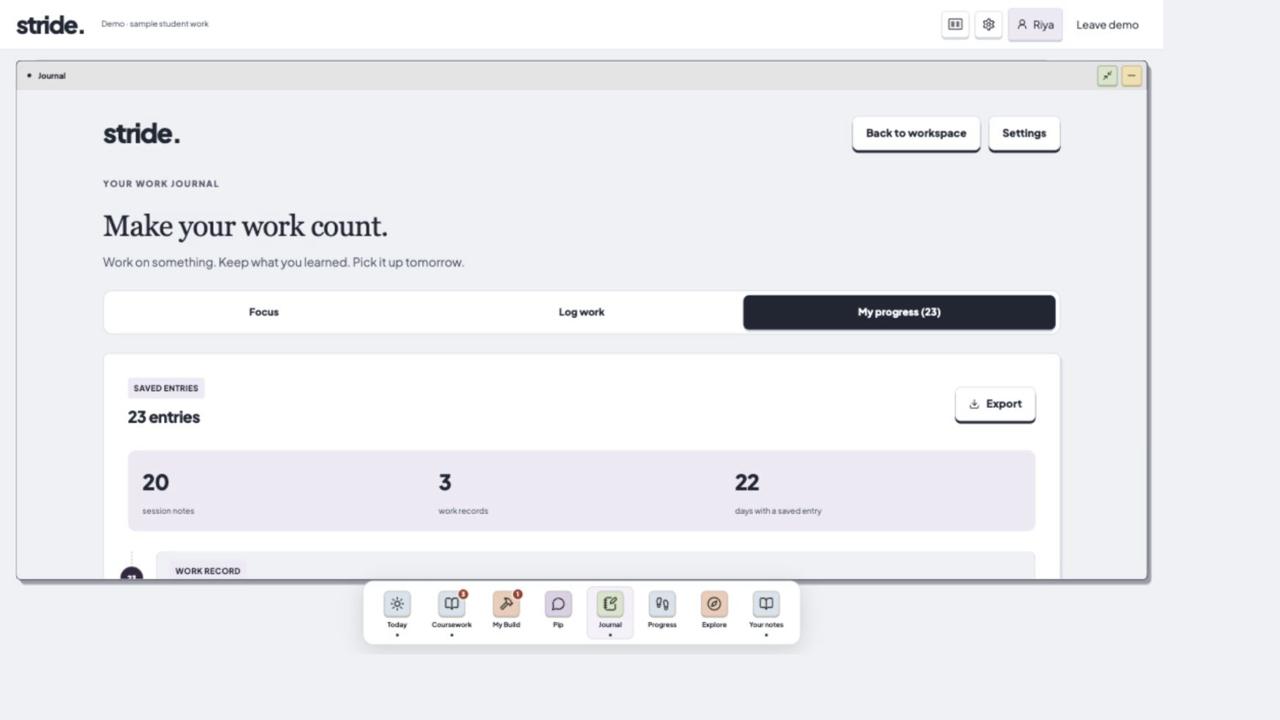
Pip helps with questions, finds public resources and retrieves relevant dated records from earlier work and conversations. The Journal keeps session notes, artifacts and next steps.
These tools open in independent desktop windows. Notes, code and Pip can sit together while you move, resize or minimise windows without losing drafts.
How we built it :-
We used Next.js, React and TypeScript, with SQLite for persistent, owner-scoped workspaces and Supabase for optional accounts.
NVIDIA Nemotron Lightning, served through Nebius Token Factory, powers conversations, task intake, planning and structured feedback. NVIDIA Nemotron Super VL handles selected PDF-page images alongside text.
Tavily retrieves public sources. The application runs on a Nebius CPU Devlab; model inference runs through Token Factory.
We validate model responses, check source references and keep saving separate from AI suggestions so users can review changes.
Challenges we faced :-
Reliable AI required more than a prompt. Relative deadlines needed explicit dates and timezone handling. Uploaded documents needed extraction, page rendering and source references. Memory needed selective retrieval rather than sending every previous conversation.
We also had to preserve drafts across desktop windows, handle stale updates and failed requests, and prevent one workspace from accessing another workspace’s files.
What we’re proud of :-
The product connects coursework to work of your own. A student can learn a concept, try it in a project, save the attempt and return with useful context.
We tested actual college PDF and slide imports, live AI lessons, browser JavaScript execution and retrieval of a month-old project thought. The deployed release passes 247 automated tests and production build checks.
The judge demo includes 20 clearly labelled sample study sessions across a month, project artifacts and saved conversations. This is illustrative history, not invented real-user traction.
What we learned :-
A convincing AI product needs clear boundaries. A question is not a decision. An uploaded file is not proof of mastery. A search result is not automatically a useful next step.
The value comes from connecting reliable tools, relevant context and actions the student understands.
What’s next :-
We want to test Stride with classmates, improve retrieval and teaching quality, and make longer projects easier to continue. Models can still misinterpret material, and memory retrieval is bounded. We would rather show those limits honestly than claim perfect understanding.
Built With
- css
- nebius-ai-cloud
- nebius-token-factory
- next.js
- node.js
- nvidia-nemotron
- react
- sqlite
- supabase
- tavily
- typescript


Log in or sign up for Devpost to join the conversation.