-
-
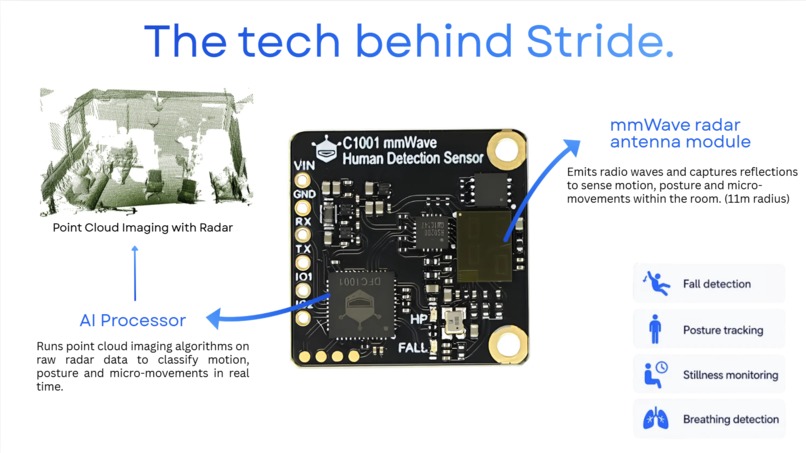
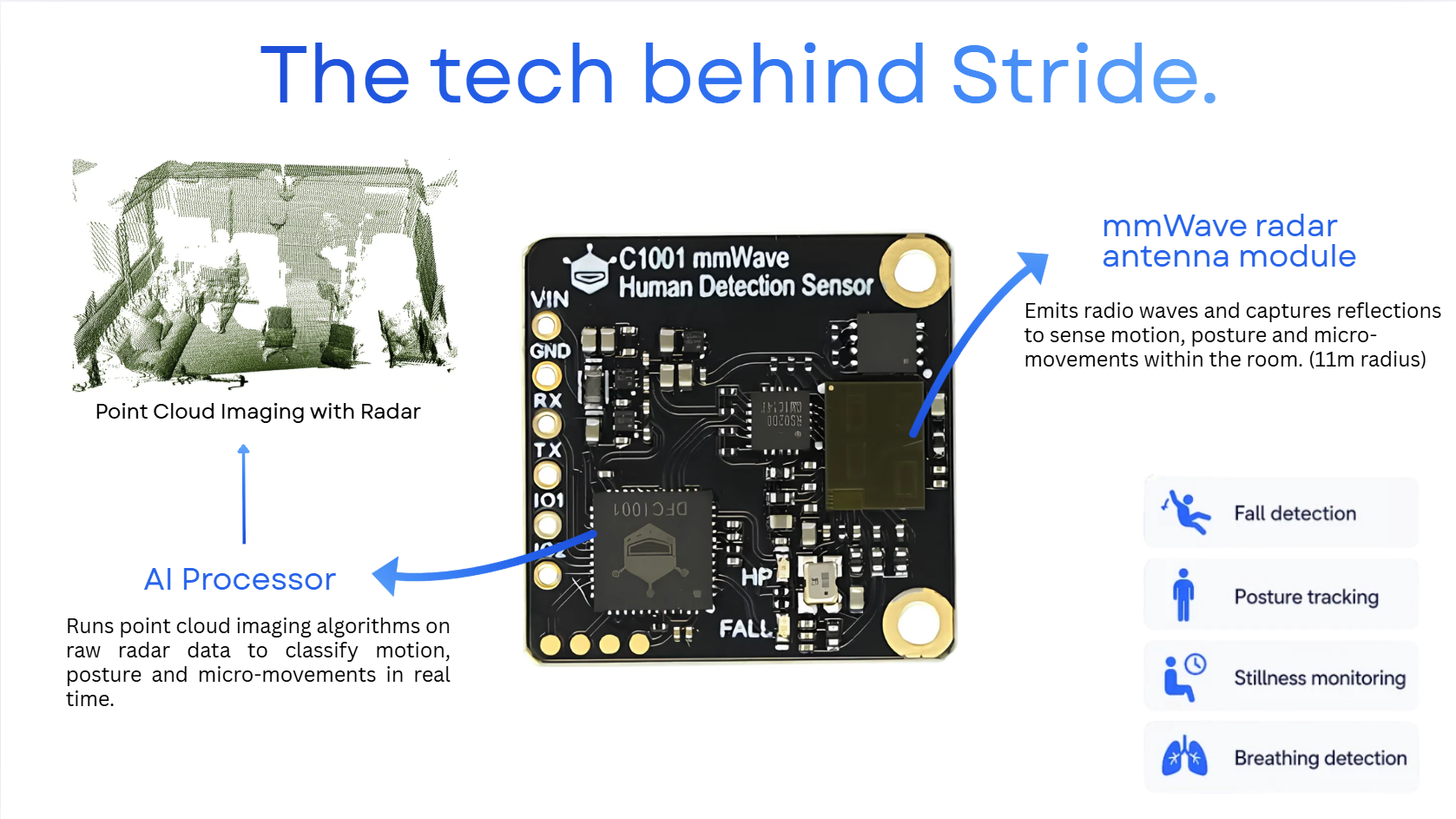
Radar-based Fall Detection
-
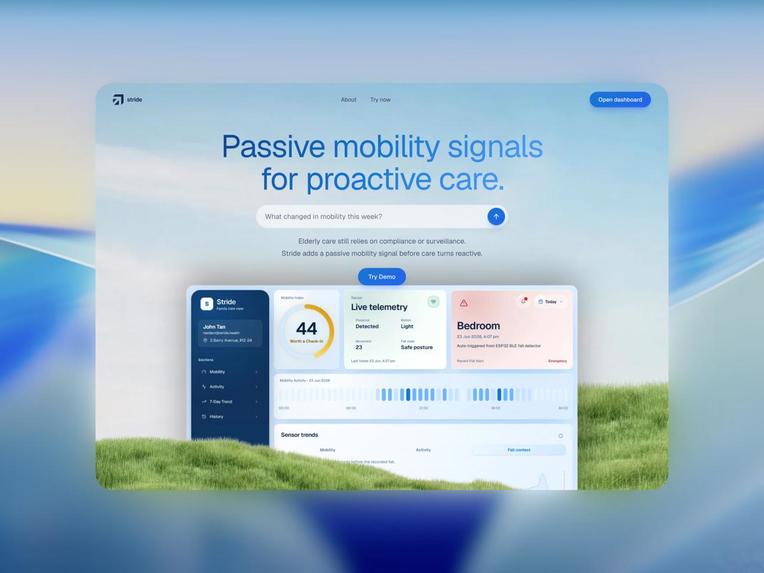
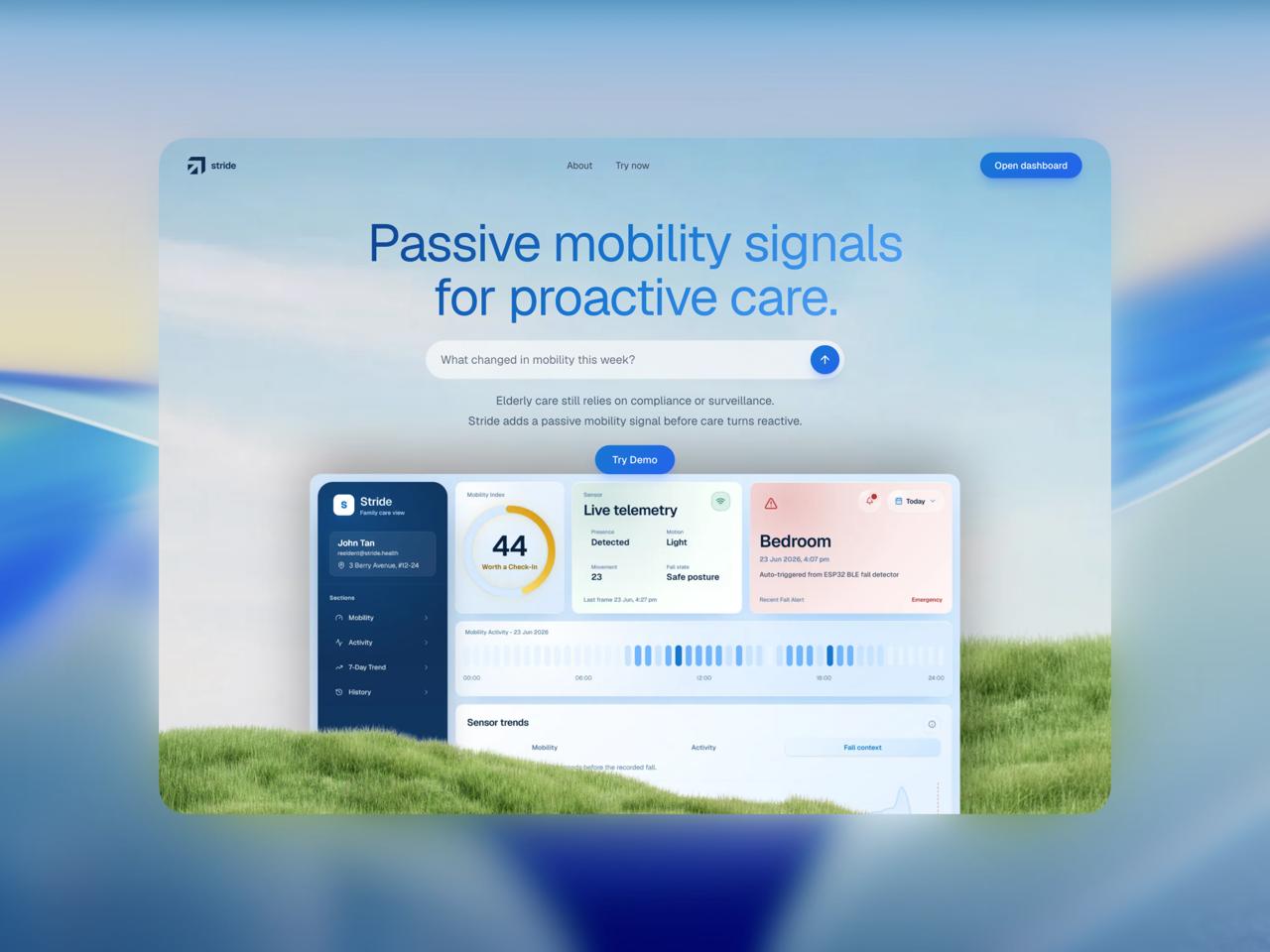
Hero Page
-
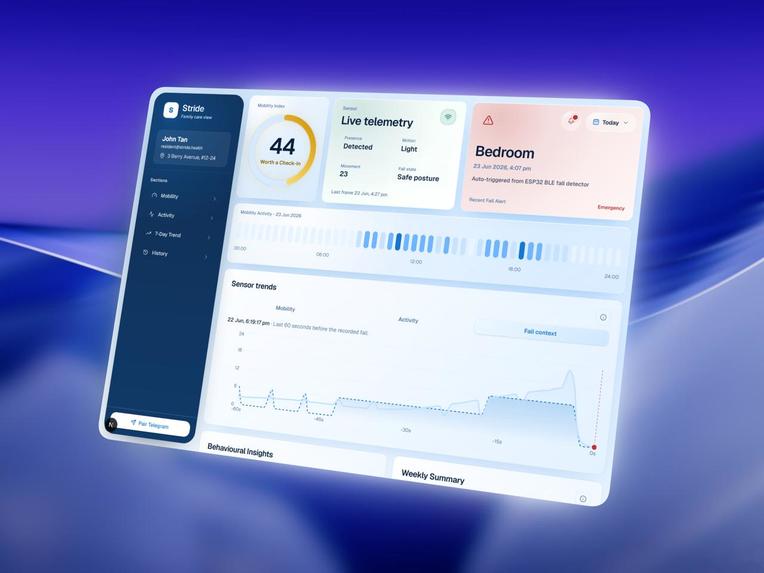
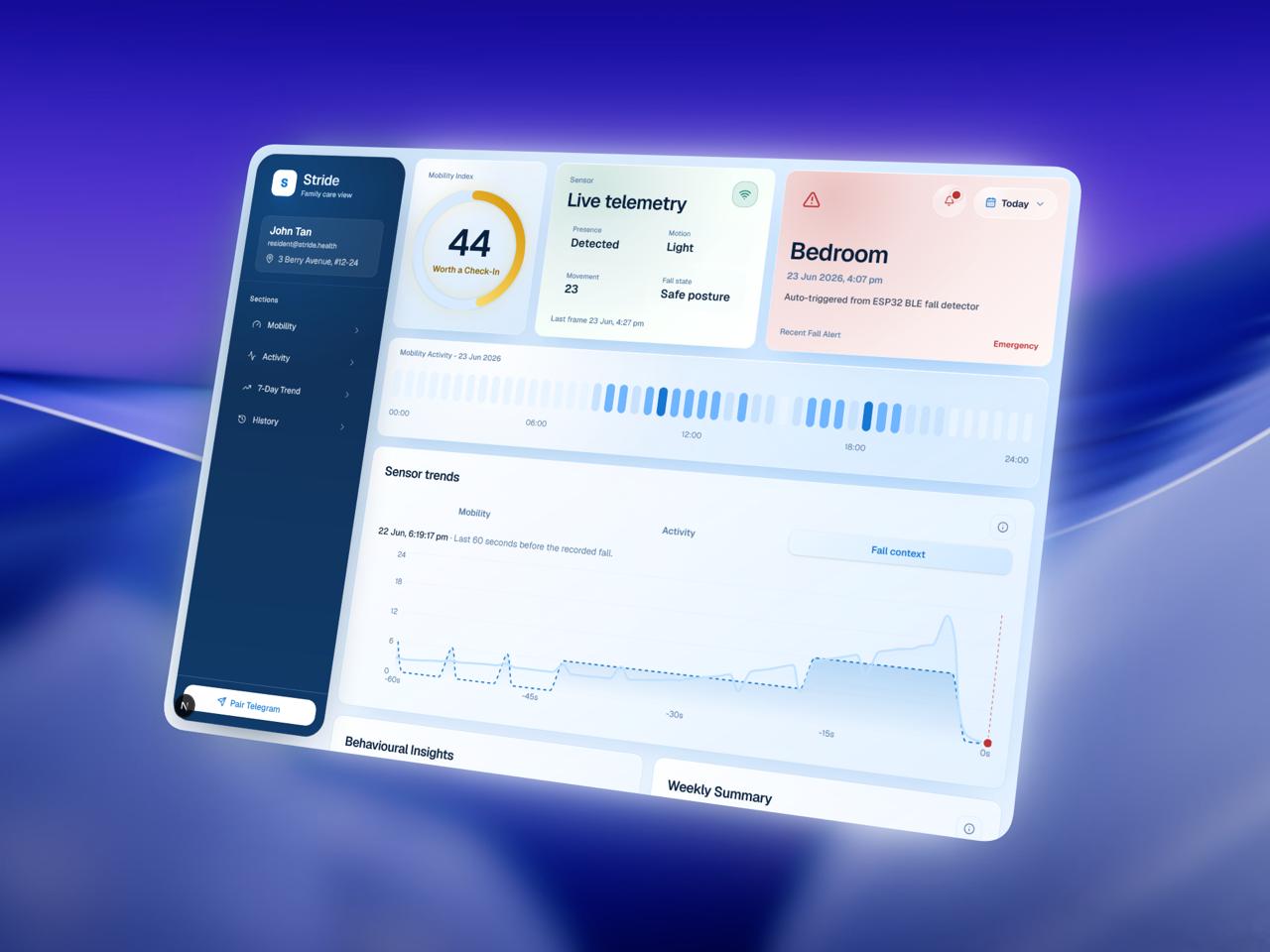
Stride's Dashboard
-
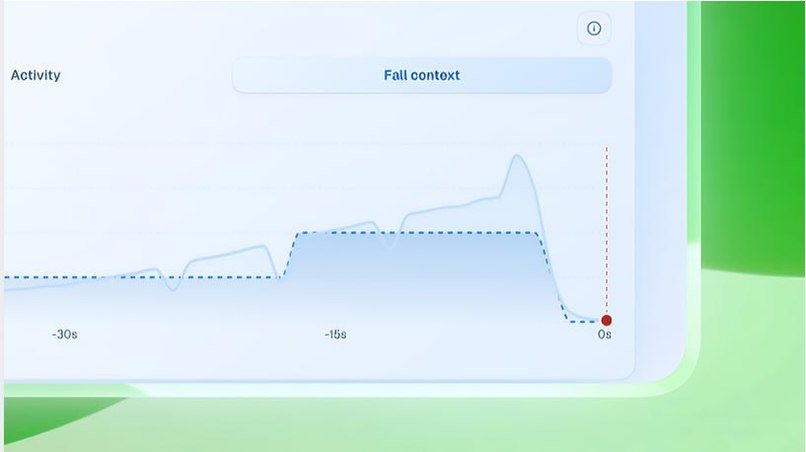
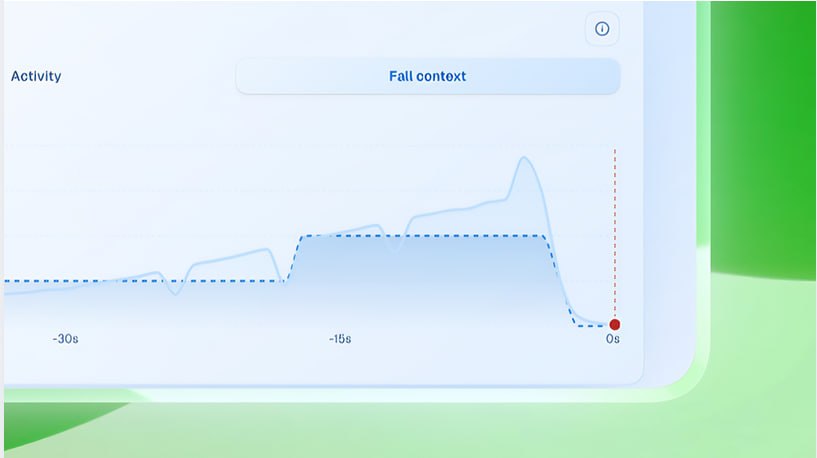
Mobility Prior a Fall Event
-
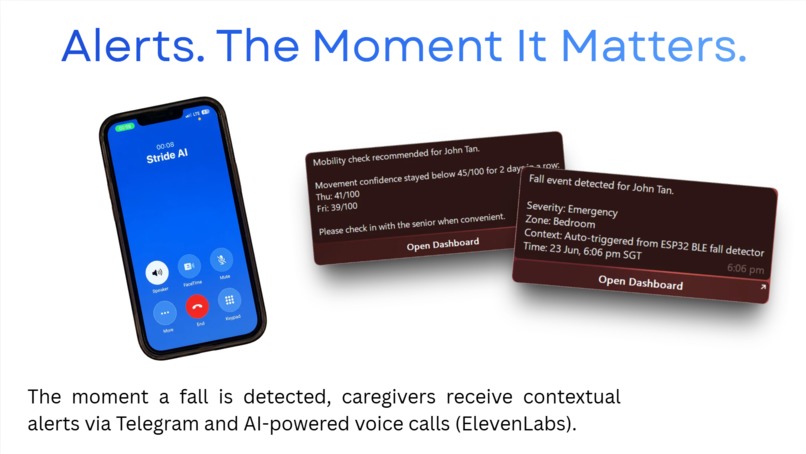
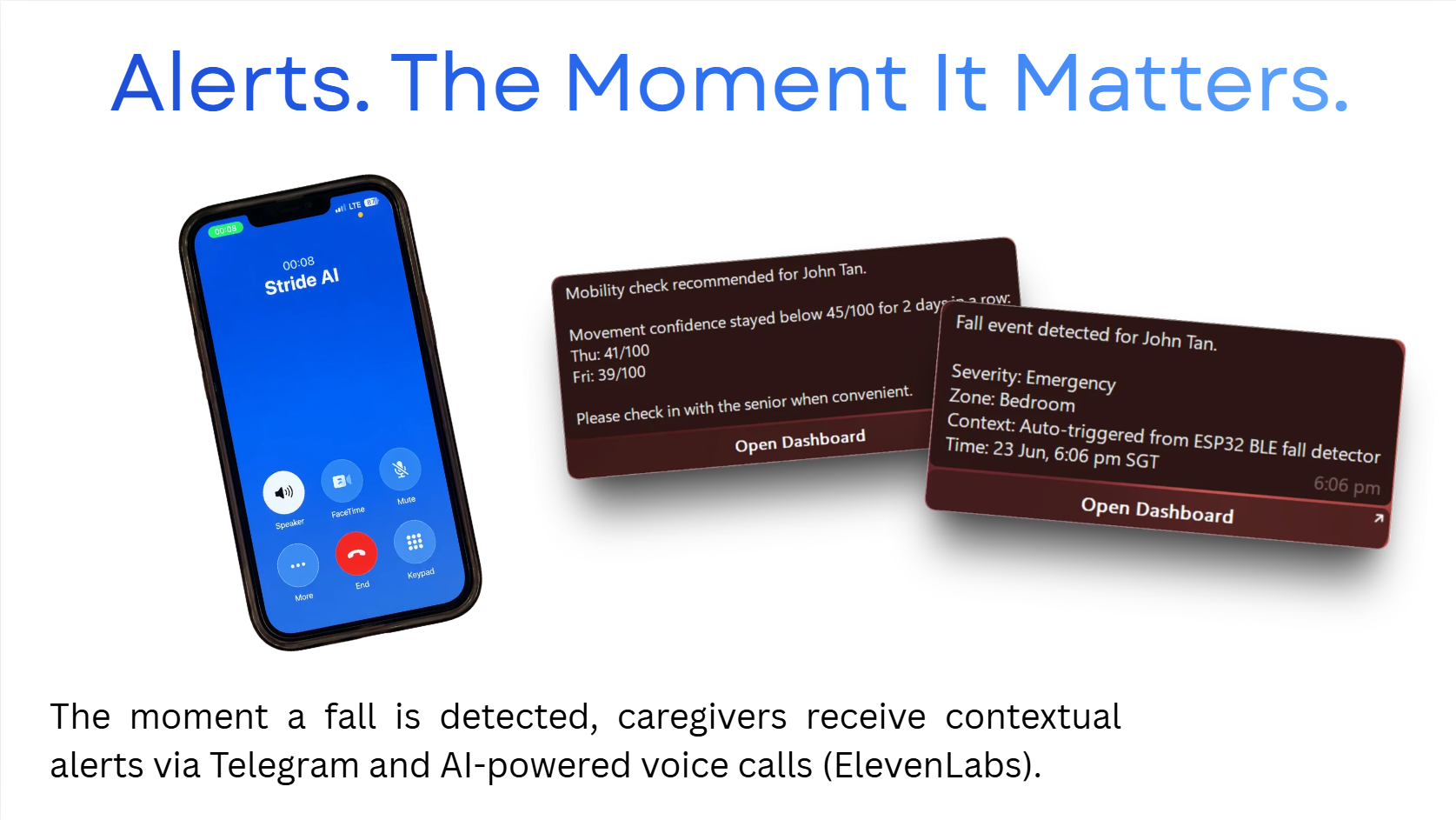
Contextual Alerts: Telegram and AI Voice Call
-
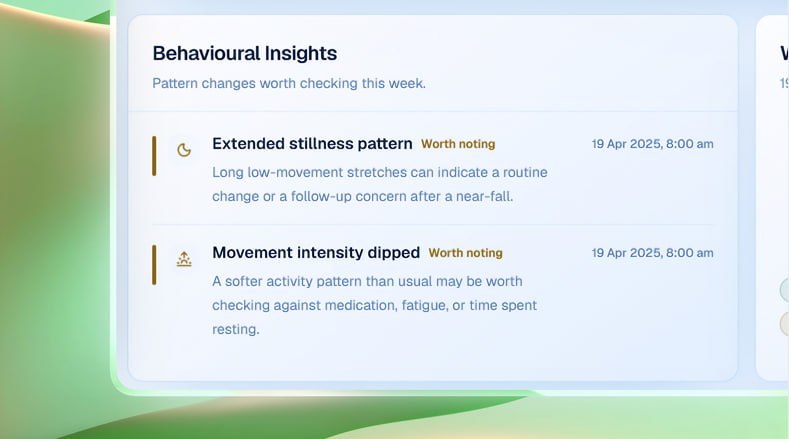
Behavioural Insights
-
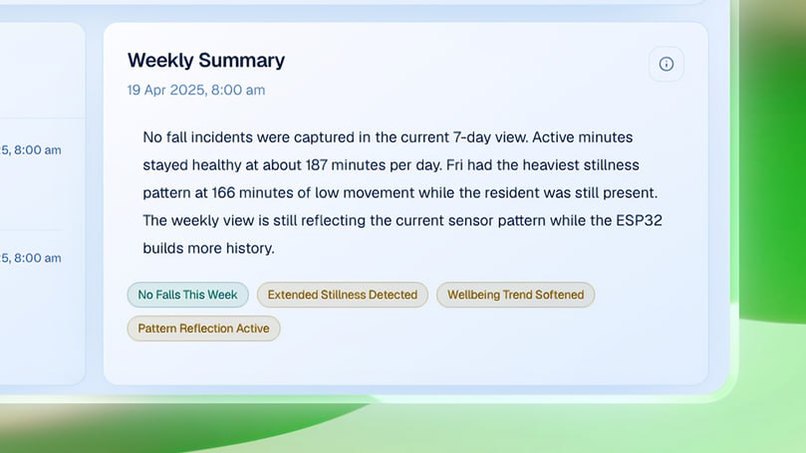
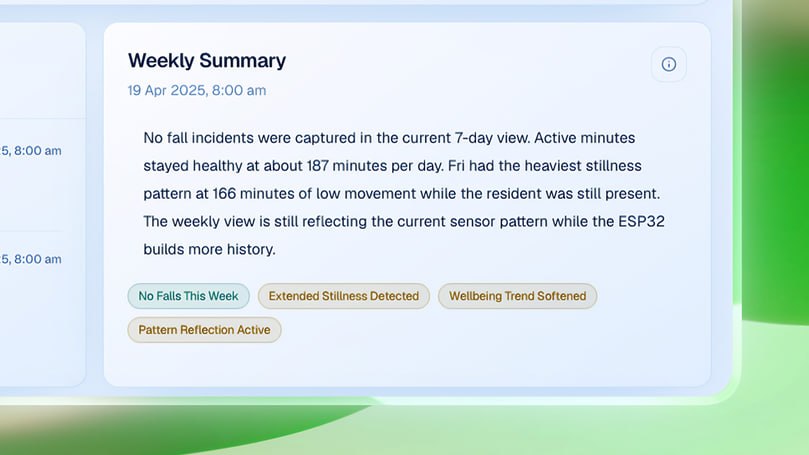
Weekly Summary
-
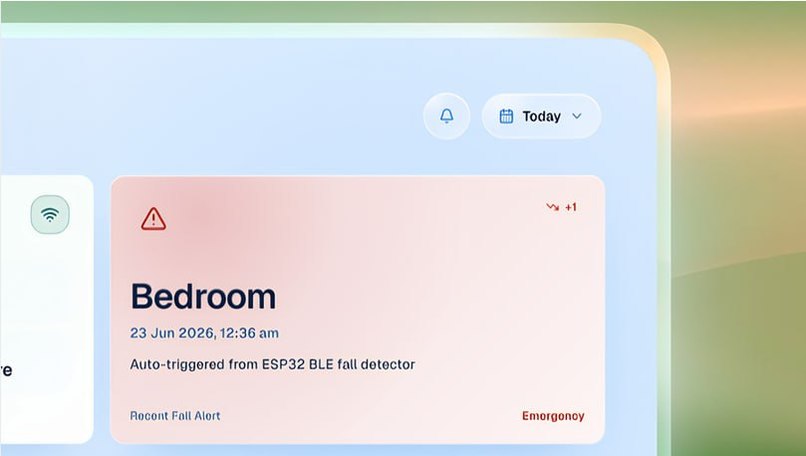
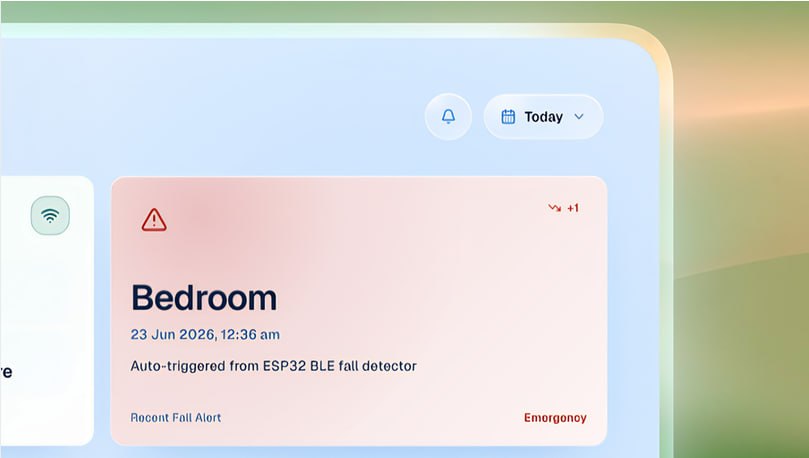
Details of Latest Fall Event

Project Name & Team Members
Name: Stride, Transforming Care from Reactive to Proactive.
Team Members: Moiz Khambhati, Kendrick Slamat and Jerome Loke
Problem Statement and Target User
Challenge Statement: How might AI support communication, mobility, memory, safety, or care coordination without being invasive? (C4)
Stride gives older adults the freedom to live independently while giving caregivers peace of mind. Existing solutions often rely on cameras, wearables, or constant check-ins, forcing uncomfortable trade-offs between privacy, convenience, and continuous monitoring.
We wanted to explore whether AI and radar sensing could offer a passive alternative that keeps seniors safe while providing caregivers with timely, actionable insights.
Solution Summary
Stride is a privacy-preserving elderly mobility and fall monitoring system powered by mmWave radar and AI.
It continuously tracks mobility patterns, detects falls in real time, and alerts caregivers through Telegram and AI voice calls without requiring cameras, wearables, or user intervention.
Beyond emergency detection, Stride identifies changes in mobility over time and provides behavioural insights that help caregivers intervene earlier.
Inspiration
We were inspired by a simple question: why must there be a trade-off between privacy and reliability for seniors to age independently at home?
Many existing solutions rely on cameras, wearable devices, manual check-ins, or emergency buttons. While these approaches can be effective, they often face challenges with privacy, adoption, compliance, and user acceptance.
We experimented with AI and radar sensing to see whether it could offer a passive, non-invasive alternative that keeps older adults safe, provides caregivers with meaningful insights and timely alerts, and remains simple enough for anyone to use regardless of their comfort with technology.
What it does
Stride continuously monitors mobility and posture using a mmWave radar sensor.
The system:
- Tracks movement intensity and mobility trends
- Learns a personal mobility baseline
- Detects significant deviations in mobility
- Detects falls in real time
- Sends emergency alerts through Telegram
- Escalates alerts through ElevenLabs AI-powered voice calls
- Generates behavioural insights and weekly summaries for caregivers
All of this is achieved without capturing images, audio, or requiring users to wear any device.
How we built it
Stride uses a C1001 mmWave radar sensor connected to an ESP32 to collect movement data.
The data is processed and transmitted to our platform, where AI models analyse mobility patterns, identify anomalies, and detect fall events. We built a caregiver dashboard to visualise mobility trends, fall history, behavioural insights, and summaries.
For notifications, we integrated Telegram for instant alerts and ElevenLabs to deliver automated voice calls during emergencies.
Challenges we ran into
Setting up reliable AI-powered voice call escalation was one of our biggest challenges. We needed to ensure alerts were delivered quickly and consistently while integrating multiple services for real-time notifications and voice communication.
Another challenge was transforming raw radar data into meaningful mobility insights. Beyond detecting falls, we wanted Stride to identify mobility trends and deviations from an individual's baseline, which required careful tuning to balance sensitivity and false alarms.
Accomplishments that we're proud of
- Built a working end-to-end prototype using mmWave radar
- Developed mobility monitoring based on personal baselines
- Implemented mobility deviation alerts based on personal baselines
- Implemented Telegram emergency alerts
- Integrated AI-powered voice call escalation using ElevenLabs
- Delivered a privacy-preserving approach to elderly mobility and fall monitoring
What we learned
Building Stride taught us that accuracy alone is not enough for healthcare technology. A solution must also be privacy-preserving, easy to adopt, and require minimal user effort to be effective in the real world.
We also gained hands-on experience working with mmWave radar sensing, real-time event processing, AI-powered insights, and automated alert systems. Most importantly, we learned how small changes in mobility can be just as valuable as fall detection when supporting independent ageing.
What's next for Stride
- Expand to multiple radar sensors for wider coverage and more precise fall localisation.
- Pilot Stride in elderly homes, hospital wards, and ageing-in-place communities.
- Improve mobility analysis and fall detection accuracy through larger-scale real-world testing.
Other attachments
Pitch Deck: https://canva.link/stride
3 min Demo: https://youtu.be/jNxo9icqNqI
30s Pitch Demo: https://www.youtube.com/watch?v=0zeNTM4pDro
Stride’s Hero Page: https://strideai.vercel.app/
Stride’s Dashboard: https://strideai.vercel.app/dashboard
Built With
- bluetooth
- elevenlabs
- esp32
- nextjs
- openai
- radar
- supabase
- tailwind
- telegram
- twilio
- typescript
- vercel


Log in or sign up for Devpost to join the conversation.