-
-
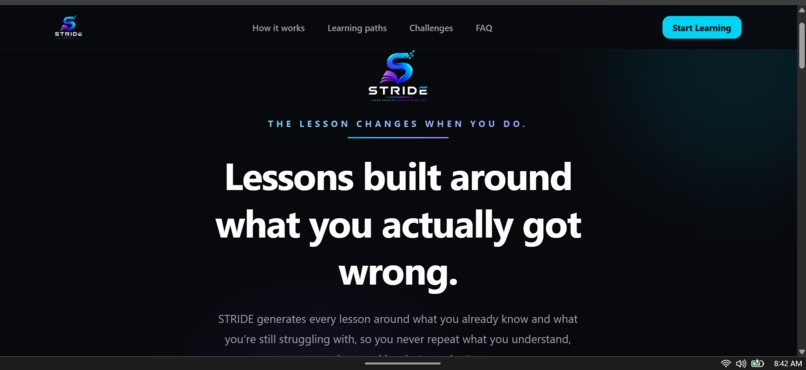
Stride Landing page
-
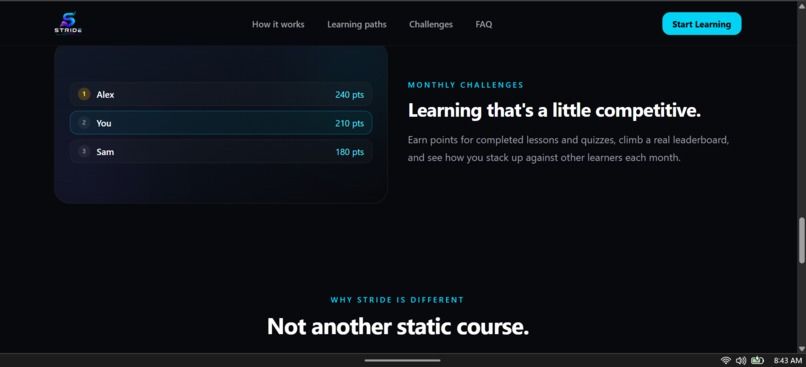
Targeted practices and learning path
-
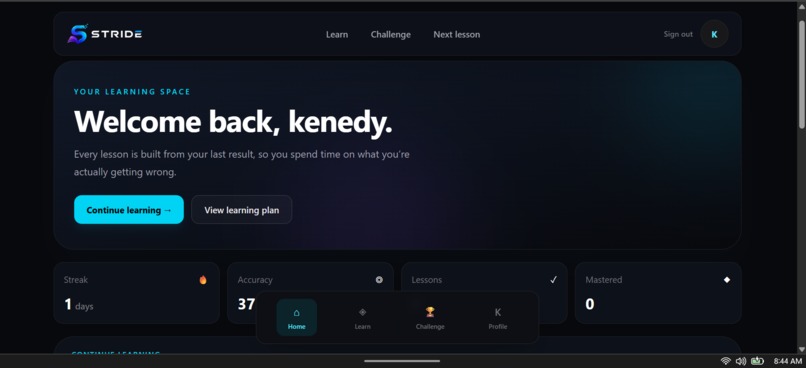
User profile
-
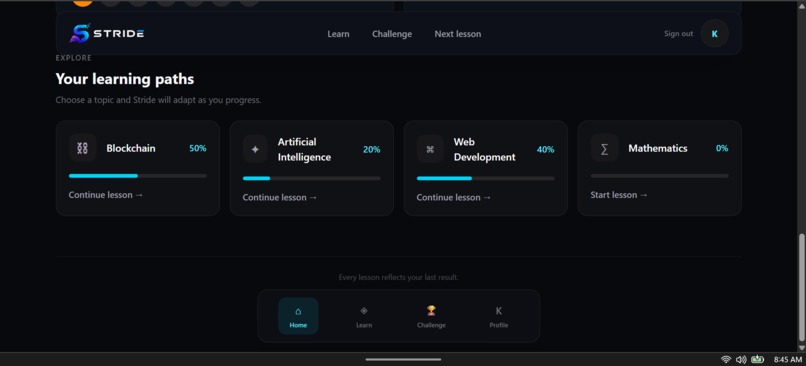
User metrics and learning progress
-
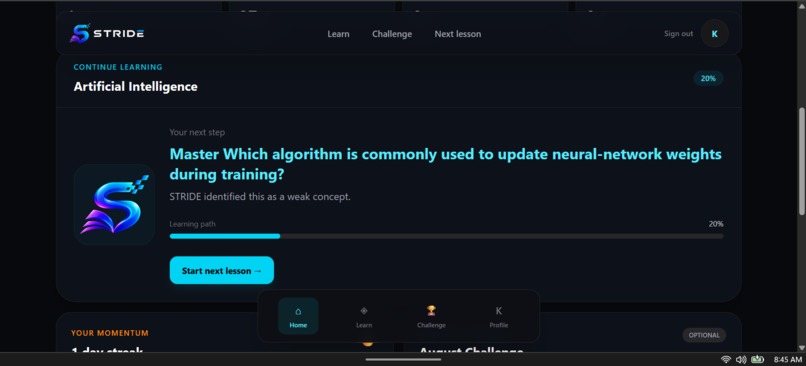
personalized learning experience
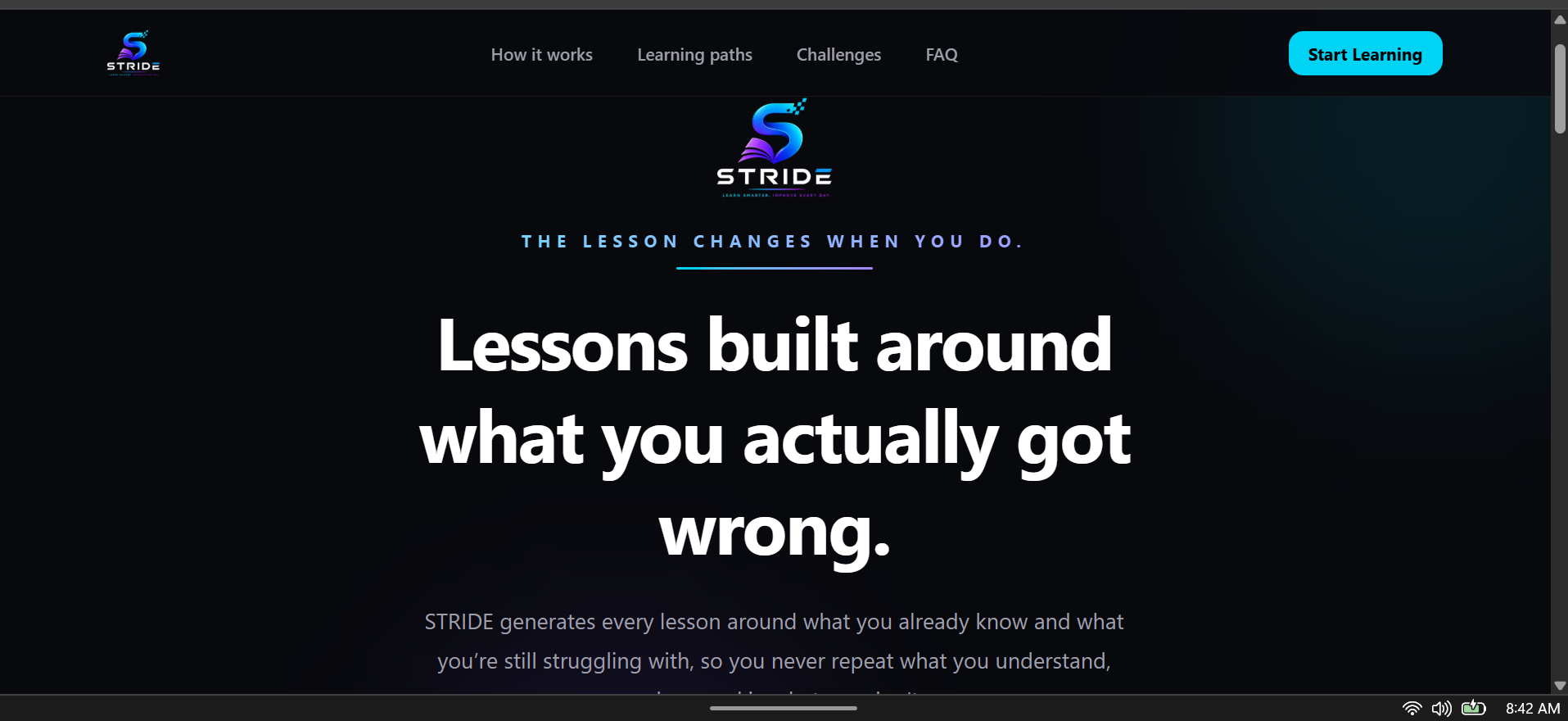
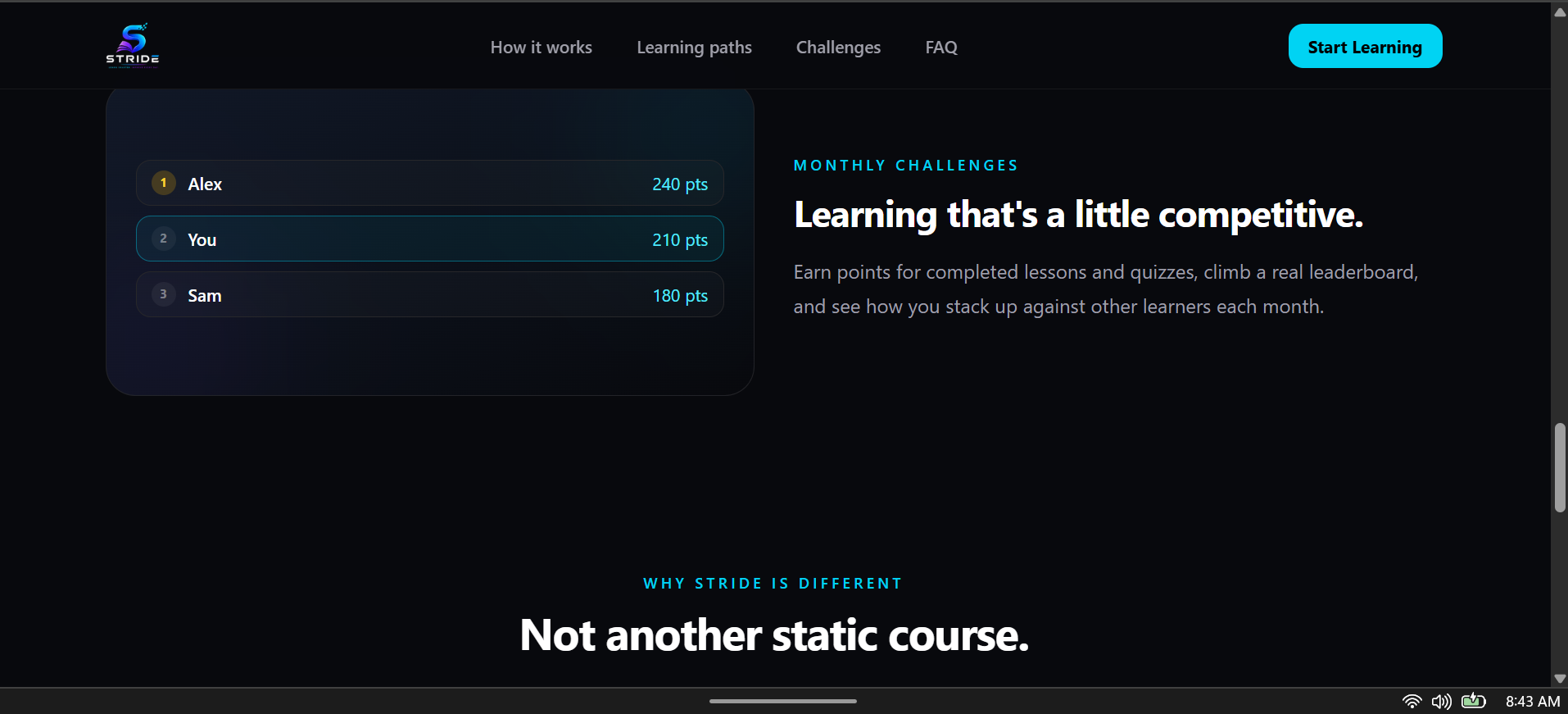
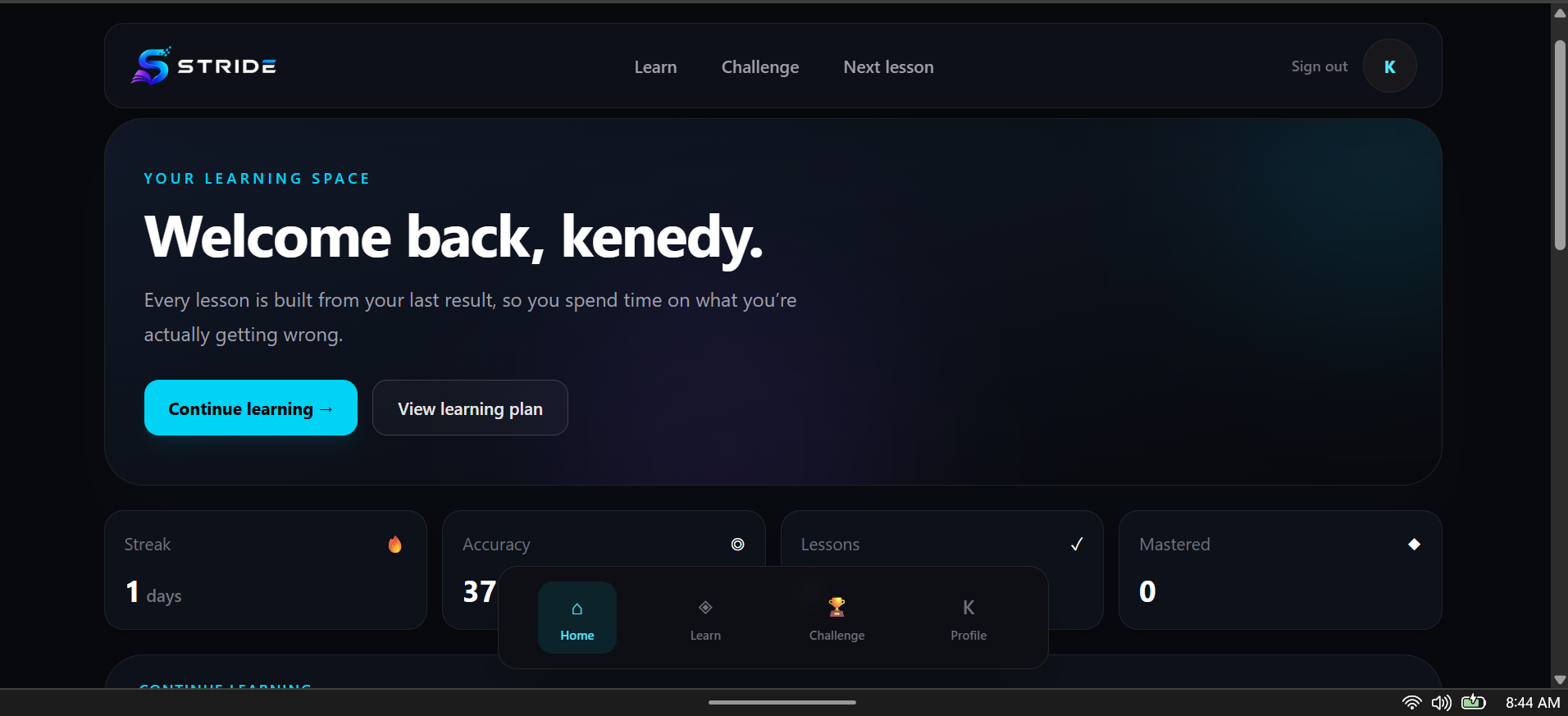
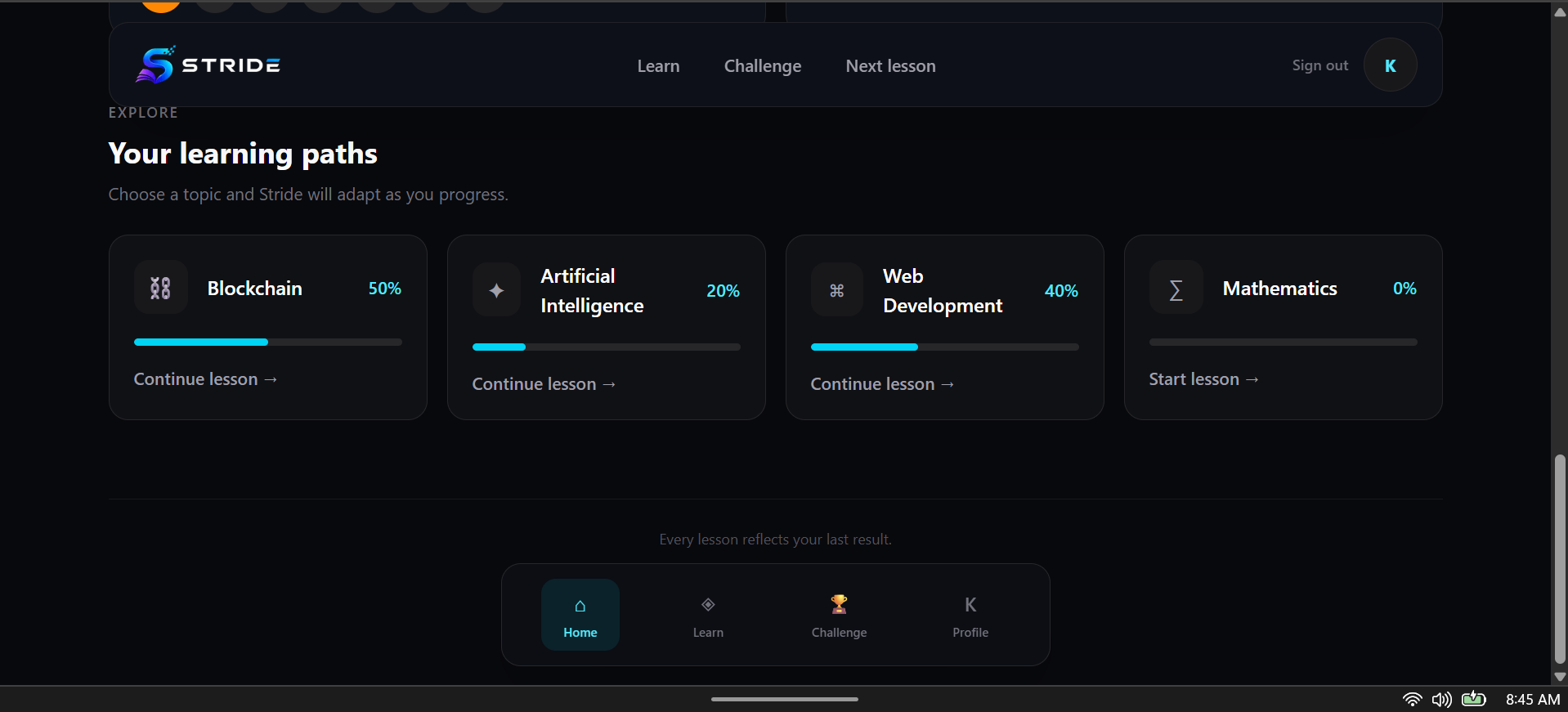
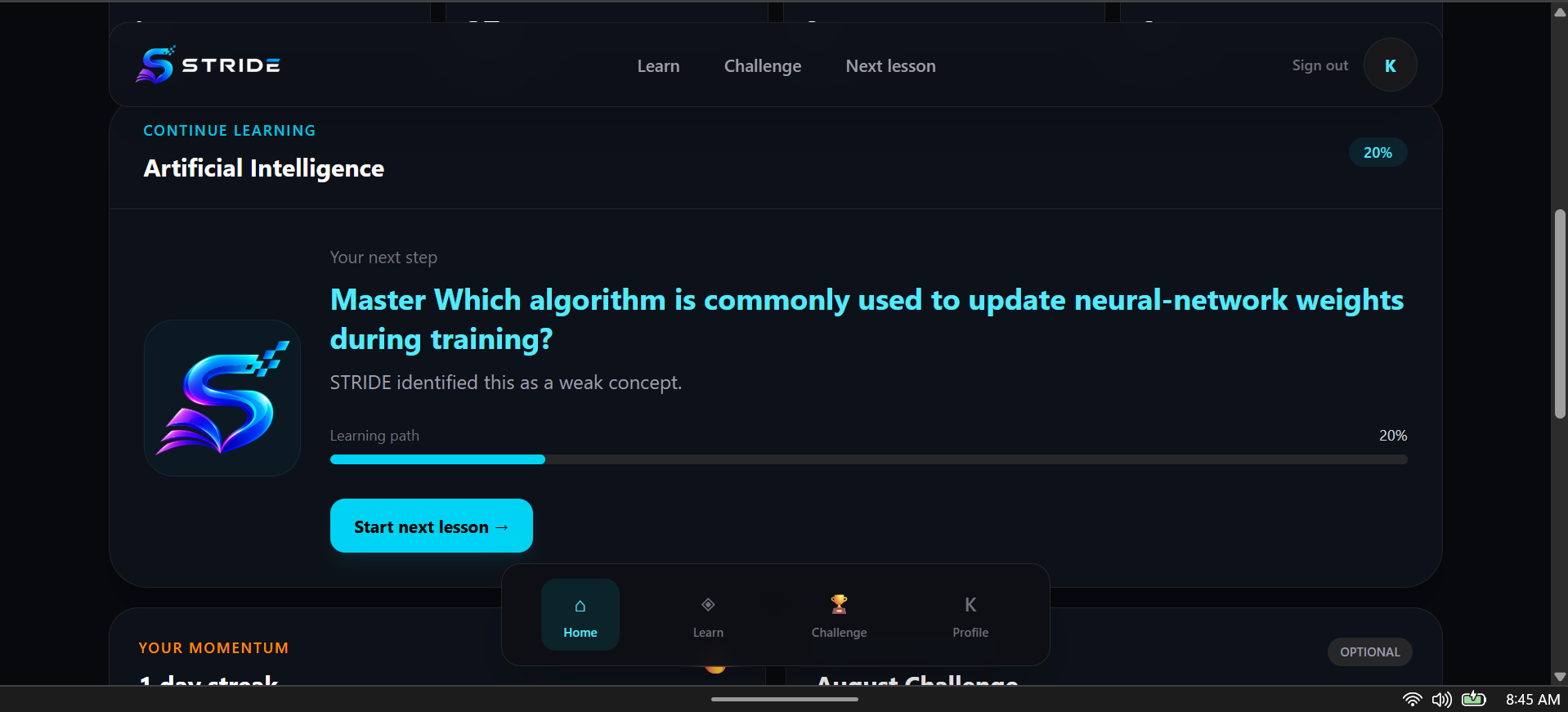
Inspiration
Most learning platforms give everyone the same material and expect them to move at the same pace. The problem is that people do not learn that way. One person may understand a topic immediately while another may need more explanation and practice.
I wanted to build something that responds to the learner instead of simply giving them more material. That idea became STRIDE, a learning platform that uses a learner's performance to help determine what they should focus on next.
What it does
STRIDE creates a learning process that changes based on how the learner performs.
A learner chooses a topic and works through a lesson generated for that topic. They then answer questions to test their understanding. STRIDE reviews their answers, identifies areas where they need more work, and records that information for future learning.
The goal is simple: instead of giving everyone the same experience, STRIDE helps learners spend more time on the things they actually need to understand.
How we built it
I built STRIDE as a full-stack web application using Next.js, React, TypeScript, Tailwind CSS, and PostgreSQL.
I use OpenRouter to generate lessons and evaluate quiz responses. The application has server-side API routes that connect the learning experience to the database and AI services.
The system keeps track of learner profiles, progress, learning history, lessons, quizzes, evaluations, and challenges so that previous performance can be used in later parts of the learning process.
Challenges we ran into
One of the main challenges was making the AI useful to the learning process rather than adding it just because it was available.
The system needs to generate useful lessons, evaluate answers properly, recognize where a learner is having difficulty, and use that information when they continue learning.
I also wanted the interface to stay simple. The learner should be able to focus on the subject instead of having to understand everything happening behind the application.
Accomplishments that we're proud of
Building STRIDE from an idea into a working application is what I'm most proud of.
I built the application as a solo project, including the interface, backend, database integration, AI integration, lessons, quizzes, evaluation, learner profiles, progress tracking, and personalized learning features.
I'm especially proud of connecting these pieces into one learning experience rather than building AI features that exist separately from the product.
I also spent time making the application simple to use. A learner can choose a topic, learn, test their understanding, and see their progress without needing to understand what is happening behind the scenes.
Most importantly, STRIDE gave me the opportunity to work through the difficult parts of building a real full-stack application, from handling data and API requests to dealing with AI responses and making the different parts work together.
What we learned
Building STRIDE showed me that useful personalization comes from paying attention to how someone actually learns.
A wrong answer is not just a result. It can show what a learner has not understood yet. Using that information can make the next lesson or question more useful.
What's next for STRIDE
STRIDE is currently a working prototype. I want to improve how it understands learner performance, make the lessons and evaluations more useful, and continue improving the way previous learning affects what a learner sees next.
Built With
- ai
- css
- next.js
- openrouter
- postgresql
- react
- tailwind
- typescript


Log in or sign up for Devpost to join the conversation.