-
-

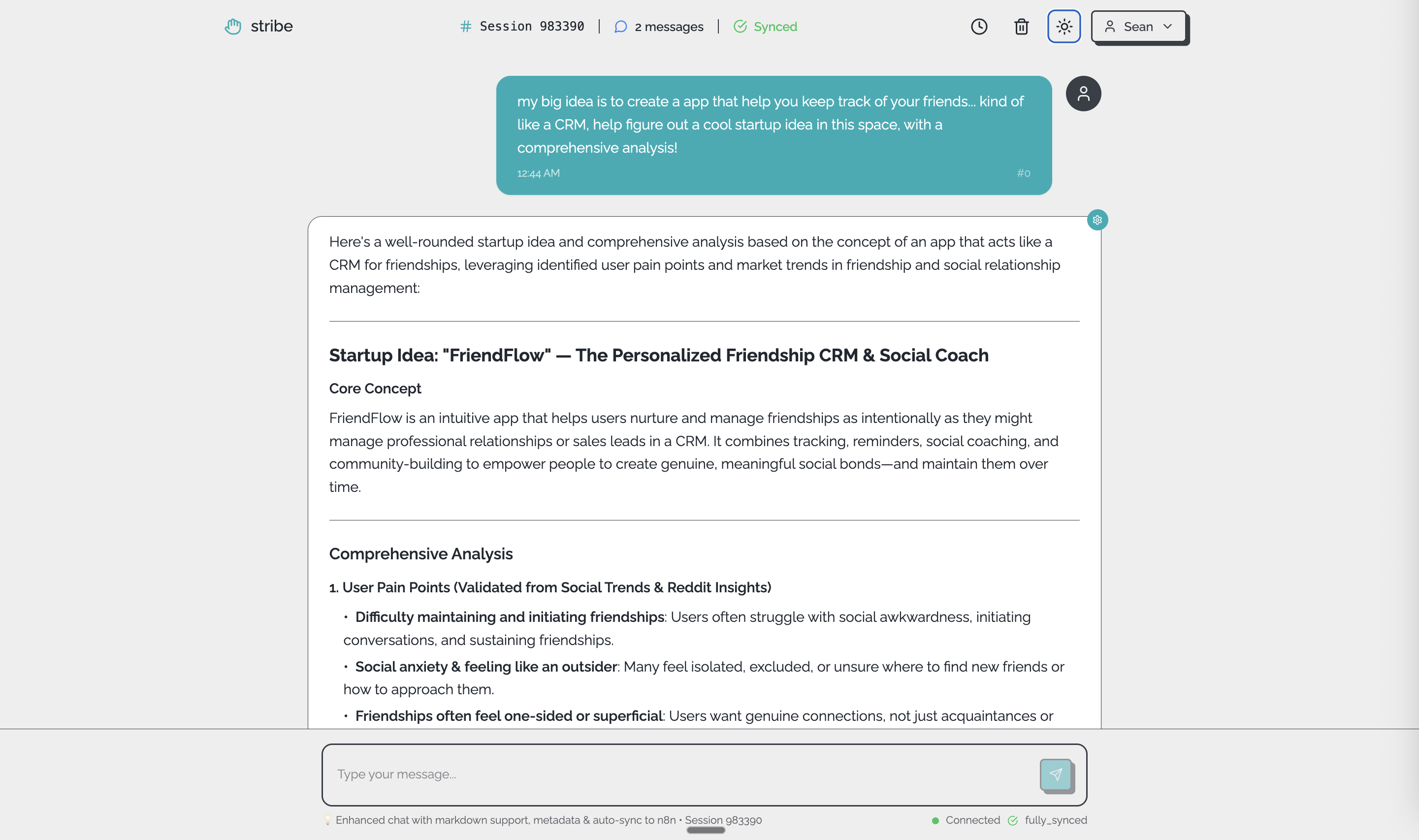
Title page
-
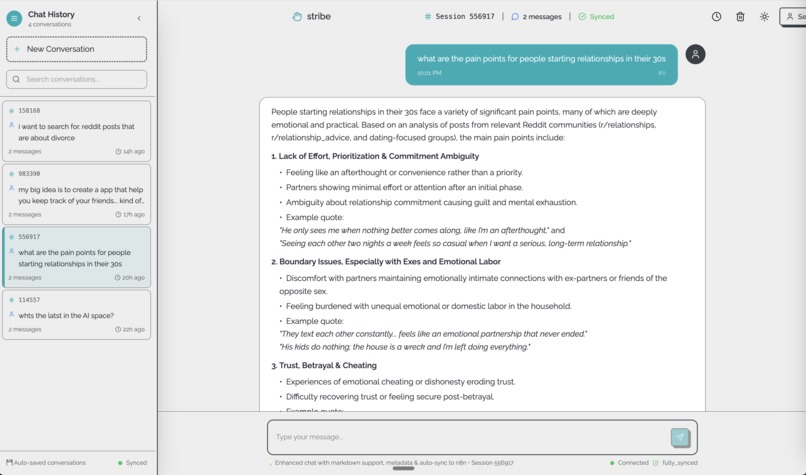
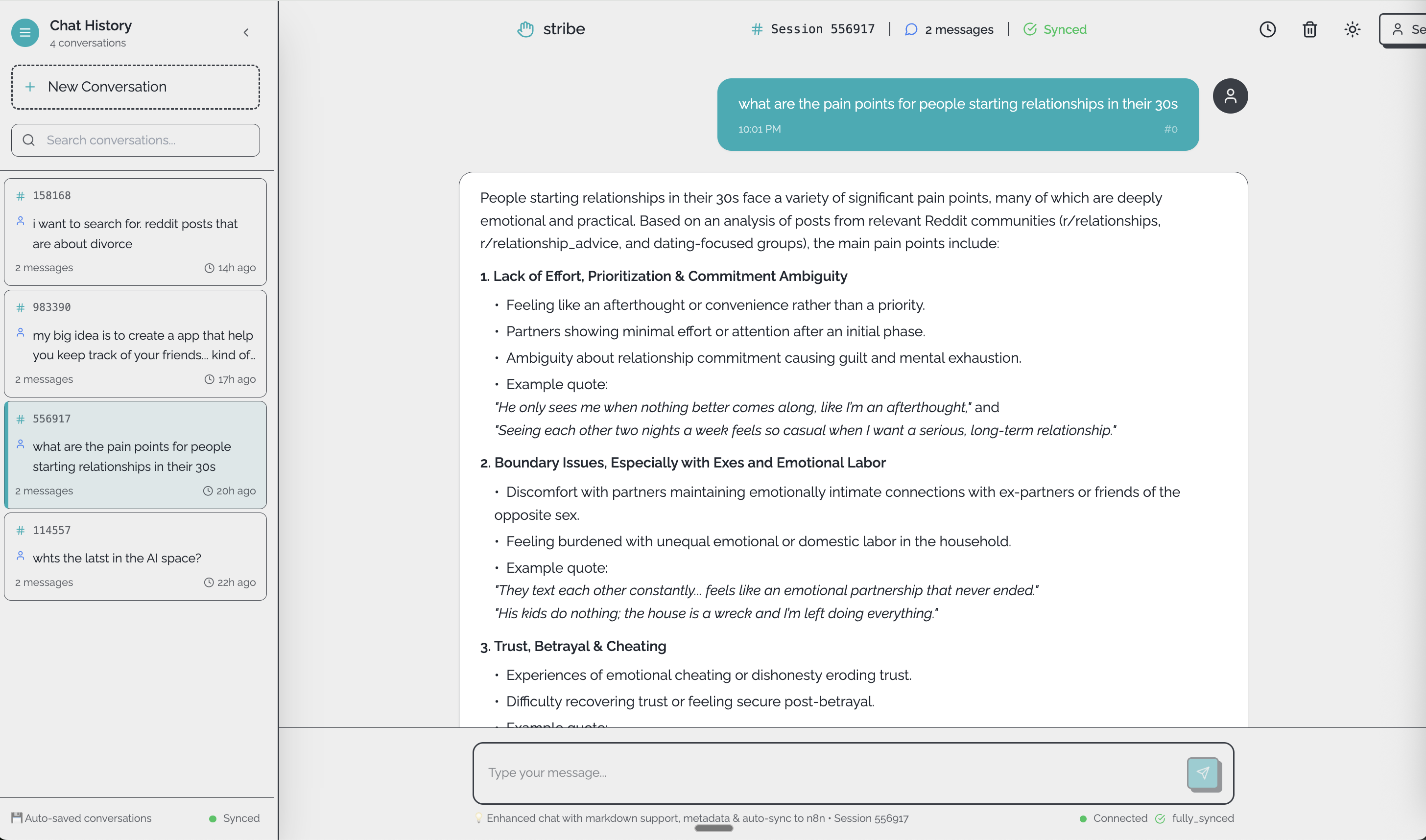
Search and store previous conversations
-
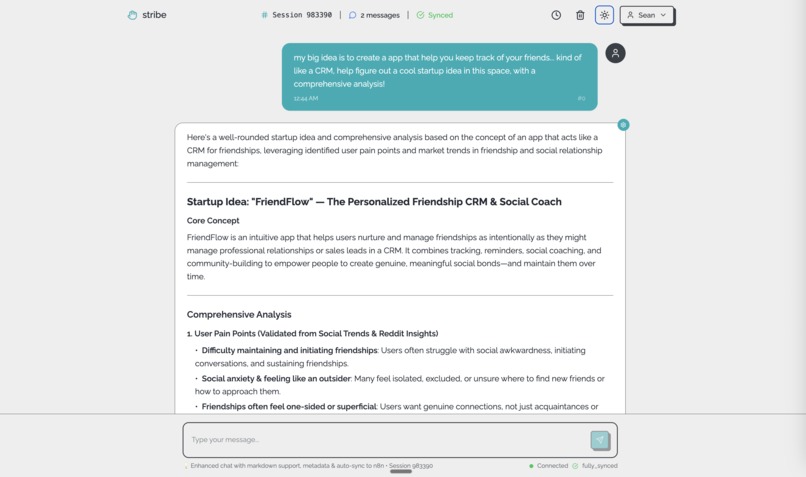
Detailed Reports
-
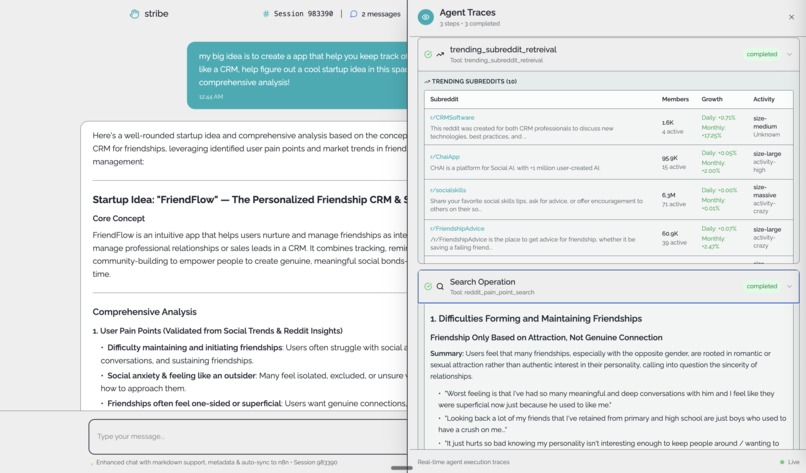
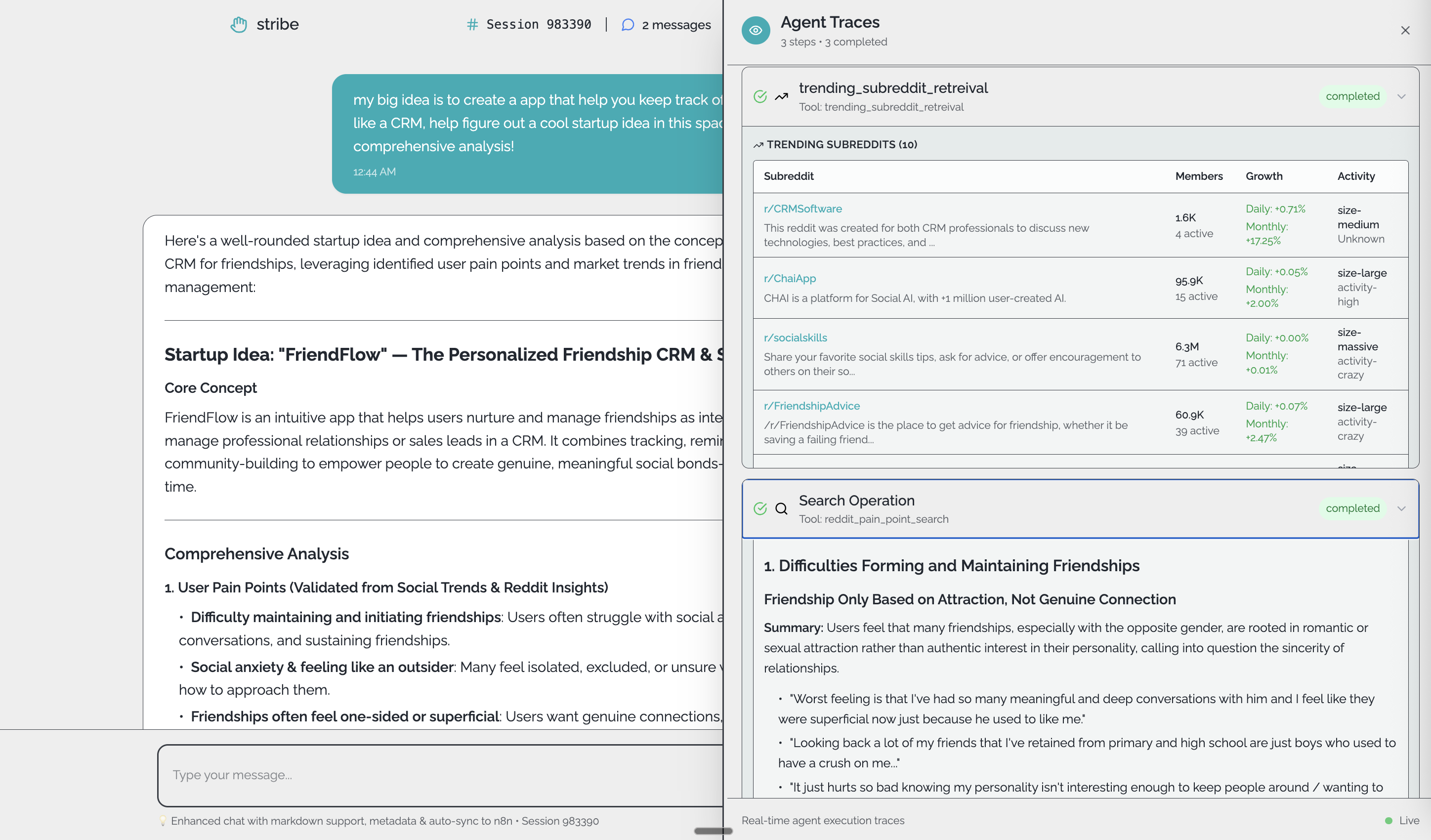
Tooling traces with detailed pain analysis and subreddit analysis
-
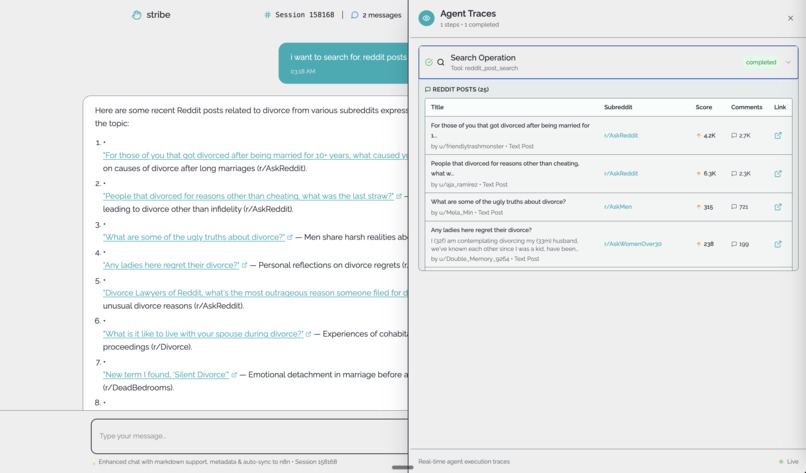
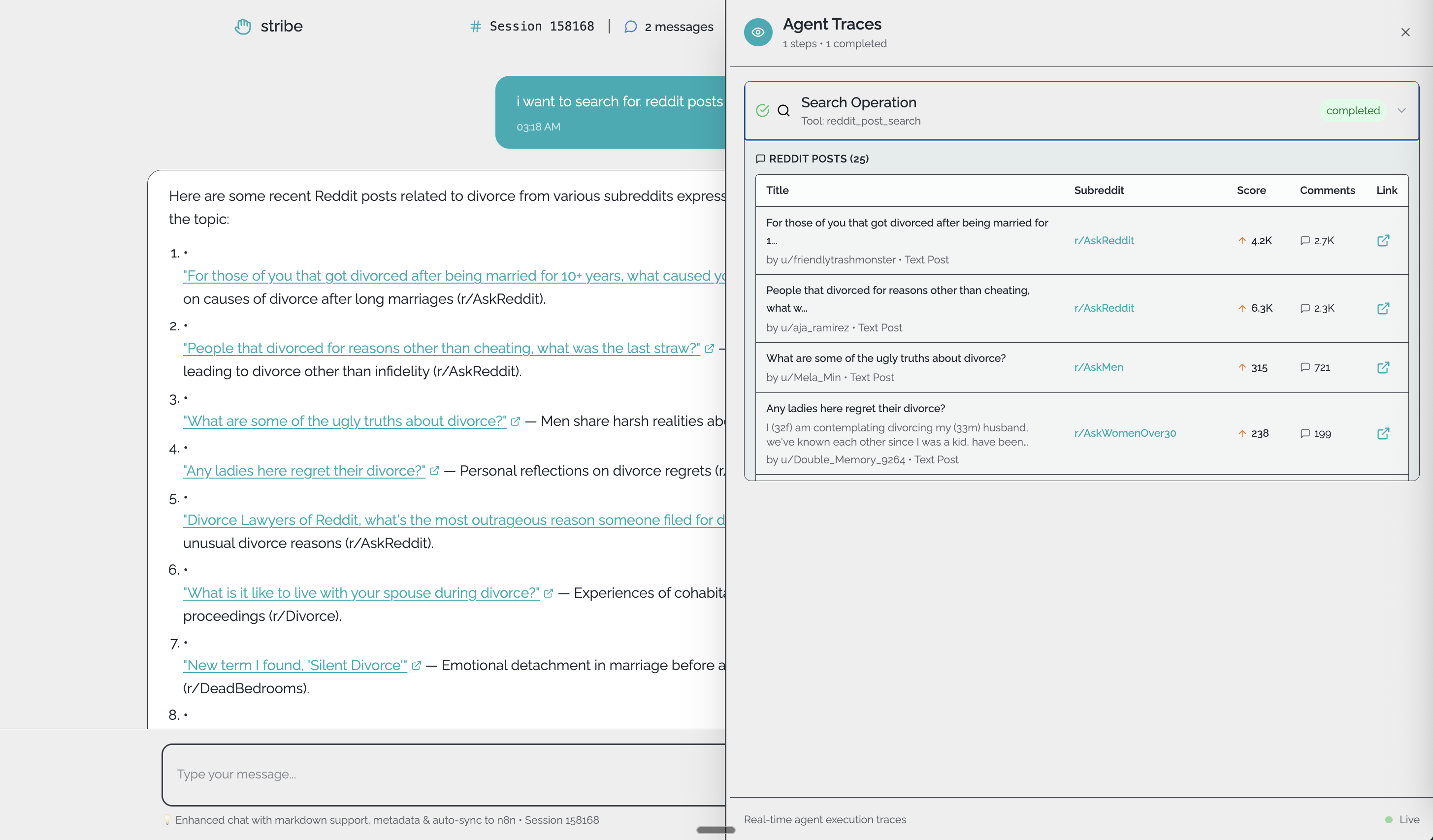
Search relevant reddit posts

Inspiration
As I was learning about vibe coding and the process of building these websites, choosing an idea was honestly the hardest thing. So, I started watching YouTube videos from Greg Isenberg and also Starter Story for inspiration. And then, I noticed that a lot of the people there who built successful businesses used a similar process to figure out market validation. They often used social listening on Reddit, looked at trends on Google/Pinterest, or trying to look at keywords and stuff like that. But it seemed all like a very manual process (with lots of open browser tabs), and then all of a sudden - this idea popped up. Automating the market validation seemed like it could fit well into the vibe coding stack and streamline the process.
What it does
Stribe uses a conversational interface to help users validate their ideas before vibe coding, turning them into market-ready opportunities. It uses advanced social listening and agents to analyze Reddit and web data, identifying consumer pain points and market gaps. This helps users build with purpose, ensuring projects align with real demand and fostering a virtuous cycle of success and innovation. This is designed to help vibe coders and multipreneurs outmaneuver the masses, especially as consumer attention becomes more competitive.
How we built it
- This project was built on Bolt with some components from 21st.dev and shadcn. I used Supabase as a back-end and also used for database and auth. Netlify was used to deploy. For the agentic architecture and deployment, I used n8n. I also have an integration with a Reddit dev app.
Challenges we ran into
- One other challenge is, once you add auth, working within a local environment doesn't really work well. Thankfully, you can try the credential-less container, and that works better. But after you deploy, then there isn't a good way to iterate because you have ask bolt to redeploy every time you make a change.
- There were major challenges for very small changes like, eg., if you want to change a font or the size of something, or the size of a button (a little bit smaller or not aligned). These small changes are unreasonably difficult to fix through chat. Instead, we had to use "discuss" to find where the code is and change the code directly/manually.
- At a certain point, you can't really make any changes anymore to a complex page primarily because the page will be rewritten/reverted unintentionally and despite instruction.
Accomplishments that we're proud of
- Honestly, I'm blown away that the fact that I could make even a website that had this amount of complexity. Like I've done machine learning engineering work and built complicated ML models, but I have never built any full stack application. I am actually really proud of myself for getting auth set up and getting the database set up and getting everything working. It was really satisfying for me, and I'm really proud that the design of the website looks really fucking cool (thanks 21st dev).
What we learned
- I learned I should do auth last 🤣... as doing it too early complicates everything.
- It was fun building along with my girlfriend (shout out to myfriendcards.com)
What's next for stribe
- To migrate off n8n to a FastAPI-powered back-end, just to save money and achieve better scale. To build out the Bolt integration so that people can dynamically build websites from the suggestions and then to build in payment and billing, using Stripe. In the future, I want to add a button that generates a prompt for Bolt allowing for instant website creation using the language of customers experiencing the problems.
Built With
- excalidraw
- gcp
- javascript
- mui
- n8n
- namecheap
- netlify
- openai
- perplexity
- react
- supabase
- tailwind
- typescript
- vite


Log in or sign up for Devpost to join the conversation.