-
-
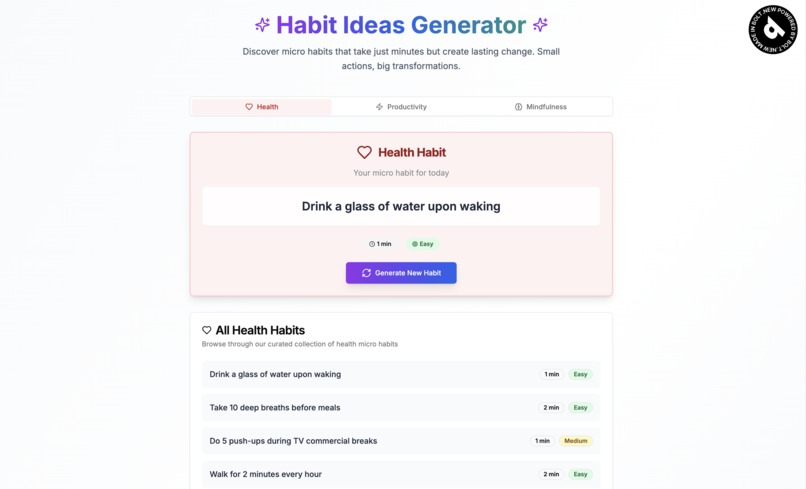
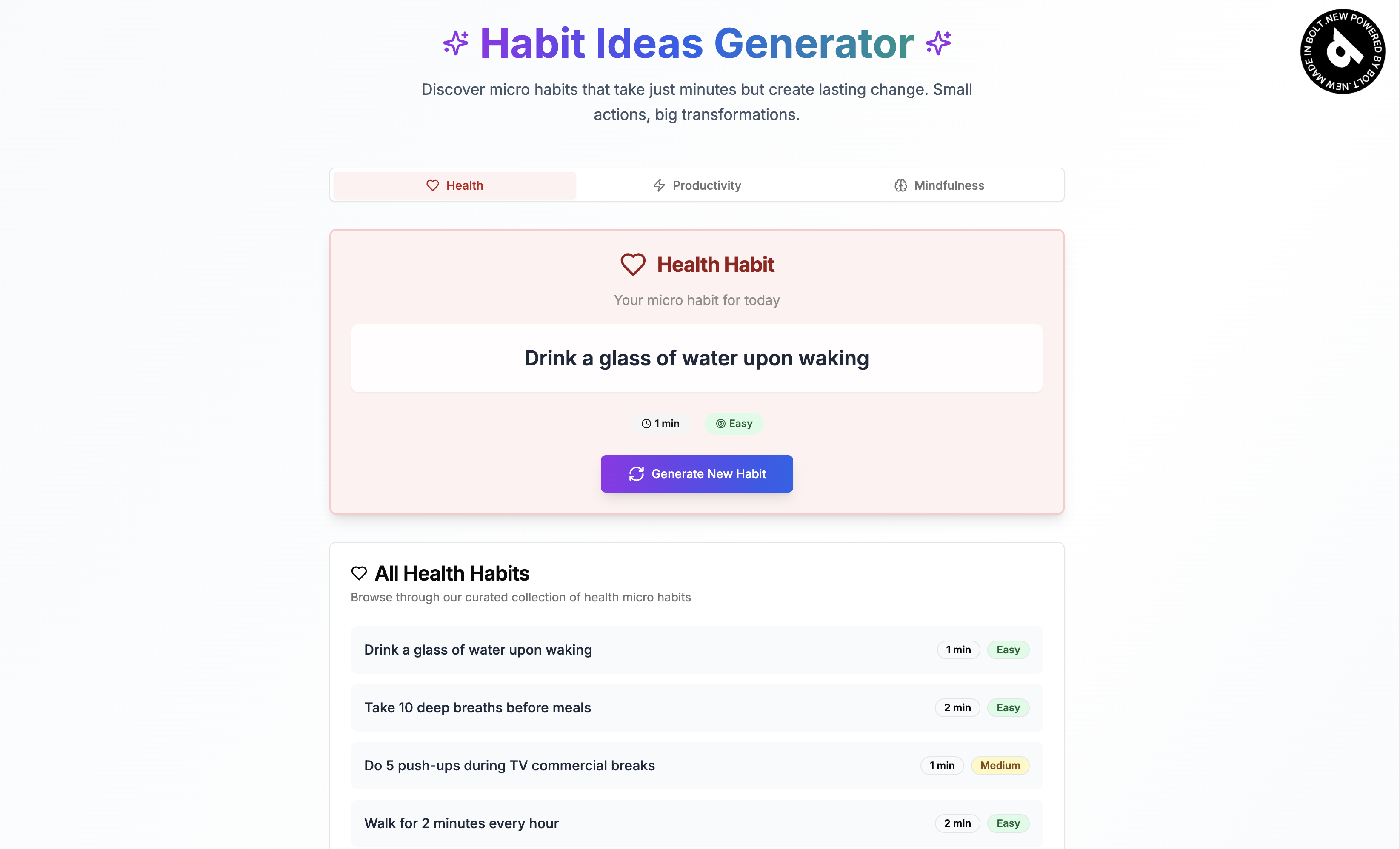
A simple and straightforward UI for user to use
Inspiration
The inspiration for the Habit Ideas Generator came from my own struggles with building consistent habits and observing the same challenges in friends, family, and online communities. I watched countless people set ambitious New Year's resolutions—exercising for an hour daily, meditating for 30 minutes, or completely overhauling their productivity systems—only to abandon these goals within weeks because they felt too overwhelming or unsustainable.
The turning point came when I discovered the concept of micro habits through James Clear's "Atomic Habits" and BJ Fogg's research on behavior change. I realized that the most successful habit changes weren't dramatic transformations but tiny, almost laughably small actions that could be done consistently. Reading about people who started with just one push-up or meditating for one minute and eventually transformed their entire lifestyle was eye-opening.
However, I noticed a gap in available resources. While there were excellent books and courses on habit formation theory, there was a lack of practical, actionable tools that could help people discover appropriate micro habits for their specific situations. Most habit-tracking apps assumed you already knew what habits to build, but many people struggled with the fundamental question: "Where do I even start?"
This inspired me to create a tool that would bridge the gap between habit science and practical application—something that could instantly provide people with small, achievable habit ideas tailored to different areas of life improvement.
What it does
The Habit Ideas Generator transforms the overwhelming world of self-improvement into manageable, actionable steps through carefully curated micro habit suggestions:
Instant Habit Discovery: Provides immediate access to 60 scientifically-backed micro habits across three essential life categories—Health, Productivity, and Mindfulness—eliminating the paralysis of choice that often prevents people from starting.
Smart Categorization System: Organizes habits into focused areas of improvement, allowing users to target specific aspects of their lives or explore holistically across all categories based on their current needs and goals.
Interactive Exploration: Features both random generation for serendipitous discovery and comprehensive browsing modes, accommodating different user preferences for finding the perfect starting habit.
Micro Habit Philosophy: Focuses exclusively on habits that require minimal time commitment (typically 1-5 minutes) and low cognitive load, following proven behavior change principles that maximize the likelihood of long-term success.
Accessibility and Convenience: Works seamlessly across all devices and browsers, ensuring users can discover new habits whenever inspiration strikes, whether they're on their phone during a break or planning their week on a desktop.
How I built it and the challenges I ran into
I approached the Habit Ideas Generator as a clean, focused Next.js application built with Typescript that prioritizes user experience and habit science over unnecessary complexity. I feed Bolt with just a single prompt to also tackle the single prompt challenge. Although Bolt did an outstanding job at developing the application right from the start, during the deployment of the application to Netlify, there were som issues that occur, which I fix with the prompted option from Bolt.
Accomplishments that I'm proud of
Evidence-Based Habit Collection: Successfully curated a comprehensive library of micro habits that are all grounded in behavior science research, ensuring users receive suggestions that have a high likelihood of success.
Accessibility Achievement: Built a tool that works perfectly for complete beginners to habit formation while also providing value to people already experienced with personal development, accommodating users across the entire spectrum of habit-building experience.
Design Impact: The visual design successfully creates an emotional connection that makes habit exploration feel positive and hopeful rather than clinical or pressured, contributing to user motivation and engagement.
What I learned
Micro Changes Create Macro Impact: Working on this project reinforced how powerful tiny changes can be.
Simplicity Enables Action: The most effective behavioral tools are often the simplest ones. By removing complexity and decision fatigue, people are much more likely to take action and stick with positive changes.
Individual Variability Matters: While micro habits work broadly, people respond differently to various types of habits based on their personality, lifestyle, and current challenges. Providing variety and choice is crucial.
What's next for Habit Ideas Generator
Personalization Engine: Developing a smart recommendation system that learns user preferences and suggests habits based on their selected interests, current life circumstances, and previously generated habits.
Habit Tracking Integration: Adding optional progress tracking features that allow users to monitor their consistency with discovered habits while maintaining the tool's low-pressure, non-intimidating approach.
Community Features: Building social elements like habit sharing, success stories, and community challenges that create positive peer support without unhealthy competition or pressure.
Advanced Filtering: Implementing sophisticated filtering options that allow users to find habits based on specific criteria like time available, current stress level, or particular life goals they're working toward.
Educational Content: Expanding the tool to include brief explanations of the science behind habit formation, helping users understand not just what to do but why these approaches work.
Habit Stacking Suggestions: Developing features that suggest how to combine micro habits with existing routines, making implementation even easier through proven habit stacking techniques.
Analytics and Insights: Adding privacy-respecting analytics that help users understand their habit exploration patterns and preferences, enabling more personalized suggestions over time.
Expansion to New Categories: Research and development of additional habit categories like relationships, creativity, financial wellness, and environmental consciousness to address broader aspects of personal development.
Built With
- bolt.new
- css3
- html5
- javascript
- netlify
- nextjs
- react
- typescript

Log in or sign up for Devpost to join the conversation.