-
-
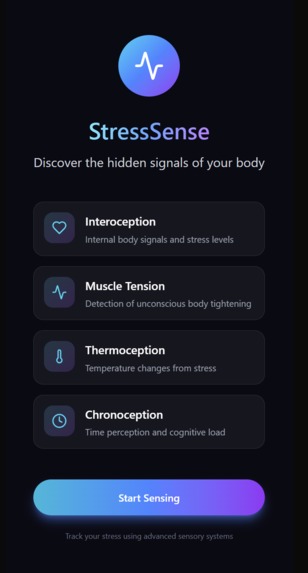
StressSense
-
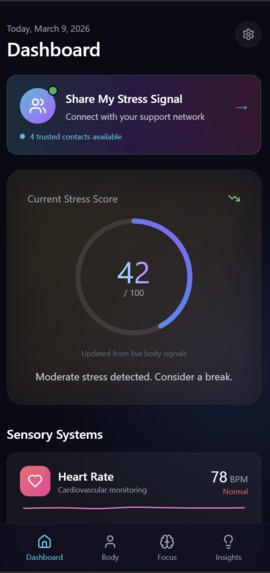
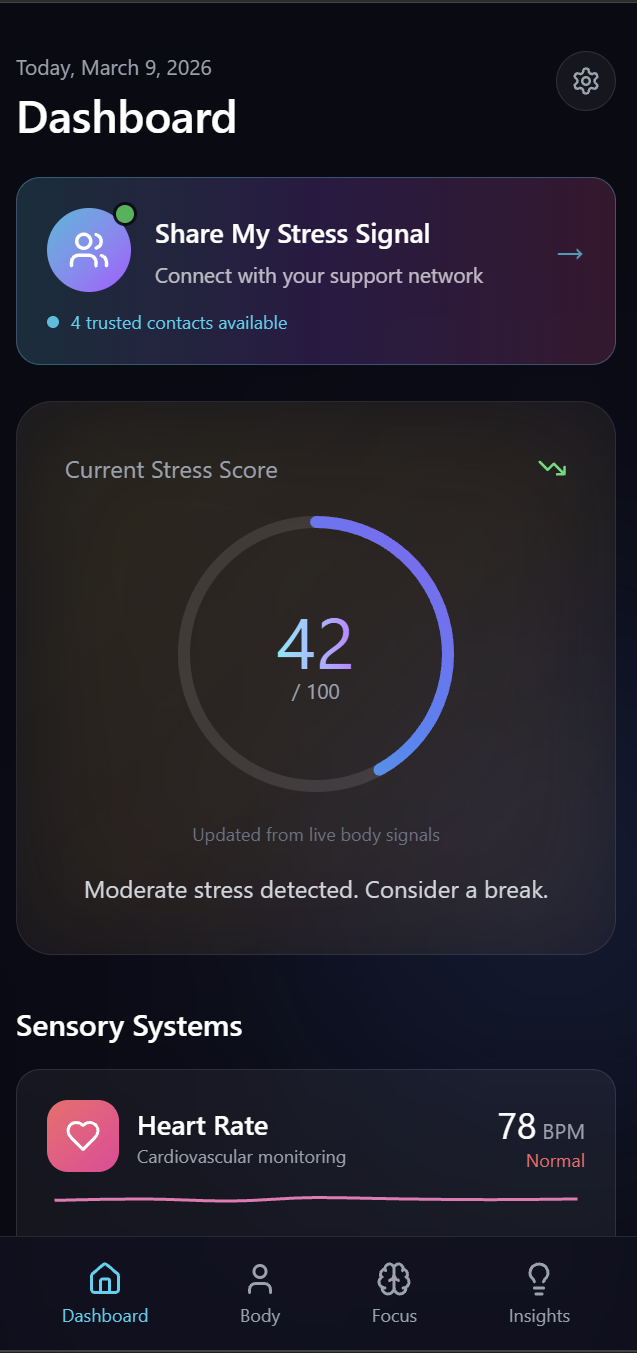
Dashboard of StressSense
-
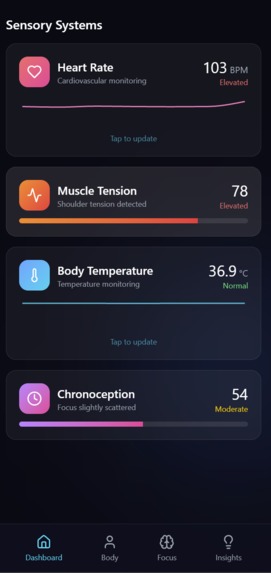
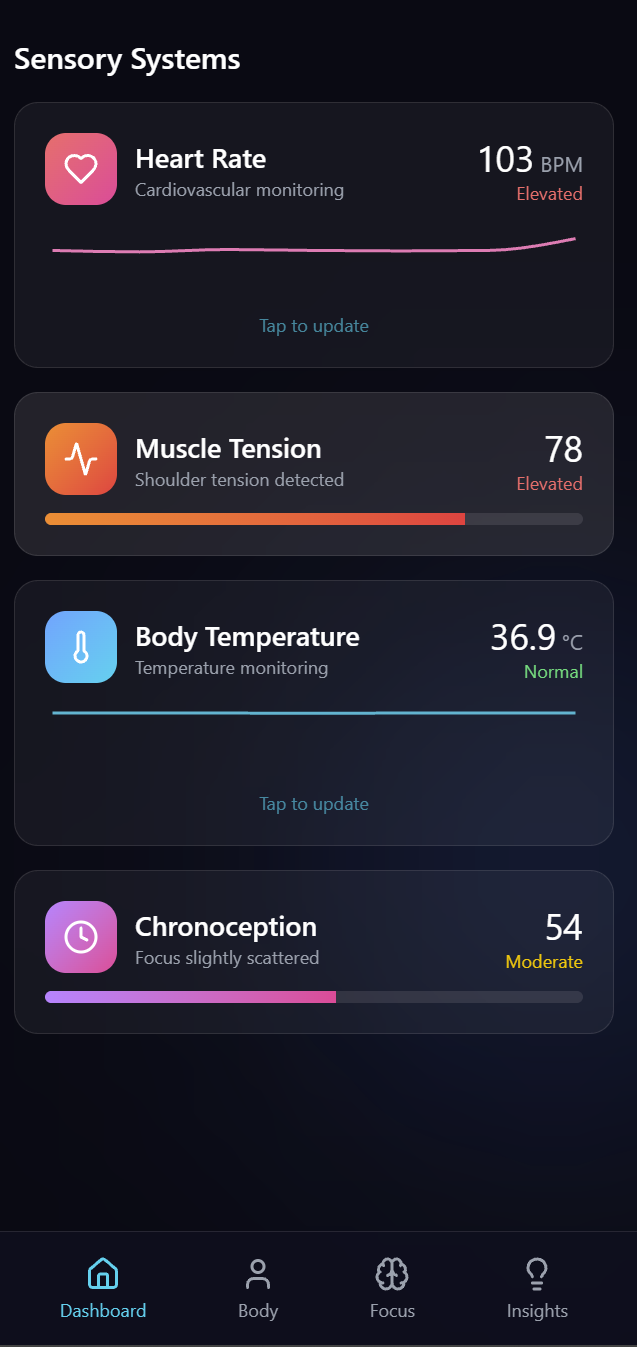
The Underlying Senses used to create the project
-
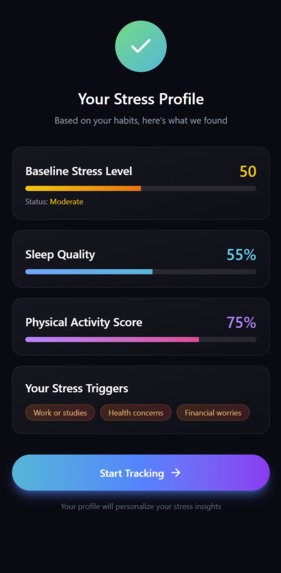
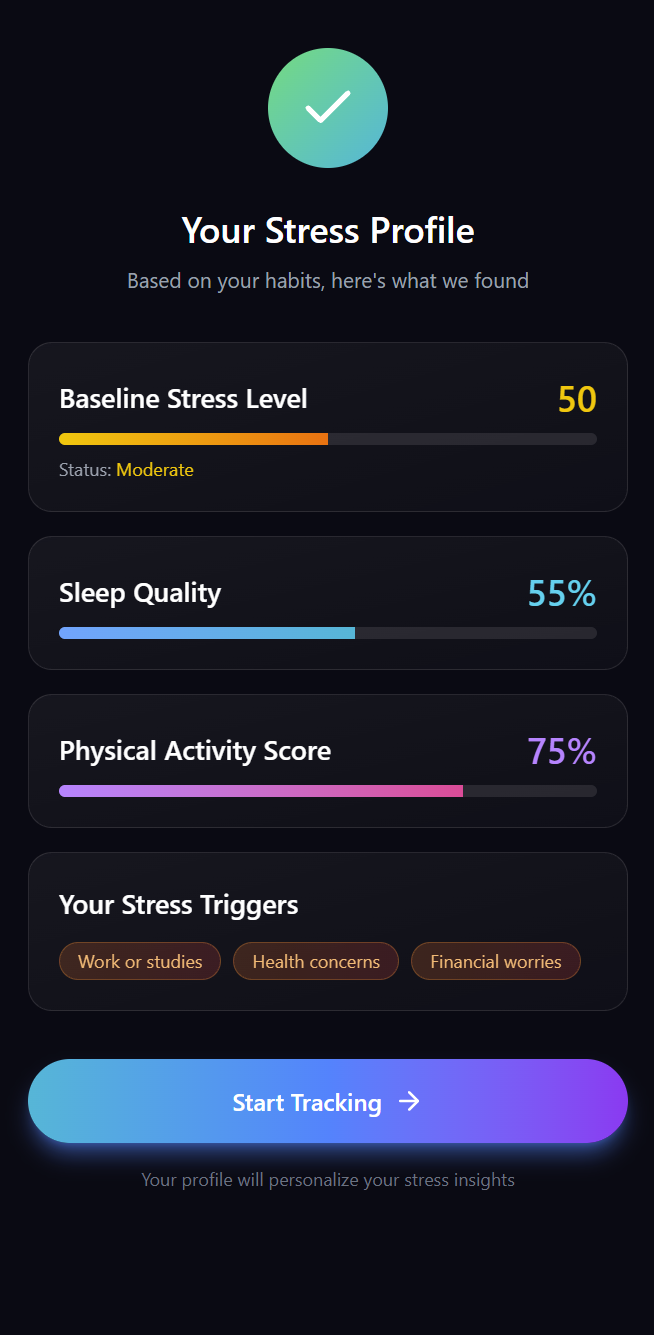
The Stress Profile
-
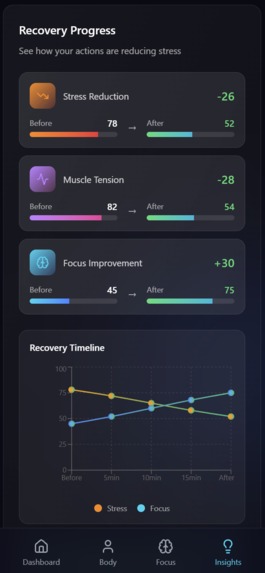
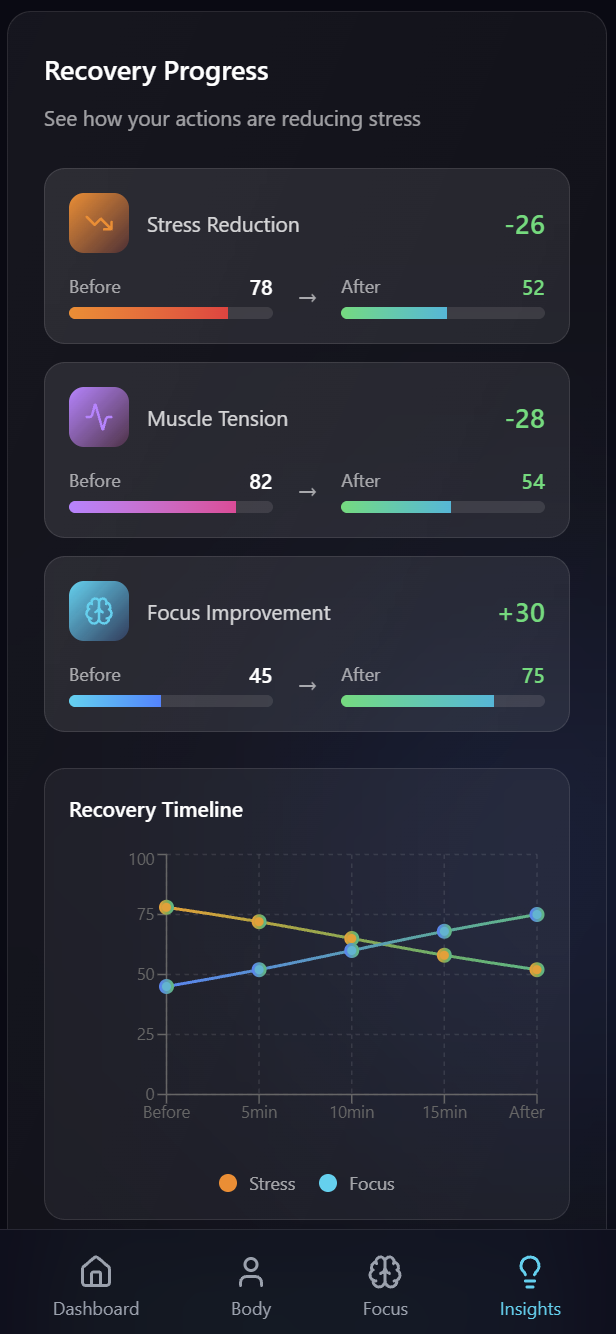
Recovery Charts
-
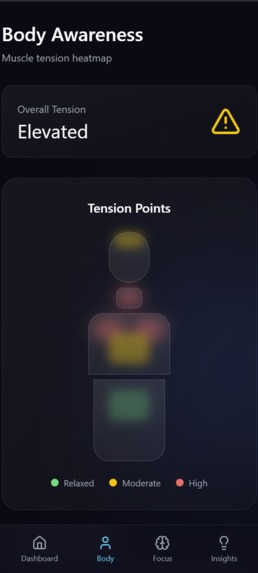
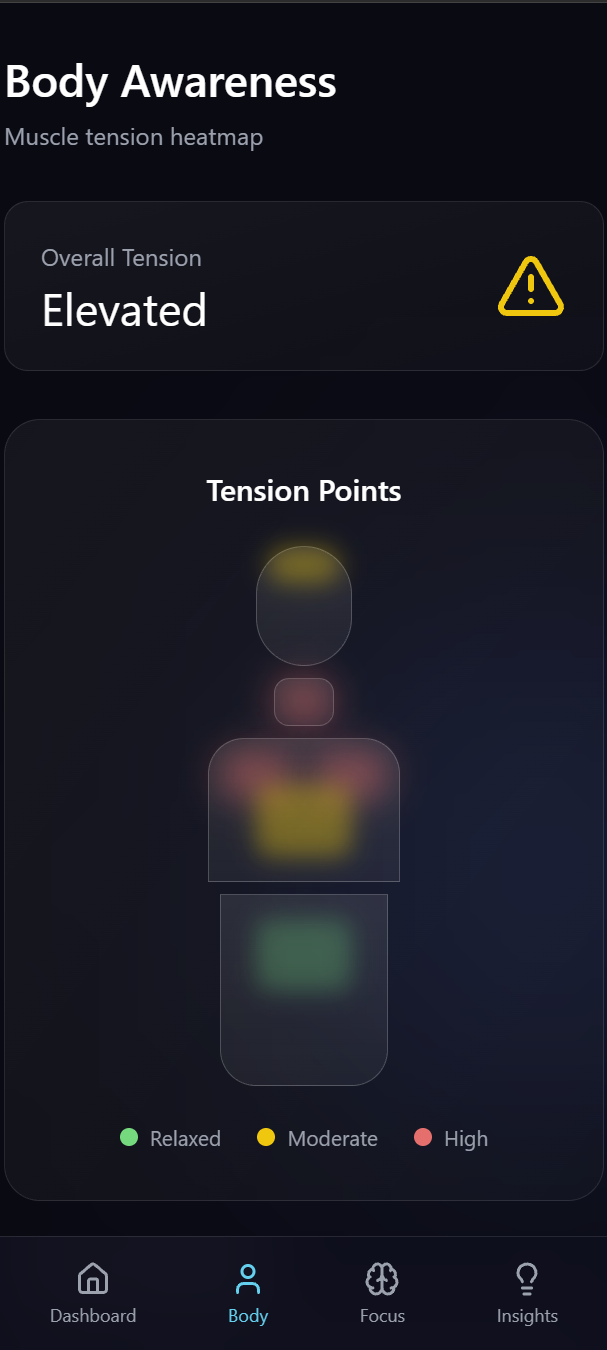
Tension Points
-
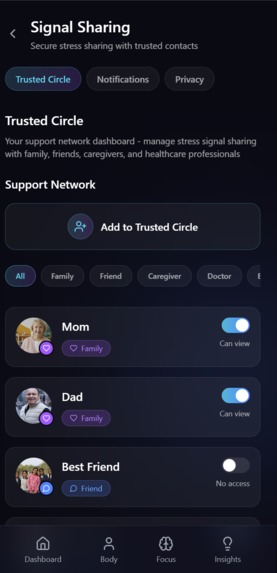
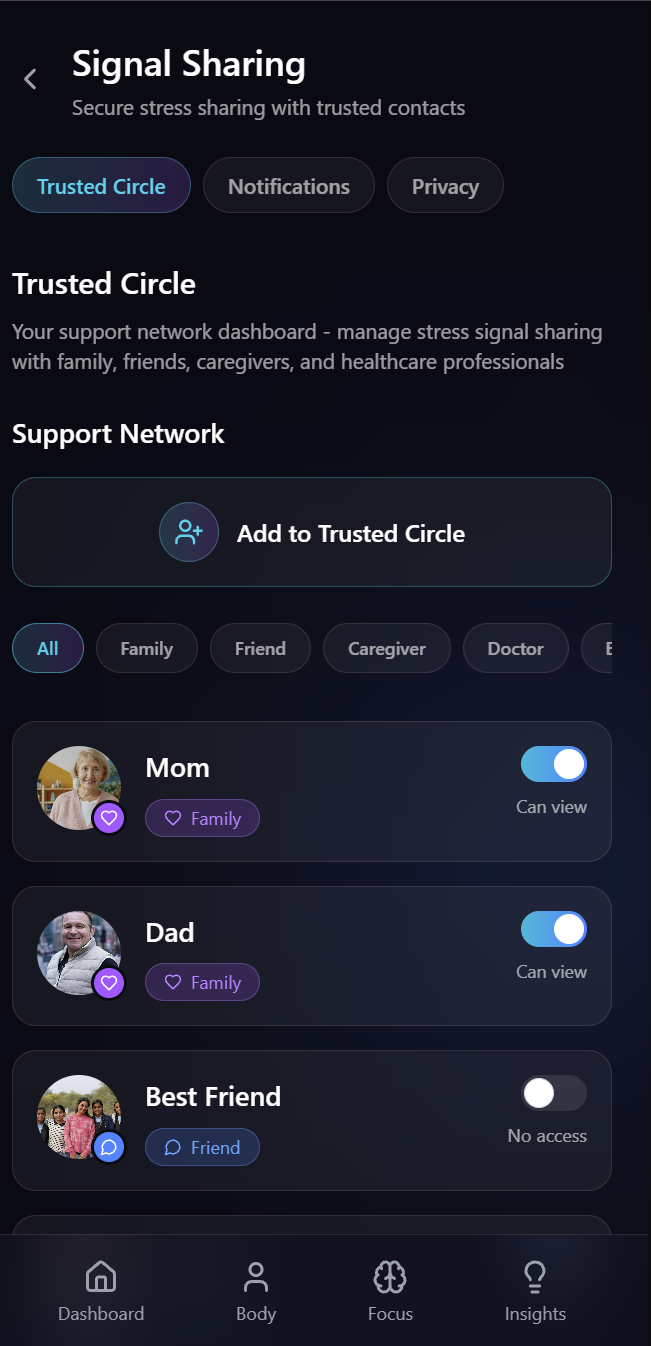
Ability to share with loved ones
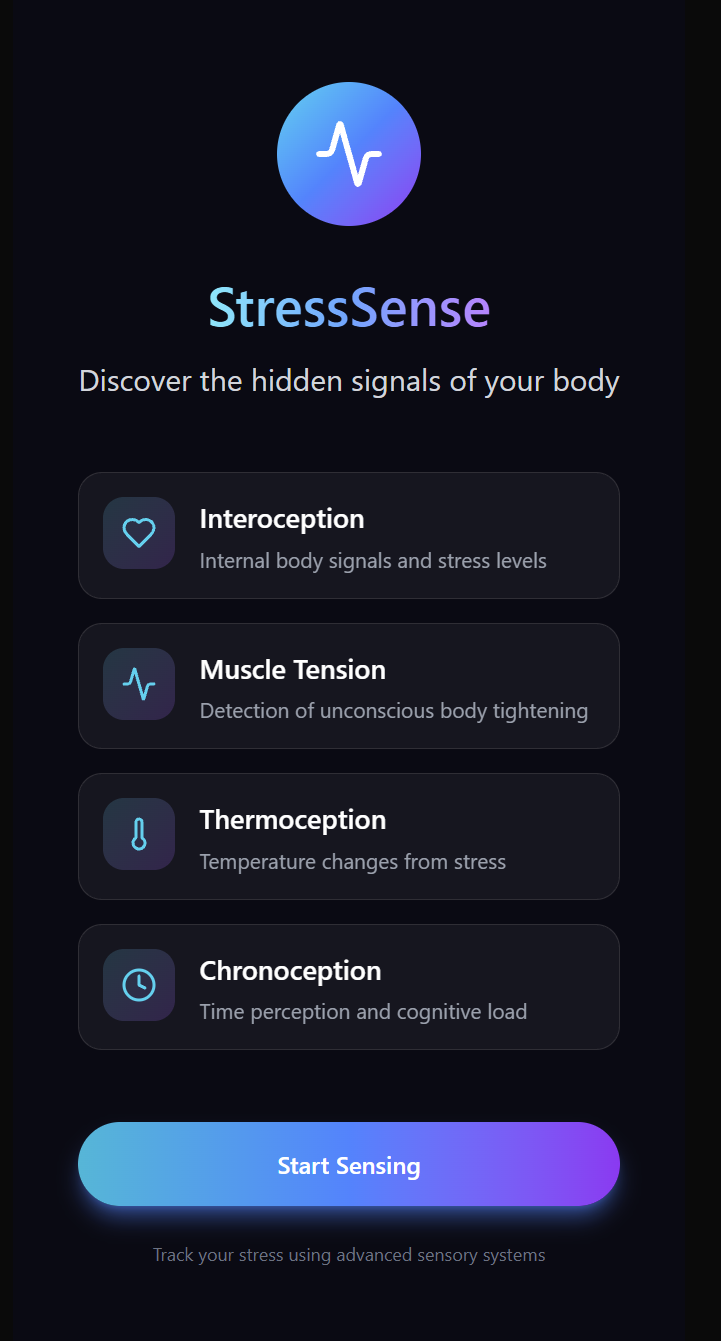
Inspiration
Stress often builds silently before people consciously feel it. Our bodies already detect signals like muscle tension, heart rate changes, temperature fluctuations, and cognitive overload, but these signals remain invisible to us. By the time people recognize stress, it has often already affected their health or productivity.
Recent neuroscience research suggests humans possess far more than the traditional five senses — including senses like interoception (internal body awareness), thermoception (temperature sensing), and chronoception (time perception).
StressSense was inspired by the idea of making these hidden sensory signals visible so people can understand their bodies better and manage stress before it becomes harmful.
What it does
StressSense is a sensory-aware wellness app that visualizes hidden body signals related to stress.
The app monitors and visualizes multiple internal sensory indicators including:
- Heart rate (interoception)
- Muscle tension
- Body temperature (thermoception)
- Cognitive focus and mental load (chronoception)
StressSense converts these signals into a real-time stress score, helping users understand their current mental and physical state.
Key features include:
- Stress dashboard with live sensory signals
- Body heatmap showing muscle tension zones
- Cognitive focus timeline to track mental performance
- AI-generated insights and stress pattern detection
- Recovery toolkit including breathing exercises and focus timers
- Progress tracking to show how actions reduce stress
- Trusted circle sharing to notify family, caregivers, or doctors
- Privacy controls for safe and consent-based sharing
The goal is to help users detect stress early, understand its causes, and take meaningful recovery actions.
How we built it
StressSense was designed as a speculative sensory wellness system focusing on user experience and human-centered design.
We built the concept using:
- Figma for UI/UX design and interactive app prototyping
- Figma Slides for storytelling and product presentation
- Design principles inspired by health dashboards and wearable apps
- Data visualization techniques for stress metrics and recovery progress
The interface includes multiple modules such as:
- Stress Dashboard
- Sensory Systems Monitoring
- Body Awareness Heatmap
- Cognitive Focus Analysis
- AI Insights and Recovery Toolkit
- Signal Sharing and Privacy Controls
The design emphasizes clarity, accessibility, and actionable insights.
Challenges we ran into
One of the biggest challenges was designing a system around senses that are not yet directly measurable with consumer technology, such as chronoception and muscle tension sensing.
We had to carefully balance:
- Scientific concepts
- Realistic product design
- Clear user experience
Another challenge was visualizing complex physiological data in a simple and understandable way. Stress is influenced by multiple factors, so designing an interface that communicates these signals clearly required thoughtful data visualization.
Finally, we needed to ensure the system addressed privacy concerns, especially when sharing sensitive mental health information with trusted contacts.
Accomplishments that we're proud of
We are proud of creating a concept that:
- Transforms invisible physiological signals into understandable insights
- Combines multiple human sensory systems into one unified wellness tool
- Provides actionable recovery tools rather than just tracking stress
- Includes a support network feature that allows users to share stress signals with trusted people
- Maintains strong privacy and consent-based sharing controls
The design also successfully demonstrates how emerging neuroscience concepts could shape future health technologies.
What we learned
Through building StressSense, we learned that stress is not just a psychological experience but also a multi-sensory physiological process.
We also gained insights into:
- Human sensory systems beyond the traditional five senses
- Designing interfaces for complex biological data
- Building wellness tools that encourage behavioral change
- Balancing technological speculation with practical design
Most importantly, we learned that good wellness technology should empower users with understanding rather than overwhelm them with data.
What's next for StressSense
In the future, StressSense could evolve into a fully integrated body-awareness platform powered by advanced sensors.
Potential next steps include:
- Integration with wearable devices capable of measuring muscle tension and temperature
- Real-time physiological signal analysis using biosensors
- AI models that predict stress patterns before they occur
- Smart environment integrations that adjust lighting or sound to reduce stress
- Expanded support network features for healthcare professionals
Ultimately, StressSense could help people develop a new sense — awareness of their own stress — enabling healthier and more balanced lives.
Built With
- figma


Log in or sign up for Devpost to join the conversation.