-
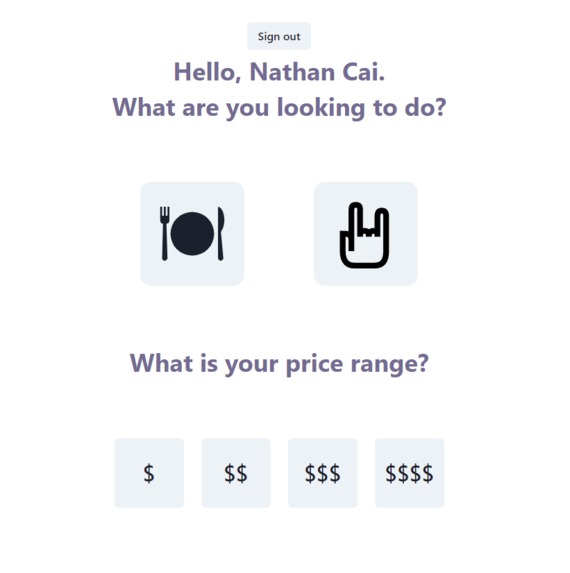
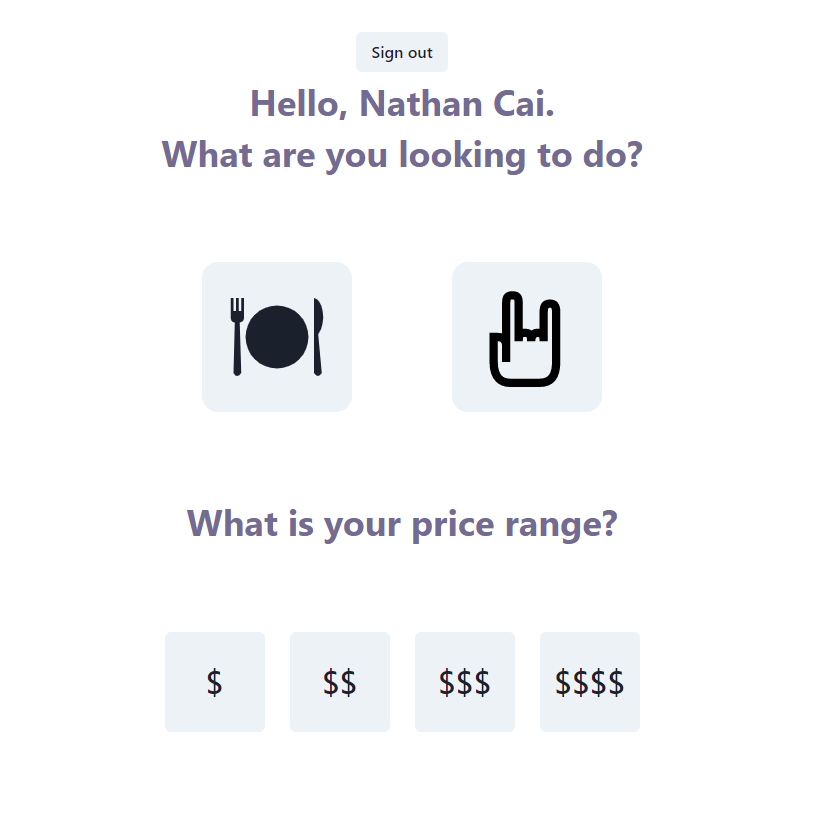
preference page
-
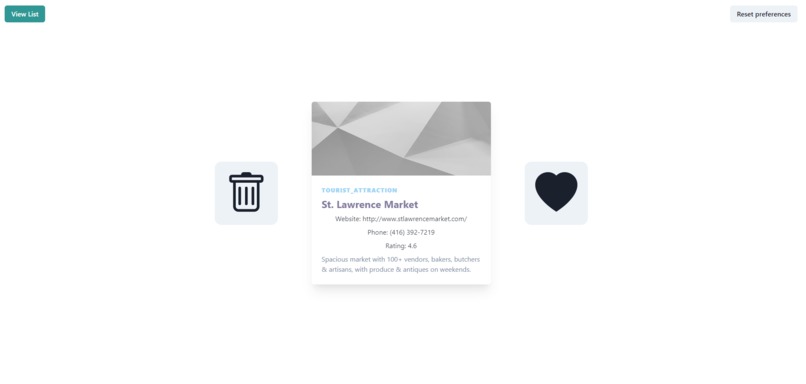
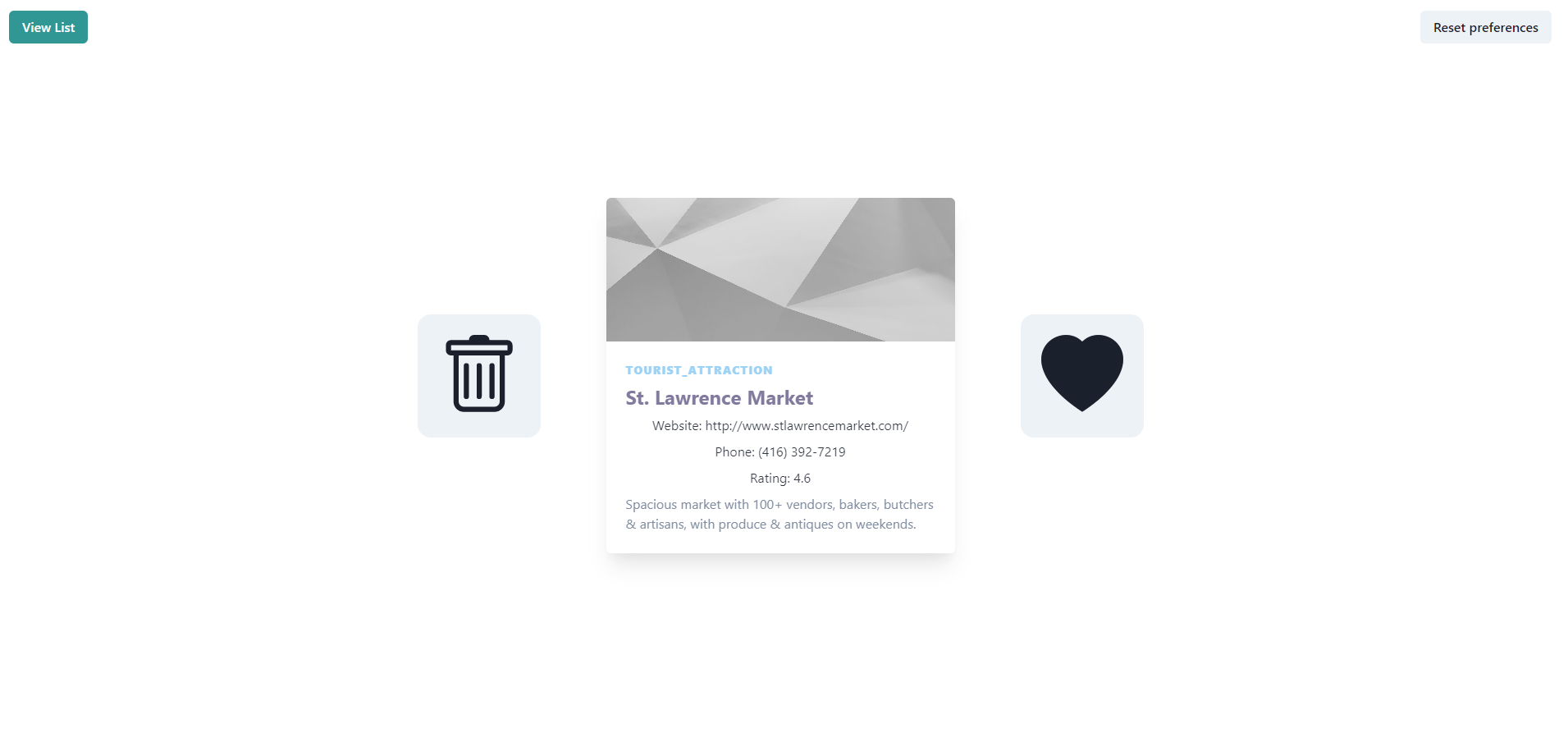
decision page
Inspiration
As avid enjoyers of travellers, we often find it hard to find things to do, while staying within a budget. Just this winter, one of our group members went on vacation and went wildly over budget without realizing it. He often had trouble finding things to do every day and places to eat. So we built an app that shows the different user restaurants and things to do that fall under a certain price category.
What it does
We built a Web app that uses an algorithm to present different restaurants or things to do to the user. the user can then choose to save the information or pass on it. Depending on the user's choices our recommendation engine will adapt to better adapt to the user's preferences. The user can then access their saved lists as they are logged in through google authentication.
How we built it
Our website is hosted on Firebase, using FireStore as the database to store all the restaurants, things to do, and user data. To access our data we created a flask restful API that we can call using requests to perform queries, add data, and delete data from FireStore. Our FrontEnd was built using the react framework to create a dynamic web app for an elevated user experience.
Challenges we ran into
2 challenges we ran into were figuring out how to deploy our REST API and converting our Figma designs to code. For the REST API we didn't have time to figure out how to use Azure or AWS as our hands were full with learning how to use Firebase. So we chose to resolve this by just hosting the REST API on our local computer. Our Figma Design Code came out to be impossible to work with and so we used it as a proof of concept and a learning opportunity for the future, but ultimately had to remake the web app.
Accomplishments that we're proud of
We learned how to implement a Database for data persistence. Gone are the days of saving data in CSV files. We also learned how to use Firebase which can be a valuable asset for our future projects. Lastly, we learned to create REST API's to access databases and connect our front end and back end. Overall, the sheer amount of learning we all did was a great accomplishment and we are very proud of the product that we ended up with, especially considering that this was all of our first hackathons.
What we learned
Firstly, we learned that Hackathons are hard, the number of hours and brain power that goes into creating a project in such a short period of time is not something to be underestimated. However, this hackathon taught us just how little we know about software development. We have a long way to go, but this hackathon was a stepping stone for all of our computer science journey. We all learned countless things, such as implementing databases, using new API's, creating API's, and we look forward to continuing to learn more every day.
What's next for Street Savvy
The next step would be to fully deploy the app by learning to use a service to host our API, add more locations to our app, and create mobile applications. What's great about Firebase is its expandability and prebuilt support for mobile applications.
For us as a team, we will be continuing our studies, pursuing side projects, and looking for internships!

Log in or sign up for Devpost to join the conversation.