Inspiration
It started with a simple question:
What happens when an ordinary person notices something unusual in a stream?
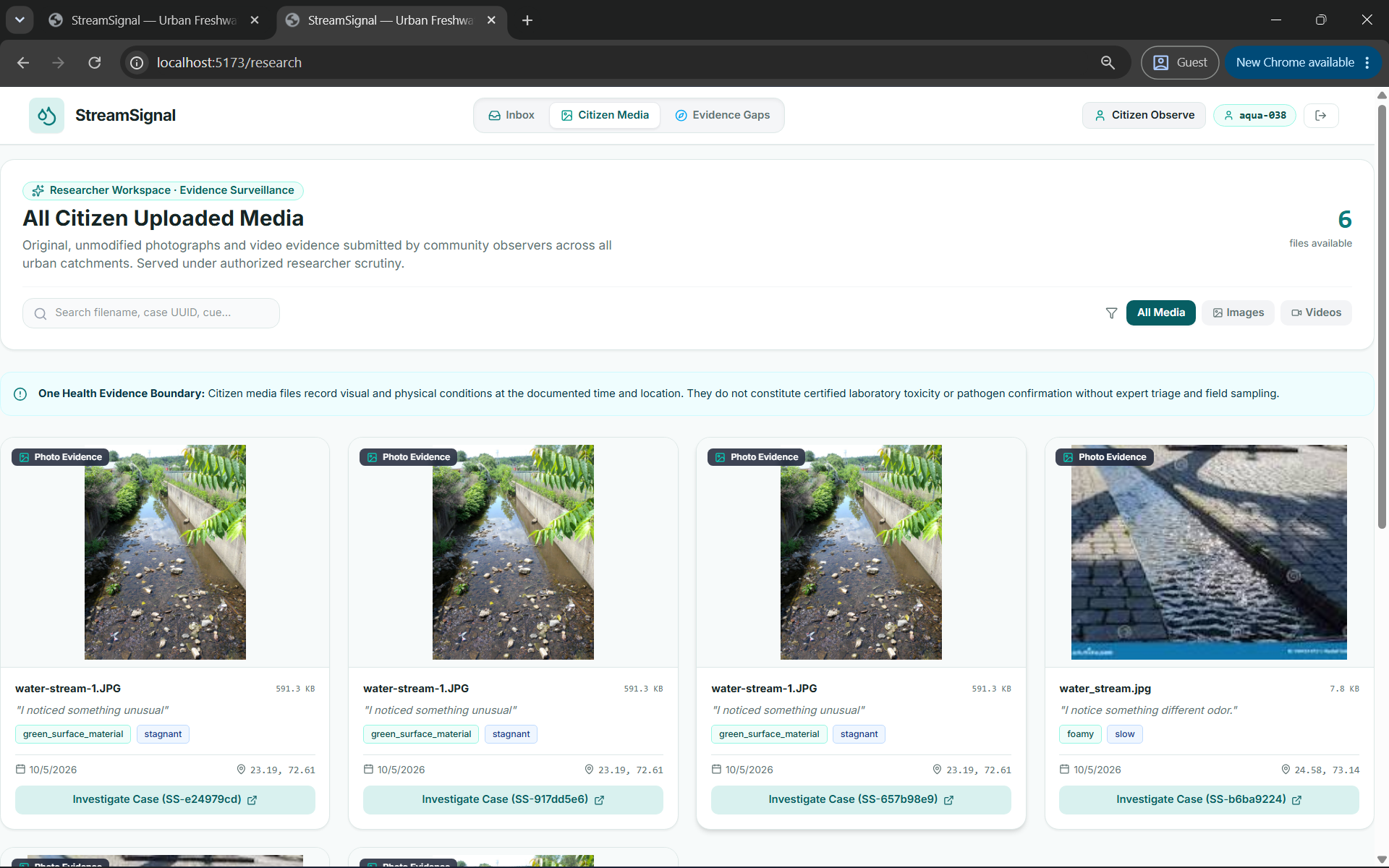
A person may see water looking different, unusual flow, foam, litter, or another change and take a photo. That observation can be valuable, but a photo alone does not tell a researcher what happened, why it happened, or whether the observation can be safely reused in another system.
I realized that there were actually two sides of the same problem.
On one side, citizens need a simple way to contribute useful observations without needing scientific knowledge.
On the other side, researchers need evidence that is organized, traceable, contextualized, and clear about what is actually known versus what is only an AI-assisted observation.
So I asked:
Why not build something that helps both sides?
That became StreamSignal.
The idea is not to replace citizen science platforms or create another environmental dashboard. Instead, StreamSignal focuses on the missing evidence journey:
Citizen observation → structured evidence → AI assistance → context → human review → provenance → interoperable One Health data.
This is what led me toward Track 7: Digital Health Standards. Interoperability is not only about converting data into FHIR. It is also about preserving the meaning, source, limitations, and decisions behind that data.
What it does
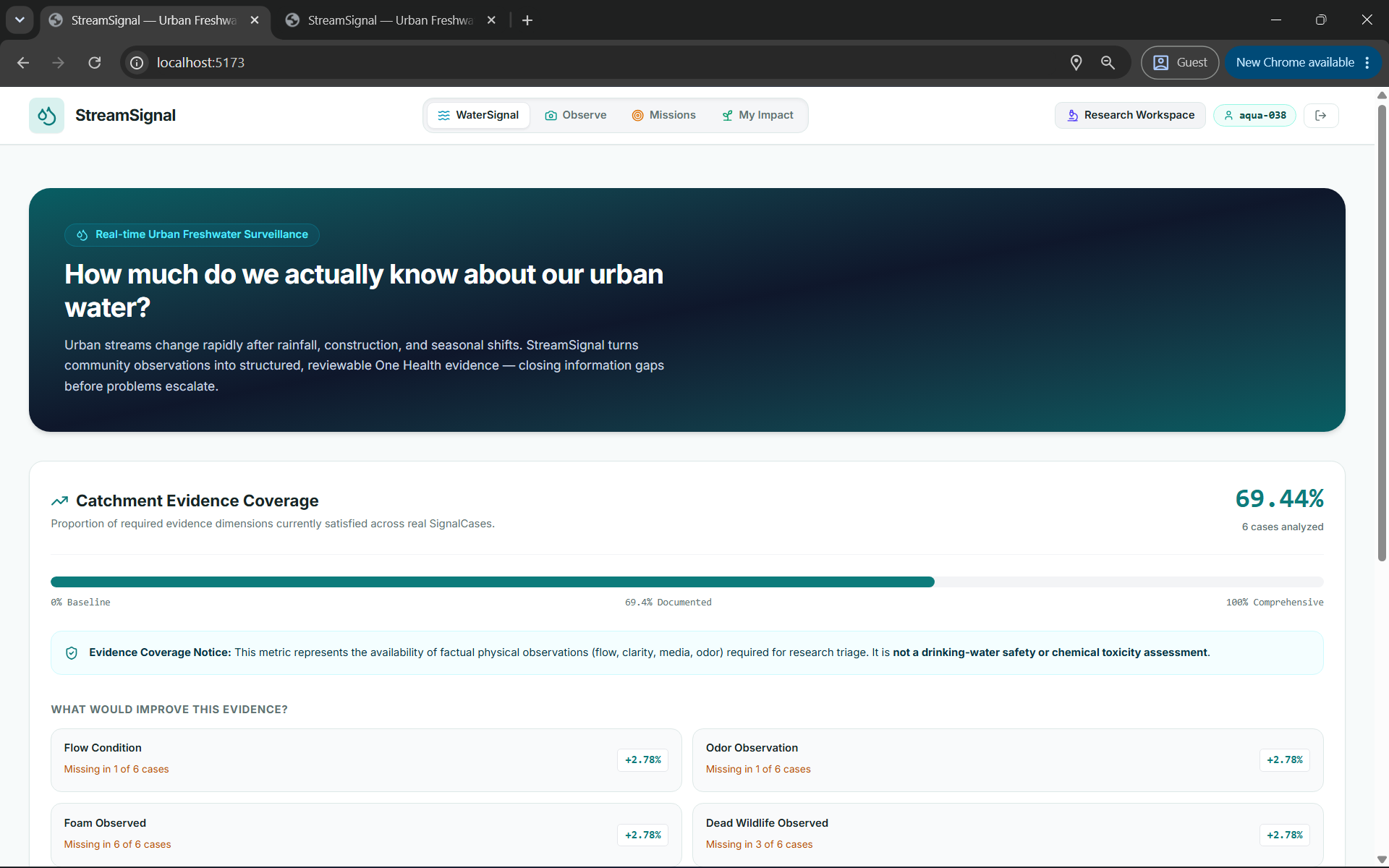
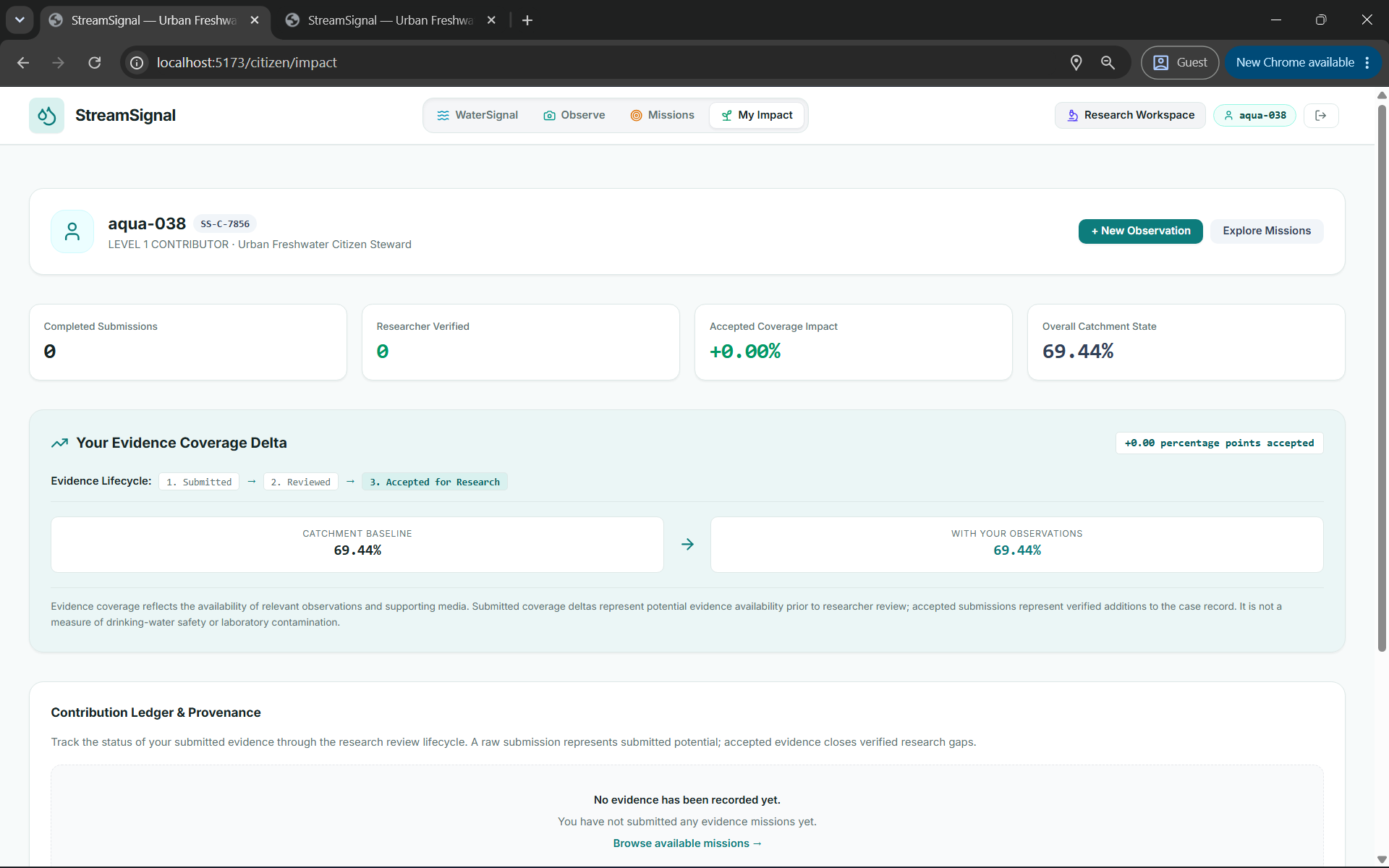
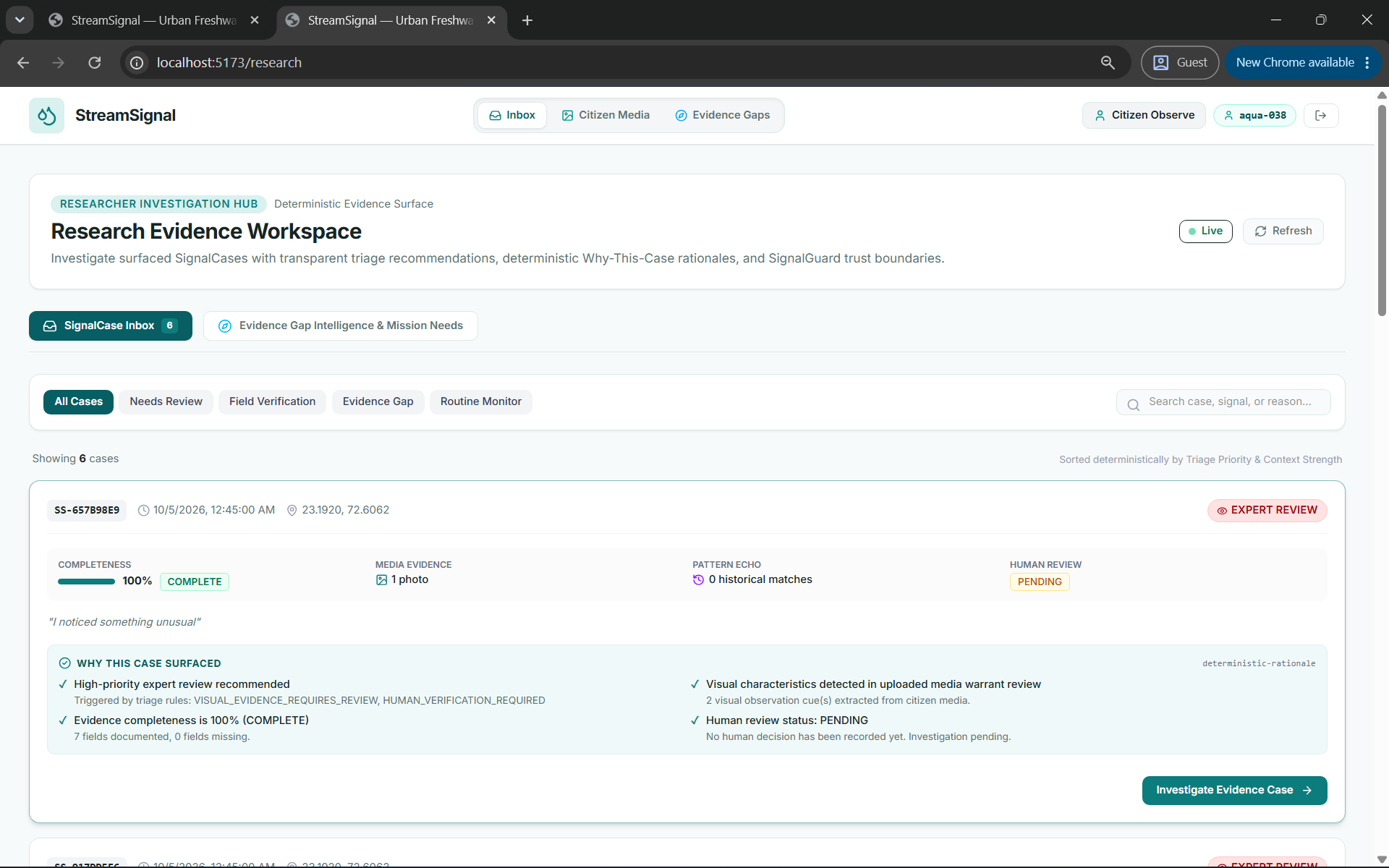
StreamSignal turns citizen observations of urban streams into trusted, traceable evidence that researchers and One Health systems can understand, review, and reuse.
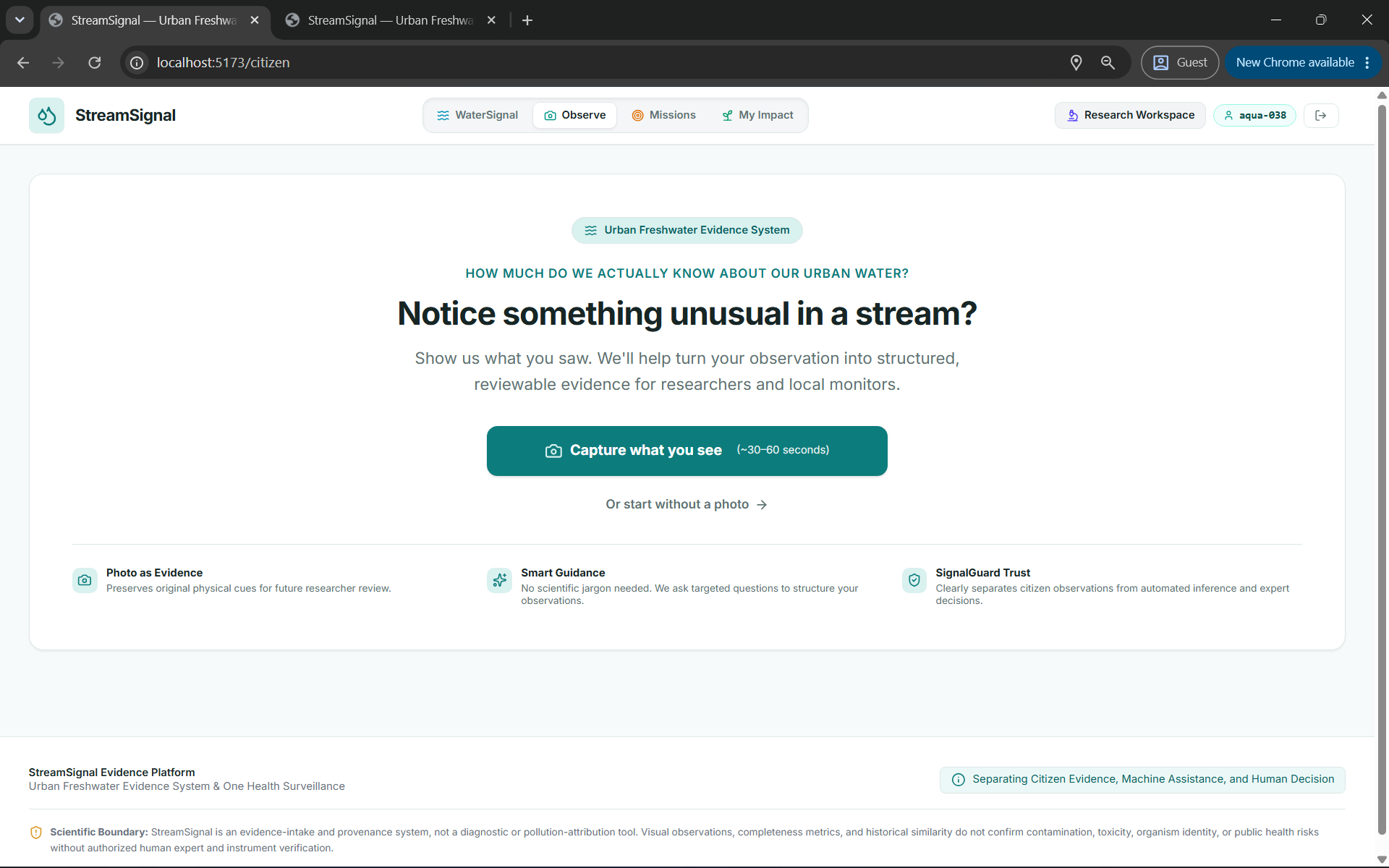
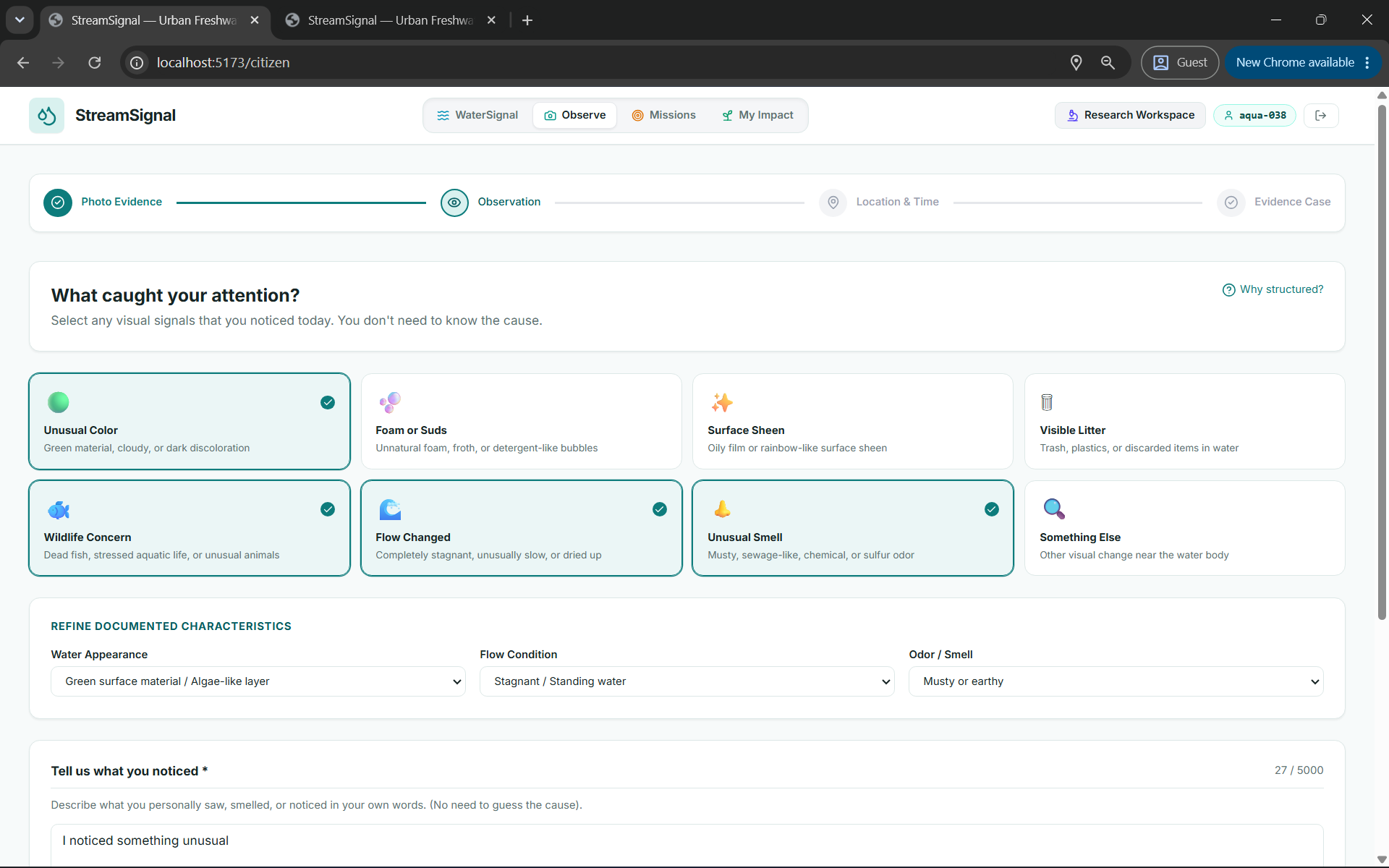
A citizen can simply report what they see:
- water appearance
- flow condition
- unusual odour
- visible changes
- photos or videos
- location and time
- what changed from their previous observation
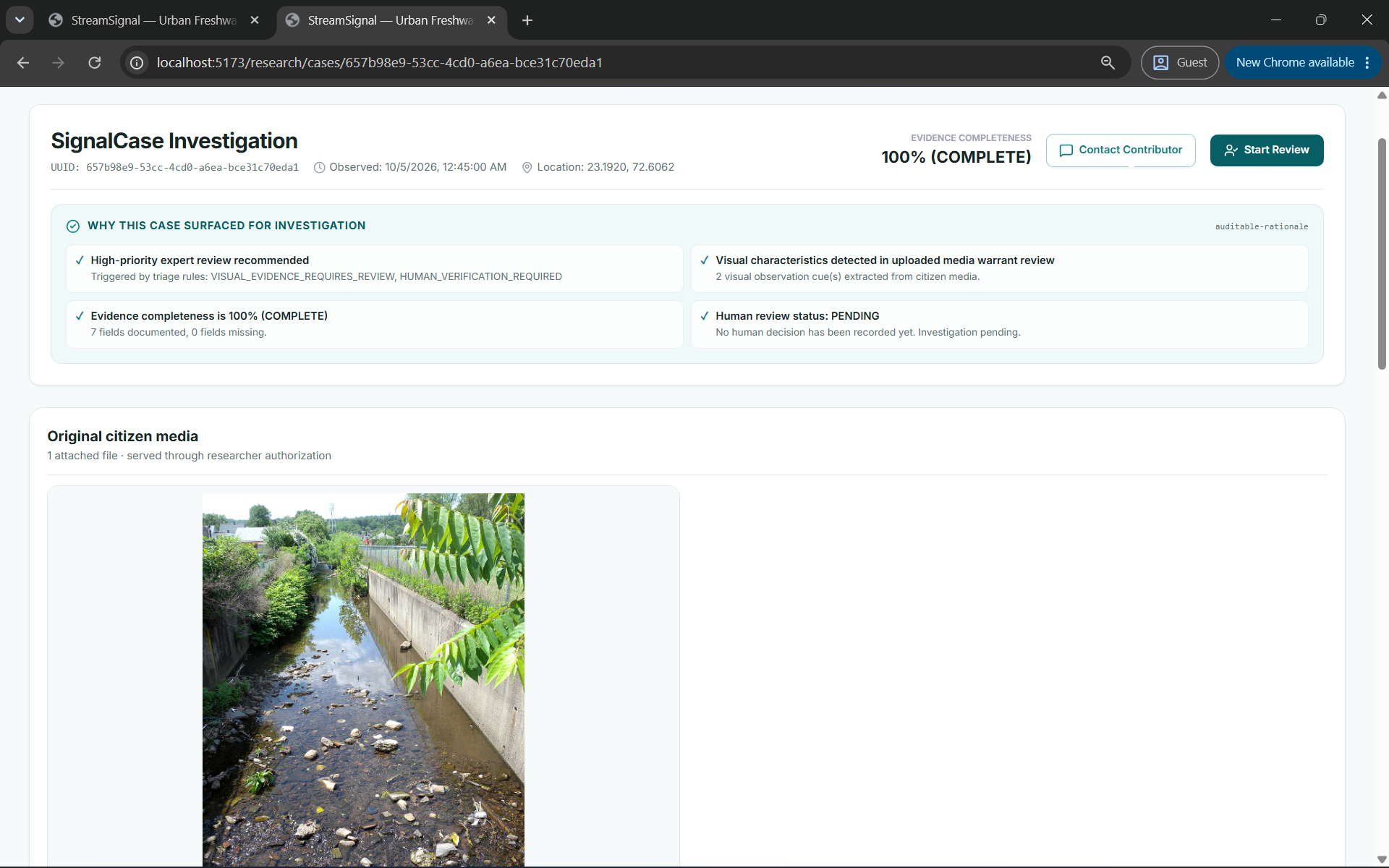
StreamSignal then creates a SignalCase around that observation.
The important part is that StreamSignal does not turn a citizen's observation into an automatic scientific conclusion.
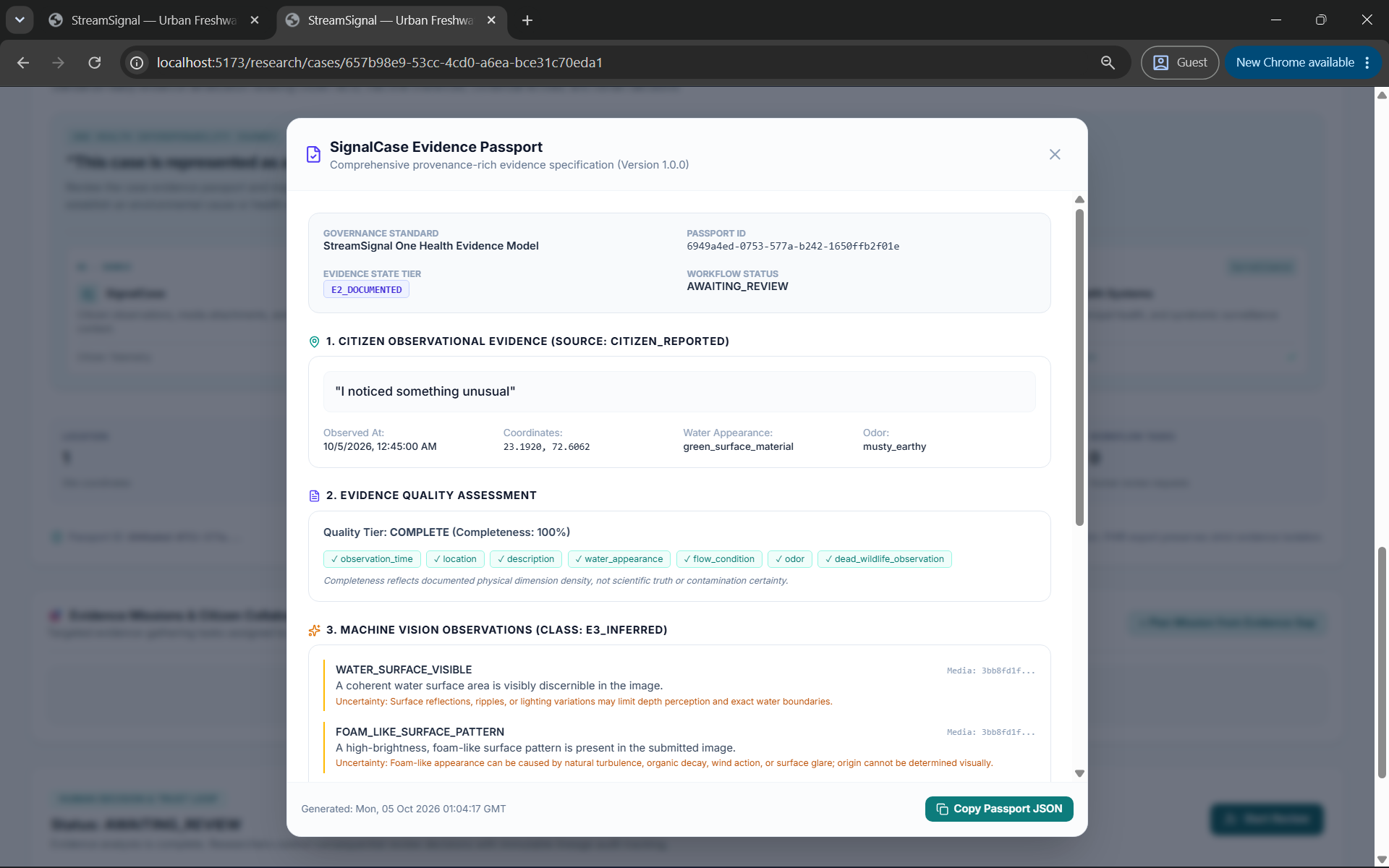
Instead, it keeps different types of evidence separate:
Citizen Evidence
What the person actually reported or captured.
Machine Assistance
What computer vision or AI can observe or infer, with uncertainty.
Contextual Evidence
Related observations and patterns that may help researchers investigate further.
Human Decision
What an authorized researcher decides should happen next.
This is controlled through SignalGuard, our evidence interpretation layer.
For example:
A citizen reports that water appears unusually green.
StreamSignal can preserve that observation and identify a possible visual cue.
But it does not automatically say:
"This water is polluted."
or:
"This is toxic."
or:
"This creates a health risk."
Instead, the system can recommend clarification or field verification.
This makes the evidence more useful without pretending that AI knows more than it actually does.
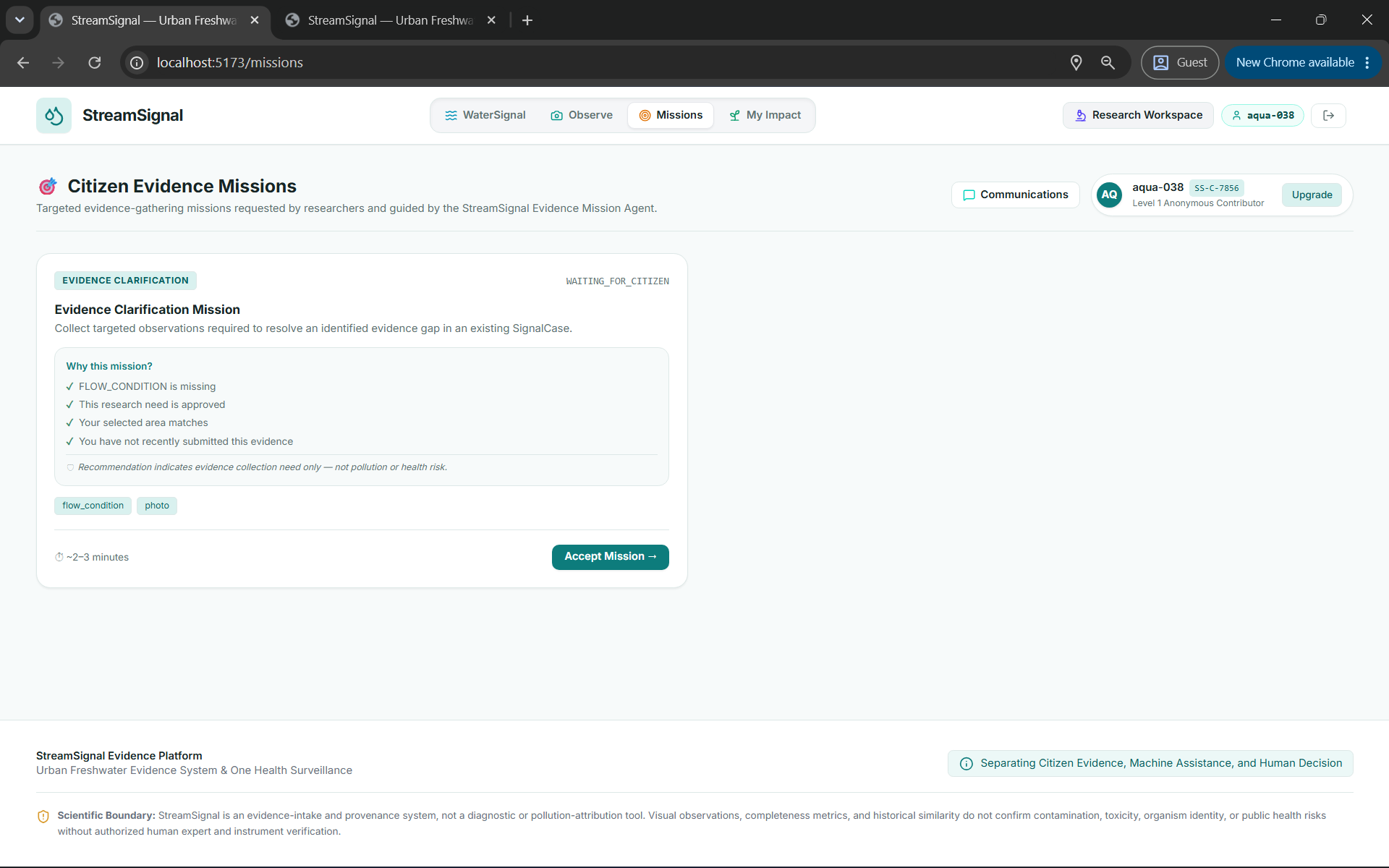
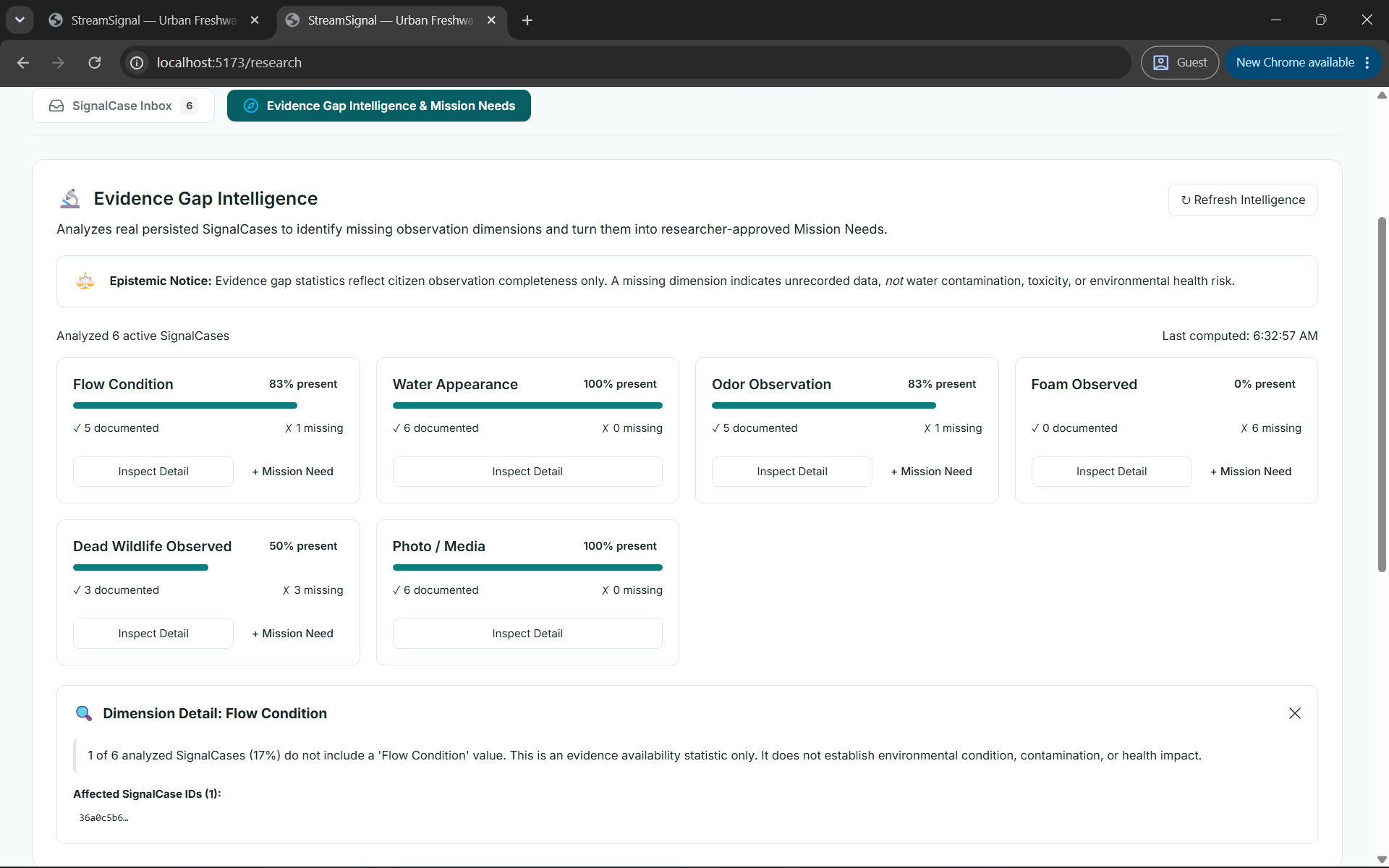
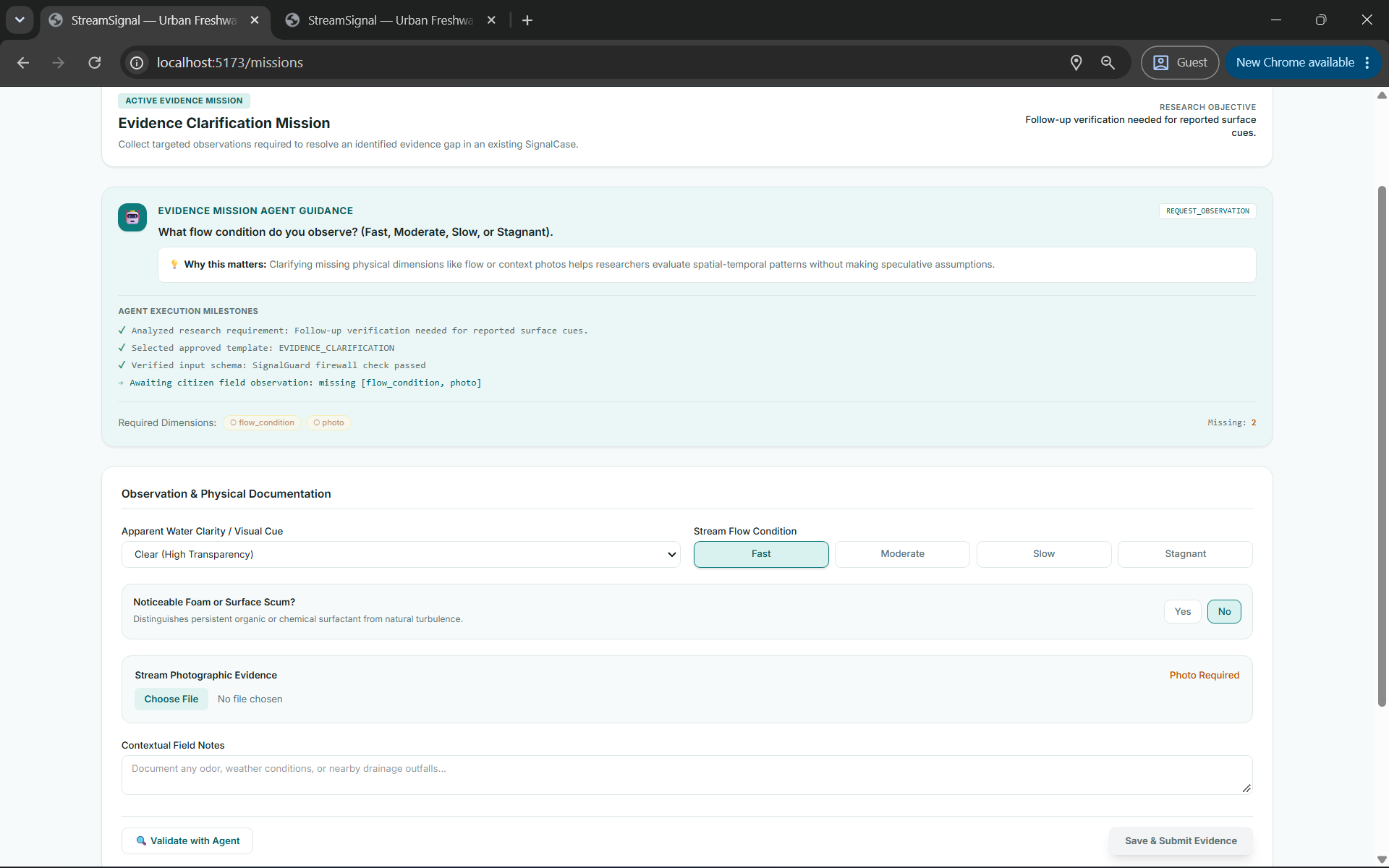
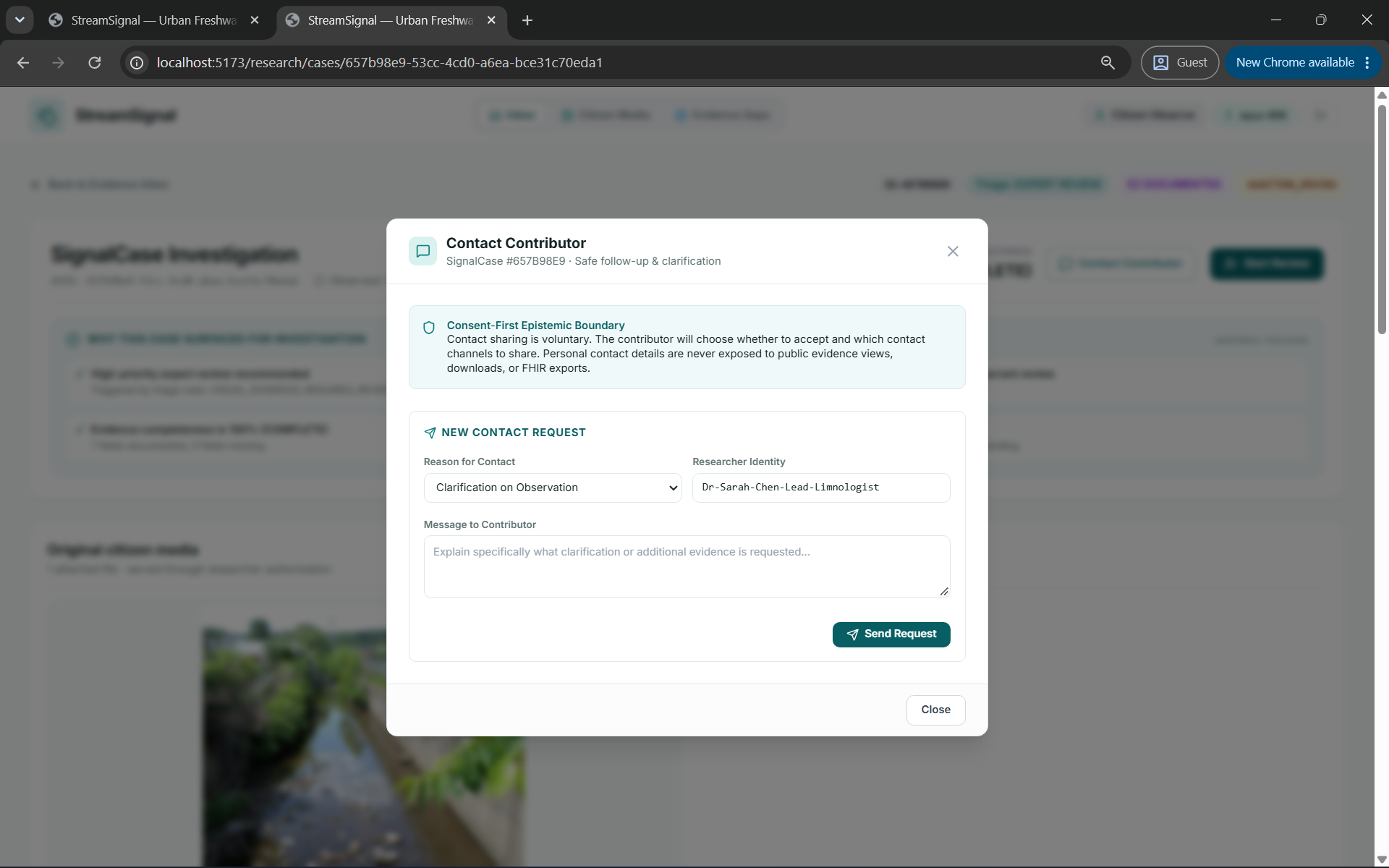
Researchers can then investigate SignalCases, identify missing evidence, request additional observations, review contributions, and follow the complete evidence history.
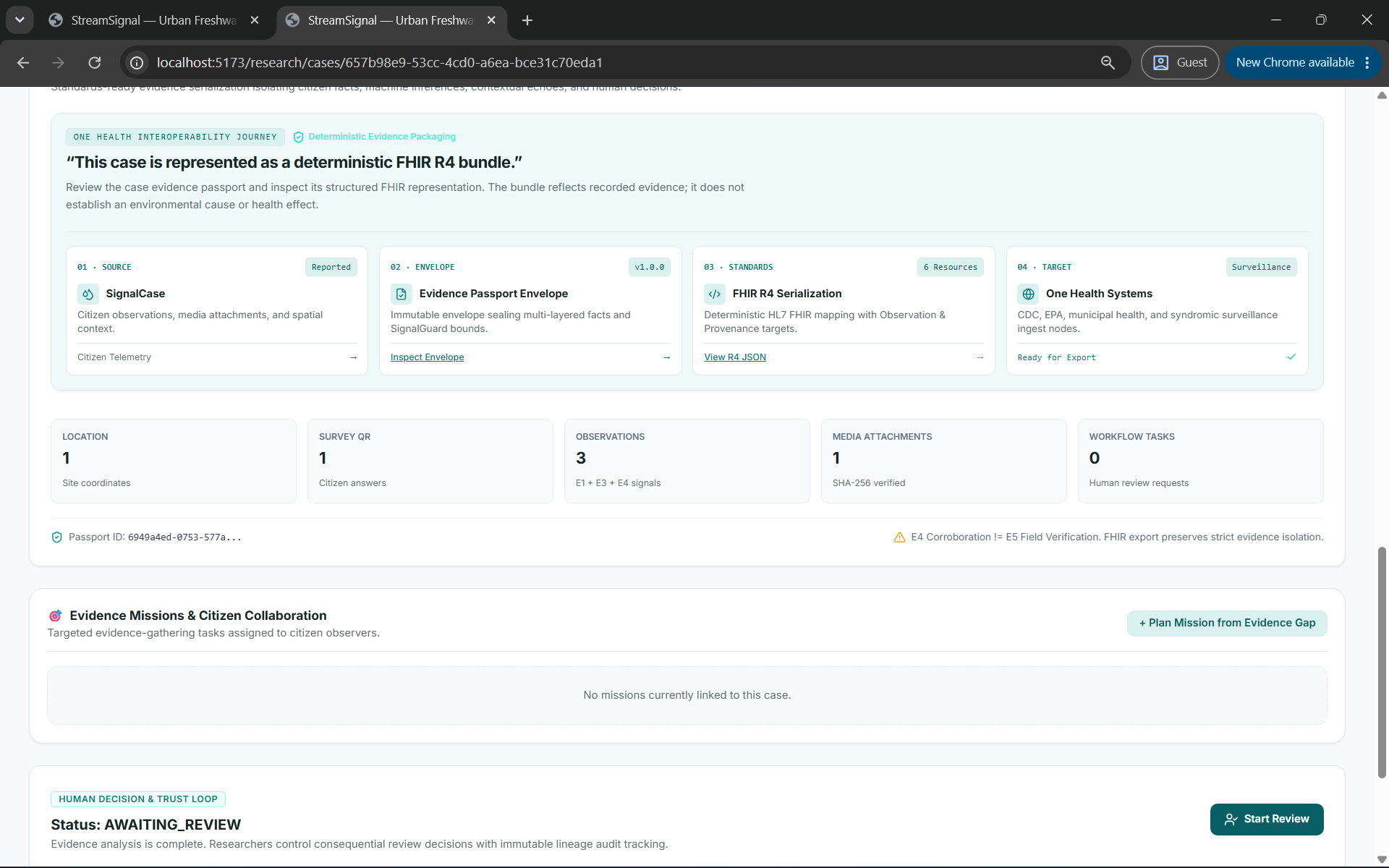
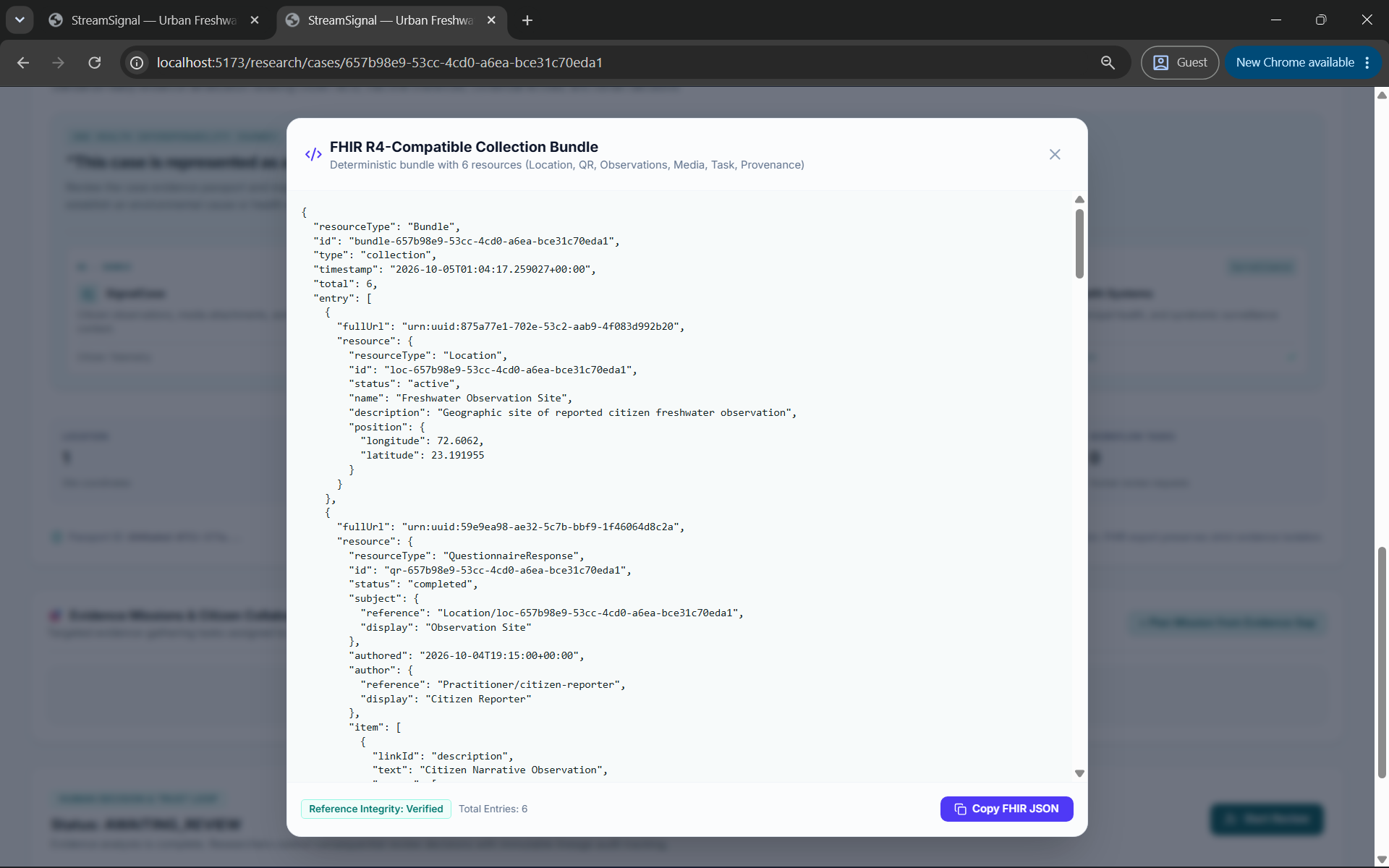
Finally, the evidence can be packaged through an Evidence Passport and exported as a FHIR R4 Bundle with Provenance, allowing the evidence to move toward other One Health systems.
How we built it
StreamSignal is a full-stack application rather than only a UI prototype.
Backend
We built the core platform with:
- Python + FastAPI
- PostgreSQL
- SQLAlchemy
- Alembic
- structured APIs
- secure media handling
- WebSockets for live updates
The backend manages real reports, media, SignalCases, evidence quality, human reviews, missions, provenance, and evidence gaps.
Built With
- agents
- ai
- alembic
- api
- css
- fastapi
- fhir
- ollama
- postgresql
- python
- react
- rest
- sqlalchemy
- tailwind
- typescript
- vector
- websockets


Log in or sign up for Devpost to join the conversation.