-
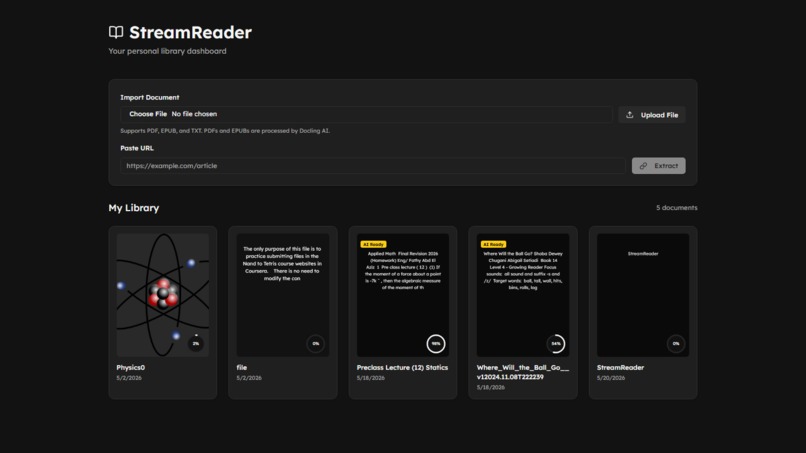
Minimalist Library Hub
-
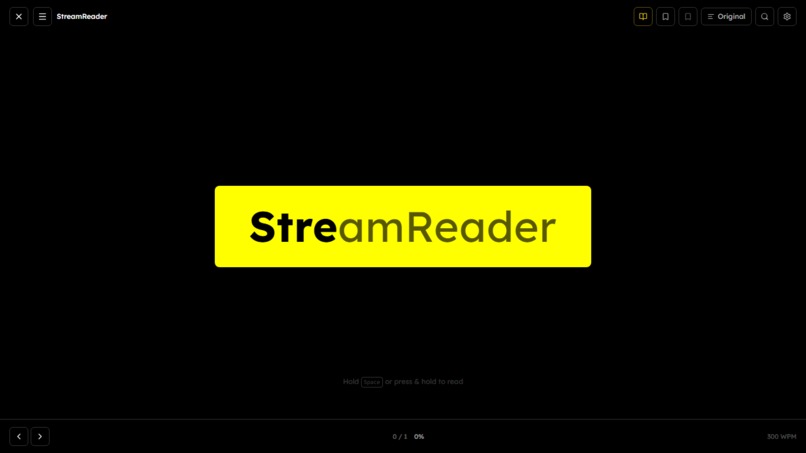
Active Engagement Mode
-

Study Guide
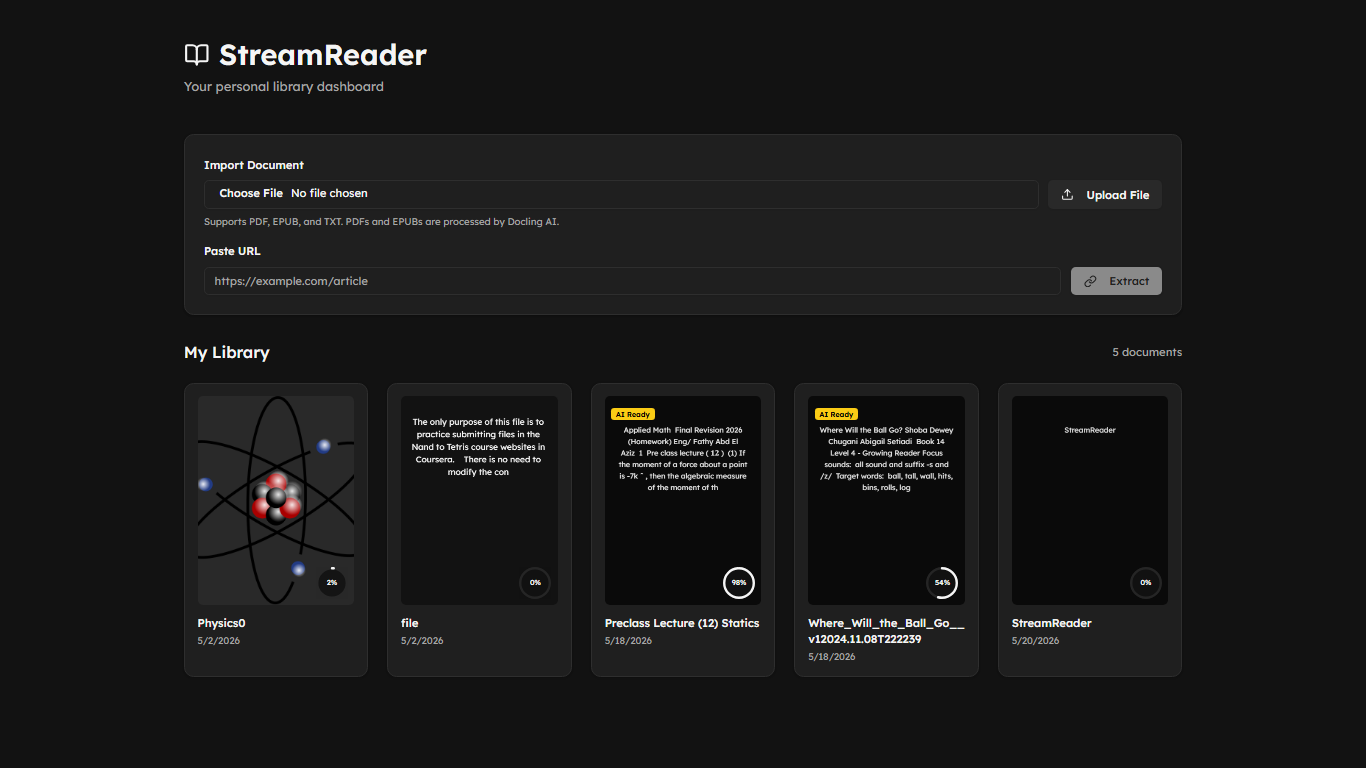
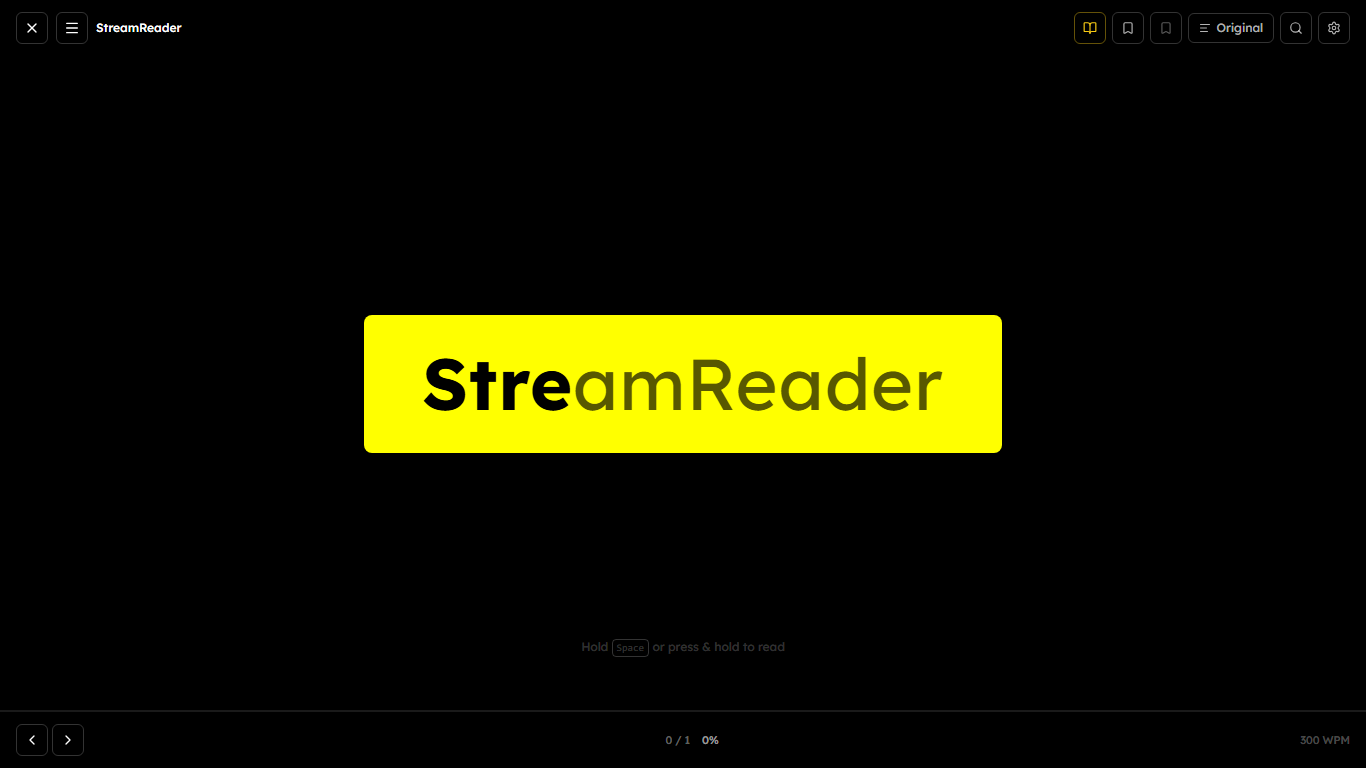

The Philosophy: The Runner and the Dog Running alone is hard. When you are by yourself, it is easy to get bored, slow down, and eventually stop. But if a dog starts running after you? You don't have time to be bored. You just keep moving. StreamReader is that dog for your brain. Traditional reading is failing the modern attention span. Most people "read" while their minds are actually somewhere else. By requiring you to physically hold the screen or the spacebar to see the words, StreamReader creates a Tactile Tether. If your focus breaks, your finger relaxes, and the knowledge stops. It forces you to be the driver of your own focus. Solving the Mechanical Failure of the Page For my generation (Gen Z) and for people with dyslexia or ADHD, the "Page" can be a scary place. When thousands of words are on a screen at once, they blend together. We skip lines, we lose our place, and we get overwhelmed by the size of the task. StreamReader solves this through Extreme Chunking. By showing only one word at a time via RSVP (Rapid Serial Visual Presentation), we turn a mountain of text into thousands of tiny, achievable micro-goals. You can’t get lost between the lines because there are no lines to get lost in. How we built it StreamReader is a hybrid of low-code simplicity and high-end AI engineering. Frontend: Built on MeDo, utilizing a custom state-management system to handle frame-perfect word streaming. The Brain: A custom-engineered backend using Docling AI (by IBM Research) deployed on Modal.com. The Hardware: We utilized an NVIDIA T4 GPU to handle layout-aware document parsing, allowing the app to ignore headers, footers, and page numbers to give the reader "pure" content. Challenges & Learning The biggest challenge was the "Cold Start" problem—waiting for heavy AI models to wake up. We learned to optimize this by using GPU Memory Snapshotting and persistent volumes, bringing processing times down from 40 seconds to sub-10 seconds. We also had to solve the "Structural Sync" problem: ensuring that if a user switches from the word-stream to the original PDF, they land on the exact same sentence.

Log in or sign up for Devpost to join the conversation.