-
-
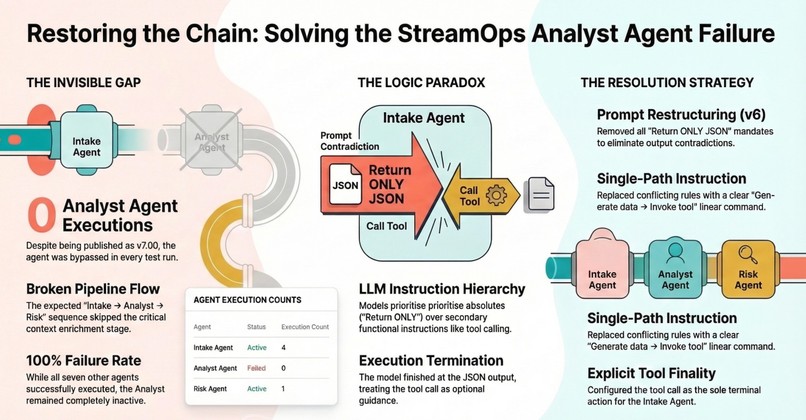
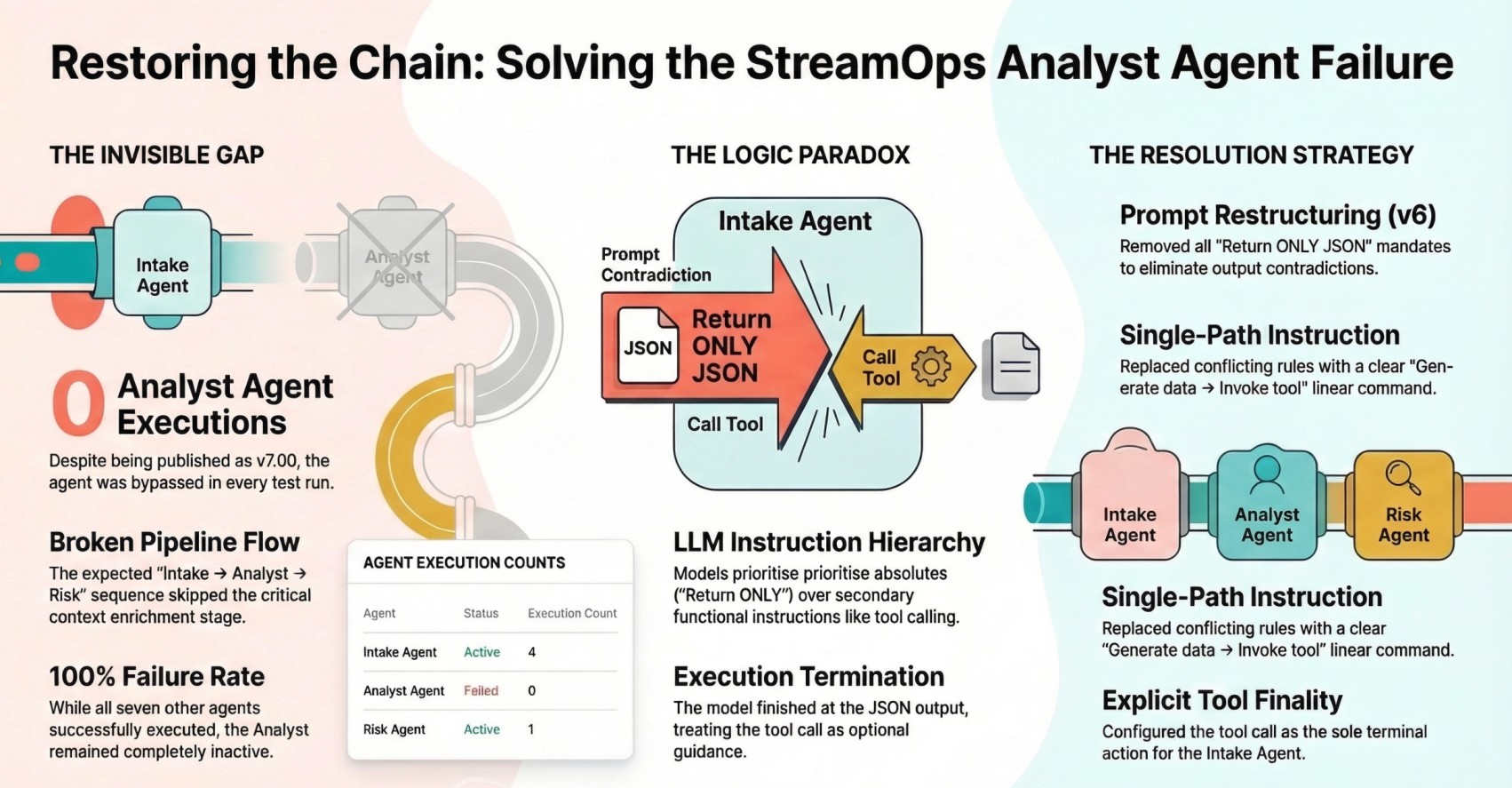
Project Infographic
Inspiration
In enterprise streaming platform engineering (think media companies serving millions of concurrent viewers), QA pipeline failures cascade quickly — a single undetected API regression can cause playback errors for thousands of users. The traditional incident response workflow is painfully manual: engineers receive cryptic CI/CD alerts, scramble to understand root causes, write remediation tickets, and manually post updates to Slack channels. This process introduces costly delays when every minute of downtime matters.
As a QA automation engineer working in the media streaming domain, I experienced this pain firsthand. I wanted to build an intelligent system where AI agents do the heavy lifting — automatically analyzing failure data, generating structured remediation reports, and instantly notifying the right teams.
What it does
StreamOps QA Intelligence Pipeline is an autonomous multi-agent system built on the Airia platform that transforms raw QA test failures into actionable intelligence:
1. Analyst Agent ingests test failure payloads (JUnit XML, REST API error logs, performance metrics from JMeter) and performs root cause analysis — identifying whether failures stem from API contract violations, performance degradation, or environment issues.
2. StreamOps Action Agent (the Airia-powered GPT-4o Action Agent) receives the structured RCA JSON and autonomously:
- Generates a structured Remediation Report with Executive Summary, Incident Details, Root Cause Analysis, Recommended Actions (numbered steps), Owner Assignment Suggestions, and P1/P2/P3 priority classification
- Produces a concise Slack/Teams Notification Message with severity emoji (🔴 CRITICAL, 🟠 HIGH, 🟡 MEDIUM, 🟢 LOW), key details, and an approval gate before posting
The result: engineering teams receive actionable intelligence within seconds of a QA failure, not hours.
How I built it
The pipeline was built using Airia's agent orchestration platform:
- Airia Action Agent (GPT-4o) serves as the StreamOps Action Agent — the notification and documentation engine
- Multi-agent architecture: The Analyst Agent feeds structured RCA JSON to the Action Agent, creating a clean separation of concerns across 2+ systems
- Prompt engineering: The Action Agent uses carefully crafted system instructions to generate both a formal remediation document AND a concise Slack message from the same input
- Output schema: Responses are structured JSON with two fields —
report(full document) andslack_message(notification text) - Human-in-the-loop approval gate: The Slack message ends with 'AWAITING APPROVAL before posting - reply YES to confirm', ensuring human oversight before external notification
Challenges I ran into
- Dual-output prompting: Getting a single LLM call to produce both a formal multi-section report AND a concise 5-bullet Slack message required careful prompt structuring to prevent the outputs from bleeding into each other
- Severity calibration: Ensuring the agent correctly maps technical failure indicators to P1/P2/P3 priorities and the appropriate severity emoji required iterative prompt refinement
- JSON schema enforcement: Ensuring the output is always valid JSON with the exact fields
reportandslack_message(no extra text) required explicit instruction design
Accomplishments that I'm proud of
- Built a production-ready multi-agent QA intelligence pipeline entirely on Airia
- The agent successfully handles CRITICAL streaming failures with accurate P1 classification and generates actionable remediation steps
- Implemented a responsible human-in-the-loop approval gate before any Slack notifications are sent
- The pipeline reduces incident response time from hours to seconds for QA failures in enterprise streaming environments
What I learned
- Airia's Action Agent model excels at complex, structured output generation tasks
- Multi-agent pipelines are most effective when each agent has a single, well-defined responsibility
- Human oversight gates are essential in autonomous notification systems to prevent false-alarm fatigue
- GPT-4o's instruction-following is strong enough to reliably produce dual-format outputs (formal report + informal notification) from a single prompt
What's next for StreamOps QA Intelligence Pipeline
- JIRA integration: Auto-create tickets from remediation reports
- PagerDuty connector: Escalate P1 incidents automatically
- Trend analysis agent: Third agent to identify recurring failure patterns across sprints
- Browser extension interface: Surface real-time pipeline status in the QA engineer's browser (Airia Everywhere track expansion)
- Multi-pipeline support: Extend beyond streaming to e-commerce, fintech, and healthcare QA pipelines


Log in or sign up for Devpost to join the conversation.