-
-
Logo
-
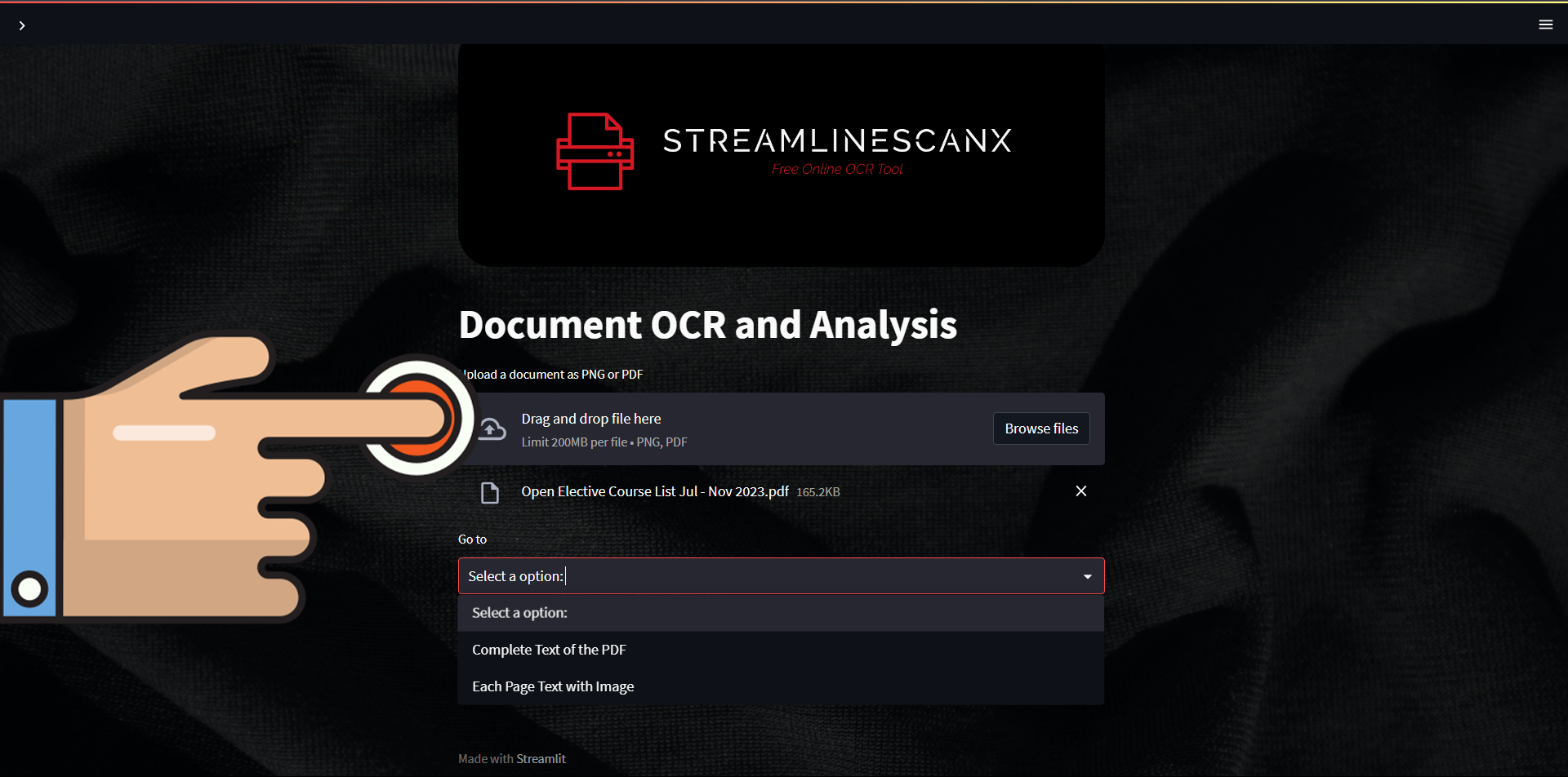
Processing Pdf
-
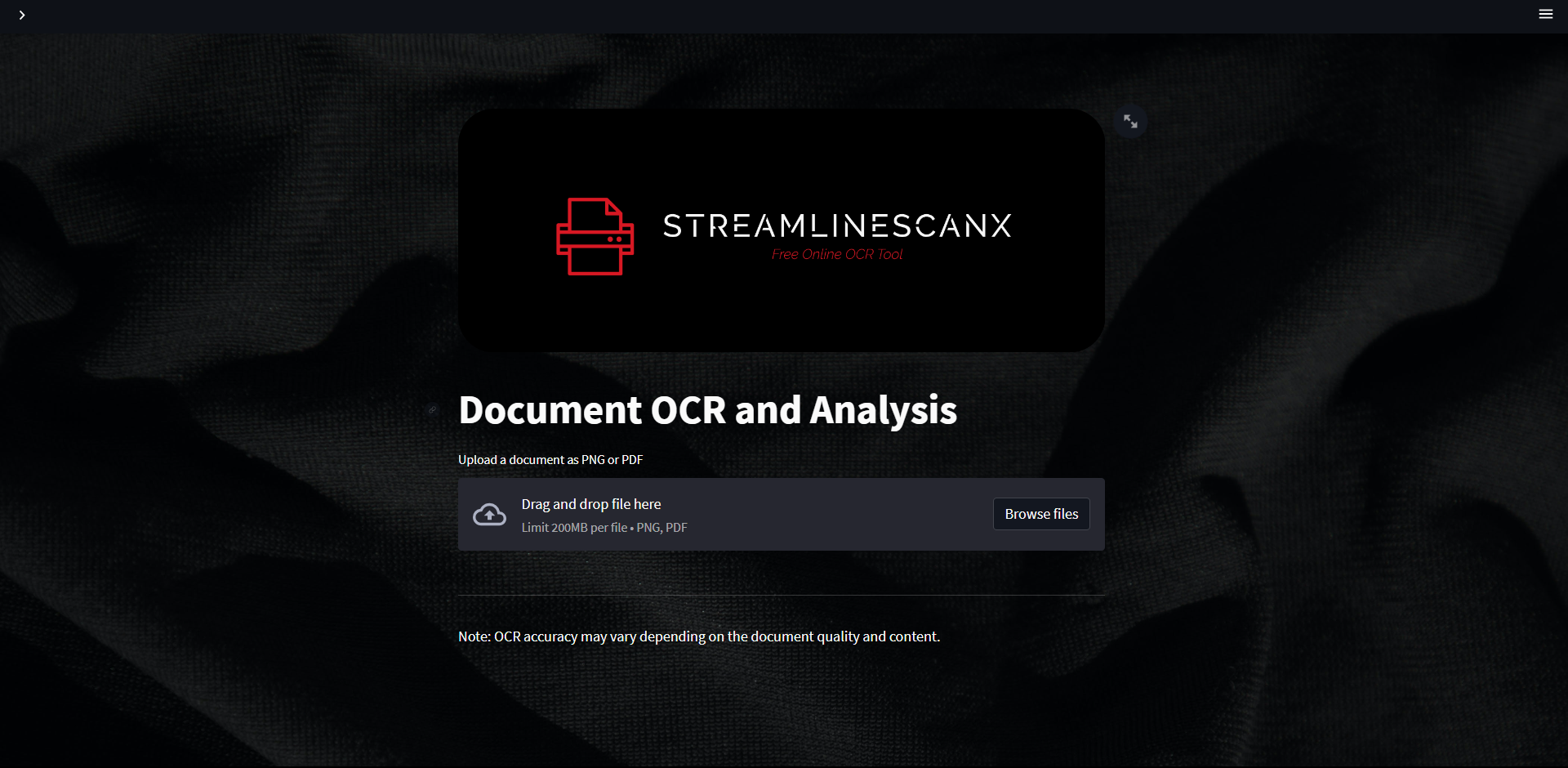
Homepage
Inspiration
The inspiration behind StreamlineScanX came from my personal experience with the challenges of document processing. Handling documents, whether they are images or PDFs, can be time-consuming and error-prone. I wanted to create a tool that could streamline this process by leveraging OCR technology and providing an intuitive interface to extract text and gain insights from various document formats.
What it does
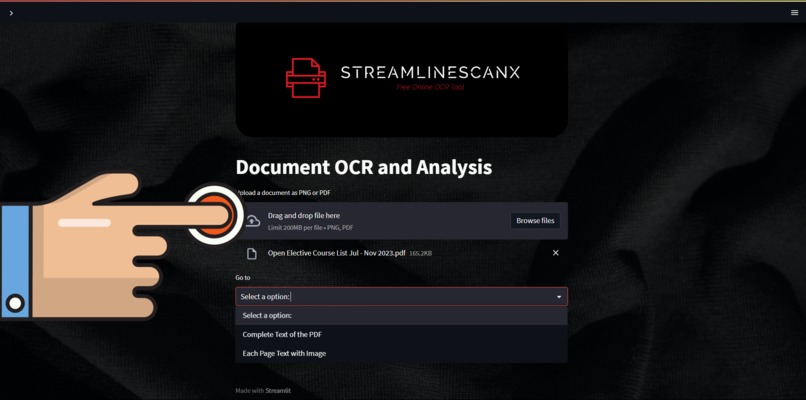
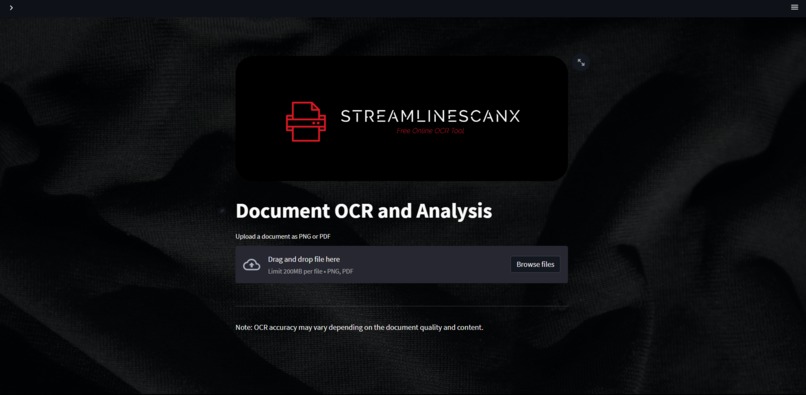
StreamlineScanX is a robust document OCR and analysis tool that empowers users to upload PNG images or PDF files and extract text, detect tables, and visualize data effortlessly. With its advanced features, it streamlines the process of digitizing documents, making them easily searchable and usable.
How I built it
StreamlineScanX was brought to life through a synthesis of diverse technologies and libraries. The frontend interface was developed using Streamlit, enabling an intuitive user experience. The project's core functionality relied on Pytesseract for optical character recognition (OCR) and text extraction. Notably, the 'microsoft/table-transformer-detection' model from the Transformers library was skillfully integrated to enhance table detection accuracy.
The backend, constructed in Python, harnessed the capabilities of OpenCV for image processing, while NumPy and pandas facilitated seamless data manipulation. Moreover, PDF2Image was utilized to convert PDF pages into images, extending the tool's versatility.
The culmination of these components yielded a coherent and effective document processing pipeline. By accurately extracting text and identifying tables, StreamlineScanX empowers users to analyze documents with ease. The project's significance lies in its capacity to simplify document processing tasks while offering potential for future enhancements such as multilingual OCR capabilities and broader document format support. StreamlineScanX embodies the spirit of innovation, demonstrating the potential for continued evolution in simplifying complex workflows.
Challenges we ran into
During the development of StreamlineScanX, I encountered significant challenges that shaped the project's trajectory. A primary hurdle involved optimizing OCR accuracy for complex document layouts and fonts. After exploring multiple OCR options, Pytesseract emerged as the top choice due to its exceptional speed.
Detecting tables within images and PDFs also proved challenging, demanding careful algorithm design and model selection. Extensive research on platforms like Hugging Face eventually led to the adoption of the 'microsoft/table-transformer-detection' model, which proved effective.
Integrating these technologies seamlessly while maintaining a user-friendly interface was another complex task, addressed through meticulous planning. The project's evolution was characterized by tackling these obstacles, highlighting the iterative nature of development and the importance of innovation and persistence in creating a reliable, user-centric document processing tool.
Accomplishments that we're proud of
I'm incredibly proud of creating an application that simplifies document processing for users. My accomplishment lies in combining multiple technologies to create a cohesive tool that offers accurate text extraction and table detection. The seamless integration of the 'microsoft/table-transformer-detection' model from Transformers significantly contributed to this accomplishment. The user-friendly interface amplifies the tool's usability, allowing users to effortlessly visualize results and gain insights through StreamlineScanX.
What we learned
The journey of development enriched me with invaluable insights spanning OCR technology, working with images, and designing interfaces that people find easy to use. I also gained insight into the challenges of combining different technologies to solve real-world problems. The experience of working with TableTransformerForObjectDetection and the 'microsoft/table-transformer-detection' model expanded my knowledge about using advanced tools for practical solutions. Overall, this journey provided me with valuable insights and skills in creating useful applications.
What's next for StreamlineScanX
In the future, I plan to enhance the table detection capabilities by incorporating machine learning algorithms for more accurate identification and extraction of tabular data. I also aim to expand the supported document formats and optimize the OCR engine for different languages. User feedback will be instrumental in driving the continuous improvement of StreamlineScanX as I continue to work on it.
StreamlineScanX represents a significant step towards efficient and intelligent document management, and I'm excited to see how it evolves and contributes to simplifying workflows for users.


Log in or sign up for Devpost to join the conversation.