Inspiration
Health education is important, but it's rarely entertaining. Twitch is where millions of people already gather, talk, and make decisions together. StreamHealth Live puts them in the role of a district health team facing a fictional outbreak, so a stream can teach prevention and emergency response while the audience plays. [Add one personal sentence here, e.g. your public-health or humanitarian background.]
What it does
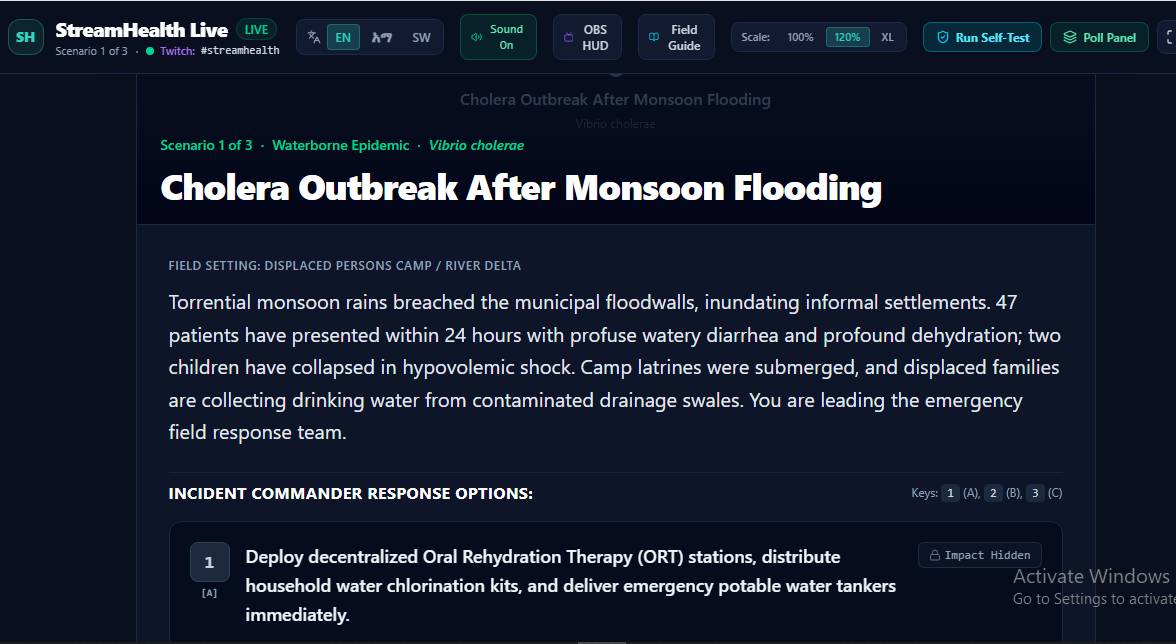
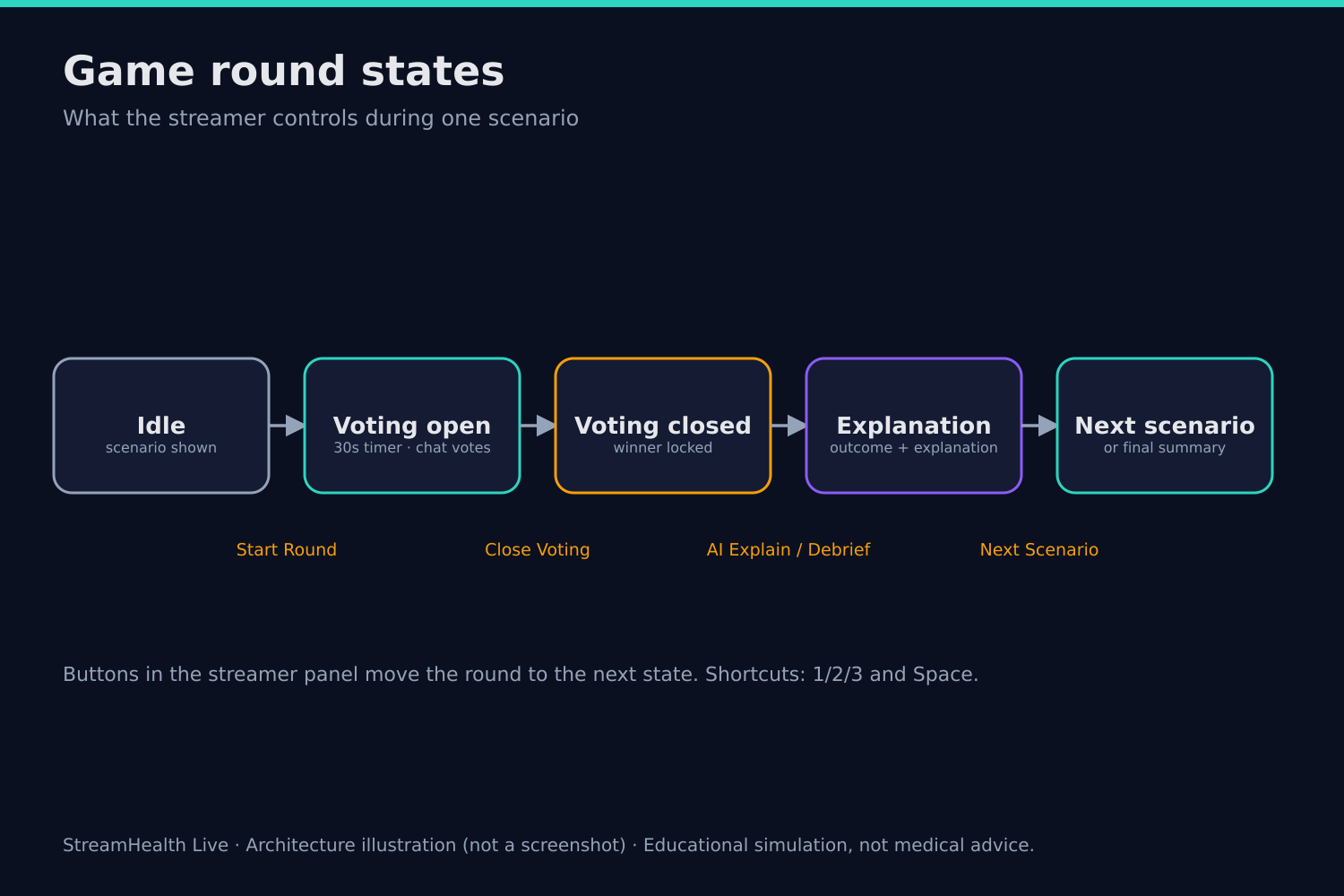
Each round presents an outbreak scenario: cholera after flooding, measles in a school, or malaria in the rainy season.
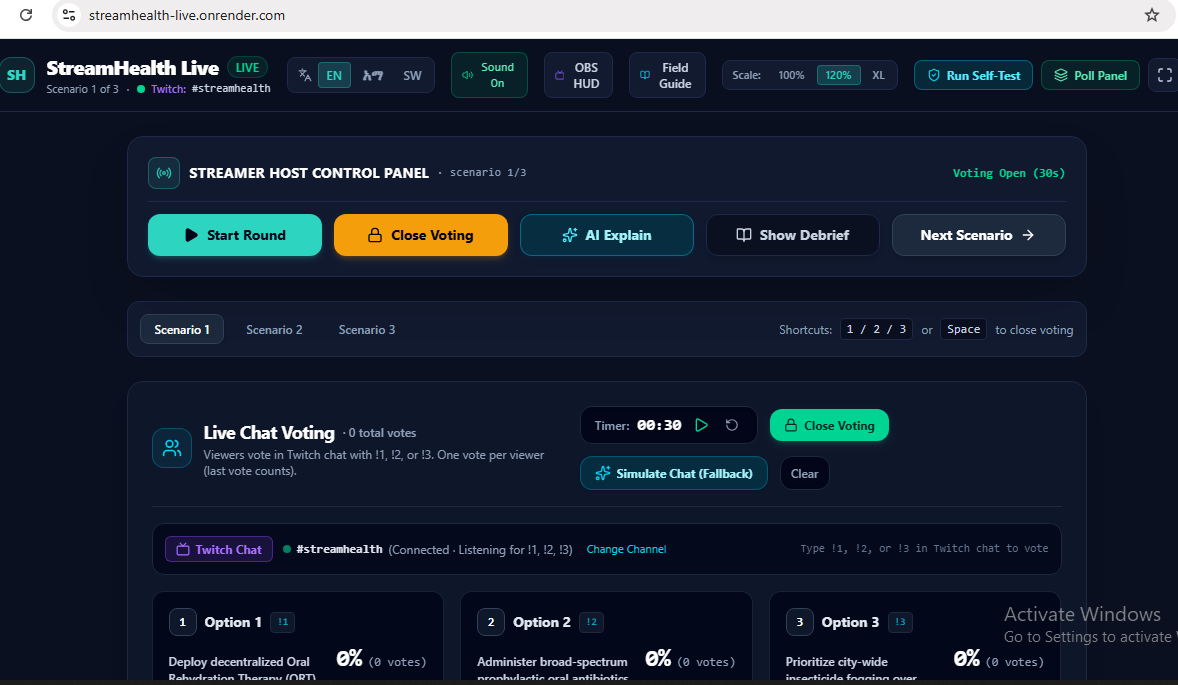
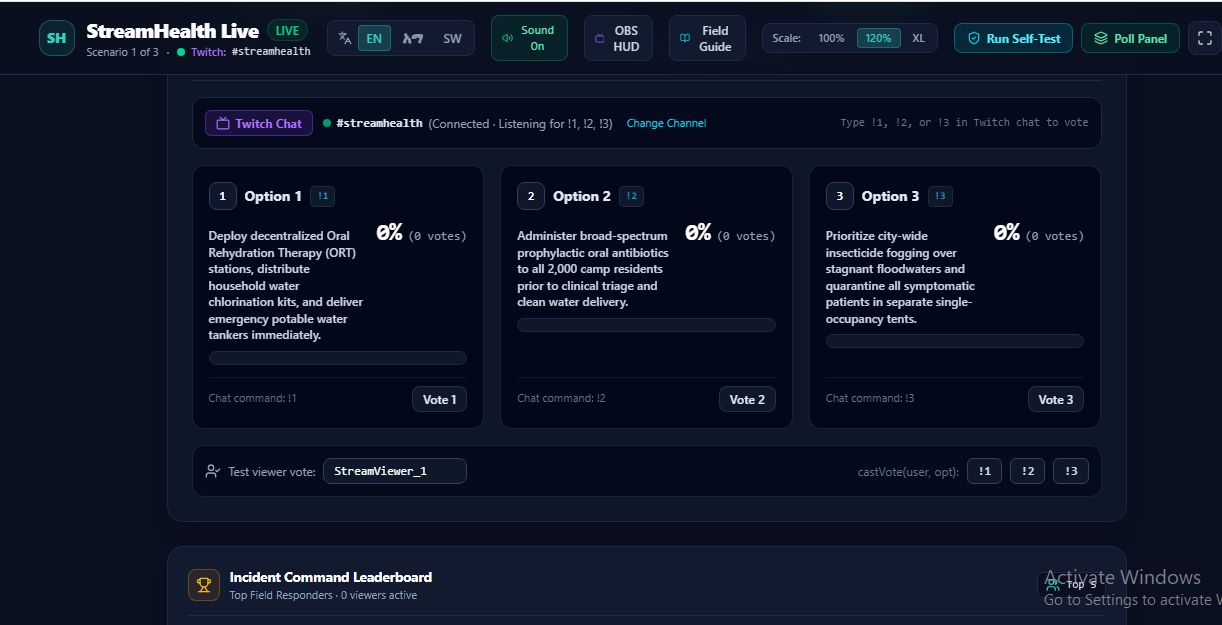
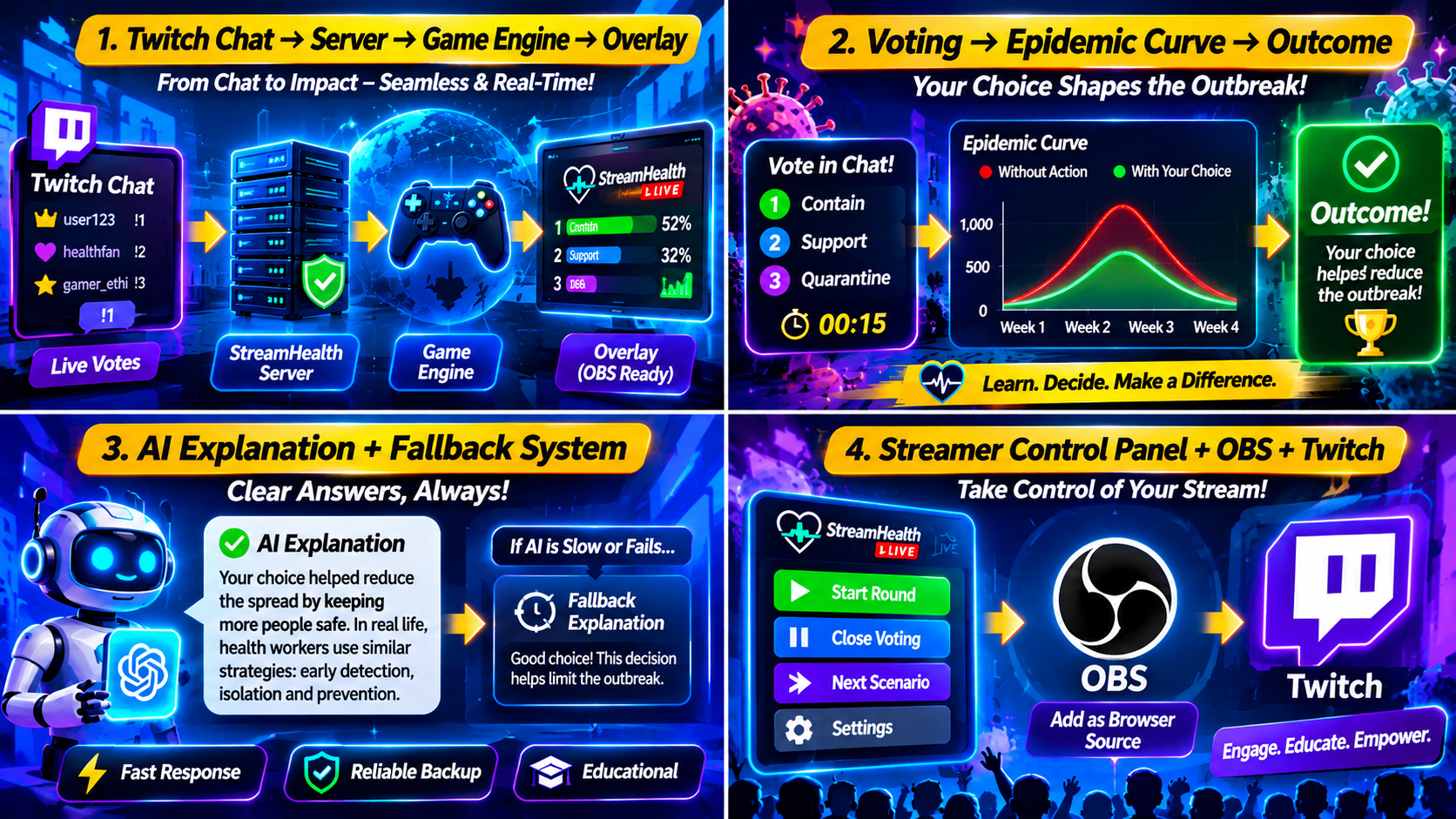
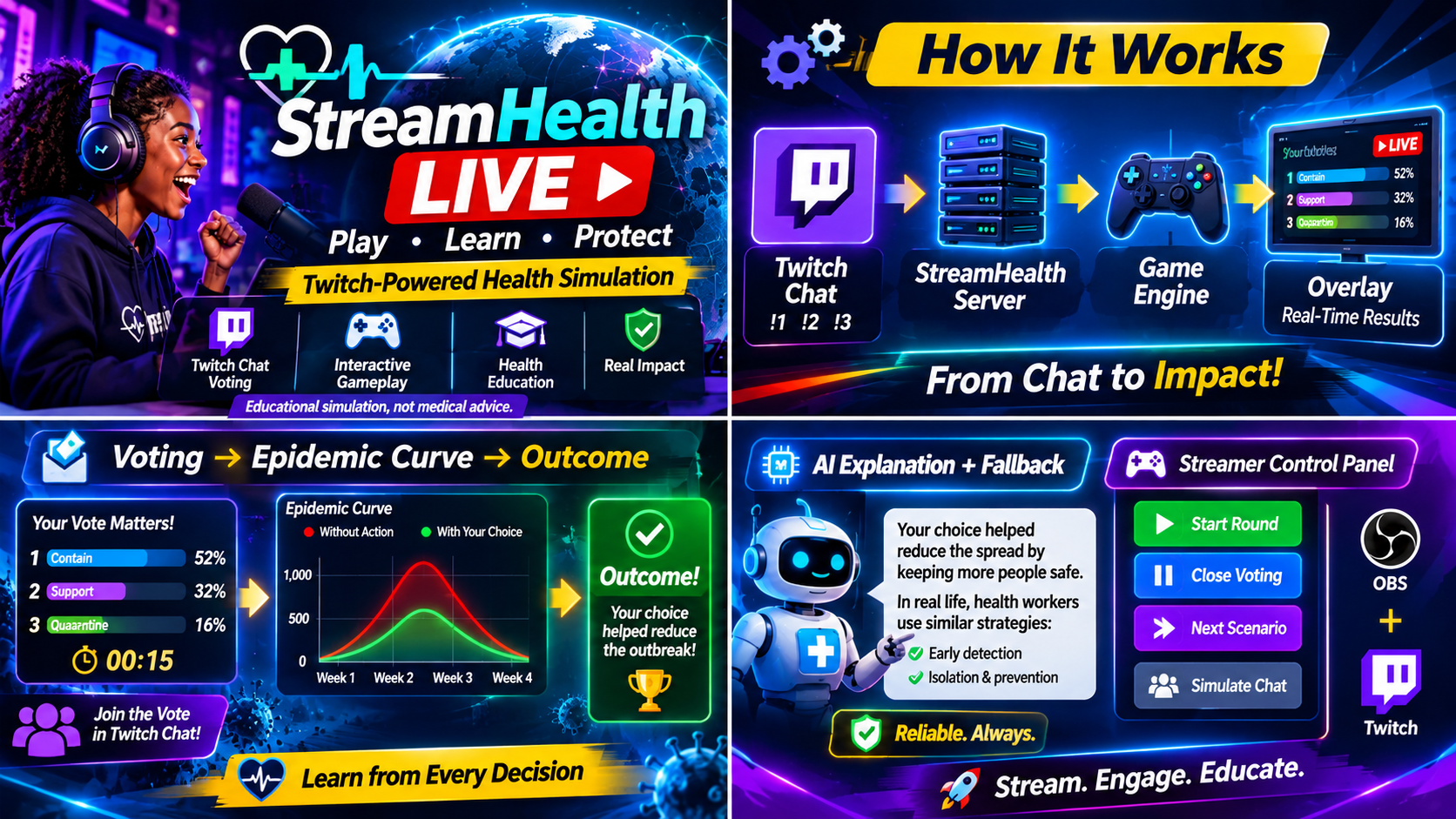
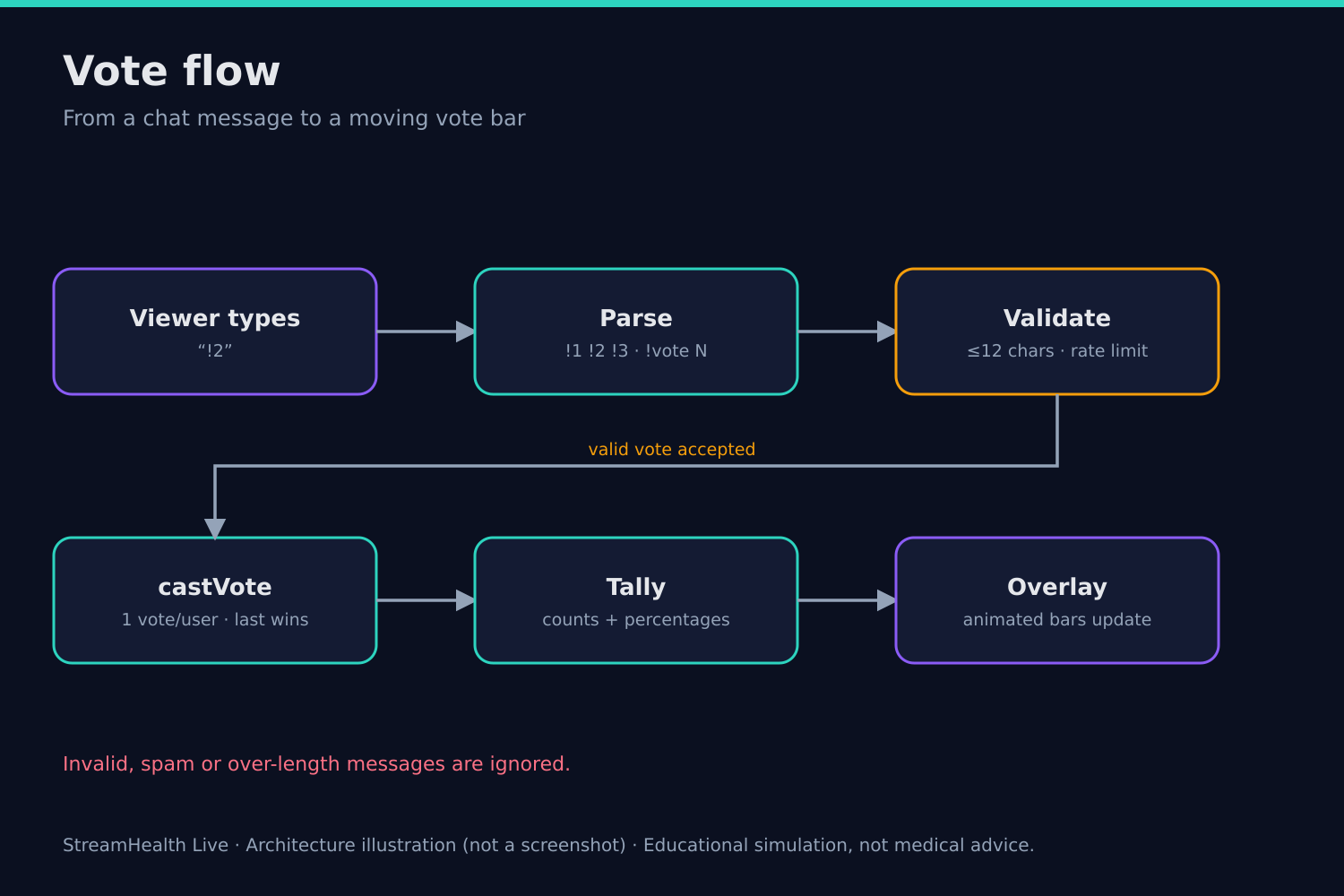
- Viewers vote in Twitch chat by typing !1, !2 or !3. No signup, no second device.
- Live animated vote bars and a countdown show the audience's choice as it forms.
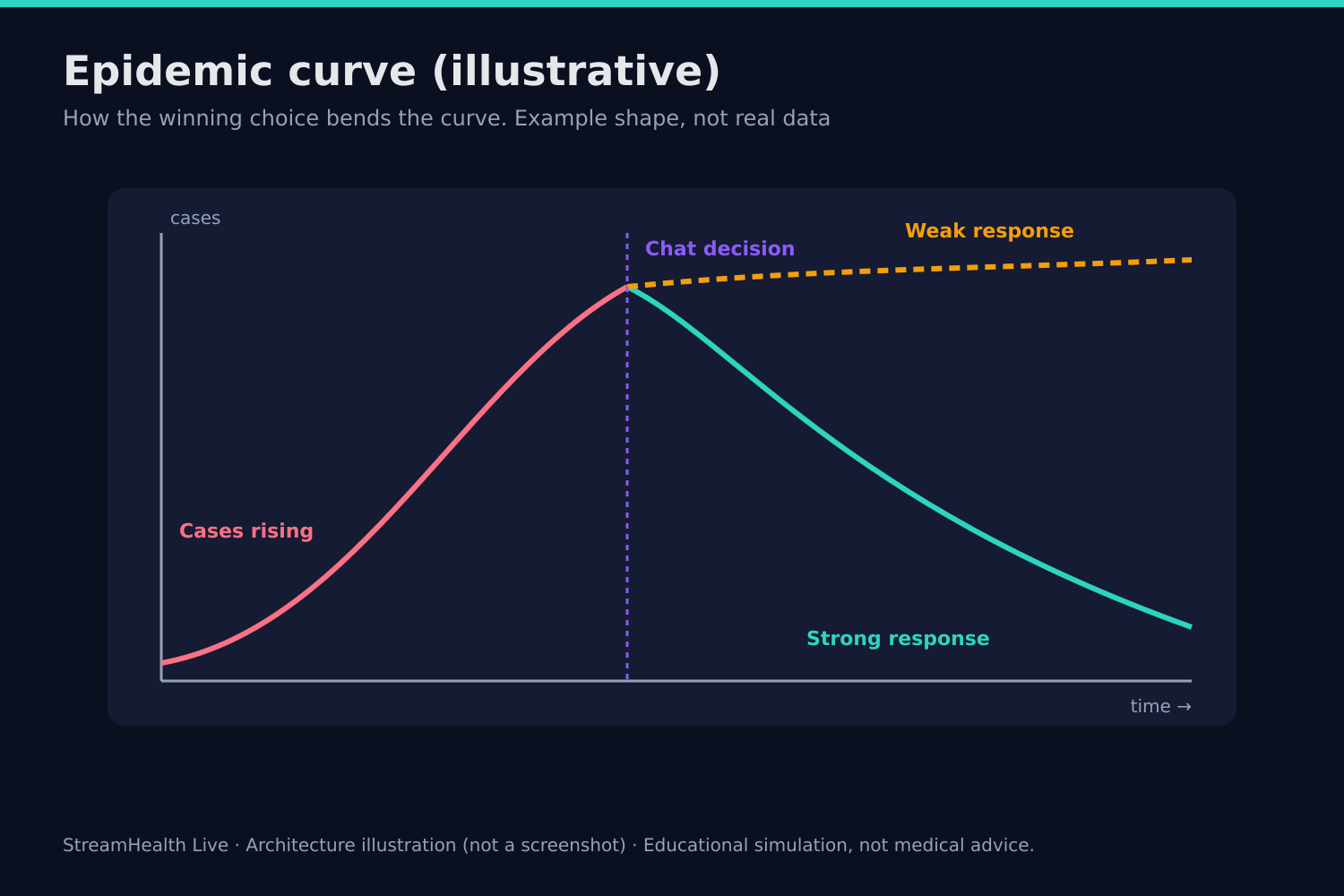
- When voting closes, the winning decision bends a live epidemic curve and the outcome is revealed.
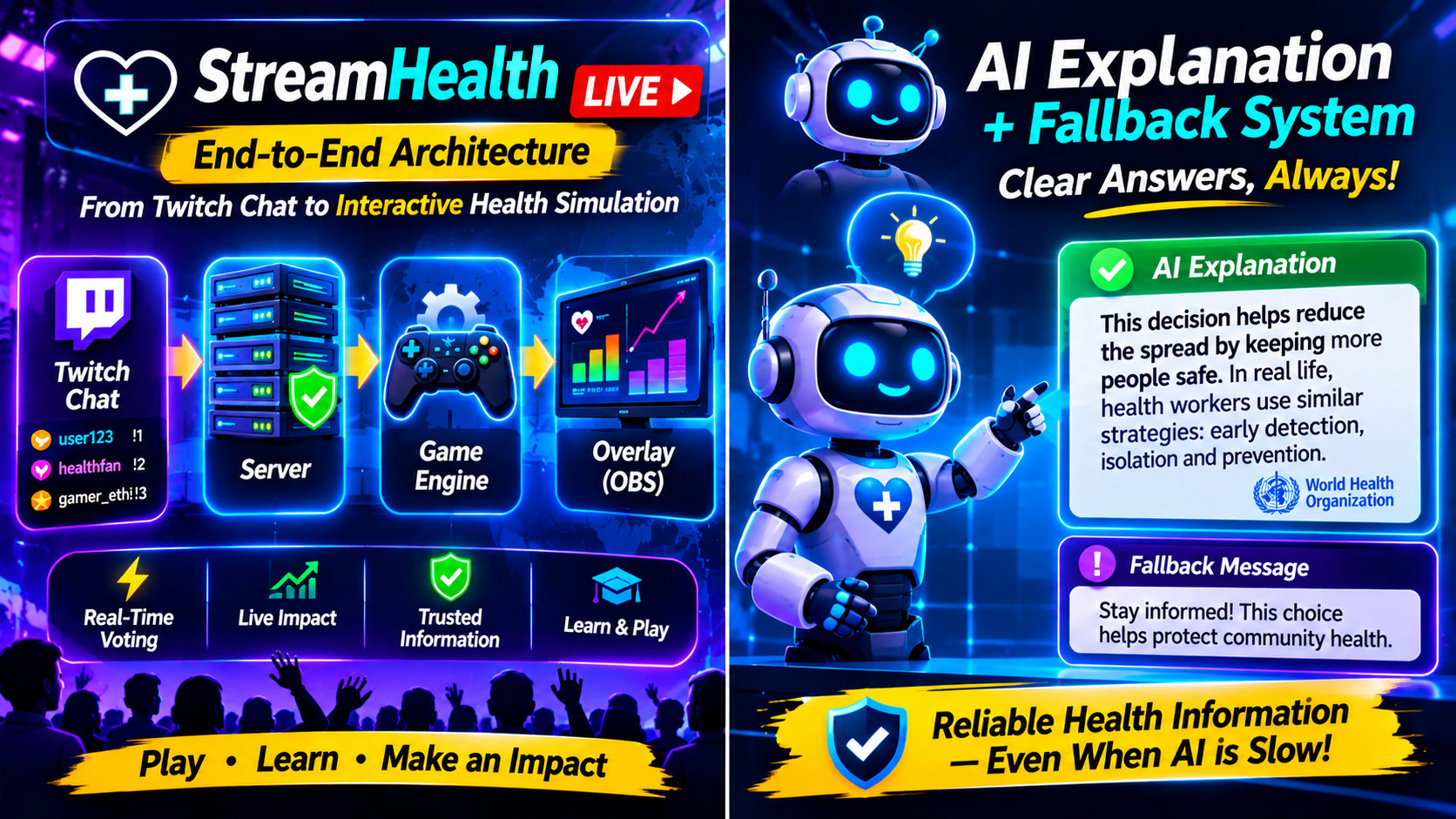
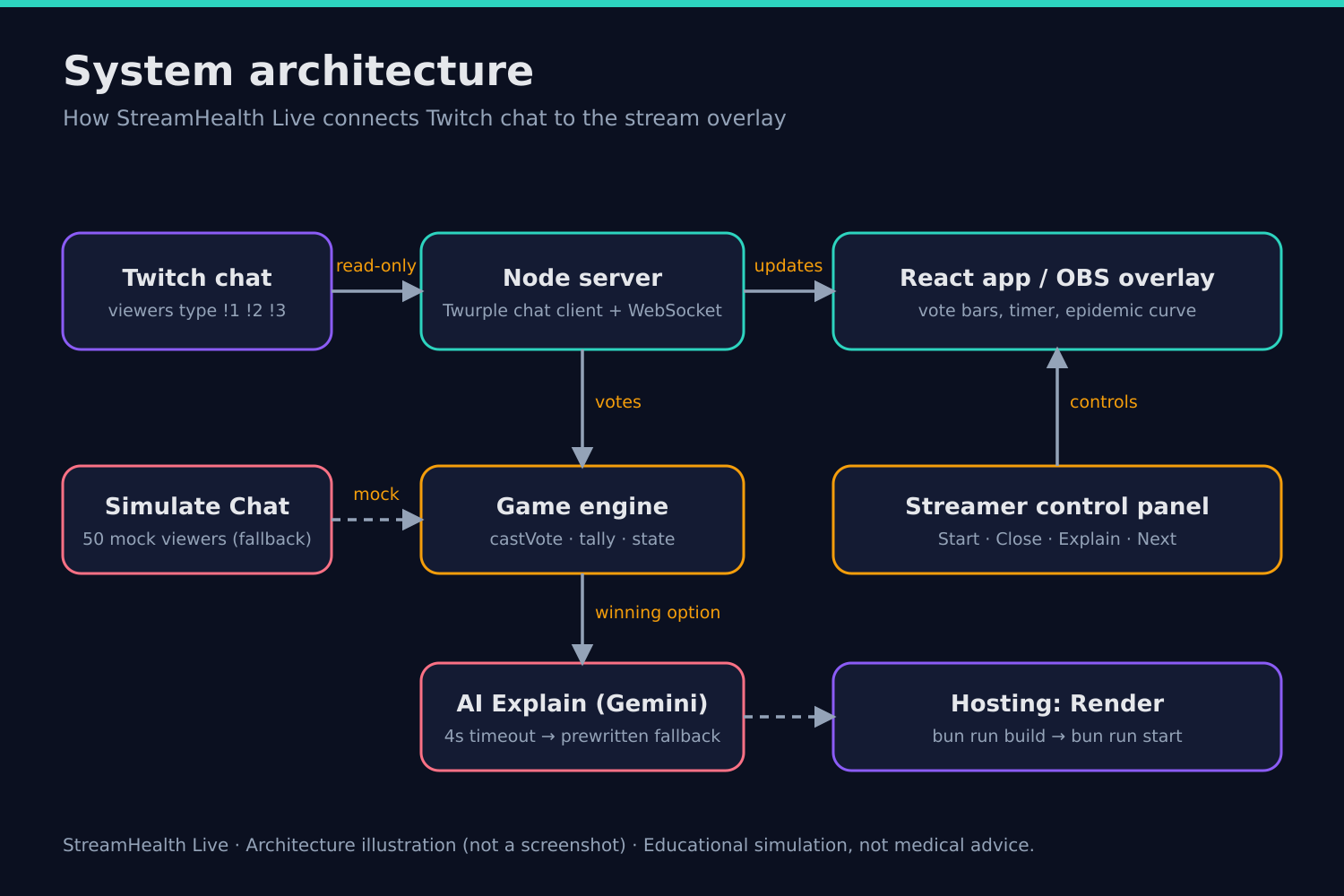
- An explanation follows: why the choice helped or hurt, in plain language, plus what real health workers do. AI Explain writes it, and a prewritten fallback appears if the AI call fails or takes too long.
- A streamer control panel starts rounds, closes voting and moves to the next scenario. An overlay mode (
?overlay=1) is designed for an OBS Browser Source. - Anti-spam rules: one vote per viewer (the last vote counts), short messages only, and per-user rate limiting.
Everything is labeled "Educational simulation, not medical advice."
How Twitch is used
Chat is the controller. The app reads votes from live Twitch chat through Twurple and shows the results on a stream overlay. A Simulate Chat button runs 50 mock viewers, so the demo never depends on a crowd. [Confirm: tested with real chat on channel #YOUR_CHANNEL.]
How I built it with Codex
[Fill this in from your real Codex session. Example structure:]
- Session ID: [paste ID]
- Prompt 1: [what you asked Codex] -> [what it produced, e.g. the game engine and tests]
- Prompt 2: [...] -> [...]
- Prompt 3: [...] -> [...]
- Codex also ran the Vitest tests and fixed failures: [describe one real example].
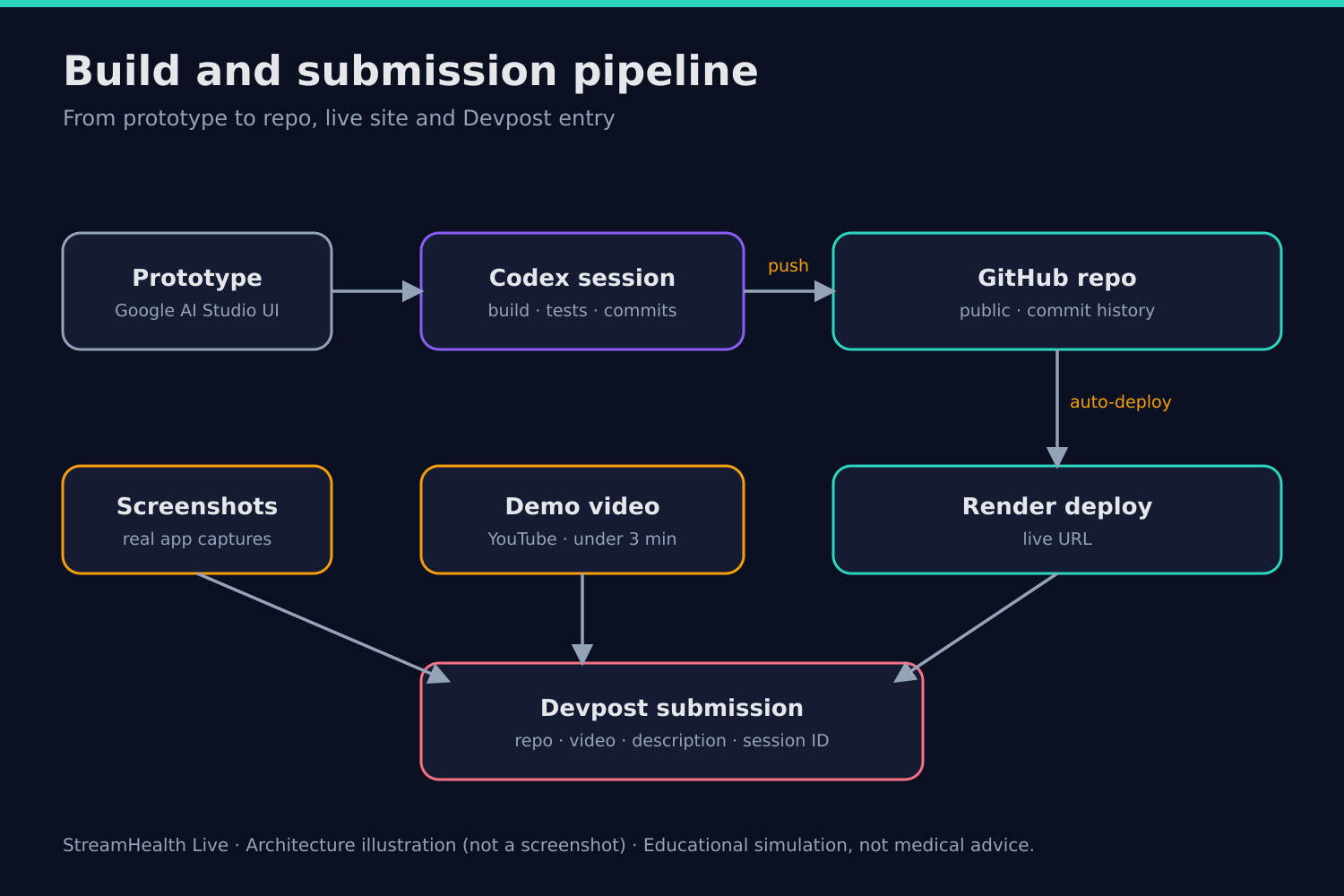
An early UI prototype was made in Google AI Studio. [State clearly which parts were built or rewritten in Codex during the submission period.]
Challenges
- Deploying: the frontend didn't build on the first deploy, which I fixed by changing the build command and server routes.
- Making a Twitch chat game readable on a small overlay, and keeping it playable when chat is quiet (hence the mock viewers).
- Keeping the science responsible: outcomes are simplified, labeled as a simulation, and each scenario is meant to cite WHO or CDC guidance. [Confirm the sources are actually in the app.]
- Keeping the app working when the AI call is slow or fails, through timeouts and fallback explanations.
What I learned
Interactive formats teach better when the audience can see their choices change something. Chat voting only needs a single word, which makes participation easy.
What's next
- Add more scenarios (for example, a flood-response and vaccination-campaign series) reviewed by public-health professionals.
- Add Amharic and Swahili for viewers and streamers who don't speak English. [Remove this line if it's already built.]
- Add streamer-created scenarios, session leaderboards and more overlay themes.
- Add channel-points and Twitch Extension integrations.
Built With
- express.js
- gemini-api
- node.js
- openai-codex
- react
- render
- tailwindcss
- twitch
- twurple
- typescript
- vite
- websockets