Inspiration
Contact center agents often dedicate significant time to perusing different instruction manuals in order to address customer inquiries, leading to reduced customer satisfaction ratings and business setbacks.
What it does
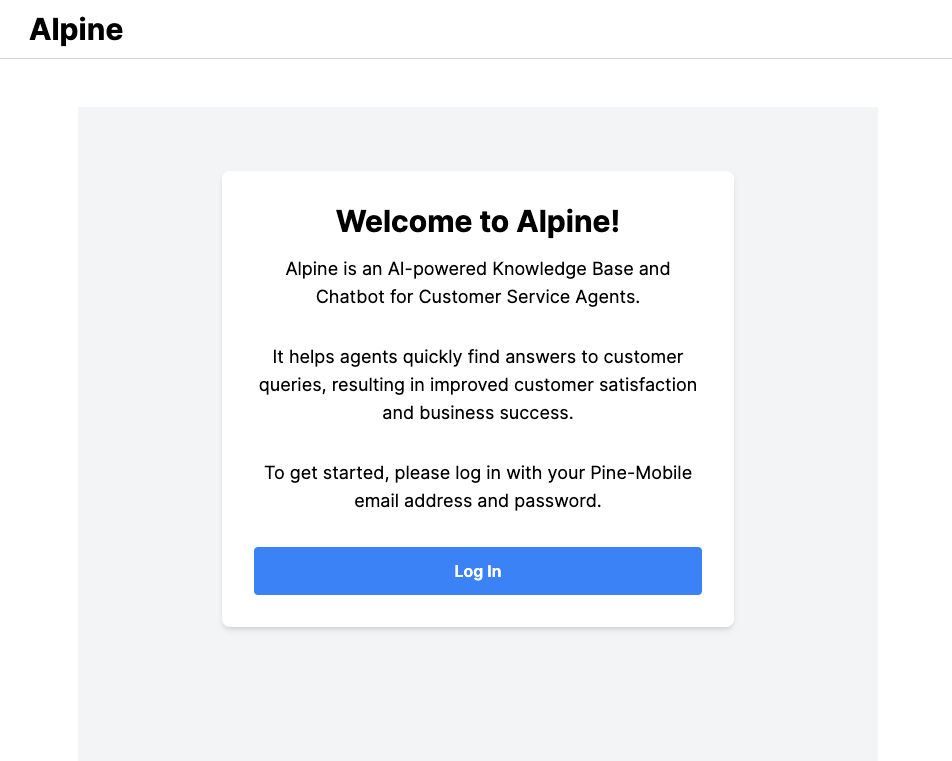
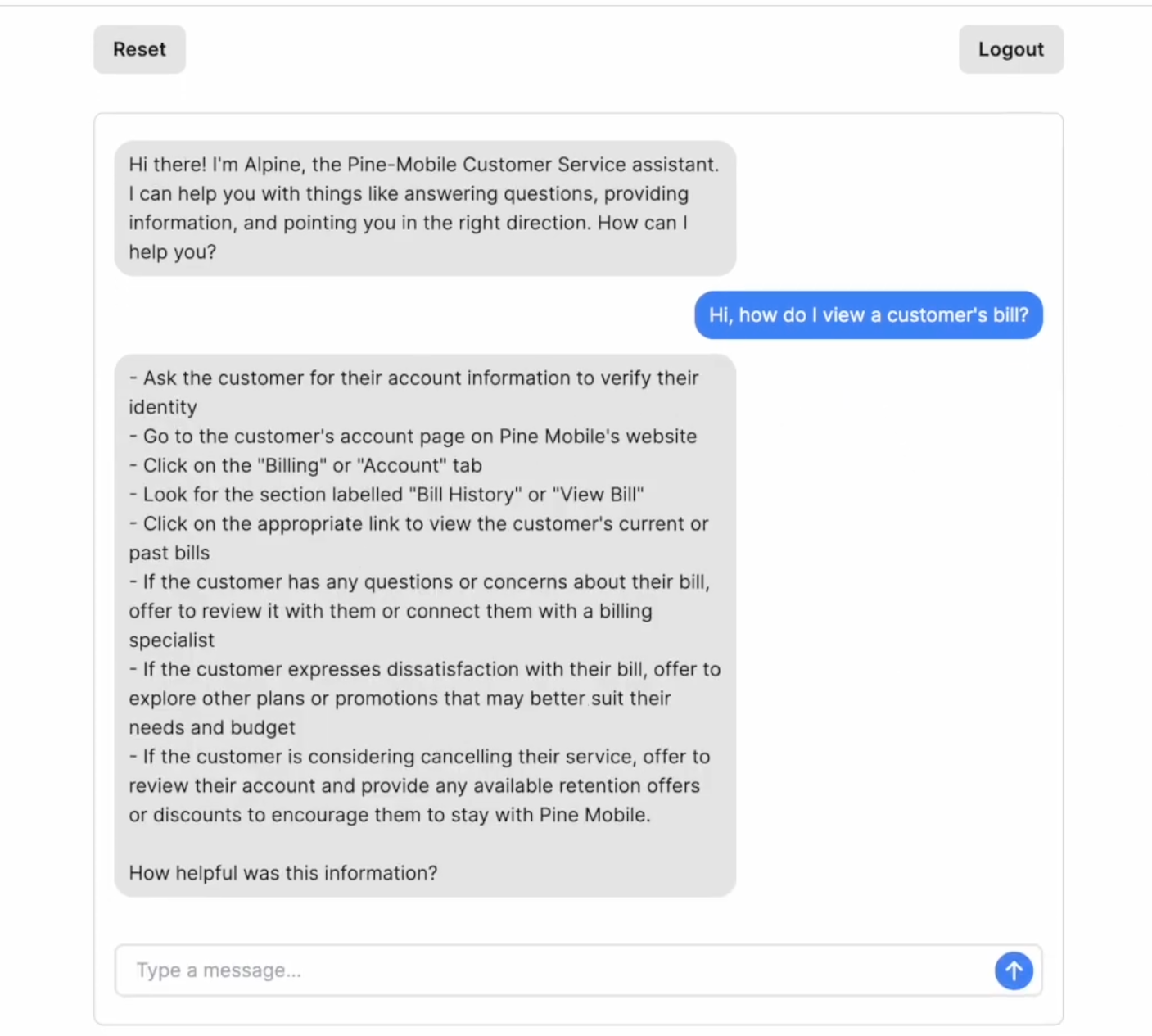
A cutting-edge AI-driven knowledge repository designed specifically for customer-facing agents in major companies
How we built it
- Our backend is powered by Python, utilizing AWS and Lambda, while FastAPI serves as the middleware.
- For the frontend, we employ NextJS/TypeScript and hosted in Vercel.
- To improve the interaction with the knowledge base, we leverage OpenAI LLM for embedding the manuals stored in Pinecone.
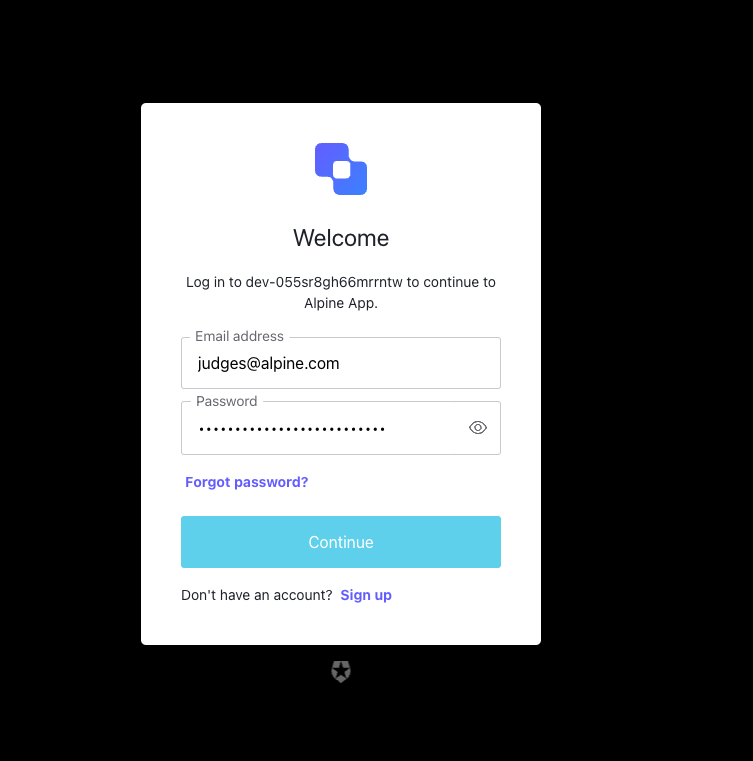
- Authentication is facilitated through the implementation of Auth0.
Challenges we ran into
- Generating synthetic manuals and converting PDF documents with tables into a usable format.
- Enhancing prompting techniques, adjusting LLM temperature setting, and selectively embedding relevant portions of manual content to improve the performance of the language model (LLM).
- Making architectural decisions, especially regarding the middle layers and frontend, considering the team's background as backend developers.
- Limited or no experience in React/NextJS, TypeScript, AWS, Lambda, LangChain, FastAPI, Pinecone, Vercel, and Auth0, which are necessary for building the application.
- Difficulties encountered when attempting to utilize another hosting solution due to its reliance on customized functions.
- Installation challenges specific to running Mac OS X on an Intel processor, such as successfully installing
lxmlinto Python 3.10 versus encountering bugs and "Document is empty" ParserError exceptions when installinglxmlinto a Python 3.11 virtual environment. - Balancing full-time work commitments while working on the project simultaneously.
Accomplishments that we're proud of
- A functional and effective product chatbot can deliver immediate business value. This chatbot could significantly reduce the time taken to answer customer queries, resulting in better customer experience and lower business hire costs.
- This chatbot is also sales and retention focused, thus it is able to provide sales advice and recommendation for call centre agents, increasing business revenue.
- Acquiring proficiency in various software and platforms, such as Pinecone and LangChain, through rapid self-learning.
What we learned
- Understanding the potential of vector databases and their synergy with language models like OpenAI's LLM.
- Recognizing the value and utility of the LangChain framework for developing consistent and efficient LLM applications.
What's next for Straya
- Make the backend Python API private to restrict access.
- Optimizing response time to ensure faster and more efficient interactions with the chatbot. This could involve refining algorithms, optimizing code, and leveraging caching techniques.
- Implementing voice and video-assisted explanations by integrating text-to-speech and video capabilities into the chatbot. This would enhance the user experience by providing more interactive and engaging responses.
- Conducting competitor analysis functionality, allowing the chatbot to compare various mobile plans offered by different telecom companies. This feature would provide users with valuable insights and help them make informed decisions. Expand the chatbot's reach to the general public by implementing comprehensive security settings. Integrate the chatbot seamlessly with actual systems to enable it to perform tasks effectively.
Built With
- amazon-web-services
- auth0
- fastapi
- langchain
- nextjs
- openai
- pinecone
- python
- typescript
- vercel

Log in or sign up for Devpost to join the conversation.