Inspiration
New York City is full of incredible experiences, but discovering them isn't always easy. Whether you're looking for a hidden restaurant, a free museum, a local event, or a new place to explore, information is scattered across multiple websites and applications. As students living in NYC, we wanted to build something that makes exploring the city easier, more accessible, and more exciting. Our inspiration came from a simple question: What if you could discover everything happening around you through one interactive map? That's how Stray City was born.
What it does
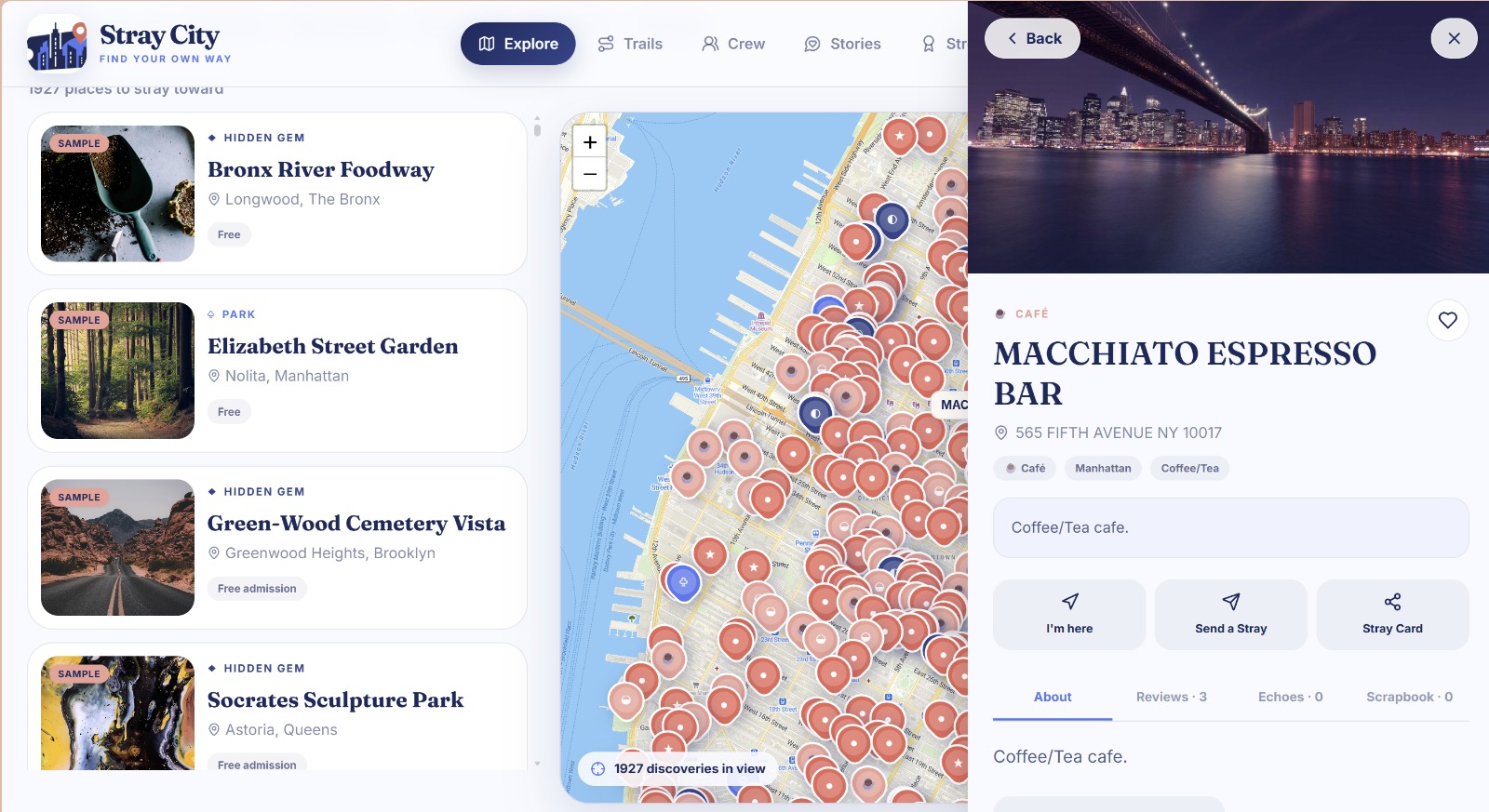
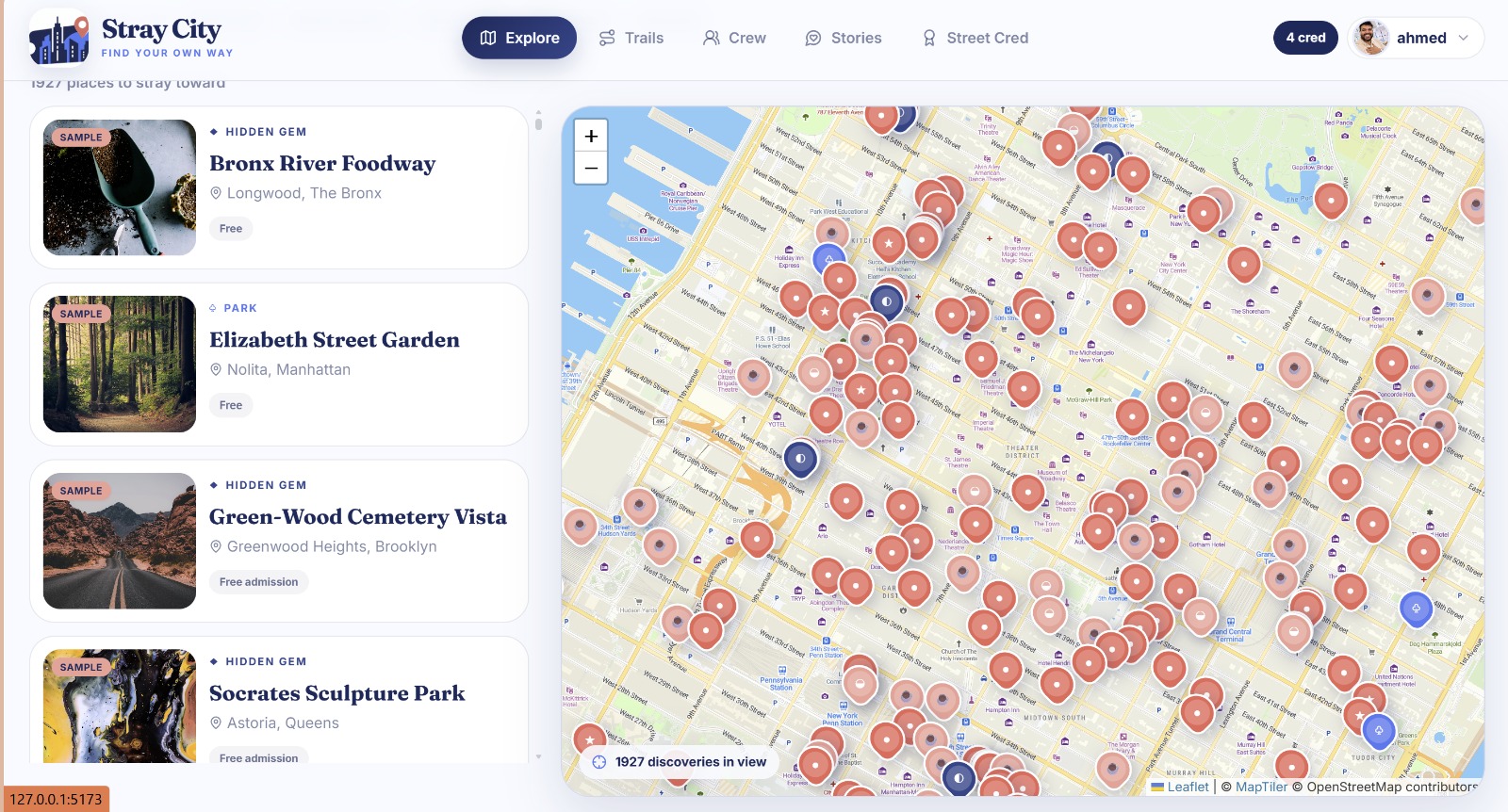
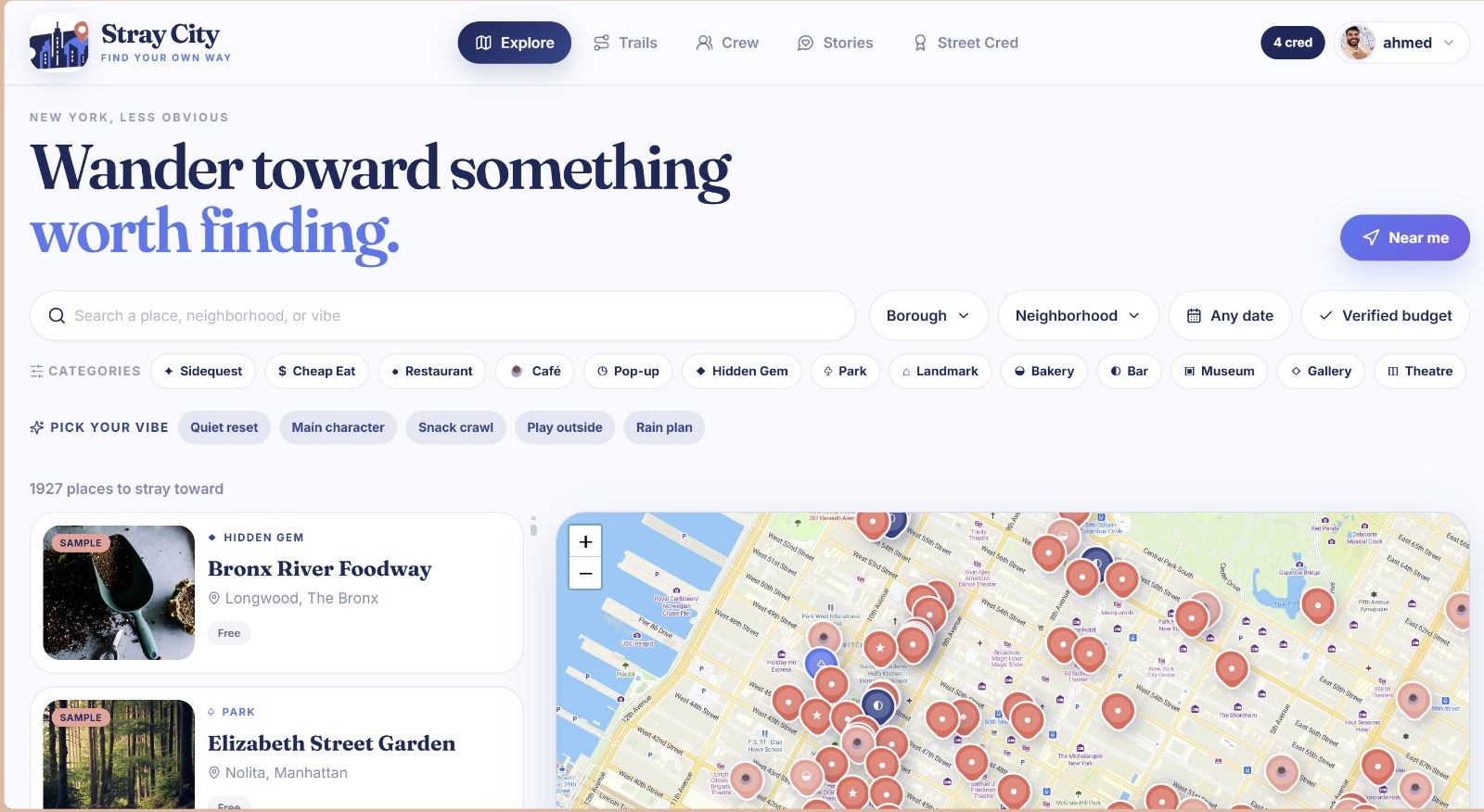
Stray City is an interactive urban discovery platform that helps users explore New York City through a single, intuitive map. Instead of switching between multiple applications, users can discover:
- Restaurants, cafés, and hidden food spots.
- Museums, parks, and cultural attractions.
- Local events, entertainment, and activities.
- Free and affordable experiences throughout NYC.
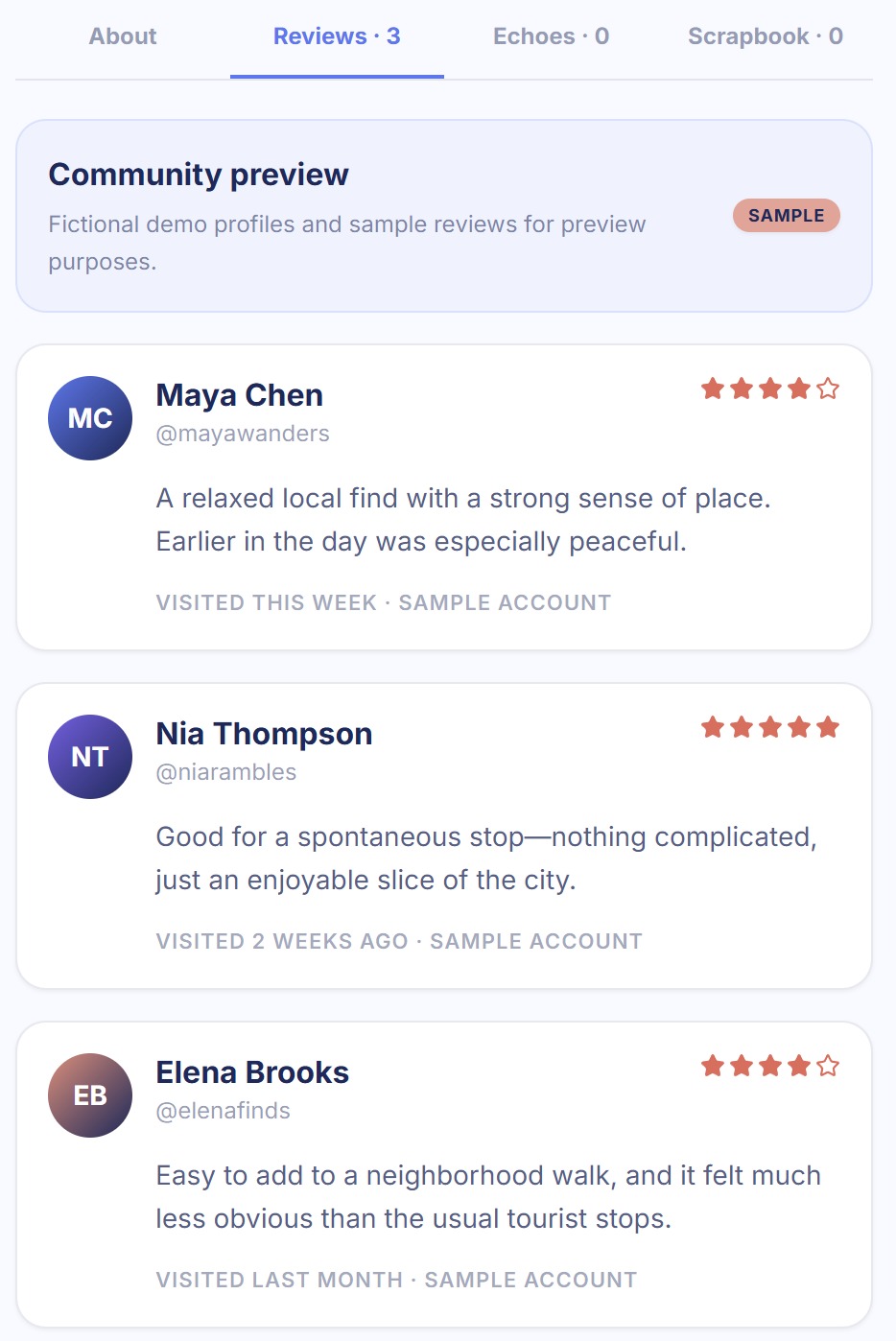
- Nearby places based on their location and interests. Stray City brings these experiences together, making it easier for users to find something new, plan their next adventure, and discover places they might otherwise miss. Our goal is to transform how people interact with their city, encouraging exploration beyond their usual routines.
How we built it
We built Stray City using a JavaScript-based architecture, focusing on scalability, data integration, and an interactive user experience.
Our technology stack includes:JavaScript Primary programming language across our application. React Native & Expo Mobile application development and user interface. Node.js Backend services, data processing, and API integrations. Supabase & PostgreSQL Database infrastructure, authentication, and location data.
We designed a data ingestion pipeline that integrates multiple geographic data sources, including OpenStreetMap and Overture Maps. Because these sources use different formats and structures, we developed a normalization process to transform incoming information into a consistent database schema. We also structured our backend to support future integrations with event providers, allowing restaurants, attractions, and events to appear together on the same map.
Challenges we ran into
One of our biggest challenges was integrating information from multiple sources. Restaurant listings, geographic coordinates, attraction details, and event information often come in different formats. Combining them into one consistent experience required careful database design and data normalization. Another challenge was handling large geographic datasets efficiently while keeping our application responsive. We also had to make important decisions about the scope of our project. Our original vision included social features, gamification, personalized recommendations, and event discovery. However, building everything simultaneously during a hackathon would have made it difficult to deliver a functional product. We decided to prioritize our core experience: an interactive map that makes discovering NYC easier.
Accomplishments that we're proud of
We're proud of turning an ambitious idea into a structured application with a clear technical foundation. Some of our accomplishments include:
- Designing a scalable architecture using JavaScript.
- Building a geographic data ingestion system supporting OpenStreetMap and Overture Maps.
- Developing a standardized structure for restaurants and attractions.
- Successfully passing all eight backend tests during our initial development.
- Designing an experience that brings different types of NYC destinations into one unified platform. Most importantly, we're proud of working together as a team to solve real engineering problems while building something that could benefit NYC residents, students, and visitors.
What we learned
Building Stray City taught us that creating a successful application involves much more than writing code. We gained practical experience in API integration, database architecture, geographic data processing, backend development, and collaborative problem-solving. We also learned the importance of defining a realistic minimum viable product (MVP). An ambitious vision is important, but prioritizing the essential features allows us to build a stronger foundation and expand more effectively. This hackathon challenged us to think like software engineers, product designers, and entrepreneurs simultaneously.
What's next for Stray City
Our vision is to grow Stray City into a comprehensive urban discovery platform, starting with New York City and eventually expanding to other cities. Our planned features include: Real-Time Event Discovery Integrate event APIs to display concerts, festivals, exhibitions, and local activities directly on the map.


Log in or sign up for Devpost to join the conversation.