-
-
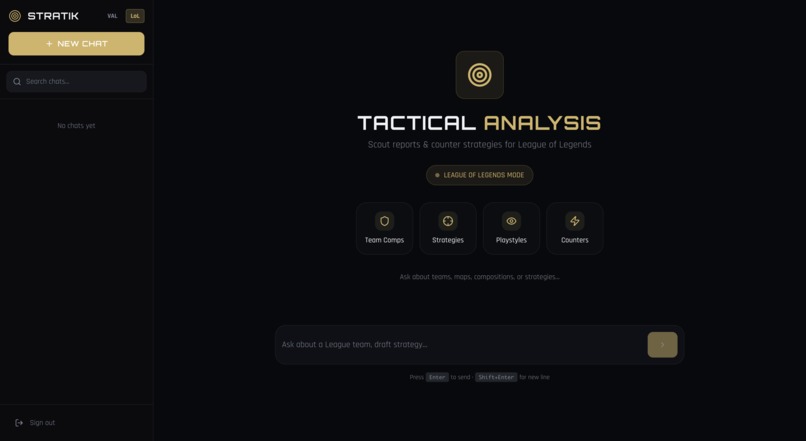
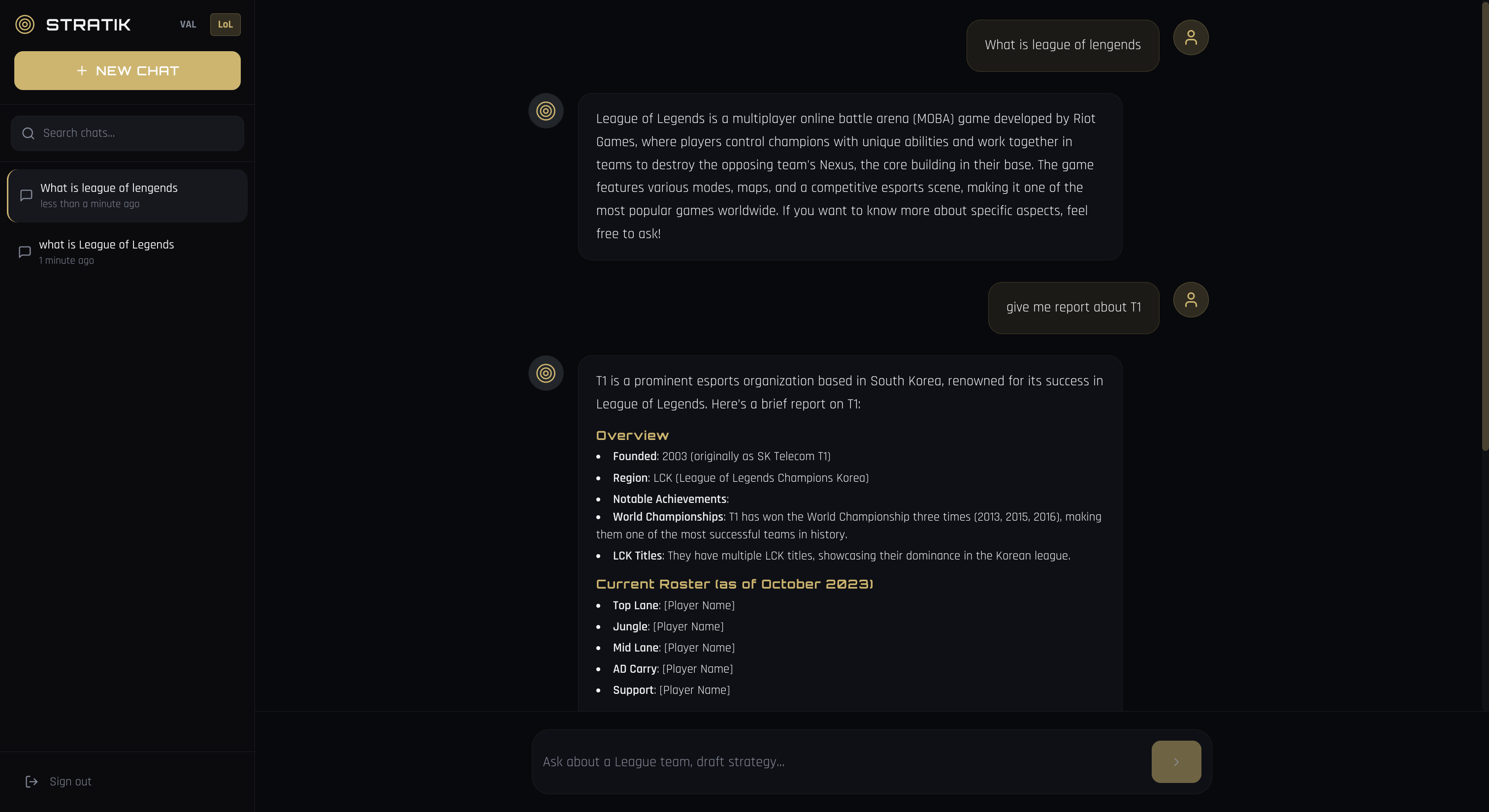
LOL Bot
-
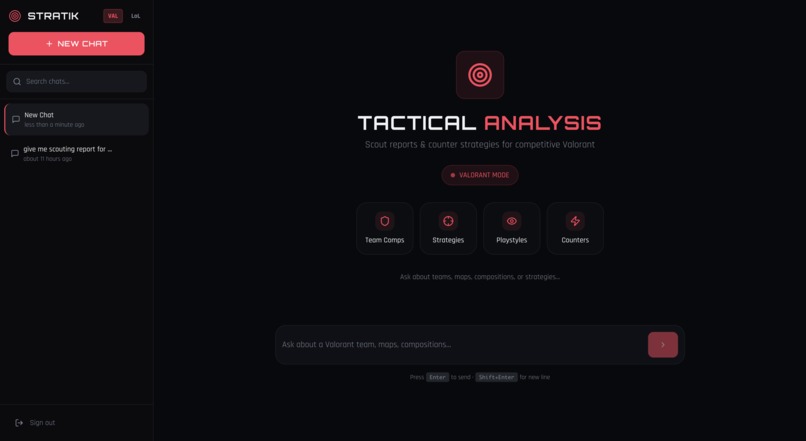
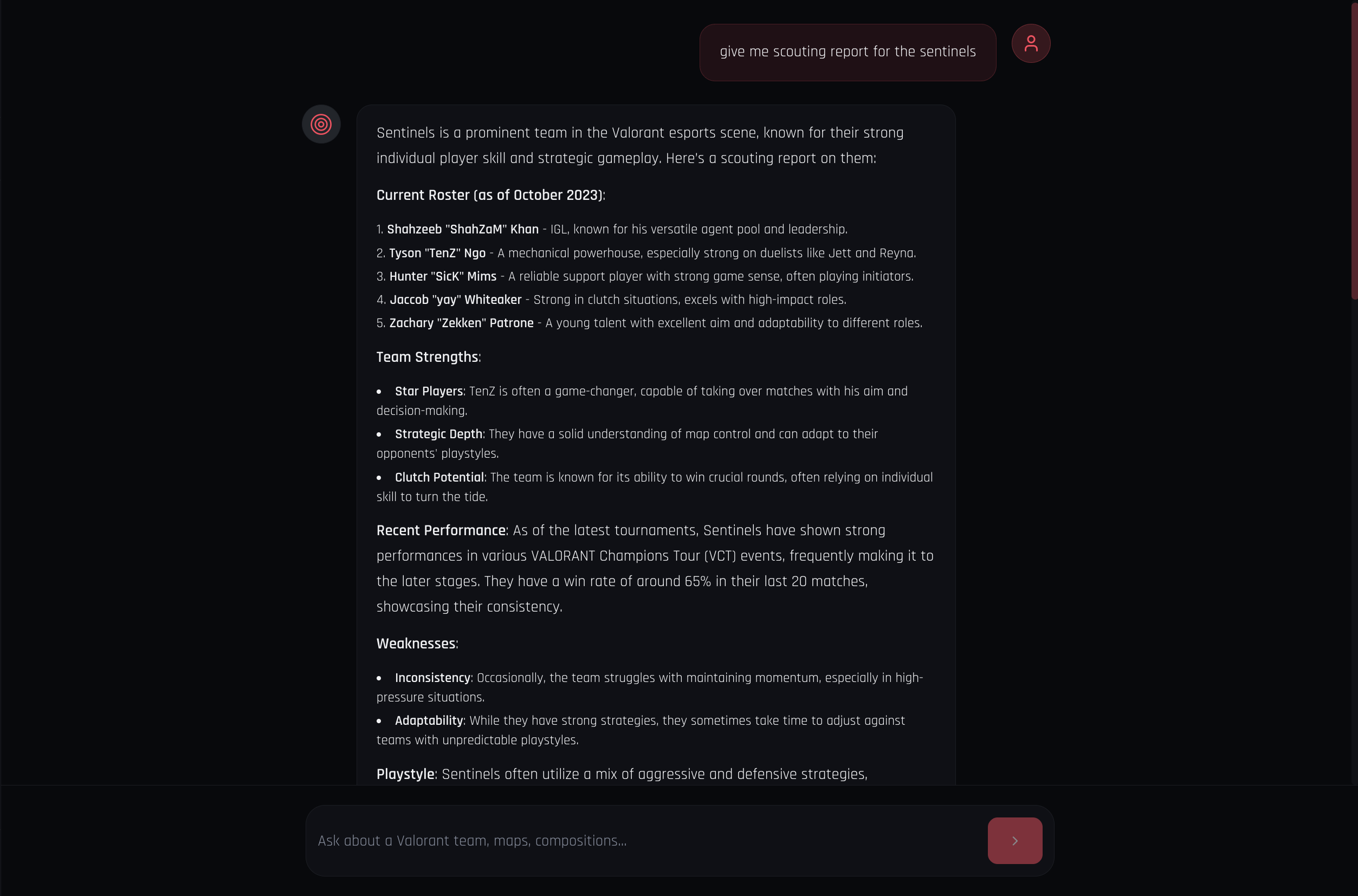
Valorant Bot
-
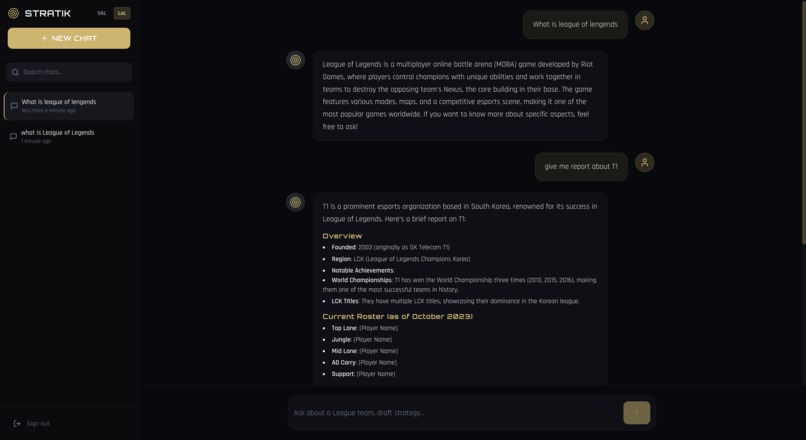
LOL chat system
-
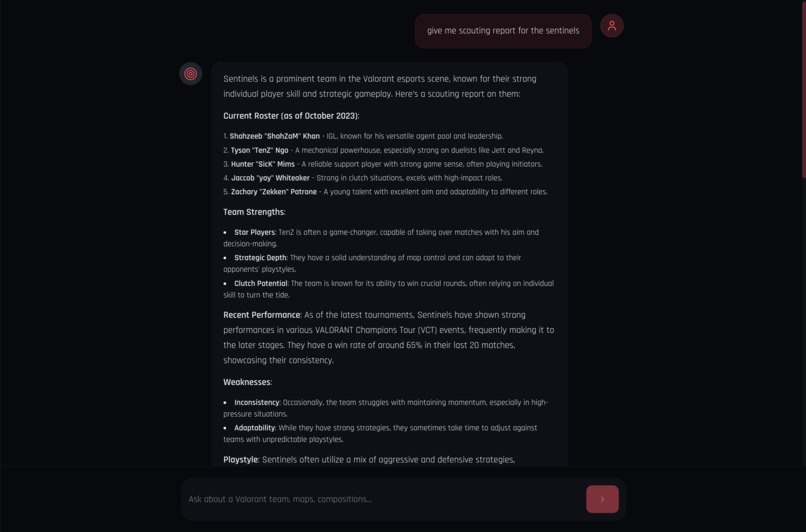
Valorant chat system
-
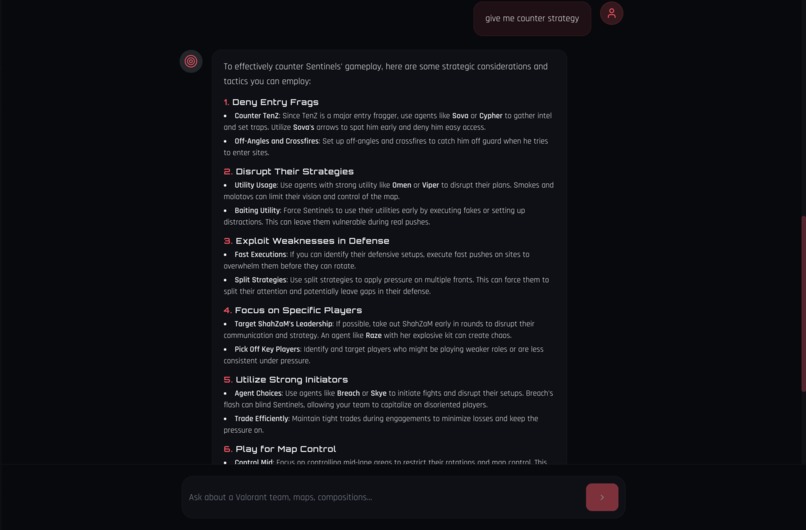
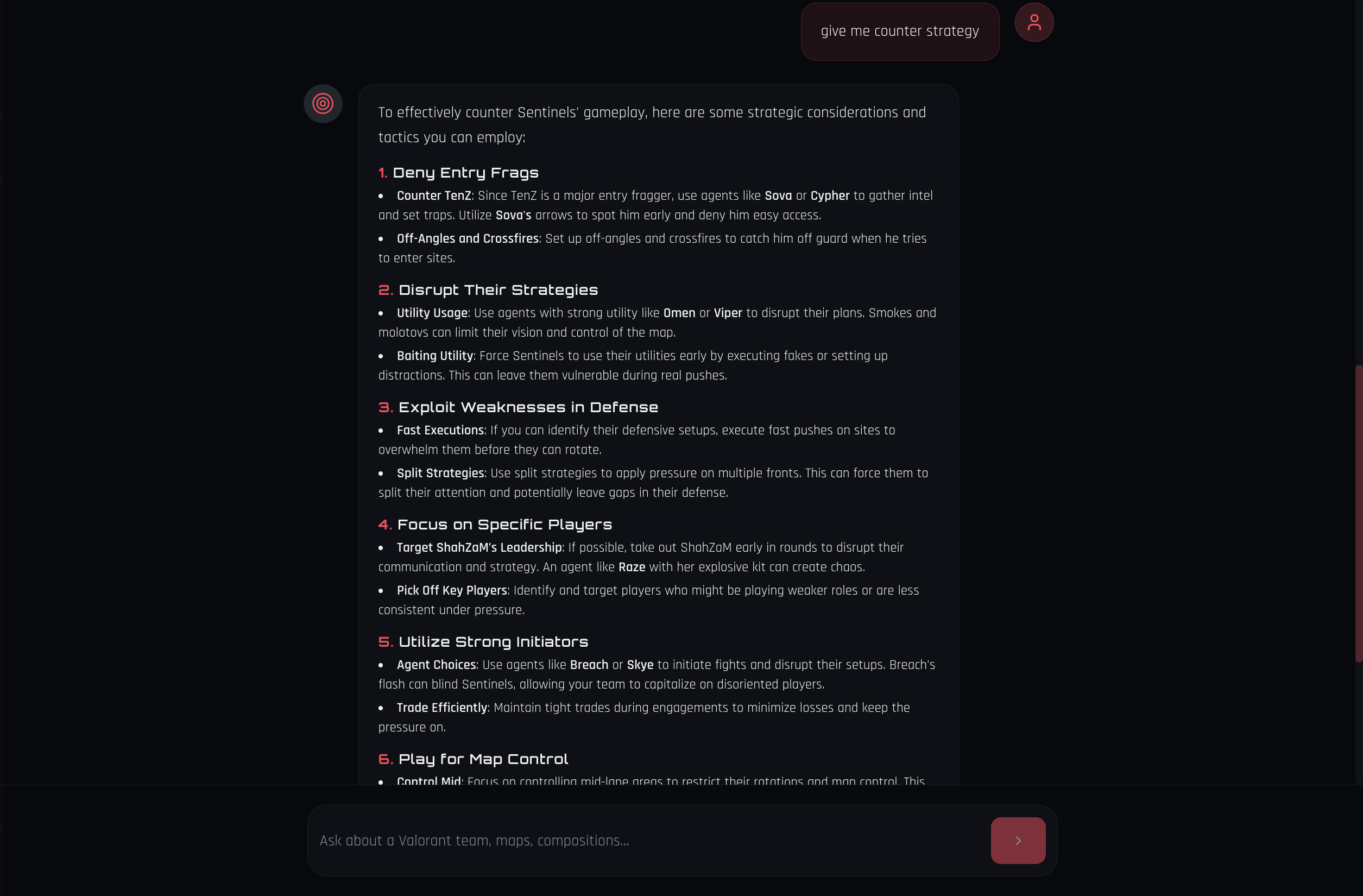
Valorant chat system
-
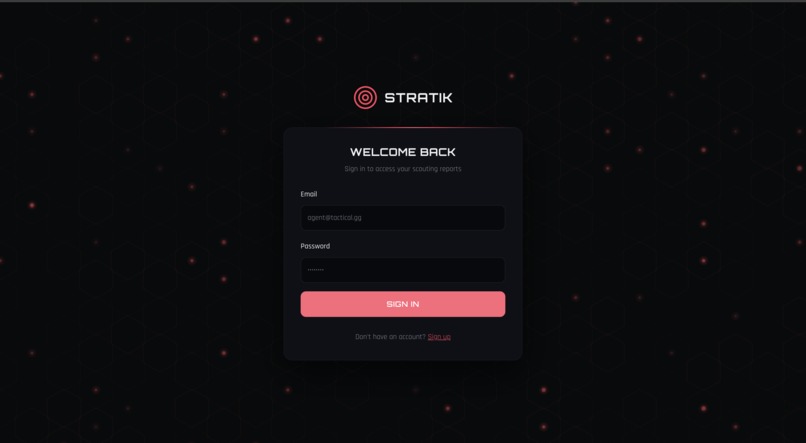
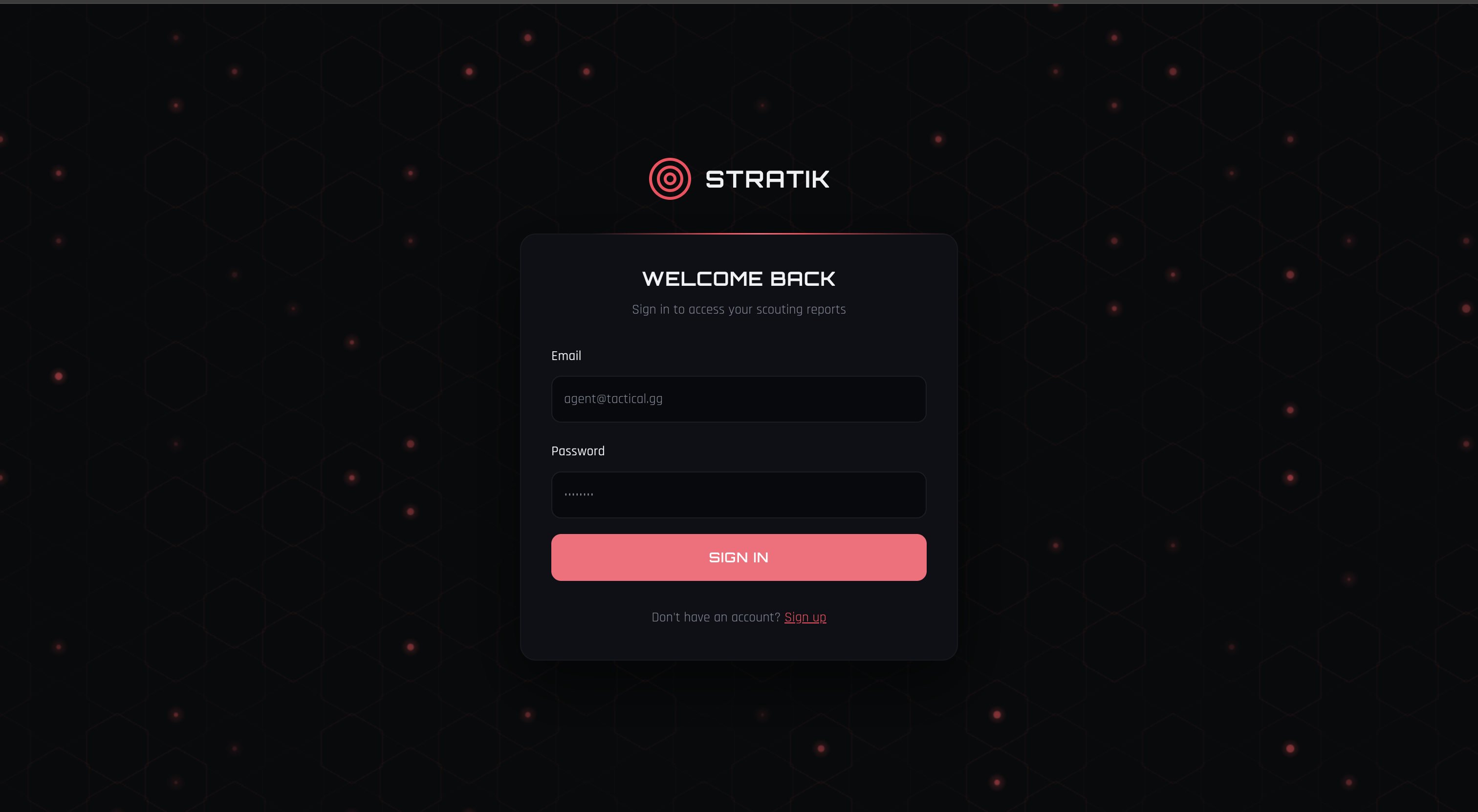
Login and Signup
Inspiration
Competitive teams spend hours watching VODs and digging through scattered stats just to answer basic questions like How does this team like to play? What maps are they good on? What should we punish?We wanted a faster way to convert real match data into a clean, coach-style scouting report instantly. That’s what inspired Stratik: a scouting + counter-strategy tool for esports teams, analysts, and players who want actionable insights without manual work.
What it does
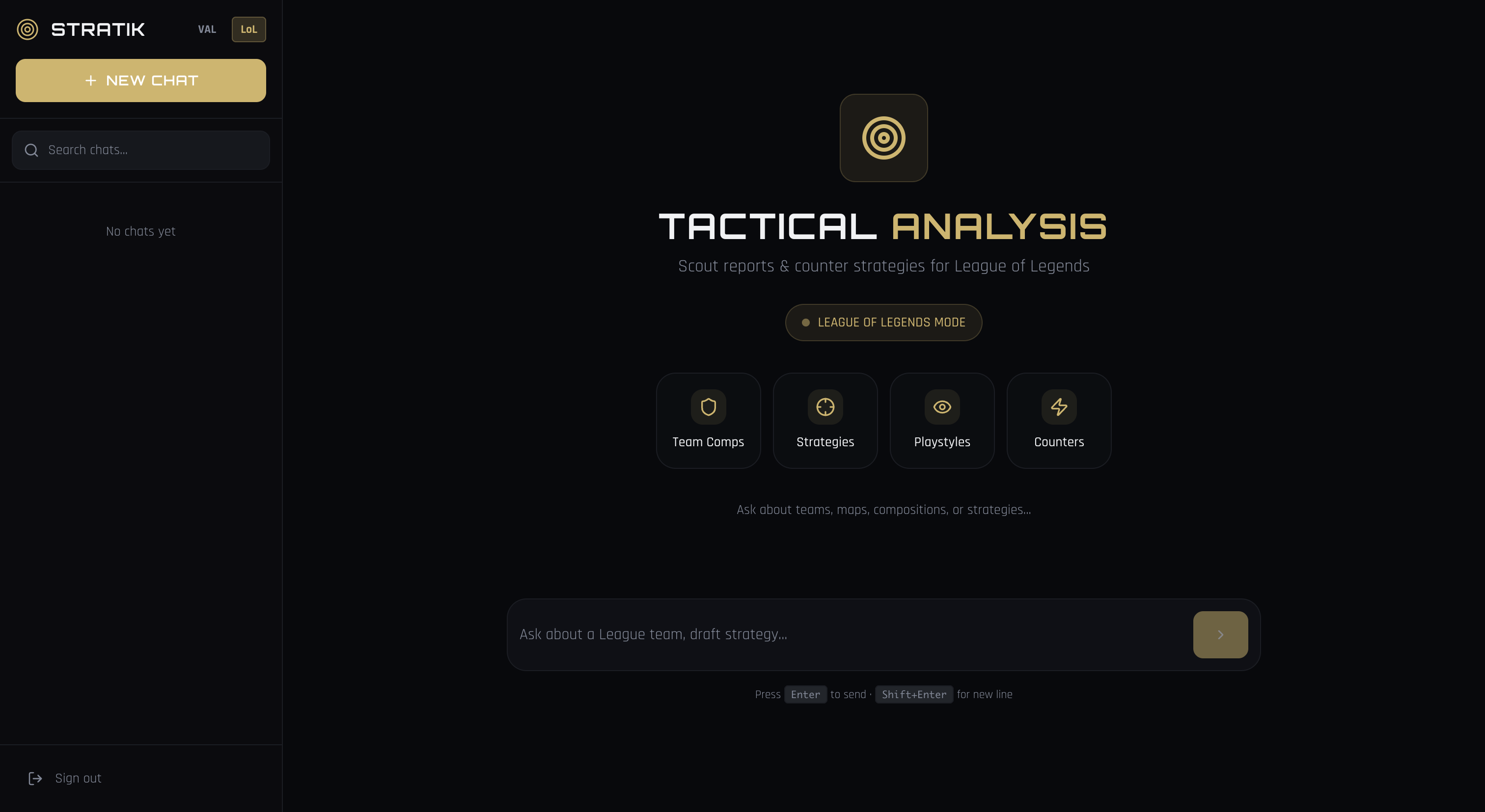
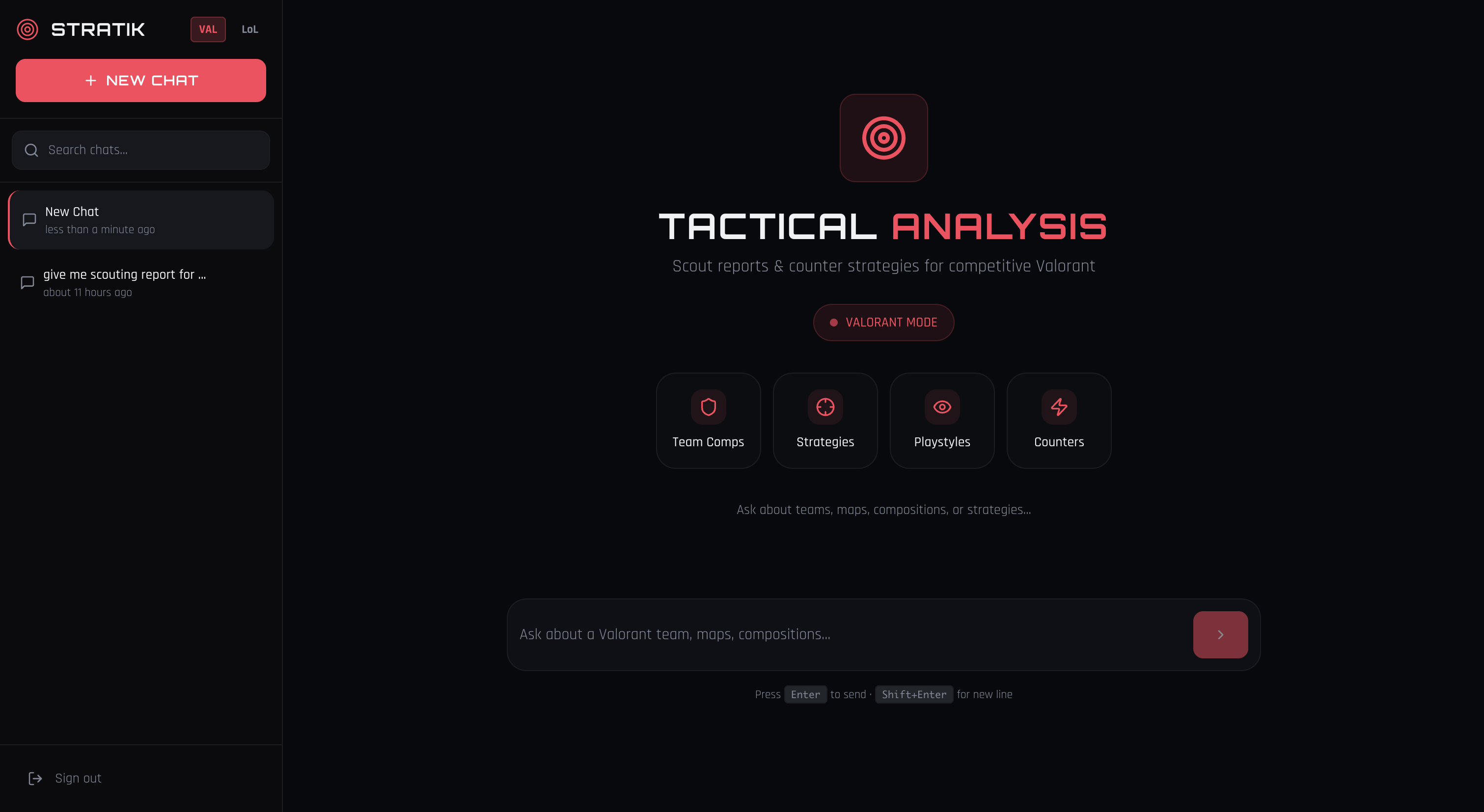
Stratik also provides a scouting Q&A chat (ChatGPT-style interface) where users can ask questions only about the selected game/team. The assistant answers using the generated scouting report + aggregated metrics as context, enabling interactive exploration of insights (playstyle, strengths/weaknesses, map tendencies, counter-strategies) without re-reading the full report.
How we built it
Frontend: React + TypeScript for a component-driven UI (sectioned report cards, internal scrolling for long reports, and a sticky metrics side panel).
- Backend: Node.js + Express powering REST endpoints for team search, series/match retrieval, aggregation, report generation, and chat-style Q&A.
- Data/API: GRID esports data for team lookup plus series/match data across Valorant and League of Legends.
- Caching: File-based caching to reduce repeated API calls, speed up responses, and help survive rate limits/throttling.
- Testing:
curl+ server logs to validate each endpoint independently and debug end-to-end flows.
Challenges we ran into
- API throttling / rate limits: We hit “enhance your calm” style throttling, so we added caching and safer retries.
- Inconsistent data coverage: Some teams return sparse or empty data depending on the time window/event coverage, so we added fallbacks and “no data” handling instead of breaking the UI.
- UI readability for long outputs: Reports were hard to scan as one block, so we redesigned into section cards and controlled scrolling inside the report container.
- Debugging across layers: We had to isolate whether issues came from the API, backend aggregation, or frontend rendering—logs +
curlsaved a lot of time.
Accomplishments that we're proud of
- Built a full end-to-end scouting pipeline (search → fetch → aggregate → generate report → render UI).
- Shipped both Valorant and League of Legends with the same structured 4-section report format and consistent styling.
- Added a ChatGPT-style scouting chat so users can ask follow-up questions that stay game/team-focused.
- Improved readability with a scrollable report container and a sticky metrics panel so key stats stay visible while reading.
- Implemented caching + safer request behavior to reduce API calls and stay stable under rate limits.
What we learned
- How to design and validate REST APIs quickly using
curl. - How to write aggregation logic that stays stable even when inputs are missing/incomplete.
- How critical UX is for analytics tools—structured cards and scrolling made the output dramatically more usable.
- How to handle real-world API behavior like throttling, retries, caching, and intermittent failures.
What's next for Stratik
- Expand LoL scouting depth (lane/role trends, objective control, early vs late game signals).
- Add opponent-aware scouting (“vs this team, here’s what changes”).
- Add export/share features (PDF download + shareable links).
- Add trend visualizations (last N series performance charts and breakdowns).
Built With
- api
- css3
- express.js
- html5
- node.js
- openai
- react
- rest
- supabase
- tailwind
- typescript

Log in or sign up for Devpost to join the conversation.