-
-
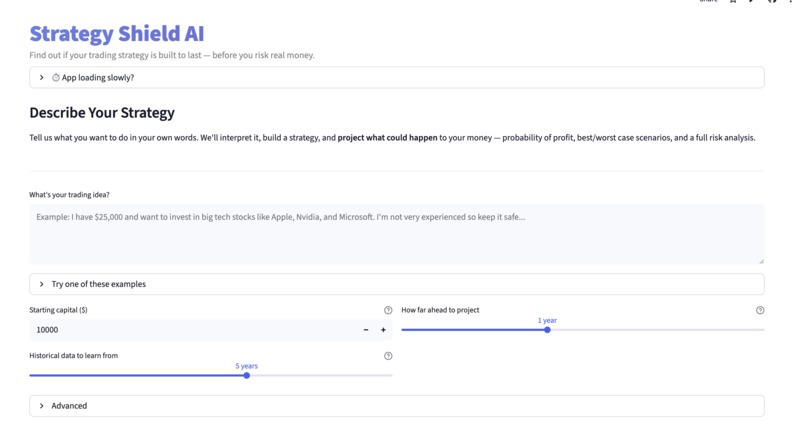
Testing a Strategy
-
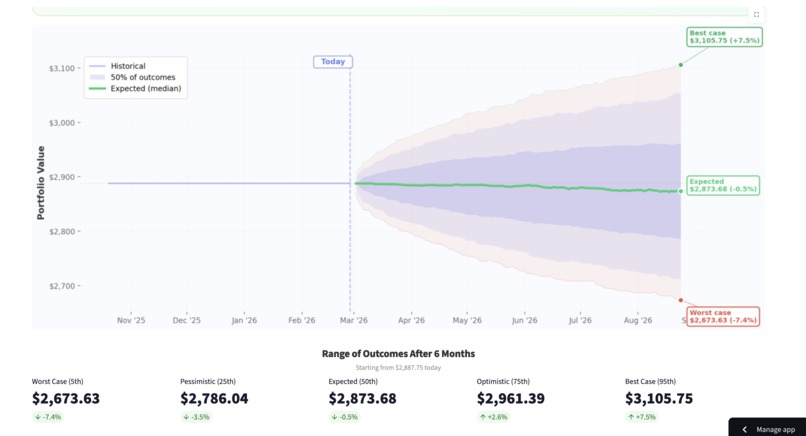
Analysis
-
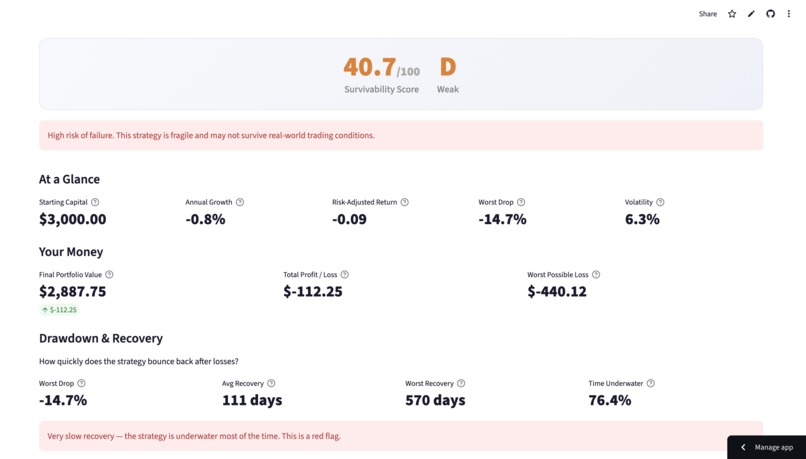
Results
-
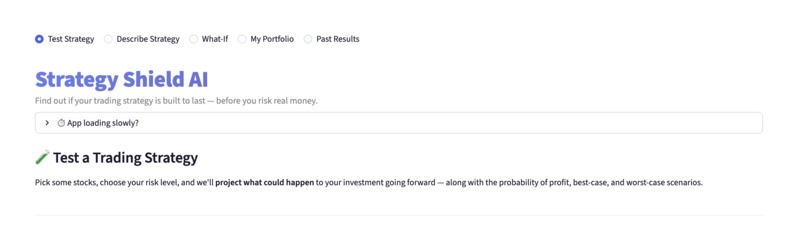
Strategy Shield Features
Inspiration
We built Strategy Shield AI because there isn’t a simple platform where beginners and experienced traders can safely test ideas before risking real money. Most trading tools are either too technical or only show basic backtests without explaining real weaknesses. We wanted to create an easy UI where users can experiment with strategies, understand the risks, and reduce the chance of losing money. Every strategy is backtested on five years of historical data so users can trust that results reflect real market conditions. One major challenge was performance. With large datasets and machine learning models, runtime became slow. We tested different setups — including Modal GPUs, local execution, and Streamlit optimizations — before finding a stable solution. We also ran into bugs when connecting the UI to ML pipelines, where small errors could break the system. Balancing speed, stability, and simplicity was a big part of development.
What it does
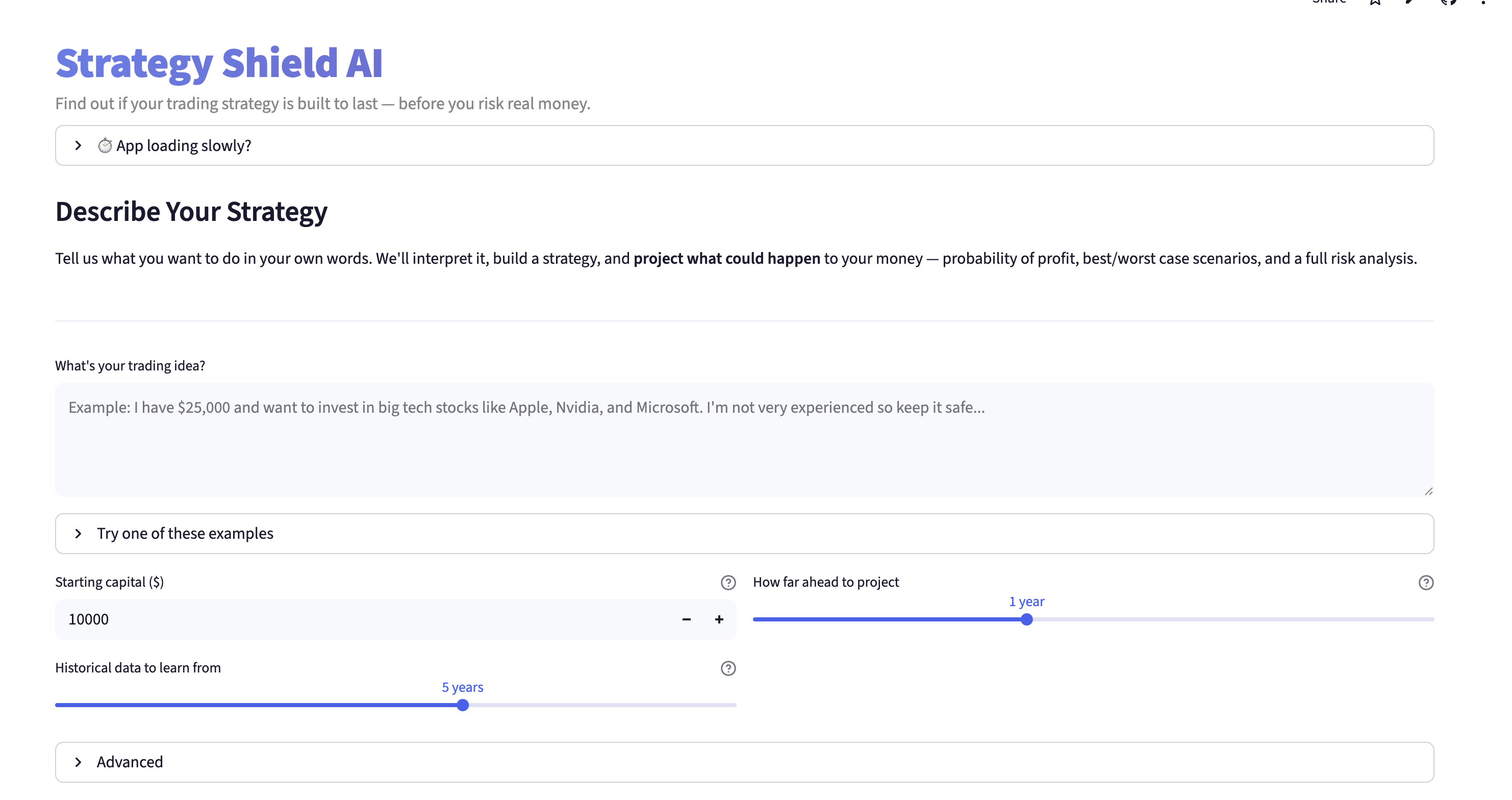
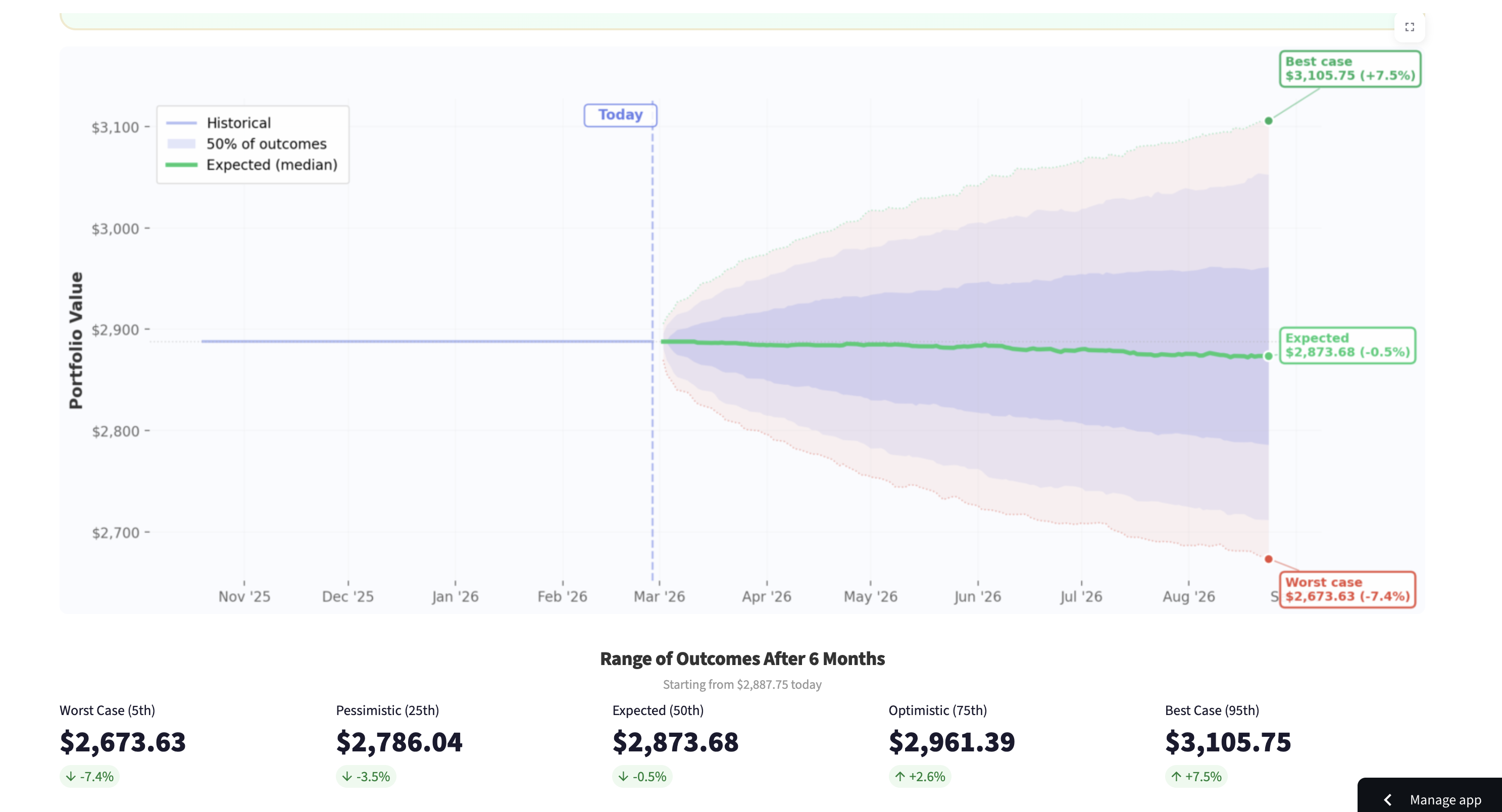
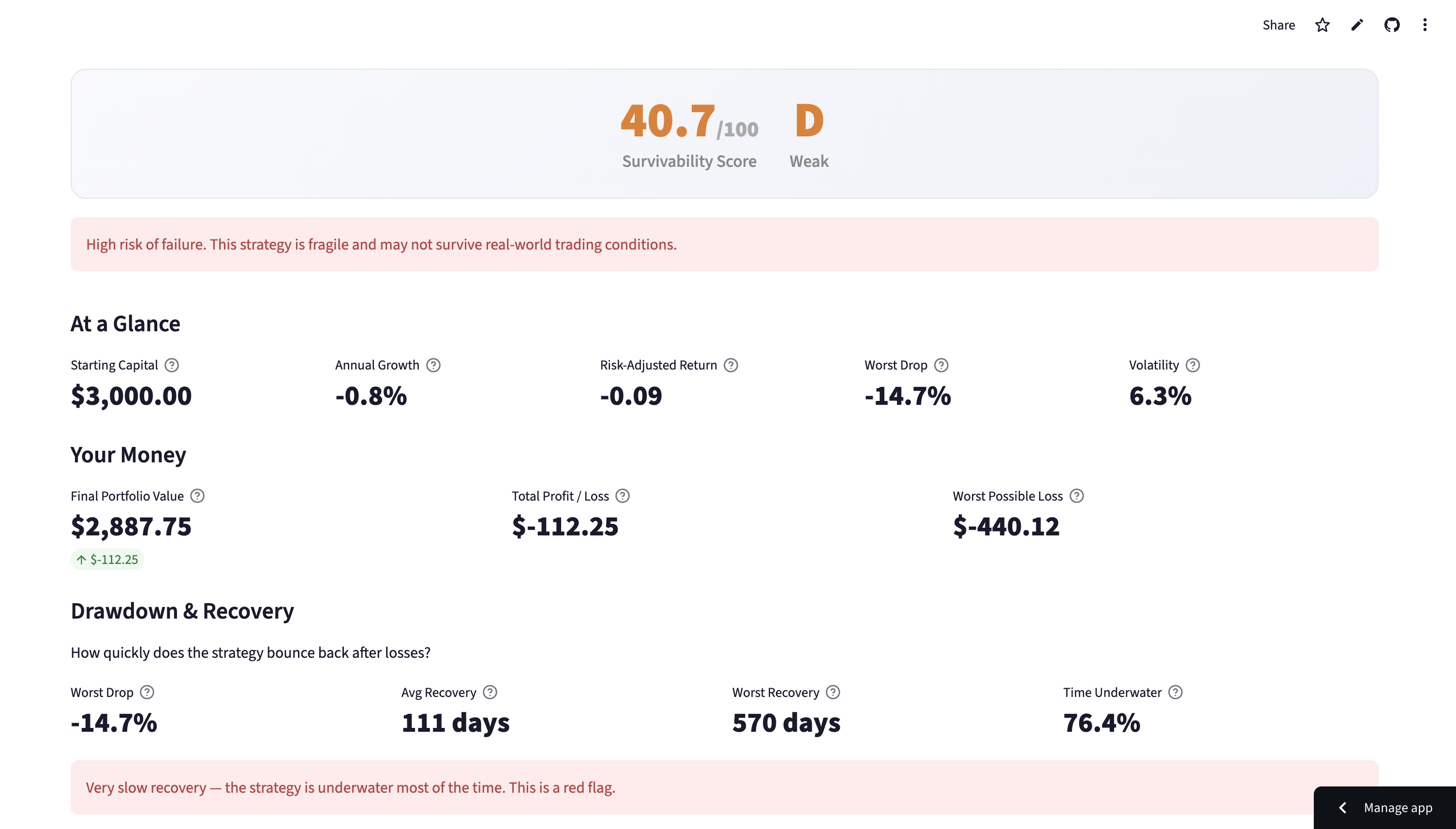
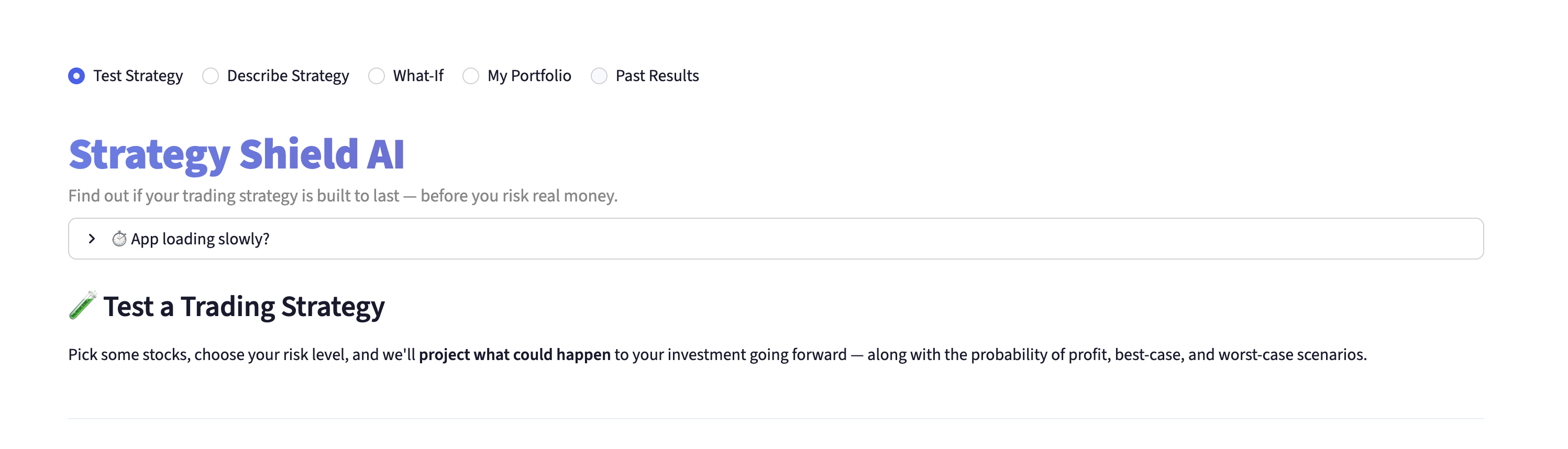
Strategy Shield AI lets users test trading strategies and audit portfolios before investing. Users can build strategies using technical indicators, describe ideas in plain English, upload a portfolio, and run simulations. Instead of just showing returns, the platform highlights weaknesses like large drawdowns, sensitivity to trading costs, or dependence on specific market conditions. It gives each strategy a Survivability Score and provides an AI-generated explanation in simple language.
How we built it
Strategy Shield AI is powered by a Python-based quant pipeline that pulls five years of daily market data using yfinance, calculates indicators like moving averages and volatility, generates trading signals, and simulates trades with slippage and commissions. All large backtests, parameter sweeps, and robustness audits are executed through Modal’s AI infrastructure, which allows us to scale compute-heavy stress tests efficiently. On top of the core engine, we built an audit layer that performs regime detection, parameter sensitivity testing, cost stress scenarios, and survivability scoring to evaluate how stable a strategy truly is. Structured audit results can be sent to the OpenAI API to generate clear, plain-English explanations. The entire system is wrapped in a Streamlit dashboard that includes features like “Test a New Strategy,” natural language strategy input, a What-If simulator, and portfolio upload auditing. It’s built in Python using libraries such as pandas, numpy, scikit-learn, xgboost, matplotlib, and other supporting tools, and is deployed on Streamlit Community Cloud.
Challenges we ran into
The biggest challenge was reducing runtime while working with large datasets and multiple libraries. We had to restructure pipelines, optimize caching, and experiment with different infrastructure setups. Preventing overfitting was another challenge, which required building parameter sensitivity tests and cross-regime validation. Integrating machine learning models with the UI also caused debugging issues. Making a powerful system feel simple and intuitive took many design iterations.
Accomplishments that we're proud of
We built a full end-to-end quant system that backtests strategies over five years of real data. We created a Survivability Score that goes beyond basic returns and added AI explanations to make results easy to understand. We also improved runtime significantly and designed a clean UI that works for both new and experienced traders.
What we learned
We learned that strong backtests are not enough — strategies need stress testing and validation. Infrastructure decisions greatly impact performance. Overfitting is easy to miss without proper safeguards. We also learned that clear design and usability matter just as much as technical strength.
What's next for Strategy Shield AI
Next, we plan to add support for more asset classes, deeper stress testing like Monte Carlo simulations, paper trading integrations, and better AI analysis. Our goal is to make Strategy Shield AI a trusted pre-trade audit system where strategies are tested before real money is invested.Next, we plan to add support for more asset classes, deeper stress testing like Monte Carlo simulations, paper trading integrations, and better AI analysis. Our goal is to make Strategy Shield AI a trusted pre-trade audit system where strategies are tested before real money is invested.

Log in or sign up for Devpost to join the conversation.