-
-
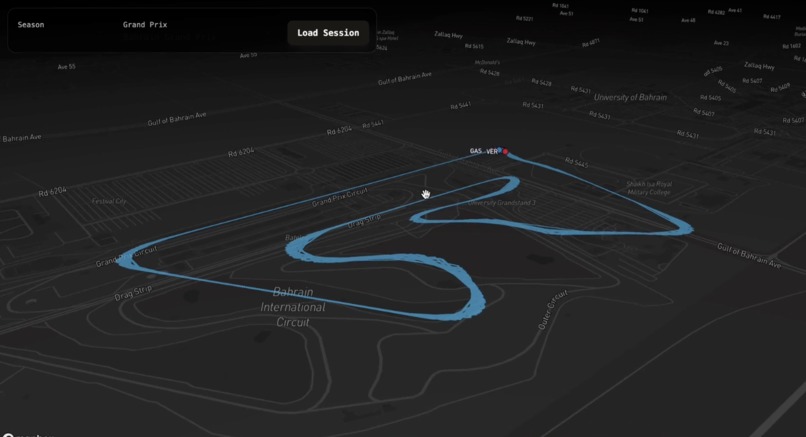
Surge
-
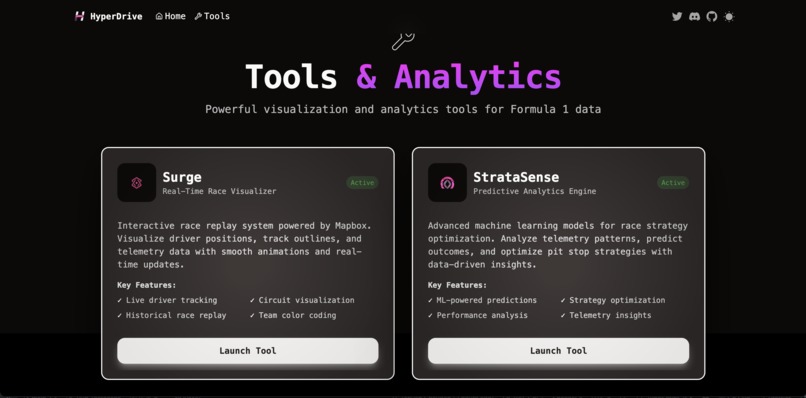
Tools Page 1
-
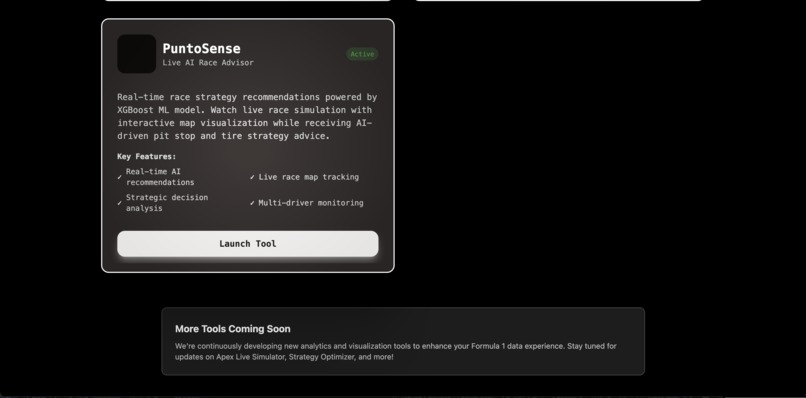
Tools Page 2
-
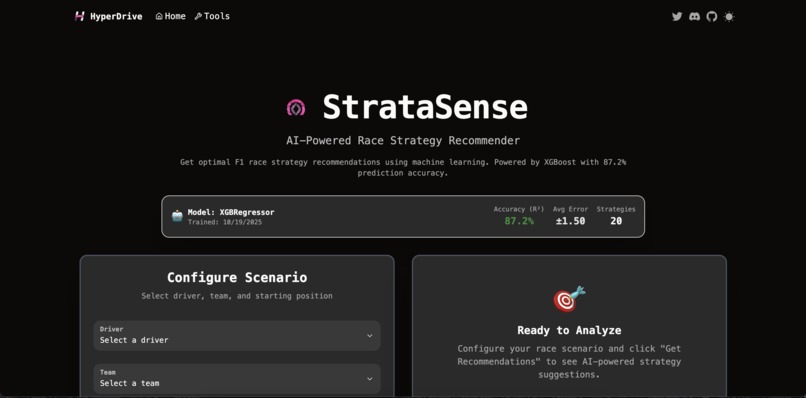
StrataSense
-
PuntoSense
Inspiration
Formula One is a sport where every second, and every strategic decision, can mean the difference between victory and defeat. We noticed that teams are drowning in data: tire wear, pit windows, safety cars, and traffic all influence outcomes, yet real-time decision-making is extremely difficult. HyperDrive was born to give engineers the ability to interpret and act on data at warp speed, turning complex simulations into actionable strategy in real time.
What it does
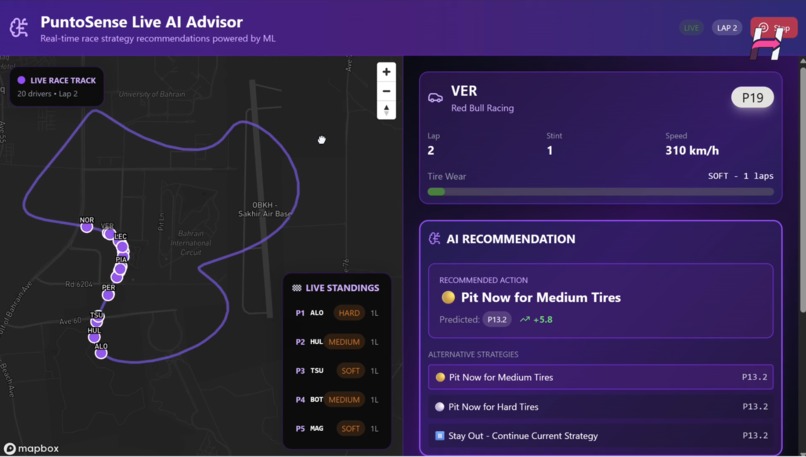
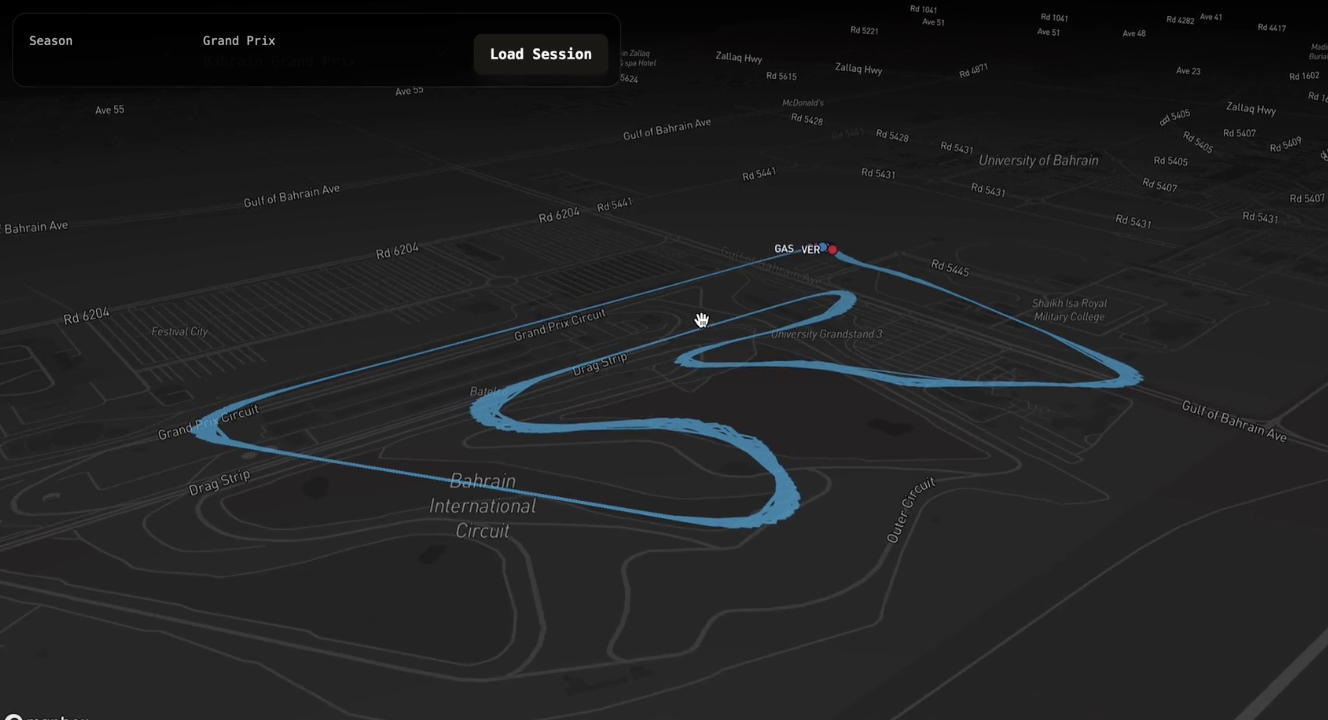
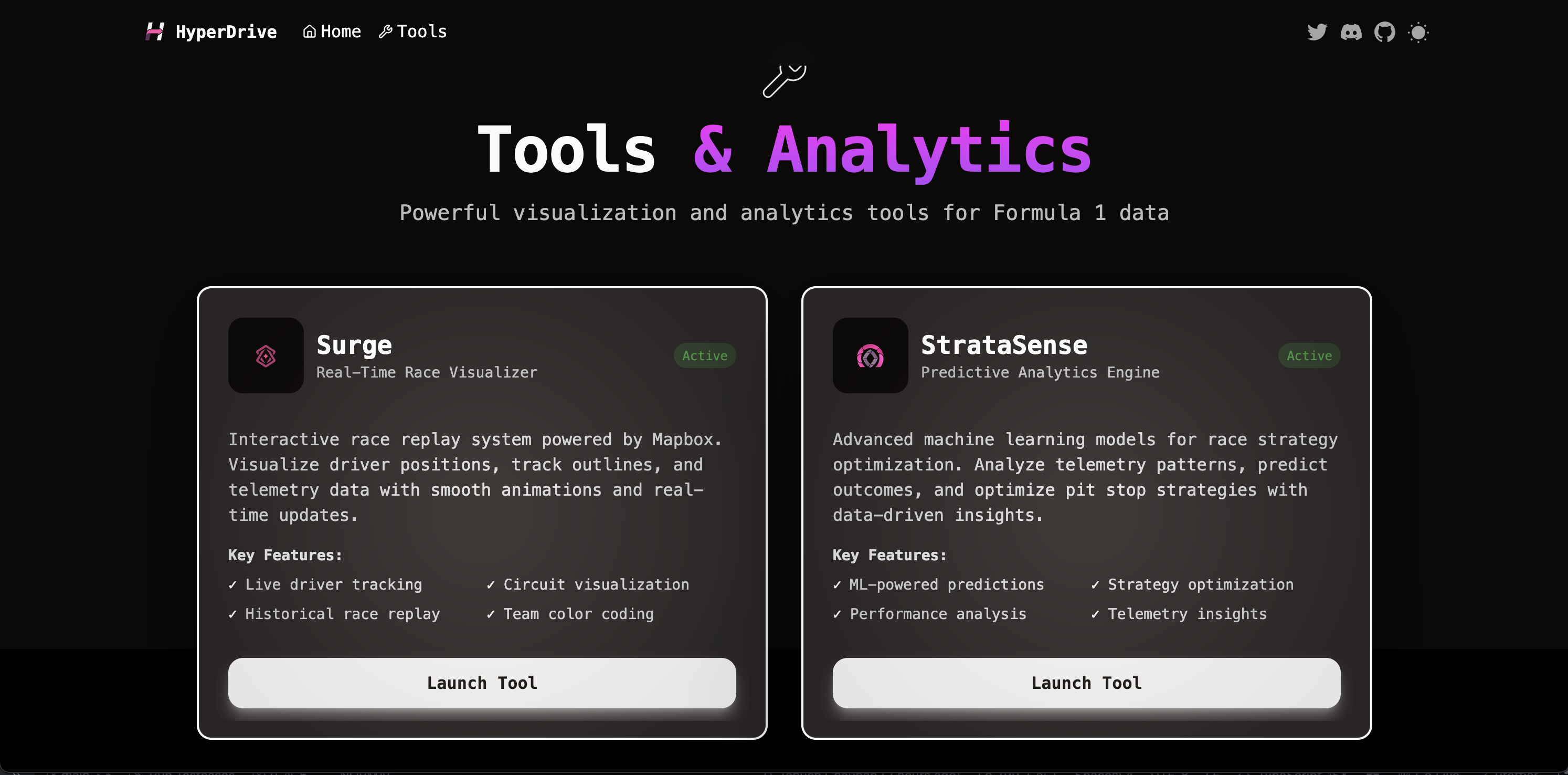
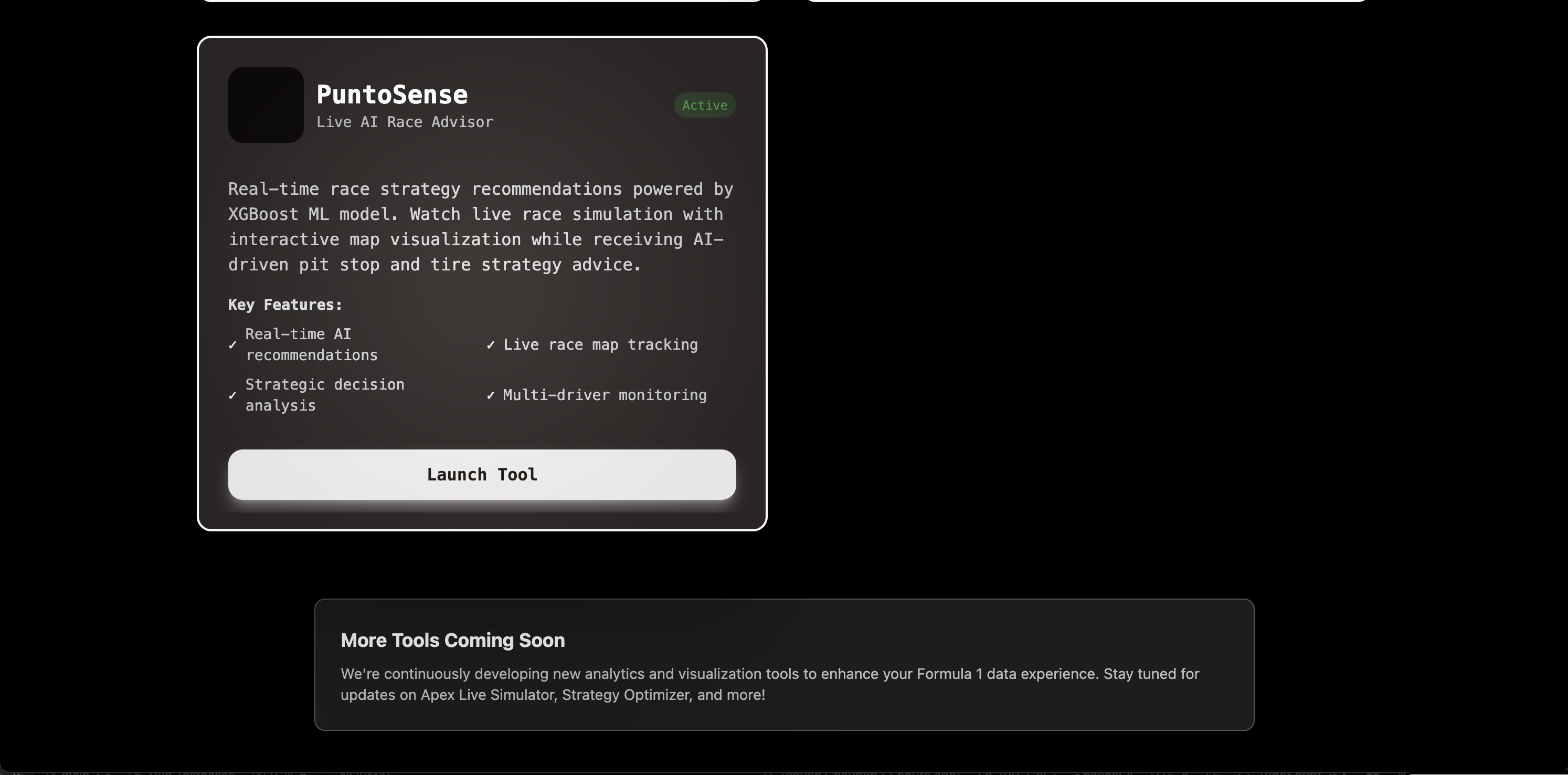
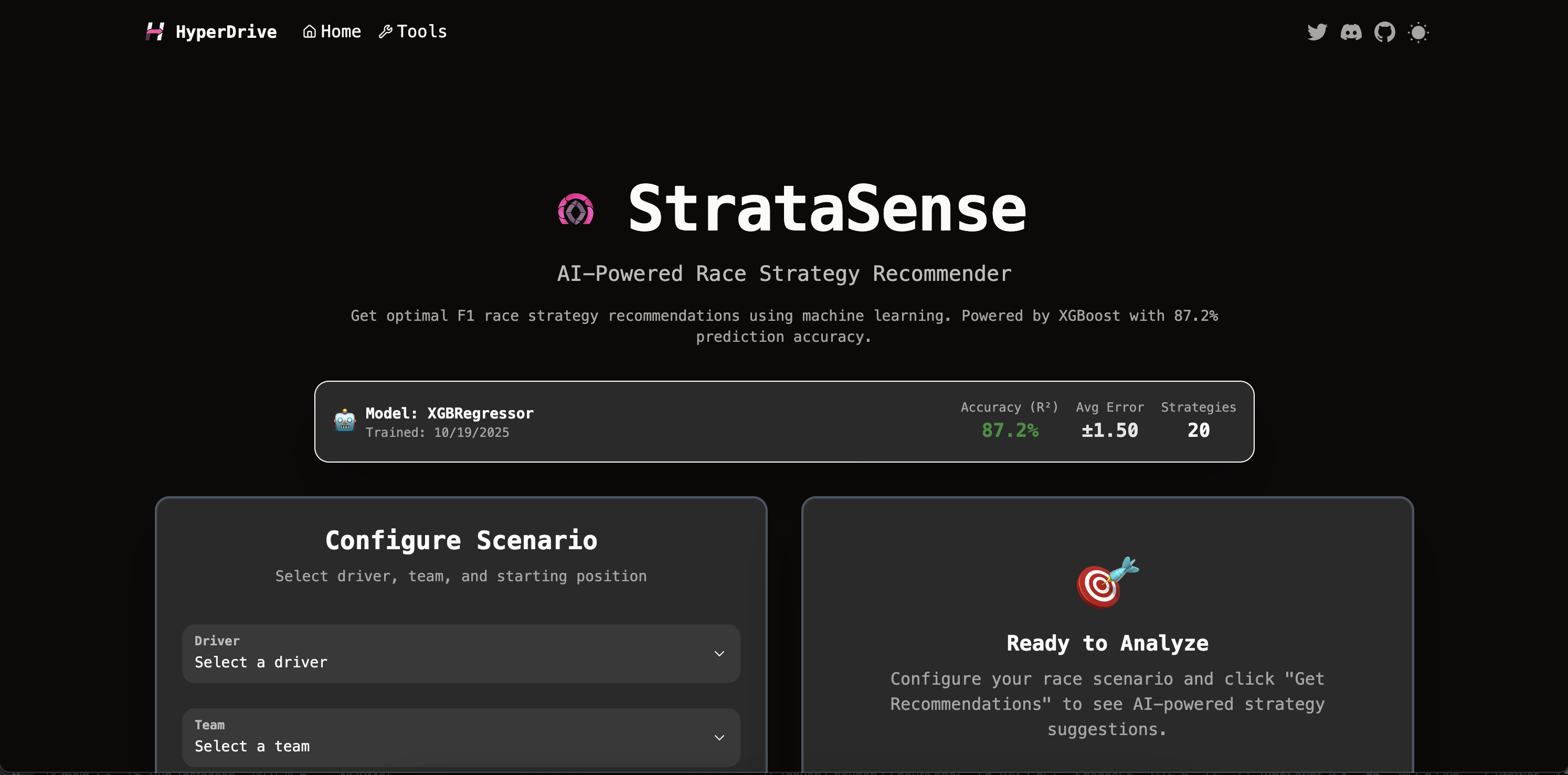
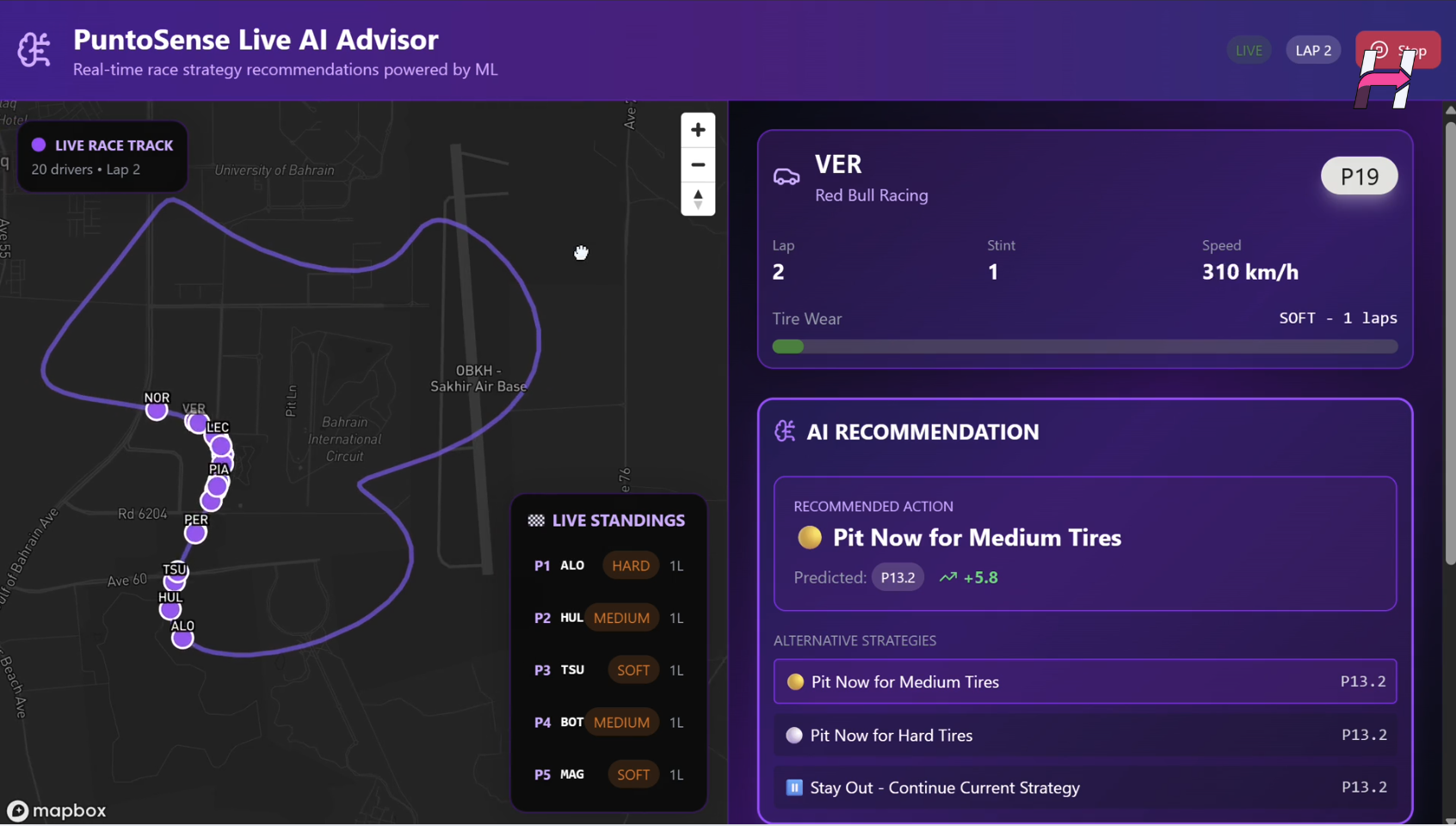
HyperDrive combines high-fidelity race simulation with AI-driven analysis and real-time visualization. Its key components: World Model: Simulates thousands of realistic races, modeling tire wear, traffic, overtakes, and stochastic events. StrataSense: Predicts which strategies maximize the probability of success using an XGBoost regression model. PuntoSense: Provides prescriptive recommendations, telling engineers the best next move at each decision point. Surge: Visualizes live telemetry, strategy forecasts, and AI guidance, helping engineers act confidently under pressure. Together, these components reduce decision latency from minutes to milliseconds, giving teams a competitive edge.
How we built it
Simulation: Built a high-fidelity “virtual F1 world” and ran over 5,000 Monte Carlo race simulations to generate our dataset. AI Models: Used XGBoost for both StrataSense (predictive strategy forecasting) and PuntoSense (prescriptive recommendations based on decision-point data). Front-end & Integration: Developed Surge with React for visualization and FastAPI for backend integration. Live telemetry is ingested using FastF1. Engineering Workflow: Designed the system so simulations feed predictive models, which in turn guide prescriptive decisions, all in real time.
Challenges we ran into
Data Complexity: Modeling realistic race physics, including non-linear tire degradation, traffic penalties, and overtakes, required careful calibration. Scale: Running thousands of Monte Carlo simulations created massive datasets, which required efficient preprocessing and feature engineering for the AI models. Real-Time Recommendations: Ensuring PuntoSense could generate actionable decisions within milliseconds was a challenge, especially with hundreds of potential scenarios per decision point. Visualization: Displaying rich, complex data in Surge without overwhelming engineers required multiple iterations of UI design.
Accomplishments that we're proud of
Successfully built a complete AI-driven F1 strategy platform, integrating simulation, predictive modeling, and prescriptive recommendations. Developed PuntoSense, capable of analyzing thousands of “what-if” scenarios in real time to recommend optimal actions. Built Surge, a clean, interactive interface that reduces cognitive load while empowering engineers to make faster, better decisions. Demonstrated that complex race strategy can be converted into real-time, actionable intelligence, cutting decision latency from minutes to milliseconds.
What we learned
Real-world systems are messy; simulating them accurately requires careful attention to every detail — from tire degradation curves to traffic effects. High-quality feature engineering is critical: decisions are only as good as the data and scenarios fed to the AI. Prescriptive AI is more than prediction; creating actionable outputs in real time requires thoughtful design of both models and interfaces. Collaboration across roles (simulation, ML modeling, UI/UX) is key to building a system that is both accurate and usable.
What's next for HyperDrive
Live Data Integration: Connect HyperDrive to live race telemetry for full-scale deployment in actual race conditions. Enhanced AI: Explore deep reinforcement learning for even more adaptive strategy recommendations. Team Collaboration: Expand Surge to support multiple engineers simultaneously, with shared strategy dashboards. Generalization: Adapt the system for other motorsports or dynamic decision-making environments beyond Formula One.
Built With
- fastapi
- google-collab
- javascript
- json
- matplotlib
- numpy
- pandas
- python
- react
- seaborn
- tailwindcss
- typescript
- uvicorn
- vite
- websockets


Log in or sign up for Devpost to join the conversation.