-
-
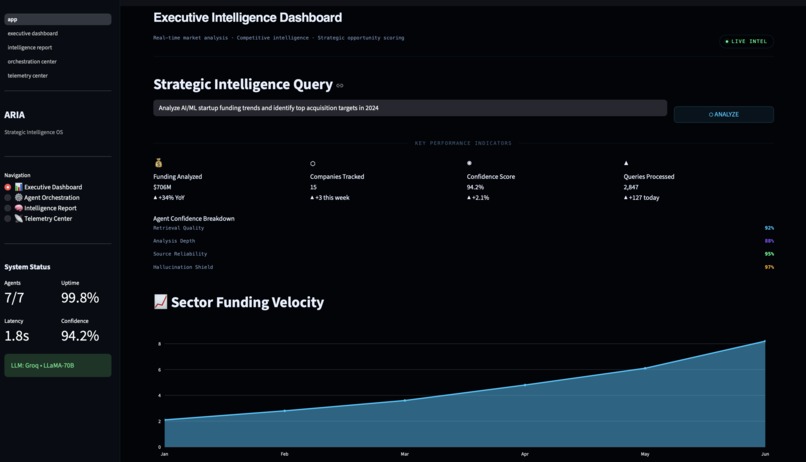
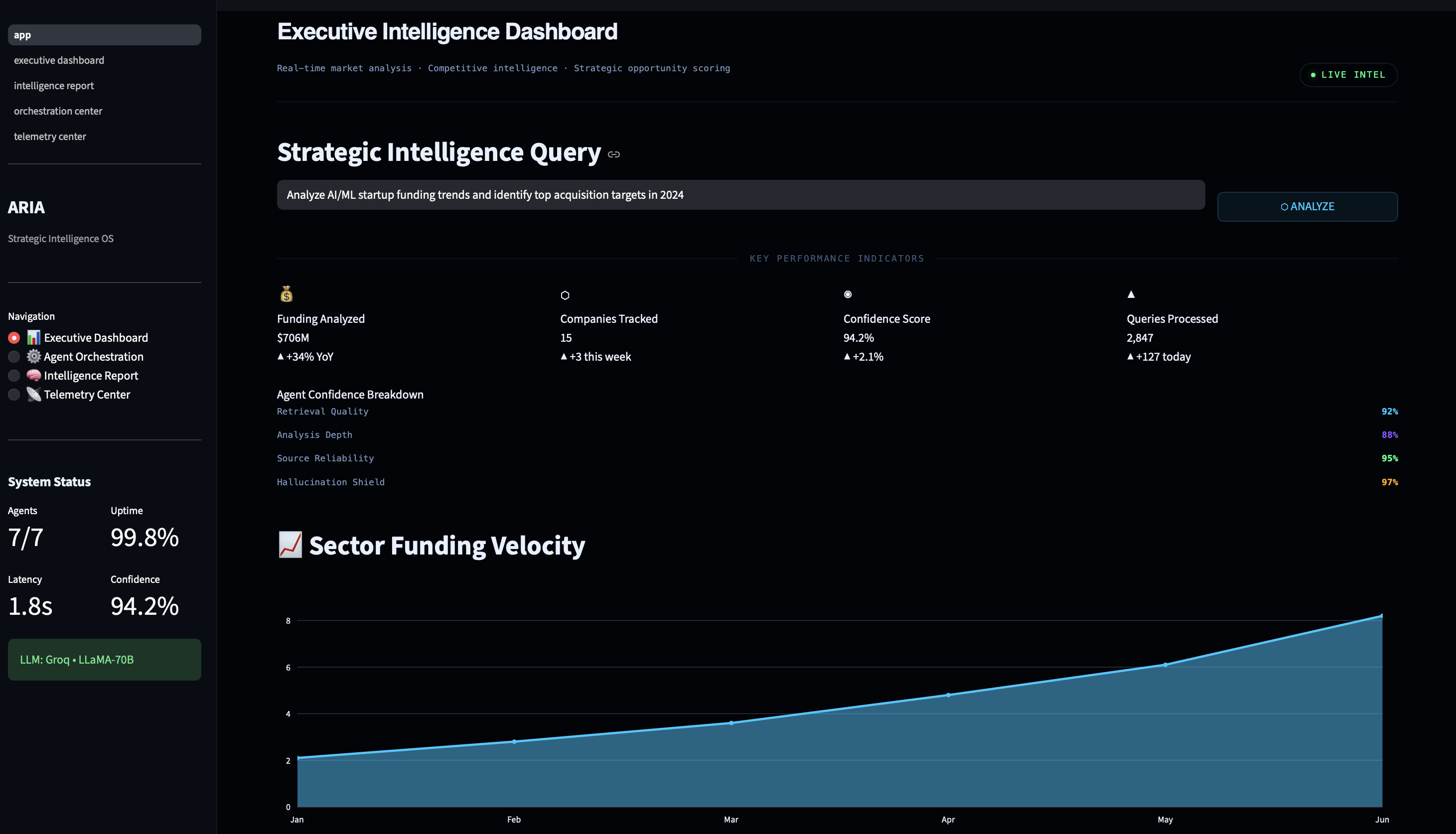
Real-time executive intelligence powered by autonomous multi-agent orchestration and AI-driven market analysis.
-
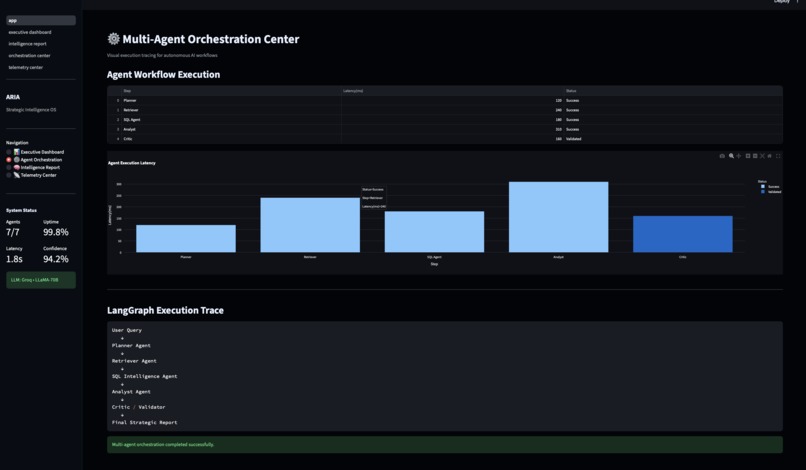
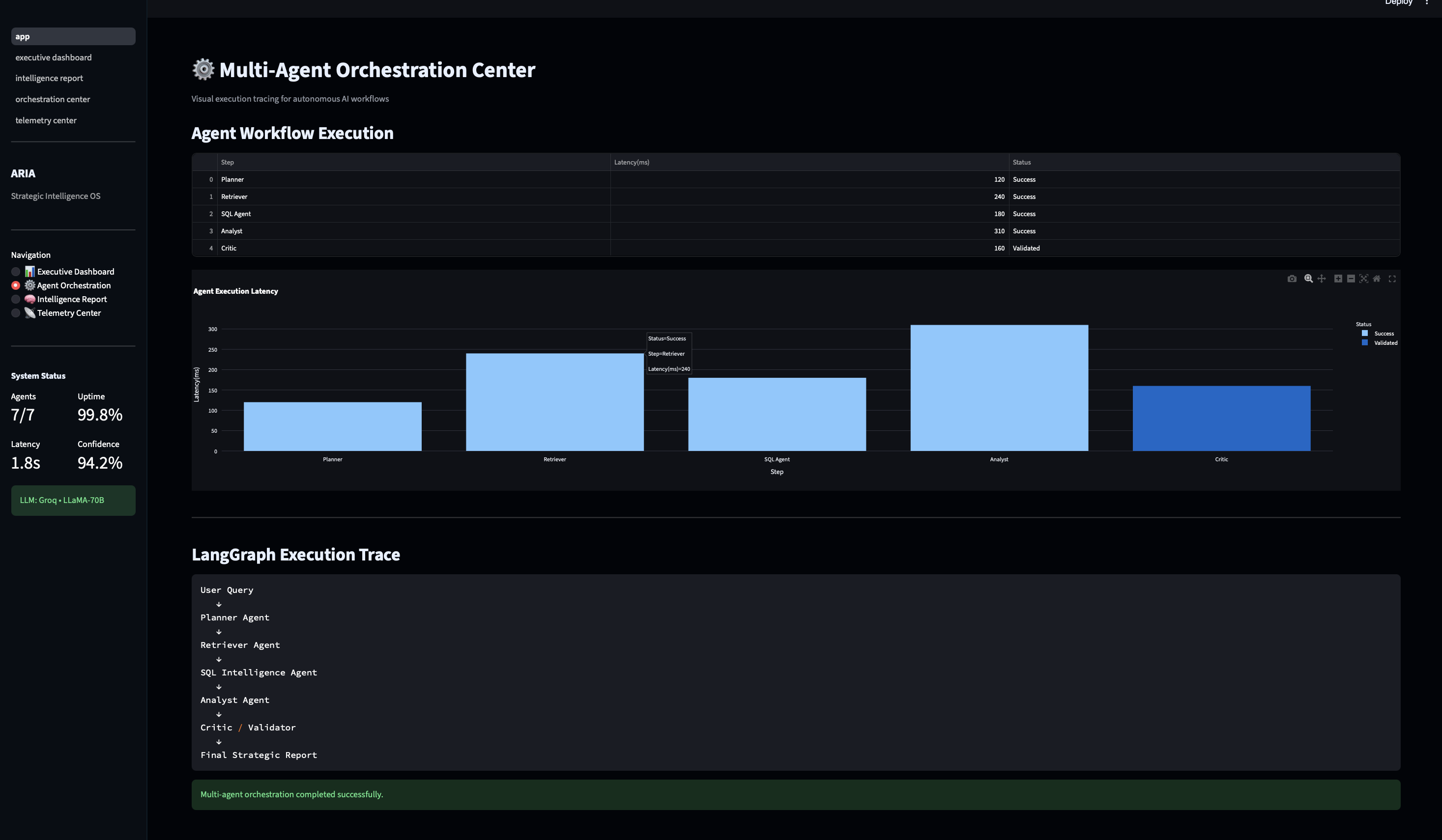
Visual orchestration of autonomous AI agents executing strategic enterprise intelligence workflows in real time.
-
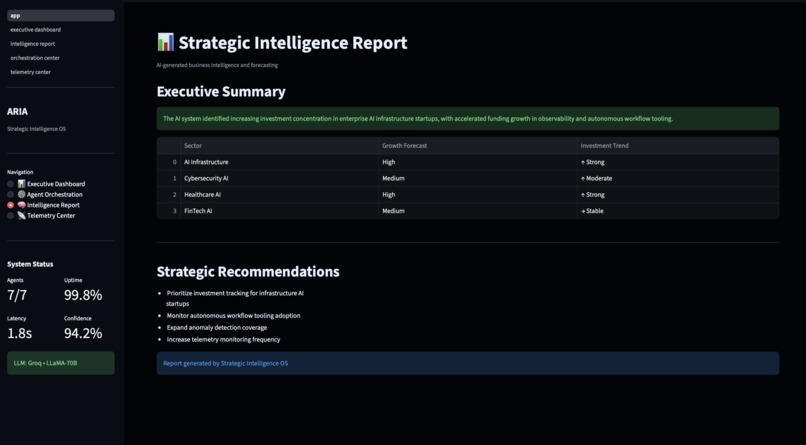
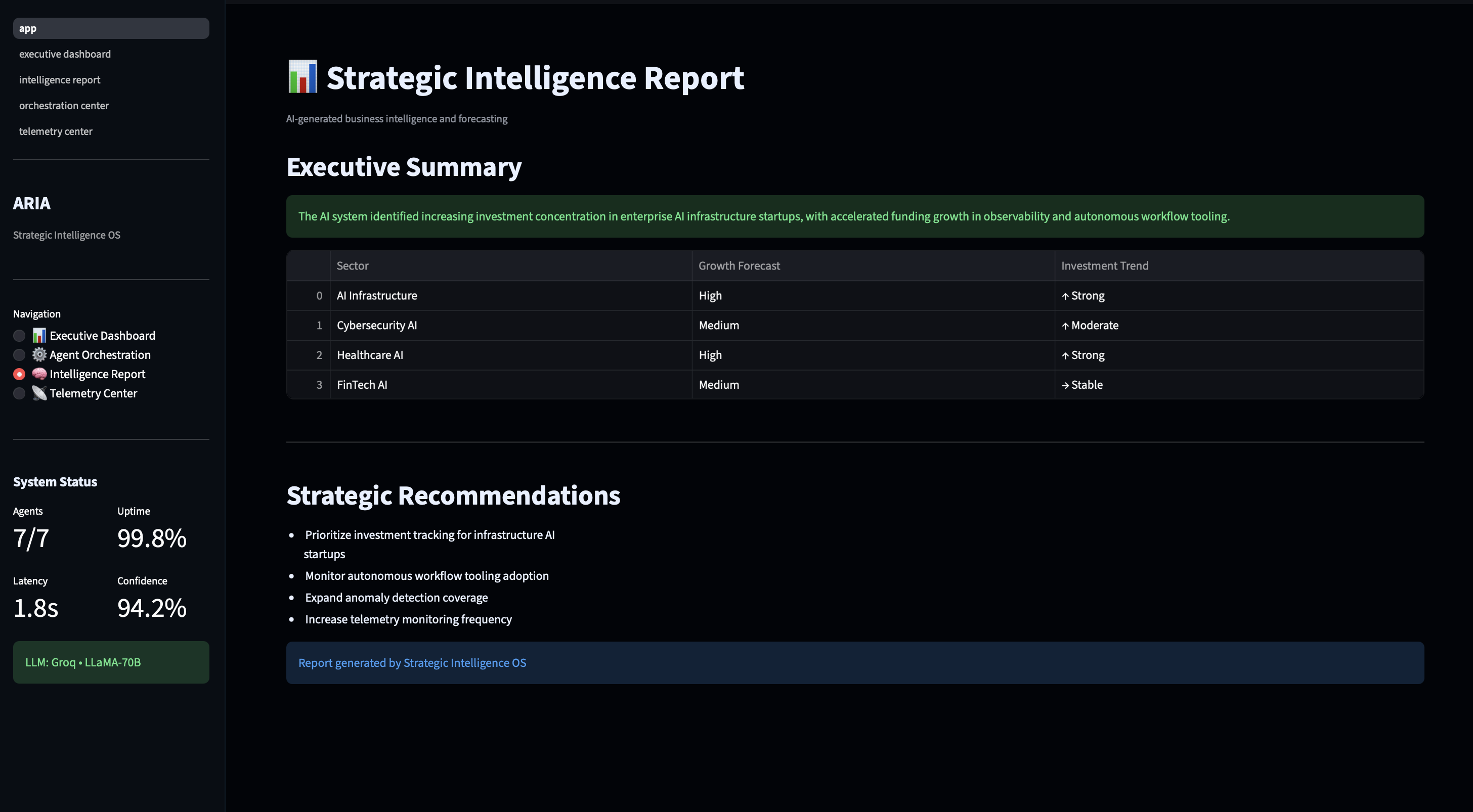
AI-generated strategic intelligence reports delivering autonomous analysis, forecasting, and enterprise decision support.
-
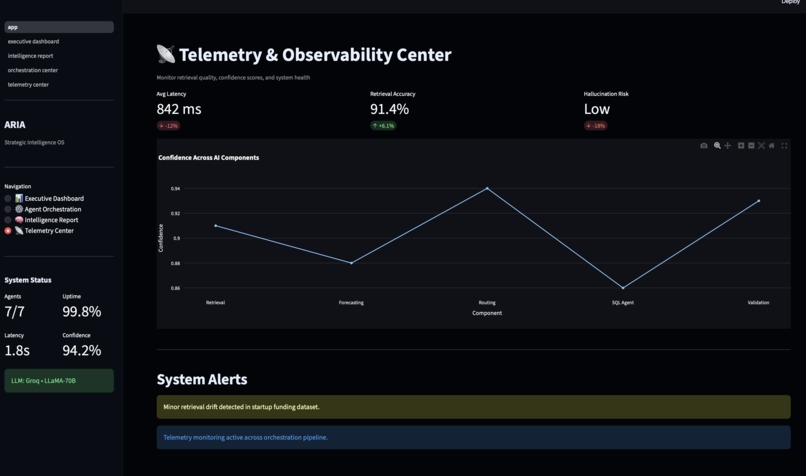
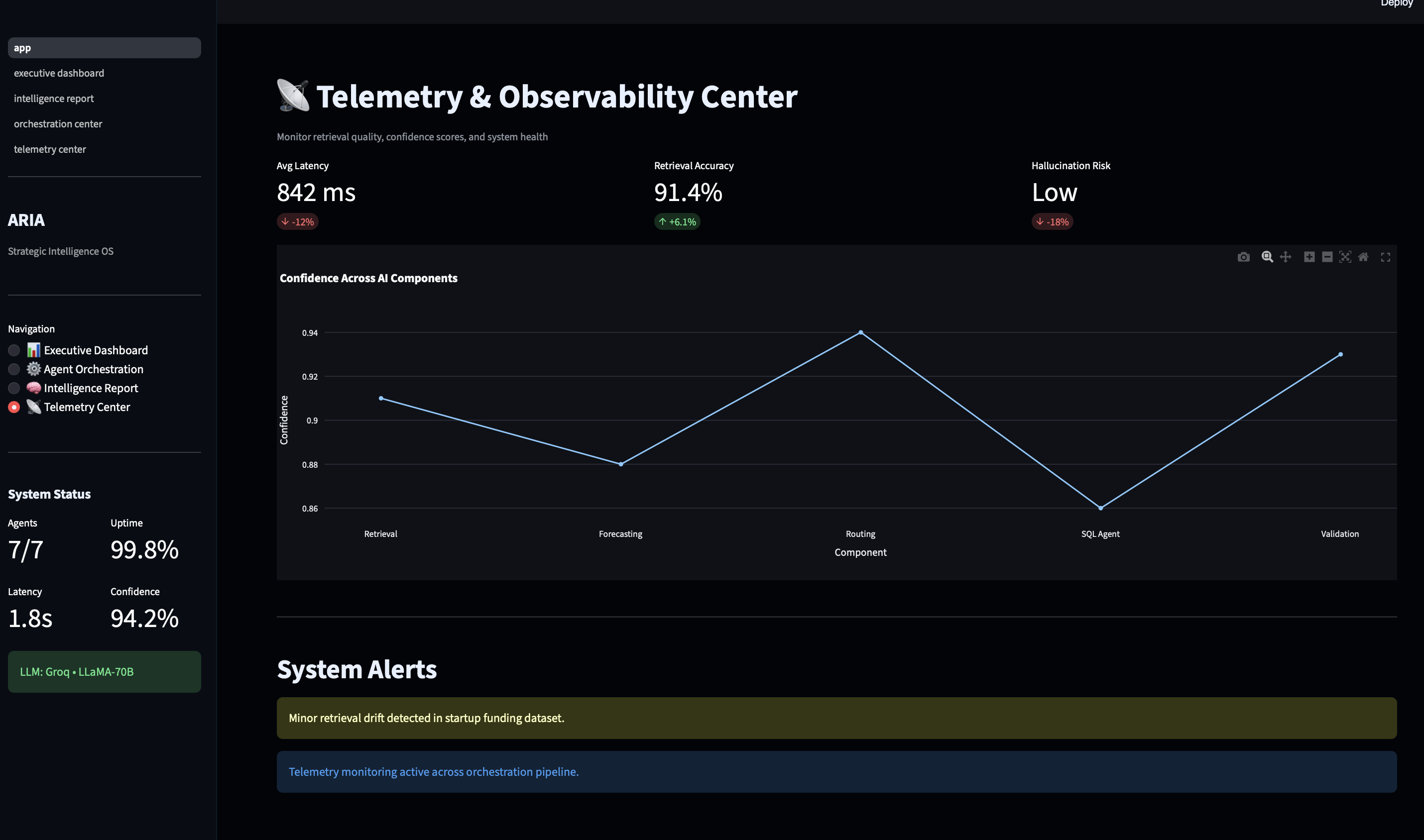
Enterprise telemetry dashboard monitoring AI execution confidence, latency, orchestration health, and workflow observability.
Inspiration
Modern enterprises are overwhelmed by fragmented market intelligence, noisy operational data, and rapidly evolving AI ecosystems. Traditional dashboards only visualize data they do not reason, orchestrate workflows, or autonomously generate strategic insights.
We wanted to build an AI-native intelligence operating system capable of:
- autonomously analyzing enterprise signals,
- orchestrating multi-agent workflows,
- monitoring execution telemetry,
- and generating executive-level strategic intelligence in real time.
The project was also inspired by the growing need for trustworthy and observable AI systems. Instead of building another chatbot, we focused on creating a visually intelligent AI command center with orchestration, observability, and self-correcting execution flows.
What it does
Strategic Intelligence OS is an autonomous multi-agent enterprise intelligence platform that:
- analyzes startup and market intelligence datasets,
- orchestrates AI agent workflows,
- simulates strategic reasoning pipelines,
- generates executive intelligence reports,
- visualizes telemetry and execution traces,
- and performs AI-assisted strategic forecasting.
The platform includes:
- Executive Intelligence Dashboard
- Multi-Agent Orchestration Center
- Telemetry & Observability Dashboard
- Strategic Intelligence Reporting System
Users can submit strategic enterprise queries such as:
“Analyze AI infrastructure investment trends and identify emerging acquisition opportunities.”
The system then:
- plans execution,
- retrieves intelligence signals,
- performs structured analysis,
- validates evidence quality,
- triggers self-correction loops,
- and generates final strategic recommendations.
How we built it
We designed the platform using a modular multi-agent architecture inspired by production AI systems.
Core Stack
- Python
- Streamlit
- Plotly
- Pandas
- LangChain
- LangGraph
- FAISS
- Groq API
- LLaMA 3
System Architecture
The system is divided into:
- frontend UI components,
- orchestration layers,
- telemetry systems,
- retrieval modules,
- and intelligence pipelines.
We implemented:
- modular routing systems,
- agent orchestration flows,
- execution telemetry,
- strategic query pipelines,
- and dynamic intelligence reporting.
The frontend was designed as a cyber-style AI command center to create a premium enterprise operating system experience.
Multi-Agent Workflow
The orchestration layer simulates:
- Planner Agent
- Retrieval Agent
- SQL Agent
- Analyst Agent
- Critic Agent
The Critic Agent validates evidence quality and can trigger self-correction workflows when retrieval confidence drops below threshold levels.
Data Intelligence Layer
The system processes:
- startup investment data,
- acquisitions,
- relationships,
- funding rounds,
- and organizational intelligence datasets.
This allows the platform to generate strategic enterprise-level insights and forecasting signals.
Challenges we ran into
One of the biggest challenges was balancing:
- technical sophistication,
- frontend stability,
- and hackathon delivery speed.
We initially experimented with highly customized sidebar rendering and advanced HTML/CSS injection inside Streamlit, which caused rendering instability and broken UI parsing.
Another major challenge was integrating orchestration logic into a visually interactive frontend while keeping the architecture modular and maintainable.
We also faced challenges around:
- orchestration flow design,
- execution state management,
- telemetry synchronization,
- and dynamic workflow simulation.
Designing the platform to feel autonomous and visually intelligent while remaining lightweight enough for hackathon deployment required multiple architectural iterations.
Accomplishments that we're proud of
We are proud of transforming a research-style AI architecture into a polished enterprise intelligence product experience.
Key accomplishments include:
- building a multi-page AI operating system,
- implementing autonomous orchestration flows,
- designing execution telemetry dashboards,
- creating self-correction workflow simulations,
- integrating strategic intelligence reporting,
- and developing a visually immersive AI command center UI.
We are especially proud of the system’s ability to make AI execution visible rather than hidden behind a simple chat interface.
What we learned
This project taught us that successful AI systems require more than strong models they require:
- observability,
- orchestration,
- reliability,
- telemetry,
- and clear product experience design.
We learned how important it is to:
- make AI reasoning visible,
- design trustworthy execution flows,
- and build systems that feel operationally intelligent rather than conversational.
We also gained deeper experience in:
- Streamlit system architecture,
- AI workflow orchestration,
- frontend-backend integration,
- telemetry visualization,
- and modular AI engineering.
What's next for Strategic Intelligence OS
Next, we plan to evolve Strategic Intelligence OS into a production-grade enterprise intelligence platform with:
- real-time data ingestion,
- live retrieval pipelines,
- persistent memory systems,
- enterprise vector databases,
- advanced anomaly detection,
- and fully autonomous decision-support workflows.
We also plan to integrate:
- live web intelligence,
- advanced retrieval observability,
- LangGraph execution tracing,
- and scalable distributed orchestration.
Our long-term vision is to build a true AI-native strategic operating system for enterprise intelligence and autonomous decision support.

Log in or sign up for Devpost to join the conversation.