Inspiration
"Is it my Wi-Fi, my router, or my ISP?" Nobody can tell, so everyone restarts the router and hopes. The theme "Let's Dig In" made me think of dig, the DNS lookup tool, and of digging down through network layers like layers of rock. That became Strata.
What it does
Strata measures the network path every few seconds with ping, dig, traceroute, and a small download. A machine learning model classifies the root cause, and the dashboard digs down the layers (device, router, ISP, DNS, destination) and marks the broken one. It then explains the cause and the fix in plain language.
With several agents running, Strata also tells an individual problem from a regional outage, which is what an ISP wants to know before the support calls start.
How I built it
- Real faults, not simulated ones. I injected latency, packet loss, bandwidth limits, slow DNS, and DNS failure with
tc neteminside isolated Linux network namespaces on a cloud server. - My own dataset. I collected 1,200 labeled measurements across 60 fault sessions, each with a random severity.
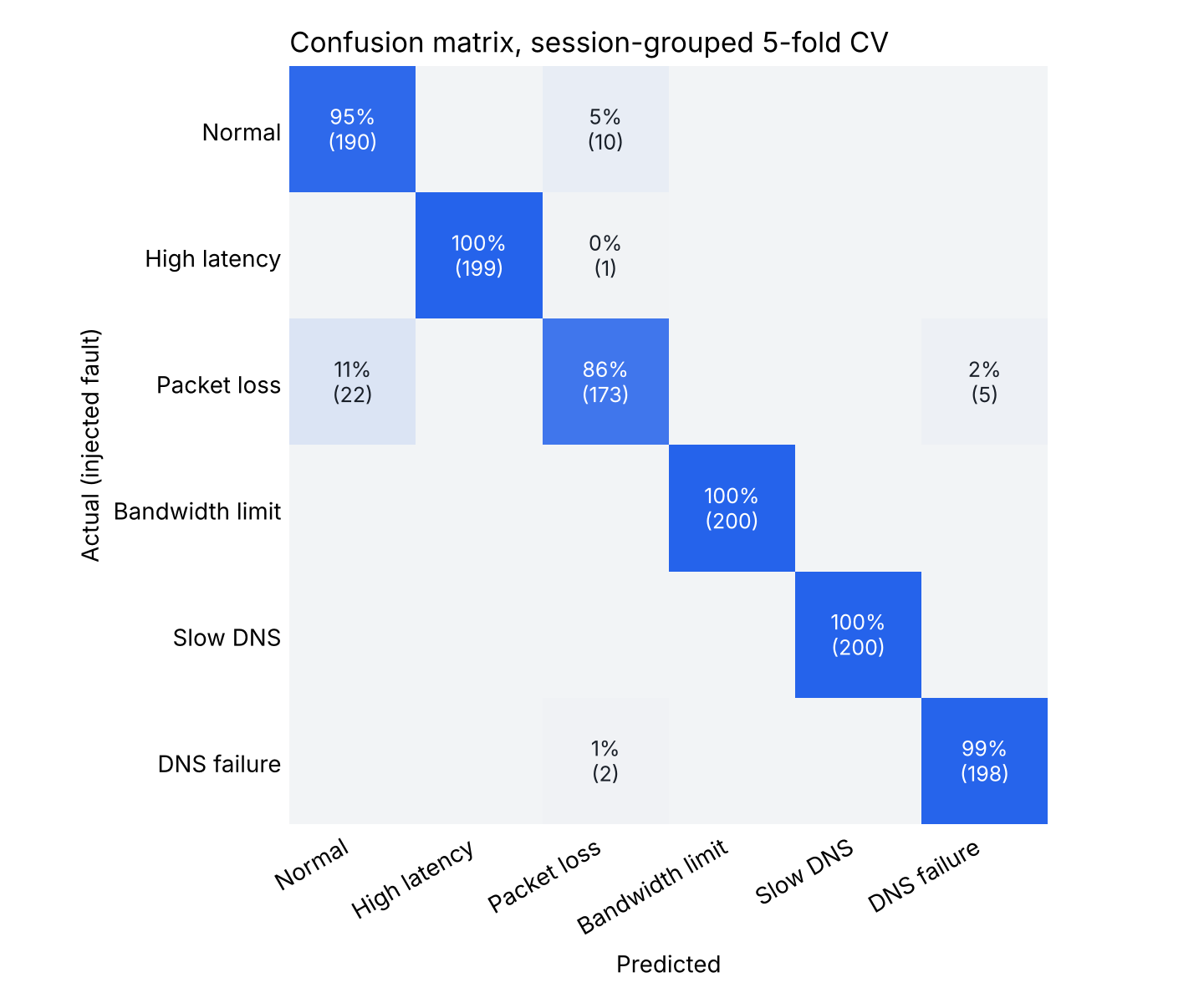
- A trained model. A LightGBM classifier on 21 features reaches 96.7% accuracy (macro F1 0.966) with 5-fold cross-validation split by session.
- An anomaly detector. Trained only on healthy measurements, it flags faults the classifier has never seen. It raises a false alarm on 2.5% of healthy rows.
- Backend and dashboard. FastAPI with WebSocket streaming, and a React and TypeScript dashboard.
- Explanations. Templates by default, or any OpenAI-compatible model with the user's own key. The model only writes the explanation; the classifier makes the diagnosis.
- History. Diagnoses go to a local queue first and sync to Supabase in the background.
Challenges I ran into
- Injecting faults without breaking the server. The test machine also runs other services. Every fault stays inside a network namespace, setup adds only a few tagged firewall rules, and teardown removes exactly those.
- Honest evaluation. Rows from one fault session look alike. Splitting train and test by row would have inflated the accuracy, so I split by session.
- Light packet loss. At low loss rates a few pings often lose nothing, so the round looks healthy. Recall for that class is 86.5%, the weakest of the six.
- A tool that diagnoses broken internet cannot depend on the internet. Classification runs locally, explanations fall back to templates, and history queues until the connection returns.
Accomplishments that I'm proud of
- A model trained on data I generated myself rather than a wrapped API
- A live demo where a real fault is injected and identified within seconds
- Built solo, end to end, in one weekend
What I learned
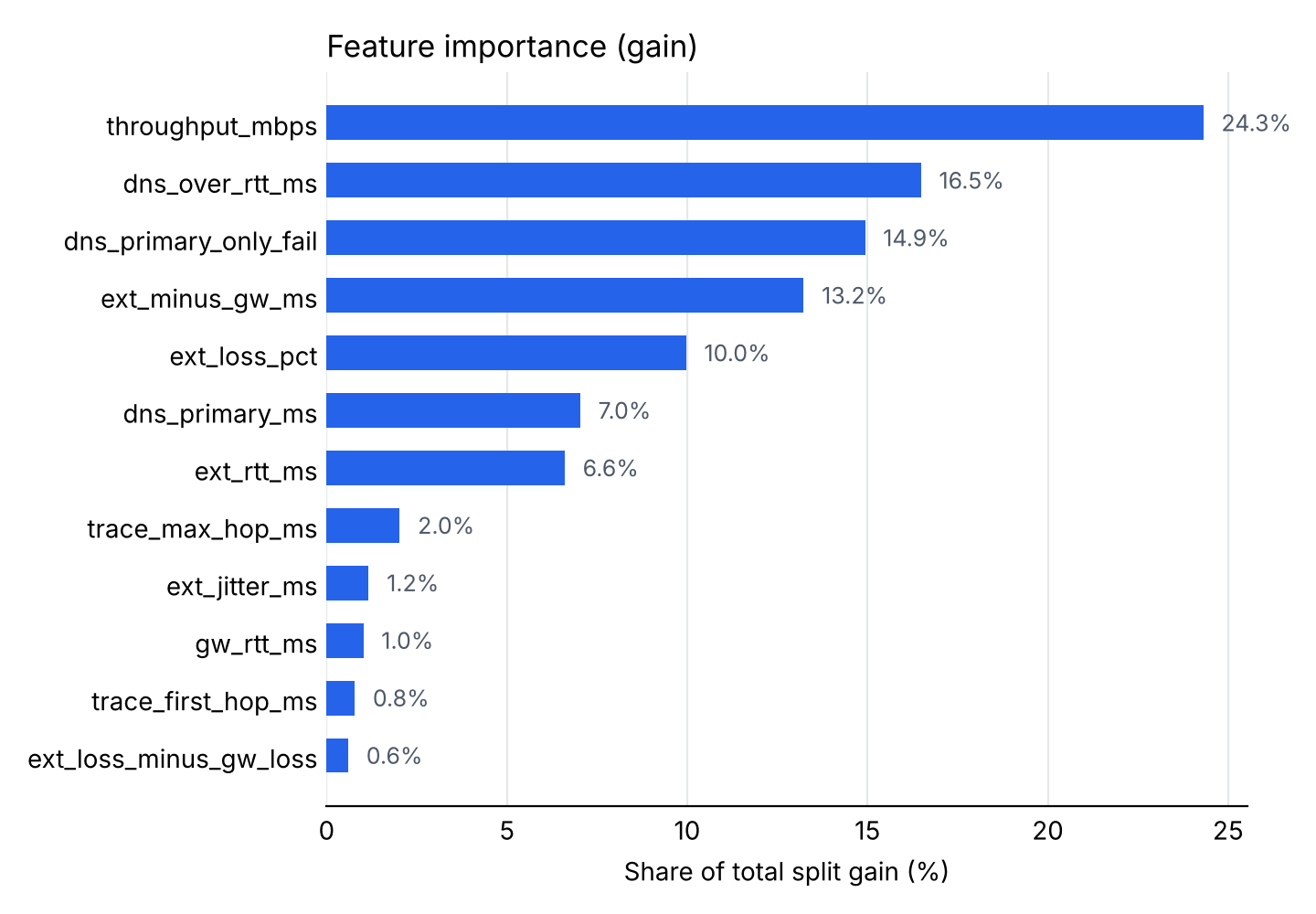
Network namespaces and traffic shaping in practice, and how much comparison features matter. The gateway answers fast but the external host is slow: the problem is past the router. An IP responds but names do not resolve: the problem is DNS. Those differences carried more signal than any single measurement.
What's next for Strata
- Agents on real home networks reporting to one backend for true regional outage detection
- A Wi-Fi layer and combined faults
- More probes per round for a sharper packet-loss signal
Built With
- fastapi
- lightgbm
- linux
- oracle
- postgresql
- python
- react
- scikit-learn
- sqlite
- supabase
- typescript
- vite
- websocket

