-
-

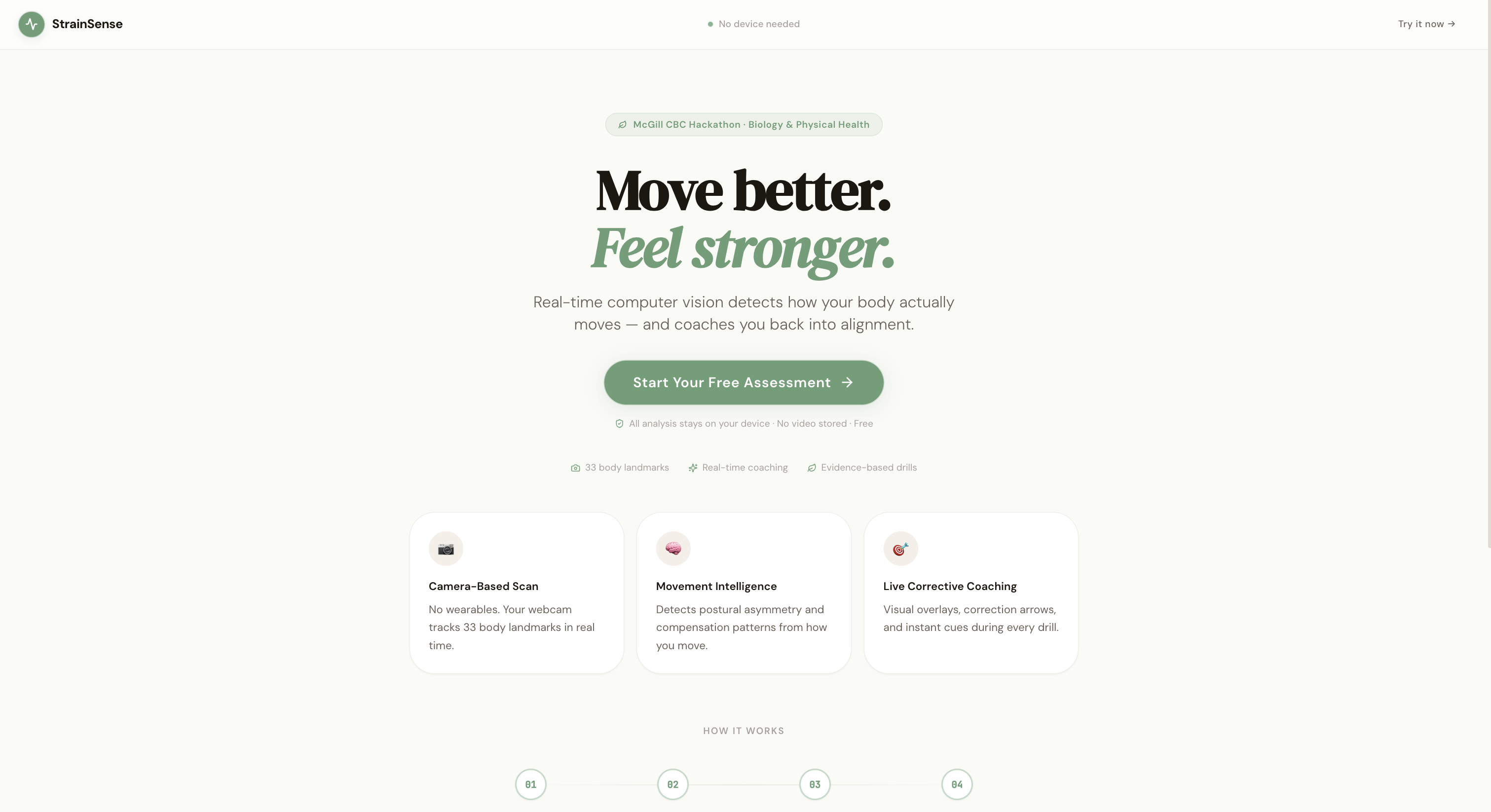
StrainSense Logo.
-
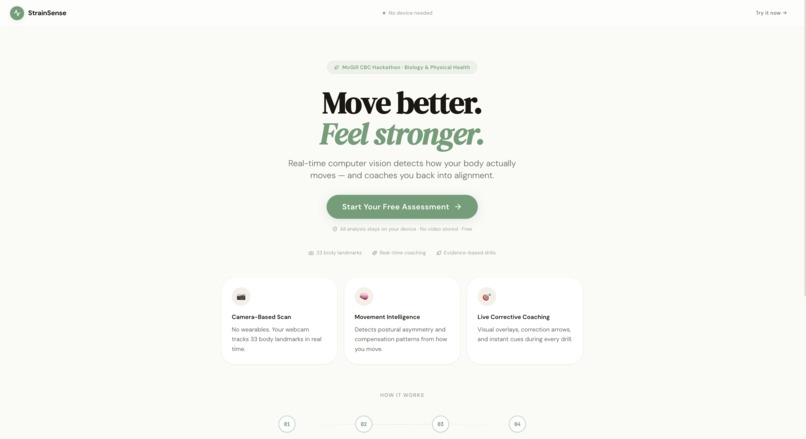
StrainSense Landing Page.
-
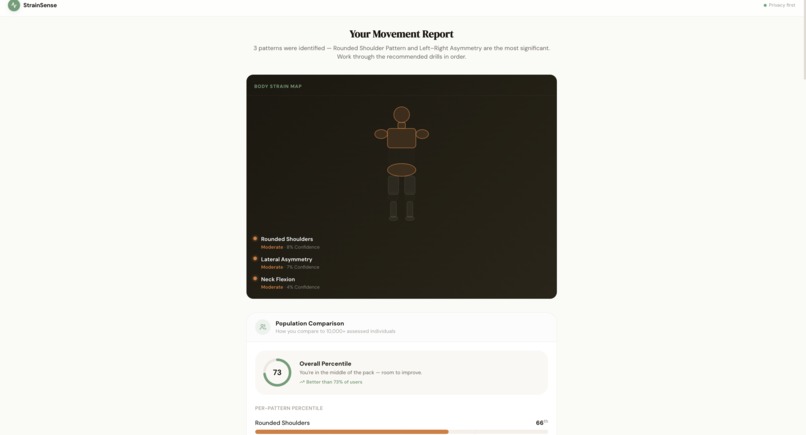
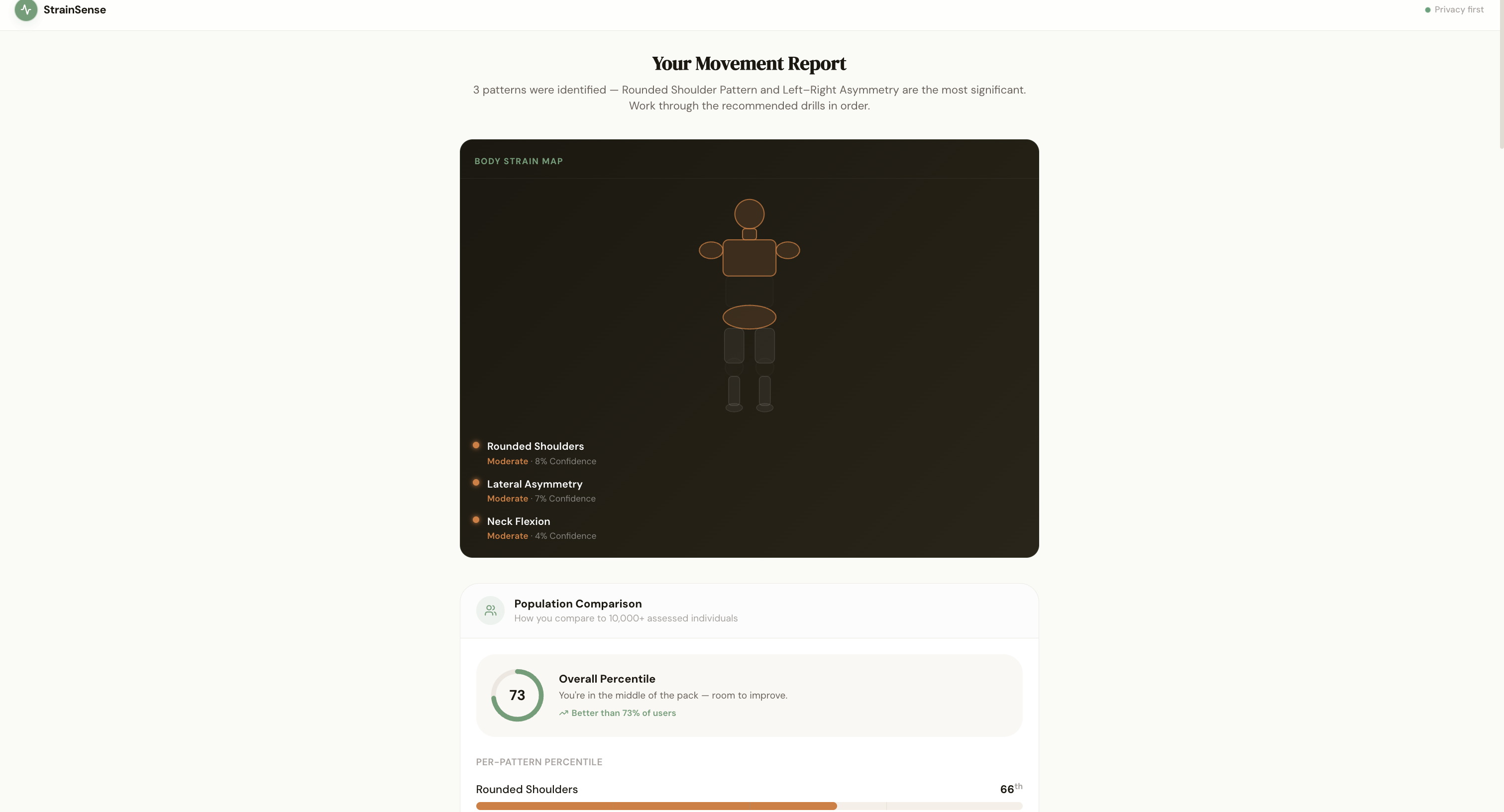
StrainSense Diagnosis.
-
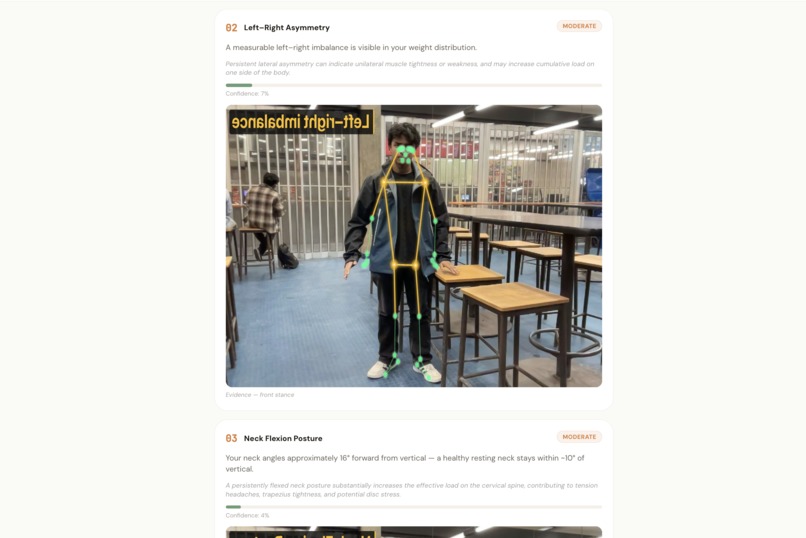
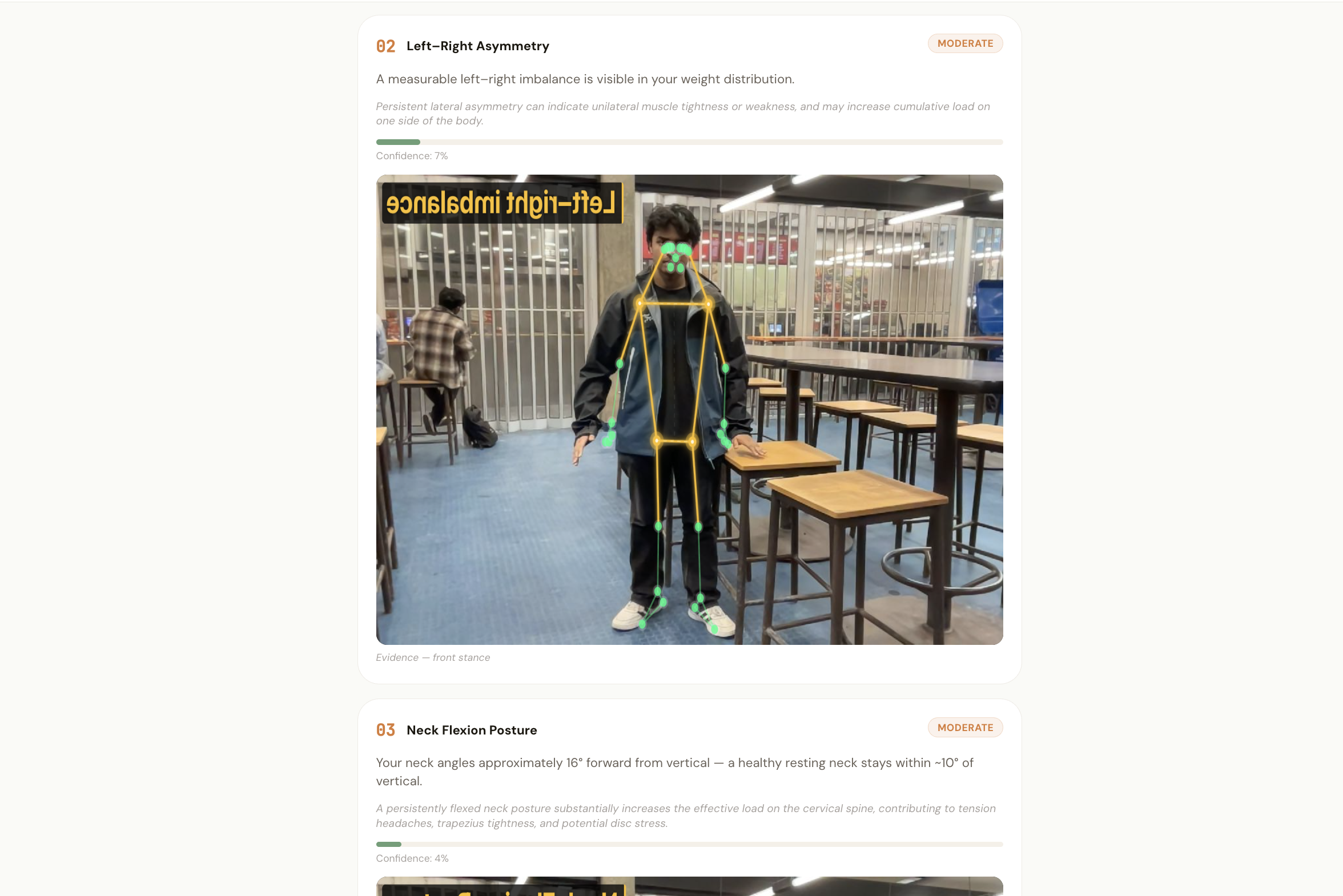
Asymettry Finding.
-
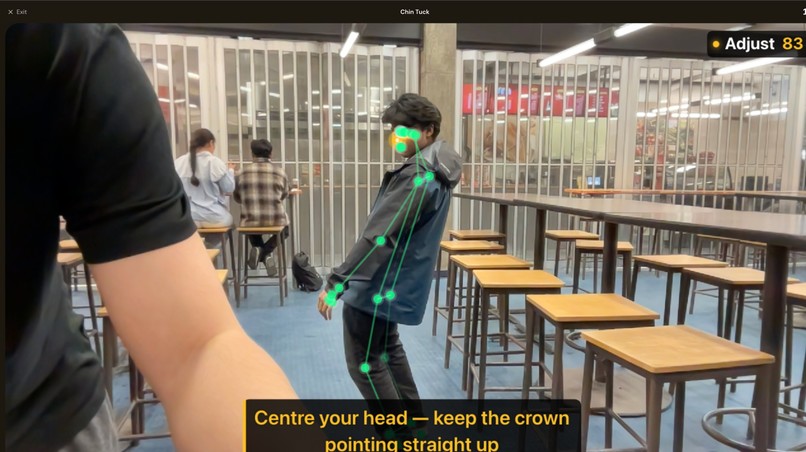
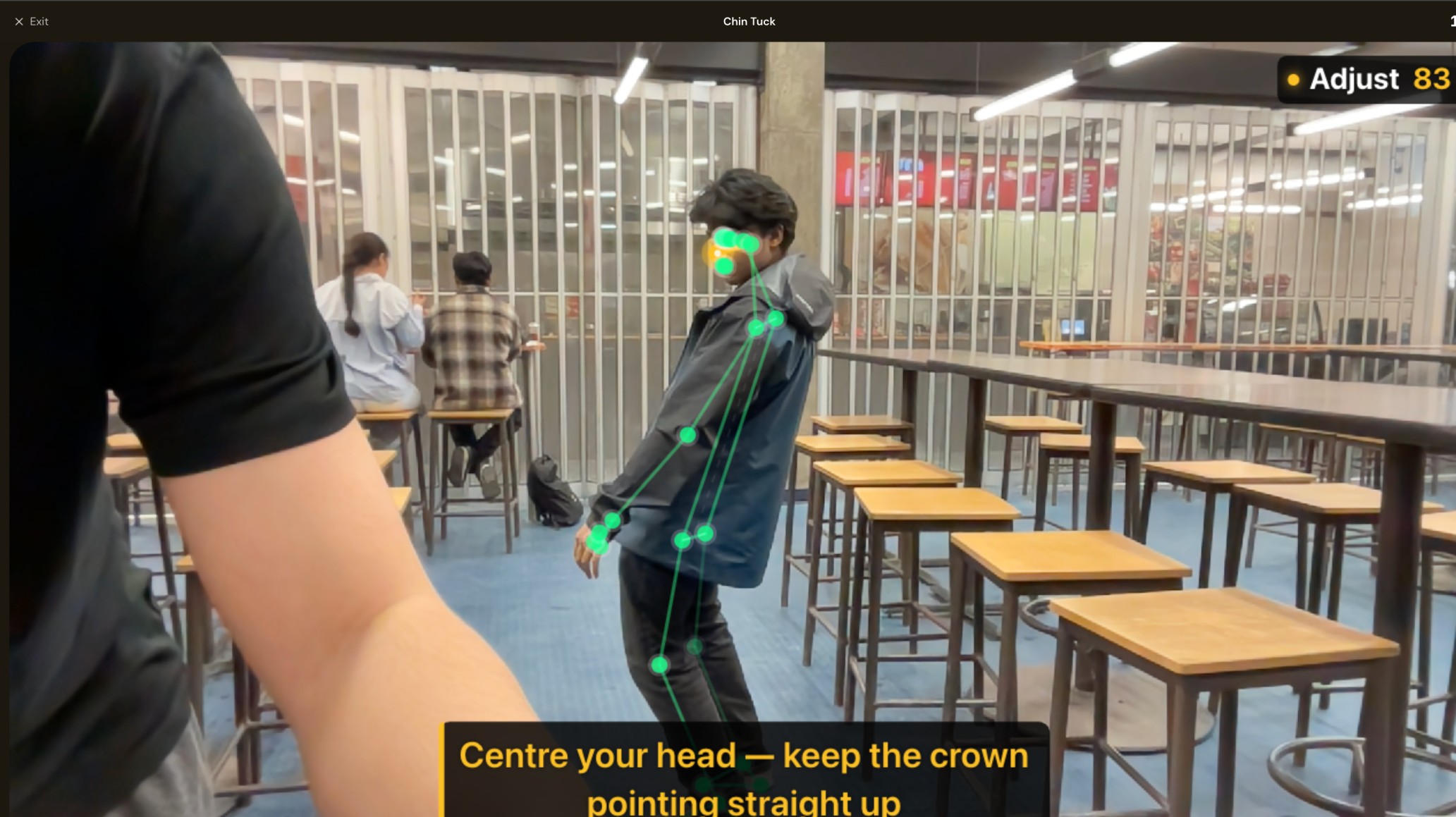
Live Coaching!

StrainSense
Inspiration
We were inspired by a problem that feels small at first and then slowly takes over people’s lives: bad posture, tight hips, forward head posture, unstable knees, and movement habits that most people can feel, but cannot actually see or correct.
Students, desk workers, gym-goers, and active people all run into the same wall. They know something feels off, but they don’t know:
- what the issue actually is
- what it may lead to
- whether they’re making it worse while trying to fix it
That gap felt deeply human.
Pain doesn’t arrive as a single dramatic moment — it accumulates over time:
$$ \text{Strain} \approx \sum (\text{small misalignments} \times \text{repetition}) $$
We wanted to build something that could catch those signals early, translate them into plain language, and give people a clear next step before strain becomes injury.
What it does
StrainSense guides the user through a short camera-based movement assessment, including stance and movement checks, then analyzes their body in real time using pose landmarks.
It detects posture and movement patterns such as:
- rounded shoulders
- forward head posture
- anterior pelvic tilt
- knee valgus
- lateral asymmetry
- thoracic kyphosis
- neck flexion
Output
After the scan, StrainSense generates:
- a body strain map
- annotated evidence frames
- severity and confidence labels
- personalized drill recommendations
- a population comparison view
- a weekly exercise plan
Live coaching
Users can enter a live coaching mode where StrainSense:
- watches movement in real time
- overlays alignment visuals
- surfaces high-priority correction cues
- warns about unsafe form
- speaks coaching cues aloud
- shows looping demo videos for drills
Core system loop
scan → analyze → prescribe → coach
How we built it
StrainSense is a browser-based application built with:
- React
- Vite
- TypeScript
- MediaPipe Pose
We use getUserMedia for live webcam input and built a guided assessment pipeline for:
- camera setup
- visibility checks
- step-by-step capture
- frame selection
Metrics engine
We transform pose landmarks into biomechanical signals:
$$ \text{metrics} = f(\text{pose landmarks}) $$
Examples include:
- shoulder height differences
- head-forward offset
- thoracic angle
- knee tracking deviation
- asymmetry scores
Challenges
Reliability
Real-world input is unstable:
- lighting changes
- camera angle
- occlusion
- landmark jitter
Interpretation
Turning pose data into meaningful, safe feedback required careful design.
Real-time coaching
Balancing responsiveness and clarity was difficult across visuals and voice feedback.
Accomplishments
- fully working end-to-end system
- real-time movement coaching
- intuitive user experience
- ethical considerations built into the product
What we learned
$$ \text{trust} = \text{clarity} + \text{transparency} + \text{consistency} $$
What’s next
Clinical validation
Work with physiotherapists and movement experts
Progress tracking
$$ \Delta \text{metrics} = \text{metrics}_{t+1} - \text{metrics}_t $$
Coaching improvements
- adaptive cueing
- drill expansion
- mobile support
Hackathon fit
Impact
Targets a widespread physical health issue
Technical execution
Real-time CV + coaching system
Ethics
No diagnosis claims, no default storage
Presentation
Highly visual and demo-friendly


Log in or sign up for Devpost to join the conversation.